Almost Paradise — Josh Keyes

Almost Paradise, 2018 by Josh Keyes (b. 1969)

Thanatos — Jacek Malczewski

Thanatos, 1899 by Jacek Malczewski (1854-1929)

Pierre Senges takes on Kafka’s fragments in Studies of Silhouettes (Book acquired, 2 Aug. 2020)

I’ve enjoyed digging into Pierre Senges’s Studies of Silhouettes since its arrival last week. The book is forthcoming from Sublunary Editions thanks to a translation by Jacob Siefring. Here’s Siefring’s blurb, which explains Senges’s project here:

Each of the texts in this work proceed from the fragments and cryptic beginnings found scattered throughout the notebooks Max Brod took possession of after Kafka’s death. The results tend to be as variable as they are unexpected: outlines of tales, madcap soliloquies, fairy tale inversions, strange parables, comedic monologues. In some instances a single fragment of Kafka’s is reprised multiple times, yielding parallel but divergent texts. Other times, a unique fragment is driven to its logical extreme, or gives way to a dizzying cascade of ab absurdum speculation, and one marvels how the development could have been otherwise. As one might expect, all of Kafka’s familiar obsessions—the night and its terrors, the law, justice and its lack, bureaucracy, animals, et cetera—are here in force. Each passage begins in boldface to indicate the hand of the Prague lawyer, before giving way to Senges’s liberties.

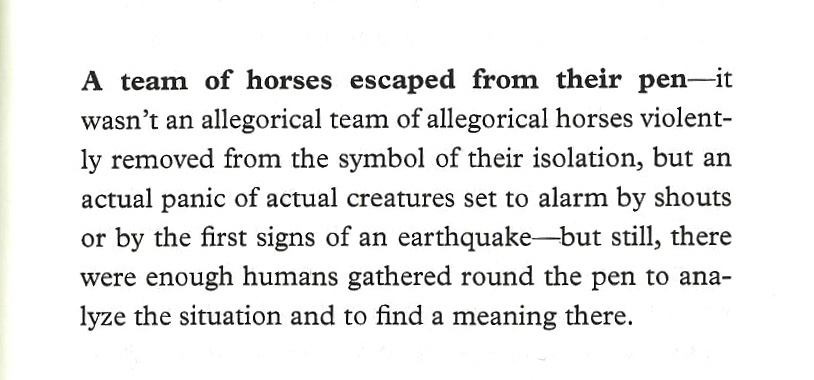
I’ve been dipping in at random, between the other few books I’ve been reading, and it’s good stuff. Here’s a sample:

Read my review of Pierre Senges’s Geometry in the Dust here.

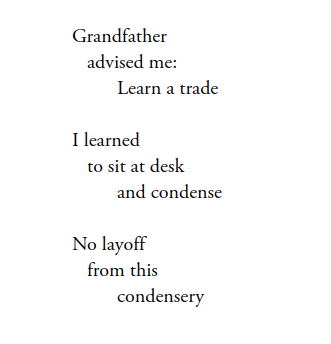
“Poet’s work” — Lorine Niedecker

The Disillusioned Medea — Paulus Bor

The Disillusioned Medea, c. 1640 by Paulus Bor (1601–1669)

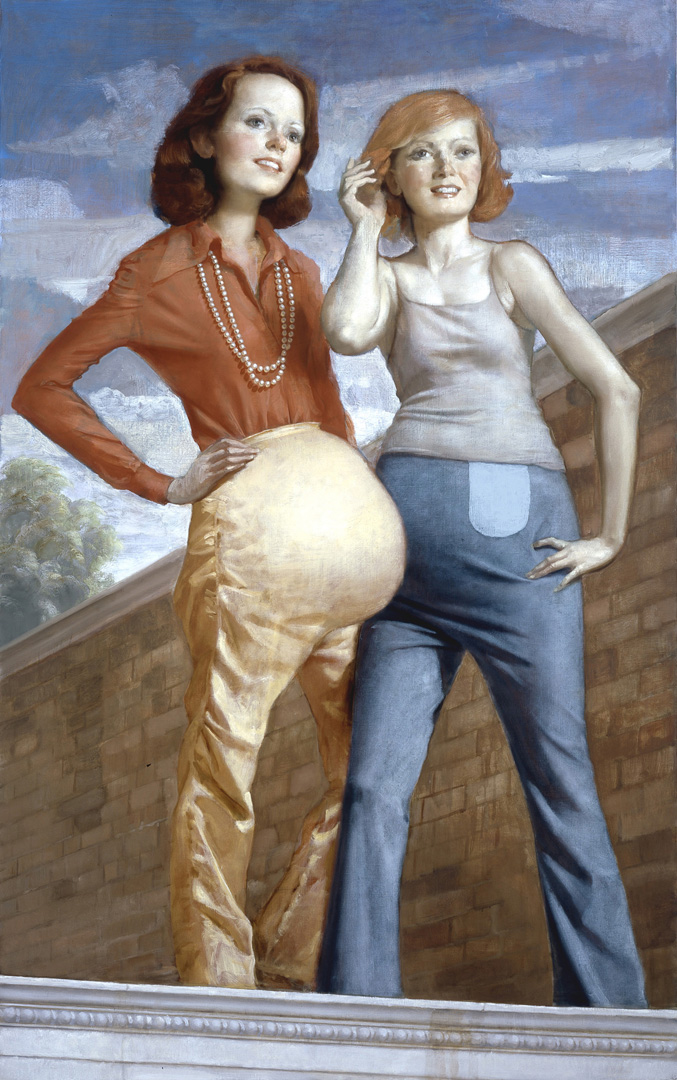
Patch and Pearl — John Currin

Patch and Pearl, 2006 by John Currin (b. 1962)

“Parable of Cervantes and the Quixote” — Jorge Luis Borges

“Parable of Cervantes and the Quixote

by

Jorge Luis Borges

Translated by Andrew Hurley


Weary of his land of Spain, an old soldier of the king’s army sought solace in the vast
geographies of Ariosto, in that valley of the moon in which one finds the time that is squandered by dreams, and in the golden idol of Muhammad stolen by Montalbán.

In gentle self-mockery, this old soldier conceived a credulous man—his mind unsettled by the reading of all those wonders—who took it into his head to ride out in search of adventures and enchantments in prosaic places with names such as El Toboso and Montici.

Defeated by reality, by Spain, don Quixote died in 1614 in the town of his birth. He was survived only a short time by Miguel de Cervantes.

For both the dreamer and the dreamed, that entire adventure had been the clash of two worlds; the unreal world of romances and the common everyday world of the seventeenth century.

They never suspected that the years would at last smooth away the discord, never suspected that in the eyes of the future, La Mancha and Montici and the lean figure of the Knight of Mournful Countenance would be no less poetic than the adventures of Sindbad or the vast geographies of Ariosto.

For in the beginning of literature there is myth, as there is also in the end of it.

Prometheus — Mitchell Villa

Prometheus, 2020 by Mitchell Villa

Conrad/Hughes (Books acquired, 2 Aug. 2020)

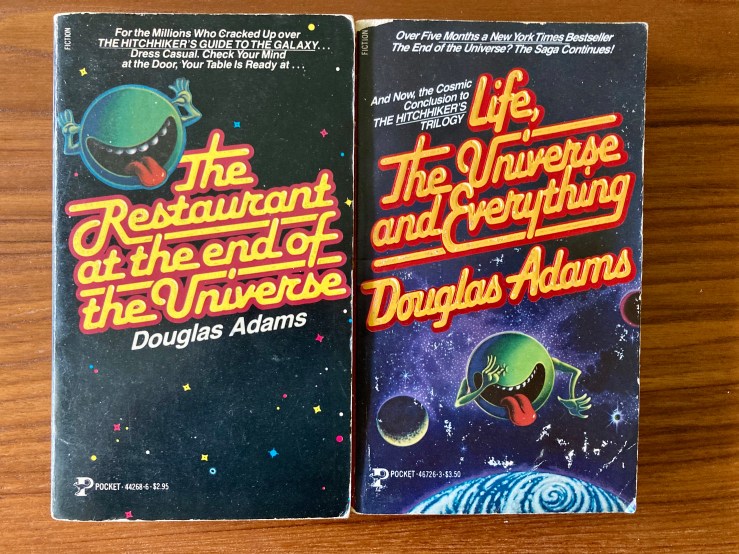
So my son finished Douglas Adams’ A Hitchhiker’s Guide to the Galaxy on Tuesday night, giving me a nice excuse to swing by the used bookstore on Wednesday to pick up the next two entries in the series, The Restaurant at the End of The Universe and Life, the Universe and Everything. I managed to find the same editions I read when I was his age. I gave my copies to one of my students some time in the early 2000s, back when I was teaching high school.

I found the Adams books almost immediately and had an hour to kill, so I strolled around, aiming not to buy anything. I’d been to the shop not a week before and picked up John Brunner’s 600+ page novel Last Stand on Zanzibar—but I thought I’d look for some interesting covers and maybe share them on twitter. And I did:

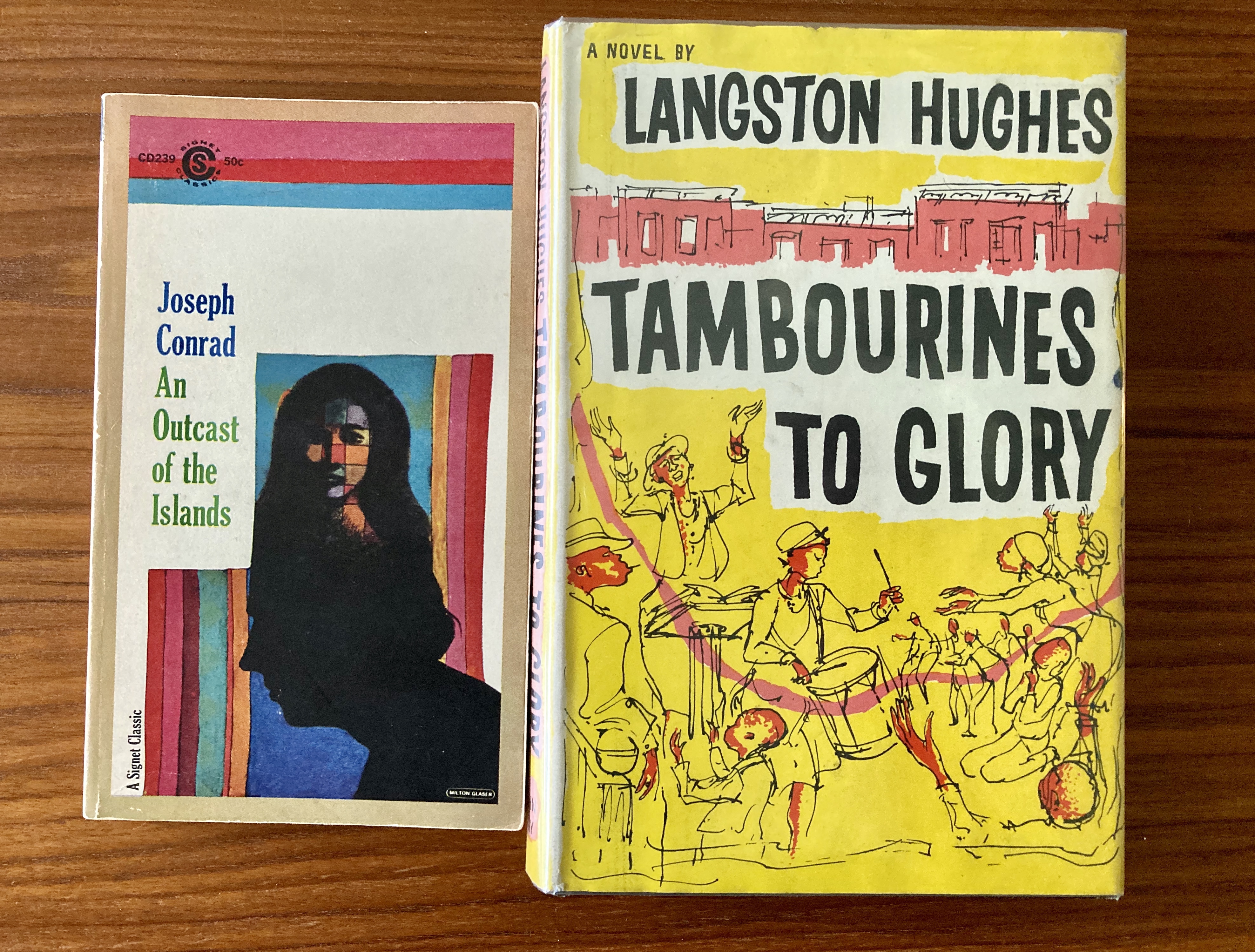
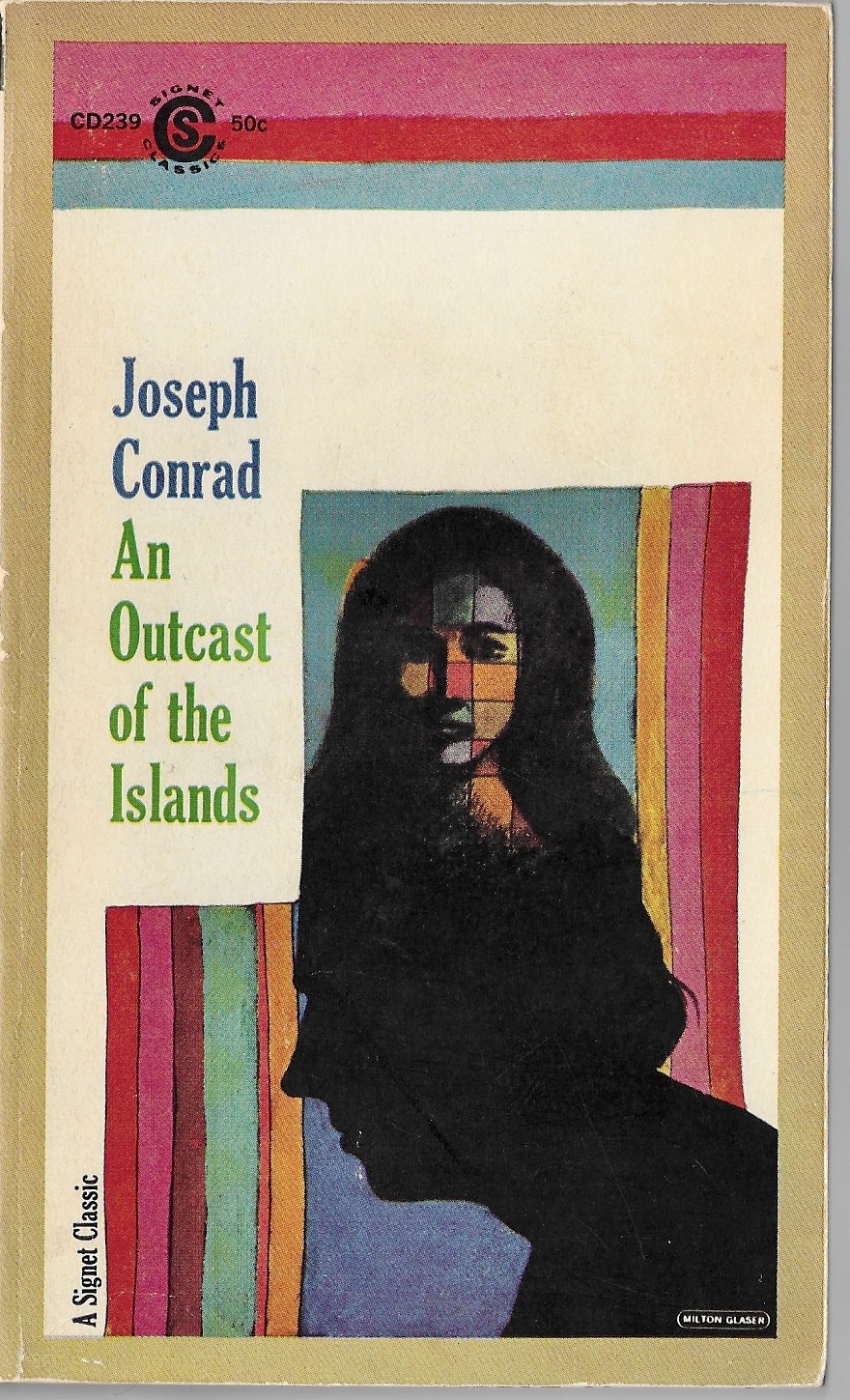
In the end though, I couldn’t pass up two books. First, I found a pristine first-edition Signet paperback of Joseph Conrad’s second novel An Outcast of the Islands with a striking Milton Glaser cover:

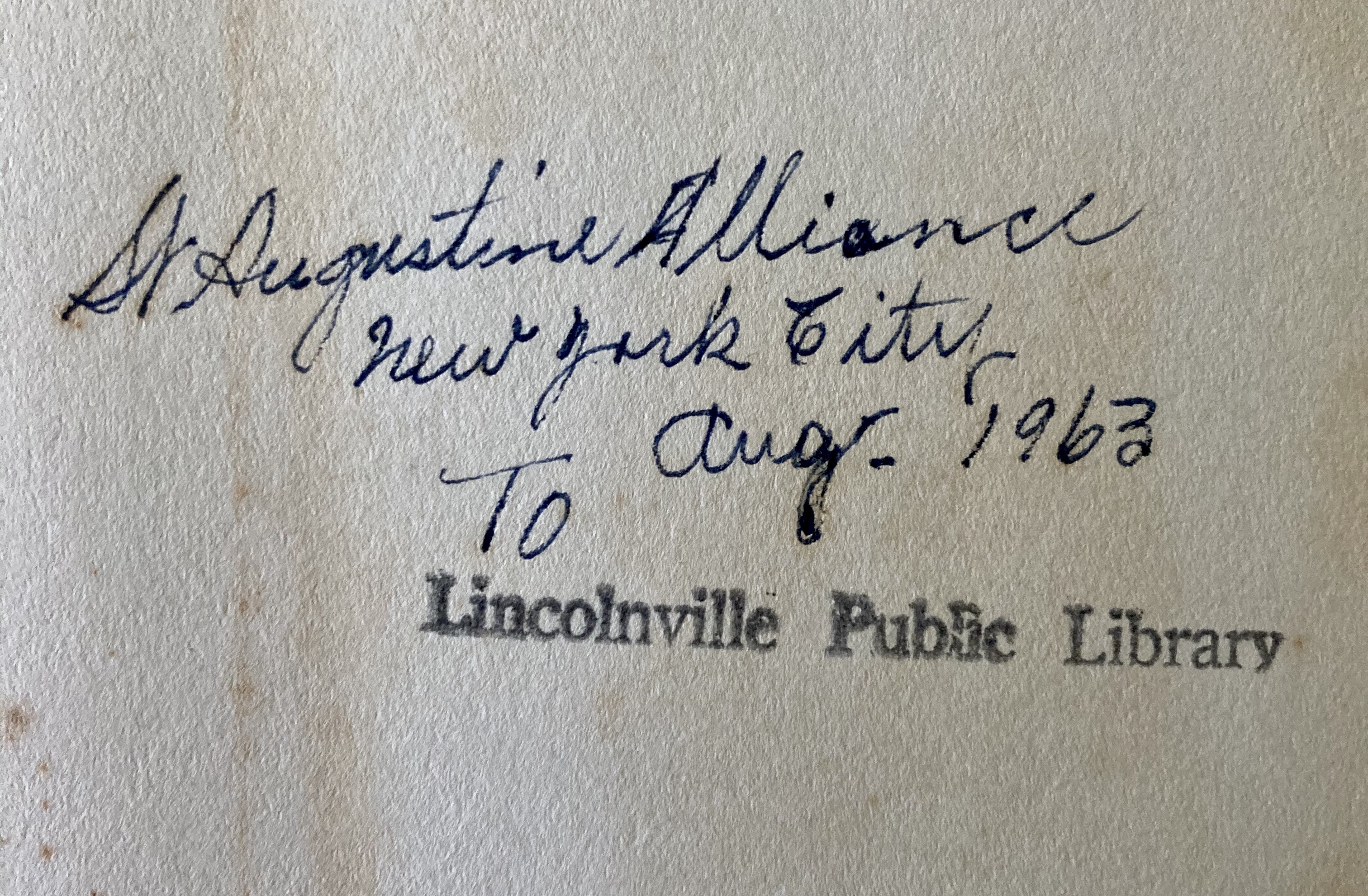
Then I came across a hardback first edition of Langston Hughes’ second novel Tambourines to Glory. At thirty bucks, it ate up the rest of my store credit, but it’s in excellent condition with no damage to the jacket and foxing only on the front flyleaf. It’s an old library book, but was fortunately spared any ugly WITHDRAWN stamps and appears never to have had a pocket in the back. Indeed, I’m not sure if the book was ever even read by anyone. Besides a few stamps identifying the library it once belonged to, the only mark in the book is on the front flyleaf:

Lincolnville is an historic black neighborhood founded by ex-enslaved people in the late 1860s. Famously, St. Augustine (and the “St. Augustine movement”) was a key location in the Civil Rights movement, and protests in the summer of 1964 when demonstrators jumped into the “whites-only” pool at the Monson Motor Lodge. Journalists captured racist motel owner James Brock pouring muriatic acid into the pool during the swim-in. A day after the world saw these images, the Senate passed the Civil Rights Act.

I wonder whose handwriting that is?


“Two Friends” — Pierre Senges

From Studies of Silhouettes by Pierre Senges. English translation by Jacob Siefring. Forthcoming in the fall from Sublunary Editions.

Archive I — Richard Hamilton

Archive I, 1981 by Richard Hamilton (1922–2011)

The Golden Section — Alejandro Pasquale

The Golden Section, 2018 by Alejandro Pasquale (b. 1984)

The Minus Times Interview with Barry Hannah

From The Collected Minus Times.

Pyrrhus — Stephen McKenna

Pyrrhus, 2012 by Stephen McKenna (1939–2017)

Wells Tower on tubing the Ichetucknee

Today, I plan to tube a portion of the Ichetucknee River, a cherished aorta of north Florida’s freshwater vasculature. It’s far and away the most vaunted tubing destination in the state, and I feel considerable pressure to get the tube into maximum spruceness and tumescence before my voyage.

In the town of Fort White, 35 miles northwest of Gainesville at the edge of Ichetucknee Springs State Park, we pull over at a tube-rental place to attend to maintenance and then install the Tube Pro booster saddle I’d thought unnecessary but, luckily, brought along anyway. My craft’s improved ergonomics should help undo the damage to my back.

The proprietress of the Ichetucknee Tube Center is a pretty woman named Linda Soride, and we chat for a moment before a purple, circa-1987 Camaro, pulsing with megabass, pulls up. As she turns away to diagnose the occupants’ needs, I fall a little bit in love with Linda. My mind drifts and I see myself, having patented the tube design, return to the ITC to license it exclusively to her. Revenues soar, and we soon depart the run-down filling station for a grand neon showroom. I’m the muscle of the operation—keeping the compressors shipshape, manning the patch kit—while Linda remains its comely public face. At the close of business each day, we head to the Ichetucknee and go floating off together, accompanied only by cool waters, cheering egrets, and some Riunite on ice.

Minutes later, I trot my tube—freshly inflated, booster seat in place—over to Linda. “This is just the prototype,” I rave proudly. “Once I get the kinks out, maybe you and me could do some business together.”

She shies away, cooing, “Maybe so, maybe so,” in a quiet, suspicious voice imparting the suggestion that I might be a little bit insane. (As Cheever’s story progresses, Neddy shows signs that he is not in command of his senses. The echo is unsettling.)

After I recover from this minor slight, Miss Bennett, who has to skip this portion of the journey to drive the car down, drops me at a designated embarkation point on the Ichetucknee. This river would inspire ecstasies in anyone with a pulse, but my ardor for spectacular scenery has reached a point of diminishing returns. I feel like a competitive eater tucking in to his 47th foie gras tart. The Ichetucknee offers more of the pellucid water and old-growth forests slung with buntings of Spanish moss. But while I’m relieved to discover, as advertised, no gators in sight, there’s also a disappointing shortage of amazing birdlife. Just the odd egret and heron, skulking on the bank like underpaid park employees. Plenty of people, though.

While my own capacity for amazement is waning, my superb invention, I would like to inform the proprietress of the ITC, is so enthusiastically admired by my fellow tubers that I’m to have no peace for the entire four-mile float. Seconds into the ride, two young women from St. Augustine beckon me into their flotilla. We enjoy a cozy interlude until a thickly built friend of theirs comes by and says “I want that tube” in a manner that is not unmenacing. I break away and into the path of a kayaking lady who pronounces mine “the Cadillac of tubes.” (A bespectacled professor following behind her describes it, a touch sneeringly, as “an interesting contraption.”) Even a fearsome river stud in a straw cowboy hat—reclining on a little inflatable yacht, trailing a miasma of marijuana fumes, a zaftig beauty on his arm—pauses to tell me that he deems the tube “a pretty badass setup.”

At last, I am among my people.

In this newfound fame and bliss, I drift on for hours. Toward the end, as I glide to the pullout, having made it halfway across Florida, the sky darkens. I struggle up the dock, where Miss Bennett waits for me in a shower of pelting rain.

From Wells Tower’s long essay, “The Tuber,” published in 2009 in Outside.

After reading Wells Tower’s short story “Opportunity Knocks!” in The Minus Times Collected the other day, I (again) poked around on the internet hoping to find any other uncollected stories by Tower. “Opportunity Knocks!” was first published in The Minus Times #29, back in 2009—the same year as Tower’s first (and so far, only) collection Everything Ravaged, Everything Burned. (I liked it a lot.)

I’ve appreciated the journalism and essayism that Tower has done over the past decade, but I somehow missed “The Tuber” until now. The essay is sort of a riff on John Cheever’s “The Swimmer,” with Tower traversing the springs and rivers of my home, North Florida, in a super-tube of his own devising. The section above details his time on the Ichetucknee River, my favorite tubing spot, and the scene of many of my favorite college days.
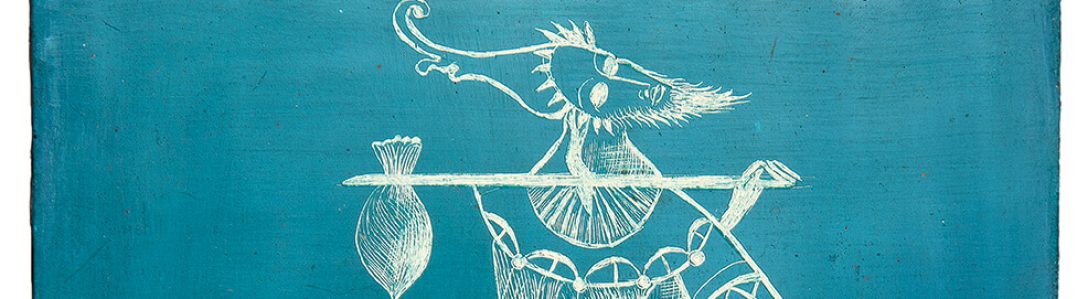
The Temptation of Saint Hilarion — Octave Tassaert

The Temptation of Saint Hilarion c.1857 by Octave Tassaert (1800–1874)