The Creation of Fish and Birds — Gustave Doré

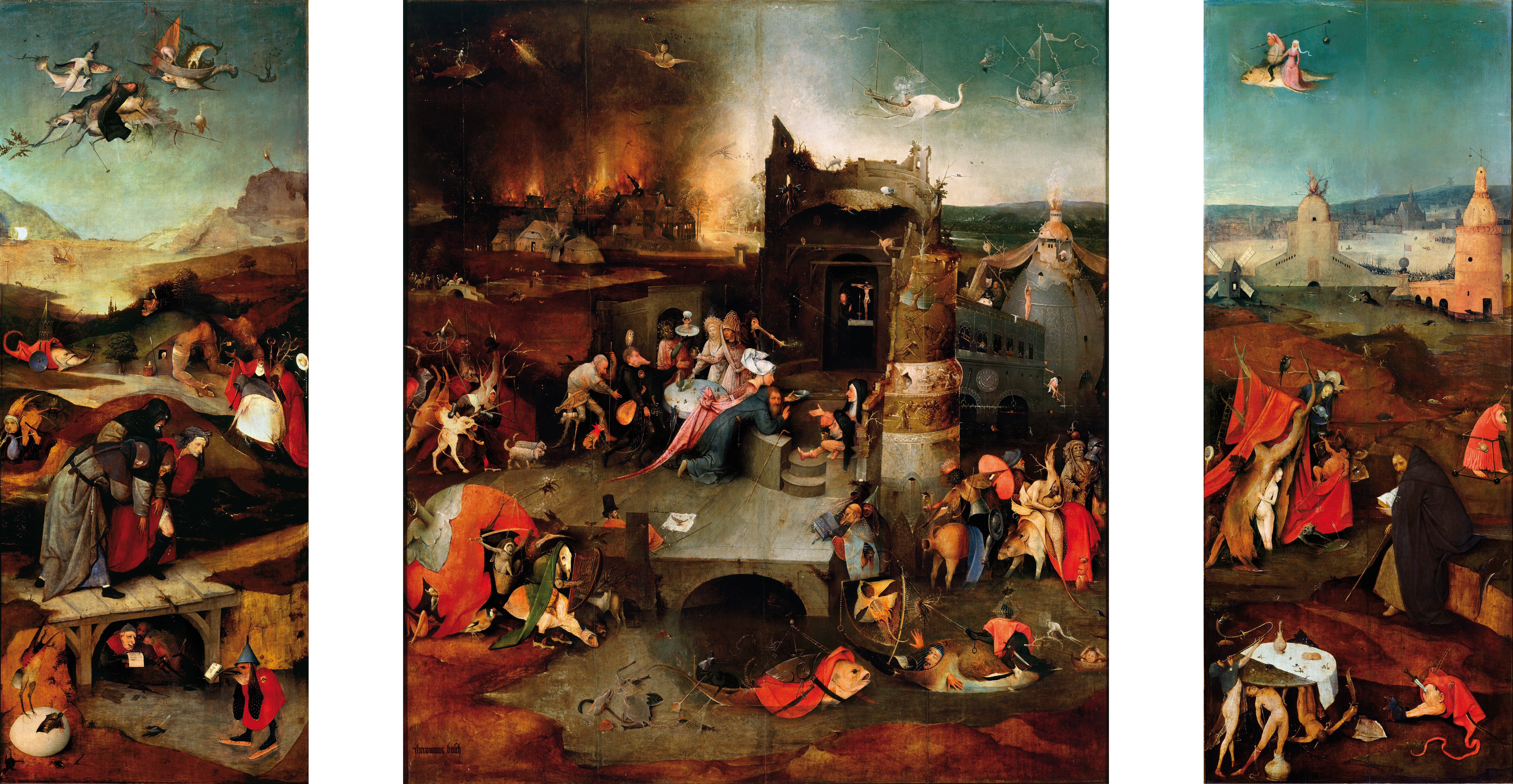
The Temptation of St. Anthony (Detail) — Hieronymus Bosch

15

Five Ideas from Nathaniel Hawthorne’s Note-Books

  1. For the virtuoso’s collection,–the pen with which Faust signed away his salvation, with a drop of blood dried in it.
  2. An article on newspaper advertisements,–a country newspaper, methinks, rather than a city one.
  3. An eating-house, where all the dishes served out, even to the bread and salt, shall be poisoned with the adulterations that are said to be practised. Perhaps Death himself might be the cook.
  4. Personify the century,–talk of its present middle age, of its youth, and its adventures and prospects.
  5. An uneducated countryman, supposing he had a live frog in his stomach, applied himself to the study of medicine in order to find a cure for this disease; and he became a profound physician. Thus misfortune, physical or moral, may be the means of educating and elevating us.

From Nathaniel Hawthorne’s American Note-Books.

Nude Study (Reading) — Kenyon Cox

A Scapegoat for Promiscuous Drunks, Friendly Calls, and Humbug Resolutions

mark-twain

From Mark Twain’s January 1st, 1863 column in the Territorial Enterprise:

Now is the accepted time to make your regular annual good resolutions. Next week you can begin paving hell with them as usual. Yesterday, everybody smoked his last cigar, took his last drink, and swore his last oath. To-day, we are a pious and exemplary community. Thirty days from now, we shall have cast our reformation to the winds and gone to cutting our ancient short comings considerably shorter than ever. We shall also reflect pleasantly upon how we did the same old thing last year about this time. However, go in, community. New Year’s is a harmless annual institution, of no particular use to anybody save as a scapegoat for promiscuous drunks, and friendly calls, and humbug resolutions, and we wish you to enjoy it with a looseness suited to the greatness of the occasion.

Ducks — Goyo Hashiguchi

After the Ball — Edouard Vuillard

Here’s to nice dreams in 2015

Board of Demented Associations (Fireworks) — Salvador Dali

The Ballroom at Arles — Vincent van Gogh

Last day (Peanuts)

peanut-newyear

Shooting the Witches on New Year’s Eve (From Sir James George Frazer’s The Golden Bough)

On New Year’s Eve, which is Saint Sylvester’s Day, Bohemian lads, armed with guns, form themselves into circles and fire thrice into the air. This is called “Shooting the Witches” and is supposed to frighten the witches away. The last of the mystic twelve days is Epiphany or Twelfth Night, and it has been selected as a proper season for the expulsion of the powers of evil in various parts of Europe. Thus at Brunnen, on the Lake of Lucerne, boys go about in procession on Twelfth Night carrying torches and making a great noise with horns, bells, whips, and so forth to frighten away two female spirits of the wood, Strudeli and Strätteli. The people think that if they do not make enough noise, there will be little fruit that year. Again, in Labruguière, a canton of Southern France, on the eve of Twelfth Day the people run through the streets, jangling bells, clattering kettles, and doing everything to make a discordant noise. Then by the light of torches and blazing faggots they set up a prodigious hue and cry, an ear-splitting uproar, hoping thereby to chase all the wandering ghosts and devils from the town.

From Sir James George Frazer’s The Golden Bough.


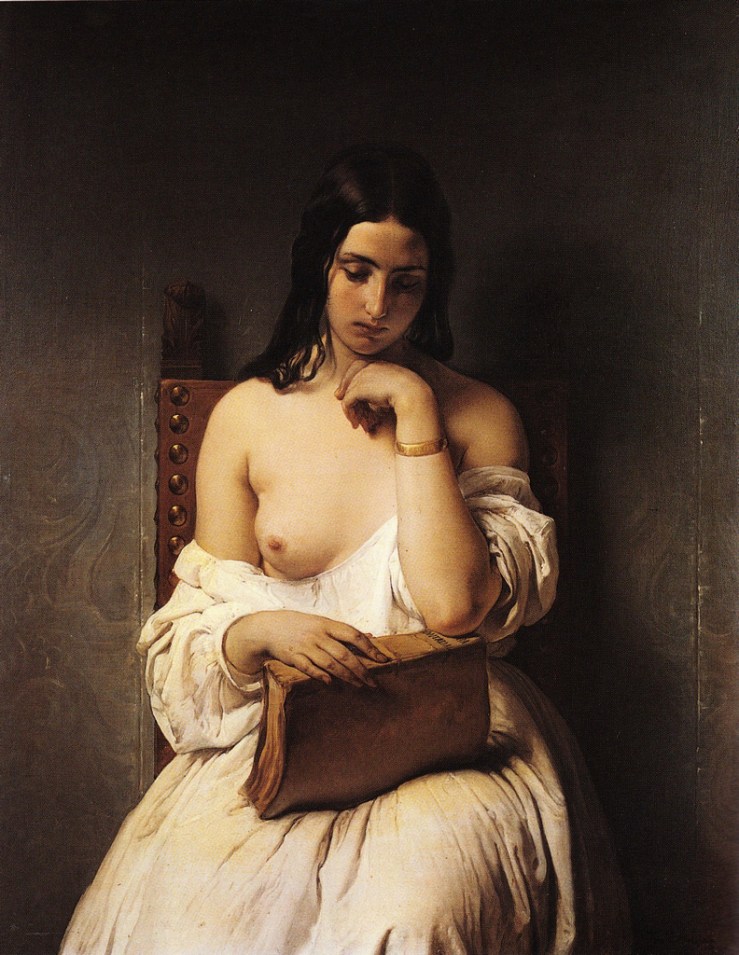
Meditation — Francesco Hayez

francesco-hayez-meditation

Bacchante with a Panther — Camille Corot

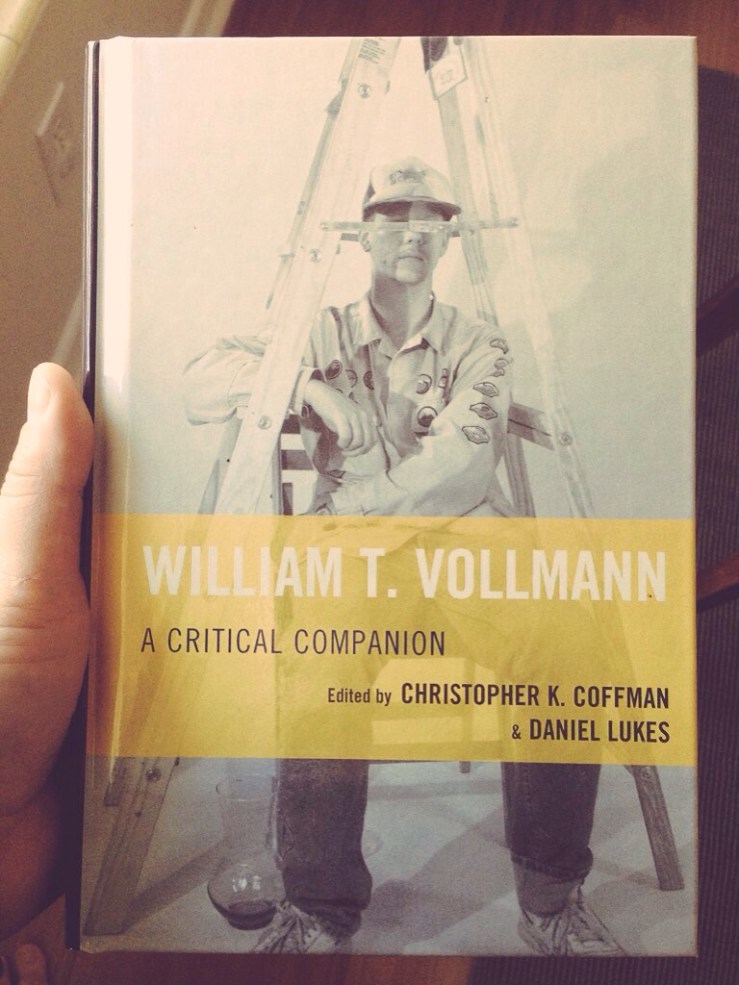
William T. Vollmann: A Critical Companion (Book acquired, 12.27.2014)

IMG_4592

William T. Vollmann: A Critical Companion is new from University of Delaware Press and editors Christopher K. Coffman and Daniel Lukes. Their blurb:

The essays in this collection make a case for regarding William T. Vollmann as the most ambitious, productive, and important living author in the US. His oeuvre includes not only outstanding work in numerous literary genres, but also global reportage, ethical treatises, paintings, photographs, and many other productions. His reputation as a daring traveler and his fascination with life on the margins have earned him an extra-literary renown unequaled in our time. Perhaps most importantly, his work is exceptional in relation to the literary moment. Vollmann is a member of a group of authors who are responding to the skeptical ironies of postmodernism with a reinvigoration of fiction’s affective possibilities and moral sensibilities, but he stands out even among this cohort for his prioritization of moral engagement, historical awareness, and geopolitical scope. Included in this book in addition to twelve scholarly critical essays are reflections on Vollmann by many of his peers, confidantes, and collaborators, including Jonathan Franzen, James Franco, and Michael Glawogger. With a preface by Larry McCaffery and an afterword by Michael Hemmingson, this book offers readings of most of Vollmann’s works, includes the first critical engagements with several key titles, and introduces a range of voices from international Vollmann scholarship.

The book (it’s beautiful, by the way) intersperses the more “academic” essays that comprise its bulk with shorter riffs, memoirs, and vignettes about Vollmann, or reading Vollmann (I wish Franzen would’ve devoted a few more lines in his piece “A Friendship” to describing the time he got to shoot Vollmann’s Tec 9, but it’s still a fascinating little piece). I read a few of these (Franco refers to our author as “Volhman” and then ends his “essay” with this parenthetical aside: “(Shit, I went back online, and I see that there is no ‘h’ in his name. Sorry, Billy.”)

I haven’t gotten into any of the the critical essays yet, but a scan over the book’s index and bibliography indicates a serious work of scholarship, while a cursory scan of a few of the more intriguing titles (“‘Strange Hungers’: William T. Vollmann’s Literary Performances of Abject Masculinity”; “The Ethics of the Archive and the William T. Vollmann Collection”; “Imperial Photography”) suggests a unified work with a tone decidedly divorced from stale academic language. More to come.

Rustic Life — Akseli Gallen-Kallela