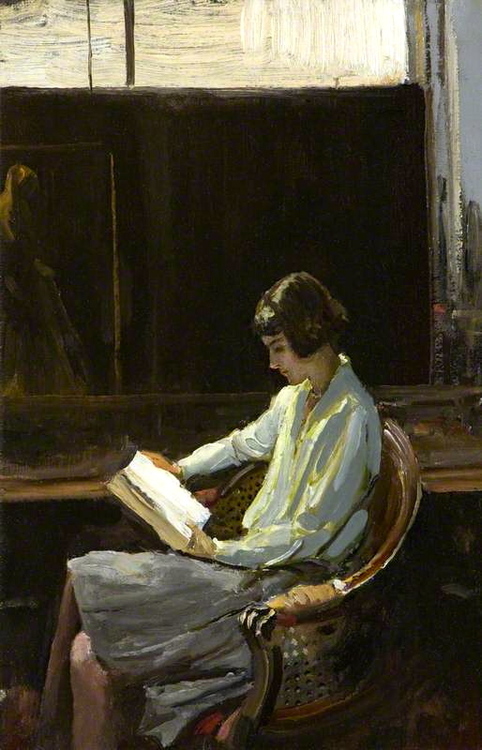
Alice — John Lavery

(c) Rosenstiel's; Supplied by The Public Catalogue Foundation

Black Bowl — George Seeley

black-bowl-1907

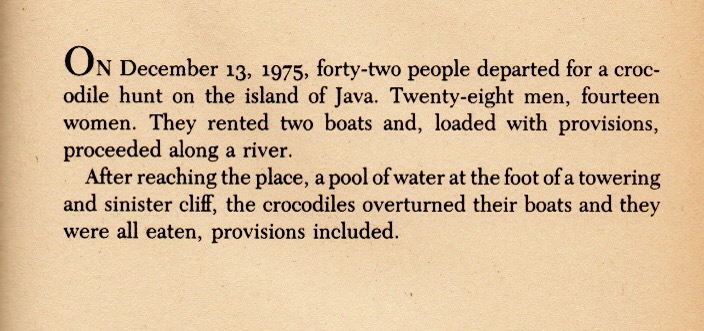
“Tragic Hunt” — Michelangelo Antonioni

IMG_3611

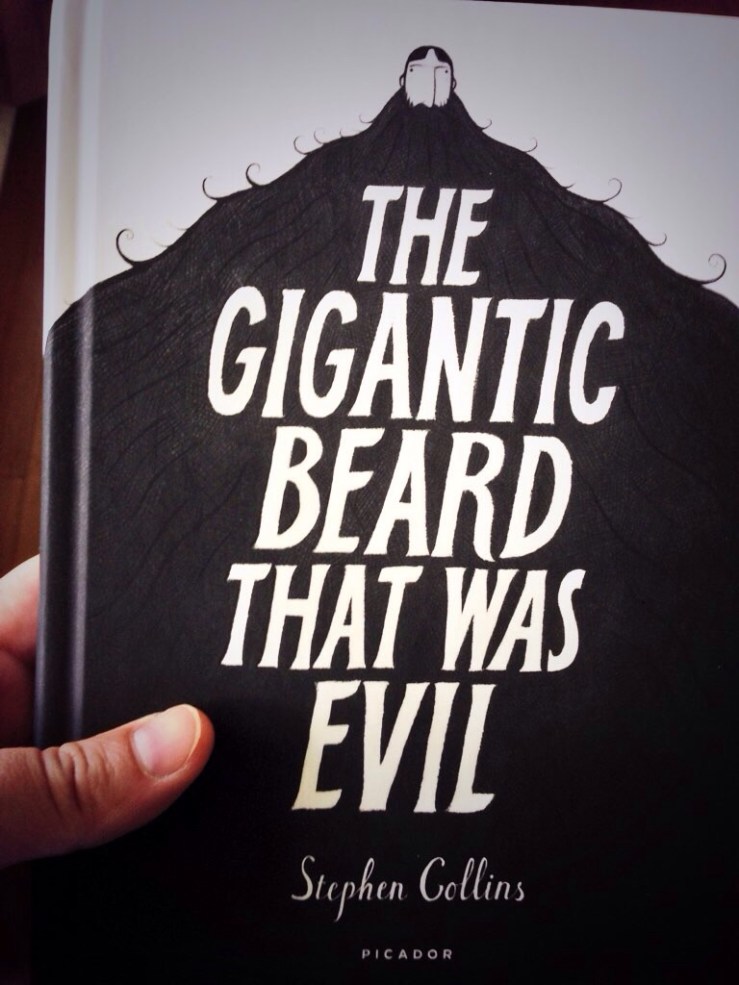
The Gigantic Beard That Was Evil (Book Acquired, 10.07.2014)

IMG_3543

Stephen Collins’s The Gigantic Beard That Was Evil is really really good. Full review forthcoming.

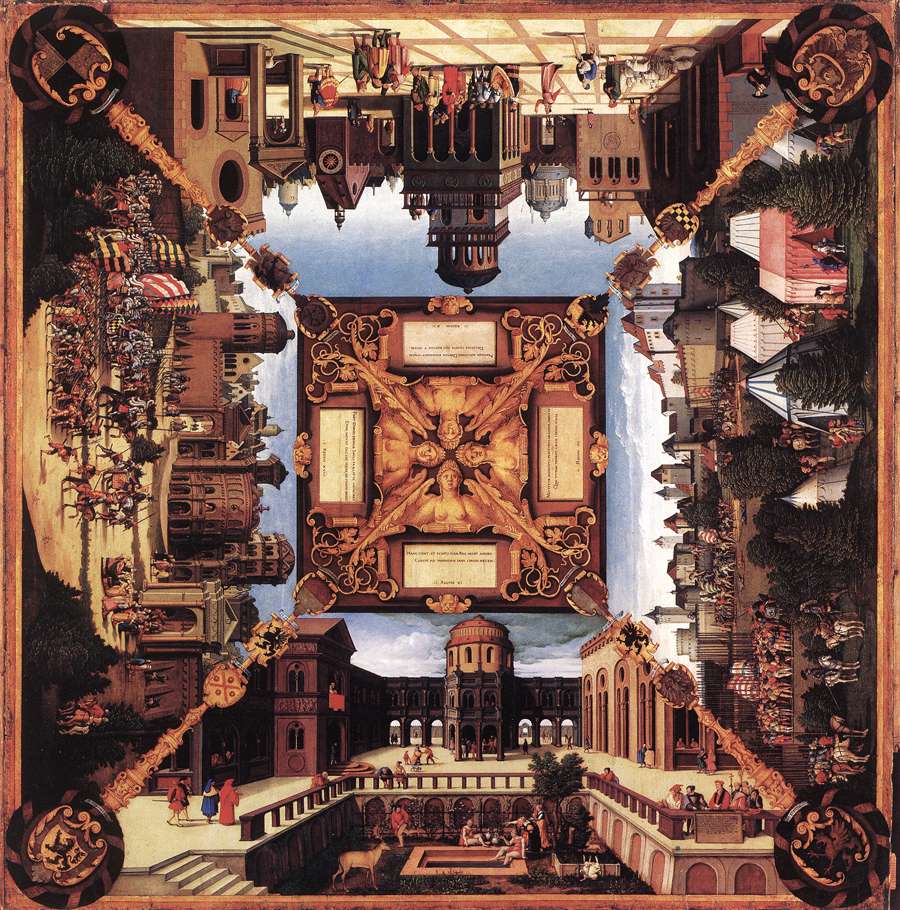
Scenes from the Life of David — Hans Sebald Beham

6725-scenes-from-the-life-of-david-hans-sebald-beham

“She Unnames Them” — Ursula K. Le Guin

“She Unnames Them”

by

Ursula K. Le Guin

MOST of them accepted namelessness with the perfect indifference with which they had so long accepted and ignored their names. Whales and dolphins, seals and sea otters consented with particular alacrity, sliding into anonymity as into their element. A faction of yaks, however, protested. They said that “yak” sounded right, and that almost everyone who knew they existed called them that. Unlike the ubiquitous creatures such as rats and fleas, who had been called by hundreds or thousands of different names since Babel, the yaks could truly say, they said, that they had a name. They discussed the matter all summer. The councils of elderly females finally agreed that though the name might be useful to others it was so redundant from the yak point of view that they never spoke it themselves and hence might as well dispense with it. After they presented the argument in this light to their bulls, a full consensus was delayed only by the onset of severe early blizzards. Soon after the beginning of the thaw, their agreement was reached and the designation “yak” was returned to the donor.

Among the domestic animals, few horses had cared what anybody called them since the failure of Dean Swift’s attempt to name them from their own vocabulary. Cattle, sheep, swine, asses, mules, and goats, along with chickens, geese, and turkeys, all agreed enthusiastically to give their names back to the people to whom—as they put it—they belonged.

A couple of problems did come up with pets. The cats, of course, steadfastly denied ever having had any name other than those self-given, unspoken, ineffably personal names which, as the poet named Eliot said, they spend long hours daily contemplating though none of the contemplators has ever admitted that what they contemplate is their names and some onlookers have wondered if the object of that meditative gaze might not in fact be the Perfect, or Platonic, Mouse. In any case, it is a moot point now. It was with the dogs, and with some parrots, lovebirds, ravens, and mynahs, that the trouble arose. These verbally talented individuals insisted that their names were important to them, and flatly refused to part with them. But as soon as they understood that the issue was precisely one of individual choice, and that anybody who wanted to be called Rover, or Froufrou, or Polly, or even Birdie in the personal sense, was perfectly free to do so, not one of them had the least objection to parting with the lowercase (or, as regards German creatures, uppercase) generic appellations “poodle,” “parrot,” “dog,” or “bird,” and all the Linnaean qualifiers that had trailed along behind them for two hundred years like tin cans tied to a tail. Continue reading ““She Unnames Them” — Ursula K. Le Guin”

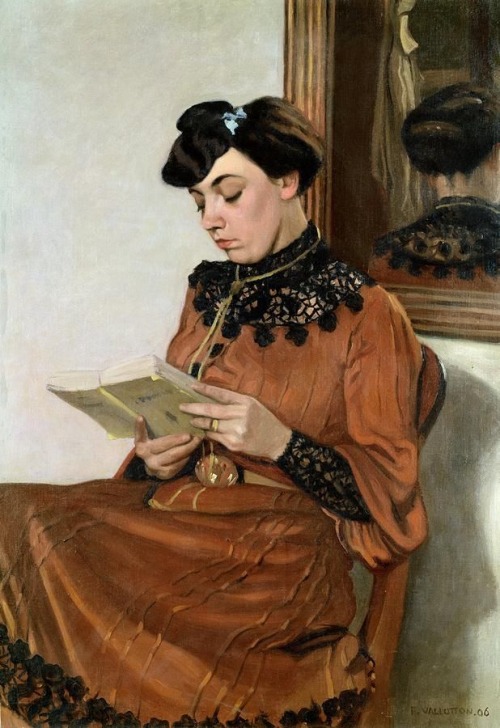
Woman Reading — Felix Vallotton

tumblr_naiidpvSQo1tvjj4lo1_500

Scented meat

IMG_0123.PNG

Punch and Judy (The Coffin Factory) — Jan Švankmajer

I hate nature, because it is killing me (Thomas Bernhard)

I do not care for walks either, and have been a reluctant walker all my life. I have always disliked walking, but I am prepared to go for walks with friends, and this makes them think I am a keen walker, for there is an amazing theatricality about the way I walk. I am certainly not a keen walker, nor am I a nature lover or a nature expert. But when I am with friends I walk in such a way as to convince them I am a keen walker, a nature lover, and a nature expert. I know nothing about nature. I hate nature, because it is killing me. I live in the country only because the doctors have told me that I must live in the country if I want to survive—for no other reason. In fact I love everything except nature, which I find sinister; I have become familiar with the malignity and implacability of nature through the way it has dealt with my own body and soul, and being unable to contemplate the beauties of nature without at the same time contemplating its malignity and implacability, I fear it and avoid it whenever I can. The truth is that I am a city dweller who can at best tolerate nature. It is only with reluctance that I live in the country, which on the whole I find hostile.

From Thomas Bernhard’s novel Wittgenstein’s Nephew.

Allegory of Sight — Jan Brueghel the Elder and Peter Paul Rubens

Jan_Brueghel_I_&_Peter_Paul_Rubens_-_Sight_(Museo_del_Prado)

“Pickman’s Model” — H.P. Lovecraft

“Pickman’s Model”

by

H. P. Lovecraft

You needn’t think I’m crazy, Eliot—plenty of others have queerer prejudices than this. Why don’t you laugh at Oliver’s grandfather, who won’t ride in a motor? If I don’t like that damned subway, it’s my own business; and we got here more quickly anyhow in the taxi. We’d have had to walk up the hill from Park Street if we’d taken the car.
     I know I’m more nervous than I was when you saw me last year, but you don’t need to hold a clinic over it. There’s plenty of reason, God knows, and I fancy I’m lucky to be sane at all. Why the third degree? You didn’t use to be so inquisitive.
     Well, if you must hear it, I don’t know why you shouldn’t. Maybe you ought to, anyhow, for you kept writing me like a grieved parent when you heard I’d begun to cut the Art Club and keep away from Pickman. Now that he’s disappeared I go around to the club once in a while, but my nerves aren’t what they were.
     No, I don’t know what’s become of Pickman, and I don’t like to guess. You might have surmised I had some inside information when I dropped him—and that’s why I don’t want to think where he’s gone. Let the police find what they can—it won’t be much, judging from the fact that they don’t know yet of the old North End place he hired under the name of Peters. I’m not sure that I could find it again myself—not that I’d ever try, even in broad daylight! Yes, I do know, or am afraid I know, why he maintained it. I’m coming to that. And I think you’ll understand before I’m through why I don’t tell the police. They would ask me to guide them, but I couldn’t go back there even if I knew the way. There was something there—and now I can’t use the subway or (and you may as well have your laugh at this, too) go down into cellars any more.
     I should think you’d have known I didn’t drop Pickman for the same silly reasons that fussy old women like Dr. Reid or Joe Minot or Bosworth did. Morbid art doesn’t shock me, and when a man has the genius Pickman had I feel it an honour to know him, no matter what direction his work takes. Boston never had a greater painter than Richard Upton Pickman. I said it at first and I say it still, and I never swerved an inch, either, when he shewed that “Ghoul Feeding”. That, you remember, was when Minot cut him.
     You know, it takes profound art and profound insight into Nature to turn out stuff like Pickman’s. Any magazine-cover hack can splash paint around wildly and call it a nightmare or a Witches’ Sabbath or a portrait of the devil, but only a great painter can make such a thing really scare or ring true. That’s because only a real artist knows the actual anatomy of the terrible or the physiology of fear—the exact sort of lines and proportions that connect up with latent instincts or hereditary memories of fright, and the proper colour contrasts and lighting effects to stir the dormant sense of strangeness. I don’t have to tell you why a Fuseli really brings a shiver while a cheap ghost-story frontispiece merely makes us laugh. There’s something those fellows catch—beyond life—that they’re able to make us catch for a second. Doré had it. Sime has it. Angarola of Chicago has it. And Pickman had it as no man ever had it before or—I hope to heaven—ever will again.
     Don’t ask me what it is they see. You know, in ordinary art, there’s all the difference in the world between the vital, breathing things drawn from Nature or models and the artificial truck that commercial small fry reel off in a bare studio by rule. Well, I should say that the really weird artist has a kind of vision which makes models, or summons up what amounts to actual scenes from the spectral world he lives in. Anyhow, he manages to turn out results that differ from the pretender’s mince-pie dreams in just about the same way that the life painter’s results differ from the concoctions of a correspondence-school cartoonist. If I had ever seen what Pickman saw—but no! Here, let’s have a drink before we get any deeper. Gad, I wouldn’t be alive if I’d ever seen what that man—if he was a man—saw!
     You recall that Pickman’s forte was faces. I don’t believe anybody since Goya could put so much of sheer hell into a set of features or a twist of expression. And before Goya you have to go back to the mediaeval chaps who did the gargoyles and chimaeras on Notre Dame and Mont Saint-Michel. They believed all sorts of things—and maybe they saw all sorts of things, too, for the Middle Ages had some curious phases. I remember your asking Pickman yourself once, the year before you went away, wherever in thunder he got such ideas and visions. Wasn’t that a nasty laugh he gave you? It was partly because of that laugh that Reid dropped him. Reid, you know, had just taken up comparative pathology, and was full of pompous “inside stuff” about the biological or evolutionary significance of this or that mental or physical symptom. He said Pickman repelled him more and more every day, and almost frightened him toward the last—that the fellow’s features and expression were slowly developing in a way he didn’t like; in a way that wasn’t human. He had a lot of talk about diet, and said Pickman must be abnormal and eccentric to the last degree. I suppose you told Reid, if you and he had any correspondence over it, that he’d let Pickman’s paintings get on his nerves or harrow up his imagination. I know I told him that myself—then. Continue reading ““Pickman’s Model” — H.P. Lovecraft”

Edgar Poe, Charles Baudelaire, an Orangutan and the Raven — Julio Pomar

Brueghel’s Method — Hanjo Schmidt

Hanjo Schmidt (1)

Flannery O’Connor’s Kiss of Death

During these travels, I met a professor at the University of Georgia. She suggested that I pay a visit to a local woman who had had her first book published by Harcourt, Brace & Company, where I was now a sales agent in the education branch. The professor believed that this author would enjoy meeting me because of her affiliation with the publishing firm. Weakened as she was by her disease, lupus, she wasn’t in contact with many people, so it would be nice to receive a visit from outside. A few years back, her father had died from the same disease, but the doctors had told her not to worry.
 
I was driven to her home outside the town of Milledgeville, Georgia. The farm was situated in the middle of a pretty deserted landscape consisting of a few villages, fields, and some woods. When I arrived, I saw a two-story farmhouse, which turned out to be from the middle of the 1800s.
 
Then Flannery’s mother, Regina, appeared in the doorway. Flannery herself couldn’t make it to the entrance because of her crutches. The mother was happy to receive a visitor for her daughter, since they lived in quite a lonesome place, but she made it clear that I shouldn’t expect to stay the night. Once I started visiting Flannery regularly, I could tell that Regina didn’t like my visits, even though she was quite polite. She perceived me as a threat, afraid that Flannery might settle down with me in Denmark.

In the new issue of AsymptoteKlaus Rothstein offers Erik Langkjær’s fascinating account of meeting—and kissing!—Flannery O’Connor. (Langkjær is the narrator of the section). Continue reading at Asymptote to get to the kissing.

How They Met Themselves — Dante Gabriel Rossetti

Watch Toby Dammit, Federico Fellini’s Short Film Loosely Based on Stories by Edgar Allan Poe