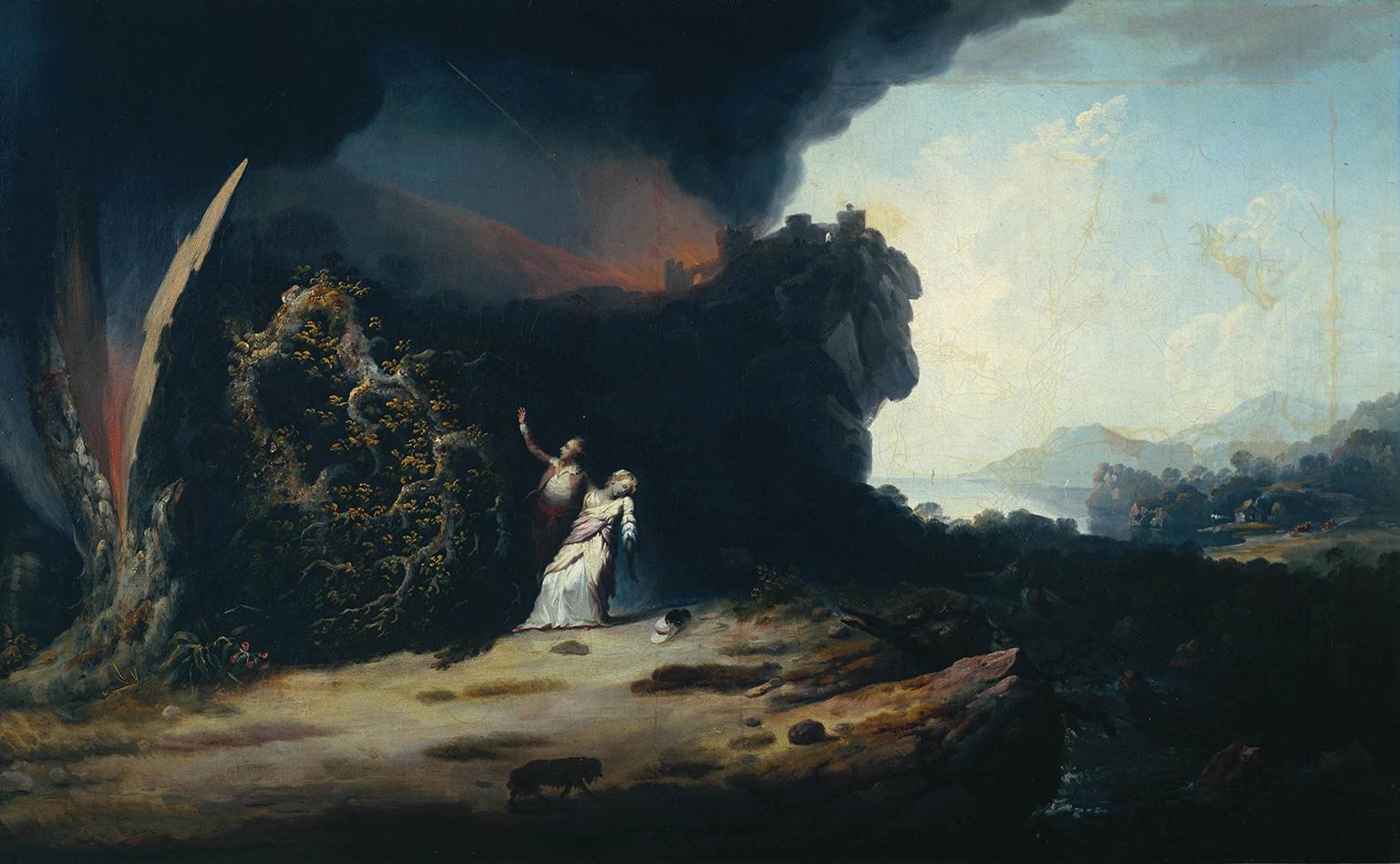
Thunderstorm with the Death of Amelia, 1784 by William Williams (active 1758-1797)
Thunderstorm with the Death of Amelia, 1784 by William Williams (active 1758-1797)
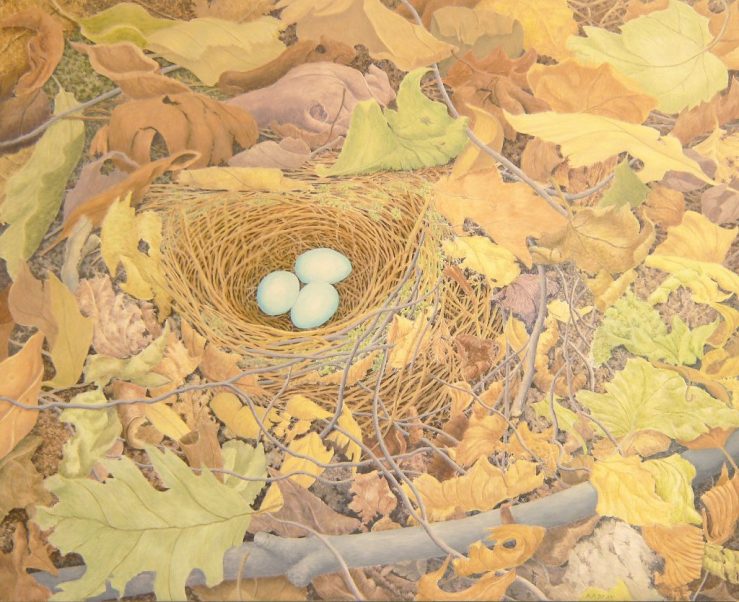
Hermit Thrush, 2022 by Alan Bray (b. 1946)
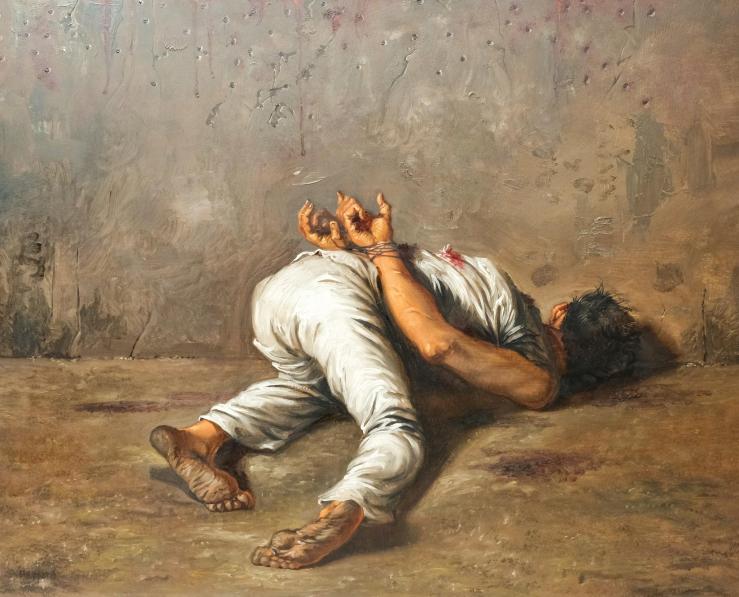
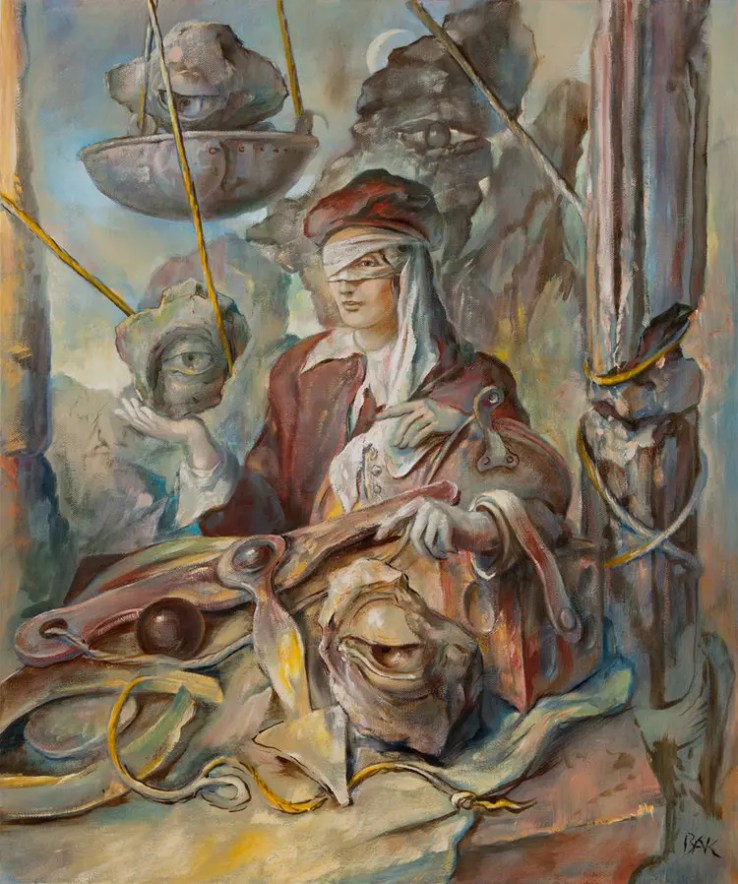
In Search of a Portrait B, 1974 by Samuel Bak (b. 1933)
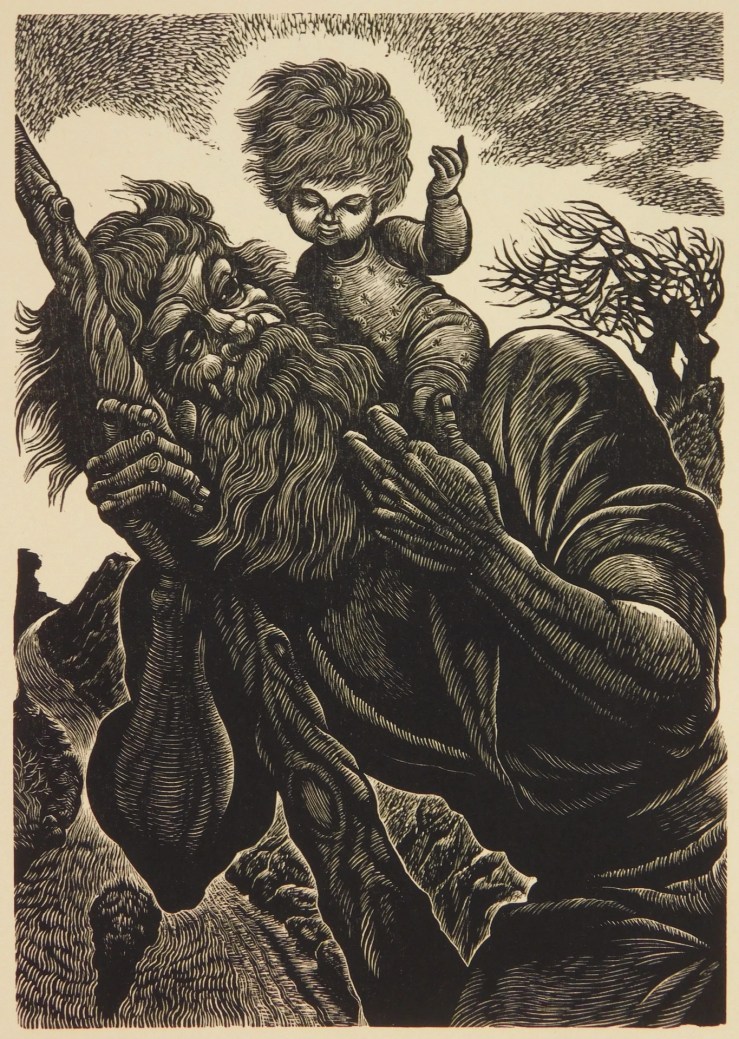
St. Christopher, 1949 by Fritz Eichenberg (1901-1990)
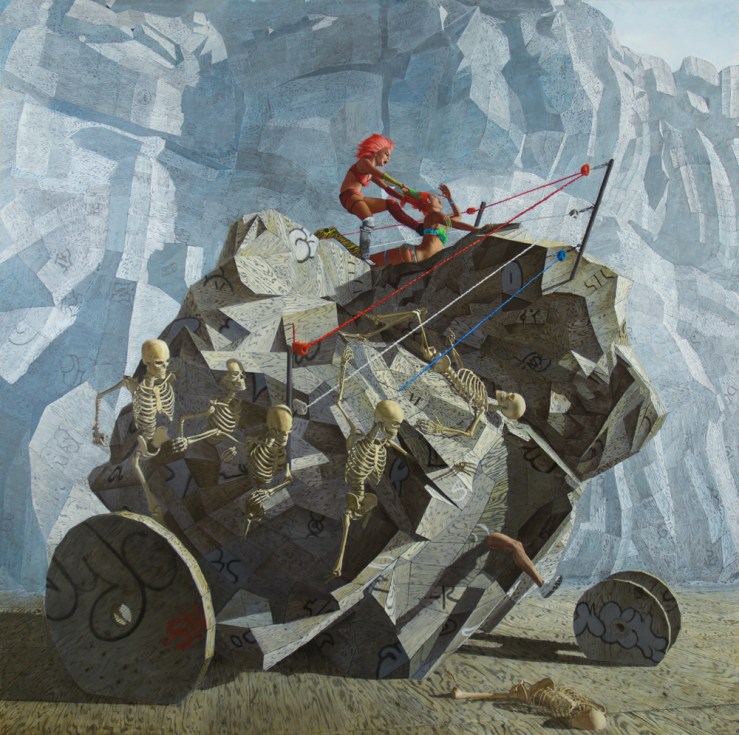
Chariot, 2018 by John Jacobsmeyer (b. 1964)
Compared to many forms that lend themselves to art or craft—drama, the novel, painting, the composition of music, even the interpretation of music, like, oh, say, singing the national anthem before the game, infinite other forms that seem to thrive, almost to wallow, in permutation, assuming new content, a mother lode of fresh ideas and differentiated styles as they’re taken up by one artist after another—it’s extraordinary how furniture is like most other furniture, as if furniture, alone among crafts, not only lived along the perimeters of some platonic ideal but had somehow actually managed to colonize it: an imperialism of the conventional. Except for a detail here, a detail there, inlay, marquetry, the pile-on of money, of pharaohs’ or aristocracy’s royal dispensations, a couch is a couch, an escritoire an escritoire. Beds resemble beds, tables and chairs are like tables and chairs. In domestic arrangements, form, bound to the custom cloth of human shape, really does follow function. The height of a table has to do with average lap tolerances. Chairs and beds are the hard aura of a strictly skeletal repose. Even so, something’s busted, I think, in the imagination of the furniture designers—I except the art directors of certain major motion pictures set in Manhattan apartments; talkin’ environment, the ecology of “life-style,” of plot and character, what the principals look like against the bookcase, propped among the furnishings; one must learn the script of one’s life and be able to afford it; because only in movies does furniture play well—all lamps and appointments, all cunning, edge-of-the-field doodad and inspired house-dower; one has at least the illusion one could live with this stuff, that it won’t vanish in a season like a Nehru shirt—something stuck in the vision, some sorcerer’s-apprentice effect, which permits to keep on coming and keep on coming with minimal variation, if any, what has come before. It isn’t anything elegant as highest math happening here, just lump-sum arrangement, ball-park figure, bottom line. It’s the fallacy of the assembly line, the notion that only costs get cut in such a wide sweep of swath. No, but really. Isn’t it astonishing that personality, surely as real as the width of one’s shoulders or the breadth of one’s beam, should be so infinite but attention to body so meager and hand-to-mouth that—chairs, say chairs, I know about chairs—there’s been less progress in the design of chairs than in the design of luggage. (I speak as a cripple full-fledged—chairs are a hangup with me—but set that aside.) It’s as if clothing came in a single size, pants like tube socks, every dress like a muumuu. And a rule of the chair seems to be that if it’s beautiful it’s rarely comfortable, if comfortable it rarely makes the cut to beauty.
Indeed, there are so few contemporary “museum-quality” chairs one can almost list them—Marcel Breuer’s side chairs, his “Wassily” chair like a leather-and-steel cat’s cradle; Jacobsen’s “Egg” chair; Thonet’s bentwood rockers; Mies Van Der Rohe’s “Barcelona”; Saarinen’s molded plastic chairs on their round bases and tapered stems like cross sections of parfaits; all Eames’s ubiquitous plastic like stackable poker chips or the pounded, hollowed-out centers of catchers’ mitts, and as locked into a vision of the fifties as pole lamps, his famous lounge chair and ottoman that, like the Nehru shirt, have become a cliché. A spectrum of vernacular chairs—soda-fountain chairs, directors’ chairs, black canvas camp chairs, those crushed—almost imploded—white or charcoal leather pillow chairs like soft fortresses or marshmallow thrones; some of the new ergonomic chairs that sit on you as much as you ever manage to sit on them.
So I know about chairs and still have my eye out, never mind I’m sixty if I’m a day, for that evasive, lost-chord masterpiece of the genre, which, like love, I’ll know when I see like a sort of fate.
Though maybe not. Not because I haven’t the imagination to cut my losses, or even the courage to finesse my life and choose to sit out the close of my days in desuetudinous splendor, but because it may not exist. The chair, my gorgeous prosthetic of choice, may not have been fashioned yet. Because oddly, strangely, ultimately, chairs are all attitude, molds of the supine or up on pointe, aggressive or submissive as sexual position. Occupied or unoccupied either, they are shadows, ghosts, signs of the been-and-gone, some pipe-and-slippers choreography of spiritual disposition, how one chooses to acquit oneself, highly personalized as an arrangement of flowers, and oh, oh, if one but had the body for it one would live out one’s days in Van Gogh’s room at Arles, eating up comfort and beauty and having it, too, there in one last fell binge of boyhood in the cane and wood along those powder-blue walls of the utile, of basin and pitcher, of military brush and drinking glass, of apothecary bottles clear as gin on a crowded corner of the nightstand, to be there on the feather bed, on the oilcloth-looking floor amid one’s things. All, as I say, you have to know is the script of your life.
From Stanley Elkin’s 1991 essay “Some Overrated Masterpieces.” Collected in Pieces of Soap.

My Bonnie Lies Over the Ocean, 1962 by David Hockney (b. 1937)
“Neglect”
by
Joy Williams
from 99 Stories of God
The Lord was asked if He believed in reincarnation.
I do, He said. It explains so much.
What does it explain, Sir? someone asked.
On your last Fourth of July festivities, I was invited to observe an annual hot-dog-eating contest, the Lord said, and it was the stupidest thing I’ve ever witnessed.
NEGLECT

The Signing of the Declaration of Independence, 2022 by Sandow Birk (b. 1962)
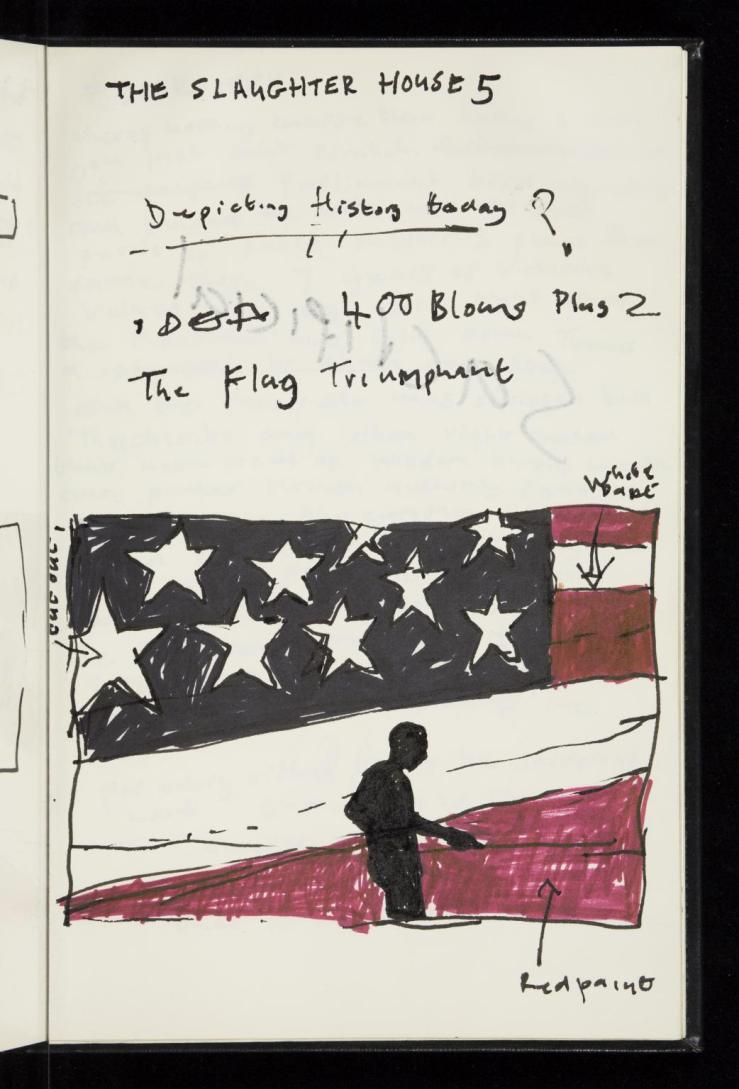
The Slaughter House 5, 1987 by Donald Rodney (1961–1998)
“One Train May Hide Another”
by Kenneth Koch
(sign at a railroad crossing in Kenya)
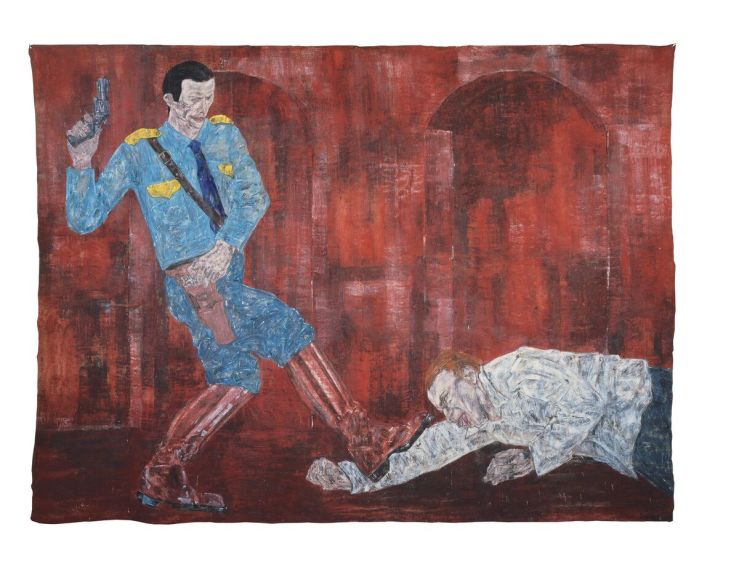 White Squad V, 1984 by Leon Golub (1922–2004)
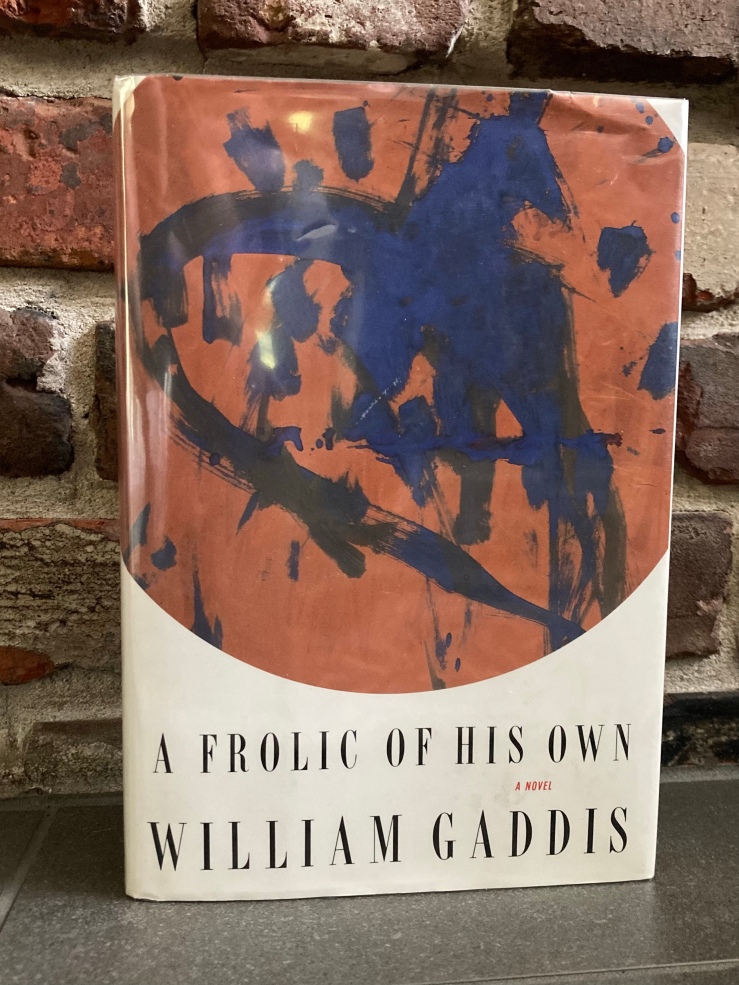
I want to comment on the themes and style of William Gaddis’s fourth novel, 1994’s A Frolic of His Own, and I’d like to do so without the burden of summarizing its byzantine plot, so I’ll crib from Steven Moore’s contemporary review of the novel that was first published in the Spring 1994 issue of The Review of Contemporary Fiction. Although he initially protests that the “plot is too wonderfully complex to summarize,” Moore nevertheless offers a concise precis. Moore writes that A Frolic of His Own
…concerns an interlocking set of lawsuits involving the Crease family: Oscar, a historian and playwright; Christina, his stepsister and married to a lawyer named Harry Lutz; and their father Judge Thomas Crease, presiding over two cases in Virginia during the course of the novel. The story unfolds by way of Gaddis’s trademark dialogue but also by various legal opinions, brilliantly rendered in the majestic language of the law.
Law, one of the major themes of the novel, is announced in its opening lines: “Justice? —You get justice in the next world, in this world you have the law.” A Frolic of His Own delves into the intersection of justice, law, art, theft, and compensation, all while foregrounding language as the mediating force of not just these nebulous concepts, but the medium, of course, of the novel itself. “What do you think the law is, that’s all it is, language,” the exasperated lawyer Harry declaims to his wife Christina.
Language is always destabilized and destabilizing in A Frolic of His Own. Gaddis lards the novel with mistakes, misinterpretations, and muddles of every mixture. Characters repeatedly fail to communicate clearly with each other, their dialogue twisting into new territories before they’ve mapped out their present concerns. A Frolic reads as linguistic channel surfing, an addled mind constantly turning the dial before a thought can fully land.
The effect of this linguistic channel surfing at times stuns and overwhelms the reader, approximating the noise of modern language that Gaddis’s heroes so often rail against, even as they participate in and create more of this noise. It’s worth sharing a paragraph in full to offer a sense of what Gaddis is doing in A Frolic of His Own. Here, Christina takes a phone call from her husband Harry, while her brother Oscar (who is slowly going mad) watches the evening news:
—Has Harry called? And when it finally rang —We’re fine, did you get to that new doctor? Well whatever you call him, you… I know that Harry but you’ve simply got to make time, if you don’t you’re going to end up like… that’s exactly what I mean, he’s sitting right here waiting for the evening news to whet his appetite for supper, I mean I can’t take care of both of you can I? Scenes of mayhem from Londonderry to Chandigarh, an overweight family rowing down main street in a freak flood in Ohio, a molasses truck overturned on the Jersey Turnpike, gunfire, stabbings, flaming police cars and blazing ambulances celebrating a league basketball championship in Detroit interspersed with a decrepit grinning couple on a bed that warped and heaved at the touch of a button —because they offered him a settlement Harry, almost a quarter million dollars but of course he insists on going ahead with the case or rather Mister Basie does, he was out here for… what? The Stars and Bars unfurled in a hail of rocks and beer cans showering the guttering remnants of a candlelight vigil—but if you can just try to be patient with her Harry, you know her mother just died and she’s been in an awful state trying to… to what? Oscar will you turn that down! that now she wants you to help her break her mother’s will? I don’t see what… well they never really got on after her mother was converted by that wildeyed Bishop Sheed was it? a million years ago convincing her that it was more exclusive with Clare Luce and all that after the wads of money she’d been giving St Bartholomew’s with these millions of Catholics jamming every slum you can think of if you call that exclusive, she…—Look! Christina look! Placards brandishing KEEP GOD IN AMERICA, MURDERER come quickly! and caught in the emergency vehicles’ floodlights towering over it all the jagged thrust of —that, that Szyrk thing that, look!
The noisy force of mass-mediated language threatens to overwhelm the reader, whom Gaddis challenges to make meaning of his mess. Later, Christina sums up the problem: “I mean you talk about language how everything’s language it seems all that language does is drive us apart.” Naive Oscar, whose multiple lawsuits initiate the plot of A Frolic, tries to clarify the problem of language in his own way too: “—Isn’t that what language is for? to say what you mean? That’s why man invented language, isn’t it? so we can say what we mean?” But the events that Gaddis arranges in his novel suggest that the answer is, Not quite. There’s only one language all Americans understand—money:
—You want to sue them for damages, that’s money isn’t it?
—Because that’s the only damn language they understand! …Steal poetry what do you sue them for, poetry? …Two hundred hours teaching Yeats to the fourth grade?
Oscar’s complaint is the apparent plagiarism of his Civil War play Once at Antietam by a major Hollywood studio that has turned it into a “piece of trash” called The Blood in the Red White and Blue. Gaddis includes large sections of Oscar’s play in A Frolic of His Own, often having various characters (including its author) stop to make critical remarks. Here, Gaddis has actually cannibalized parts of a play he wrote in the late 1950s after he’d finished The Recognitions. He was unable to get Once at Antietam produced or published. In a 1961 letter, he admitted that “Now it reads heavy-handed, obvious, over-explained, oppressive,” adding that there might be some value somewhere in the work “but the vital problem remains, to extract it, to lift out something with a life of its own, give it wings, release it.” A Frolic of His Own may, on one hand, “release” Gaddis’s old play, but it denies it any life of its own. The play is bound within the text proper, incomplete, riddled with elisions, terminally unfinished.
It also comes to light (via a lengthy legal deposition) that Oscar (and perhaps the younger Gaddis?) has plagiarized large sections of his play, notably from Plato’s Republic. Oscar pleads that his plagiarisms are justified—they are art. But in A Frolic of His Own, “it all evaporates into language confronted by language turning language itself into theory till it’s not about what it’s about it’s only about itself turned into a mere plaything.”
Language is, of course, Gaddis’s plaything, and his novel repeatedly underlines its own textuality without the preciousness that sometimes afflicts postmodernist writing. For all his innovations and experimentation with form, Gaddis here and elsewhere is at his core a traditionalist like his hero T.S. Eliot. And like Eliot, he seeks to pick up the detritus of culture and meld it into something new, all while attacking the hollow men who run America. There’s more than just crankiness here: There is howling and bleating and often despair. There’s no justice for our characters, but at the same time, they hardly deserve any. For all their apparent cares and worries, these rich, venal, petty characters are ultimately, to borrow a phrase from another book, careless people, leaving messes for others to clean up (often quite literally). The satire bites; it’s rightfully mean-spirited, caustic, and bitter.
As such, A Frolic of His Own, for all its humor, is often very bleak. It also becomes increasingly claustrophobic. The characters get stuck in their language loops; the only way out seems to be madness or death. Gaddis’s writing had long evoked suffocating domestic spaces, whether it was the paper-stuffed 96th Street apartment shared by Bast, Eigen, and Gibbs in 1975’s J R or the haunted house of 1985’s Carpenter’s Gothic. A Frolic of His Own takes the madness to another level, setting the stage for the monolingual stasis of his final work, Agapē Agape.
Even if its cramped quarters are often gloomy and crammed with sharp objects, there’s a zaniness to the linguistic channel surfing of A Frolic that propels its fractured narrative forward. “The rest of it’s opera,” repeats Harry throughout, calling attention to the novel’s satirical histrionics. “It’s a farce,” repeats Oscar, pointing to both his own legal cases and his family history. As A Frolic progresses, its farcical twists become more and more bizarre, yet Gaddis always ties his loose ends. The modern world he satirizes is absurd, but it is real.
The realism Gaddis evokes in A Frolic centers around food and shelter. The action is confined primarily to the dilapidated old Crease estate, with its family (in ever-shifting configurations) frequently trying to feed themselves: “We’ve got to get some food in the house” becomes a mantra. Poor privileged half-siblings Oscar and Christina can hardly shop for themselves, let alone cook.
They are very adroit at drinking, however. As the novel careens towards madness, the half-siblings respond by hitting the booze. Consumption runs throughout the novel, presaged in its domestic-but-dooming epigraph, a recollection of something Thoreau said to Emerson while they were walking:
What you seek in vain for, half your life, one day you come full upon, all the family at dinner. You seek it like a dream, and as soon as you find it you become its prey.
Gaddis was fond of repurposing language, and first used the lines in his first novel, 1955’s The Recognitions. The last line of the epigraph, which finds the seeker become prey to his own dream, seems to me now to further highlight A Frolic’s themes of consumption—taboo consumption: cannibalism.
Very early in the novel, the narrator calls attention to Oscar’s copy of George Fitzhugh’s 1857 defense of slavery, Cannibals All! The phrase “cannibals all” is then inverted near the very end of the novel, when a former lawyer, in the hopes of perpetrating an insurance scam, wedges his foot in Oscar’s door: “they’re cannibals Mister Crease, they’re all cannibals,” the former lawyer insists, referring broadly to the insurance industry (he’ll later extend the term to those working in the real estate market in particular and humanity in general).
These direct inversions—cannibals-all/all-cannibals—bookend A Frolic of His Own, neatly encasing the metaphorical cannibalism that runs through the novel. Gaddis depicts a “dog eat dog” world (full of literal dead dogs) ruled by venal consumption. Family members cannibalize family members, law cannibalizes art, texts cannibalize texts. “When the food supply runs out and the only ones around are your own species, why go hungry?” interjects the narrator of a nature documentary that Oscar watches absentmindedly. Harry puts it succinctly:
That’s…what this whole country’s really all about? tens of millions out there with their candy and beer cans and this inexhaustible appetite for being entertained? Anything they can get their hands on…
Gaddis depicts a world where all attempts at culture and art are ultimately cannibalized and excreted by capital. In one of the novel’s goofiest and meanest gags, an entrepreneur seeks to exploit the highly-publicized death of Spot, a dog trapped and then zapped in an ugly postmodernist sculpture. The huckster, capitalizing on the public’s love for Spot, creates “Hiawatha’s Magic Mittens…labeled ‘Genuine Simulated Spotskin® Wear ‘Em With The Furside Outside.'”
“Hiawatha’s Magic Mittens” might seem like a throwaway joke, but the joke is nevertheless part of the novel’s theme of cannibalized culture. Those familiar with the legend of Hiawatha may recall that in many versions, Hiawatha practices ritual cannibalism until he is converted by the Great Peacemaker Deganawida. After his conversion, Hiawatha ceases to eat human flesh and strives for mutual aid and cooperation.
Gaddis also evokes the Hiawatha of Henry Wadsworth Longfellow’s epic poem, itself a cannibalization of sorts of the mytho-historical Hiawatha. Gaddis grafts the oft-cited opening line of “Hiawatha’s Childhood,” “By the shores of Gitche Gumee” a few times early in the novel. The poem seems to loll and roll around in Oscar’s skull; as his alcoholic madness increases, the poem’s trochaic tetrameter infects his thoughts. The result is some of the most beautiful prose in the book (even if the lines are intended as half-parody). Consider the following passage, which begins with Oscar watching the sunset on the wetlands around his crumbling estate, takes flight into the poetic cannibalization of Longfellow’s lines, and winds up in the jumble of Oscar’s fish tank (I strongly suggest reading the passage aloud to hear the trochaic tetrameter):
Neither the red scream of sunset blazing on the icebound pond nor the thunderous purple of its risings on a landscape blown immense through leafless trees off toward the ocean where in flocks the wild goose Wawa, where Kahgahgee king of ravens with his band of black marauders, or where the Kayoshk, the seagulls, rose with clamour from their nests among the marshes and the Mama, the woodpecker seated high among the branches of the melancholy pine tree past the margins of the pond neither rose Ugudwash, the sunfish, nor the yellow perch the Sahwa like a sunbeam in the water banished here, with wind and wave, day and night and time itself from the domain of the discus by the daylight halide lamp, silent pump and power filter, temperature and pH balance and the system of aeration, fed on silverside and flake food, vitamins and krill and beef heart in a patent spinach mixture to restore their pep and lustre spitting black worms from the feeder when a crew of new arrivals (live delivery guaranteed, air freight collect at thirty dollars) brought a Chinese algae eater, khuli loach and male beta, two black mollies and four neons and a pair of black skirt tetra cruising through the new laid fronds of the Madagascar lace plant.
Forgive the long quote. Or don’t. As the novel swerves to its gloomy end, the poem overtakes Oscar’s consciousness, the transcendental beauty of Longfellow’s vision cannibalized by the chainsaws of “land developers,” the real fauna replaced with Disneyfied simulations to send him off to drunken troubled dream. Dreamy Oscar:
…made a bed with boughs of hemlock where the squirrel, Adjidaumo, from his ambush in the oak trees watched with eager eyes the lovers, watched him fucking Laughing Water and the rabbit, the Wabasso sat erect upon his haunches, watched him fucking Minnehaha as the birds sang loud and sweetly where the rumble of the trucks drowned the drumming of the pheasant and the heron, the Shuh-shuh-gah gave a cry of lamentation from her haunts among the fenlands at the howling of the chainsaws and the screams of the wood chipper for that showplace on the corner promising a whole new order of woodland friends for the treeless landscape, where Thumper the Rabbit and Flower the Skunk would introduce the simpering Bambi to his plundered environment and instruct him in matters of safety and convenience by the shining Big-Sea-Water, by the shores of Gitche Gumee where the desolate Nokomis drank her whisky at the fireside, not a word from Laughing Water left abandoned by the windows, from the wide eyed Ella Cinders with the mice her only playmates as he turned his back upon them with his birch canoe exulting, all alone went Hiawatha.
Many contemporary reviewers suggested that A Frolic of His Own was Gaddis’s most accessible novel to date, and it might be. Whereas J R and Carpenter’s Gothic are composed almost entirely in dialogue, Gaddis provides more stage direction and connective tissue in A Frolic. There are also the fragments of other forms: legal briefs, depositions, TV news clips, Oscar’s play…Some of these departures can exhaust a reader. Gaddis’s parodies of legalese are full of jokes, but the tone of the delivery can lead one’s mind’s eye to glaze over. Oscar/Gaddis’s play is problematic too, but in a rewarding if confounding way: Is it supposed to be, like, good? The answer, I think, comes in its cannibalized version—I mean the cannibalized version that Oscar watches over broadcast television. When he finally sees The Blood in the Red White and Blue, Oscar experiences a wild array of emotions, both positive and negative—but his feelings are real.
A Frolic of His Own is not the best starting point for anyone interested in William Gaddis’s fiction, although I don’t think that’s where most people start. It is rewarding though, especially read contextually against his other works, in which it fits chaotically but neatly, underscoring the cranky themes in a divergent style that still feels fresh three decades after its original publication. Highly recommended.
 Biblioklept