Portrait of a Mother and Daughter Reading a Book — Edwin Harris

Porcile — Pier Paolo Pasolini (Full Film)

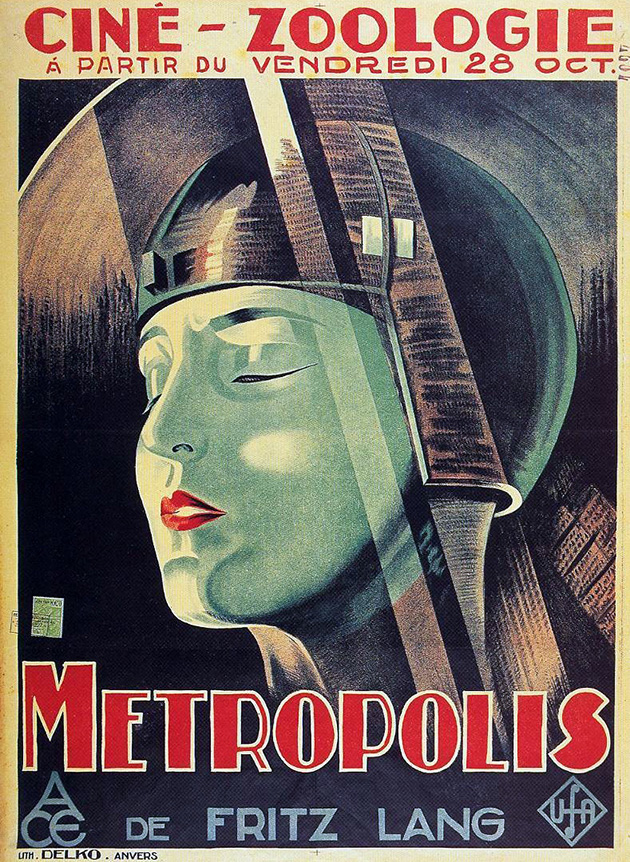
Metropolis Film Poster — Werner Graul

metropolis

Lovers with Cat — Oskar Kokoschka

Sensational Future Pleasures — Ryan Heshka

20140510-171353.jpg

In the heart of every man there lies a wild beast (Schopenhauer)

It is a fact, then, that in the heart of every man there lies a wild beast which only waits for an opportunity to storm and rage, in its desire to inflict pain on others, or, if they stand in his way, to kill them. It is this which is the source of all the lust of war and battle. In trying to tame and to some extent hold it in check, the intelligence, its appointed keeper, has always enough to do. People may, if they please, call it the radical evil of human nature—a name which will at least serve those with whom a word stands for an explanation. I say, however, that it is the will to live, which, more and more embittered by the constant sufferings of existence, seeks to alleviate its own torment by causing torment in others. But in this way a man gradually develops in himself real cruelty and malice. The observation may also be added that as, according to Kant, matter subsists only through the antagonism of the powers of expansion and contraction, so human society subsists only by the antagonism of hatred, or anger, and fear. For there is a moment in the life of all of us when the malignity of our nature might perhaps make us murderers, if it were not accompanied by a due admixture of fear to keep it within bounds; and this fear, again, would make a man the sport and laughing stock of every boy, if anger were not lying ready in him, and keeping watch.

From Arthur Schopenhauer’s “On Human Nature.” Translated by T. Bailey Saunders.

Regina Reads — Susanne Kühn

reginaliest-kopie-767x1024-1

Regina Reads, 2008 by Susanne Kühn (b. 1969)

Group of Nude Figures in a Forest — Paul Delvaux

“The Poor” — William Carlos Williams

Capture

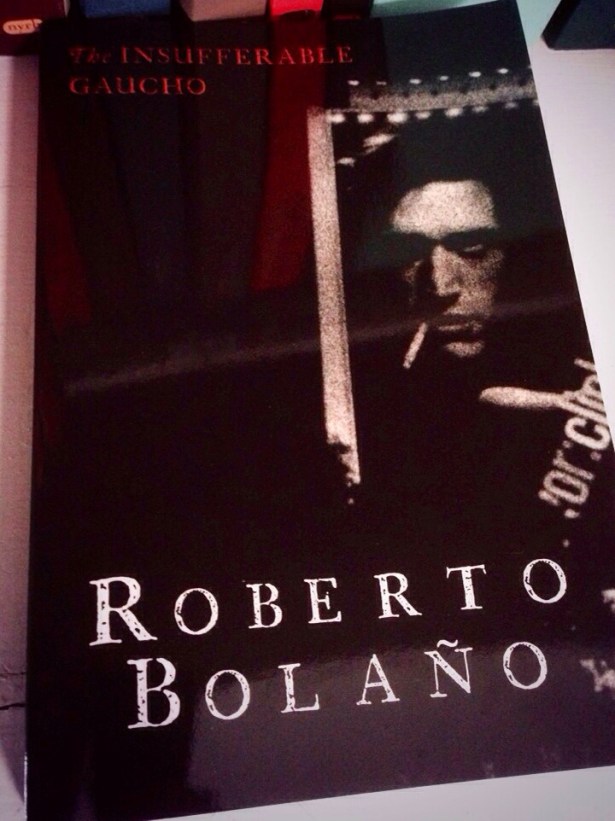
Roberto Bolaño’s The Insufferable Gaucho (Book Acquired, 05.05.2014)

20140509-130407.jpg

Roberto Bolaño’s The Insufferable Gaucho, which I’ve sort of saved for a few years—put off isn’t the right phrase, but sort of, knowing it as companion to Last Evenings on Earth, y’know, saved it for later—Roberto Bolaño’s The Insufferable Gaucho is very difficult to photograph. Very shiny.

Untitled — Martha Colburn

The will to live (Schopenhauer)

The will to live, which forms the inmost core of every living being, exhibits itself most conspicuously in the higher order of animals, that is, the cleverer ones; and so in them the nature of the will may be seen and examined most clearly. For in the lower orders its activity is not so evident; it has a lower degree of objectivation; whereas, in the class which stands above the higher order of animals, that is, in men, reason enters in; and with reason comes discretion, and with discretion, the capacity of dissimulation, which throws a veil over the operations of the will. And in mankind, consequently, the will appears without its mask only in the affections and the passions. And this is the reason why passion, when it speaks, always wins credence, no matter what the passion may be; and rightly so. For the same reason the passions are the main theme of poets and the stalking horse of actors. The conspicuousness of the will in the lower order of animals explains the delight we take in dogs, apes, cats, etc.; it is the entirely naive way in which they express themselves that gives us so much pleasure.

The sight of any free animal going about its business undisturbed, seeking its food, or looking after its young, or mixing in the company of its kind, all the time being exactly what it ought to be and can be,—what a strange pleasure it gives us! Even if it is only a bird, I can watch it for a long time with delight; or a water rat or a hedgehog; or better still, a weasel, a deer, or a stag. The main reason why we take so much pleasure in looking at animals is that we like to see our own nature in such a simplified form. There is only one mendacious being in the world, and that is man. Every other is true and sincere, and makes no attempt to conceal what it is, expressing its feelings just as they are.

From Arthur Schopenhauer’s “Psychological Observations.” Translated by T. Bailey Saunders.

Lolita, Reading — Stanley Kubrick

Ugetsu — Kenji Mizoguchi (Full Film)

Selections from One-Star Amazon Reviews of Thomas Pynchon’s Gravity’s Rainbow

[Ed. note: The following citations come from one-star Amazon reviews of Thomas Pynchon’s novel Gravity’s Rainbow. Yes, I’ve done this a few times before (see also: George Orwell’s 1984, Melville’s Moby-Dick, Joyce’s Ulysses and Markson’s Wittgenstein’s Mistress) and to be clear, I think some of the one-star reviews of Gravity’s Rainbow make some interesting points–although most of the reviewers seem to be upset over the book’s reputation/status, and attack that (and by extension, postmodernism) instead of attempting to analyze what Pynchon was actually, y’know, trying to do. I’ve preserved the reviewers’ unique styles of punctuation and spelling].

Who put it into Pynchon’s head that he could write?

After reading over one hundred fifty pages, all I could believe was the story set during WWII, but I wasn’t sure.

This is not literature. 

After I finished reading this book twenty years ago, I left it in my apartment building’s laundry room for whomever might be interested in it. The book sat there for months and nobody was interested in it enough to take it home. Finally, it was ruined when a water pipe burst and, I presume, it is now landfill in Staten Island.

Tedious. 

There is not an ounce of humanity in this book.  I finally threw it against a wall in disgust.

Pynchon writes liberal, paranoid diatribes against any and all institutions, especially conservative ones 

I felt empty and used.

I’ve been told the nominating committee (made up mostly of book reviewers) nominated this for the Pulitzer Prize as best fiction. The awards committee (mostly book editors) rejected it as an unreadable piece of crap. I agree with the editors.

This book’s failings are in part a function of it’s time — the early 70’s – when culture was naively experimental, half-baked, vulgar, and exhibitionist.

When one contrasts Vonnegut’s Slaughterhouse Five with this book, it’s like comparing an Olympic sprinter with an obese man running for the bus with a hot dog in one hand and a soda in the other.

I honestly preferred J.G. Ballard’s Crash to this book.

It seems to me it’s very easy to be “a literary master” in this way. It’s much more difficult to write something very clear and simple that people can easily understand (and yet still be profound and say something new).

Woody Allen used to be funny. Monty Python was occasionally funny. 

Any author who uses “further” for “farther” (as Pynchon does, among many other errors) should never make anyone’s “best novelist” list.

To this reader, Pynchon sounds like the unabomber with a better thesaurus. 

One of those books that professors are constantly forcing students to read because the novelist can’t attract a following on his own merits and ability to entertain. 

I only finished it beacuse I was on jury duty. 

I thought this novel was a complete waste of my time and it amazes me to hear so many praise what I think was paranoid and resembles silly cult literature. My father had a book back in the fifties sponsored by an extreme right wing group that was equally paranoid and absurd.

Pynchon couldn’t write anything funny if his life depended upon it.

Pynchon is like a high school football bully who says “Okay, I’m gonna trow da ball as hard as I can–you see if you can catch it”. No thanks Spike.

I mean, even the first page of this book offends my sensibilities.

An entire novel centered on the unrealistic, flimsy idea that a man getting erections will attract missiles? Some missiles may be heat seaking but the temperature of blood found in the groin during erections is no longer near the degree it takes to attract heat seaking weaponry. Get your facts right, Pynchon. A scientist you ain’t.

Reminds me of John Coltrane’s Ascension album, which for the entire album sounds like the band is warming up but never gets to play, but the elitist snobs just adore it.

A good argument for a good old fashioned book burning. 

The majority of this book consists of sentence after sentence and paragraph after paragraph that don’t have any apparent correlation to each other.

wow, all the hard work that this man put in just to bore me! the effort alone is worth a star. gallant attempt mr pynchon.

This is one of those “university novels” (as opposed to “popular” novels that people actually read and love) that “you have to work hard at to appreciate”. 

It’s like viewing a `painting’ of a blank canvas titled Untitled. 

I lived in Germany a few years ago and found this book in a train station. Someone had just walked off and left it. After about ten pages, realizing that Pynchon was an intellectual rip-off artist, I secured it a trash can where no one could find it. I like to think I protect the public from pollution.

Maybe it’s entertaining if you take huge quantities of lsd, otherwise it’s a nightmare. 

It is terrible.

I cannot summarize the story, because I couldnt find one.

obviously written by some self-loving, over-indulged, hippie.

I tend to lump this book in with the rest of the general malaise surrounding the innate nihilism of Postmodernism. 

This book makes me a little sad, because I think that Pynchon, had he not gone over to the dark side, could have been a brilliant prose stylist, if not anything else.

feels like being flayed alive by words alone. I wanted to stab myself in the head just to relieve the pain.

This is like Ulysses. 

Add a star if you enjoy constant reference to penises and vulva and all kinds of deviant sex acts.

I should sue the author for migraine.

To sum it up: it is too much work to read this book.

The Door to the Open — Egon Schiele

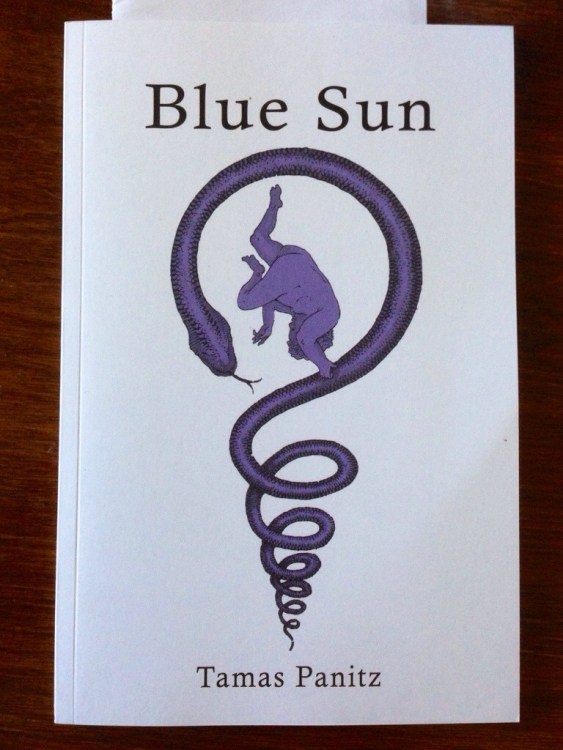
Blue Sun (Book Acquired, Like Maybe Three Weeks Ago)

20140504-091954.jpg

I got Tamas Panitz’s poems Blue Sun a few weeks ago but didn’t get a chance to get into it until last night. Good stuff—I’ll try to write a proper review in the next week, but until then, here’s Charles Stein’s blurb, via publisher Inpatient Press:

The splitting of historiography into a brash imposition of history as ontology, history as willfully configurative, history as but a wistful desideratum — leaves the archetypal self little choice but to hive in the lucubrations of a poetry questing for self and history. Panitz’ book enacts such a questing. Its voice would be master of its walk to the extent that even in addressing another it might be strictly about its own business: a panoply of poetic measures, variable tactics of order, the exploration of ontological imponderables. The smartness of its utterance throughout is instructive and – something not so common these days – provides a species of written speech that will repay proper study.