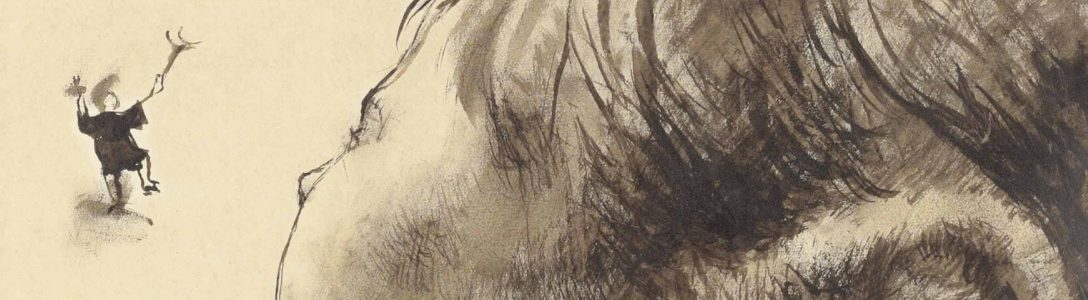
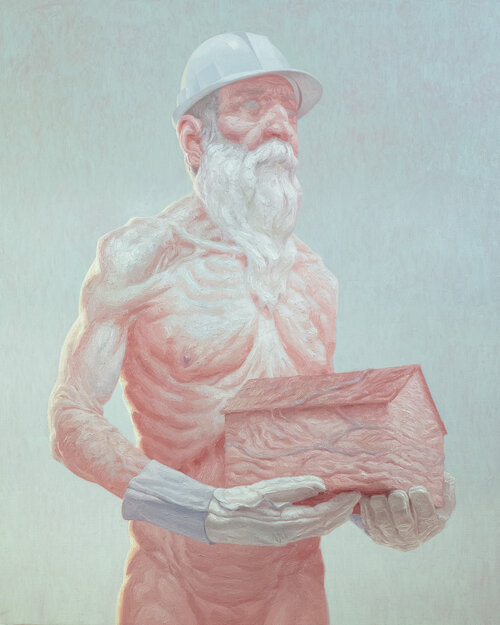
Ktitor’s Guilt — Dragan Bibin

Ktitor’s Guilt, 2019 by Dragan Bibin (b. 1984)

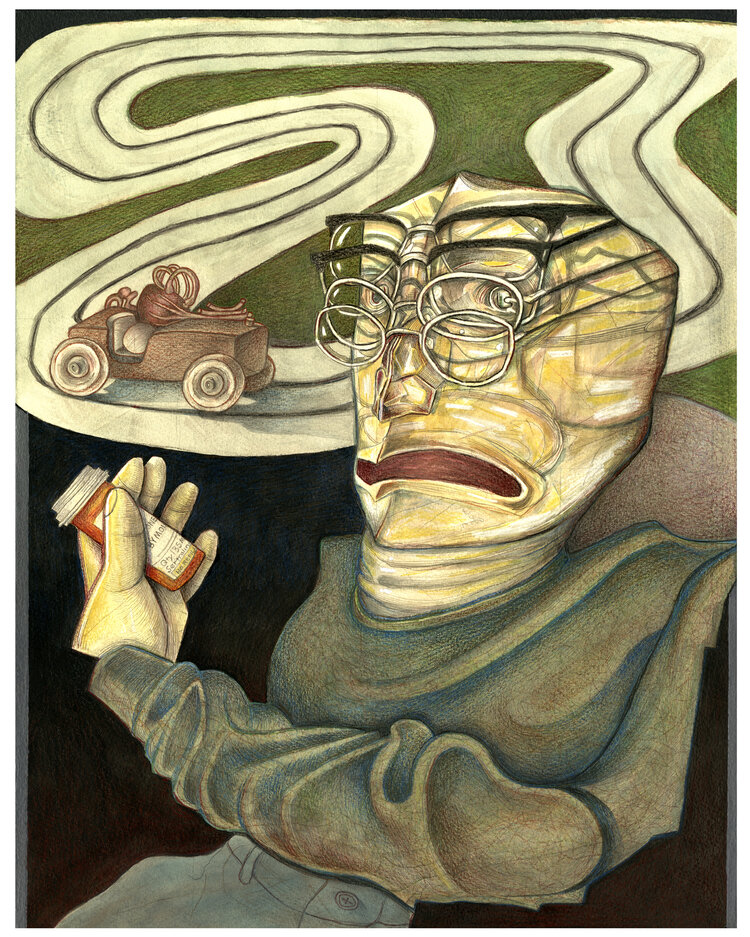
Solitary Loop — Jason Herr

Solitary Loop, Jason Herr

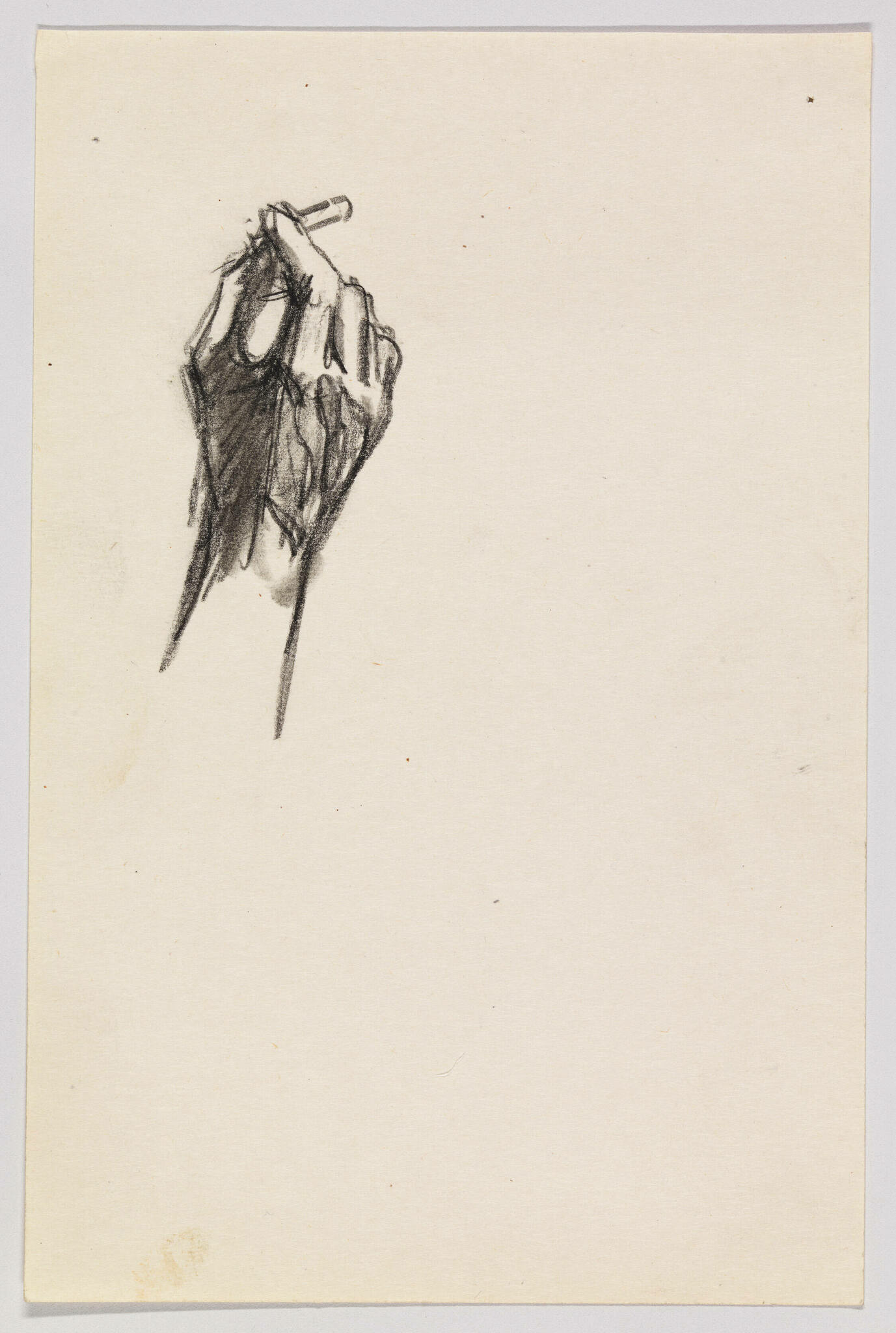
Study for Hotel by a Railroad — Edward Hopper

Study for Hotel by a Railroad, 1952 by Edward Hopper (1882-1967)

There is a little tale about man’s fate, and this is the way it is put | Joy Williams

There is a little tale about man’s fate, and this is the way it is put. A man is being pursued by a raging elephant and takes refuge in a tree at the edge of a fearsome abyss. Two mice, one black and one white, are gnawing at the roots of the tree, and at the bottom of the abyss is a dragon with parted jaws. The man looks above and sees a little honey trickling down the tree, and he begins to lick it up and forgets his perilous situ- ation. But the mice gnaw through the tree and the man falls down and the elephant seizes him and hurls him over to the dragon. Now, that elephant is the image of death, which pur- sues men, and the tree is this transitory existence, and the mice are the days and the nights, and the honey is the sweetness of the passing world, and the savor of the passing world diverts mankind. So the days and nights are accomplished and death seizes him and the dragon swallows him down into hell and this is the life of man.

This little tale with its broad and beasty strokes seems to approximate man’s dilemma quite charmingly, with the caveat that it also applies to the ladies (“she” being “he” throughout here, the writer’s woes not limited by gender; like Flannery O’Connor’s Misfit, the writer knows there’s no enjoyment to be had in this life). This is the story, then, pretty much the story, with considerable latitude to be had in describing those mice, those terrifying mice. But it is not for the writer to have any part in providing the honey—the passing world does that. The writer can’t do better than that. What the writer wants to be is the consciousness of the story, he doesn’t want to be part of the distraction; to distract is ignoble, to distract is to admit defeat, to serve a lesser god. The story is not a simple one. It is syncretistic and strange and unhappy, and it all must be told beautifully, even the horrible parts, particularly the horrible parts. The telling of the story can never end, not because the writer doesn’t like the way it must end but because there is no end to the awareness of the story, which the writer has only the dimmest, most fragmentary knowledge of.

From Joy Williams’ essay “Why I Write.” Collected in Ill Nature.

The American novel starts off with Hawthorne, Melville, Poe—and it’s not a novel, it’s a reaction to the novel | Kathy Acker

BODDY: In In Memoriam you speak of Faulkner as “the American writer.” What is it about Faulkner that makes him “the American”?

ACKER: First of all, there weren’t any novelists around then who weren’t just realists. The way I see it is that it starts off with Hawthorne and Melville—you have Cooper on one side, the realist telling fairy tales (realism has always looked like fairy tales, even Dickens). For me, the American novel starts off with Hawthorne, Melville, Poe—and it’s not a novel, it’s a reaction to the novel, it’s a romance. The novel, as Roland Barthes would say, is deeply about bourgeois life. Hawthorne and Melville and Poe are revolutionaries in lots of ways. So you have the novel in America starting off being radical, not being real. Just in literary terms, the fight is against realism. Moby Dick is not a realist novel, and Pierre just makes fun of the whole idea—it’s the first genre-fuck novel. But then you don’t really have the tradition continuing. You go through a lot of radical writing that is mainly poetry. And nobody is that interesting until Faulkner, who just shines. He does something interesting—he does a novel that is both realist and radical. He keeps narrative, and yet it’s absolutely radical. What I take to be radical is that interest in America in something called guts—a heart. What does Poe say? That if you wrote the truth of the heart you’d set the whole world on fire. It’s like fuck you, the rules, that’s what you do. That’s what Faulkner did.

From a 1997 interview with Kathy Acker, conducted by Kasia Boddy.

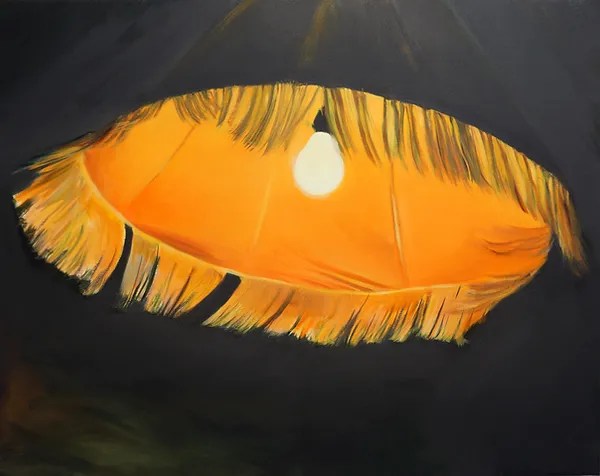
Tassel Shade — Aglaé Bassens

Tassel Shade, by Aglaé Bassens (b. 1986)

Utopia — Benny Andrews

Utopia, 1975 by Benny Andrews (1930-2006)

Two from Dino Buzzati (Books acquired, last week of March 2023)

NYRB is issuing a new translation of Italian author Dino Buzzati’s 1940 novel Il deserto dei Tartari next month. In his afterword to this new edition, translator Lawrence Venuti points out that Buzzati’s original intended title, La fortezza, was rejected by the novel’s publisher Rizzoli, who expressed concerns that, with the outbreak of WW2, the title might be misunderstood by the reading public. The novel received an English translation by Stuart Hood twelve years later as The Tartar Steppe. Venuti restores Buzzati’s intended title in his new translation.

I started in on The Stronghold last night, just casually dipping into a few pages, as I try to do with all of these silly “book acquired” posts, and wound up reading the first fifty pages in one go, then picking it up again this morning. It quickly reminded me of Kafka’s The Castle and Ishiguro’s The Unconsoled—the kind of novel of endless deferrals, its alterity heightened by the concrete precision of the prose. Great stuff so far.

NYRB is also releasing an edition of Joseph Green’s translation of Buzzati’s later novel, A Love Affair. Their blurb:

Antonio Dorigi is a successful architect in Milan, nearing fifty, who has always been afraid of women. He has been a regular at an upscale brothel for years, even as he mourns the lack of close female companionship in his life.

One afternoon, the madam at the brothel introduces Tonio to “a new girl,” Laide (short for Adelaide). Tonio sees nothing especially remarkable about Laide, though it intrigues him that she dances at La Scala and also at a strip club, and yet in a very short time he becomes completely obssessed with her.

Laide draws Antonio on, confounds him, uses and humiliates him, treats him tenderly from time to time, lies to him, makes no apologies to him, and he loves her ever more. This helpless and hopeless love is what he is, he feels, even as it prevents him—we see—from ever seeing Laide for who she is. Because Who is she? is the question at the heart of Buzzati’s clear-eyed and often comic tale of infatuation.

Laide is a young woman who has never known the bourgeois prosperity Tonio takes for granted, someone in a pickle looking for a main chance. She is a storyteller and someone, too, who knows how stories tell on people and shape their desires and lives.

Is A Love Affair a love story or is it a story of anything but love? Buzzati’s novel, with its psychological subtleties, its vivid cityscapes, and its compassion, keeps the reader guessing till the end.

“The Definition” — Russell Edson

“The Definition”

by

Russell Edson


He that puts suicide into his left ear pretends it is wax. His mother says, but it’s a bullet which you have shot yourself with.

Is that how I died? he said.

That’s when the funeral began, it was like a flower festival; your father asked me to marry him, and with much declining as to appear of greater value I agreed. Of the two of us, your father and I, so overlapping we blurred into three. I said, how is this? Your father said, this is this. And this was you. But for a time we could not tell who any of us were. Your father said, who am I? And I said, am I you? And he said, if you are me then I am the small one there and the small one is you. And after much declining I agreed to be anyone; I said, someone is passing the house, shall I be someone passing the house? … and so forth. Until we discovered that we had shadows; so that in the morning we would assemble and let the sun stencil us on the wall: The largest of the three we allowed would be the father, the next largest, the mother, and the smallest, the third one, which you were called as we did not know who you were …

And that you might be a wood god or the spirit of the house … So that we allowed
you to define yourself.

But of my suicide? …

But you see that is another definition of the first turning which was turned when I wasn’t looking …

And of my death? …

As a festival of flowers … declining as to appear of greater value …

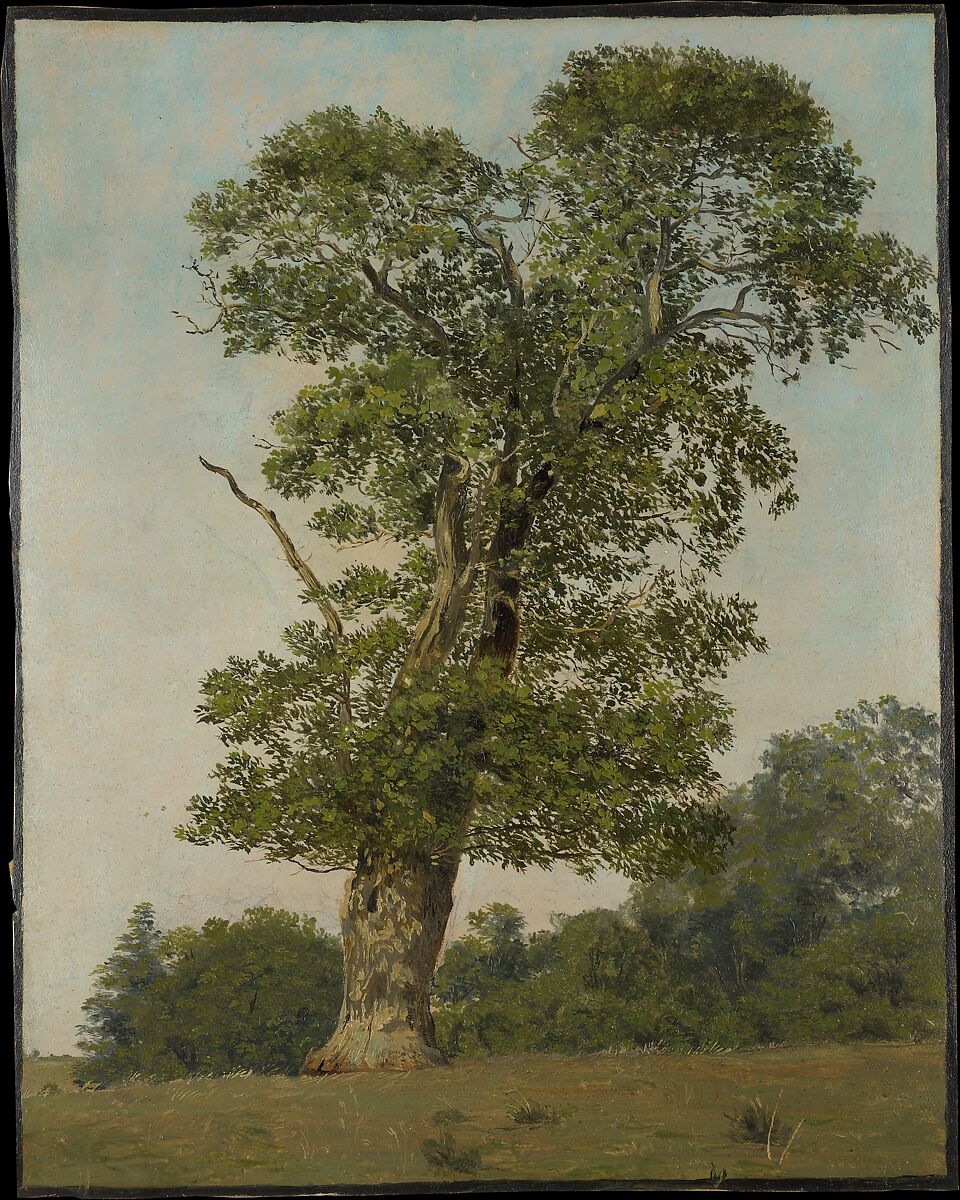
A Large Oak — Lorenz Frølich

A Large Oak, 1837 by Lorenz Frølich (1820–1908)

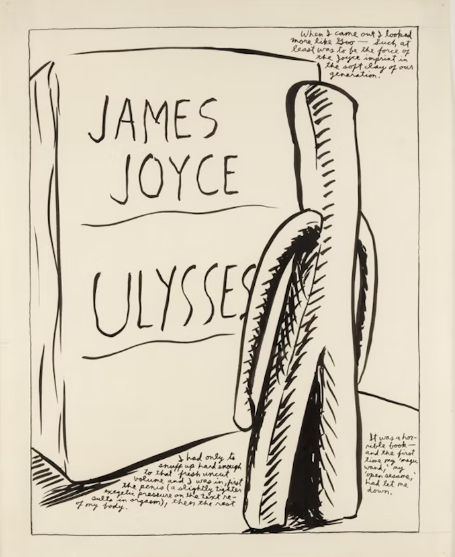
Untitled (James Joyce Ulysses) — Raymond Pettibon

Untitled (James Joyce Ulysses), 1995 by Raymond Pettibon (b. 1957)

Inherited Absolute — Imants Tillers

Inherited Absolute, 1992 by Imants Tillers (b. 1950)

The Eternal City — Peter Blume

The Eternal City, 1937 by Peter Blume (1906–1992)

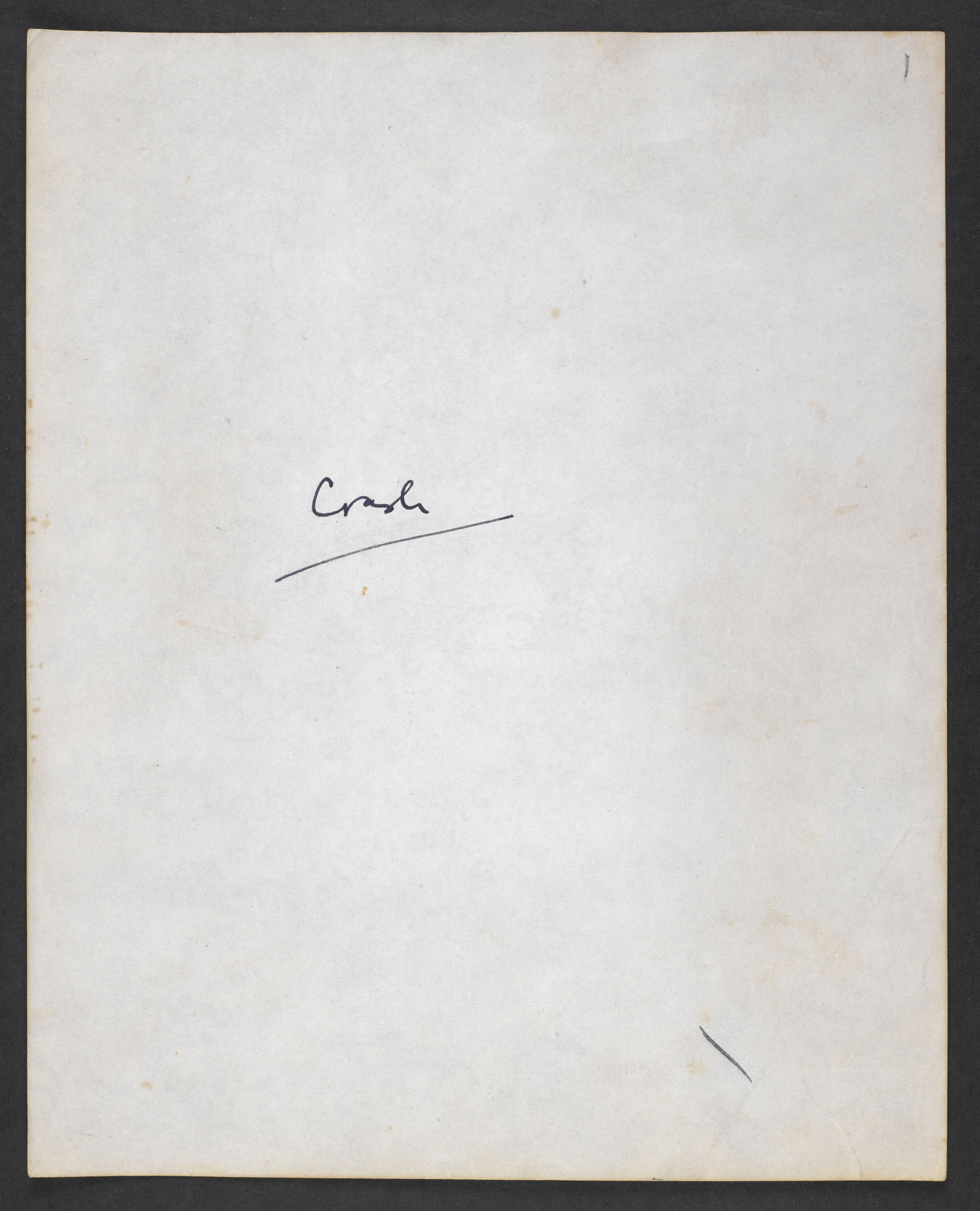
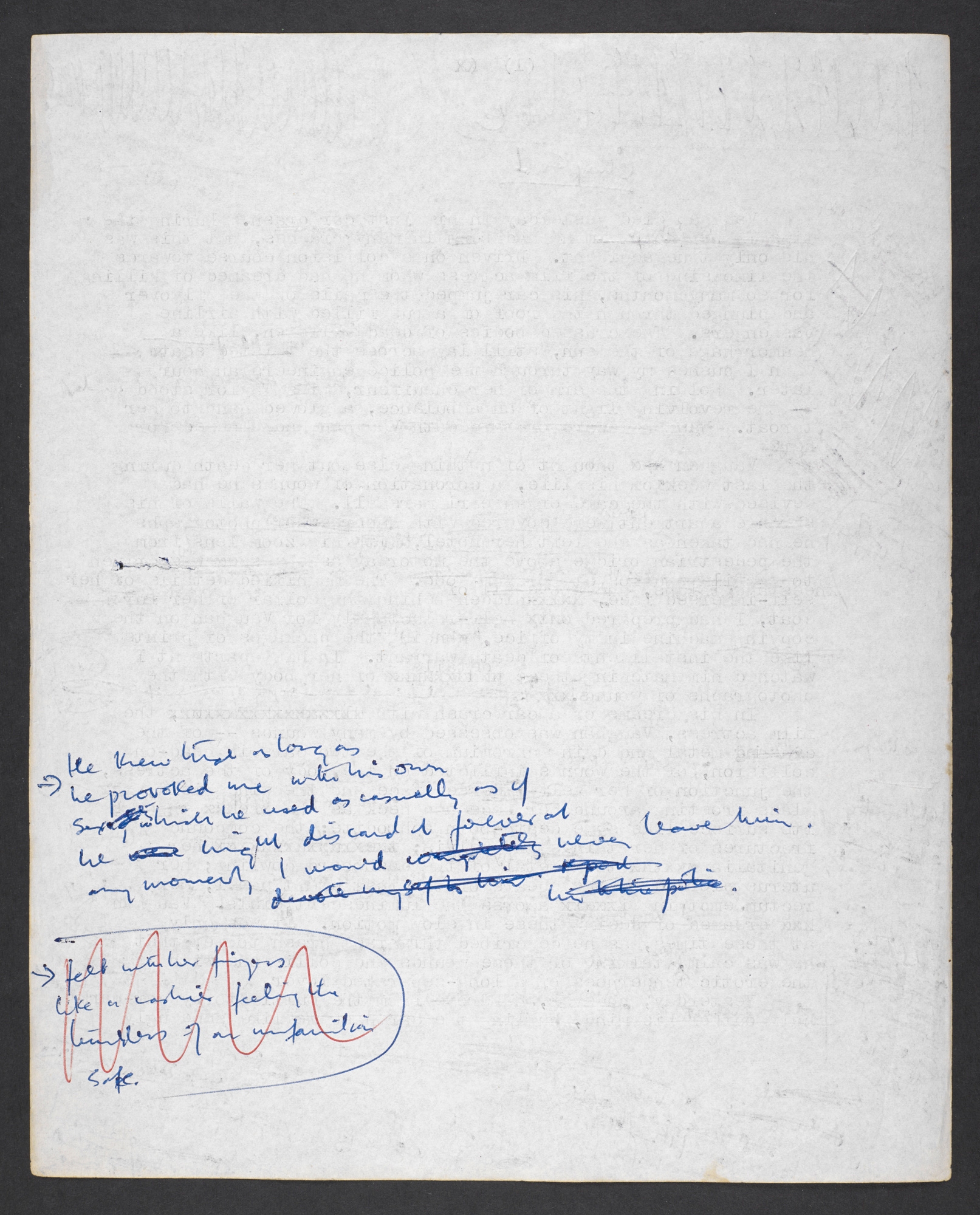
Vaughan died yesterday in his last car crash | J.G. Ballard’s typescript, hand-revised draft of the opening page of Crash

Via/more.

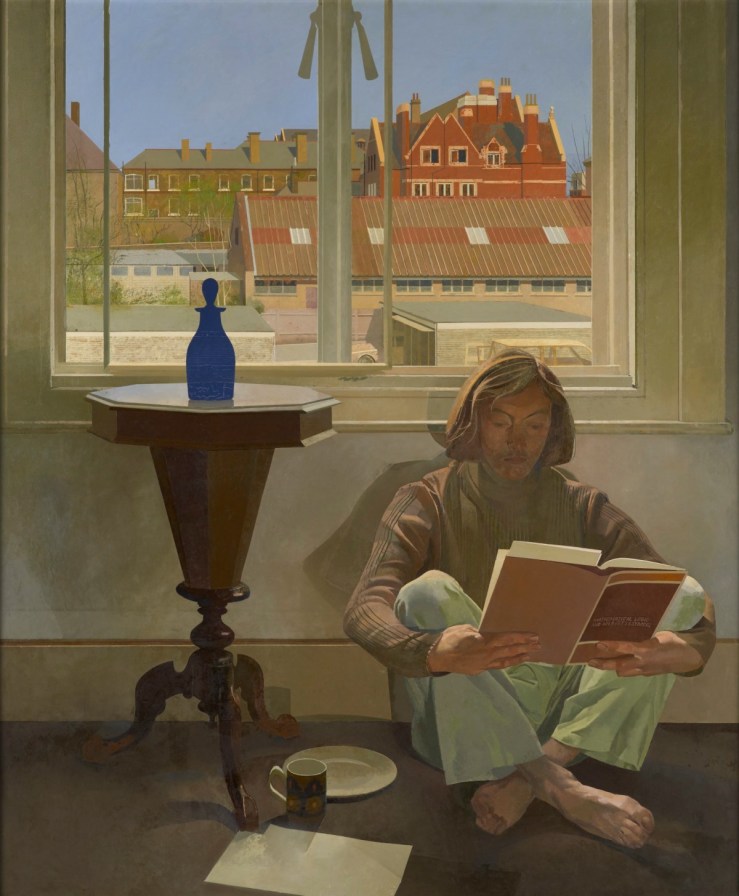
Spring and the Student — Norman Blamey

Spring and the Student, 1975 by Norman Blamey (1914 – 2000)

Under the Volcano and elsewhere (Books acquired, week of 10 March 2023)

My family and I had a wonderful time vacationing in Mexico City last week. We rented an apartment in Condesa, a friendly, walkable neighborhood marked by shade trees, lush gardens, and robust parks. And dogs. Lots of lovely dogs. Over eight days, we took in as much of the city as we could (as well as some excellent day trips to Grutas Tolantongo in Hidalgo and Teotihuacán in Edomex). The city is huge, with more than 150 museums, and the food is excellent. While the four members of our family share common interests (including a love of art), making sightseeing somewhat streamlined, I left Mexico City feeling like I had barely scratched the surface. It reminded me in disparate ways of New York City, Bangkok, and New Orleans. Like those cities, there’s not a single aspect that intrigues me, but rather a vibe. But this is not a travel blog, it is a book blog, so:

The first thing I noticed is that the selection of titles in the several bookstores I visited (a few just very briefly) was generally excellent. Shops tended to feature big-ell Literature titles in lieu of bestsellers and airport novels, with new releases like Mircea Cartarescu’s Solenoid and Yuri Herrera’s La estación del pantano getting prominent displays.

I visited both locations of Cafebrería El Péndulo, and picked up an inexpensive Debolsillo edition of Roberto Bolaño’s La literatura nazi en America, resisting the urge to grab one of the big novels. I’ve read Chris Andrews’ translation of Nazi Literature in the Americas a few times, and I figured that it would be better for me to attempt reading and comparing the shorter sketches here than to jump into 2666 in Spanish. Although I practiced my Spanish for a year in preparation for the trip (it helps to have a Spanish professor friend whose office is down the hall from mine), my vocabulary is still limited and my conjugations are a mess.
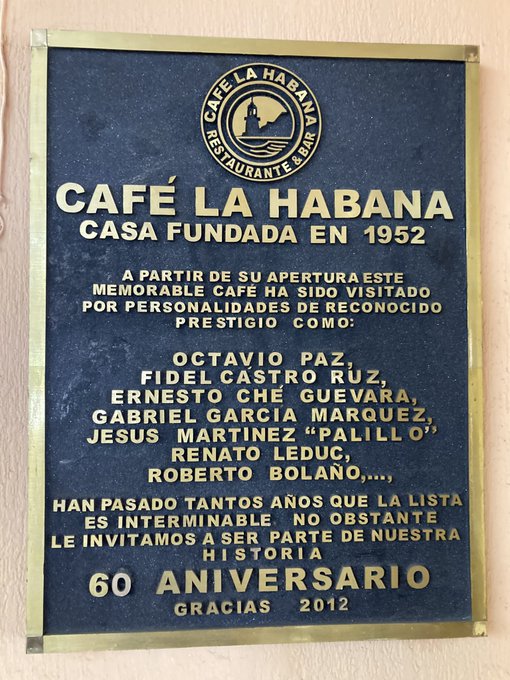
Also Bolaño-related: We lunched at Café la Habana, a charming restaurant boasting a history as a salon for poets, politicians, theorists and other bullshitters. In Bolaño’s Mexican opus The Savage Detectives, Café la Habana appears as Café Quito.

I also visited Under the Volcano, a tiny and charming bookstore in Condesa that carries English-language books–mostly literature. The store is named for Malcolm Lowry’s excellent novel, but there didn’t appear to be any of his books there the day I visited. There was a first-edition hardback copy of Robert Coover’s Pricksongs and Descants, but it was jacketless and out of my price range. There was also a standalone magazine-sized Dalkey Archive edition of William H. Gass’s story Willie Master’s Lonesome Wife, which, based on its price, the owner seemed to believe the most valuable item in the store. I also spied a copy of Jay McInerney’s 1984 novel Ransom, notable because it’s the first and so-far only hardcover of a Vintage Contemporaries edition I’ve ever seen.
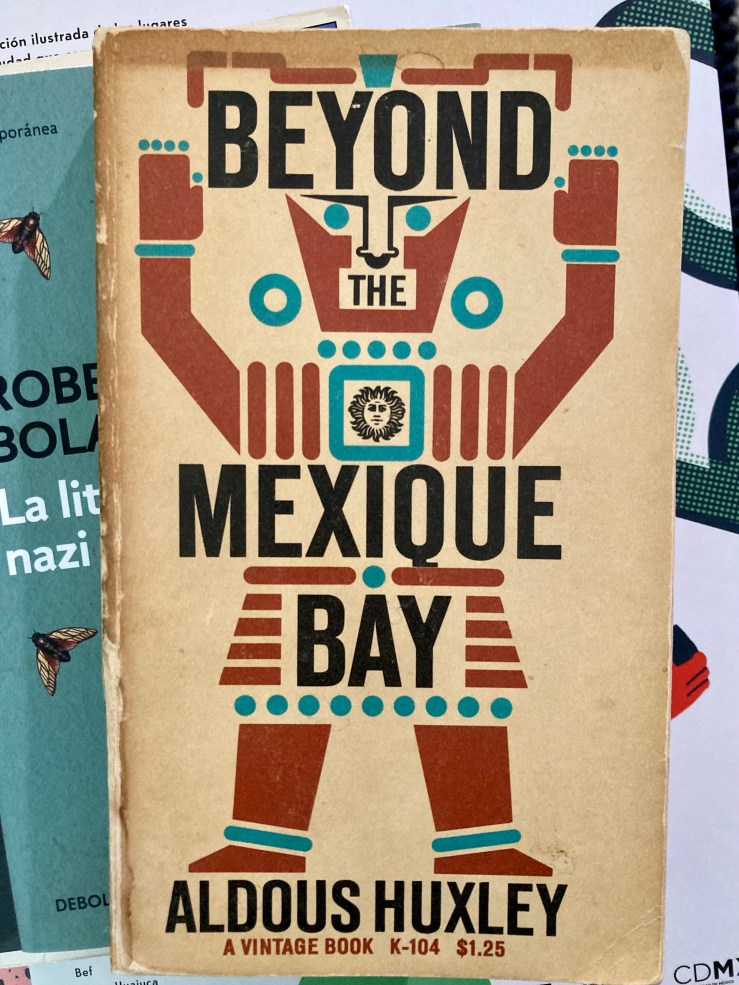
I wound up with two books from Under the Volcano: a Europa Editions of Steven Erickson’s Zeroville and Vintage edition of Aldous Huxley’s Beyond the Mexique Bay. I listened to the audiobook of Zeroville a few years ago, loved it, and have kept an eye out for a reasonably-priced copy ever since. I admit that I picked up Huxley’s essay collection in large part because of its title and its cover design (by Bradbury Thompson). I only found it because I was looking for a copy of Huxley’s The Devils of Loudun. I’ve been falling asleep to an audiobook version of Devils for about three weeks now.

I stopped into a La Increíble Librería at random while walking through Condesa. It’s a charming store that specializes in art books and arty children’s books. They also sell a small but excellent selection of Latin American titles in English translation. I picked up a coffee table book there called 50 íconos de la Ciudad de México. The book is in both Spanish and English, and features lovely illustrations of iconic Mexico City locations by ten different artists. Here’s a detail from Diego Huacuja’s illustration of the Auditorio Nacional:

As we looked through this book this morning, my wife remarked on just how few of the fifty icons presented we missed seeing on this trip. And although we saw a lot that’s not in the book, it nevertheless confirmed my feeling that we need to visit Mexico City again.