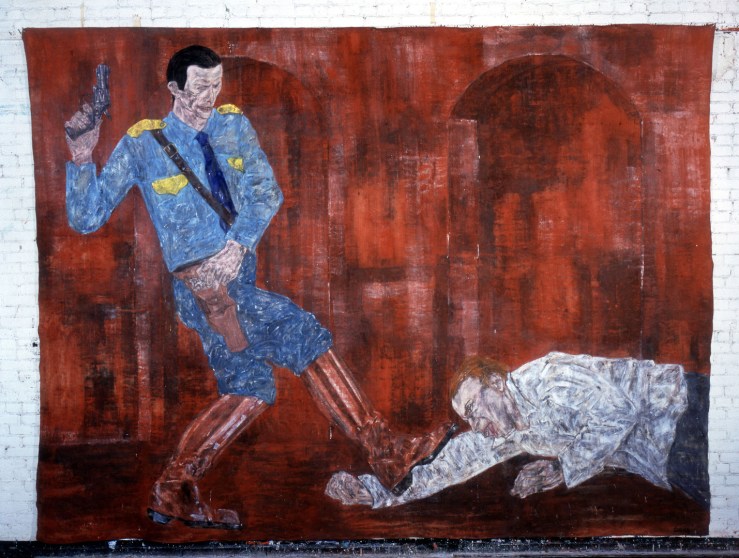
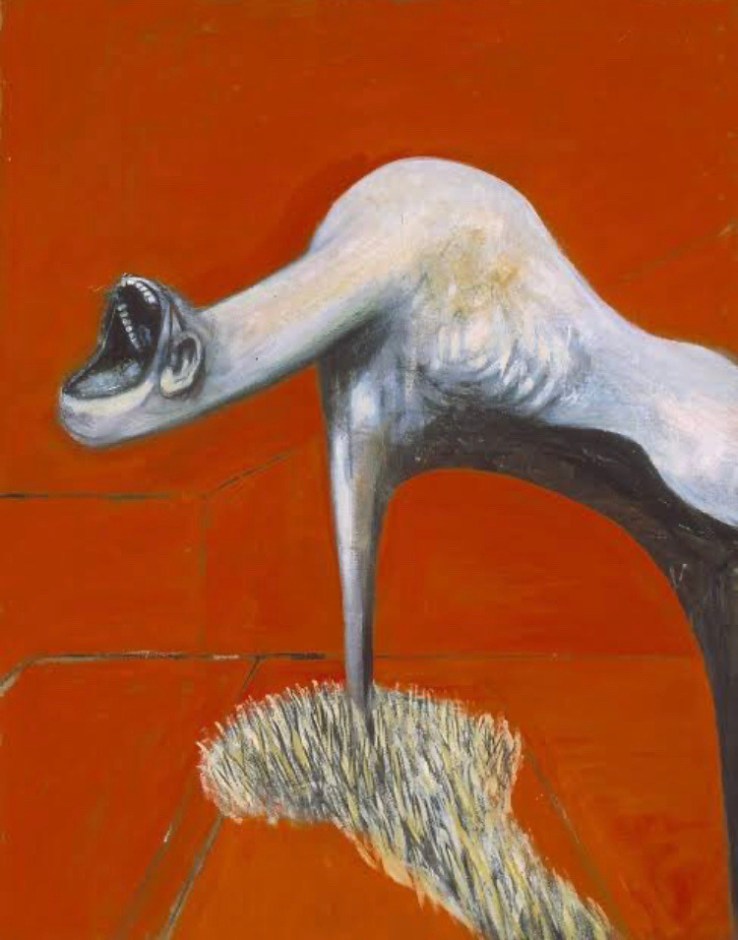
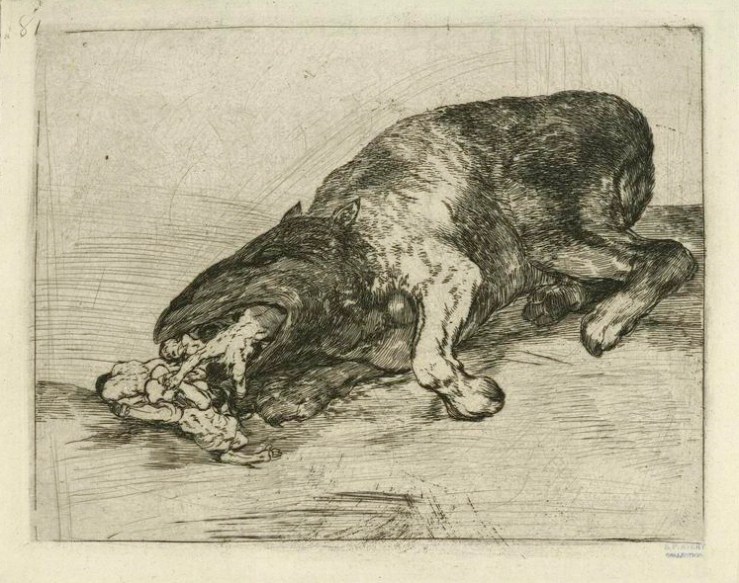
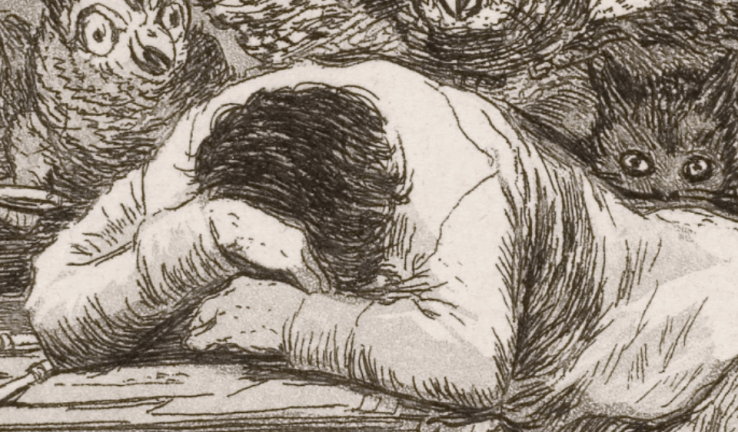
List with no name #67

The extinction of the dodo | A passage from Thomas Pynchon’s Gravity’s Rainbow

saftleven_dodo
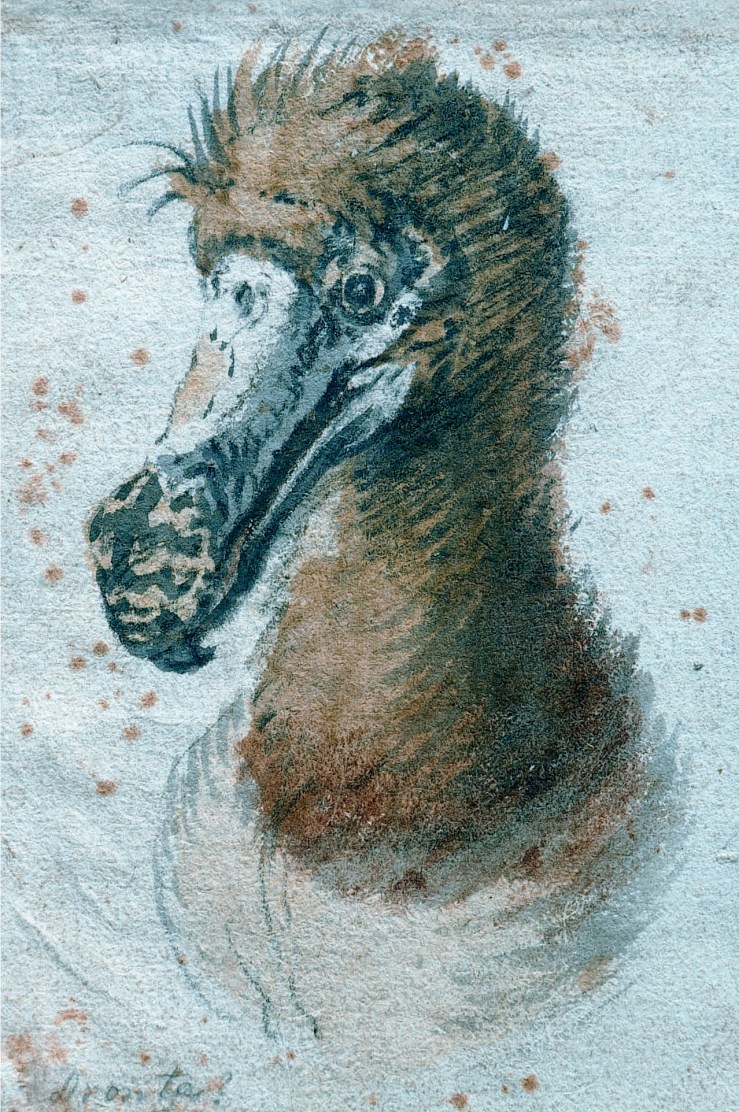
Dodo, 1638 by Cornelis Saftleven (1607-1681)

He left the dodoes to rot, he couldn’t endure to eat their flesh. Usually, he hunted alone. But often, after months of it, the isolation would begin to change him, change his very perceptions—the jagged mountains in full daylight flaring as he watched into freak saffrons, streaming indigos, the sky his glass house, all the island his tulipomania. The voices—he insomniac, southern stars too thick for constellations teeming in faces and creatures of fable less likely than the dodo—spoke the words of sleepers, singly, coupled, in chorus. The rhythms and timbres were Dutch, but made no waking sense. Except that he thought they were warning him… scolding, angry that he couldn’t understand. Once he sat all day staring at a single white dodo’s egg in a grass hummock. The place was too remote for any foraging pig to’ve found. He waited for scratching, a first crack reaching to net the chalk surface: an emergence. Hemp gripped in the teeth of the steel snake, ready to be lit, ready to descend, sun to black-powder sea, and destroy the infant, egg of light into egg of darkness, within its first minute of amazed vision, of wet downstirred cool by these south-east trades… . Each hour he sighted down the barrel. It was then, if ever, he might have seen how the weapon made an axis potent as Earth’s own between himself and this victim, still one, inside the egg, with the ancestral chain, not to be broken out for more than its blink of world’s light. There they were, the silent egg and the crazy Dutchman, and the hookgun that linked them forever, framed, brilliantly motionless as any Vermeer. Only the sun moved: from zenith down at last behind the snaggleteeth of mountains to Indian ocean, to tarry night. The egg, without a quiver, still unhatched. He should have blasted it then where it lay: he understood that the bird would hatch before dawn. But a cycle was finished. He got to his feet, knee and hip joints in agony, head gonging with instructions from his sleeptalkers droning by, overlapping, urgent, and only limped away, piece at right shoulder arms.

Continue reading “The extinction of the dodo | A passage from Thomas Pynchon’s Gravity’s Rainbow”

No. VII — Cy Twombly

No. VII, 1974 by Cy Twombly (1928-2011)

The Hitchhiker — Robert Gwathmey

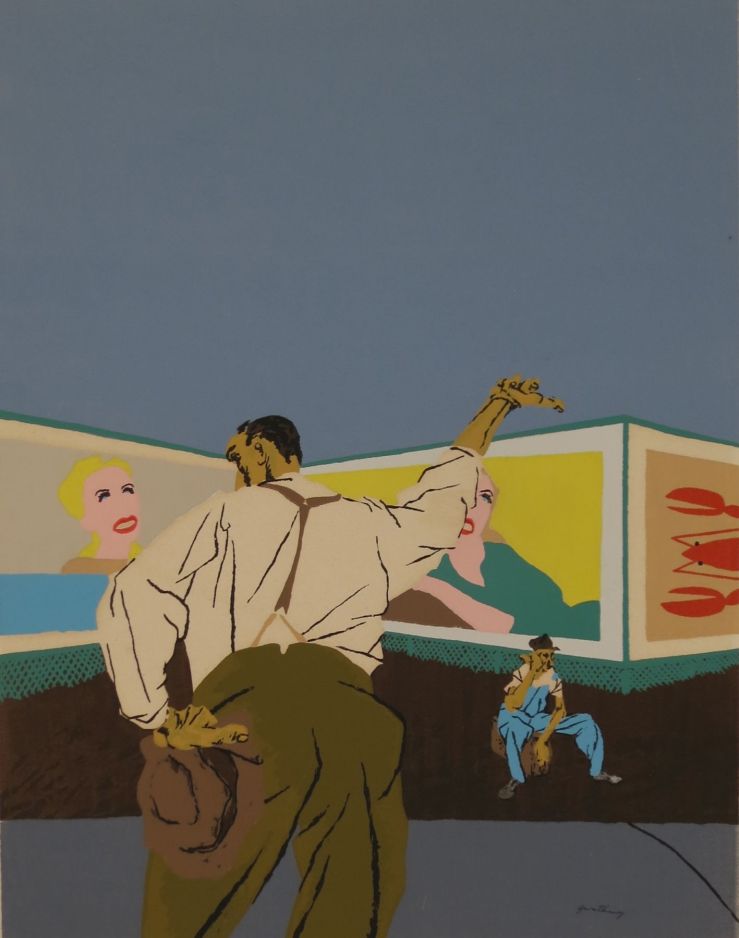
The Hitchhiker 1937, by Robert Gwathmey (1903 – 1988)

There’s a nice new big fat interview with Ishmael Reed now up at The Collidescope

2020-01-03_152112_1

There’s a nice new big fat interview with Ishmael Reed now up at The Collidescope. In the interview (conducted by George Salis), Reed discusses lots of stuff, including his love of Nathaniel Hawthorne’s “Young Goodman Brown” (“one of the great short stories [by] the greatest of American white male writers for my money”), his contempt for David Simon’s The Wire, most of his novels, and his new play The Slave Who Loved Caviar. 

Late in the interview, Salis asks Reed to name a novel he thinks deserves more attention. Here’s Reed’s reply:

IR: Let’s see, there’s a novel by Ron Sukenick, one of the experimental writers about the golden calf [Mosaic Man, 1999]. I can’t figure the title right now, but I think it deserves more readers. I think they like Philip Roth and pedestrian writers like him. But Ron Sukenick was an excellent writer and one of those experimental white writers who don’t get enough attention. I like also A Different Drummer by William Melvin Kelley which I have written a review about but it’s not published and there are a lot of excellent writers, excellent novelists, but the Anglo minds of reviewers is just preventing the public from having access to these writers.

Read the interview at The Collidescope.

Drivers Notice: Are That Mr. Mushroom and Badger the Mad Warlock — Davor Gromilovic

Drivers Notice: Are That Mr. Mushroom and Badger the Mad Warlock, 2021 by Davor Gromilovic (b. 1985)

“The Terrapin” — Wendell Berry


“The Terrapin”

by

Wendell Berry


The terrapin and his house are one.
Though he may go, he’s never gone.

He’s housed within, from nose to toe:
A door, a floor, and no window.

There’s little room; the light is dim;
His furniture is only him.

He doesn’t speak what he thinks about;
Where no guest comes, a thought’s a shout.

He pokes along; he’s in no haste:
He has no map and no suitcase;

He has no worries and no woes,
For where he is is where he goes.

Ponder this wonder under his dome
Who, wandering, is always home.

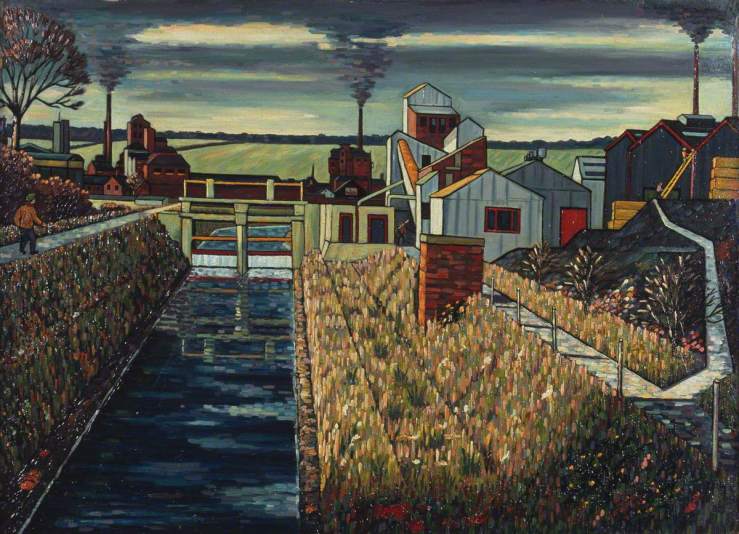
The Brewery and Paper Mill — Ely Charles Byrd

The Brewery and Paper Mill by Ely Charles Byrd (1916–2018)

“The Valley” — William S. Burroughs

“The Valley”

a passage from

The Western Lands

by William S. Burroughs


THE VALLEY

There is no way in or out of the Valley, which is ringed with sheer cliffs with an overhanging ledge. How did the people of the Valley get in there in the first place? No one remembers. They have been there for many years. Children have been born, grown old and died in the Valley, but not many children. Food is scarce. A stream runs through the Valley, and they have dammed up a large pond to raise fish. There is an area along the stream where they grow corn. Sometimes they kill birds, a few lizards and snakes. So most children must be killed at birth. Just an allotted number to continue the line.

Maybe, some say, they will be seen, and people will lower ropes. There is a legend that one man built a flying machine from lizard, snake and fish skins sewn to a frame of light wood. It took him all his life to build it, and he was seventy when the machine was finally finished. It looked like a gigantic dragonfly with sixty-foot wings.
Continue reading ““The Valley” — William S. Burroughs”

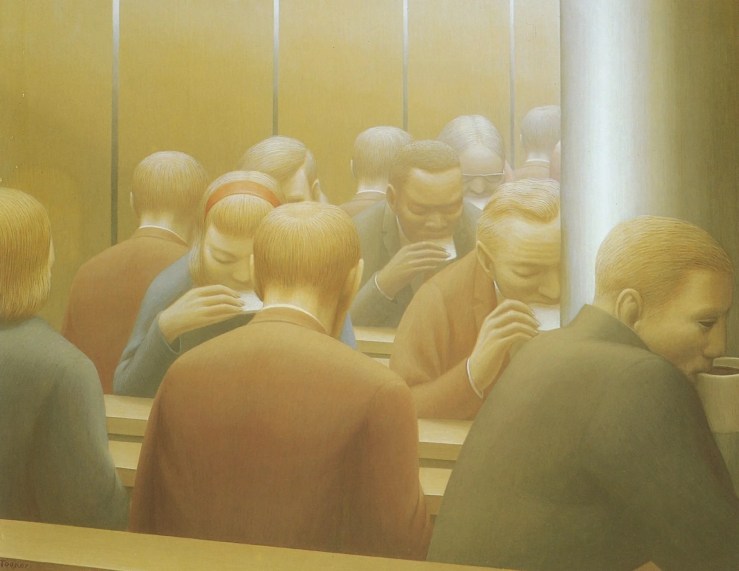
Lunch — George Tooker

Lunch, 1964 by George Tooker (1920-2011)

Posted in Art

“Metals Metals” — Russell Edson

“Metals Metals”

by

Russell Edson


Out of the golden West, out of the leaden East, into the iron South, and to the silver North … Oh metals metals everywhere, forks and knives, belt buckles and hooks … When you are beaten you sing. You do not give anyone a chance …

You come out of the earth and fly with men. You lodge in men. You hurt them terribly. You tear them. You do not care for anyone.

Oh metals metals, why are you always hanging about? Is it not enough that you hold men’s wrists? Is it not enough that we let you in our mouths?

Why is it you will not do anything for yourself? Why is it you always wait for men to show you what to be?

And men love you. Perhaps it is because you soften so often.

You did, it is true, pour into anything men asked you to. It has always proved you to be somewhat softer than you really are.

Oh metals metals, why are you always filling my house?

You are like family, you do not care for anyone.

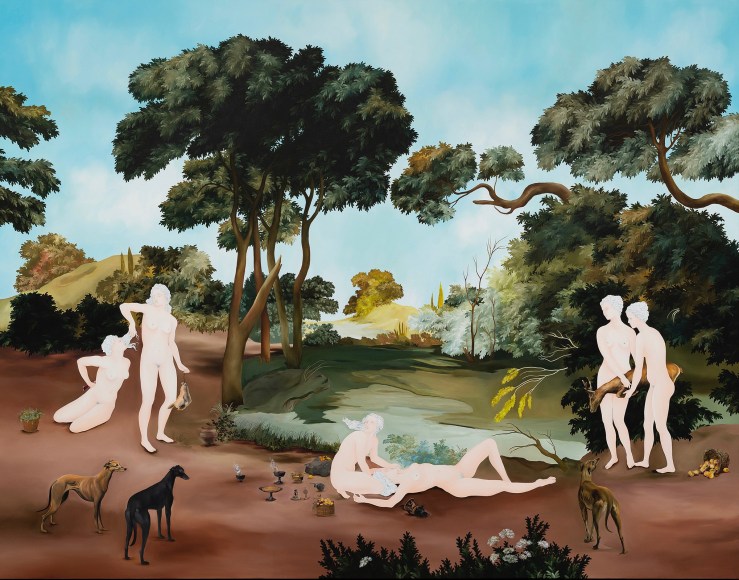
Under the Influence of Poison — Sanam Khatibi 

Under the Influence of Poison, 2018 by Sanam Khatibi (b. 1979)

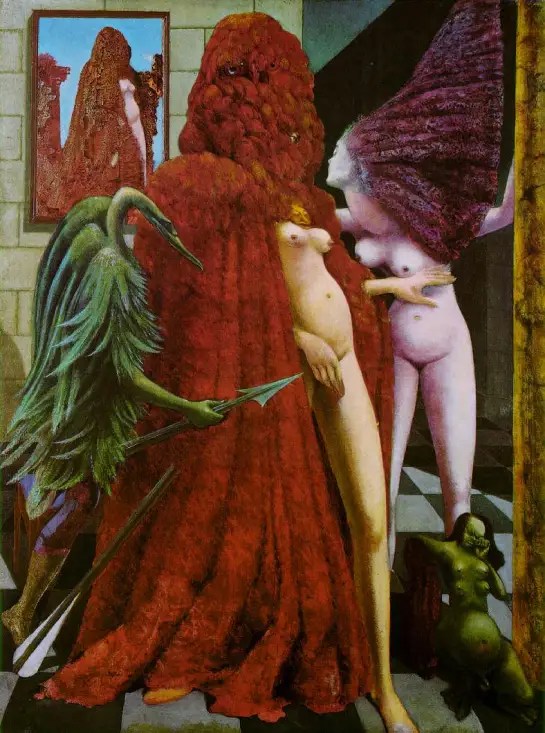
The Robing of the Bride. The title of one of Max Ernst’s most mysterious paintings | J.G. Ballard

The Robing of the Bride.

The title of one of Max Ernst’s most mysterious paintings. An unseen woman is being prepared by two attendants for her marriage, and is dressed in an immense gown of red plumage that transforms her into a beautiful and threatening bird. Behind her, as if in a mirror, is a fossilized version of herself, fashioned from archaic red coral. All my respect and admiration of women is prompted by this painting, which I last saw at Peggy Guggenheim’s museum in Venice, stared at by bored students. Leaving them. I strayed into a private corridor of the palazzo, and a maid emerging through a door with a vacuum cleaner gave me a glimpse into a bedroom overlooking the Grand Canal. Sitting rather sadly on the bed was Miss Guggenheim herself, sometime Alice at the surrealist tea-party, a former wife of Max Ernst and by then an old woman. As she stared at the window I half-expected to see the bird costume on the floor beside her. She was certainly entitled to wear it.

From The Atrocity Exhibition by J.G. Ballard

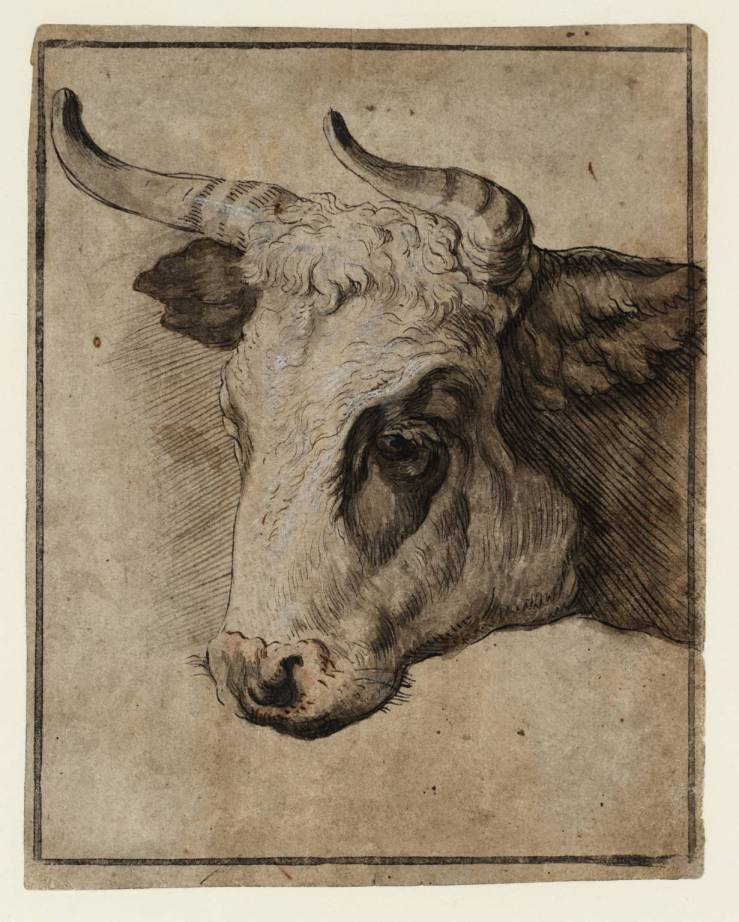
Side View of a Bull’s Head — Joseph Highmore

Side View of a Bull’s Head by Joseph Highmore (1692-1780)

List with no name #66

  1. The Slynx, Tatyana Tolstoya
  2. Nazi Literature in the Americas, Roberto Bolaño
  3. Parable of the Sower, Octavia Butler
  4. Telluria, Vladimir Sorokin
  5. The Road, Cormac McCarthy
  6. The Cities of Red Night, William S. Burroughs
  7. Harrow, Joy Williams
  8. Love in the Ruins, Walker Percy
  9. The Hospital Ship, Martin Bax
  10. Post-Exoticism in Ten Lessons, Lesson Eleven, Antoine Volodine
  11. Carmen Dog, Carol Emshwiller

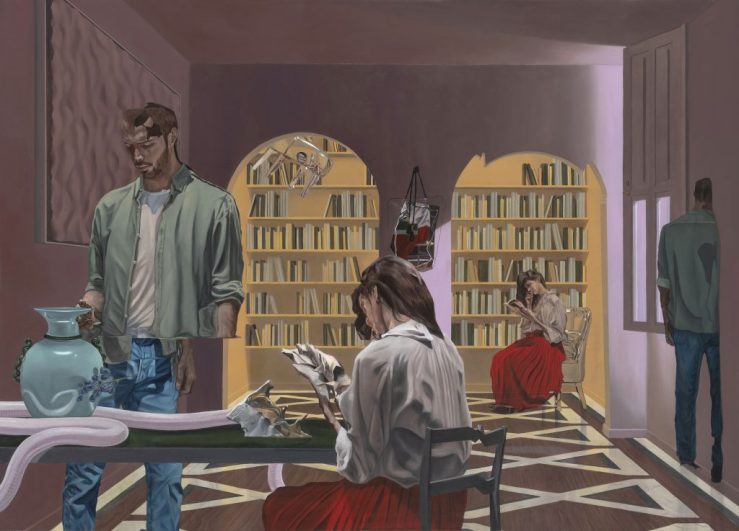
Reification #80 — Dario Maglionico 

Reification #80, 2021 by Dario Maglionico (b. 1986)