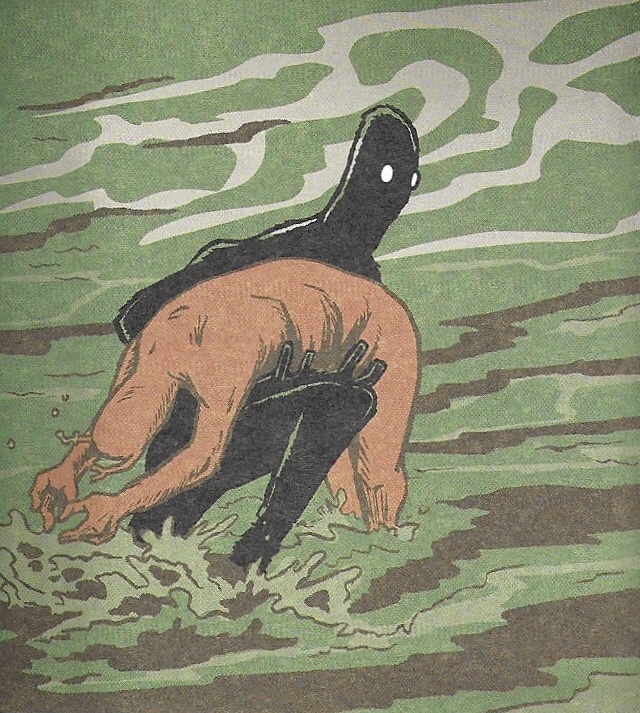
A week or so ago, Mike McCubbins offered me a review copy of Anasazi, the graphic novel that he made with Matt Bryan. He sent a link to the Anasazi’s Kickstarter page. I skimmed over the art, was impressed and immediately interested, and then read their blurb:
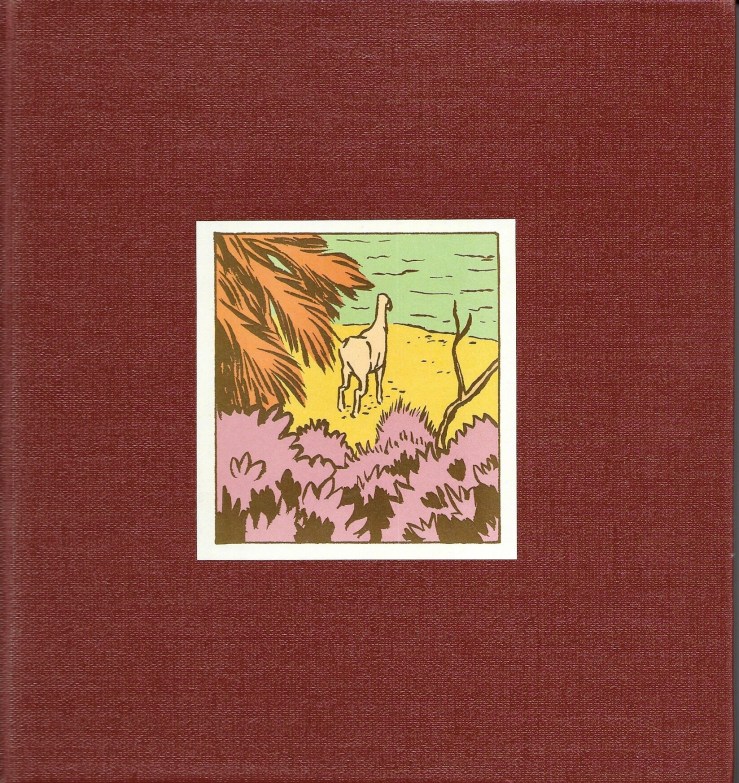
Anasazi is a nearly wordless 212 page, 8″ x 8.5″ full-color cloth-bound graphic novel. Its a story of war, assimilation, and cultural divisions on a colorful alien planet that combines elements of science fiction, fantasy, mythology, world history, and horror.
…16 chapters. 16 words. There is no English dialogue or exposition in Anasazi. Instead each chapter heading contains an alien language glyph along with a non-English word or phrase meaning and its literal English translation. These glyphs then appear as dialogue throughout the story.
The art, overview, and the concept of a story told in glyphs intrigued me, and I trusted my intuition not to read the brief “What’s the story?” section of Anasazi until after I’d read the novel. I read it twice; once the night it showed up, and then again the next morning. The story synopsis (three short sentences) hardly spoils the narrative, but it offers enough context for anyone wholly lost to find their footing.
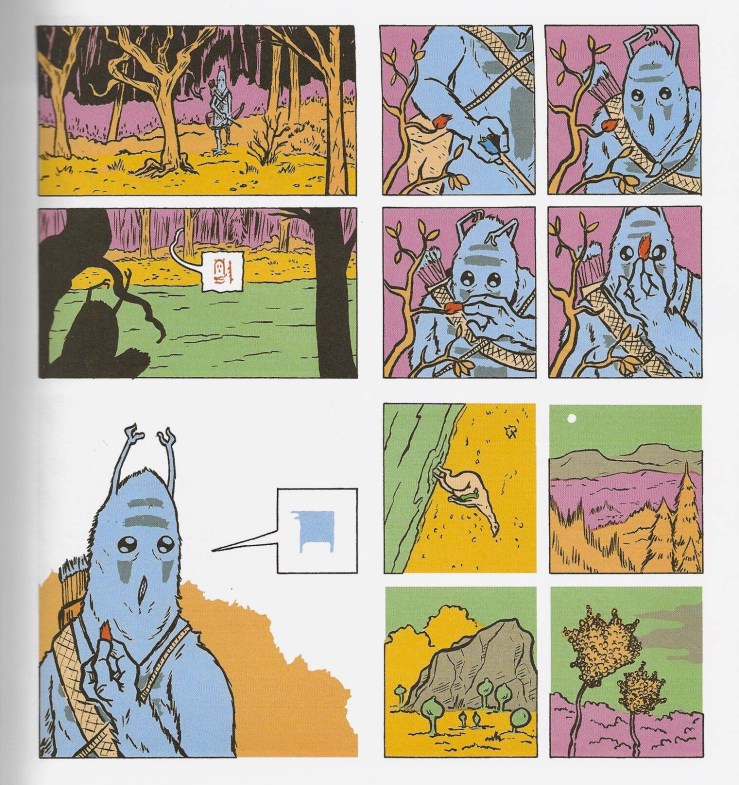
The joy of Anasazi is sinking into its rich, alien world, sussing out meaning from image, color, and glyphs. The novel has its own grammar. Bryan and McCubbins conjure a world reminiscent of Edgar Rice Burroughs’ Martian novels, Charles Burns’ Last Look trilogy, Kipling’s Mowgli stories, as well as the fantasies of Jean Giraud.
The sixteen English words in Anasazi are all chapter names, and all are loan words, as the novel’s title suggests. Some (“M’Aidez,” “Sheol,” “Melaina Chole”) were more familiar to me than others (“Zinduka,” “Gweilo,” “Shuv”), and all take on a strange tone in the novel, as if the glyphs the characters speak are rough transliterations of something far more refined than our alien ears could comprehend.
I really enjoyed Anasazi, and I aim to have a full review soon. But I plan to read it a few more times first.








 Biblioklept