

Tag: Art
Why are works of art so socially important? (William H. Gass)
Why are works of art so socially important? Not for the messages they may contain, not because they expose slavery or cry hurrah for the worker, although such messages in their place and time might be important, but because they insist more than most on their own reality; because of the absolute way in which they exist. Certainly, images exist, shadows and reflections, fakes exist and hypocrites, there are counterfeits (quite real) and grand illusions – but it is simply not true for the copies are as real as their originals, that they meet all of the tests which I suggested earlier. Soybean steak, by God, is soybean steak, and a pious fraud is a fraud. Reality is not a matter of fact, it is an achievement; and it is rare – rarer, let me say – than an undefeated football season. We live, most of us, amidst lies, deceit, and confusions. A work of art may not utter the truth, but it must be honest. It may champion a cause we deplore, but like Milton’s Satan, it must in itself be noble; it must be all there. Works of art confront us the way few people dare to: completely, openly, at once. They construct, they comprise, our experience; they do not deny or destroy it; and they shame us, we fall so short of the quality of their Being. We live in Lafayette or Rutland – true. We take our breaths. We fornicate and feed. But Hamlet has his history in the heart and none of us will ever be as real as vital, as complex and living as he is – a total creature of the stage.
–More from William H. Gass’s essay “The Artist and Society” (1968). Collected in Fiction and the Figures of Life.
The Spectators (Beautiful book acquried 6.11.2015)
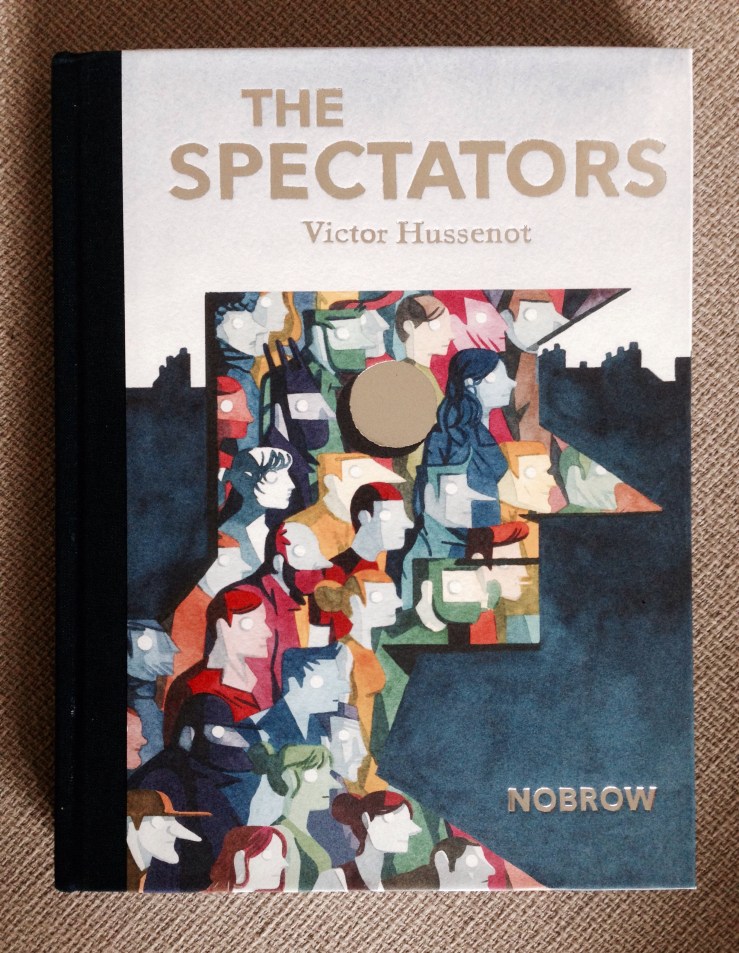
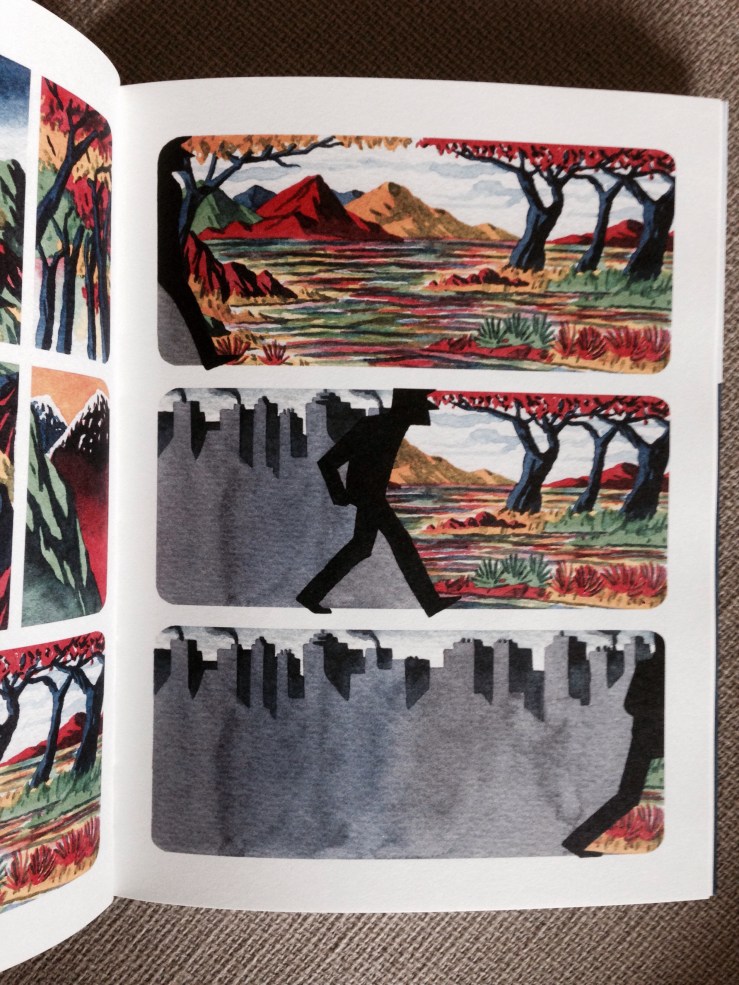
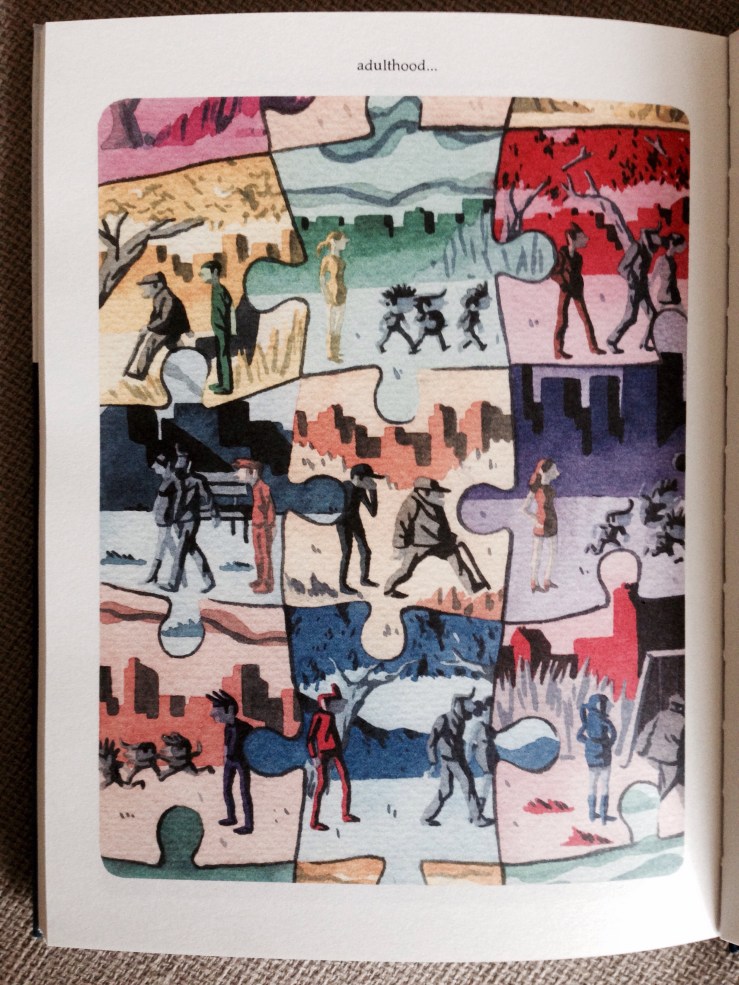
Victor Hussenot’s The Spectators is a gorgeous new graphic novel from Nobrow. I’ve read it twice now (“read” as a verb seems inadequate but—), and will get to a proper review later this week. Excellent stuff. Nobrow’s blurb:
What if we are merely shadows, our characters defined by a simple inflection of light? The realm of possibilities opens up, because in our world we are nothing but spectators.
The Spectators unfolds as a poetic and philosophical introspection on the nature of man. Victor Hussenot‘s palette is awash with subtle colour, gently carrying the narrative and allowing the reader to envelop themselves in the lyricism of the work. Reminiscent of French New Wave cinema with its clipped dialogue, gentle pacing and departure from a classic narrative structure, The Spectators is an exciting new graphic novel.
Portrait of the Artist’s Father
 Repin
Repin

 Freud
FreudThe Bus — Paul Kirchner

Playdate — Chris Ware

Untitled — Alessandro Sicioldr

Diagram for Gesture Dance — Oskar Schlemmer

We nullify the consciousness of others. We make their experiences unreal. (William H. Gass)
You can measure the reality of an act, a man, an institution, custom, work of art in many ways: by the constancy and quality of its effects, the depth of the response which it demands, the kinds and range of values it possesses, the actuality of its presence in space and time, the multiplicity and reliability of the sensations it provides, its particularity and uniqueness on the one hand, its abstract generality on the other—I have no desire to legislate concerning these conditions, insist on them all.
We can rob these men, these acts and objects, of their reality by refusing to acknowledge them. We pass them on the street but do not see or speak. We have no Negro problem in our small Midwestern towns. If someone has the experience of such a problem, he is mistaken. What happened to him did not happen; what he felt he did not feel; the urges he has are not the urges he has; what he wants he does not want. Automatically I reply to my son, who has expressed his desire for bubble gum: Oh, Peppy, you don’t want that. Number one, then: we deny. We nullify the consciousness of others. We make their experiences unreal.
–From William H. Gass’s essay “The Artist and Society” (1968). Collected in Fiction and the Figures of Life.
Woman in Cave — Paul Delvaux

Interior with Hippopotamus — Gilles Aillaud

Copulation — Agostino Arrivabene

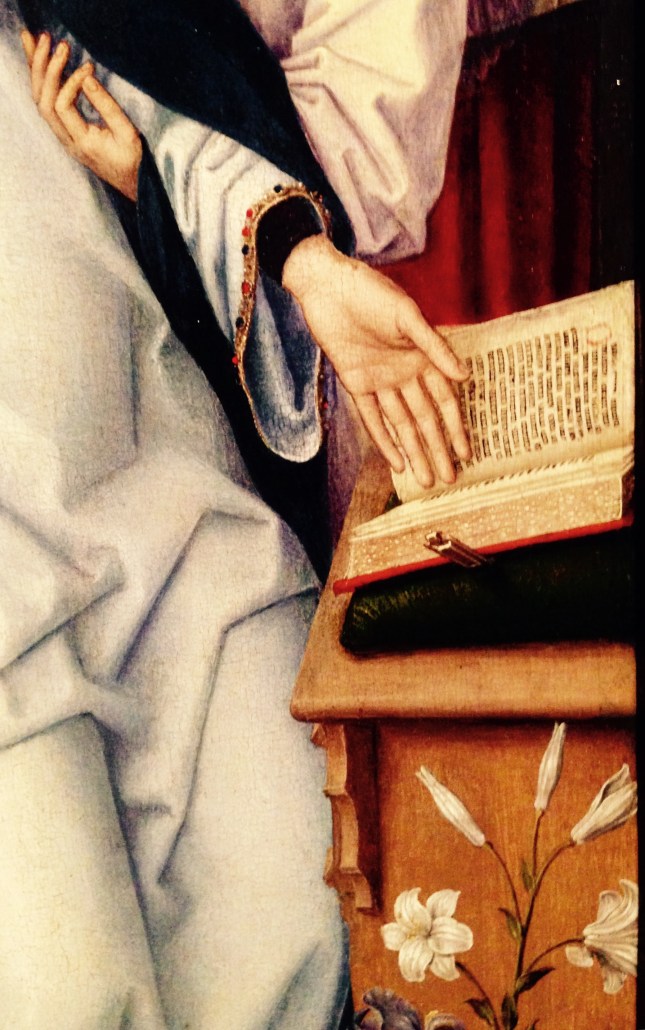
The Annunciation (Detail) — Hans Memling
Song in the Twilight — Franz Sedlacek

Museo del Prado, Madrid — Elliott Erwitt

Silver Chalice with Roses — Julian Alden Weir

Animals of the First Creation — Barry Moser

 Biblioklept