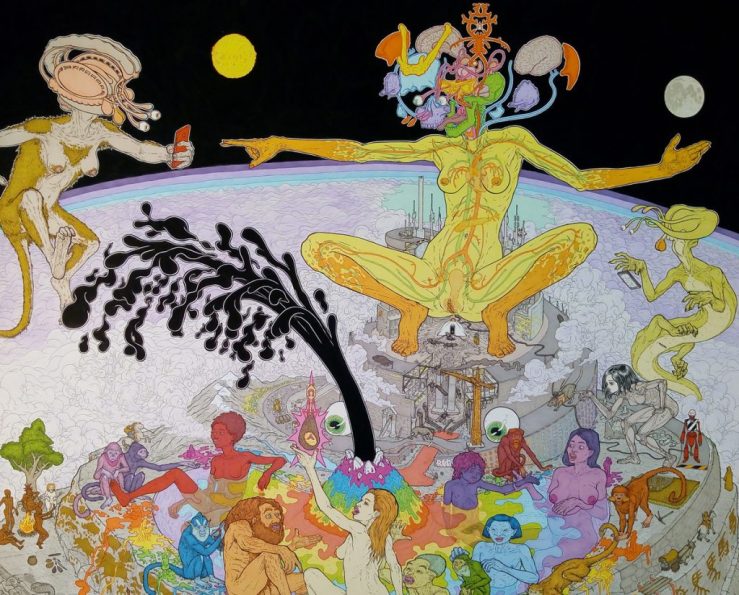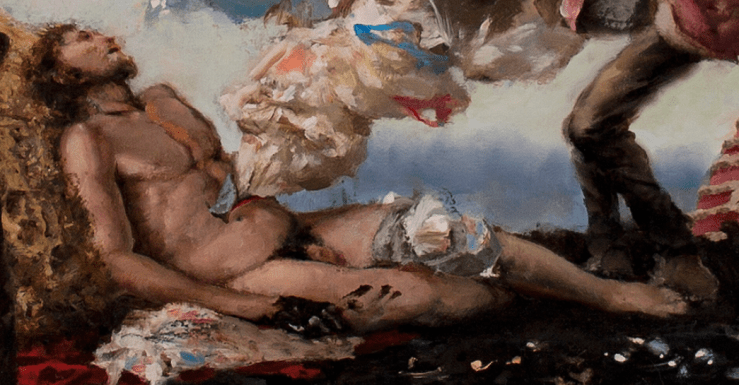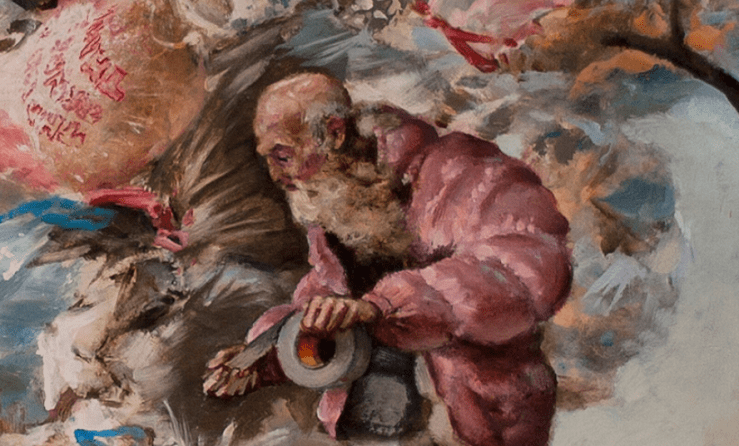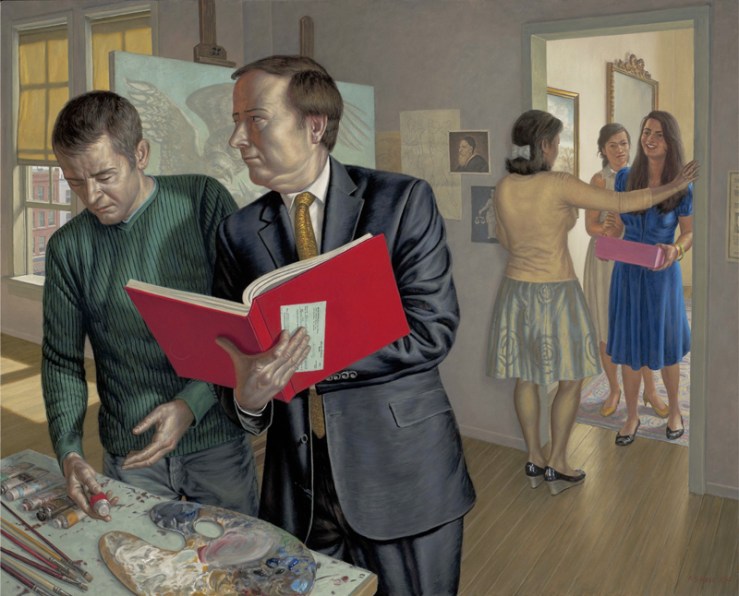
New World Order — Mat Brown

matbrown-thenewwordorder2019web-1024x825

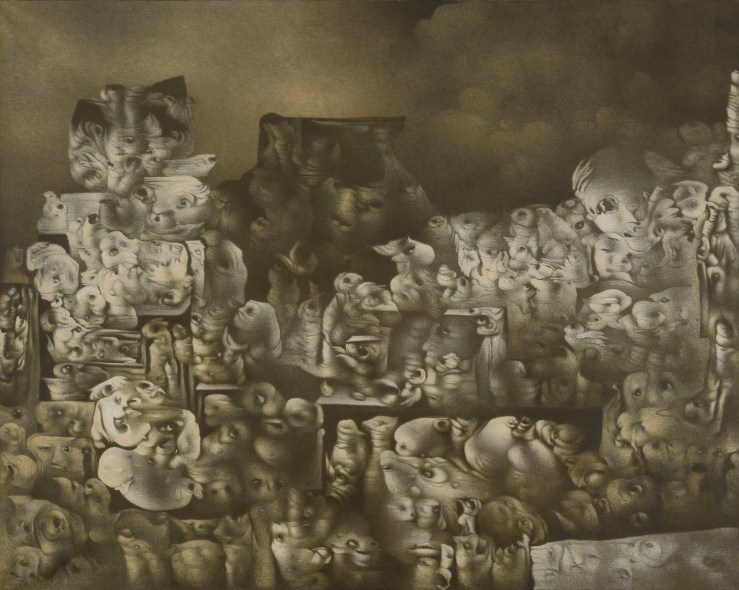
New World Order, 2019 by Mat Brown (b. 1980)

Lisa — Kira Nam Greene

lisab-1750x2288

Lisa, 2018 by Kira Nam Greene

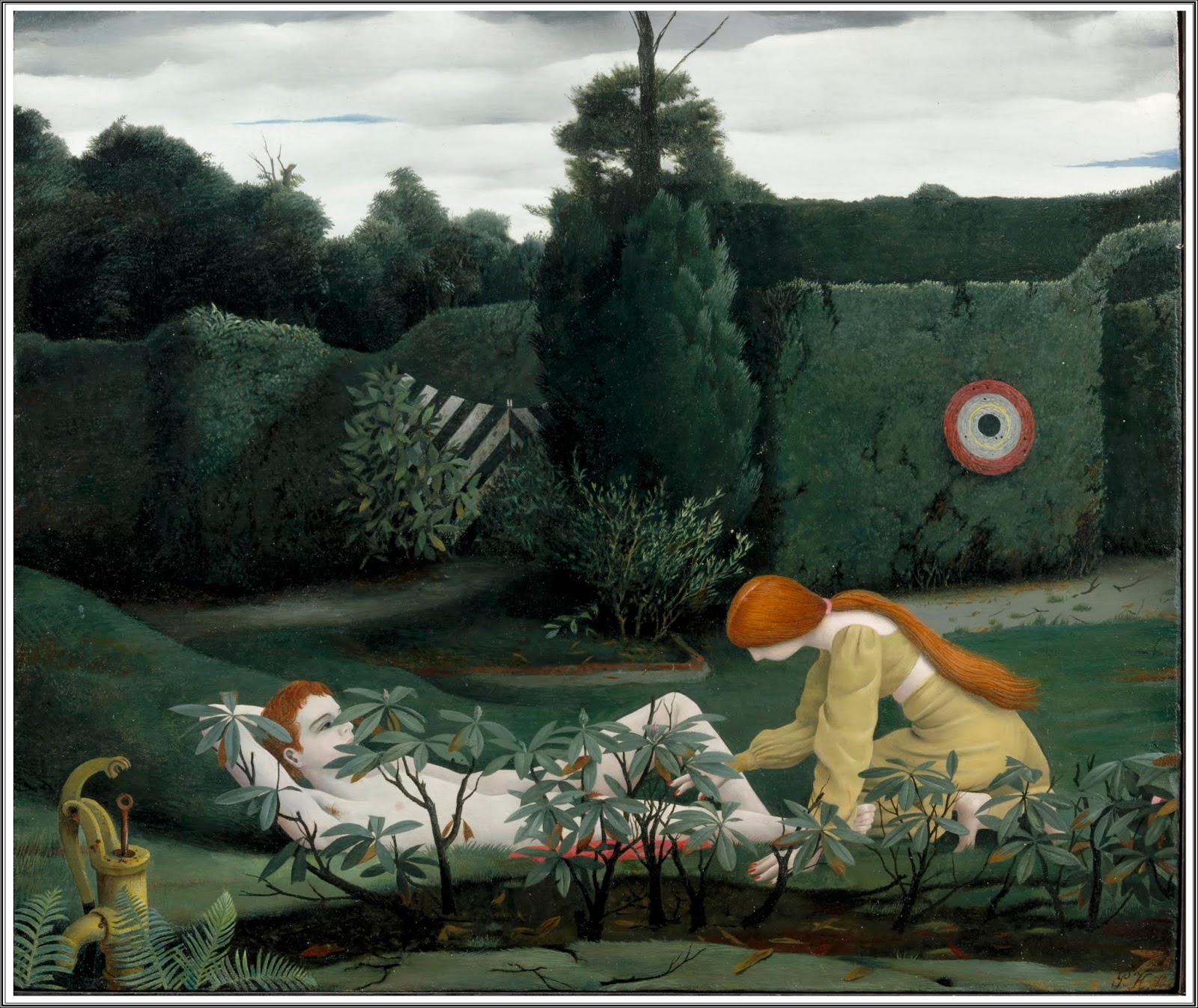
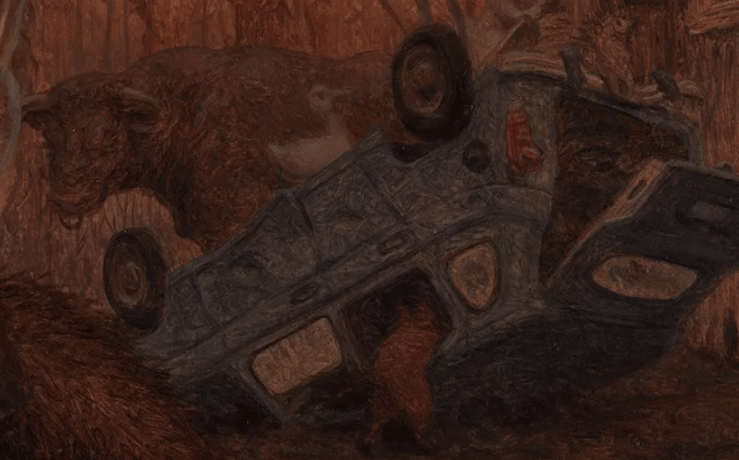
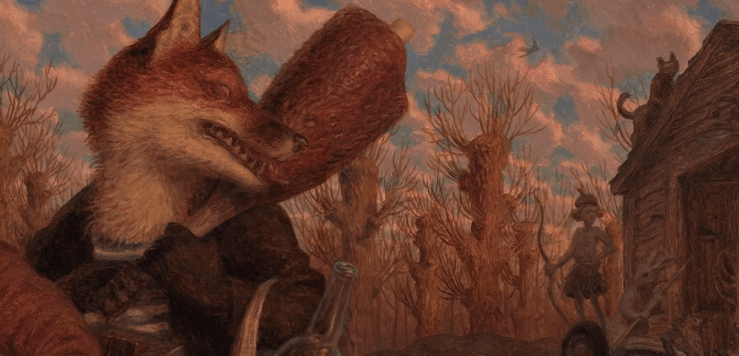
The Hedgerow Rebellion, 1962 — Peter Ferguson

ferguson-hedgerow-rebellion-1962-medium

Screenshot 2019-08-20 at 6.13.06 PMScreenshot 2019-08-20 at 6.13.22 PMScreenshot 2019-08-20 at 6.13.44 PM

The Hederow Rebellion, 1962 by Peter Ferguson (b. 1968)

Lost Horizon — Dan Lydersen

losthorizon

Lost Horizon, 2017 by Dan Lydersen (b. 1980)

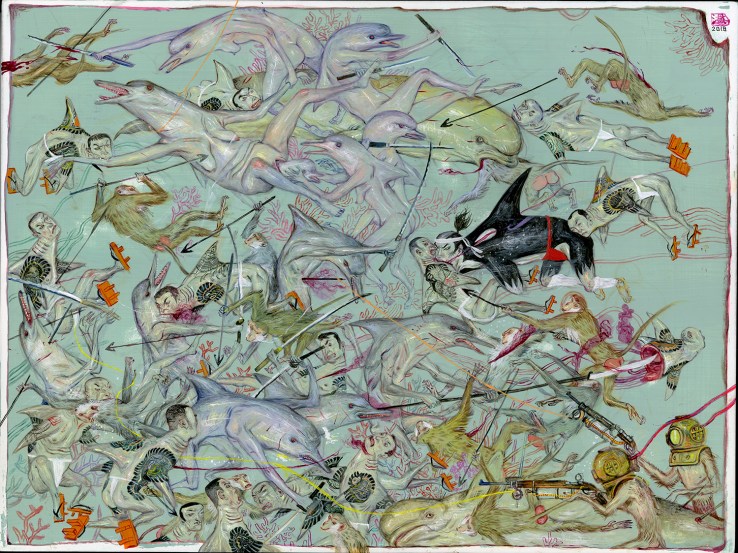
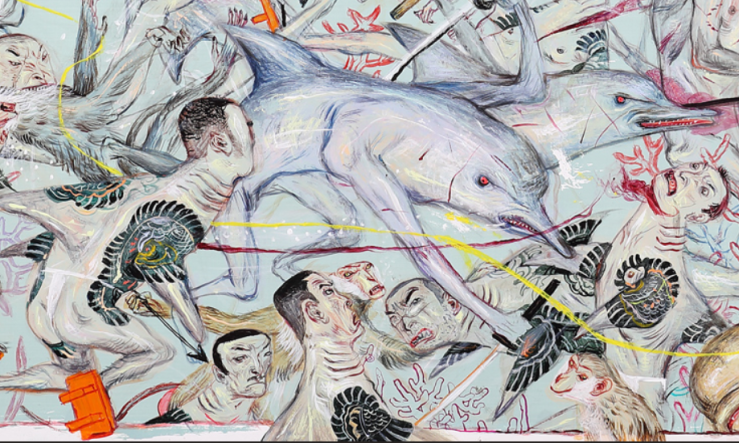
Dolphins — Mu Pan

dolphins

Screenshot 2019-08-18 at 10.32.38 AMScreenshot 2019-08-18 at 10.32.13 AMScreenshot 2019-08-18 at 10.31.55 AM

Dolphins, 2018 by Mu Pan (b. 1976)

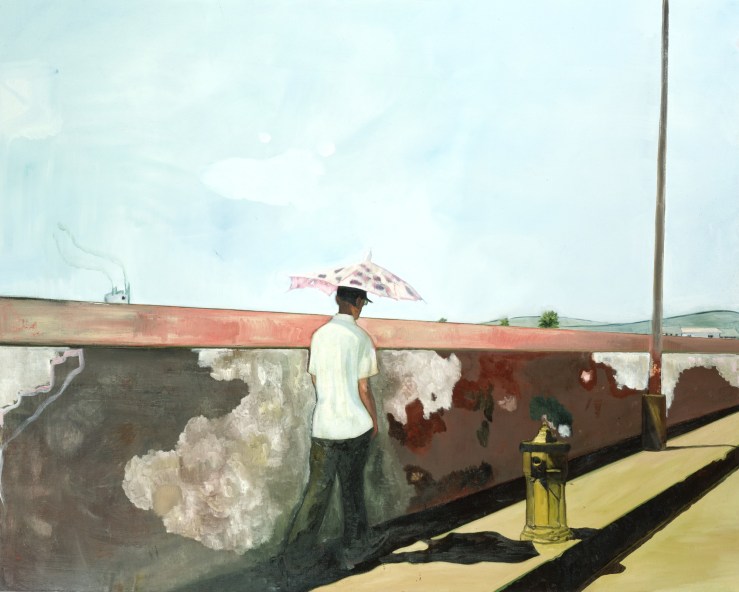
Lapeyrouse Wall — Peter Doig

w1siziisijexoduxmyjdlfsiccisimnvbnzlcnqilcitcmvzaxplidiwmdb4mjawmfx1mdazzsjdxq

Lapeyrouse Wall, 2004 by Peter Doig (b. 1959)

Stars ‘n Tarnation — Scott Greene

s_greene_starsntarnationScreenshot 2019-08-16 at 9.29.26 AMScreenshot 2019-08-16 at 9.28.53 AM

Stars ‘n Tarnation, 2013 by Scott Greene

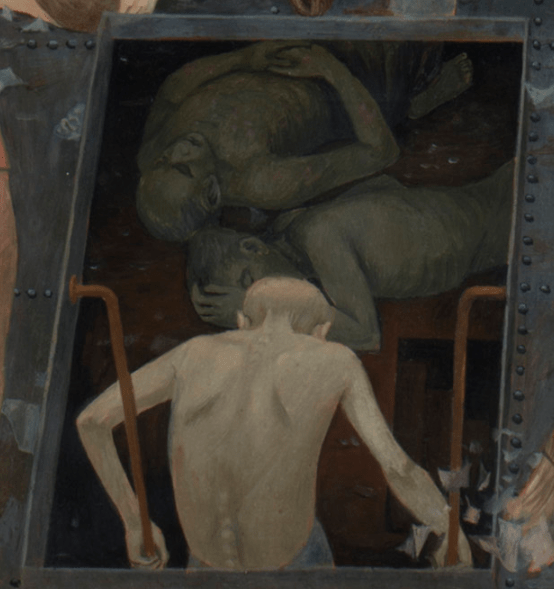
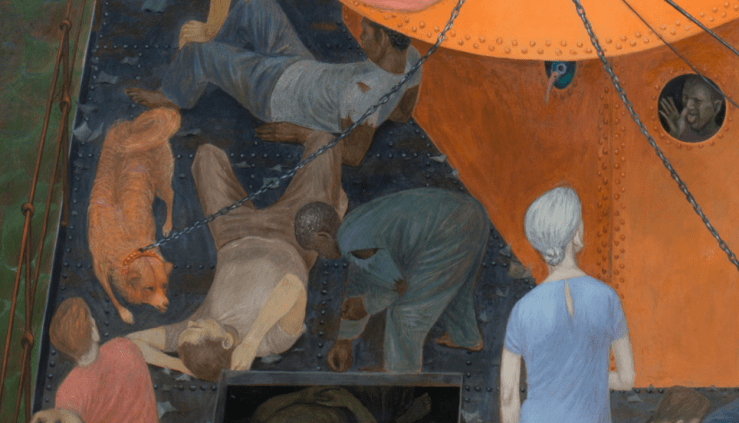
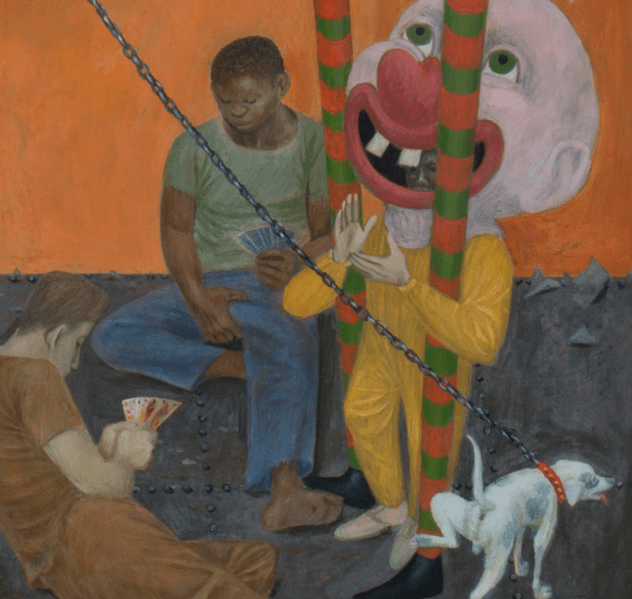
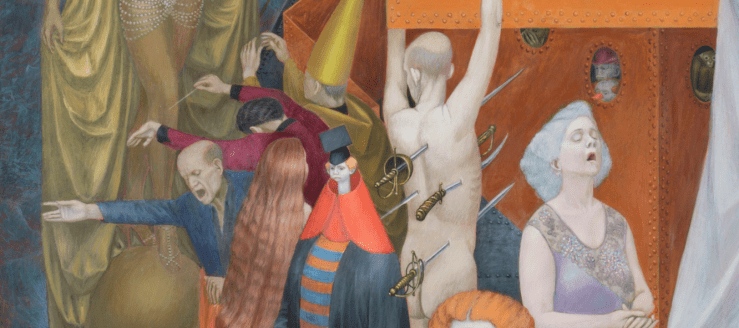
The Showboat — Henry Koerner

110 West 80 St-4R, NY, NY 10024
212 874 3879Screenshot 2019-07-15 at 9.18.08 PMScreenshot 2019-07-15 at 9.17.52 PMScreenshot 2019-07-15 at 9.17.32 PMScreenshot 2019-07-15 at 9.17.12 PMScreenshot 2019-07-15 at 9.16.44 PMScreenshot 2019-07-15 at 9.16.20 PMScreenshot 2019-07-15 at 9.15.44 PMScreenshot 2019-07-15 at 9.15.18 PMScreenshot 2019-07-15 at 9.14.45 PM

The Showboat, 1948 by Henry Koerner (1915-1991)

In Lieu of Flowers and Blood — Richard Oelze

oel2016

Screenshot 2019-08-15 at 4.30.55 PMScreenshot 2019-08-15 at 4.30.43 PMScreenshot 2019-08-15 at 4.30.19 PM

In Lieu of Flowers and Blood, 1963 by Richard Oelze (1900-1980)

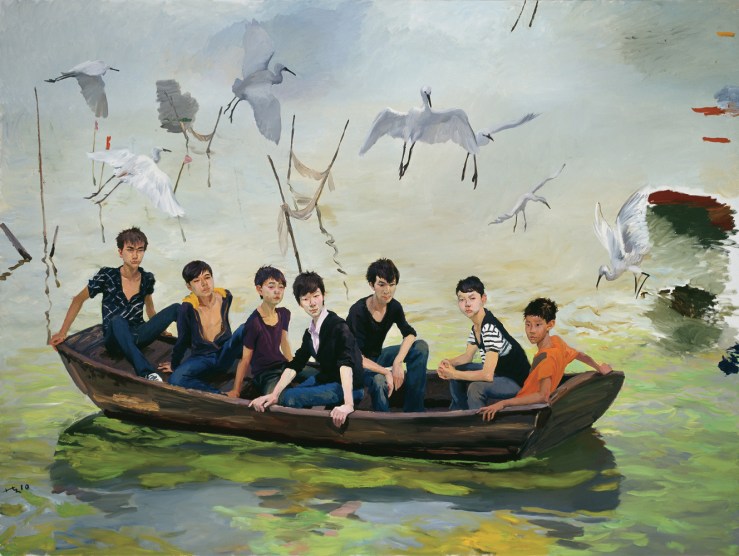
Into Taihu — Liu Xiaodong

feature_2010into_taihu_3

Into Taihu, 2010 by Liu Xiaodong (b. 1963)

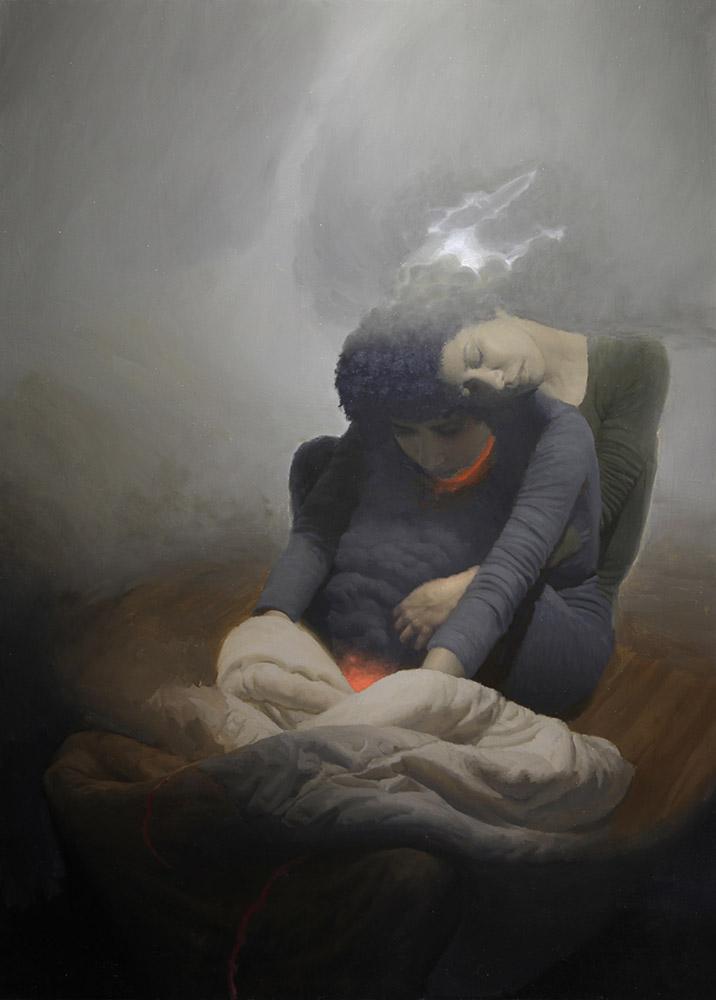
Held —  Lukifer Aurelius

lukifer-aurelius-held_1024x1024

Held by Lukifer Aurelius

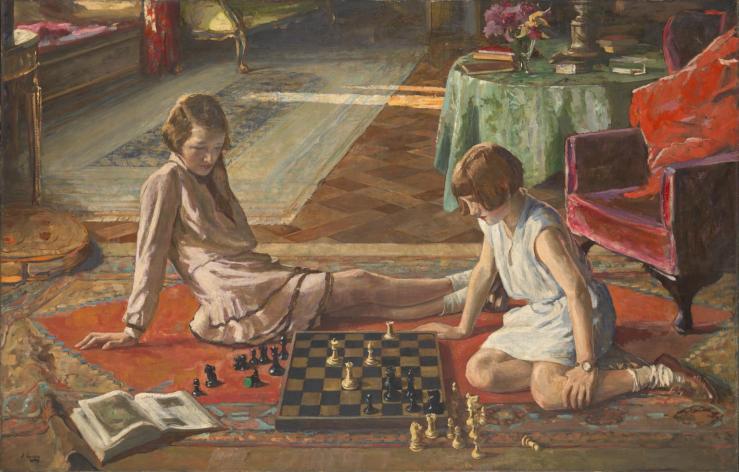
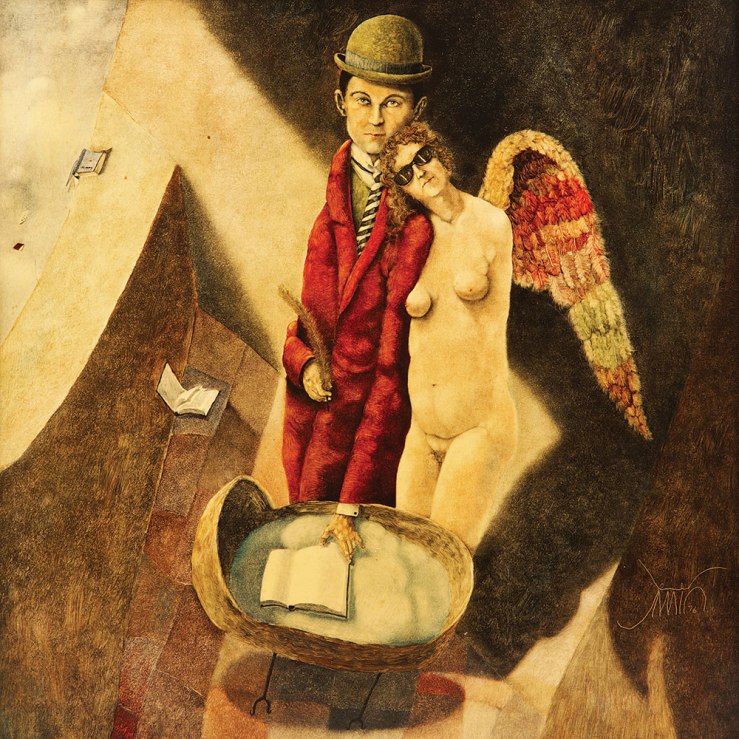
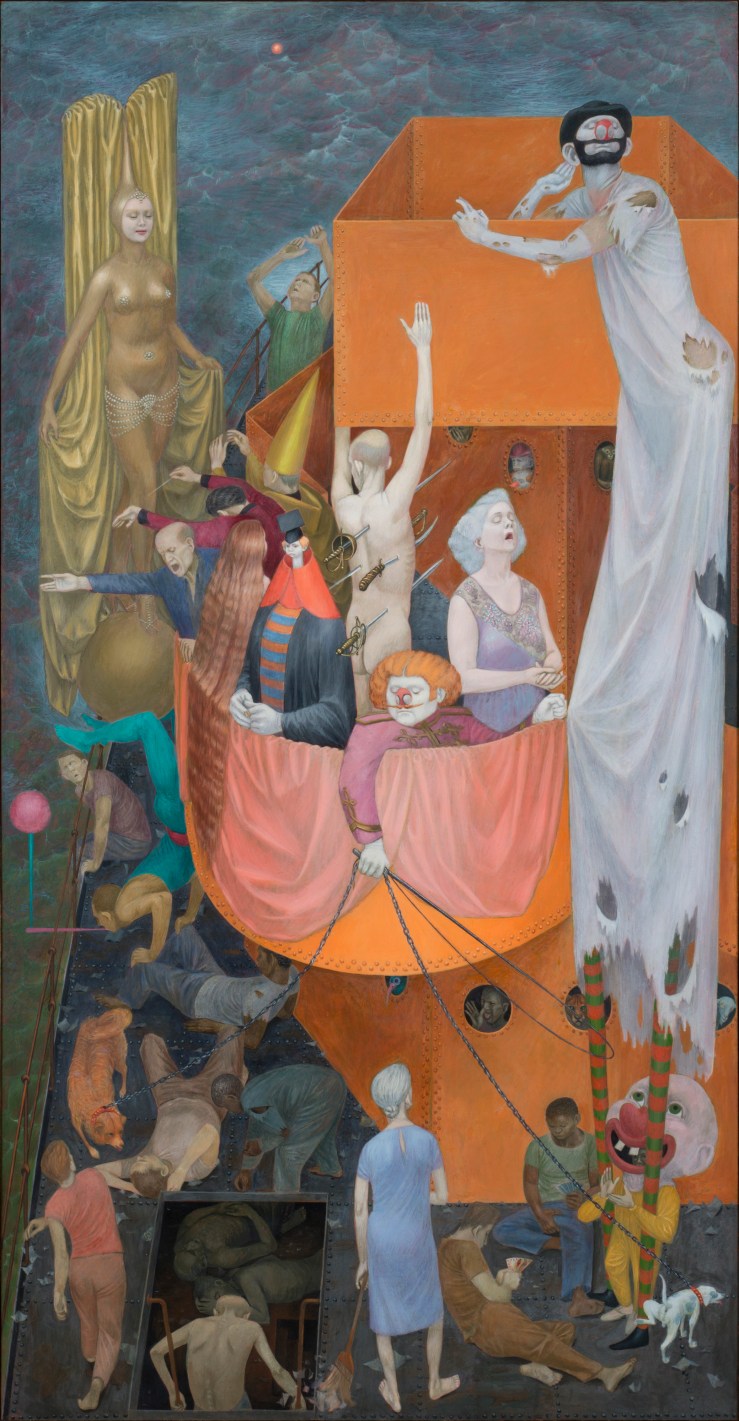
The Strangers — Leonor Fini

Screenshot 2019-08-13 at 10.09.04 AM

The Strangers, 1968 by Leonor Fini  (1908-1996)

Her Mother’s Kiss — Eugène Carrière

her-mothers-kiss-eugene-carriere
Her Mother’s Kiss, 1899 by Eugène Carrière (1849-1906)

Fast Lane — Nigel Van Wieck

fl-26

Fast Lane by Nigel Van Wieck (b. 1947)

Secret Laboratory inside the Skull Mountain — Davor Gromilovic 

secret_laboratory_inside_the_skull_mountain

Secret Laboratory inside the Skull Mountain, 2018 by Davor Gromilovic (b. 1985)

Master among these queer magicians | Nathaniel Hawthorne’s journal entry for August 9th, 1857

Chorlton Road, August 9th.–We have changed our lodgings since my last date, those at Old Trafford being inconvenient, and the landlady a sharp, peremptory housewife, better fitted to deal with her own family than to be complaisant to guests. We are now a little farther from the Exhibition, and not much better off as regards accommodation, but the housekeeper is a pleasant, civil sort of a woman, auspiciously named Mrs. Honey. The house is a specimen of the poorer middle-class dwellings as built nowadays,–narrow staircase, thin walls, and, being constructed for sale, very ill put together indeed,–the floors with wide cracks between the boards, and wide crevices admitting both air and light over the doors, so that the house is full of draughts. The outer walls, it seems to me, are but of one brick in thickness, and the partition walls certainly no thicker; and the movements, and sometimes the voices, of people in the contiguous house are audible to us. The Exhibition has temporarily so raised the value of lodgings here that we have to pay a high price for even such a house as this.

Mr. Wilding having gone on a tour to Scotland, I had to be at the Consulate every day last week till yesterday; when I absented myself from duty, and went to the Exhibition. U– and I spent an hour together, looking principally at the old Dutch masters, who seem to me the most wonderful set of men that ever handled a brush. Such lifelike representations of cabbages, onions, brass kettles, and kitchen crockery; such blankets, with the woollen fuzz upon them; such everything I never thought that the skill of man could produce! Even the photograph cannot equal their miracles. The closer you look, the more minutely true the picture is found to be, and I doubt if even the microscope could see beyond the painter’s touch. Gerard Dow seems to be the master among these queer magicians. A straw mat, in one of his pictures, is the most miraculous thing that human art has yet accomplished; and there is a metal vase, with a dent in it, that is absolutely more real than reality. These painters accomplish all they aim at,–a praise, methinks, which can be given to no other men since the world began. They must have laid down their brushes with perfect satisfaction, knowing that each one of their million touches had been necessary to the effect, and that there was not one too few nor too many. And it is strange how spiritual and suggestive the commonest household article–an earthen pitcher, for example–becomes, when represented with entire accuracy. These Dutchmen got at the soul of common things, and so made them types and interpreters of the spiritual world.

Afterwards I looked at many of the pictures of the old masters, and found myself gradually getting a taste for them; at least they give me more and more pleasure the oftener I come to see them. Doubtless, I shall be able to pass for a man of taste by the time I return to America. It is an acquired taste, like that for wines; and I question whether a man is really any truer, wiser, or better for possessing it. From the old masters, I went among the English painters, and found myself more favorably inclined towards some of them than at my previous visits; seeing something wonderful even in Turner’s lights and mists and yeasty waves, although I should like him still better if his pictures looked in the least like what they typify. The most disagreeable of English painters is Etty, who had a diseased appetite for woman’s flesh, and spent his whole life, apparently, in painting them with enormously developed busts. I do not mind nudity in a modest and natural way; but Etty’s women really thrust their nudity upon you with malice aforethought. . . . and the worst of it is they are not beautiful.

Among the last pictures that I looked at was Hogarth’s March to Finchley; and surely nothing can be covered more thick and deep with English nature than that piece of canvas. The face of the tall grenadier in the centre, between two women, both of whom have claims on him, wonderfully expresses trouble and perplexity; and every touch in the picture meant something and expresses what it meant.

The price of admission, after two o’clock, being six-pence, the Exhibition was thronged with a class of people who do not usually come in such large numbers. It was both pleasant and touching to see how earnestly some of them sought to get instruction from what they beheld. The English are a good and simple people, and take life in earnest.

Nathaniel Hawthorne’s journal entry for August 9th, 1857. From Passages from the English Note-Books.

artist-in-his-studio-1632
Artist in His Studio, 1632 by Gerrit Dou (Gerard Dow; 1613-1675)
a082d1b6e44bb6567c88b2d1fb9b0dc2
The Three Graces by William Etty (1787–1849)
800px-william_hogarth_007
The March of the Guards to Finchley1750 by William Hogarth (1697-1764)

The Affair — Kent Monkman

9aa7d5a288f32deda47b1aee11b455f0

The Affair, 2018 by Kent Monkman (b. 1965)