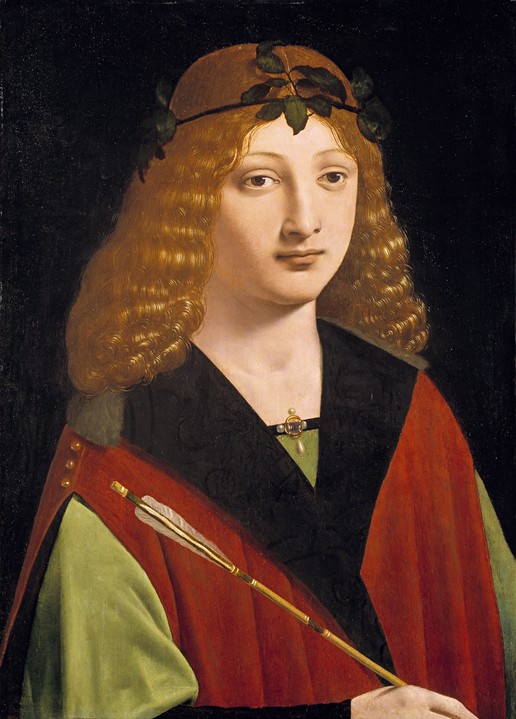
Portrait of a Youth Holding an Arrow, c. 1500 by Giovanni Antonio Boltraffio (c. 1466-1516)

Portrait of a Youth Holding an Arrow, c. 1500 by Giovanni Antonio Boltraffio (c. 1466-1516)

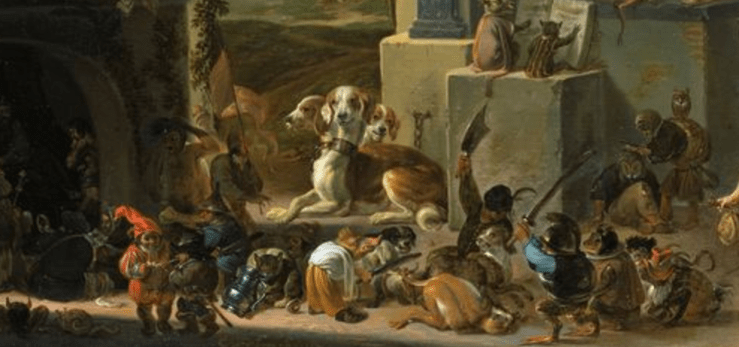
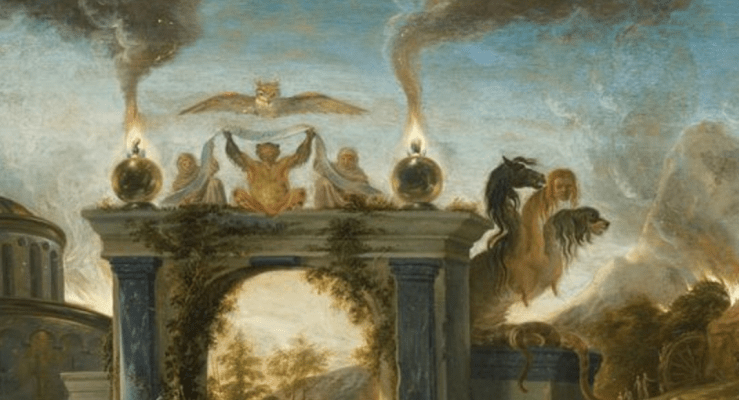
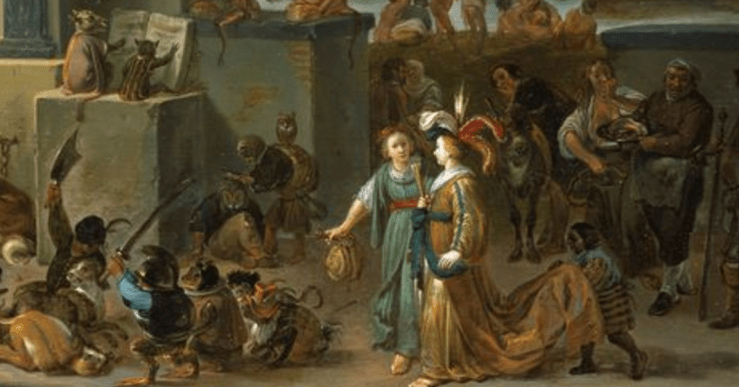
The Gates of Hell by Cornelis Saftleven (1607-1681)

From a hilarious profile on Odd Nerdrum, in which he discusses his 1997 work The Savior of Painting:
Almost life-size, it depicts the artist in a golden robe, armed with paintbrush and palette, against the soft Norwegian evening sky. On his palette is one single color: that of gold.
“This is kitsch in its purest form,” remarks the artist in front of the nearly finished work, gracefully saving us the embarrassment. “Mind you, there’s absolutely no irony here.”
The golden robe is for real. He had it made in New York a few years back, and it´s already a garment of international notoriety. His Self Portrait in Golden Robe, first exhibited in Stockholm last winter and now showing in a retrospective at the Astrup-Fearnley Museum in Oslo, shows him in this robe, which is lifted to reveal a markedly curved erection. Needless to say, the painting, done in the Rembrandt-like style that is both Odd Nerdrum’s life and his curse, caused a major debate in his home country. To Odd, that was business as usual.

Mass II by Seth Clark
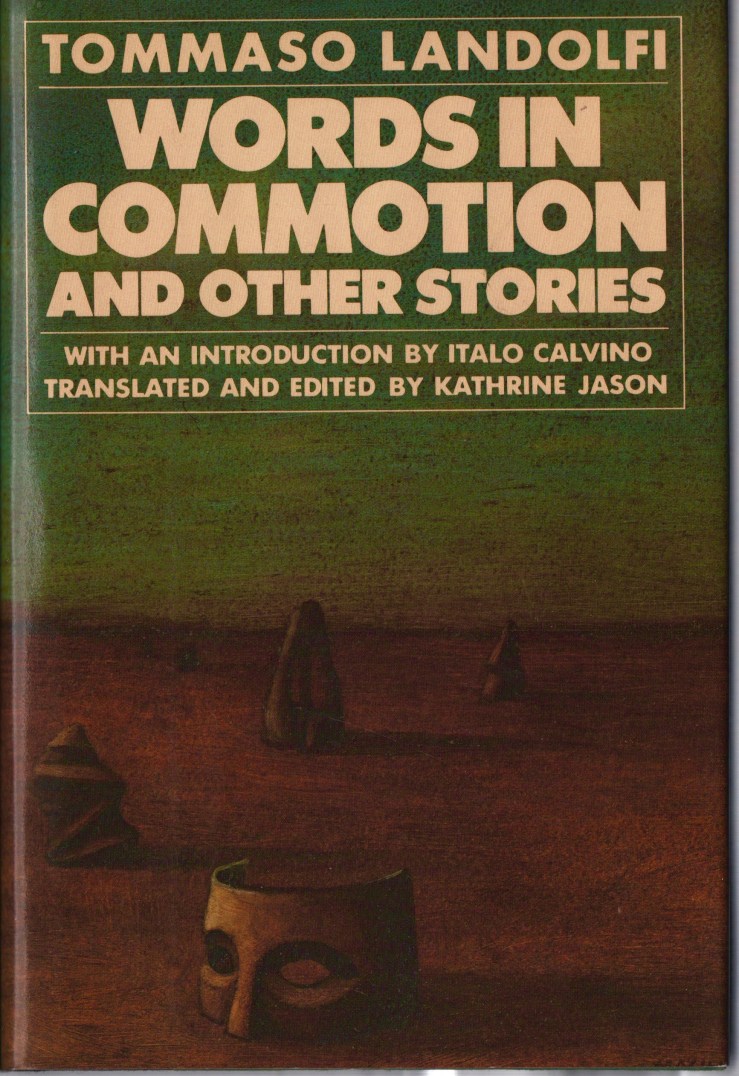
Having a spare hour, I searched my favorite local used book store again for a copy of Thomas S. Klise’s 1974 cult novel The Last Western. I’d like to write about The Last Western more, and I only have a samizdat digital copy (clearly made by someone who deeply loves this out of print novel). It’d be nice to check the digital copy against an actual book of course. Anyway, I didn’t find the Klise, despite extending my search to, um, westerns. (I see interlibrary loan in my future). Really, any indie press that brings The Last Western back into print will find plenty of readers (and champions for the book).
I did find a hardback Viking copy of a Tommaso Landolfi collection Words in Commotion, and read one of the shorter stories, “The Werewolf,” in the shop and then picked it up. Here’s Publisher’s Weekly’s 1986 review:
Little known in this country when he died in 1979, Landolfi is scarcely better recognized today, a situation this collection of 24 stories, with an introduction by Italo Calvino, is intended to remedy. Landolfi did not aspire to amuse or entertain in the usual sense; he preferred to confound and mystify. Even in his relatively conventional stories he scarcely bothered to inquire into motive or seek resolution. In “Uxoricide,” for example, a wife-murderer sets out to kill the shrew for reasons that do not seem quite sufficient, so that the act itself appears brutal and sadistic. In “A Woman’s Breast,” a man lusts after that part of a stranger until he attains it, is thereupon sickened by the sight and discovers odd morbidities within himself. Landolfi’s overriding interests–language and its literary possibilities, metaphysics, literary criticism—necessarily limit his audience. He saw the writer as one who spits words (see the title story), and he set himself against the critics who accused him of being “utterly indecipherable and mysterious.” That is, however, a challenge hurled at the reader.
You can read “Gogol’s Wife,” probably Landolfi’s most famous story, here.
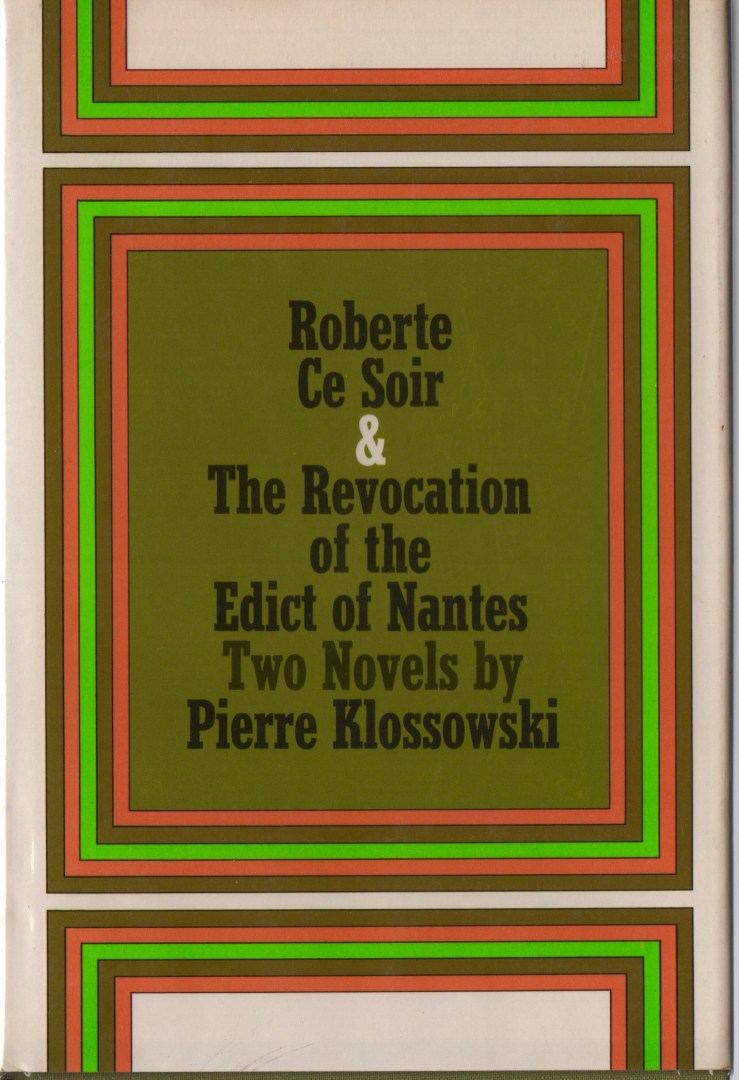
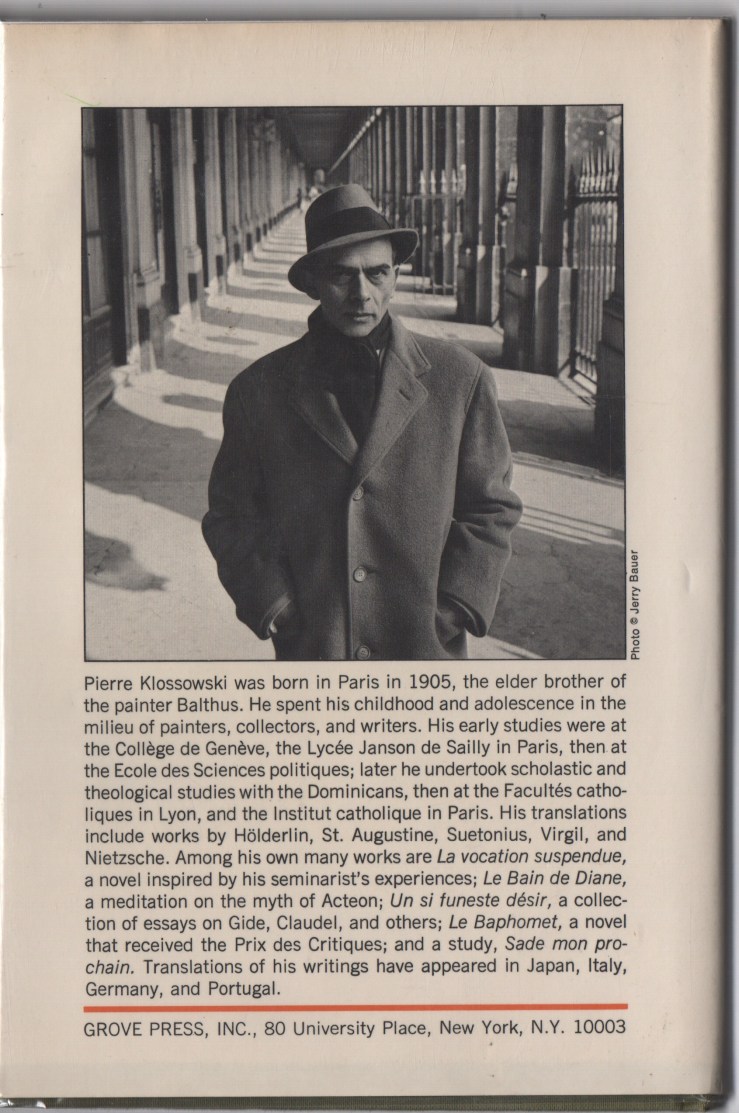
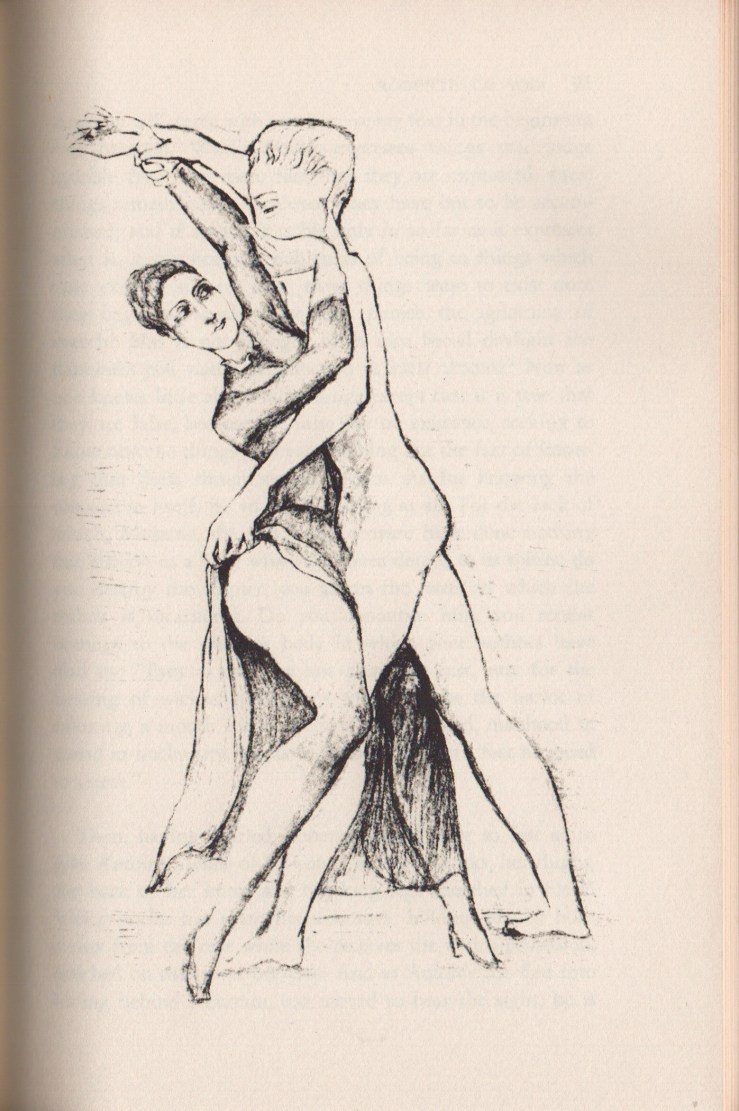
I also picked up a Grove Press first edition of Pierre Klossowski’s Roberte Ce Soir & The Revocation of the Edict of Nantes, two midcentury erotic novels. Austryn Wainhouse translates. Klossowski was the elder brother of the painter Balthus. Here’s the back cover, and an illustration of Klossowski’s (I’ll post the rest of the illustrations later):
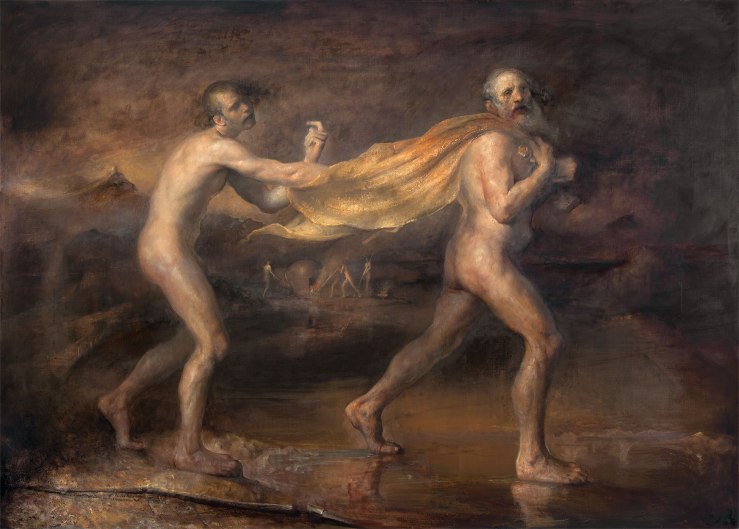
The Golden Cape, 1997 by Odd Nerdrum (b. 1944)
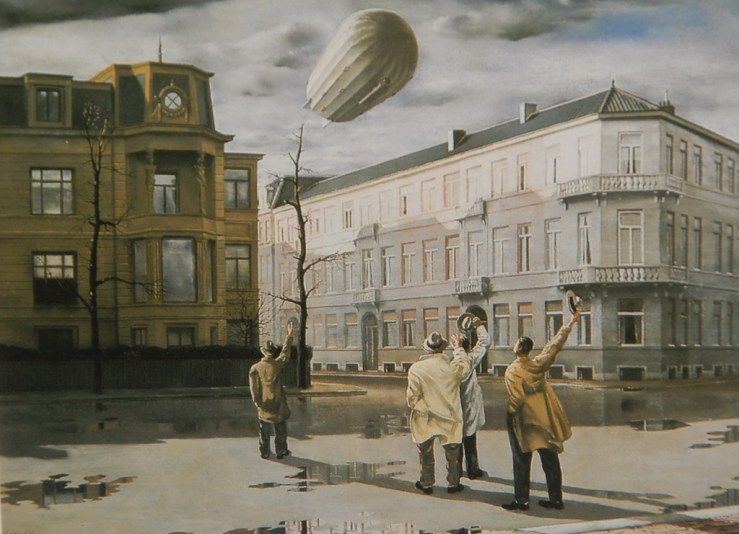
The Blimp, 1933 by Carel Willink (1920-1983)
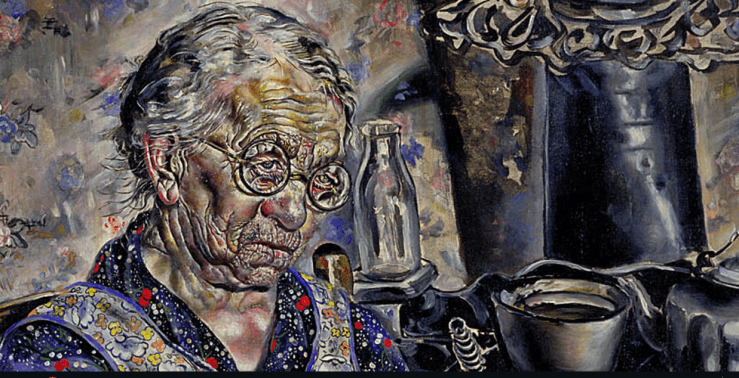
The Farmer’s Kitchen (detail), 1934 by Ivan Albright (1897–1983)
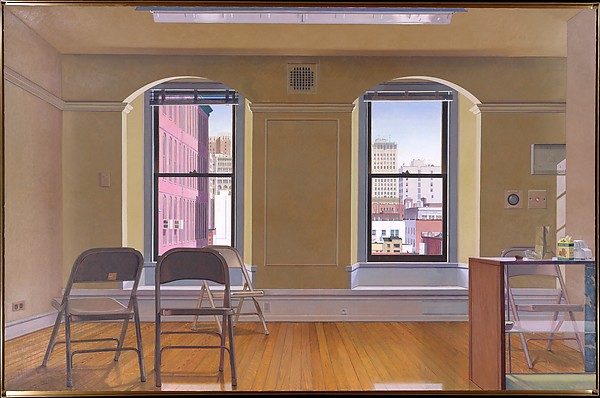
Thursday, 1980 by John Moore (b. 1941)
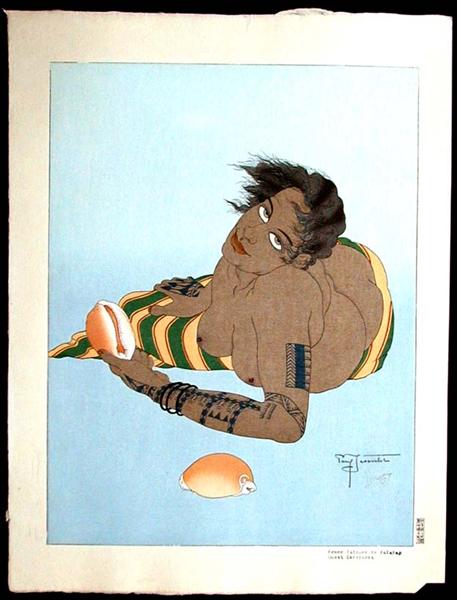
Femme Tatouee De Falalap. Ouest Carolines (Tattooed Woman of Falalap. West Carolines), 1935 by Paul Jacoulet (1896-1960)


The Flaying of Marsyas, c. 1570-1576 by Titian (c. 1488-1576)
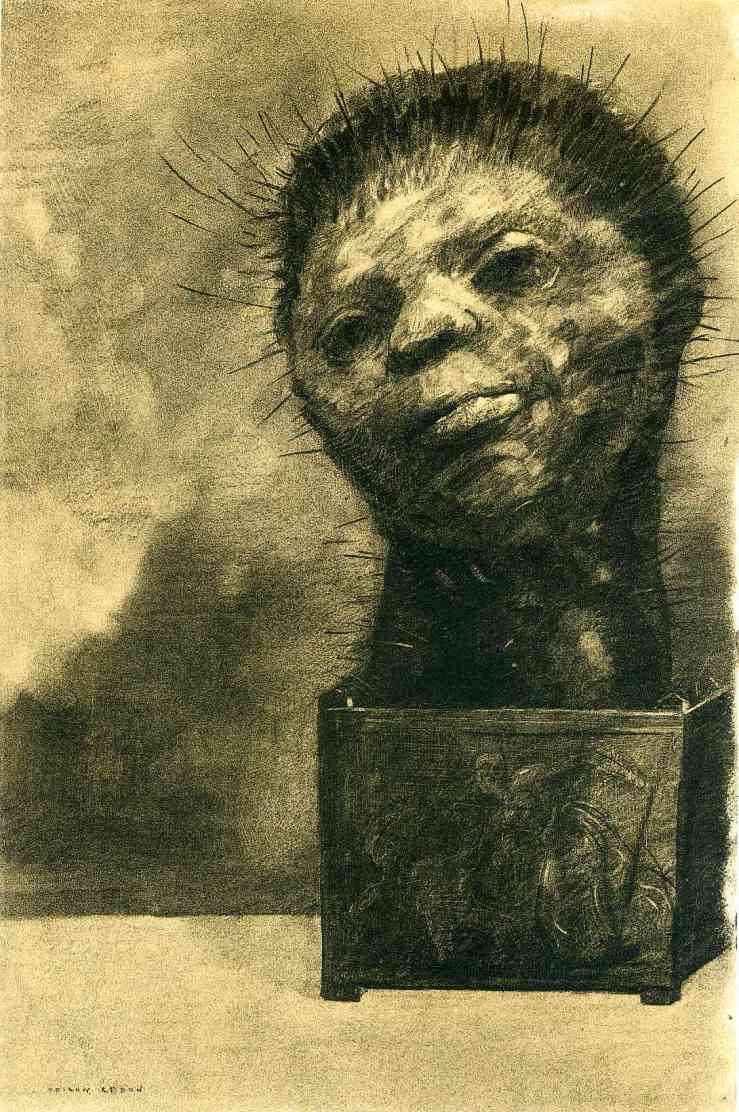
Cactus Man, 1882 by Odilon Redon (1840-1916)

Teasing the Donkey, 1827 by Joseph Mallord William Turner (1775–1851)
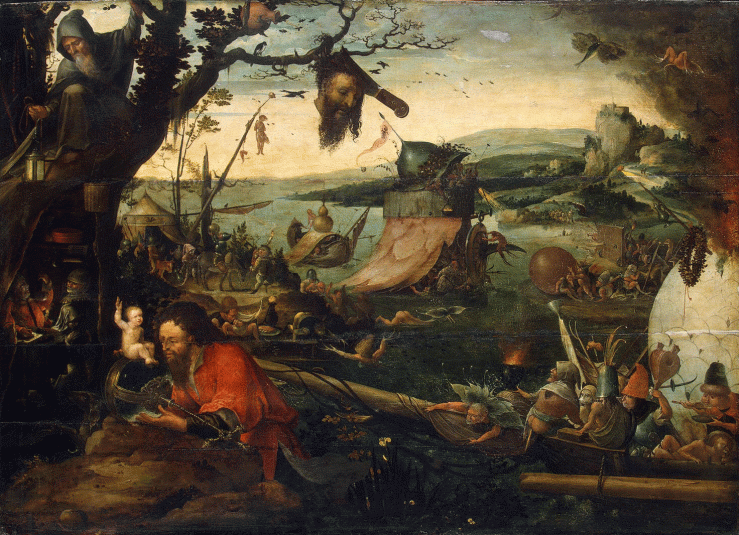
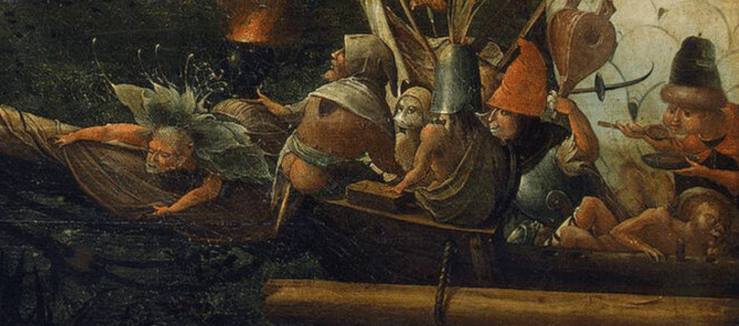
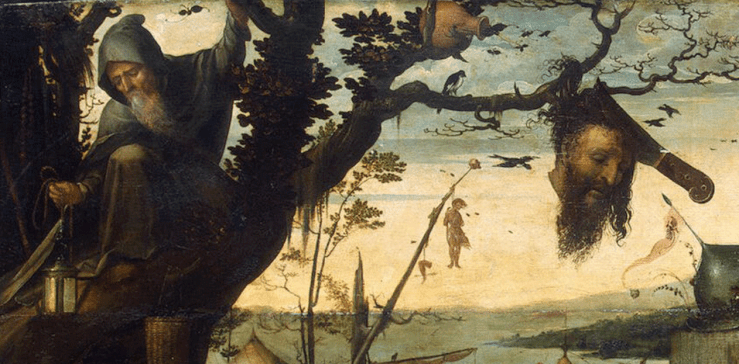
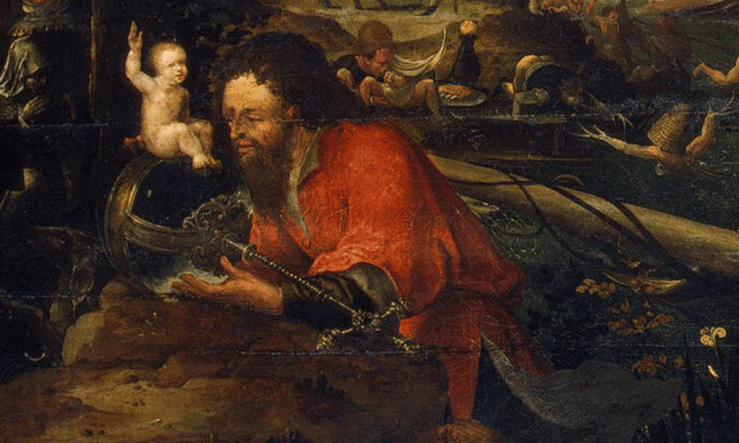
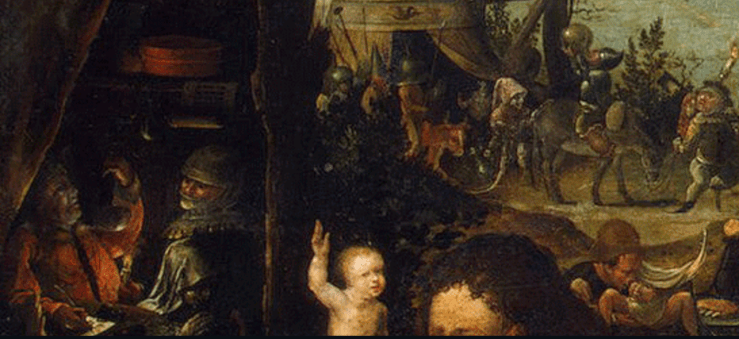
St. Christopher and the Christ Child, c. 1550 by Jan Mandyn (c. 1500-1559)


Trompe l’oeil (Board Partition with Letter Rack and Music Book), 1668 by Cornelis Norbertus Gysbrechts (c. 1630 – c. 1675)
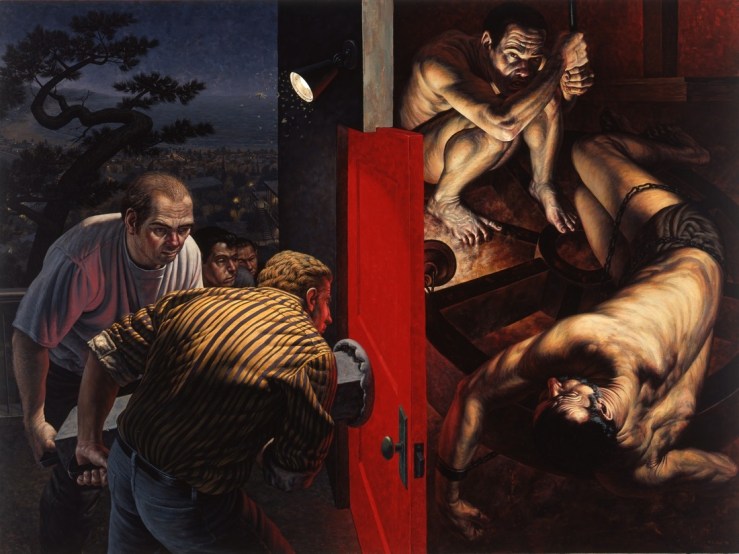
Red Door, 1994 by F. Scott Hess (b. 1955)

Detail from Der Jungbrunnen (The Fountain of Youth), 1546 by Lucas Cranach the Elder (c. 1472–1553)
 Biblioklept
