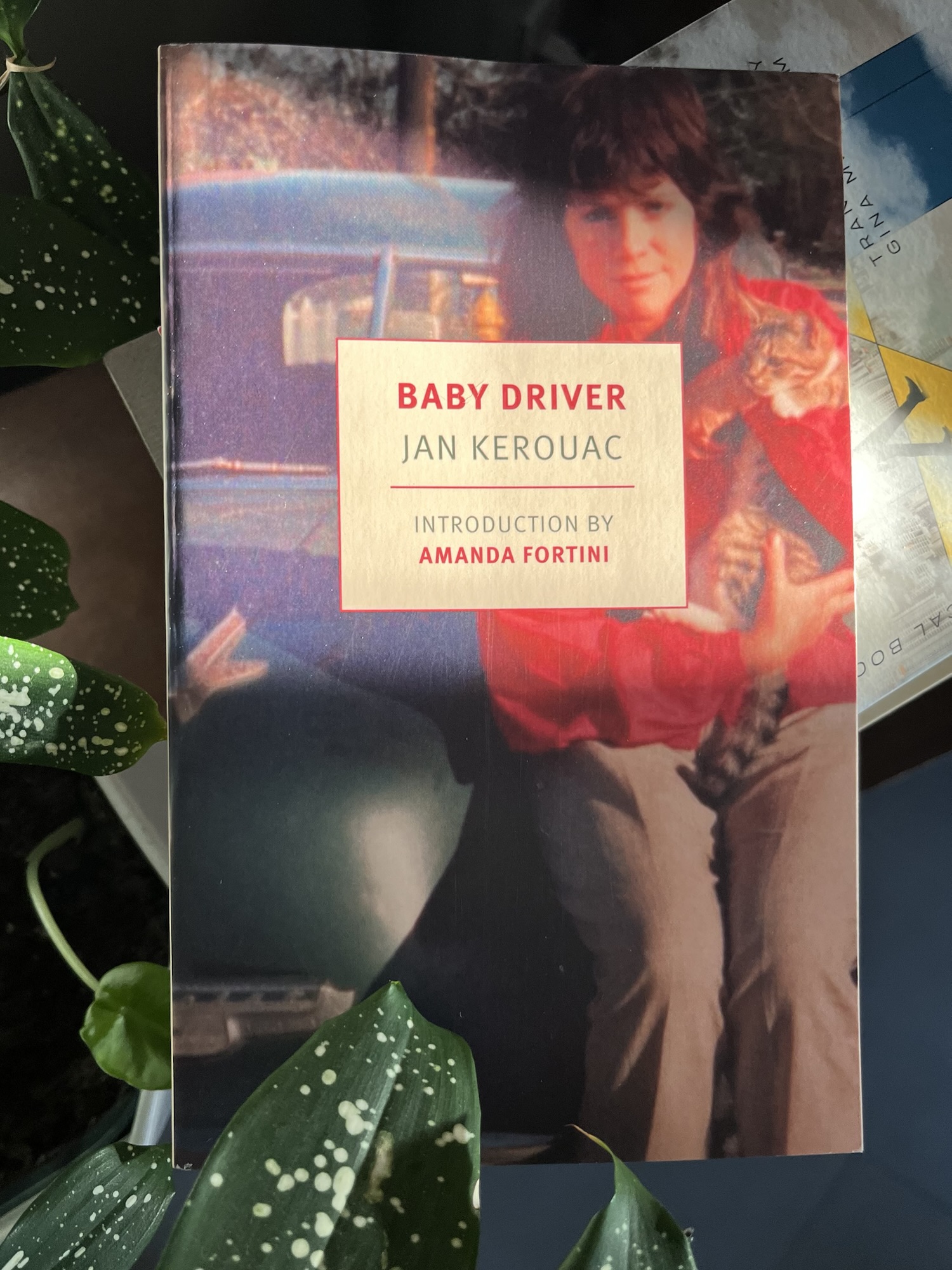
Thomas Pynchon’s Shadow Ticket (Book acquired, 30 Sept. 2025)

Here are the first four paragraphs of Thomas Pynchon’s ninth novel Shadow Ticket:

When trouble comes to town, it usually takes the North Shore Line. What with tough times down the Lake in Chicago, changes in the wind, Prohibition repeal just around the corner, Big Al in the federal pokey in Atlanta, Outfit affairs grown jumpy and unpredictable, anybody needing an excuse to get out of town in a hurry comes breezing up here to Milwaukee, where it seldom gets more serious than somebody stole somebody’s fish.

 Hicks McTaggart has been ankling around the Third Ward all day keeping an eye on a couple of tourists in Borsalinos and black camel hair overcoats up from the home office at 22nd and Wabash down the Lake, the Chicago Outfit handling whatever needs to be taken care of in Milwaukee since Vito Guardalabene cashed in his chips ten years ago, though Vito’s successor Pete Guardalabene is still considered head man in the Ward, gets his picture in the social pages smiling at weddings and so forth.

 Loitering in the alleyway in back of Pasquale’s Bella Palermo, Hicks can hear sounds of noodle-flexing sociability, smell spaghetti sauce and garlic frying and sfinciuni bagherese baking over an olive-branch fire, and it’s making him hungry, though this close to payday his lunch menu is a thermos of coffee and a buttermilk cruller stashed in a pocket someplace.

 The explosion when it comes seems to be from somewhere across the river and nearer the Lake. Forks and glassware pause between tabletop and mouth, as if everybody’s observing a moment of stillness, and nobody seems surprised.

An explosion! There we go.

Ben Passmore’s Black Arms to Hold You Up (Book acquired, 23 Sept. 2025)

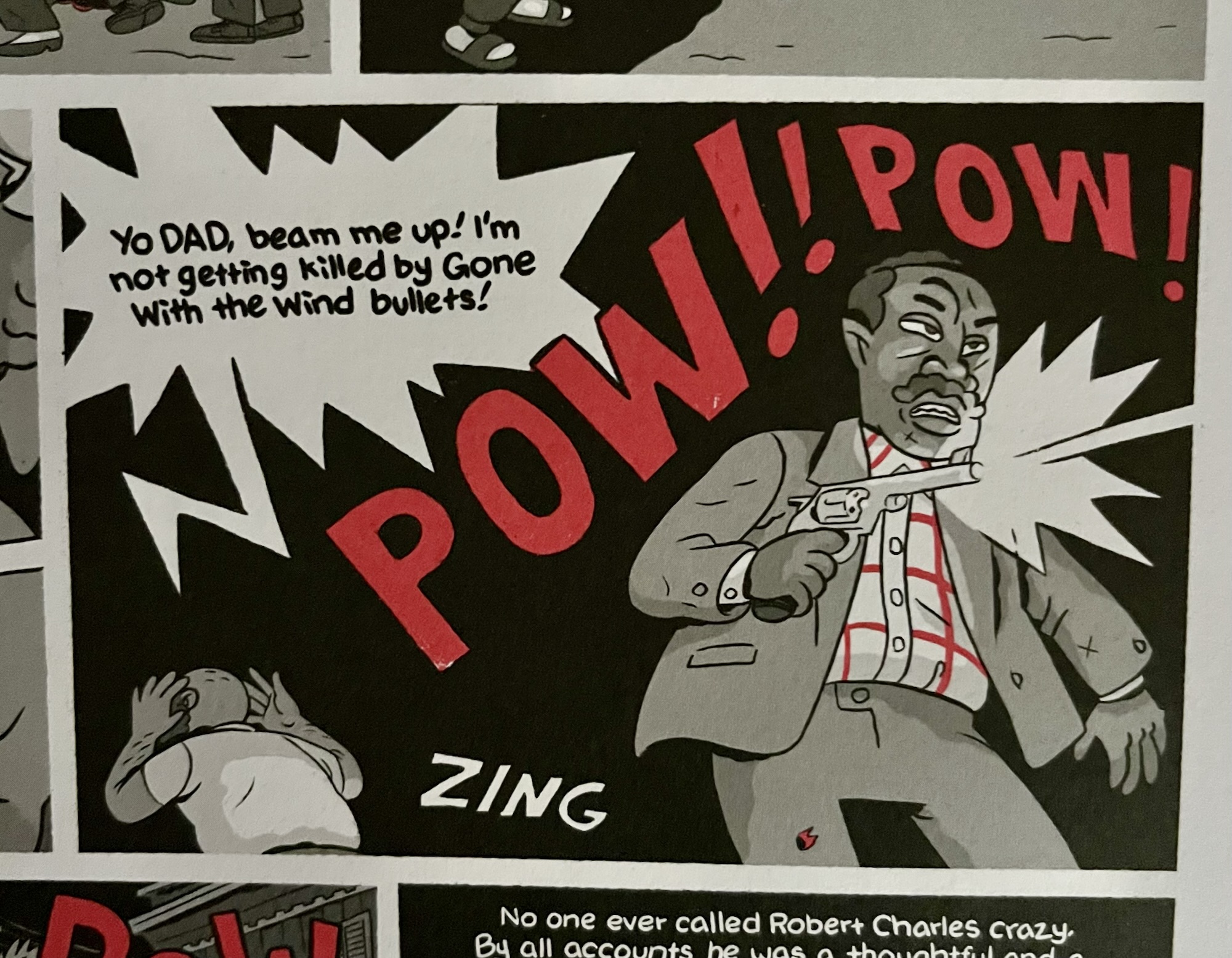
I was psyched to get an early copy of Ben Passmore’s Black Arms to Hold You Up this week. I love the dramatic vibrancy of Passmore’s cartooning, and his economic use of black, white, gray, and red throughout the book. I should have a review out around its release on 7 Oct. 2025.

Here is publisher Pantheon’s blurb:

It’s the summer of 2020, and downtown Philly is up in flames. “You’re not out in the streets with everyone else?” Ronnie asks his ambivalent son, Ben, shambling in with arms full of used books: the works of Malcom X, Robert F. Williams, Assata and Sanyika Shakur, among others. “Black liberation is your fight, too.”

So begins Black Arms to Hold You Up, a boisterous, darkly funny, and sobering march through Black militant history by political cartoonist Ben Passmore. From Robert Charles’s shootout with the police in 1900, to the Black Power movement in the 1960s, to the Los Angeles and George Floyd uprisings of the 1990s and 2020, readers will tumble through more than a century of armed resistance against the racist state alongside Ben—and meet firsthand the mothers and fathers of the movement, whose stories were as tragic as they were heroic.

What, after so many decades lost to state violence, is there left to fight for? Deeply researched, vibrantly drawn, and bracingly introspective, Black Arms to Hold You Up dares to find the answer.

Siegfried Kracauer’s Ginster (Book acquired, 16 Sept. 2025)

Siegfried Kracauer’s 1928 novel Ginster is forthcoming in translation by Carl Skoggard from NYRB. Their blurb:

Ginster is a war novel about not going to war; about how war, far from the front, comes to warp every aspect of outer and inner life and to infect the workings of language itself. The subject is World War I, but this novel by the brilliant twentieth-century sociologist, journalist, and film critic Siegfried Kracauer, first published in 1928, has as much to say about what it means to live under the sulking great powers and blood-imbrued satrapies of today as it does about the inflamed self-righteousness of late imperial Germany. In Ginster, as in Greek tragedy, massacre occurs offstage, arriving only as “news,” but the everyday horror of a society engineered for the continual production of violence is not to be denied. Ginster, the Chaplinesque antihero, intent chiefly on saving his own skin, works hard to keep his distance from the war machine, and yet making a living, he discovers, is all about keeping it running. How different, in the end, is his dreamy self-absorption from the empty military language that has come to pervade every aspect of civilian life in the homeland?

Bialik/Rilke (Two poetry collections acquired, 13 Sept. 2025)

Two new collections from NYRB’s Poets imprint: On the Slaughter by Hayim Nahman Bialik, translated by Peter Cole, and Fifty Poems by Rainer Maria Rilke, translated by Geoffrey Lehmann. NYRB’s Bialik blurb:

Few poets in the history of Hebrew have possessed the power and prescience of Hayim Nahman Bialik. Born in 1873 in a small Ukrainian village, he spent his most productive years in Odessa and in his fifties made his way to British Mandatory Palestine. He died in Vienna in 1934. His body of work opened a path from the traditional Jewish world of Eastern Europe into a more expansive Jewish humanism. In a line that stretches back to the Bible and the Hebrew poetry of Muslim and Christian Spain, he stands out—in the words of Maxim Gorky—as “a modern Isaiah.” He remains to this day an iconic and shockingly relevant poet, essayist, and tutelary spirit.

Translated and introduced by MacArthur-winning poet Peter Cole, On the Slaughter presents Bialik for the first time in English as a masterful artist, someone far more politically and psychologically unsettling than his reputation as the national poet of the Jewish people might suggest. This compact collection offers readers a panoramic view of Bialik’s inner and outer landscapes—from his visionary “poems of wrath” that respond in startling fashion to the devastations of pogroms and revolutionary unrest to quietly sublime lyrics of longing and withering self-assessment. The volume also includes a sampling of slyly sophisticated verse for children, and a moving introduction that bridges Bialik’s moment and our own.

And “The Grown-up,” a poem from Rilke in Lehmann’s translation:

“The Grown-up”

All stood on her, all that has ever been
and was the world, and stood, its fears and grace,
as trees stand straight and rooted in one place, and solemn, like the memory of a race
or Ark of God, all-seeing and not seen.

She carried it; knowledge of who they are,
the flyers, those who flee, the distant ones,
the monsters and the awkward, diffident sons,
casually like a brimming water jar
on her calm head. Then in the midst of play,
preparing, changing slowly, cell by cell,
she did not sense the first white veil that fell
across her open face, bland as the day,

almost opaque, never to lift again.
And she forgot the answers she once knew,
leaving some vagueness she could not explain:
in you, the child who you have been, in you.

Dante’s Paradiso (Book acquired, some time in July 2025)

D.M. Black’s new translation of Dante’s The Divine Comedy concludes in this volume. Publisher NYRB’s blurb:

Paradiso brings The Divine Comedy to a virtuosic and visionary end. This final leg of Dante’s journey from Hell into the presence of God is for many the most memorable stretch of the poem, a musical and mystical interveaving of mind and heart and transported sense that is unlike anything else in world literature. This new English rendering of Paradiso by the poet D.M. Black, whose Purgatorio won the 2022 National Translation Award in Poetry, re-creates this masterpiece with fidelity and clarity.

Cleansed of sin after his grueling trek up Mount Purgatory, Dante’s pilgrim sets out to explore the celestial spheres under the guidance of his childhood sweetheart and lifelong muse, Beatrice. As he moves from the moon to the planets to the Primum Mobile and beyond, encountering emperors, heroes, saints, members of his family, and various other redeemed sinners, he contemplates optics, angels, free will, mercy, and love. The transcendent actuality of bliss is ever more palpable as the poem unfolds, and yet in the background remains the carnage of history and the deforming bitterness of the human heart, not to be denied—Dante is nothing if not a realist—even in the supreme light of “the Love that moves the sun and all the stars.”

Written at a time of great political turmoil in Italy and great personal anxiety in Dante’s life, Paradiso wrestles with many questions that have echoes in our own disturbing times. It is a book about the shape of the universe and how to find one’s place within it, composed with inventive daring and linguistic ingenuity as Dante stretches language to its very limits, striving to make vivid and tangible the ineffable and sublime.

Manuel Mujica Lainez’s Bomarzo (Book acquired, 14 July 2025)

I’m always intrigued by any NYRB fatty that shows up at Biblioklept World Headquarters, and Manuel Mujica Lainez’s 1962 novel Bomarzo (translated by Gregory Rabassa) has especially piqued my interest. The back of this edition features praise from Roberto Bolaño:

[Bomarzo] is a novel that will make any reader happy…. It’s a novel about art and a novel about decadence, about the luxury of writing novels and about the exquisite uselessness of the novel…. And of course it’s also a novel to be read aloud, with the whole family gathered around.

I’d heard of the novel a few years ago, but hadn’t been able to track down a used copy, so it’s great that it’s back in print. Here’s NYRB’s description:

Pier Francesco Orsini, duke of Bomarzo, created a park of monsters in which the nightmares of the Renaissance are preserved, set in stone yet still writhingly alive. In Bomarzo, Manuel Mujica Lainez—one of the great Argentine novelists of the twentieth century—re-creates the dark and legendary duke as a brilliant memoirist recalling the trials and travails of his sixteenth-century life from a modern point of view (Freudian psychoanalysis and Lolita both put in an appearance) while ensconced in a city that sounds suspiciously like Mujica Lainez’s own Buenos Aires.

Bomarzo is a historical novel in the grand manner, a first-person portrait of an aristocratic hunchback bullied by his family and determined to prove a villain (a portrait so convincing that Edmund Wilson assumed it to be fact). It is also, of course, a commentary on such historical fictions. But above all it’s an immersive story told in a sumptuous style—a bit as if Proust were rewriting one of Poe’s Italian tales—as Gregory Rabassa’s translation (out of print for many years) conveys beautifully.

Leonora Carrington’s The Stone Door (Book acquired, 22 June 2025)

Superpsyched about this one. NYRB’s jacket copy:

The Stone Door is an omen, an incantation, and an adventure story rolled into one. Built in layers like a puzzle box, it is the tale of two people, of love and the Zodiac and the Kabbalah, of Transylvania and Mesopotamia converging at the Caucasus, of a mad Hungarian King named Böles Kilary and of a woman’s discovery of an initiatory code that leads to a Cyclopean obstacle, to love, self, and awareness, to the great stone door of Kescke and beyond.

Written at the end of World War II but not published until 1977 and long unavailable, The Stone Door is at once a celebration of the union of the surrealist painter Leonora Carrington and her husband, the Hungarian-born photographer Chiki Weisz, and an argument for the unification of the male and the female as a means of liberating the human race.

Konstantin Vaginov’s Goat Song (Book acquired, c. early May 2025)

I kinda sorta lost a big chunk of May this year, and some of the books that arrived at Biblioklept World Headquarters slipped through the cracks. Here, the cliche slipped through the cracks means got piled up in the wrong pile. Ainsley Morse’s and Geoff Cebula’s translation of Konstantin Vaginov’s Goat Song was one of these slipped-crack-wrong-pile titles. The volume actually collects two short novels by Vaginov: Goat Song, and Works and Days of Whistlin. Publisher NYRB’s blurb:

Konstantin Vaginov was an early and exemplary figure of Soviet modernist writing in all its agonized and glorious contradictions. Born into an educated middle-class family, Vaginov came of age with the Revolution. His novels of the late 1920s and early ’30s are daringly experimental and tragically nostalgic, using mercilessly ironic prose to mourn the loss of prerevolutionary intellectual culture. Adrift in the brave new Soviet world, Vaginov’s protagonists attempt to conjure the recent and distant past by stockpiling old books and songs, vulgar baubles and bad jokes, newspaper clippings, coins, and graffiti.

This volume contains two novels: Goat Song features thinly veiled portraits of Vaginov’s contemporaries as they flounder and self-destruct in their new bracingly materialist circumstances. Echoing Gogol, Dostoyevsky, and Bely, Goat Song is both a classic Petersburg city text and its swan song: “Now there is no Petersburg . . . the author is a coffin-maker by trade, not a cradle expert.”

Works and Days of Whistlin follows the novelist Whistlin as he unscrupulously mines the lives of his friends and fellow citizens for literary material. His exploitation of human material is a wry commentary on the concurrent efforts to industrialize and collectivize the Soviet economy, at a horrific human cost.

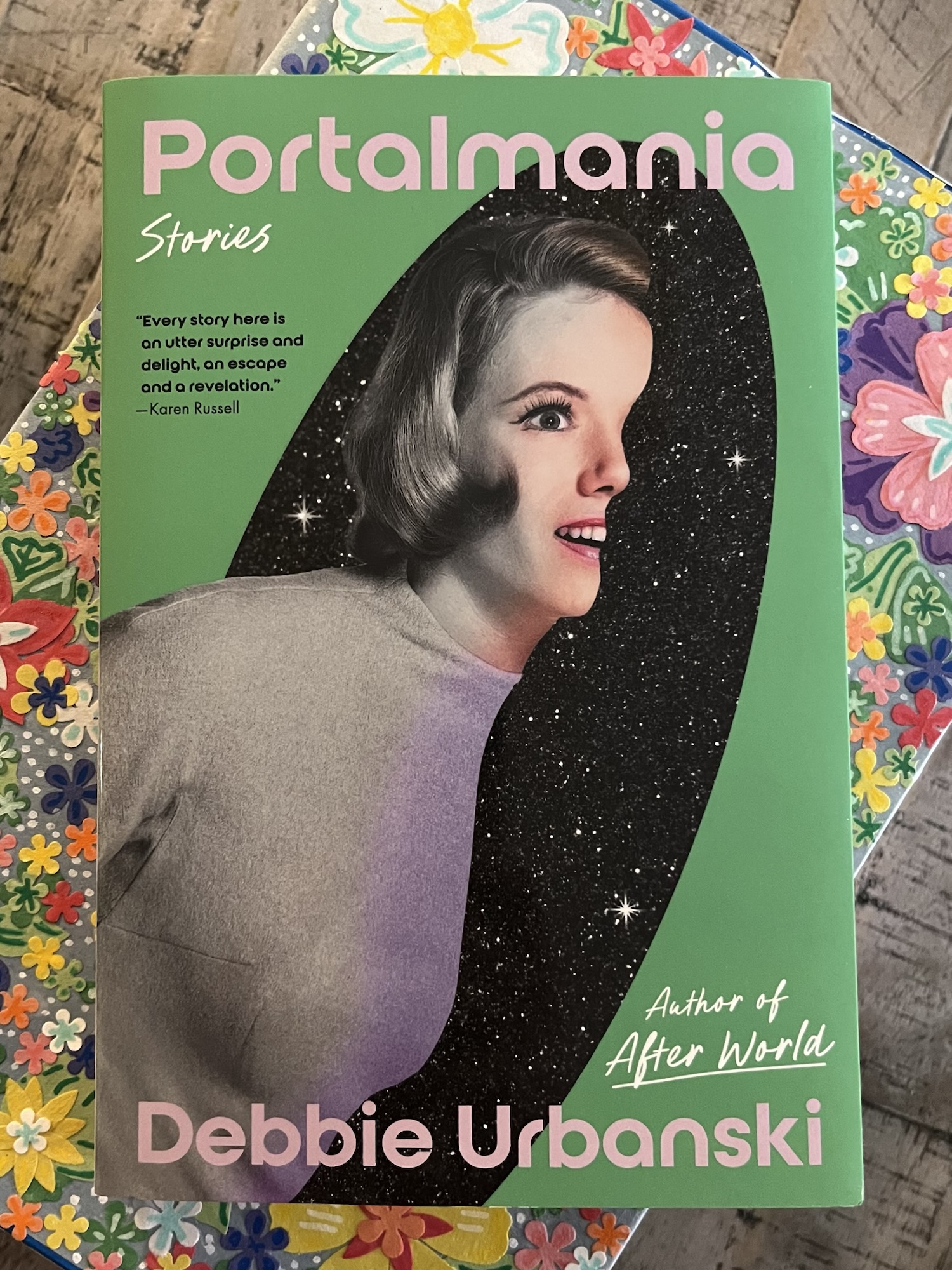
Debbie Urbanski’s Portalmania (Book acquired, 5 May 2025)

I really dug Debbie Urbanski’s debut novel After World, writing about it,

Debbie Urbanski’s debut novel After World reimagines the end of humanity—or perhaps the beginning of a new digital existence. The narrator, [storyworker] ad39-393a-7fbc, reconstructs the life of Sen Anon, the last human archived in the Digital Human Archive Project, using sources like drones, diaries, and other materials. Drawing on tropes from dystopian and post-apocalyptic literature, this metatextual novel references authors like Octavia Butler and Margaret Atwood while nodding to works such as House of Leaves and Station Eleven. Urbanski’s spare, post-postmodern approach also reminded me of David Markson’s Wittgenstein’s Mistress—good stuff.

Publisher Simon & Schuster’s blurb:

In Portalmania, Debbie Urbanski wields sci-fi, fantasy, horror, and realism to build a dark mirror that she holds up to the ordinary world. Within the sharply imagined landscape of this collection, portals appear in linen closets, planetary gateways materialize in boarding schools, monsters wait in bathroom vents, and transformations of women’s bodies are an everyday occurrence. Political division causes physical rifts that break apart the Earth’s crust. A son on another planet sends dispatches home to the mother who failed him, and a wife turns to the supernatural to escape her abusive marriage. Portals are not only doorways found in children’s classics, but separations, escapes, dead ends, desertions, and choices that will change these characters’ lives forever.

Laura Vazquez’s novel The Endless Week (Book acquired, 24 May 2025)

Laura Vazquez’s novel The Endless Week is forthcoming this Fall in the US in English translation by Alex Niemi from publisher Dorothy. The Dorothy Project’s (enticing) description:

From the 2023 winner of the Prix Goncourt for poetry comes a debut novel unlike any other, a lyrical anti-epic about the beauty, violence, trauma, and absurdity of the internet age.

Like Beckett’s novels or Kafka’s stranger tales, The Endless Week is a work outside of time, as if novels had never existed and Laura Vazquez has suddenly invented one. And yet it could not be more contemporary, as startling and constantly new as the scrolling hyper-mediated reality it chronicles. Its characters are Salim, a young poet, and his sister Sara, who rarely leave home except virtually; their father, who is falling apart; and their grandmother, who is dying. To save their grandmother, Salim and Sara set out in search of their long-lost mother, accompanied by Salim’s online friend Jonathan, though their real quest is through the landscape of language and suffering that saturates both the real world and the virtual. The Endless Week is sharp and ever-shifting, at turns hilarious, tender, satirical, and terrifying. Not much happens, yet every moment is compulsively engaging. It is a major work by one of the most fearlessly original writers of our time.

“Not much happens, yet every moment is compulsively engaging” — I am the kind of sicko who will lap that up, maybe. I’ve had almost entirely hits with everything Dorothy has put out; even the misses were a thousand percent more interesting than most of the midlist stuff that comes through the house. Anyway.

Benito Pérez Galdós’ Miaow (Book acquired, mid May 2025)

Benito Pérez Galdós’ 1888 novel Miaow is forthcoming in English translation this summer by Margaret Jull Costa, via NYRB. Their blurb:

Ramón Villaamil has been a loyal civil servant his whole life, but a change in government leaves him out of a job and still two months short of qualifying for his pension. Initially optimistic that he’ll be able to find work and pull his family out of their financial straits, he spends his days visiting the administration, pestering his ex-colleagues to put in a good word for him, and begging his friends in high places for money. At home, Villaamil’s wife, daughter, and sister-in-law—whose feline appearances earn them the nickname “the Miaows”—are unimpressed by Villaamil’s failures, and the only joy left in Villaamil’s life is his young grandson Luis. When Luis’s disgraced father, the handsome and dastardly Víctor Cadalso, reappears in their lives with promises of easing their financial burdens, Villaamil has no choice but to allow him back into their midst, even as he knows there is nothing pure about Víctor’s intentions and his return might spell their ruin.

Benito Pérez Galdós’s satire of middle-class life bears comparison with the novels of Charles Dickens and Honoré de Balzac, serving up a scathing critique of the hypocrisy and corruption of nineteenth-century Spanish society and the dehumanizing rituals of work. Margaret Jull Costa’s new translation brings out the tragedy, the comedy, and the vitality of Pérez Galdós’s prose.

And another Moby-Dick

Herman Melville’s 1851 novel Moby-Dick is probably my favorite book.

***

Years ago at an awful dinner party a man I didn’t know asked me What do you do?, by which he meant how I made money to live, or, maybe charitably, if I had a specific profession. When I told him it had something to do with literature and college students he followed up with a question no stranger should aim at another stranger-

-So what’s your favorite book then?

-Moby-Dick is my favorite book, I offered, this being my somewhat standard answer then.

-Oh no, I mean, what’s your real favorite booknot just the one you say to impress people?

Okay Gravity’s Rainbow is my favorite book.

-I haven’t read that one yet but I like Tom Clancy too. 

***

A dear friend at our house this weekend, under truly awful circumstances, circumstances that have no bearing on this riff, claimed to have counted “eighteen copies” of Moby-Dick around the house. As far as I could tell, there are only about thirteen, including a children’s pop up version and three comic book adaptations (I don’t know how he would’ve found the comic adaptations, as they are slim and I think in drawer or box). He asked for one; I offered him the UC Press edition illustrated by Barry Moser, the one I’d used the last time I reread Moby-Dick. He opted instead for the most recent Norton Critical Edition, which a rep sent me a few years ago.

***

The last time I reread Moby-Dick I used the UC Press edition illustrated by Barry Moser. This was in 2021. I ended up writing forty riffs on the novel, likely trying the patience of any regular readers of this blog.

***

If you’re not up for forty riffs, I wrote a very short riff on this very long book back in 2013.

***

The two preceding notes are my way of saying: Moby-Dick is probably my favorite novel; it’s fantastic and I’ve written about it in both short and long form, and I think anyone can read it and should–it’s funny, sad, thrilling, captivating, meditative, beguiling, baffling–a thing larger than its own frame, certainly larger than its author and his era. And so now–

***

I have another Moby-Dick. This one is designed and illustrated by Dmitry Samarov. It’s about 650 pages, and is a pleasing, squarish shape that rests easy in the hands (a contrast to the coffin-shaped Norton Critical Editions). The pages are not too bright (I hate bright white pages) nor too crisp; the spine is not so rigid that one seeks to break it before setting about the business of checking into the Spouter Inn. It is a very readable copy — relaxed, not too heavy and not too cramped, no precious footnotes. And there are Samarov’s sketches.

***

***

Rifling (or is it riffling? I can never remember) through this edition today, reading a few passages aloud even, just to feel myself go a little crazy and then get a small relief from that craze, the dominant sense I got from Samarov’s accompanying sketches is something like this: Someone riffing along to Ishmael’s ghost-voice, not competing with it nor trying to turn the mechanics of its verbs and nouns and adjectives into a mimetic representation of action or thought. I think the drawings, as a body, rather approximate something like an aesthetic ear tuned to Ishmael’s wail: scratchy ink lines tangle into and out of shapes in a discourse with the narrative. Others tuned to the voice might on any given page jot down a note or circle a phrase or even, dare, dream of a crowded footnote; Samarov offers a sketch. His love for the novel comes through.

***

If you haven’t read Moby-Dick, you should. Samarov’s edition is a worthy entry into the fold. Check it out.


Matt Bucher’s The Summer Layoff (Book acquired, 24 April 2025)

Matt Bucher’s forthcoming novel The Summer Layoff is a semi-sequel to his debut, The Belan Deck. Blurb:

On Day 1, the narrator of The Summer Layoff is unceremoniously canned from his soul-sucking corporate job. But, he has a generous severance package that affords him the time off to do nothing, for once. Instead of attending virtual meetings and reviewing PowerPoint files relating to an amorphous Al project, he can now take long walks through his Texas suburb, write in his diary, scroll Wikipedia for hours at a time, and contemplate normal human anxieties. Part catalog, part self-help note-to-self, The Summer Layoff is a meditation on the modern metaphysics of work and stasis.

From my review of The Belan Deck:

Let’s talk about the spirit and form of The Belan Deck. Bucher borrows the epigraphic, anecdotal, fractured, discontinuous style that David Markson practiced (perfected?) in his so-called Notecard Quartet (1996-2007: Reader’s BlockThis Is Not A NovelVanishing Point, and The Last Novel). “An assemblage…nonlinear, discontinuous, collage-like,” wrote Markson, to which Bucher’s narrator replies, “Bricolage. DIY culture. Amateurism. Fandom. Blackout poems.”

Bucher’s bricolage picks up Markson’s style and spirit, but also moves it forward. Although Markson’s late quartet is arguably (I would say, by definition) formally postmodernist, the object of the Notecard Novels’ obsession is essentially Modernism. Bucher’s book is necessarily post-postmodern, taking as its objects the detritus and tools of postmodern communication: PowerPoint, Google Street View, Wikipedia, social media, artificial intelligence.

Egon Hostovský’s The Arsonist (Book acquired, 22 March 2025)

Egon Hostovský’s The Arsonist is new in translation by Christopher Morris from Twisted Spoon. Their blurb:

Awarded the Czechoslovak State Prize for Literature in 1936, The Arsonist explores the world of youth against the backdrop of a small eastern Bohemian border town being menaced by an invisible firebug. Time and fire, their ability to reshape and destroy, are central. Encoded in echo, wind, and smoke — in the gesture and in the whisper — the true nature of events is too intangible and fleeting, too pregnant with the unknown, to provide any genuine certainty, and this is the real source of the townsfolk’s terror. Their misguided attempts to identify the elusive arsonist ultimately reveal the emptiness and inflexibility of their own lives. One of the most distinctive voices in 20th-century Czech letters, Hostovský’s mix of mysticism, irony, and wit, all leavened by the influence of Expressionism on his early work, results in a richly textured narrative amid an atmosphere of growing peril that serves as a harbinger of the catastrophe to come. This is the first English translation.

Zuzana Brabcová’s Ceilings (Book acquired, 22 March 2025)

I’m excited about Zuzana Brabcová’s novel Ceilings, in English translation by Tereza Novická. Here’s publisher Twisted Spoon’s blurb:

Kin to the work of Leonora Carrington and Unica Zürn, Ceilings is a polyphonic novel that takes place in a mental hospital in Prague where the “narrator” is undergoing detox treatment for substance abuse. As the borders blur between inner experience and the outer world, between reality and dream, as the walls and ceilings hemming in the desire for freedom fantastically break open as if into the unknown and gender fluidly shifts between brother and sister, who are one and the same, Brabcová’s flights of imagination portray how difficult it is to “come out of oneself” and to engage with the other in a multifarious world that demands it of us, no matter how ambivalently.

Marquis de Sade’s Stories, Tales, & Fables (Book acquired, mid-March 2025)

I’m excited about this one — R.J. Dent’s translation of the Marquis de Sade’s short work from Contra Mundum. Their blurb:

Written in his Bastille cell in the years between 120 Days of Sodom and Justine, this is the first English translation of Marquis de Sade’s collection of short works, Stories, Tales, and Fables.

Essential reading for all Sade devotees, Stories, Tales, and Fables is an introduction for those who are not yet familiar with the work of this controversial French literary innovator. The short works in this collection range from the dramatic novella, Dorci, to comic tales such as The Duped Judge. Whether he is writing bawdy, exuberant comedies, supernatural tales, or human tragedies, Sade is essentially a moralist, and his exploration of the darker side of human nature remains as relevant to our society as it was to his own.

Psychologically perceptive and defiantly unconventional, Stories, Tales, and Fables reveals the compelling force of Sade’s narrative powers. An accomplished and artful fiction writer, Sade, like all great writers, asks penetrating questions about society, life, and humanity. This collection also includes a selection of Sade’s non-fiction, ranging from his insightful survey of the novelist’s art, Some Thoughts on the Novel, to his Last Will and Testament, as well as several essays about Sade’s work by renowned authors including Apollinaire, Heine, Masson, Anatole France and Paul Ėluard.


Paul Griffiths’ let me tell you/let me go on (Book acquired, 24 March 2025)

Paul Griffiths’ Ophelia novels are collected in one volume from NYRB for a US release:

“So: now I come to speak.” With this line, Shakespeare’s Ophelia starts telling her story. In let me tell you, this newly revealed woman uses exactly the same words Shakespeare gave her in Hamlet, shifted as in a kaleidoscope to create a very different voice: her own. We hear her personal narrative from childhood to the moments before the start of the play, when she knows she has a fateful decision to make. Along the way, we discover whole new angles on her father, her brother, the prince, and other characters who come out from behind the curtain.

In let me go on, her decision made, she refashions herself. Emerging from her old world, she explores a new one, of magical variety yet coherent. As she goes in search of what she may still become, she meets a new cast of characters, some poignant, some hilarious. Paul Griffiths gives this remarkable protagonist—and us—a play-full of humor, poignancy, passion, adventure, and a great many surprises.