Book Shelves #50, 12.09.2012

20121208-170158.jpg

Book shelves series #50, fiftieth Sunday of 2012

There are fifty-three Sundays in 2012. I ran out of book shelves last week.

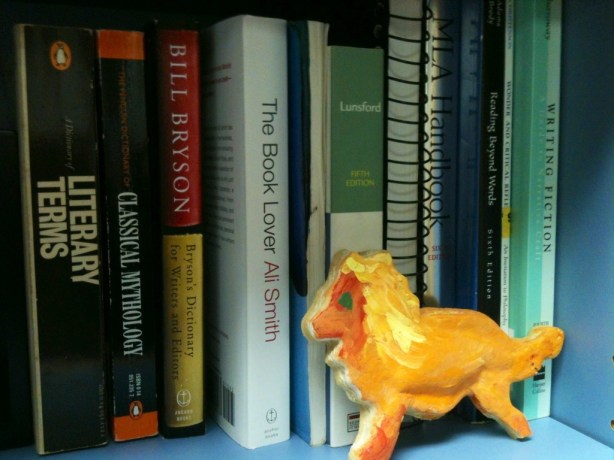
Here are some shelves/books from my office (work).

One wall is floor-to ceiling shelves—the whole wall—but most of the space is filled with files, folders, and professional books.

I tried to picture some of my favorite stuff—dictionaries, guides, and anthologies that remain inspiring.

20121208-170205.jpg

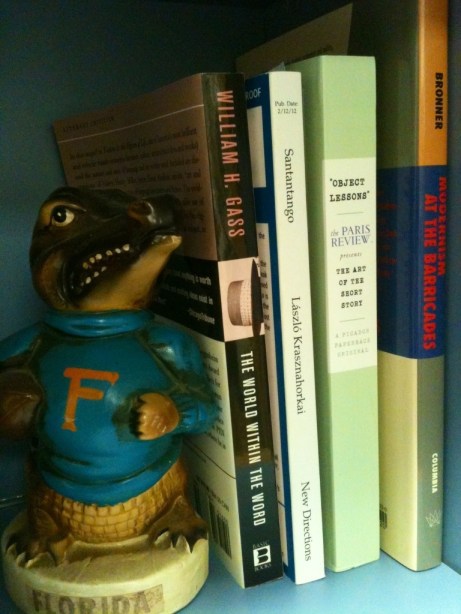
There is also a little corner where I keep stuff I read in my office—review copies or other books that I work with when I have a spare hour.

20121208-170216.jpg

Here’s a shelf (double stacked, as you might be able to see) that gets constantly shifted around. There are a couple of books about usage here that I like to bring into the classroom.

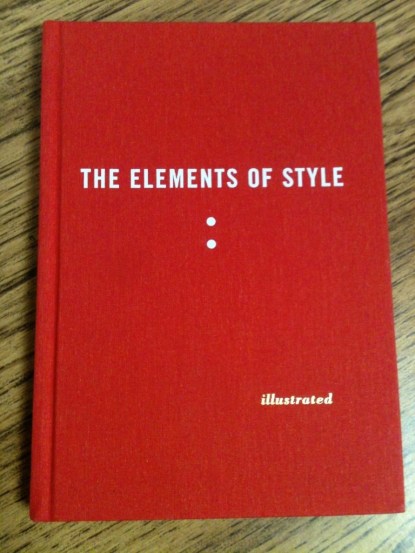
Of course, the best usage guide is Strunk & White’s classic:

20121208-170226.jpg

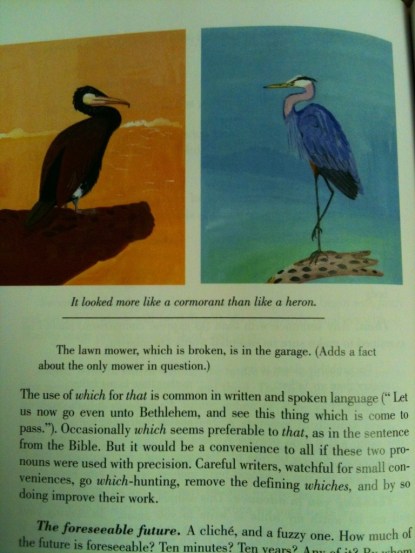
This illustrated copy was a gift from some dear friends.

20121208-170234.jpg

20121208-170241.jpg

20121208-170255.jpg

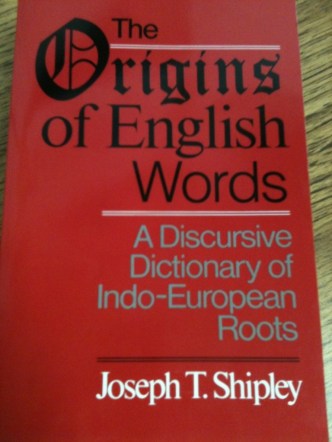
Joseph T. Shipley’s The Origins of English Words: A Discursive Dictionary of Indo-European Roots is a favorite.

Interior sample:

20121208-170302.jpg

Reading — Ilya Repin

Camille Monet Reading — Pierre-Auguste Renoir

Still Life — MC Escher

https://i0.wp.com/uploads0.wikipaintings.org/images/m-c-escher/still-life.jpg

Three Beautiful Books For Children (and Adults)

As the season for giving arrives, Biblioklept reviews three beautiful books that children and adults alike will enjoy.
20121118-123043.jpg

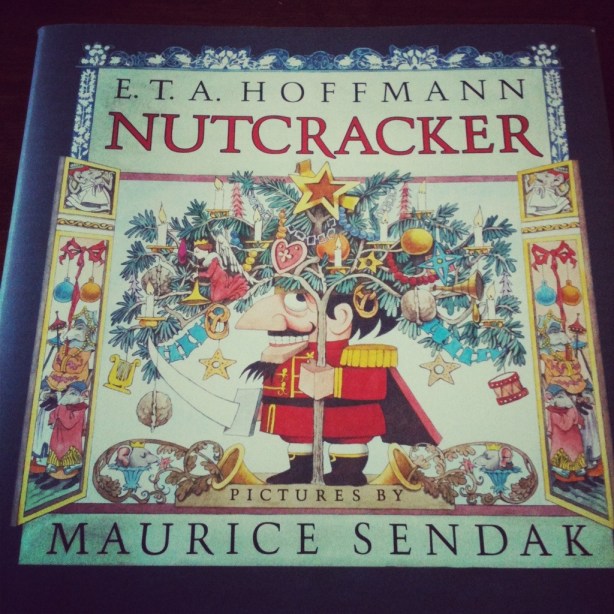
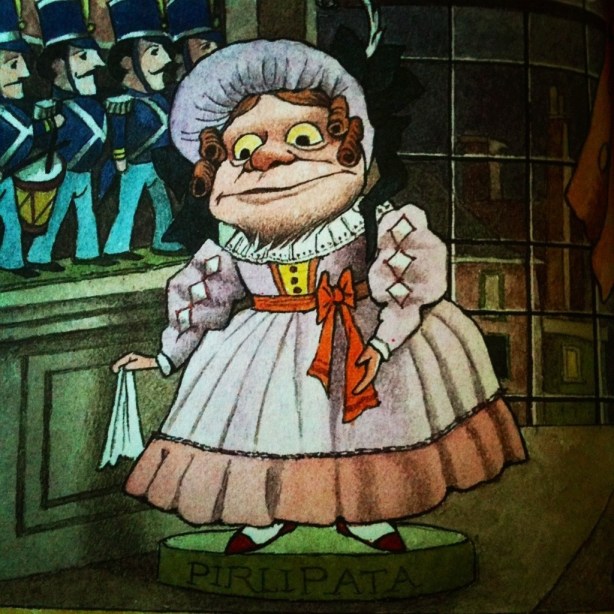
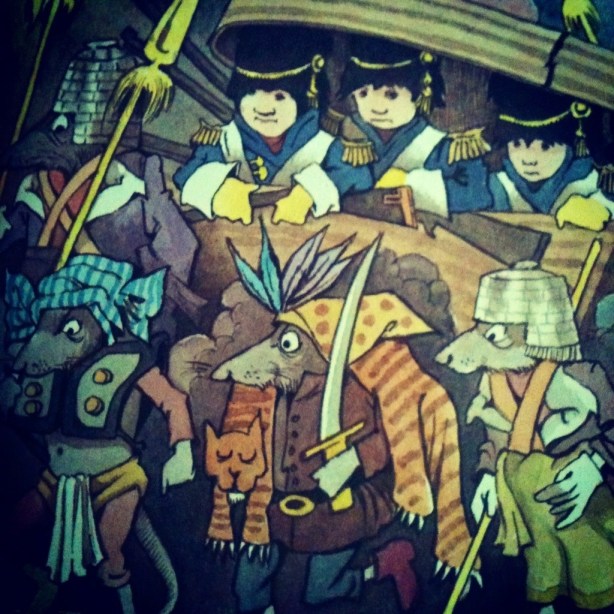
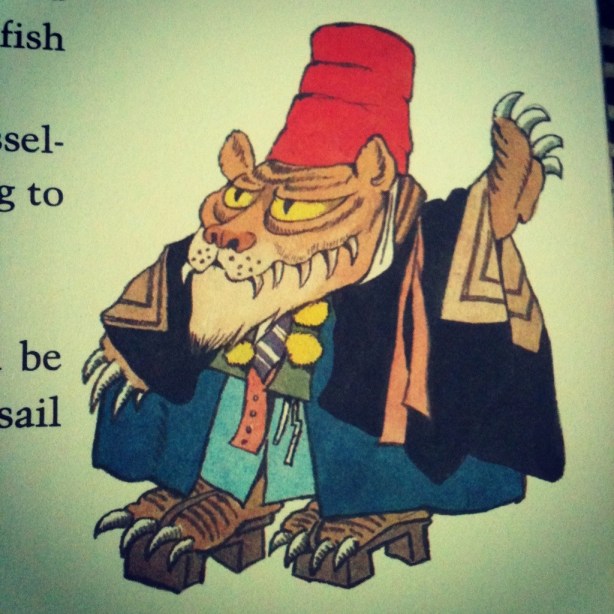
First up is E.T.A. Hoffman’s 1816 Christmas classic Nutcracker in translation by Ralph Manheim and beautifully illustrated by the late Maurice Sendak. In 1983, Sendak designed sets and costumes for the Pacific Northwest Ballet’s adaptation of Nutcracker and in 1984 he translated some of those designs into a book edition.
20121118-123123.jpg

According to a 2001 profile with NPR, Sendak was initially unsure about working on what he considered “the most bland and banal of ballets.” However, upon reading Hoffman’s original text, Sendak discovered a work full of “weird, dark qualities that make it something of a masterpiece,” an observation he notes in his introduction to Nutcracker.

The NPR profile notes that Sendak intended to bring “Hoffmann’s original story back to audiences, especially by having the main character, a girl named Clara, brought back into the story.” Sendak believed

The whole ballet is about her and for the most part you get her in act one, and then she discreetly disappears for the rest of the work. My feeling is this has to be disturbing to children. . . . [She goes] where the wild things are . . . She is overwhelmed with growing up and has no knowledge of what this means. I think the ballet is all about a strong emotional sense of something happening to her, which is bewildering.
20121118-123102.jpg

These “strange, weird” qualities—the same tones that made Sendak’s Where the Wild Things Are a classic of children’s literature—are on display in Nutcracker. Hoffman’s text in Manheim’s translation has a wonderfully episodic, even picaresque quality that restores a sense of adventure—and even peril—to the smooth play we might be familiar with sitting through each December.

Nutcracker’s reading level, length, and tone make it likely appropriate for children over eight or nine, but younger children will enjoy reading the story through Sendak’s marvelous and strange illustrations.

Nutcracker is available in a new hardback edition from Random House.
20121118-123054.jpg

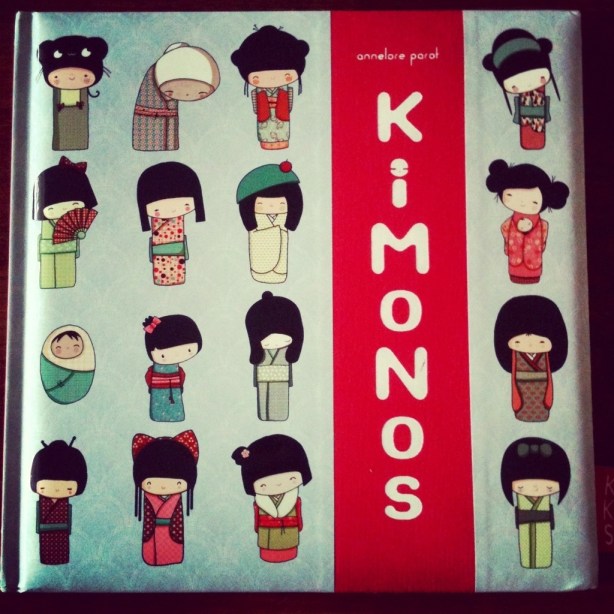
Next up is Annelore Parot’s Kokeshi Kimonos from Chronicle Books.
20121205-150255.jpg

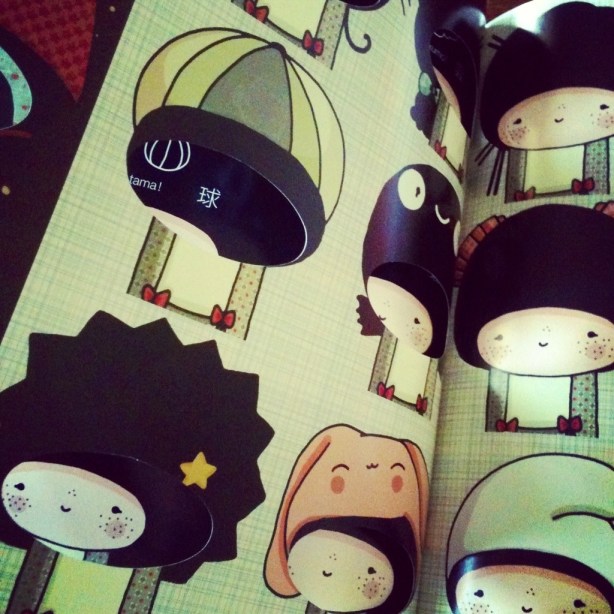
Koskeshi Kimonos is a fun and stylish book that uses kokeshi dolls to showcase facets of Japanese culture including attire and family life. The book features folding flaps, pull out sections, and other interactive features that will appeal to younger children. It’s the sort of aesthetically charming book that adults can enjoy as well.
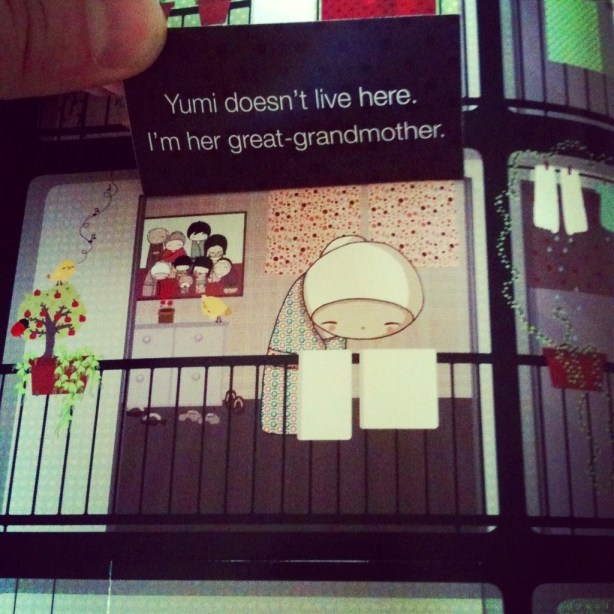
20121205-150303.jpg

Kokeshi Kimonos will likely appeal to younger readers—five to nine—and seems particularly suited to girls (although this doesn’t mean boys wouldn’t enjoy it, of course). The cute kokeshis are a wonderful alternative to the sterile, plastic world of Barbie and other facile dolls.
20121205-150310.jpg

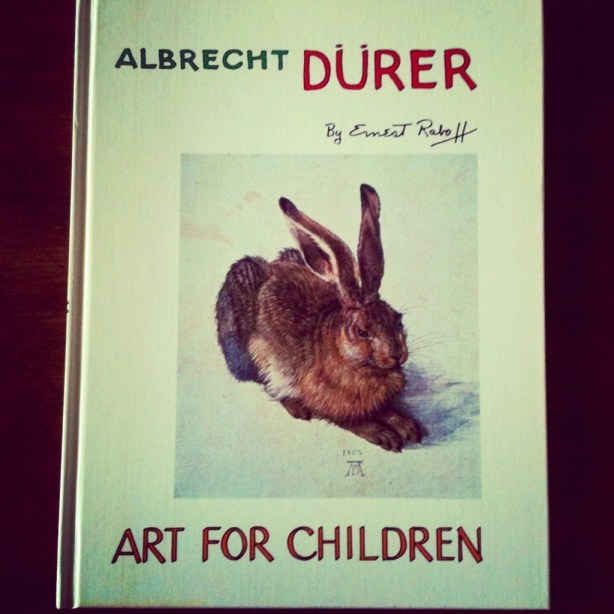
Finally, Ernest Raboff’s Albrecht Dürer, part of his Art for Children series. The book is out of print but not impossible to find.
20121205-150318.jpg

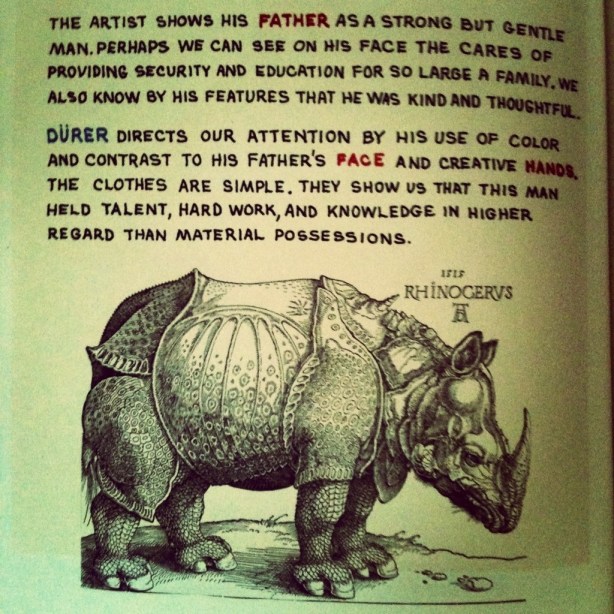
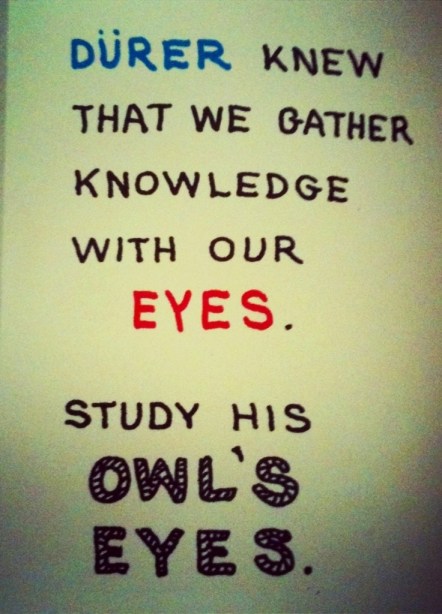
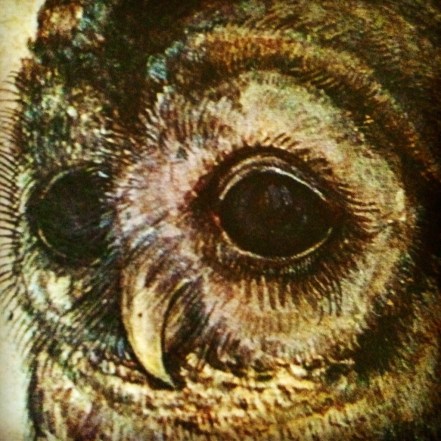
Raboff presents Dürer’s life simply and in clear context, using about a dozen beautiful  prints from the German master, as well as many of his etchings. Raboff also hand letters the book, and provides his own sketches and illustrations occasionally to clarify and explain Dürer’s work.
20121205-150327.jpg

What I love most about Raboff’s book though is the way he integrates elements of art appreciation into his book in subtle, simple ways. Lovely:
20121205-150335.jpg

20121205-150343.jpg


The Book — Utagawa Kunisada

https://i0.wp.com/uploads6.wikipaintings.org/images/utagawa-kunisada/not_detected_240346.jpg

Reading — Dmitry Samarov

reading

Portrait of Dr. Hugo Koller — Egon Schiele

https://i0.wp.com/uploads5.wikipaintings.org/images/egon-schiele/portrait-of-dr-hugo-koller-1918.jpg

The Law Student — Norman Rockwell

Book Shelves #49, 12.02.2012

20121202-134243.jpg

Book shelves series #49, forty-ninth Sunday of 2012

Unless I’ve somehow miscalculated, this is the last book shelf in my house. It’s difficult to describe the room it’s in—sort of like a storage corridor that serves as an attic (my attic is tiny) with an ersatz workshop. Kids paints and art supplies dominate the top shelf; photo albums and year books the bottom. The middle holds all sorts of books that I can’t bear to get rid of, including a coffee-table history of MAD Magazine which is one of the first books I can remember begging my parents to get me.

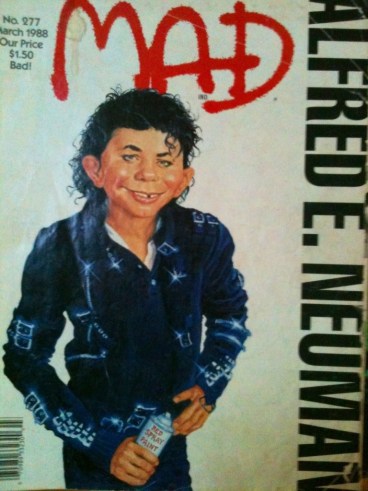
There are also many, many back issues of MAD:

20121202-134258.jpg

Also, lots of old books with out of date info, like a book about Jacques Cousteau, a book of Indian recipes which is more of a cultural guide, and this book of my home state:

20121202-134314.jpg

Several old music zines (I should probably donate them to a zine library).

20121202-134322.jpg

I have several dozens of these history packets called Discovery that I loved as a kid—they’d come with a booklet that illustrated the historical event in context, including opposing viewpoints, and they also had cool activities and games. I think they really helped me to learn as a child, and I can’t bear to get rid of them. Apparently Dennis Miller sat for the portrait of Guy Fawkes in the second issue.

20121202-134333.jpg

The Science in Science Fiction probably deserves its own post it’s so wonderfully weird and silly.

20121202-134341.jpg

Although this is the last shelf in my house, I said I’d do these posts each Sunday of 2012—and there are four more. I’ll visit the bookshelves in my office, the books in my car, take another look at the books on my nightstand (where I started) and then do a review post. Then I will never, ever do anything like this again.


Leontine Reading — Pierre-Auguste Renoir

https://i0.wp.com/uploads4.wikipaintings.org/images/pierre-auguste-renoir/leontine-reading-1909.jpg

Eco/Krasznahorkai (Books Acquired, 11.30.2012)

20121130-173840.jpg

Reading Nude — Theodor Pallady

https://i0.wp.com/uploads3.wikipaintings.org/images/theodor-pallady/reading-nude-nu-la-lecture.jpg

Reading Girls — Nikolay Bogdanov-Belsky

Reading — Berthe Morisot

“All schools are bad” (Thomas Bernhard)

All schools are bad and the one we attend is always the worst if it doesn’t open our eyes. What lousy teachers we had to put up with, teachers who screwed up our heads. Art destroyers all of them, art liquidators, culture assassins, murderers of students.

From Thomas Bernhard’s novel The Loser.

Spetssom — Anders Zorn