The Fall of the House of Usher — Edgar Allan Poe’s Tale Comes to Life in a Creepy Stop-Motion Film by Jan Svankmajer

Railway — Edouard Manet

The Cup of Tea — Andre Derain

The Most Beloved American Writer — Norman Rockwell

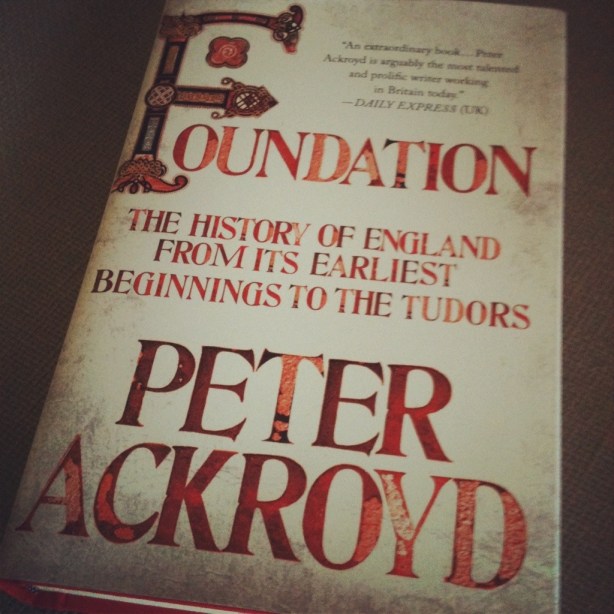
Book Acquired, 9.28.2012

20121002-170012.jpg

Foundation, a history of England from Peter Ackroyd. From a recent Guardian profile:

Ackroyd’s trademark insight and wit, and the glorious interconnectedness of all things, permeate each page. One thing that struck me was the realisation that history isn’t nearly as linear as we thought. Something is invented, or discovered, or philosophised, and we tend to think that that’s knowledge known from then on, but even in this single volume there are endless forgettings.

“Absolutely,” comes his fast answer, spoken, as ever, gently and with a strange mix of confidence and self-effacement. “One thing which most interested me was the fact that neglect, or our genius for forgetfulness, occurs at every level of social and political activity. The same mistakes, the same confusions, occur time and time again. It sometimes seems to me that the whole course of English history was one of accident, confusion, chance and unintended consequences – there’s no real pattern.”

What he discovered, or rediscovered, is that “what underlines that random happenstance are the deep continuities of national life that survive, uninfluenced by the surface events. In this book, I have little chapters on, say, medieval medicine, or punishment, or medieval humour, simply to convey the broad continuities that underlie this bewildering range of events. Continuities of the soil, the land, the earth.” And these help create human – English – sensibilities? “Yes. As I said in my London book, it’s a sort of territorial imperative, the landscape; the shape of the geology, almost, has a definite though not comprehended effect on human behaviour, human need. So that’s one of the things I was trying to explore I suppose.”

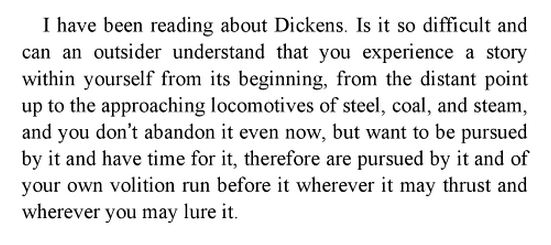
“I have been reading about Dickens” (Kafka)

(From Kafka’s Diaries).

Man Seated by Radiator — Norman Rockwell

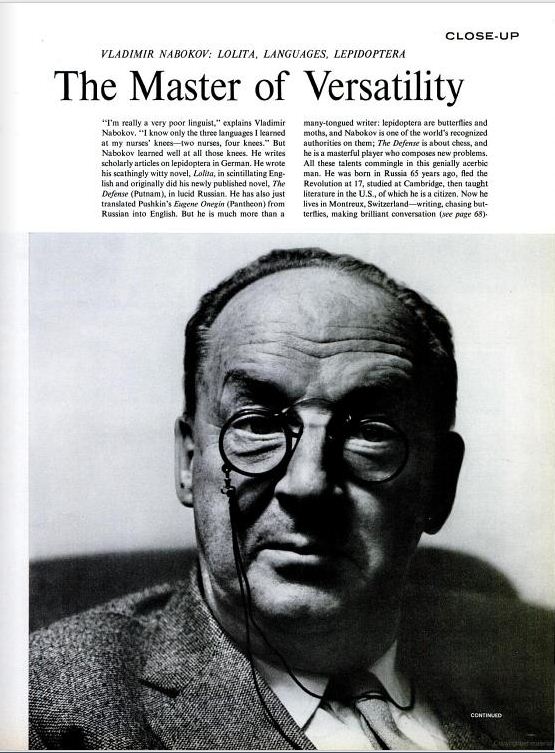
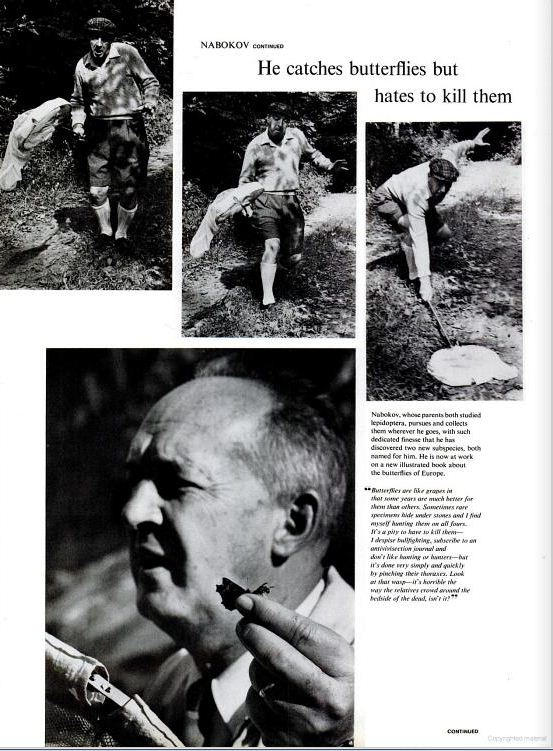
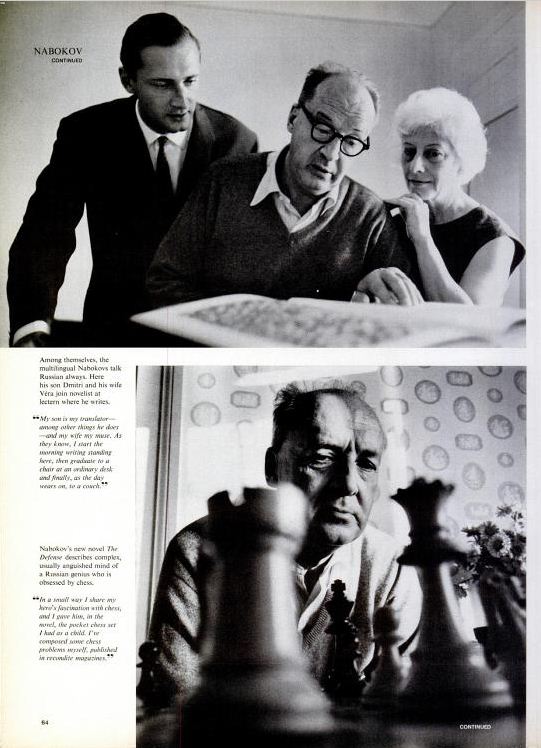
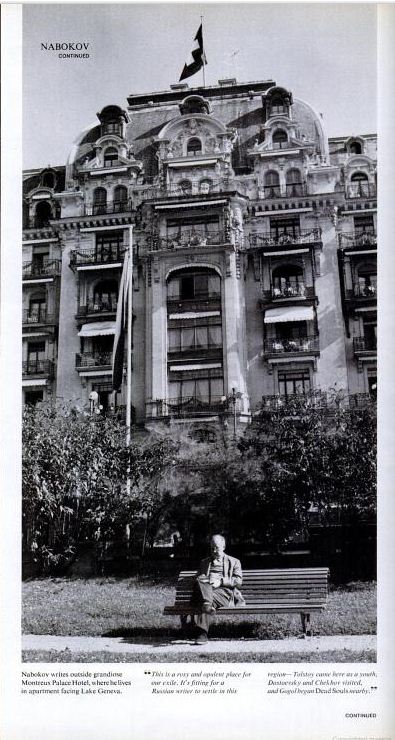
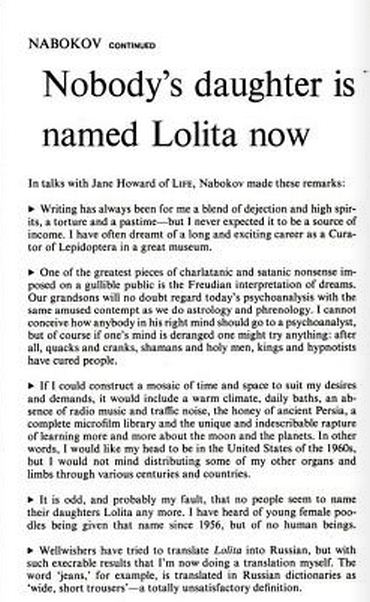
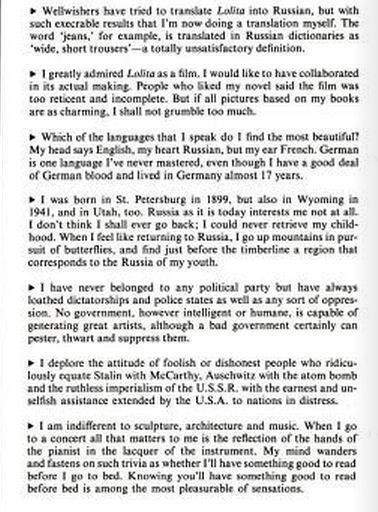
Vladimir Nabokov: Lolita, Languages, Lepidoptera (1964 LIFE Magazine Profile)

(From a 1964 LIFE profile; my favorite line: “It is odd, and probably my fault, that no people seem to name their daughters Lolita anymore. I have heard of young female poodles being given that name since 1956, but of no human beings.”)

Self-discovery (Kafka)


(From Kafka’s diaries).

In the Boat — Konstantin Korovin

Sebald’s After Nature (Book Acquired, 9.21.2012)

20120930-142202.jpg

W.G. Sebald’s poetry collection After Nature. Not really poetry. Or maybe it is poetry. I don’t know what poetry is.

Mrs. Cassatt Reading to Her Grandchildren — Mary Cassatt

Book Shelves #40, 9.30.2012

20120930-110158.jpg

Book shelves series #40, fortieth Sunday of 2012

So we dip into the penultimate book shelf in this series, the one I shot last week in hazy hangover.

(This shelf is lower right; I’ll be working down to up and right to left).

Kids puzzles and a toy accordion block some books on folklore, history, and music.

20120930-110205.jpg

As always, sorry for the glare, blur, and poor lighting. Blame my ancient iPhone 3gs .

A book my grandmother gave me a few years ago:

20120930-110215.jpg

Sample:

20120930-110222.jpg

This is a wonderful old collection:

20120930-110229.jpg

Pissing in the Snow: I’ve gone to that well more than once.

20120930-110238.jpg

Kind of a motley crew here; the Barthes is misshelved but the lit crit shelves above are too full, so . . .

20120930-110246.jpg

Musical bios. More of these are scattered around the house. I gave away a few recently.

Some of these books made it on to a list I wrote of seven great books about rock and roll.

20120930-110253.jpg

Anthony Scaduto’s Dylan bio, which I, ahem, *borrowed* from my uncle years ago.

It made the rounds in high school but I managed to get it back somehow (but not its cover):

20120930-110304.jpg

Portrait of a Woman — Andre Derain

Books Acquired, 9.21.2012

20120923-131123.jpg

Perhihan Magden’s Escape. Pub copy:

Time passes slowly in the hotel rooms. This is what the daughter thinks. They’ve been moving since the beginning, in and out of hotels, sometimes staying for months, sometimes for a mere hour, but never with luggage, heavy things weighing them down. The mother and daughter are singular, a “Moon Unit,” revolving so far away that no one can touch them. They form attachments to no one, not the pool boy who watches the daughter swim for hours, nor the girl at the front desk who counts the moments she sees the daughter as little good luck charms for her day. They are bound together with a secret language, the beautiful girl loved solely by her mother, who will never ever ever leave her side.

Prize-winning Turkish novelist and journalist Perihan Magden delivers a heartbreaking meditation on the intense and sometimes isolated love between a mother and daughter against the world.

Kiana Davenport’s The Spy Lover. Pub copy:

Thrust into the savagery of the Civil War, a Chinese immigrant serving in the Union Army, a nurse doubling as a spy for the North, and a one-armed Confederate cavalryman find their lives inextricably entwined.

Fleeing drought and famine in China, Johnny Tom arrives in America with dreams of becoming a citizen. Having survived vigilantes hunting “yellow dogs” and slave auction- blocks, Johnny is kidnapped from his Mississippi village by Confederate soldiers, taken from his wife and daughter, and forced to fight for the South. Eventually defecting to the Union side, he is promised American citizenship in exchange for his loyal services. But first Johnny must survive the butchery of battles and the cruelties inflicted on non-white soldiers.

Desperate to find Johnny, his daughter, Era, is enlisted as a spy. She agrees to work as a nurse at Confederate camps while scouting for the North. Amidst the unspeakable carnage of wounded soldiers, she finds solace in Warren Petticomb, a cavalryman who lost an arm at Shiloh. As devastation mounts in both armies, Era must choose where her loyalties lie—with her beloved father in the North, or with the man who passionately sustains her in the South.

A novel of extraordinary scope that will stand as a defining work on the Chinese immigrant experience, The Spy Lover is a paean to the transcendence of love and the resilience of the human spirit.

Jurisprudence — Edvard Munch

Auguste Reading to Her Daughter — Mary Cassatt