The thinning of language (Doris Lessing)

I am in a mood that gets more and more familiar: words lose their meaning suddenly. I find myself listening to a sentence, a phrase, a group of words, as if they are in a foreign language—the gap between what they are supposed to mean, and what in fact they say seems unbridgeable. I have been thinking of the novels about the breakdown of language, like Finnegans Wake. And the preoccupation with semantics. The fact that Stalin bothers to write a pamphlet on this subject at all is just a sign of a general uneasiness about language. But what right have I to criticize anything when sentences from the most beautiful novel can seem idiotic to me? 

… I made tea, and then I remembered a story that was sent to me last week. By a comrade living somewhere near Leeds. When I first read it, I thought it was an exercise in irony. Then a very skilful parody of a certain attitude. Then I realized it was serious—it was at the moment I searched my memory and rooted out certain fantasies of my own. But what seemed to me important was that it could be read as parody, irony or seriously. It seems to me this fact is another expression of the fragmentation of everything, the painful disintegration of something that is linked with what I feel to be true about language, the thinning of language against the density of our experience.

From Doris Lessing’s novel The Golden Notebook.

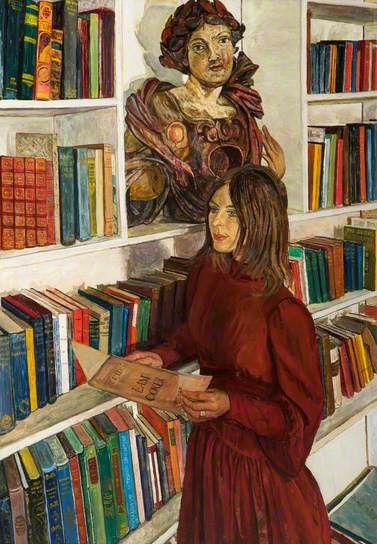
The Library — Carel Victor Morlais

Bridgeman; (c) Bridgeman; Supplied by The Public Catalogue Foundation

Franz Marc and Maria in the Studio — August Macke

Painter and His Model — Balthus

The Model — Jacek Malczewski

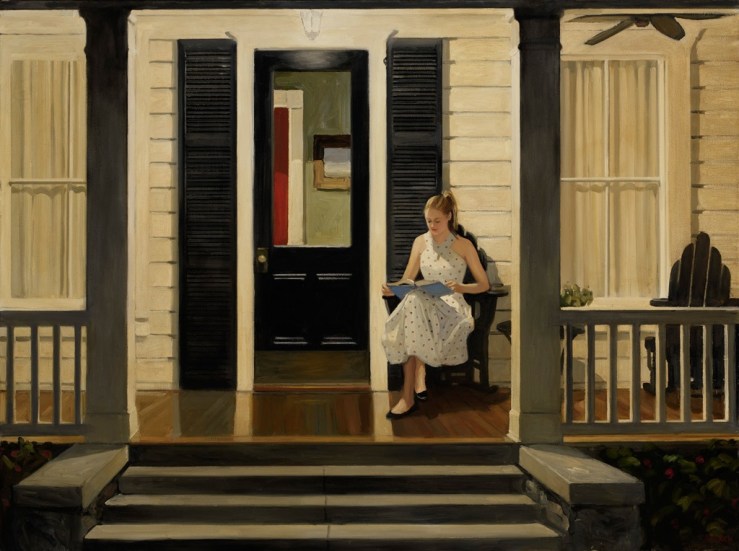
The Screen Porch — Fairfield Porter

Biblioklept’s Dictionary of Literary Terms

AUTEUR

French for author, this term denotes a film director who makes the same film again and again and again.

BIBLIOGRAPHY

A detailed list of the books from which the author plundered all his or her good ideas.

CIRCUMLOCUTION

The rhetorical device of circumlocution can be seen by the reader or made evident to the reader when a writer chooses to compose phrases, clauses, or sentences that are inordinately complex, exaggerated, long-winded, or otherwise unnecessarily verbose in order to demonstrate, convey, show, or express an idea, image, or meaning that might have been demonstrated, conveyed, shown, or expressed via the use of shorter, simpler, more direct phrases, clauses, or sentences that demonstrate brevity.

Inexperienced writers, especially composition students, are advised to use circumlocution to pad their writing and meet the assigned word count.

DESCRIPTIVIST

A grammarian who holds strong opinions and judgments about prescriptivists.

EXPOSITION

Telling without showing. Exposition can be extremely useful to the reader, who will slight the author who successfully employs it.

FREE INDIRECT STYLE

James Wood Approved!™

GOLDEN AGE

A comforting, nebulous fantasy.

HAGIOGRAPHY

A biography composed entirely of distortions, half-truths, and outright lies.

INNUENDO

The funny dirty bits that make you feel clever.

JARGON

Trade-specific diction employed (preferably clumsily) to confuse the average reader and offend the expert reader.

KINDLE

Early 21st-century reading device, often mistaken as a harbinger of literary doom.

LITERALLY

An adverb that most often means figuratively.

MYTH

The most enduring—and therefore most true—kind of story.

NEGATIVE CAPABILITY

A writer’s ability to just chill and not know. (Also useful for lazy frauds).

OBJECTIVE POINT OF VIEW

A comforting, nebulous fantasy.

PRESCRIPTIVIST

A grammarian who holds strong opinions and judgments about descriptivists.

QUEST

The story-teller’s scheme. Make it up as you go along. Steal as necessary.

REALISM

A comforting, nebulous fantasy.

SEBALDIAN

An adjective used to describe a literary work that is not quite as good as anything by W.G. Sebald.

TRAGEDY

A work often mistaken as more serious or more important or more literary than a comedy.

UNIVERSAL SYMBOL

A comforting, nebulous fantasy.

VULGARITY

A specific type of lucidity that authors sometimes use.

WELTSCHMERZ

The emotional byproduct of attempting to maintain comforting, nebulous fantasies.

XANAX

A stop-gap for bouts of Weltschmerz.

YOKNAPATAWPHA COUNTY

Faulkner’s Middle-earth.

ZYZZYVA

Zyzzyva is a real word, and this fact should give us all some small measure of hope..

(Previous entries here and here and here.).

Self-Portrait — Gerrit Dou

Portrait of a Woman with a Book — Paolo Zacchia il Vecchio the Elder

1c Paolo Zacchia il Vecchio (the elder) (1519-1561) Portrait of a Woman with a Book

Summer Porch — Sally Storch

SS-web.22

A Compelling Reason — Felix Vallotton

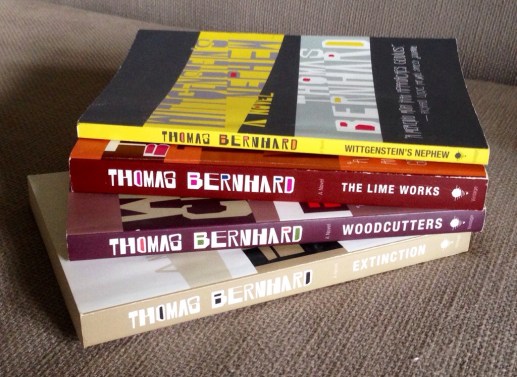
Four by Thomas Bernhard (Books Acquired, 7.15.2014)

20140716-162726-59246033.jpg

So the other week, Turner wrote, at my favorite local bookstore—a labyrinthine maze you wouldn’t believe, formed from wooden frames filled with dusty paper stacks, obstacles of boxed books, unexplored (the boxed books, not the shelves), littering the pathways (the boxed books)—just under 2 million books (all the books, shelved, and boxed), if a certain clerk is to be believed (and I believe her)—and you wouldn’t believe, and I know you wouldn’t believe because I go there often enough, me, living just a mile away, sometimes walking, briskly, or at an even pace—and with this free time on my hands, and with all these unsolicited review copies, creating a little pool of credit, of trade of etc.—I know you wouldn’t believe because I so often hear the irregular clientele remarking on their own personal disbelief, or their own befuddlement, or, more often, I see them get lost, and even then I’m enjoying that, maybe offering (mis)direction, or, more likely, intercepting the high school seniors—What are you reading? Yes? Faulkner! No! Not that edition!—And so the other week at my favorite local bookstore, I happened upon, neatly stacked in a to-be-shelved shelf, a neatly stacked stack of Thomas Bernhard novels, or, more precisely, a compliment stack of Thomas Bernhard novels, a so-called stack of novels that I did not so-call “own,” a so-called stack of Thomas Bernhard novels that I had not read, not to mention have in my own personal possession, a little series of Vintage English translation editions that could be nestled next to my own meager collection, already, yes, Gargoyles and Correction and Concrete and Yes and The Loser and The Voice Imitator and Frostbut not Old Masters, and Old Masters not in this neatly-stacked bundle (it was never a bundle), no, not Old Masters, which, Turner wrote, Chang wrote about on this so-called website, no, no not Old Masters, not in the so-called bundle, but what to begrudge, begrudge that, no, Turner thought and wrote, and then, looking back over what he had written, thought, No, this is rubbish, I must delete all this, I must erase all this and not push publish.

Woman Reading Book with Orange — Georgy Kurasov

tumblr_nf2hcwWAxE1qz6f9yo3_1280

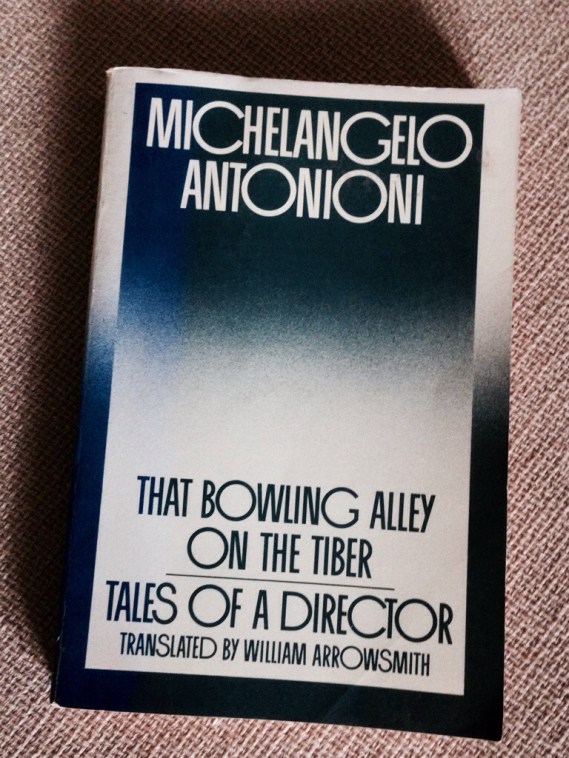
Michelangelo Antonioni’s Film Sketches (Book Acquired, 7.15.2014)

20140716-162724-59244603.jpg

The Bowling Alley on the Tiber (translated by William Arrowsmith) collects the sketches, vignettes, and microfictions that director Michelangelo Antonioni may or may not have intended to film given the time and funds. Braincandy.

“Silence”:

20140716-162722-59242226.jpg

Beatrice — Marie Stillman

stillman9

Young Girl Reading — Alfred Stevens

Jeune-femme-lisant-alfred-stevens

Grandfather’s Devotion — Albert Anker

er