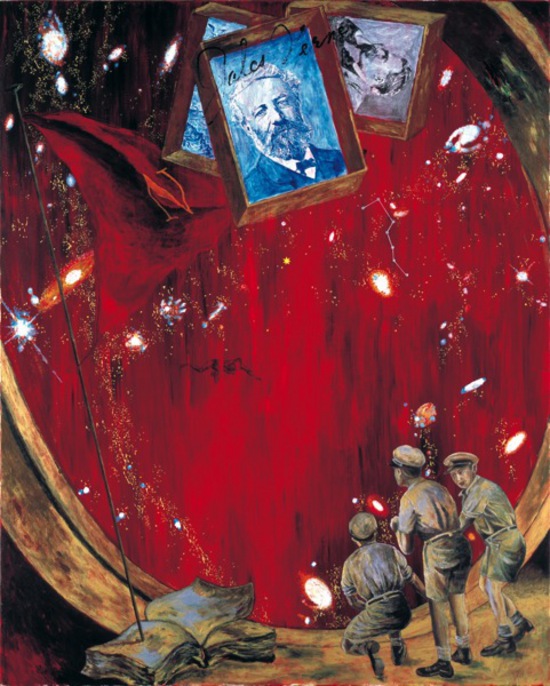
Willie Gillis in College — Norman Rockwell

Desire Dehau Reading a Newspaper in the Garden — Henri de Toulouse-Lautrec

The Book of Men (Book Acquired, 10.25.2013)

20131027-125451.jpg

The Book of Men  is curated (and not, curiously, edited, which is the word I thought we used, but hey, whatever) by Colum McCann. Publisher’s blurb:

To help launch the literary nonprofit Narrative 4, Esquire asked eighty of the world’s greatest writers to chip in with a story, all with the title, “How to Be a Man.”

The result is The Book of Men, an unflinching investigation into the essence of masculinity.

The Book of Men probes, with the poignant honesty and imagination that only these writers could deliver, the slippery condition of manhood. You will find men striving and searching, learning and failing to learn, triumphing and aspiring; men who are lost and men navigating their way toward redemption. These stories don’t just explore what it is to be a man or how to achieve manliness, but ultimately what it is to be a human—with all of its uncertainty, complexity, clumsiness, and beauty.

With contributions from literary luminaries as diverse as the subjects they capture, and curated by the editors of Esquire, National Book Award winner Colum McCann, and Narrative 4, a global nonprofit devoted to using storytelling as a means to empathy, The Book of Men might not teach you how to negotiate a deal or mix a Manhattan, but it does scratch at that most eternal of questions: What is a man?

Lots of shorties here. Here’s Chimamanda Ngozi Adichie’s entry:

Our Sundays always tasted like peppers that flared hot in the rice and soups and stews. We sat in the kitchen, knees fresh from pews, and watched our houseboy pounding them in pairs. He held the phallic pestle—thump thump thump—while we coughed and spluttered with watery eyes. Nobody tastes them raw, it wasn’t wise. But we did, and then we’d shout and jump to the fridge for ice.
My mom sang an Igbo song about strong women. It wasn’t too trite, but it told of places she didn’t know, streams, goddesses, women who couldn’t read. Women like that would squeeze peppers, I heard, and force them between their daughters’ legs—“so they’ll stop following boys.” But Eros was good for sons. No peppers to curb sons’ paths to manhood.


Isle of Shoals — Childe Hassam

Fantastical Fictive Beers

big

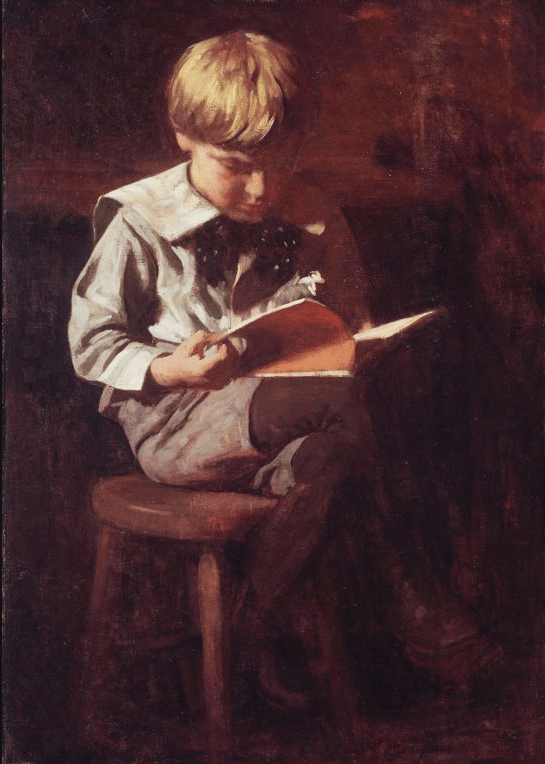
Boy Reading — Thomas Pollock Anshutz

anshutz

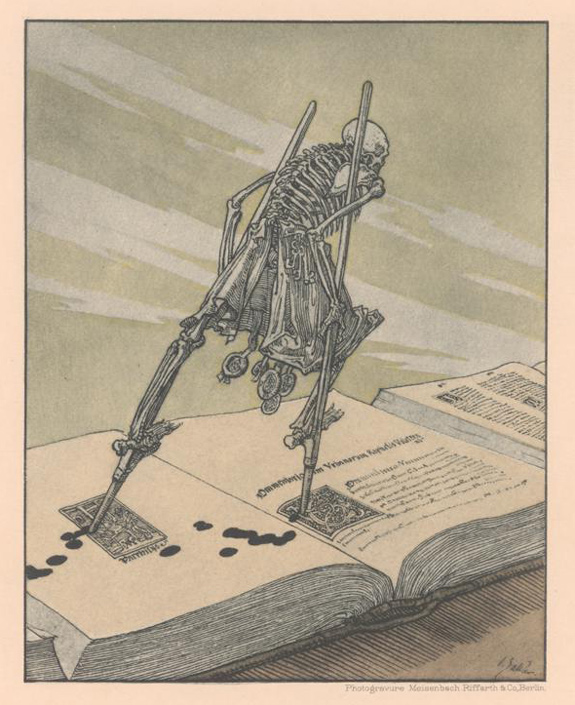
Illustration to A Modern Dance of Death — Joseph Sattler

02-joseph-sattler-modern-dance-of-death-1894

Woman Reading a Letter — Pieter de Hooch

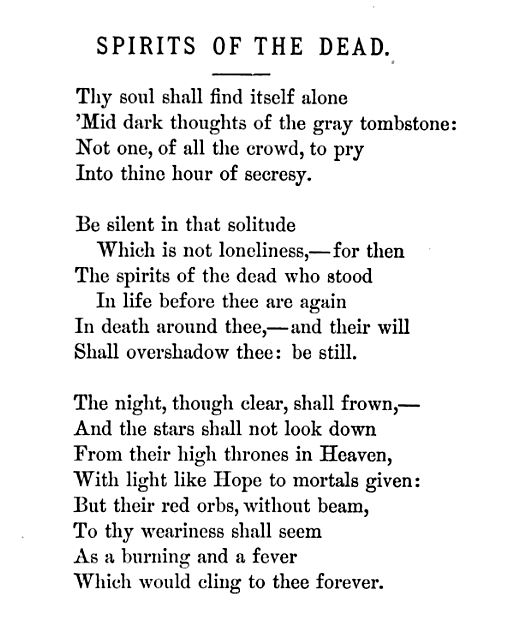
“Spirits of the Dead” — Edgar Allan Poe

spirits

Portrait of Alexandre Benois — Leon Bakst

A Reading in the Garden — Theo van Rysselberghe

An Interior with a Woman Reading — Carl Larsson

The Holy Family with John Baptist as a Boy — Adriaen van der Werff

Reader with Red Book — Andre Masson

Iced Coffee — Fairfield Porter

Moby-Dick(s)

20131019-174532.jpg

These are (as near as I can tell) all the versions (translations, if you will) of Herman Melville’s Moby-Dick at our house.

20131019-174553.jpg

This is my beloved copy, a hardback Signet Classic edition that’s the size of a mass market paperback.

I love this copy because it was the one that I read when I really read Moby-Dick (I also kinda sorta ‘klept it).

20131019-174611.jpg

These abridged versions for young readers are the same, despite the cooler updated cover on the right, which I guess fooled my wife into buying another copy for me to read with my daughter. (She liked it the first time though, so….). Even the illustrations are the same:

20131019-174620.jpg

20131019-174629.jpg

More of a resource than a reading copy—although as Norton Critical Editions go, this one’s footnotes aren’t too obtrusive. Handy dictionary of nautical terms.

20131019-174637.jpg

I am a huge fan of Bill Sienkiewicz. And Moby-Dick. I wish his Moby-Dick adaptation had no words though.

20131019-174646.jpg

20131019-174655.jpg

My dad’s childhood adaption, a Grosset & Dunlap from the early ’60s.

20131019-174705.jpg

20131019-174716.jpg

Sam Ita’s fantastic pop-up adaptation fails to mention Herman Melville’s name at all.

Despite the gross oversight, it’s given me hours of joy with my kids.

20131019-174740.jpg

20131019-174748.jpg

Moby-Dick was published on October 18th, 1851 in England.

The English printer Peter Bentley’s text contained numerous errors, including leaving out the epilogue, where we learn that Ishmael survives to bear witness to disaster.

Although the American printing in November of 1851 emended many of these errors, the early reviews of Moby-Dick were scathing, and Melville’s career and reputation deteriorated.

It wasn’t until the advent of literary modernism in the first decades of the twentieth century that the world caught up to Moby-Dick.

20131019-174756.jpg

Rest on the Way from Kiev — Vladimir Makovsky