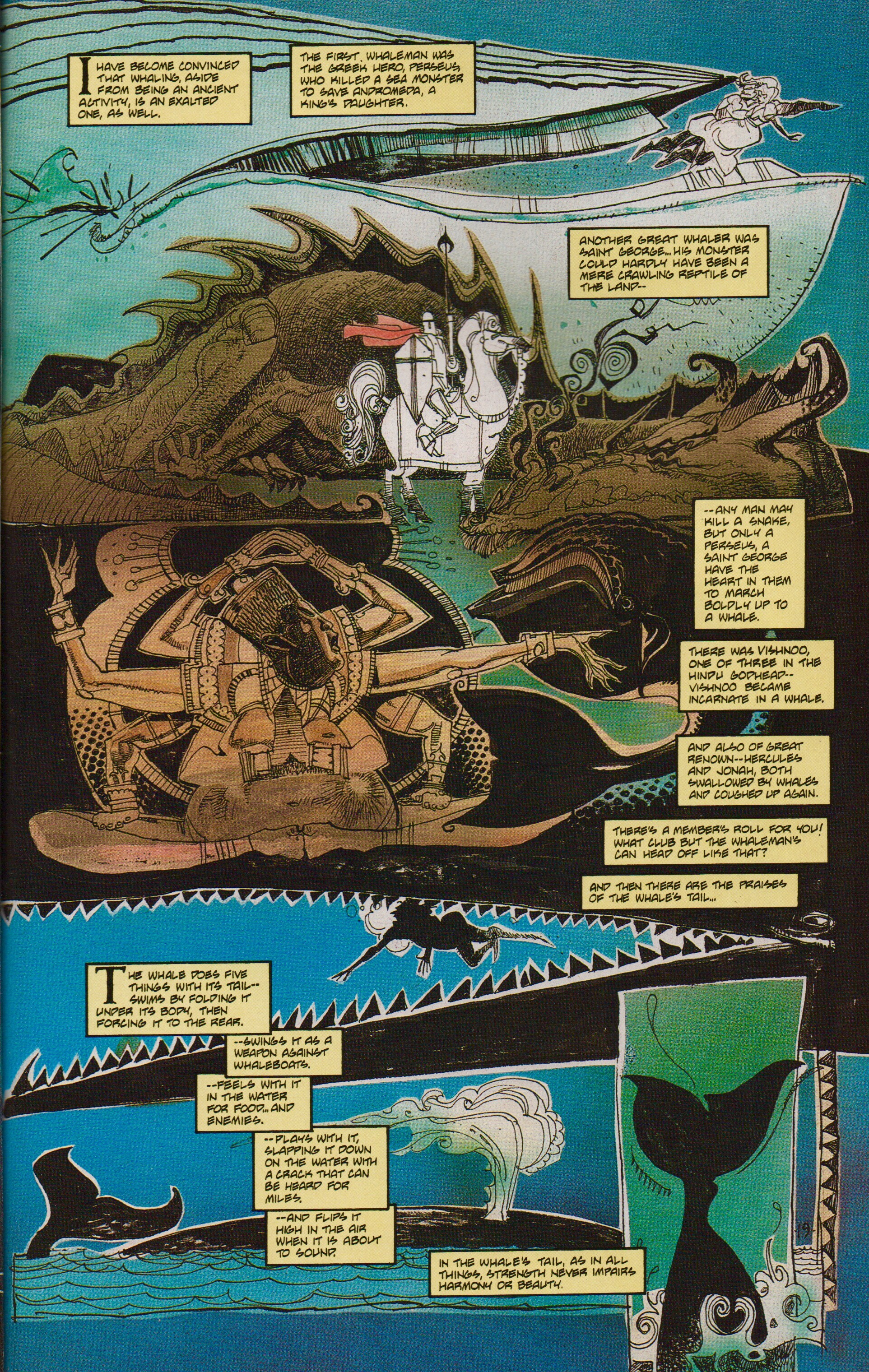
From Bill Sienkiewicz’s adaptation of Herman Melville’s Moby-Dick. The Classics Illustrated edition (February 1990) is one of my favorite Moby-Dicks.
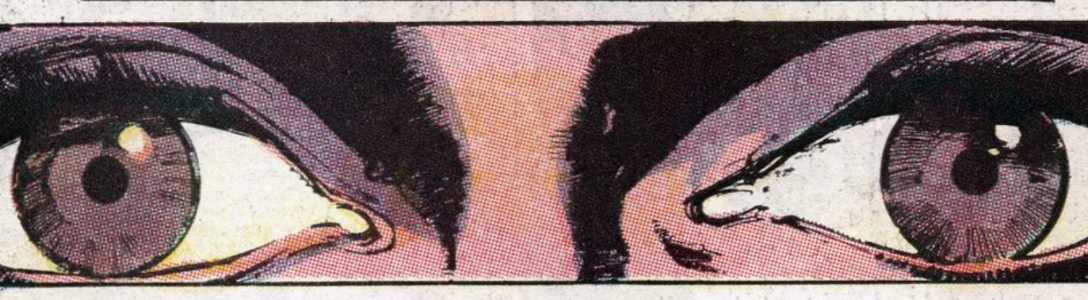
From Bill Sienkiewicz’s adaptation of Herman Melville’s Moby-Dick. The Classics Illustrated edition (February 1990) is one of my favorite Moby-Dicks.
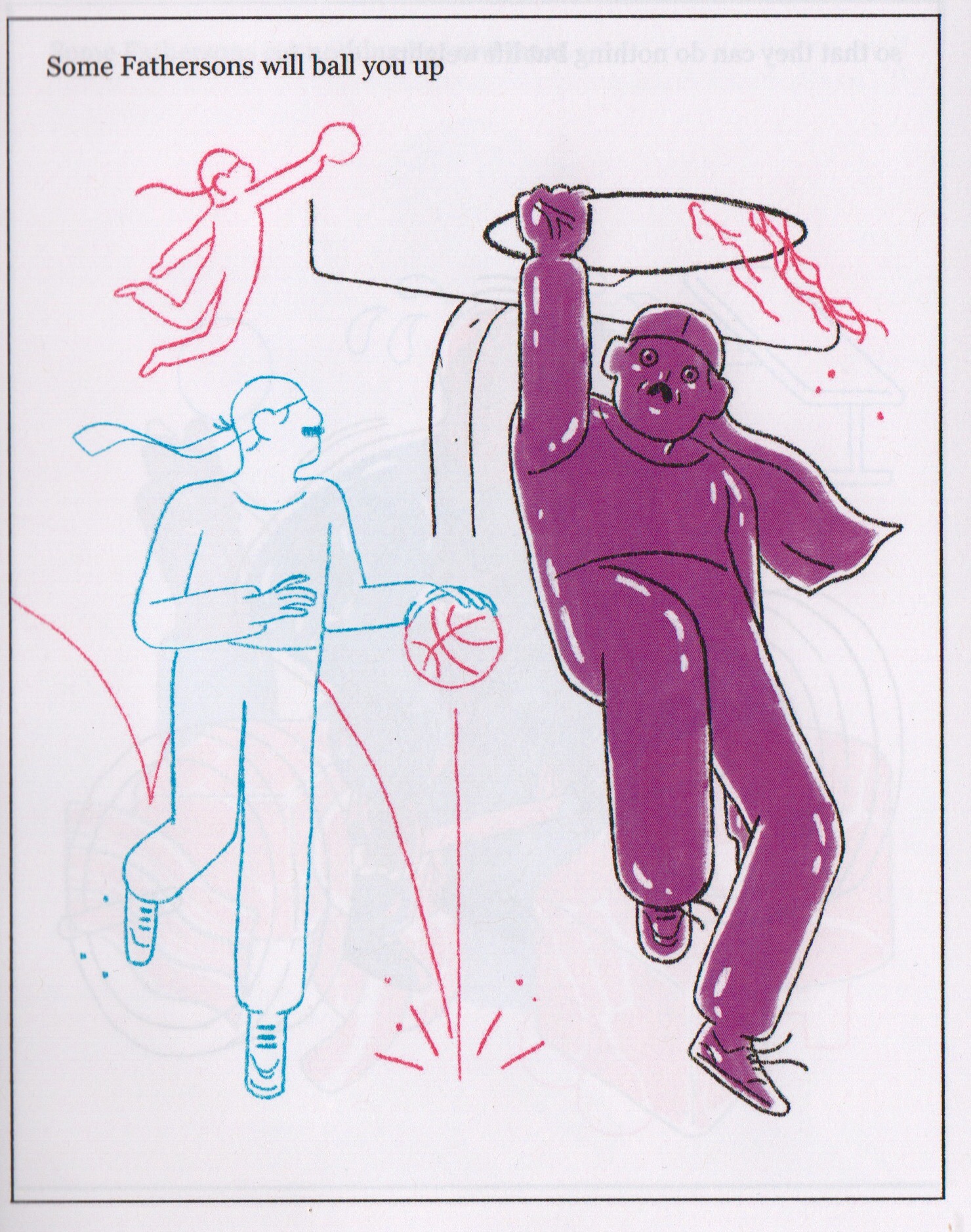
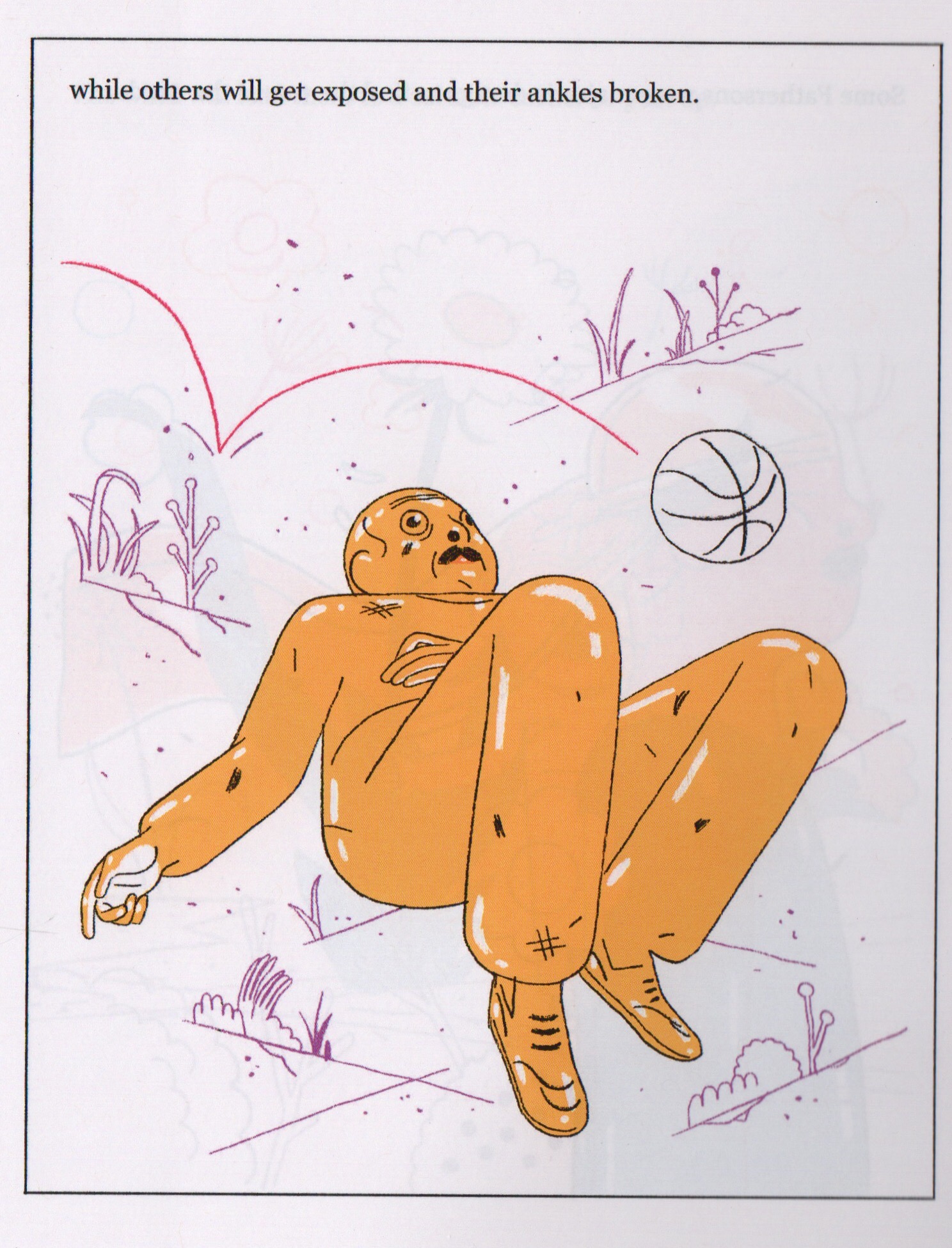
From Richie Pope’s Fatherson, issue #13 of Youth in Decline’s monograph series Frontier. It’s so, so good. My review.
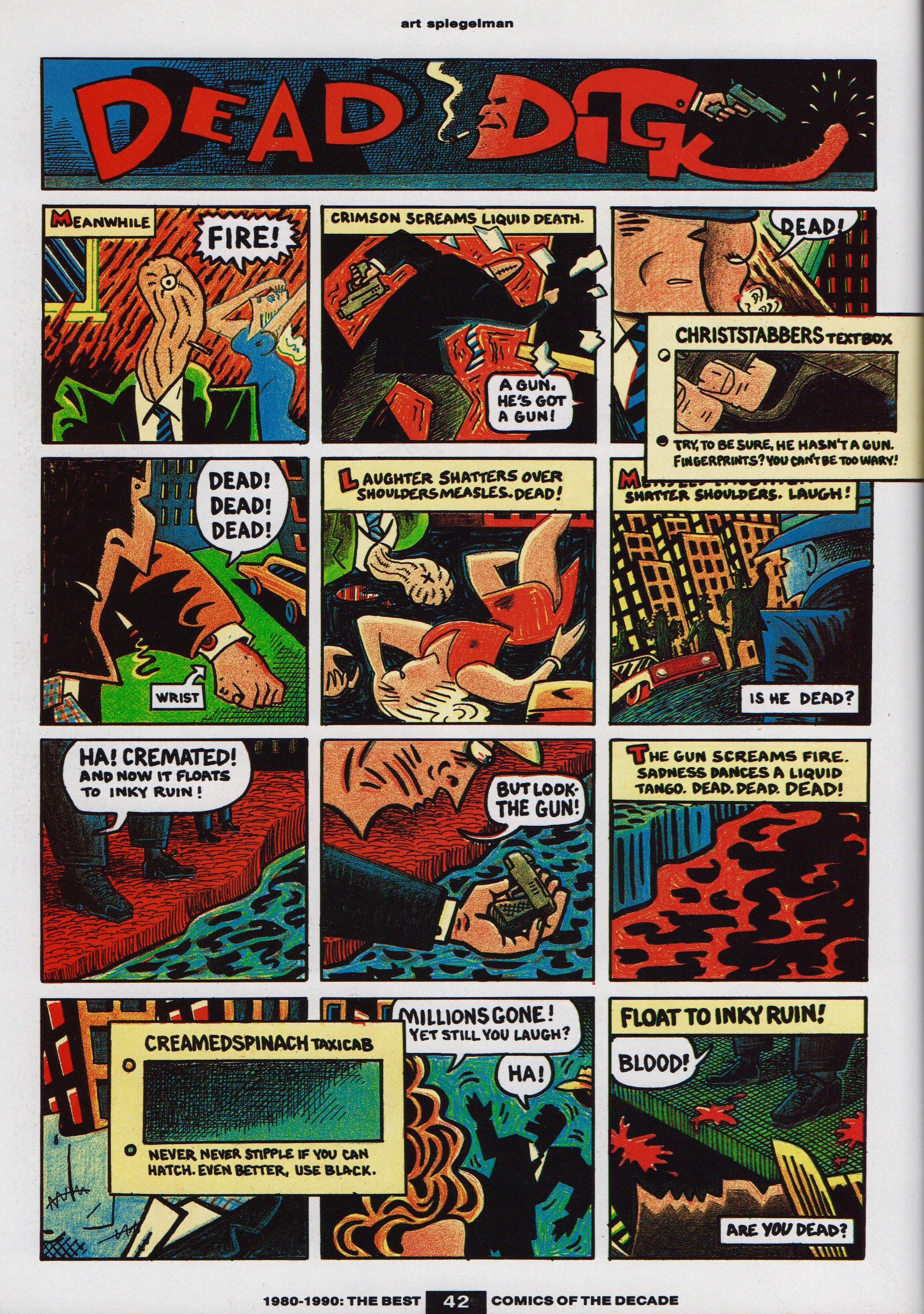
“Dead Dick” by Art Spiegelman, 1989. From The Best Comics of the Decade: 1980-1990, Vol. 1, Fantagraphics Books, 1990. Originally published in RAW vol. 2, #1, 1989.
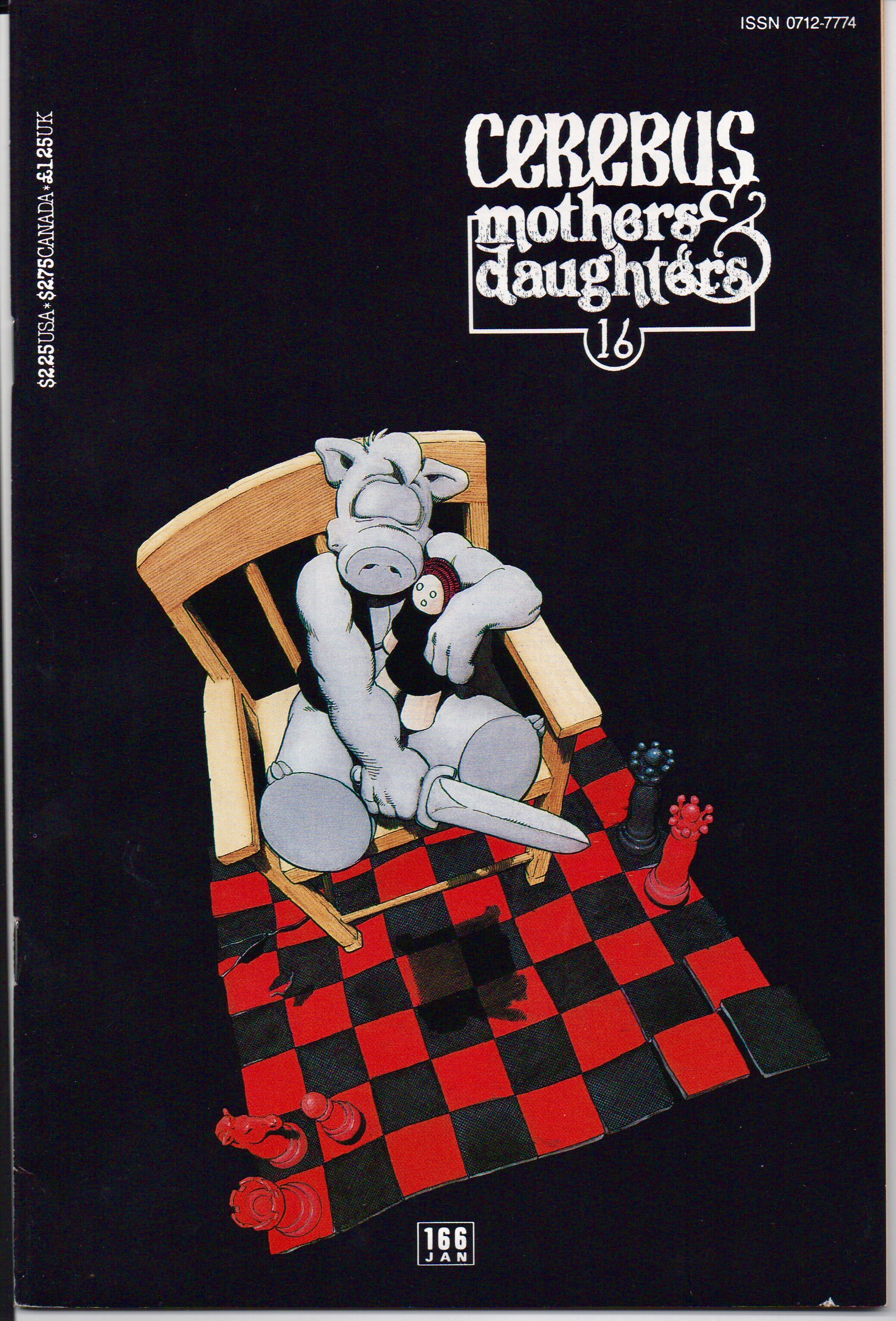
Cerebus #166, January, 1993 by Dave Sim and Gerhard; published by Aardvark-Vanaheim. This issue is Chapter 16 of the Mothers & Daughters storyline, Sim’s imagining of a tyrannical matriarchal state (sort of like The Handmaid’s Tale in reverse, sort of). This issue is one of my favorite chapters in the novel, a riff on Sim’s earlier “Mind Games” issues, wherein Cerebus’s dream-state shapes events in the real world. Mothers & Daughters is pretty much the last good Cerebus novel, before Sim took things completely off the rails in Reads.
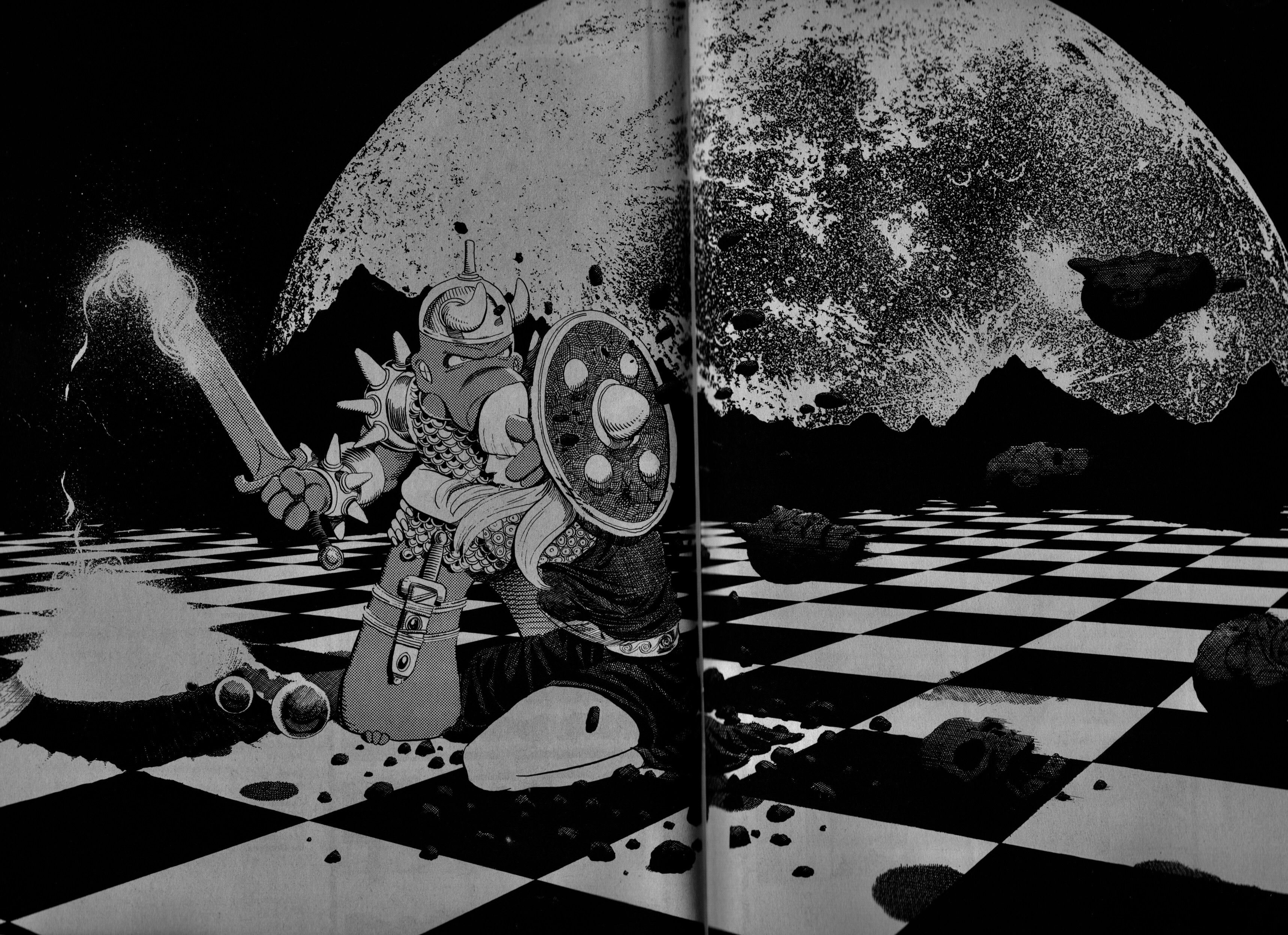
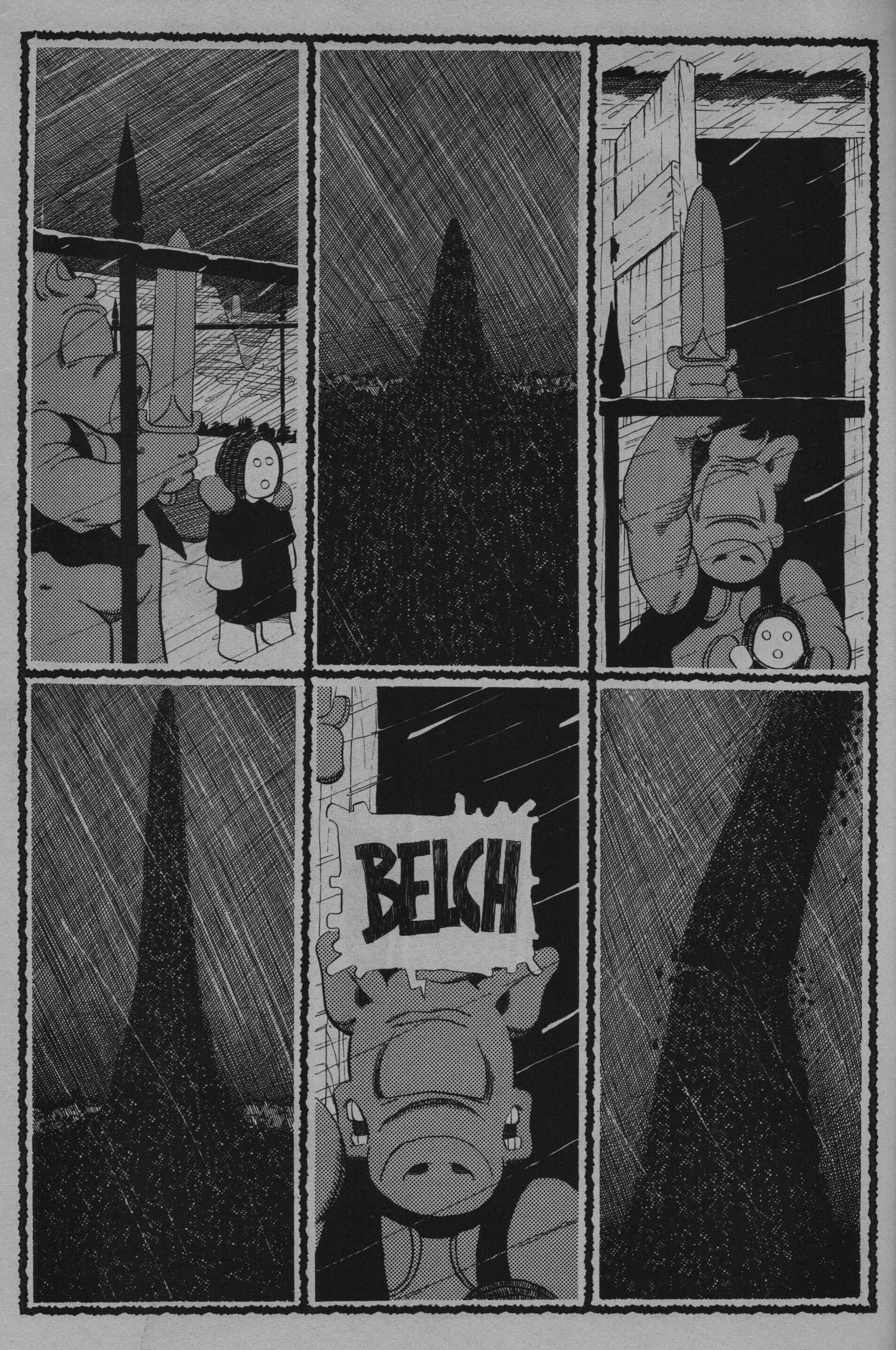
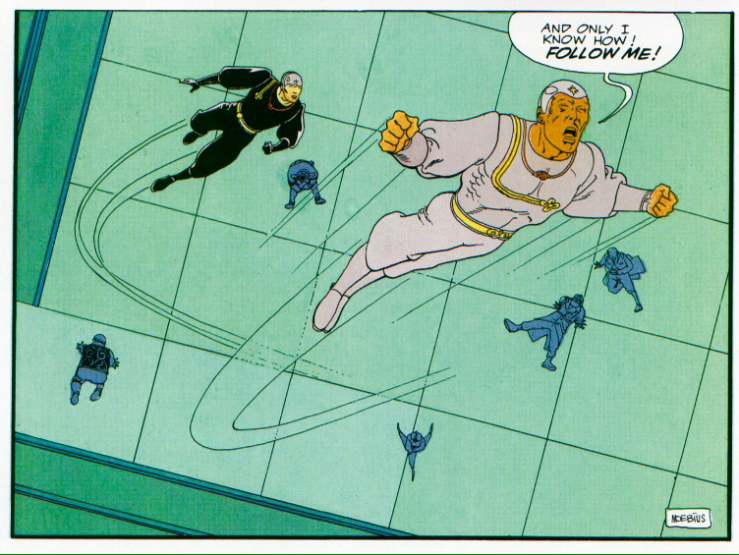
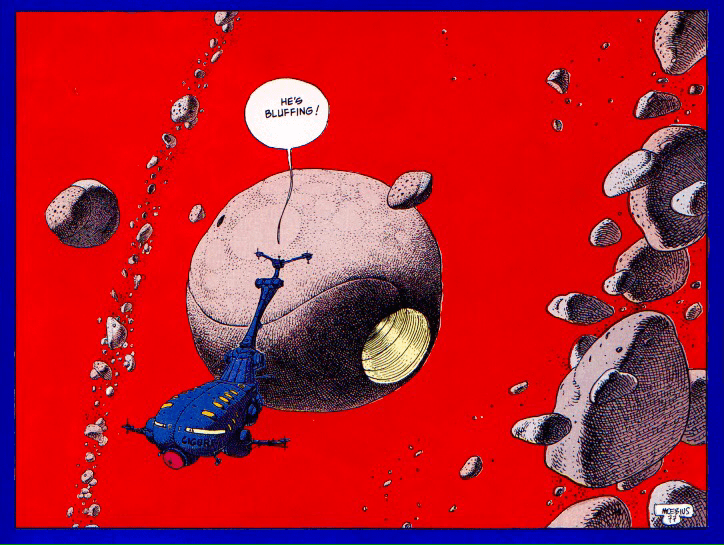
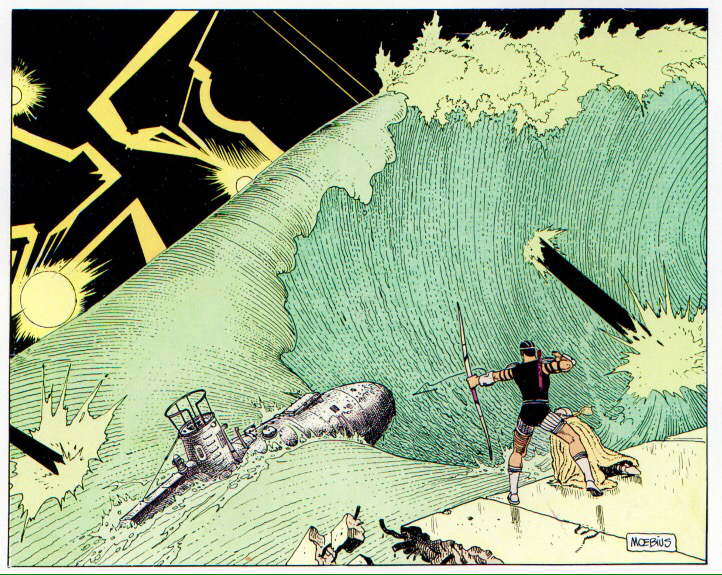
Three (noncontiguous, nonconsecutive, unrelated) panels by Moebius from various comics in Moebius 3: The Airtight Garage (Epic Comics/Marvel).

From “A Halo of Flies,” The Saga of the Swamp Thing #30, November 1984. Art by Stephen Bissette with guest inks by Alfredo Alcala; coloring by Tatjana Wood.
I’m still really enjoying my re-read of Alan Moore’s run on Swamp Thing. There’s a cinematic quality to the work, evident in its (often-reserved) pacing, its attention to basic concepts like time and place (it’s astounding frankly how many “superhero” comics pay zero attention to basics like scale or the relationships between physical objects), and its framing of panels. I love how the single-page “Swamp Thing” illustration shows up near the end of this particular issue—like a long cold opening in a film or TV show.
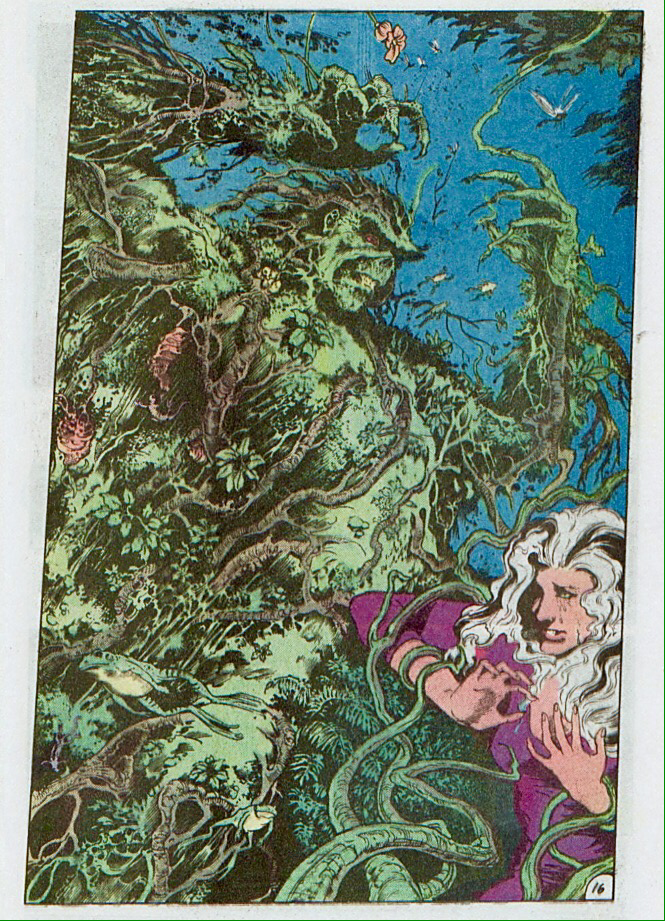


Pages from issues 23, 24, and 25 of The Saga of the Swamp Thing, 1984. Art by Stephen Bissette and John Totleben; coloring by Tatjana Wood. Script by Alan Moore.
I’ve been rereading Moore’s run on Swamp Thing and am amazed anew at the comic’s cinematic construction, moody tone, and mix of simplicity and depth in storytelling. Wood’s moody, atmospheric coloring is unlike anything I can think of in contemporary 1980’s “superhero” comics, and Swamp Thing’s detailed contours seem impossible without Totleben’s intricate inking. I plan to write a “thing” on Moore’s Swamp Thing era down the line, but for now, I’m surprised at now just how well it holds up, but how well-constructed the team’s efforts were, right out of the gate on the early issues.
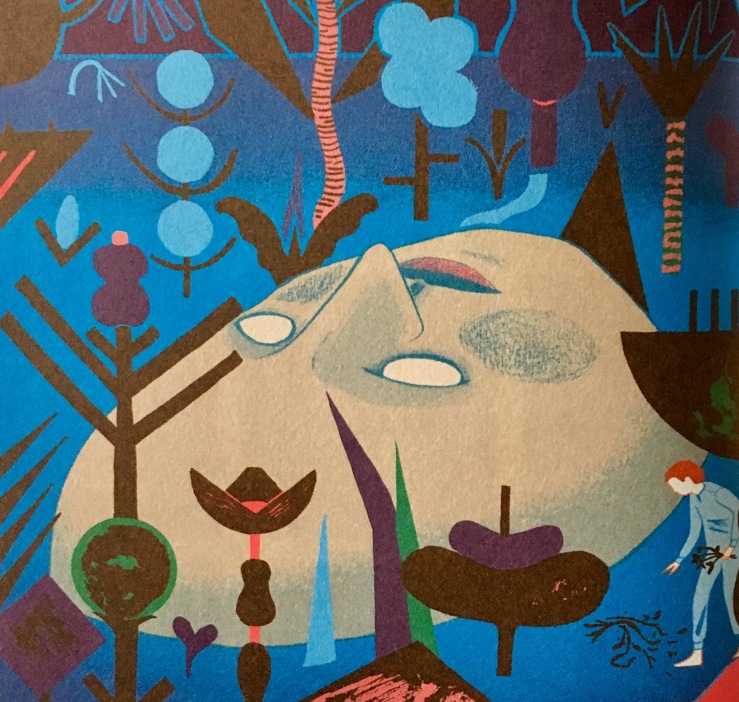
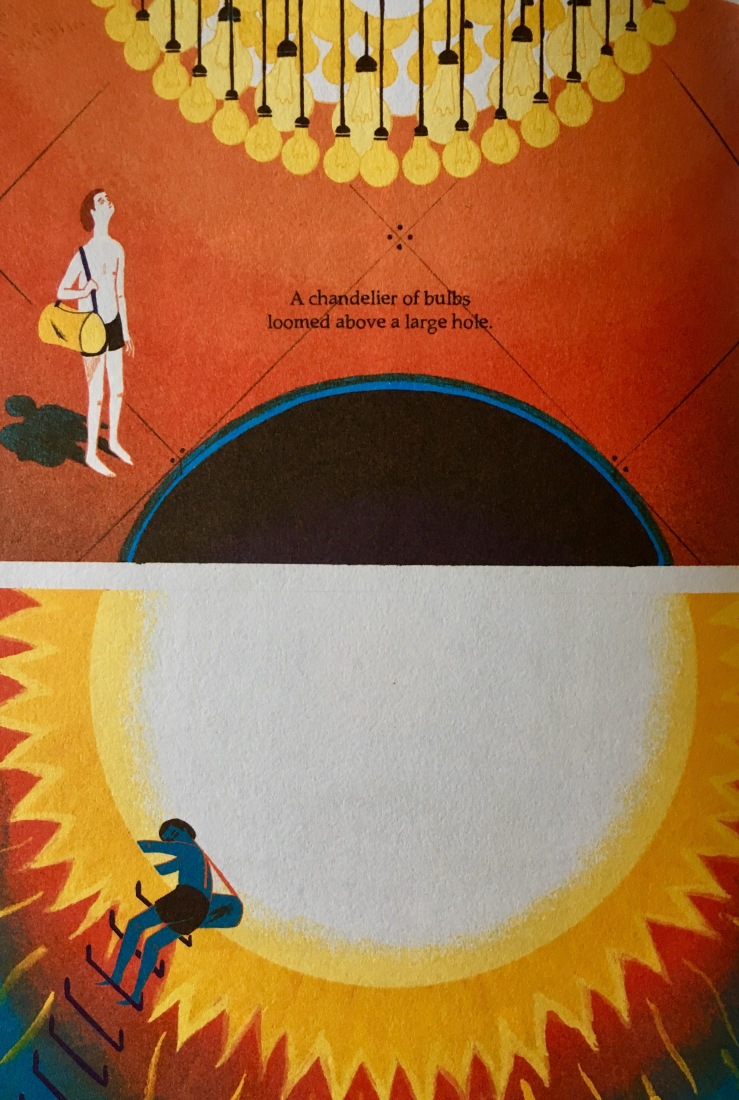
Robert Hunter’s graphic novel Map of Days is new from Nobrow. It’s gorgeous.
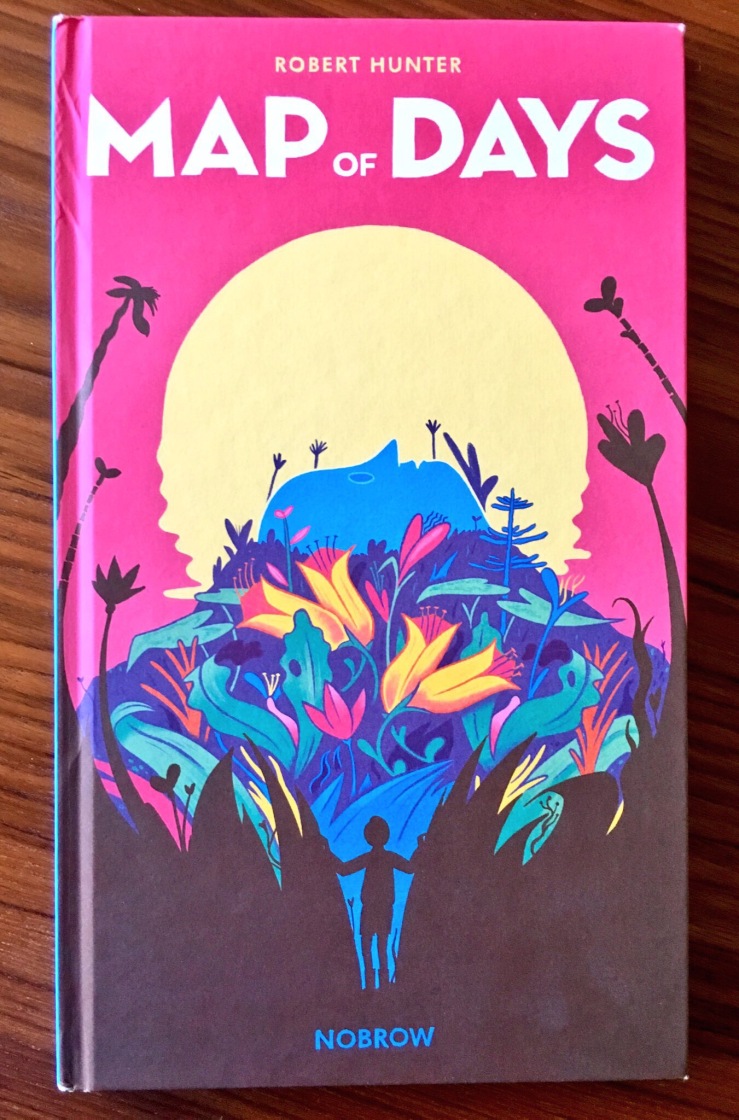
I’ll write a proper review soon, but for now, here’s Nobrow’s blurb:
Richard can’t stop thinking about the clock. He lies in bed each night listening to its tick-tocking, to the pendulum’s heavy swing. Why does his grandfather open its old doors in secret and walk into the darkness beyond?
One night, too inquisitive to sleep, Richard tiptoes from his bed, opens the cherry wood door of the grandfather clock, and steps inside. There, in a strange twilight, he sees the Face the Earth, locked forever in a simulated world, where green things seem to grow in the semblance of trees and plants, from unreal soil…


A Krazy Kat strip by George Herriman. The scan is from Krazy Kat by George Herriman, Henry Holt and Company, 1946.
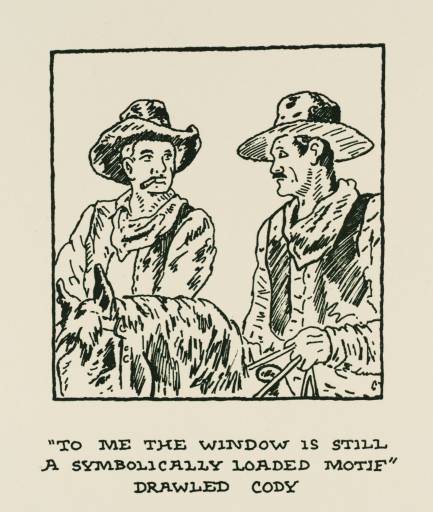

From Ron Cobb’s 1970 collection Raw Sewage (Sawyer Press).
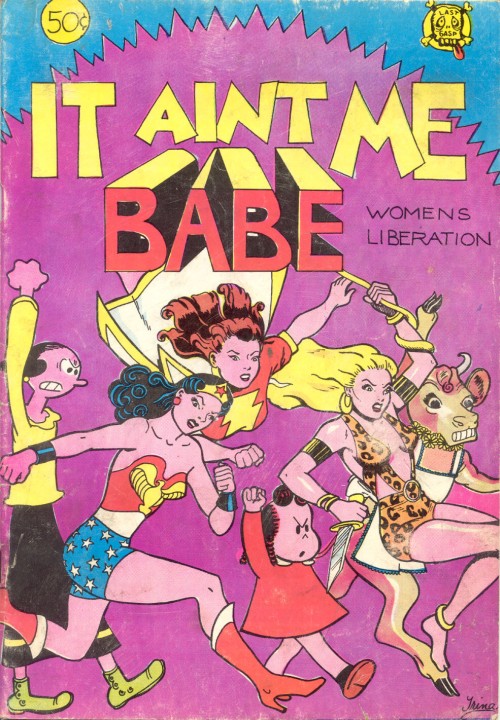
It Ain’t Me Babe, Last Gasp, July 1970. Cover by Trina Robbins.
From Silvers’s essay:
With Wimmen’s Comix, there were no cliques, no unspoken rules: Each issue had a loose theme (Outlaws, The Occult, Disastrous Relationships — even a 3-D edition.) In each issue, roughly half the book was reserved for any woman who wanted in; the collective solicited contributions on the back page. And every month the editors would meet at someone’s house to sift through the submissions.
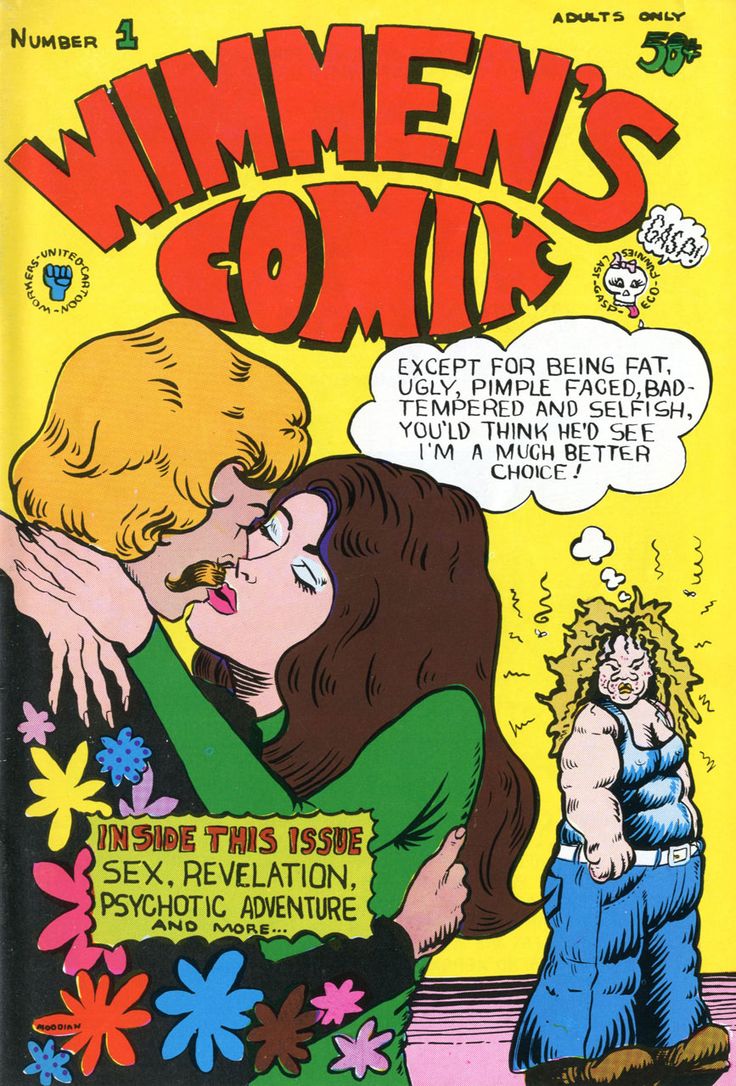
Wimmen’s Comix #1, Last Gasp, November 1972. Cover by Patricia Moodian.
Learn lots more at The Comics Journal’s “An Oral History of Wimmen’s Comix.“
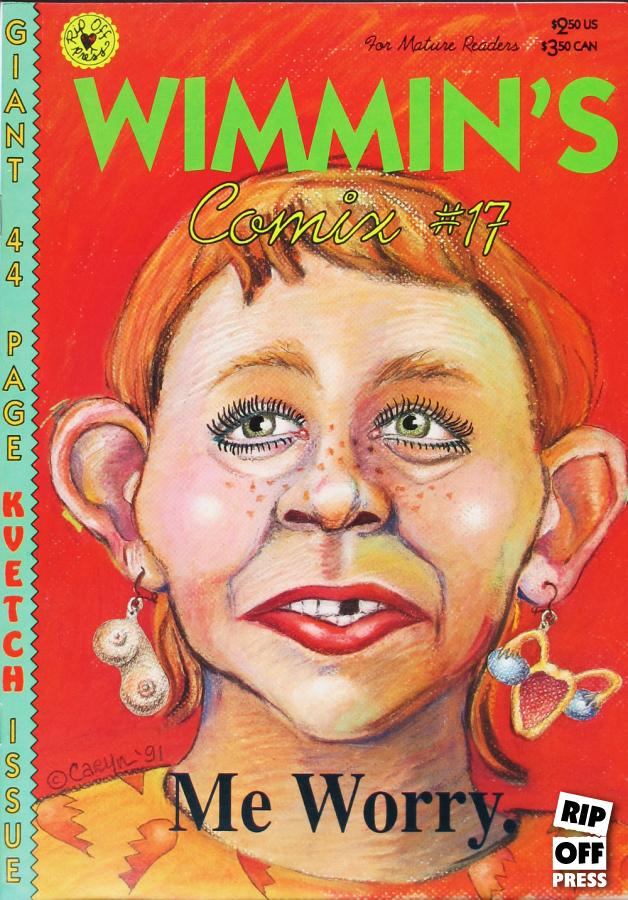
Wimmin’s Comix #17, Rip Off Press, 1992. Cover by Caryn Leschen.
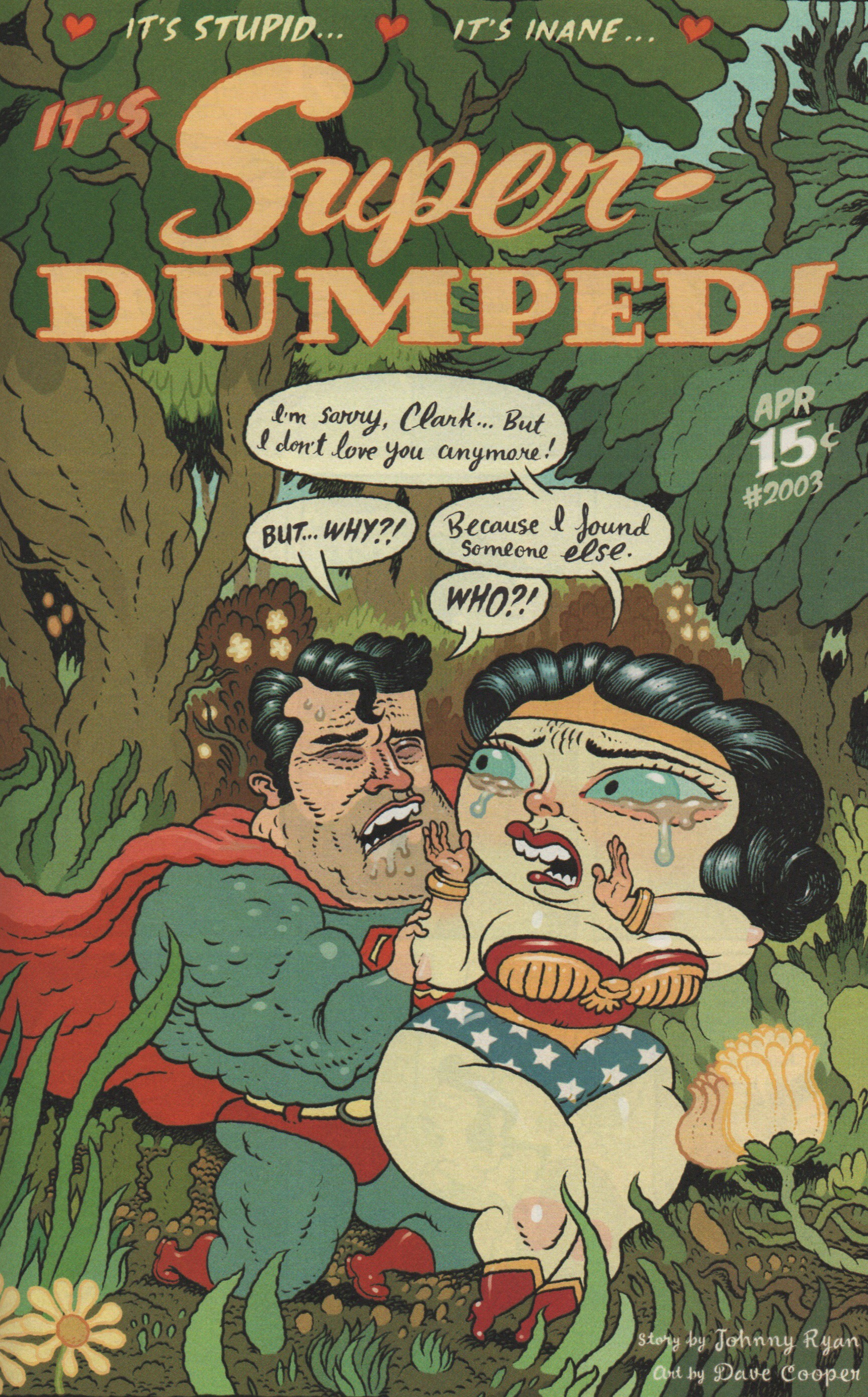
Art by Dave Cooper. From Bizarro World, DC Comics, 2005.

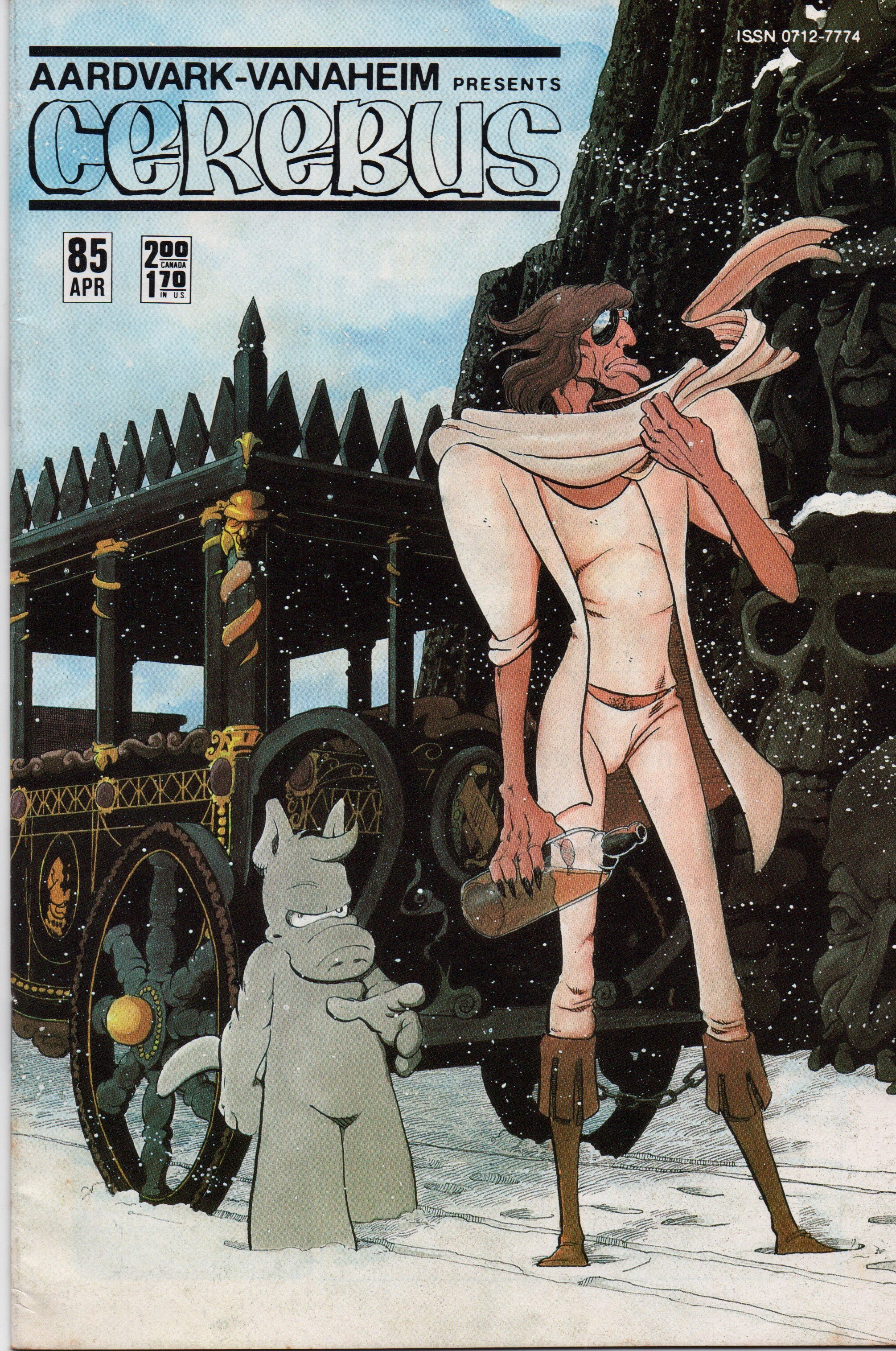
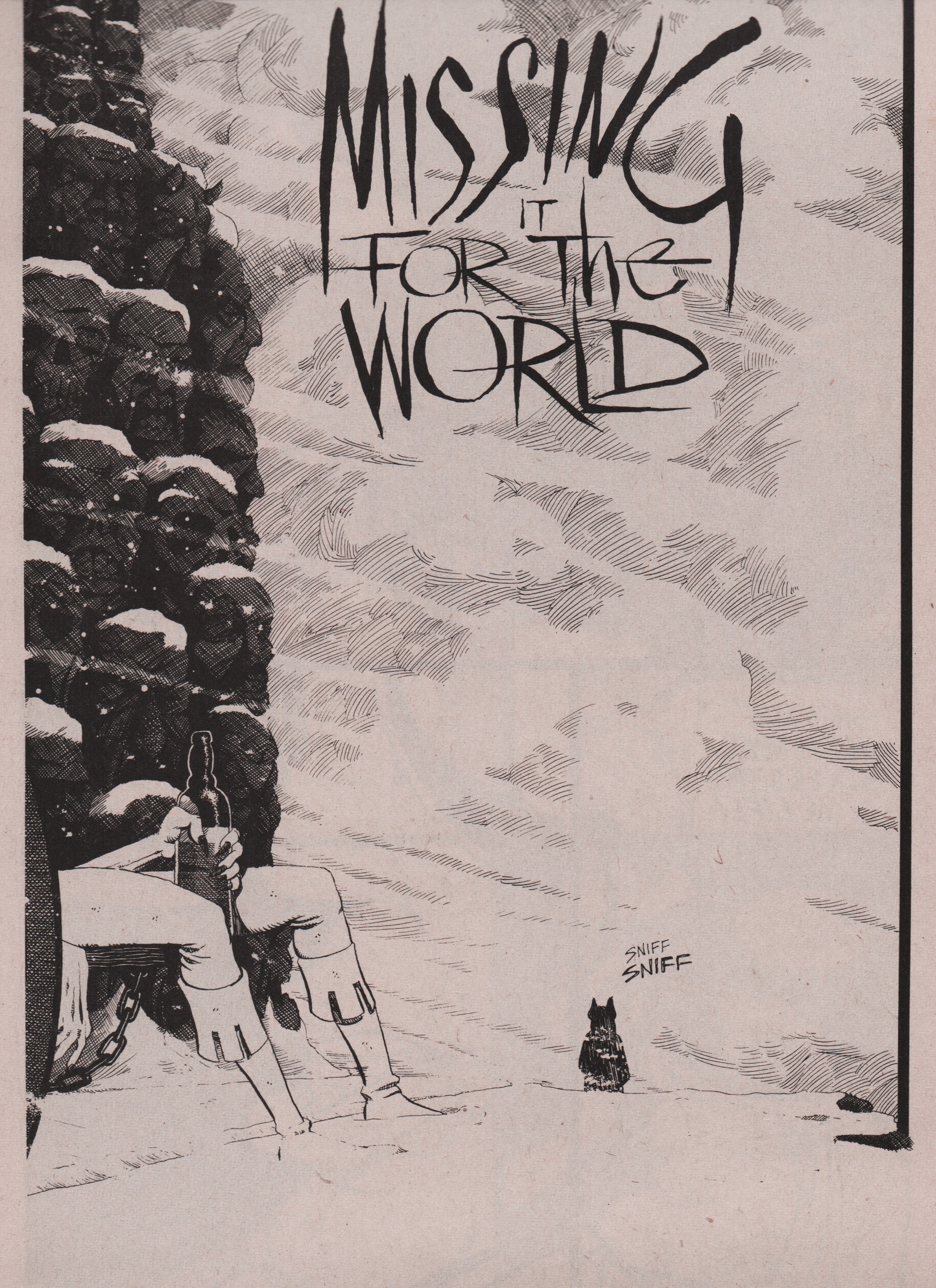
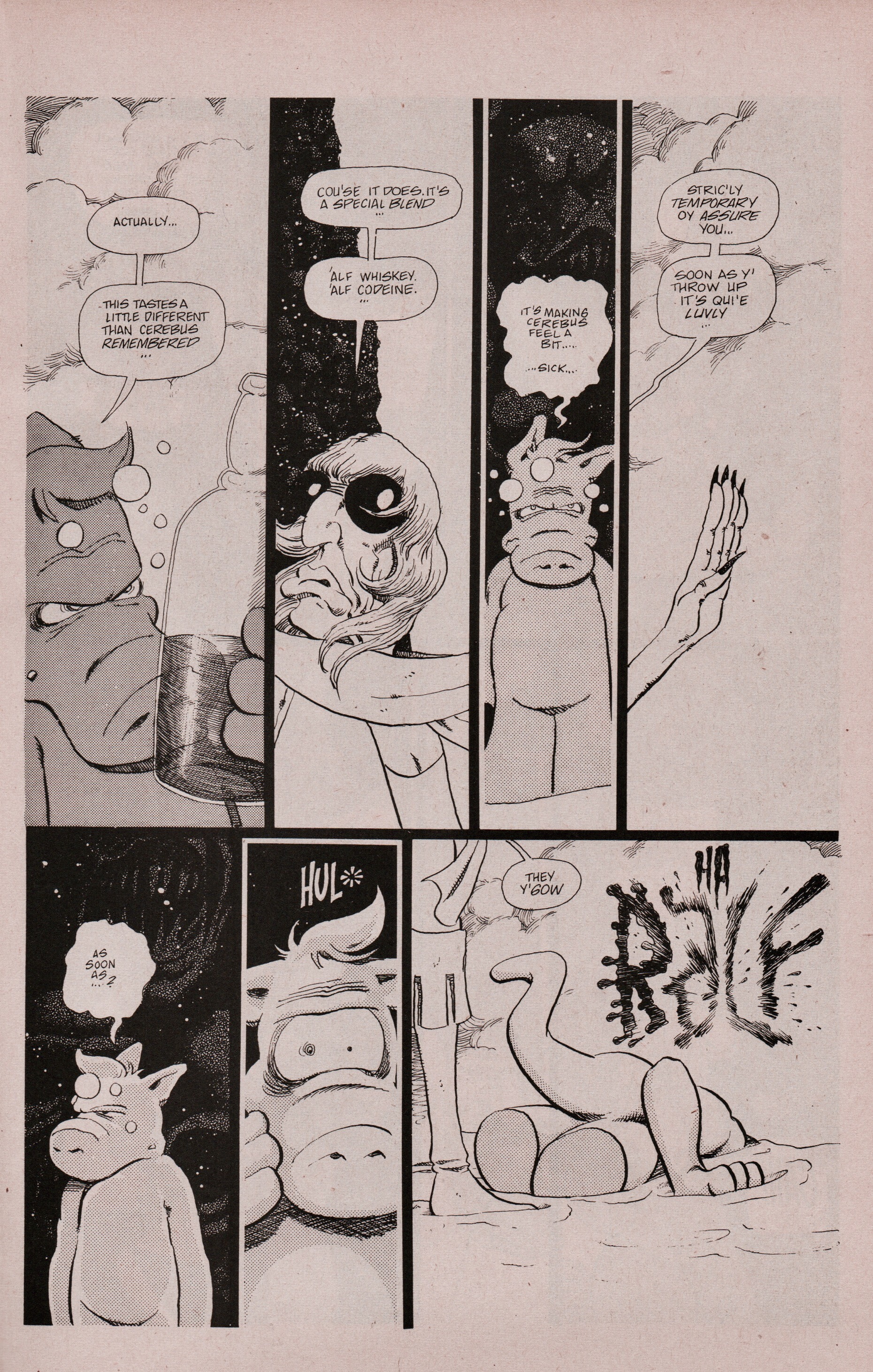
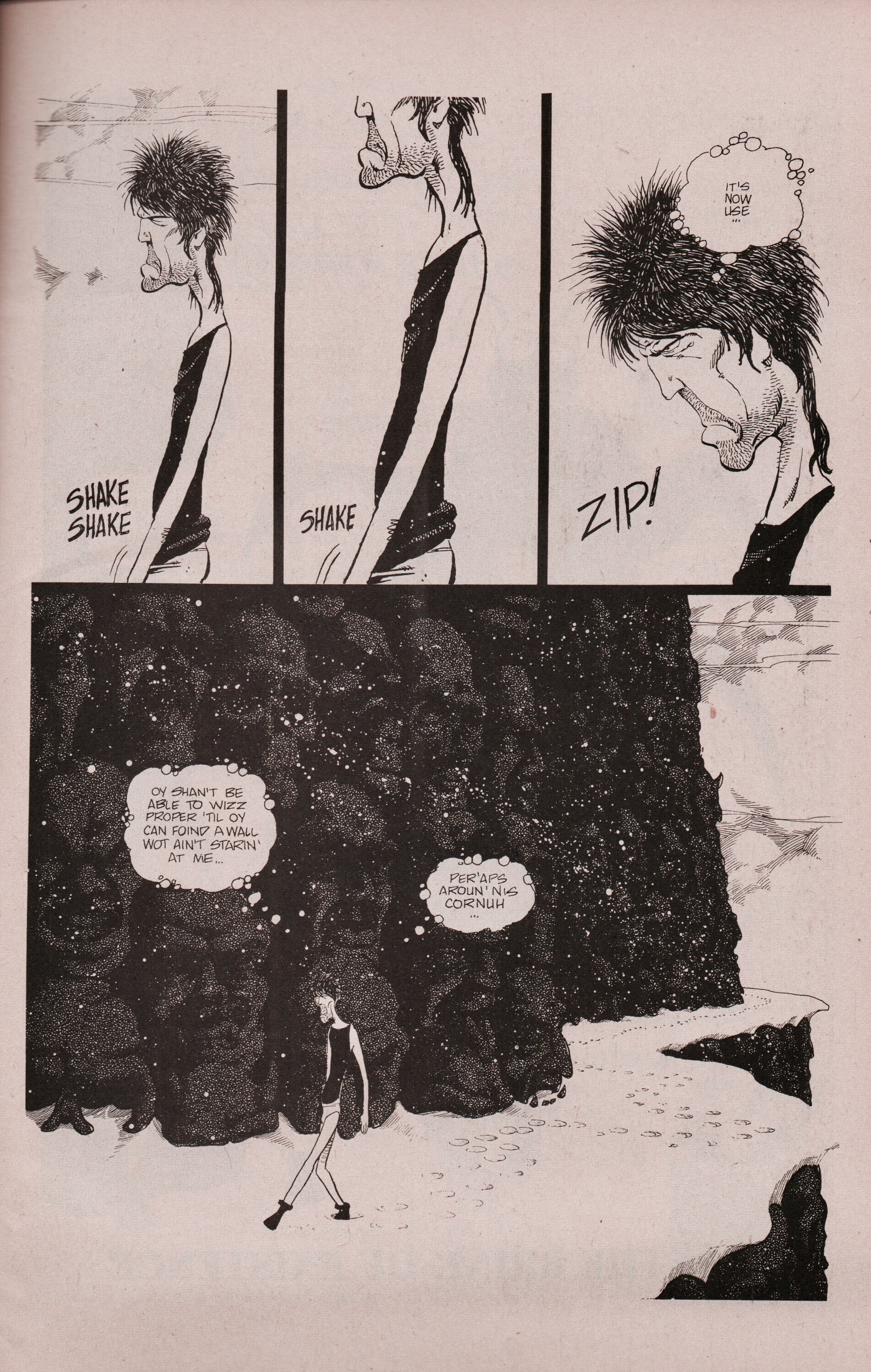
Cerebus #85, April 1986 (Aardvark Vanaheim), by Dave Sim and Gerhard. This was the first Cerebus back issue I bought (in like ’91 or ’92). It’s near the beginning of Church & State II (which is to say, in the middle of Church & State, which is to say, in the middle of the best parts of Cerebus). The issue introduces Sim’s parodies of Mick and Keith (um, Mick n’ Keef); Prince Mick shares codeine-laced whiskey with Cerebus. Vomiting, hallucination, and friendship ensue.
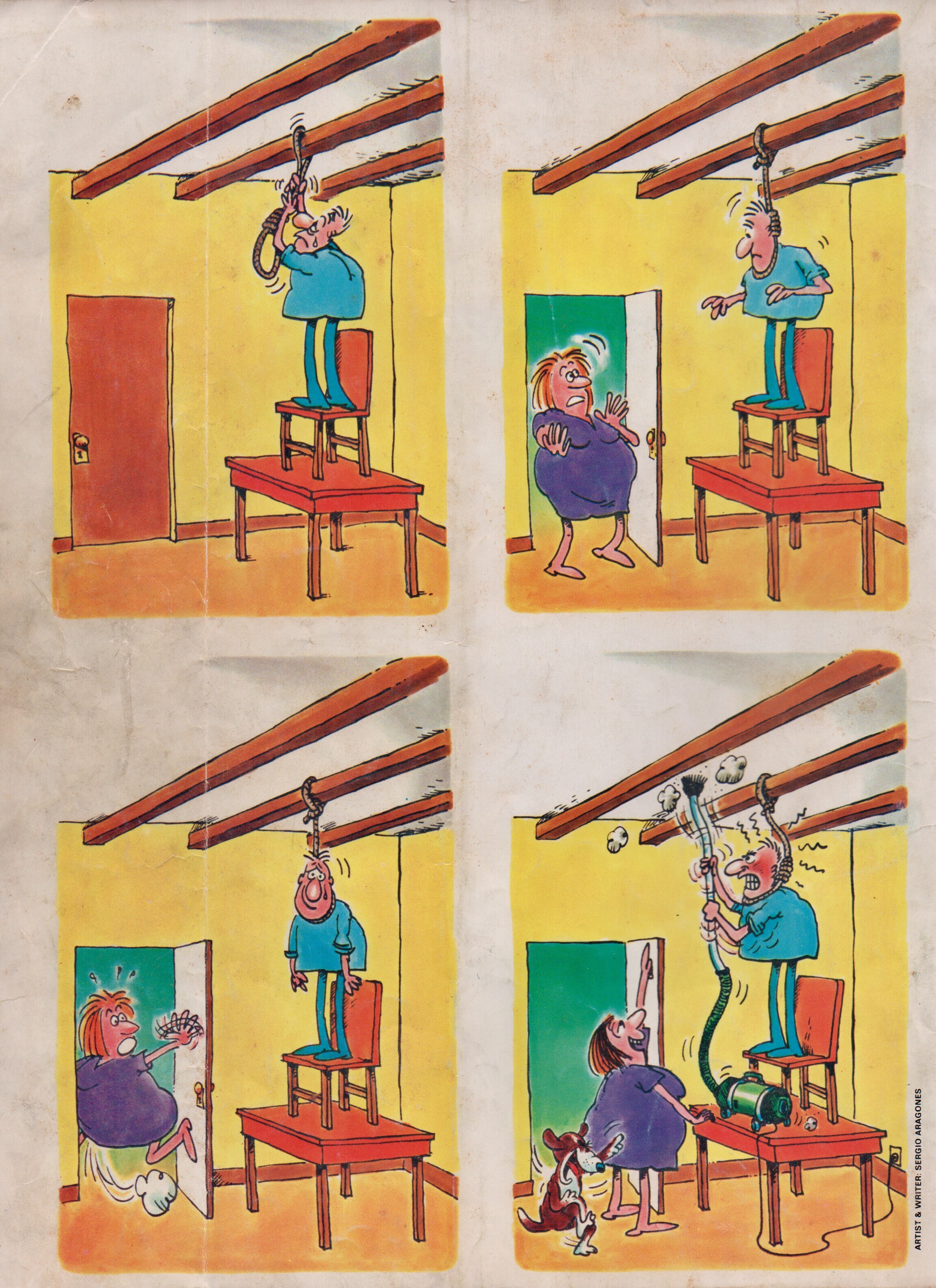
A morbid Sergio Aragones strip from the back cover of the 1987 Xmas Super Special of Mad Magazine (Australian edition). Here’s the front cover, also by Aragones: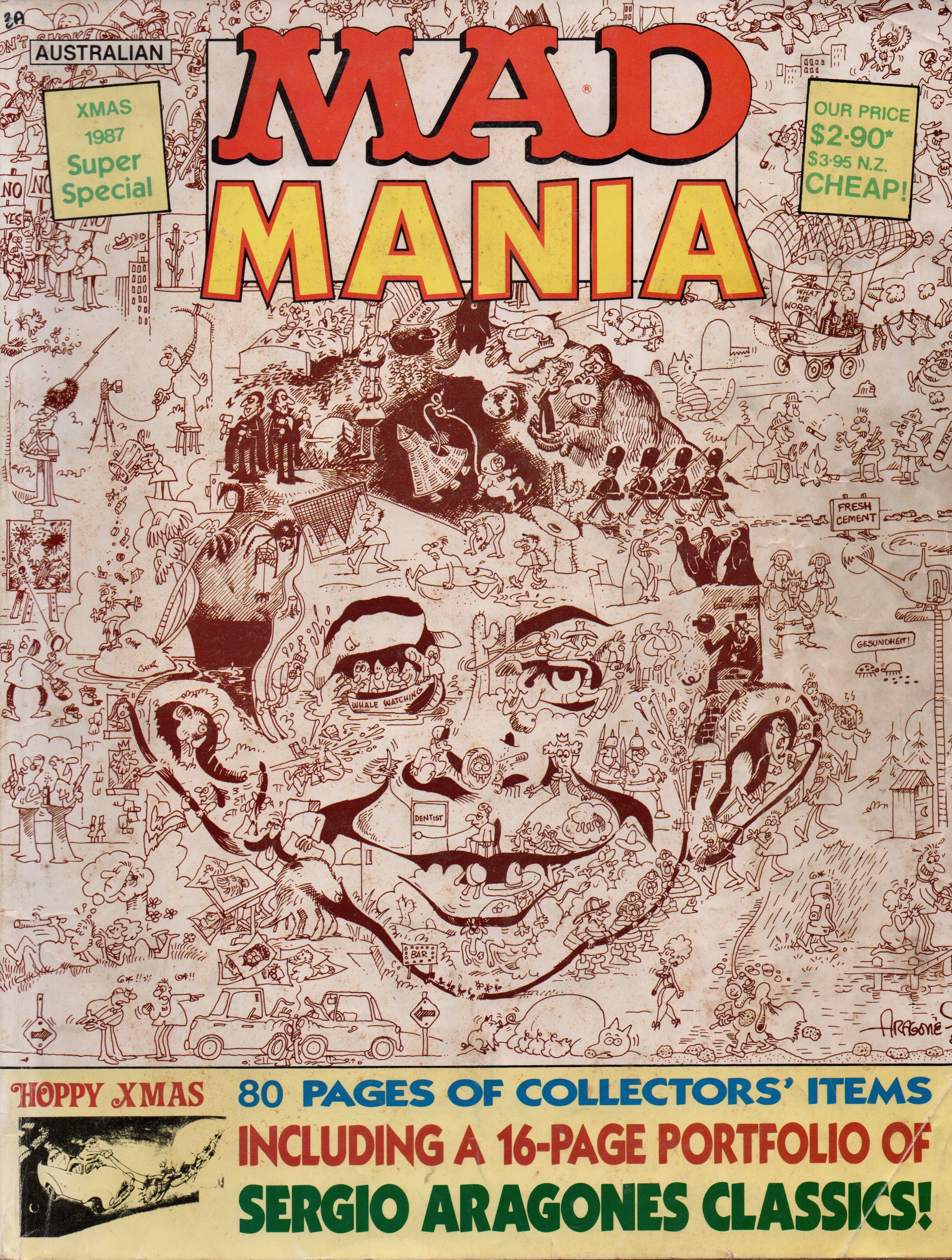

 Biblioklept