Lydia Davis Reads Five of Her Short Stories

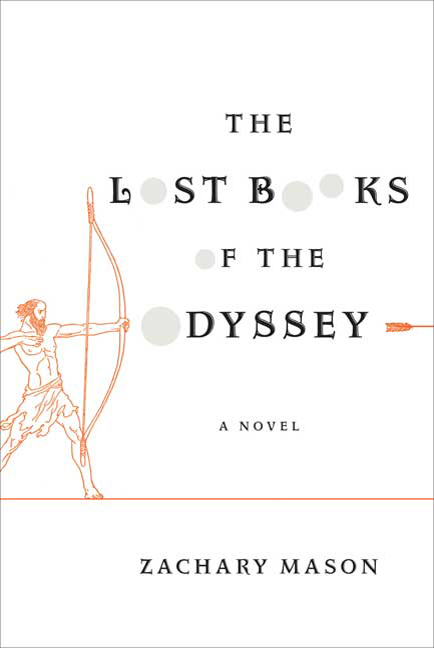
The Lost Books of the Odyssey — Zachary Mason

In his preface to The Lost Books of the Odyssey, author Zachary Mason tells us that before the story we now know as the Odyssey was organized by the poet Homer, the “material was formless, fluid, its elements shuffled into new narratives like cards in a deck.” Mason’s goal in The Lost Books is to echo these older versions of the story of Odysseus, omitting “stock epic formulae in favor of honing a single trope or image down to extreme clarity.” He succeeds admirably — Lost Books is an engaging and perplexing work that challenges our assumptions about one of the most foundational stories of Western literature. Mason’s “novel” (it is not really a novel, of course) strikes a wonderfully resonant and deeply upsetting chord, disrupting our sense of narrative satisfaction, breaking us away from the outcomes we thought we knew. I’ll share an example. Here’s chapter 14, “Fragment,” in its entirety–

A single fragment is all that survives of the forty-fifth book of the Odyssey:

Odysseus, finding that his reputation for trickery preceded, started inventing histories for himself and disseminating them wherever he went. This had the intended effect of clouding perception and distorting expectation, making it easier for him to work as he was wont, and the unexpected effect that one of his lies became, with minor variations, the Odyssey of Homer.

Lies with minor variations is a pretty good definition for storytelling. As the fragment above may skew a bit too academic for some readers, a bit too meta-textual, I’ll hasten to point out that Mason’s primary concern is storytelling. We get all the old characters: Penelope and Telemachus, Agamemnon and Achilles, Circe and Cassandra, and so on. Mason’s take is programmatic from the example above though — he works by “clouding perception and distorting expectation.” The opening chapter, “Sad Revelation,” begins with Odysseus returning home to find that Penelope is an old woman, and remarried at that. This revelation turns false, a “vengeful illusion, the deception of some malevolent god. The real Ithaca is elsewhere, somewhere on the sea-roads, hidden. Giddy, Odysseus turns and flees the tormenting shadows.” Hence, the real joy here is in movement and adventure. The journey is the telos, not Ithaca itself. Homecoming is always a deferral.

The opening chapter’s theme of an illusory home and wife repeats throughout the text, as Mason suggests again and again that notions of a stable, fixed identity will always prove untrue. Odysseus, through a clerical error, is ordered to carry out his own assassination. Later, he seems to swap souls with a Trojan enemy, living out another person’s life entirely. In another episode, we see that Odysseus never really escapes Hades, that he is simply always travelling through it, catching glimpses of another, older life.

While many of Mason’s pieces are short — one to three pages — there is a richness here that taps into the history of Western literature. What’s striking is how alienating it can all be: how dark, how cold, how scary. We are reminded that Odysseus can trace his lineage to lycanthropes, an odd call to Scandinavian myth, one reinforced later on a beach with three witches, a tale that echoes (or prefigures) the horror of Macbeth. Mason shows us (or, perhaps more accurately reminds us) that the Odyssey uncannily permeates more of our literature than we might readily recall.

The Lost Books of the Odyssey is post-modern through and through, fragmentary and elliptical, meta-textual and highly ironized. There’s of course a rich tradition of reinterpreting the Odyssey, from Tennyson’s poem to Joyce’s classic, from the Coen brothers’ film O Brother, Where Art Thou? to Margaret Atwood’s The Penelopiad, and Mason’s book will not disappoint those who are interested int the subject (although admittedly, some readers may find too much academic commentary in his work — not me though). In his brevity and frank humor, but most of all in the seemingly unclassifiableness of his work, Mason’s writing reminds me of Lydia Davis or Amy Hempel, but also Borges and Calvino. These are stories that might not be stories in a novel that might not be a novel. Highly recommended.

The Lost Books of the Odyssey is new in trade paperback from Picador.

“Idea for a Short Documentary Film” — Lydia Davis

“Idea for a Short Documentary Film,” a very short story by Lydia Davis, from The Collected Stories of Lydia Davis

Representatives of different food products manufacturers try to open their own packaging.

“Honoring the Subjunctive” — Lydia Davis

“Honoring the Subjunctive,” a very short story by Lydia Davis, from The Collected Stories of Lydia Davis

It invariably precedes, even if it do not altogether supersede, the determination of what is absolutely desirable and just.

The Best Books of 2010

Here are our favorite books published in 2010 (the ones that we read–we can’t read every book, you know).

Sandokan — Nanni Balestrini

A dark, elliptical treatise on the mundane and inescapable violence wrought by the Camorra crime syndicate in southern Italy.

Everything Ravaged, Everything Burned — Wells Tower (trade paperback)

Tower’s world is a neatly drawn parallel reality populated by down-on-their-luck protagonists who we always root for, despite our better judgment, even as they inadvertently destroy whatever vestiges of grace are bestowed upon them.

The Union Jack — Imre Kertész

Kertész’s slim novella explores a storyteller’s inability to accurately and properly communicate spirit and truth against the backdrop of an oppressive Stalinist regime.

BodyWorld — Dash Shaw

Shaw’s graphic novel is sardonically humorous in its psychoanalytic/post-apocalyptic visions. It’s a sweet and sour subversion of 1950’s comics and contemporary conformist groupthink politics. Witty and poignant, it advances its medium.

The Thousand Autumns of Jacob de Zoet — David Mitchell

An unexpected historical romance from postmodern poster boy David Mitchell. Thousand Autumns is a big fat riff on storytelling and history and adventure–but mostly, Mitchell’s Shogunate-era Japan is a place worth getting lost in.

C — Tom McCarthy

“I see what I’m doing as simply plugging literature into other literature,” McCarthy said in an interview this year. “For me, that’s what literature’s always done.” C, our favorite novel of 2010, seems plugged into the past and the present, pointing to the future.

Wolf Hall — Hilary Mantel (trade paperback)

Who knew that we needed to hear the Tudor saga again? Who knew that Thomas Cromwell could be a good guy?

The Ask — Sam Lipsyte

A mean, sad, hilarious novel that simultaneously eulogizes, valorizes, and mocks the American Dream.

X’ed Out — Charles Burns

Charles Burns does Tintin in William Burroughs’s Interzone. ‘Nuff said.

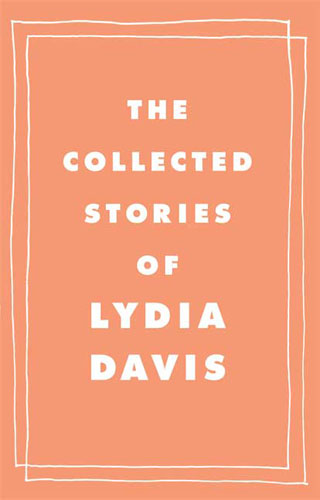
The Collected Stories of Lydia Davis — Lydia Davis

An epic compendium of, jeez, I don’t know, how do you define or explain what Davis does? Inspection, perception, mood, observation. Tales, fables, riffs, annotations, skits, jokes, japes, anecdotes, journals, thought experiments, epigrams, half-poems, and would-be aphorisms. Great stuff.

Win a Copy of The Collected Stories of Lydia Davis

UPDATE: The contest is closed–and in record time.

Want to win a copy of The Collected Stories of Lydia Davis? Of course you do. The book makes a hefty stocking stuffer, so you could even give it away if you wanted to, but we suggest you do the selfish thing and hold on to it. It’s excellent.

Picador has kindly agreed to give a copy to one lucky Biblioklept reader (you must have a U.S. address, though). Win this handsome Davis volume by being the first to correctly answer all three questions of our quiz. Post your answers in the comments section.

1. Lydia Davis was married to another famous writer back in the 1970s. Name that writer and his new novel.

2. One of Davis’s short story collections is titled Samuel Johnson Is Indignant. Why is Dr. Johnson indignant? (Hint: Read our review).

3. In a 2008 interview with The Believer, Davis commented that she tried to translate/update a famous 18th century Irish novelist’s work. Who was the writer?

The Collected Stories of Lydia Davis

The Collected Stories of Lydia Davis compiles all 198 of Davis’s short stories in one handsome volume. That’s all four of Davis’s exceptional short story collections: Break It Down, Varieties of Disturbance, Samuel Johnson Is Indignant, and Almost No Memory. FS&G debuted the hardback edition a year ago, and this month Picador offers up a lovely (and more affordable) trade paperback version; it sports deckle edge pages and French flaps, and runs over 700 pages.

I front-load my review with this data to make it obvious that, if you have any interest in Lydia Davis, this is a book to pick up. It’s a wonderful collection, a tidy brick of words that begs for immersion, the kind of book you float around in, flipping pages at random to find and enjoy yet another strange little gem. Go get it.

If you’re not sure why you should be interested in Davis, read on.

Most of Davis’s stories are very short; many are just a paragraph or two, and some a mere sentence in length. They are not stories in the traditional sense: don’t look for sweeping character development or grand plot arcs. These stories thrive rather on tone, a keen sense of inspection, perception, and mood, and an intensity of observation on matters large and small. They are tales, fables, riffs, annotations, skits, jokes, japes, anecdotes, journals, thought experiments, epigrams, half-poems, and would-be aphorisms.

“In a House Besieged,” from her first collection Break It Down (1986) reveals much about the Davis program. Here it is in full–

In a house besieged lived a man and a woman. From where they cowered in the kitchen the man and woman heard small explosions. “The wind,” said the woman. “Hunters,” said the man. “The rain,” said the woman. “The army,” said the man. The woman wanted to go home, but she was already home, there in the middle of the country in a house besieged.

“In a House Besieged” illustrates a number of the themes and motifs that run throughout Davis’s oeuvre: unnamed protagonists identified only as “the man” and “the woman” (later stories might call them “the husband” and “the wife”) who are at once allegorical placeholders and at the same time singular individuals; a domestic setting (with family members as protagonists); an unknowable and perhaps unidentifiable threat; a pervasive sense of alienation balanced by an ironic sense of humor. The story’s brevity also shows that, from the outset of her publishing career, Davis was already working toward something wholly different from the Carveresque stories that dominated MFA fiction in the 80s.

The domestic settings of Break It Down–spaces often haunted by mothers and fathers–rear up again and again throughout the collection. 1997’s Almost No Memory kicks off with “Meat, My Husband,” a story about a wife who is trying to get her husband to eat healthier–a difficult prospect considering his affection for beef. The tale should be utterly banal, but instead it is humorous and even oddly moving; the wife, who narrates the piece, concludes by realizing that her husband would really just prefer to cook for himself. The insight transcends the particular domestic scenario: it seems applicable to the reader’s own life (or to this reader’s, anyway). “How He Is Often Right,” also from the same collection, is a short paragraph where the narrator concludes that the titular “he” is often wrong, “but wrong for circumstances different from the circumstances as they actually were, while [his decision] was right for circumstances I clearly did not understand.” The story captures the way that we impart great meaning to the smallest arguments, dwelling on them, connecting them to our sense of identity. We see the same analysis at work in “The Outing” (also from Almost No Memory). In full–

An outburst of anger near the road, a refusal to speak on the path, a silence in the pine woods, a silence across the old railroad bridge, an attempt to be friendly in the water, a refusal to end the argument on the flat stones, a cry of anger on the steep bank of dirt, a weeping among the bushes.

Davis’s sentence might be telescopic, but it also, paradoxically, puts the relationship in the story under a microscope. The reader can fill in the gaps with his or her own background: we’ve all experienced this anger, this silence, this refusal. We’ve been there. The story is real. It’s true.

The truth of Davis’s stories is what unites them; it’s the reader’s recognition of their truth that makes them so pleasurable. Take “Boring Friends” from 2001’s Samuel Johnson Is Indignant (again, in full)–

We know only four boring people. The rest of our friends we find interesting. However, most of the friends we find interesting find us boring: the most interesting find us the most boring. The few who are somewhere in the middle, with whom there is reciprocal interest, we distrust: at any moment, we feel, they may become too interesting for us, or we too interesting for them.

Davis’s treatment on friendship consistently penetrates facades, exposes our competitive cores, and, at the same time, celebrates the joys we might take in others. This precarious line also evinces in Davis’s stories about taking care of young children. The short scene “Child Care” focuses on a grumpy father who’d rather watch TV than take his turn with the baby. Solution: “Together they watch The Odd Couple.” And perhaps it is because I have two young children, but I can’t recall a more accurate depiction of the simultaneous wonder and boredom of taking care of a new baby than “What You Learn About the Baby” (a lengthy treatise at six pages).

Not all of Davis’s stories focus on family and friends. There’s much here about academia: troubles with translation, grappling with tenure, the perils of teaching, and so on. There are at least three entries on grammar here. If not all readers can connect with these stories (although I certainly did), they need not worry–part of the joy of the book is its diversity. If a story doesn’t catch right away, flick to the next one, or one a hundred pages down the line. Perhaps you will alight on one of the collection’s imaginative historical biographies, like “Kafka Cooks Dinner” or “Marie Curie, So Honorable Woman,” positively epic at 18 pages. Davis’s histories fascinate; they seem utterly real and true and absurd and improbable, all at the same time.

Indeed, discursive movement is the core of Davis’s, but her digressions all point to a thematic analysis of truth, of an individual’s attempt to understand the world in terms other than the individual herself. They dwell on problems of self-consciousness, often employing literary distortion as an analytical tool. Davis’s literary distortions always point to a concrete reality, a livable, experiential reality; the fact that we should experience the real as surreal or absurd only makes her work more truthful.

It would be easy to park Davis with the postmodernist counter-tradition, but I think her work looks to something else, something post-postmodernist (I write this, I know, at the risk of falling into an abyssal loop).  Davis’s work presages contemporary “flash fiction”; her stories’ brevity reflect the simultaneous contraction of our attention spans and the expansion of our diverse interests. Her story “Samuel Johnson Is Indignant:” reads like a Facebook update. Here it is in full — “that Scotland has so few trees.” Davis transmutes an amusing annotation into a story that somehow brings the great critic back to life. The title of the story is also the title of the book; what follows then is a kind of meta-joke on reader expectations, subverting our expectations of Dr. Johnson’s (supposed) meta-commentary on the book-proper. But I fear I’m headed into a lit-crit navel-gazing snoozefest (in what has already been a long review). Far better to wrap things up, I think, by simply noting again how joyful it is to move through the book, to open at random and read. Very highly recommended.

“Nietszche” — Lydia Davis

“Nietszche” [sic] by Lydia Davis, from Varieties of Disturbance, and reprinted in The Collected Stories of Lydia Davis

Oh, poor Dad. I’m sorry I made fun of you.

Now I’m spelling Nietszche wrong, too.

“Money” — Lydia Davis

“Money” by Lydia Davis, from Samuel Johnson Is Indignant, collected in the forthcoming volume The Collected Stories of Lydia Davis

I don’t want any more gifts, cards, phone calls, prizes, clothes, friends, letters, books, souvenirs, pets, magazines, land, machines, houses, entertainments, honors, good news, dinners, jewels, vacations, flowers, or telegrams. I just want money.