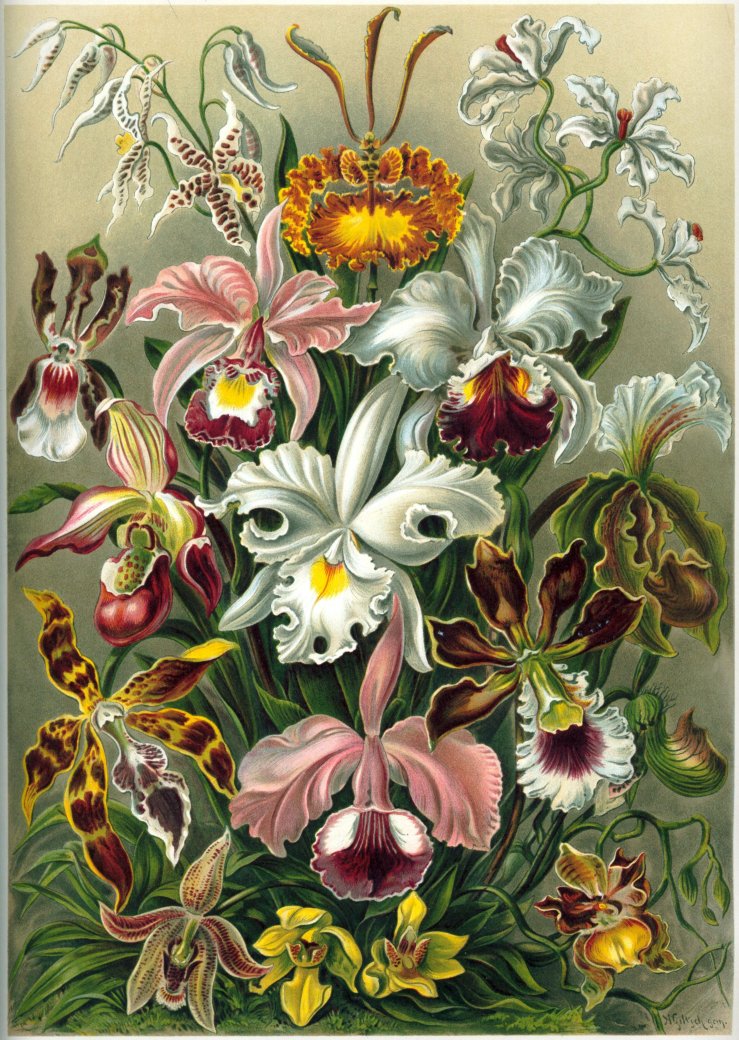
Orchidaceae — Ernst Haeckel

Haeckel_Orchidae

Fowl in a Damson Tree — Charles Tunnicliffe

https://i0.wp.com/uploads5.wikipaintings.org/images/charles-tunnicliffe/fowl-in-a-damson-tree%281%29.jpg

Reading-as-Nature or Nature-as-Reading (From Thomas Berhnhard’s Correction)

We couldn’t endure a life in nature, necessarily always a free nature, without respite, so we always step outside nature, for no reason but survival, and take refuge in our reading, and live for a long time in our books, a more undisturbed life. I’ve lived half my life not in nature but in my books as a nature-substitute, and the one half was made possible only by the other half. Or else we exist in both simultaneously, in nature and in reading-as-nature, in this extreme nervous tension which as a form of consciousness is endurable only for the shortest possible time span. The question can’t be whether I live in nature as nature, or in reading-as-nature, or in nature-as-reading, in the nature of nature-as-reading andsoforth, so Roithamer. To everything that we think and fill our own life and that we hear and see, perceive, we always have to add: the truth, however, is … as a result, uncertainty has become a chronic condition with us. Those abrupt transitions from one nature into the other, from one form of awareness into the other, so Roithamer. When we think, we know nothing, everything is open, nothing, so Roithamer.

From Thomas Bernhard’s novel Correction.


“Life in the jungle” (Kafka)

(From Kafka’s Diaries).

“Overwhelming and Collective Murder” (Herzog)

(More).

Still Life with Pygmy Parrot — George Flegel

In the Jungle, Florida — Winslow Homer

The Marquis de Sade: “You Need Only Have a Good Heart”

PRIEST – Then we should not shrink from the worst of all crimes.

DYING MAN – I say nothing of the kind. Let the evil deed be proscribed by law, let justice smite the criminal, that will be deterrent enough; but if by misfortune we do commit it even so, let’s not cry over spilled milk; remorse is inefficacious, since it does not stay us from crime, futile since it does not repair it, therefore it is absurd to beat one’s breast, more absurd still to dread being punished in another world if we have been lucky to escape it in this. God forbid that this be construed as encouragement to crime, no, we should avoid it as much as we can, but one must learn to shun it through reason and not through false fears which lead to naught and whose effects are so quickly overcome in any moderately steadfast soul. Reason, sir – yes, our reason alone should warn us that harm done our fellows can never bring happiness to us; and our heart, that contributing to their felicity is the greatest joy Nature has accorded us on earth; the entirety of human morals is contained in this one phrase: Render others as happy as one desires oneself to be, and never inflict more pain upon them than one would like to receive at their hands. There you are, my friend, those are the only principles we should observe, and you need neither god nor religion to appreciate and subscribe to them, you need only have a good heart. But I feel my strength ebbing away; preacher, put away your prejudices, unbend, be a man, be human, without fear and without hope forget your gods and your religions too: they are none of them good for anything but to set man at odds with man, and the mere name of these horrors has caused greater loss of life on earth than all other wars and all other plagues combined. Renounce the idea of another world; there is none, but do not renounce the pleasure of being happy and of making for happiness in this. Nature offers you no other way of doubling your existence, of extending it. – My friend, lewd pleasures were ever dearer to me than anything else, I have idolized tham all my life and my wish has been to end it in their bosom; my end draws near, six women lovelier than the light of day are waiting in the chamber adjoining, I have reserved them for this moment, partake of the feast with me, following my example embrace them instead of the vain sophistries of superstition, under their caresses strive for a little while to forget your hypocritical beliefs.

NOTE: The dying man rang, the women entered; and after he had been a little while in their arms the preacher became one whom Nature had corrupted, all because he had not succeeded in explaining what a corrupt nature is.

From the Marquis de Sade’s Dialogue Between a Priest and a Dying Man (1782).

Stump — Neil Welliver

Two Chained Monkeys — Pieter Bruegel the Elder

The Joy of Living — Max Ernst

Two Cats Fighting — John James Audubon

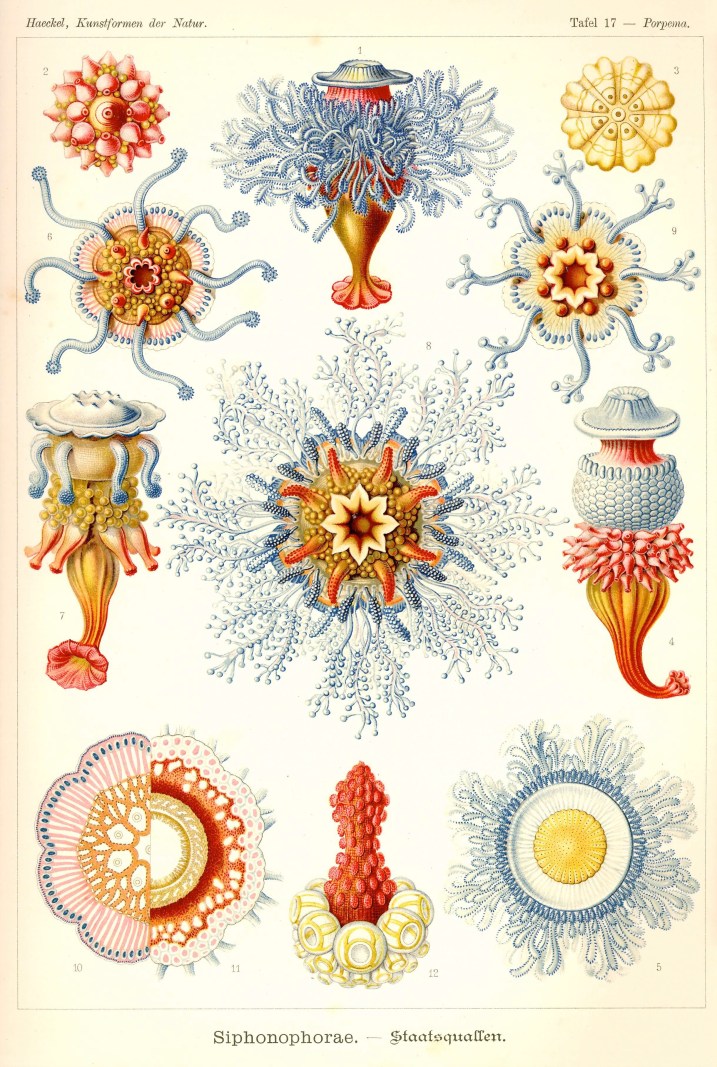
Siphonophorae — Ernst Haeckel

Anteater — Erica il Cane

(More).

The Island — Walton Ford

“We Are Challenging Nature Itself . . . And It Hits Back” — Werner Herzog on Nature’s Violent Obscenity

(More).

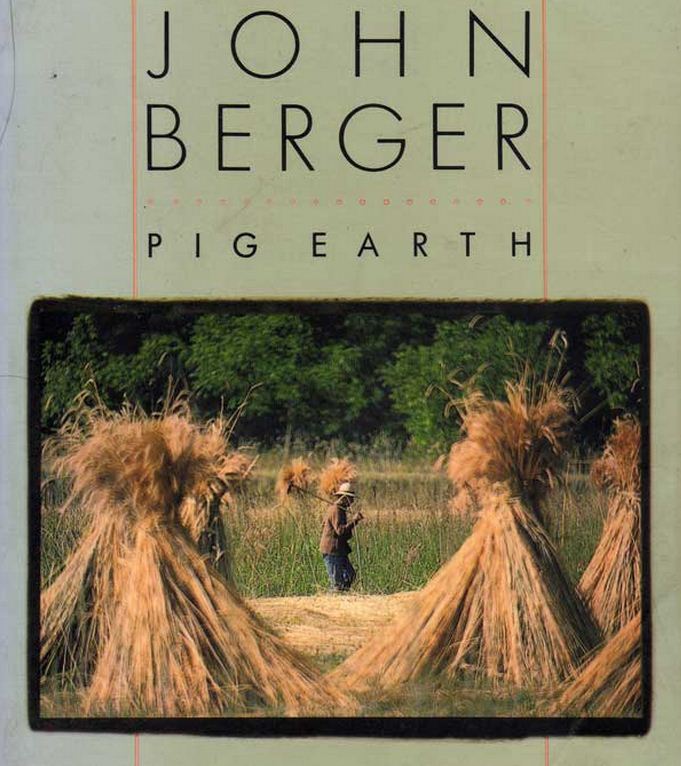
Pig Earth — John Berger

People exaggerate the changes in nature so as to make nature seem lighter. Nature resists change. If something changes, nature waits to see whether the change can continue, and it it can’t, it crushes it with all its weight!  Ten thousand years ago the trout in the stream would have been exactly the same as today.

Stasis and disruption and the relation between people and their natural and urban surroundings are the themes John Berger writes about in his 1979 collection of essays, poems and short stories, Pig Earth.  Having moved from England, where he enjoyed considerable renown as an art critic and fiction writer, to the peasant villages of the French Alps, Berger settled into his role as an active participant in rural life, not only turning hay but observing and documenting the disappearance of a way of a once-pervasive mode of life.  Pig Earth was one result of his labors, the first book of a trilogy that took some fifteen-odd years to complete, a moving but not uncritical account of humanity’s struggle to conquer nature by symbiosis.

Maybe symbiosis isn’t the proper term if we agree that humanity is part of nature’s whole, but Berger juxtaposes the frailty of humanity with the earth’s uncaring and often violent strength.  Survival for the family of the subsistence farmer depends upon that family’s ability to tend to the needs of the plant and animal world (as well as more than a little bit of luck).  In the collection’s first true story, “A Calf Remembered,” a baby cow is delivered on a dark winter’s night. Here, Berger stresses the protections that nature and man have designed to ensure the survival of a young, vulnerable animal:  mucus, barn, salt, and sense.  The human spends his night in the barn protecting his property because it provides him not only with sustenance in the forms of milk and meat, but also companionship and a sense of duty.  When daily living requires acts that might mean life or death, the conscious and the instinct converge.

He sat on a milking stool in the dark.  With his head in his hands, his breathing was indistinguishable from that of the cows. The stable itself was like the inside of an animal.  Breath, water, cud were entering it:  wind, piss, shit were leaving.

Pig Earth is a book worth studying as people attempt to make sense of a world transitioning from one type of living to another and fuss over the sources of their own limited strength and vitality. Berger may not have been looking to pioneer a slow-living locavore lifestyle, but his subjects worry about their increasing isolation from the circles of power and industry.  They fret over the pointlessness of passing their knowledge to their children who need entirely different skills to survive in the rapidly encroaching urban wage economy.  In “The Value of Money” a father refuses a tractor, branded “The Liberator” by the manufacturer, that his son has purchased for him because it will render his faithful work-horse obsolete.  This same farmer kidnaps local tax officials because they want to confiscate the products of his labor without compensation for value that he exclusively created.  Unable to make them understand their wrongdoing, he sets them free because “you can only take revenge on those who are your own.”

The final story, “The Three Lives of Lucy Cabrol,” is the lengthiest and perhaps most poignant narrative in the book. It follows the life of a bright, tenacious, physically stunted woman as she grows from young girl to town outcast.  While Berger admired much of the life in the peasant village, he would fail in his duty as critic and chronicler if he ignored its darker sides. Berger often sets the title character’s pluck against the resignation and superstition endemic to village life. When life requires struggle, most people choose to hoard.  When poor choices may lead to death or family hardship, capitulation to those in power, whether those rulers be the town’s big man or Nazi collaborators, can often seem the only obvious choice.  Lucy shows us that cowardice, no matter the circumstances, only seems easy. Pig Earth is highly recommended.