“Carson McCullers” — Charles Bukowski


“Carson McCullers,” a poem by Charles Bukowski—


she died of alcoholism
wrapped in a blanket
on a deck chair
on an ocean
steamer.

all her books of
terrified loneliness

all her books about
the cruelty
of loveless love

were all that was left
of her

as the strolling vacationer
discovered her body

notified the captain

and she was quickly dispatched
to somewhere else
on the ship

as everything
continued just
as
she had written it


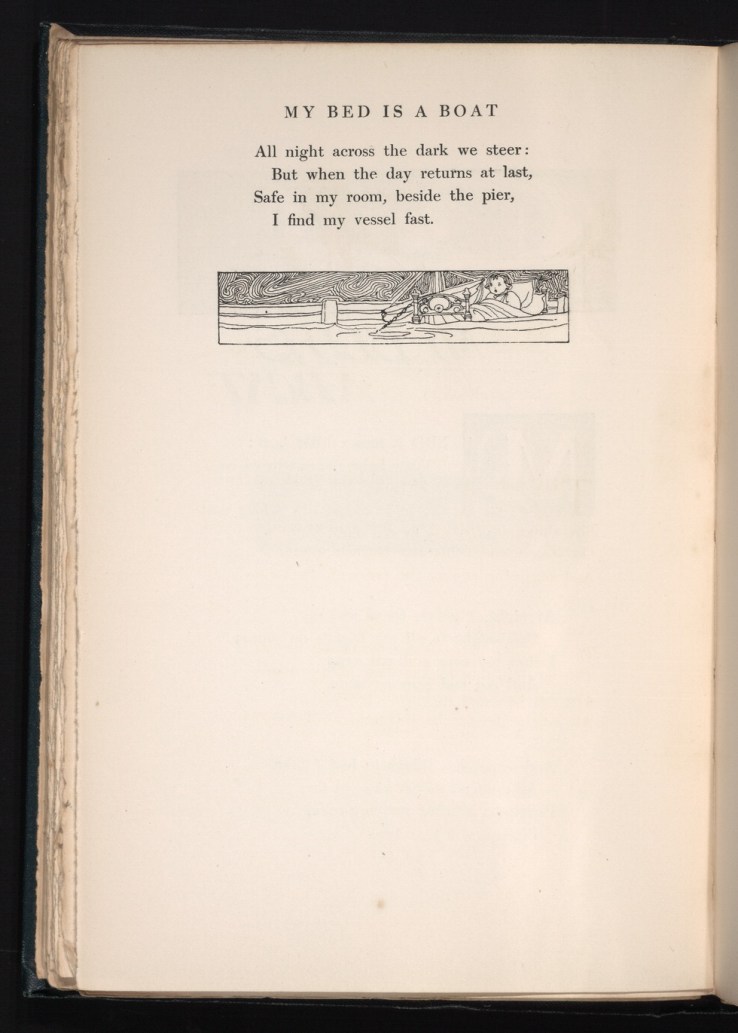
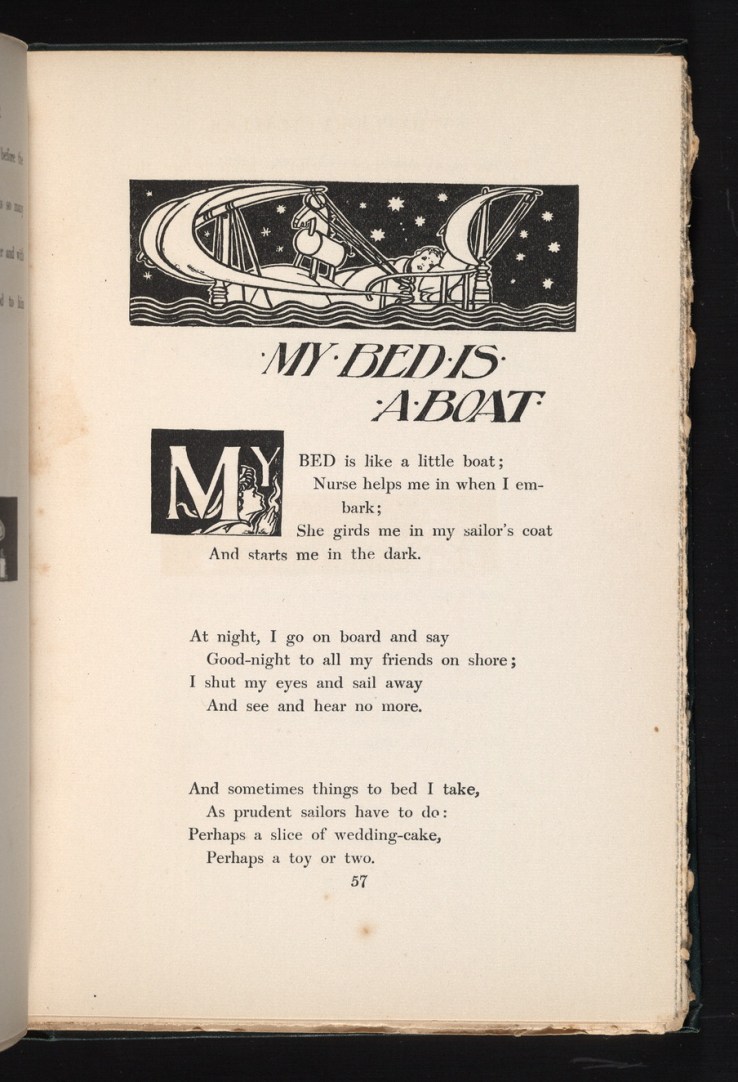
“My Bed Is a Boat” — Robert Louis Stevenson

“cruelty. don’t talk to me about cruelty” — Lucille Clifton

A poem by Lucille Clifton—

cruelty. don’t talk to me about cruelty
or what i am capable of.

when i wanted the roaches dead i wanted them dead
and i killed them. i took a broom to their country

and smashed and sliced without warning
without stopping and i smiled all the time i was doing it.

it was a holocaust of roaches, bodies,
parts of bodies, red all over the ground.

i didn’t ask their names.
they had no names worth knowing.

now i watch myself whenever i enter a room.
i never know what i might do.

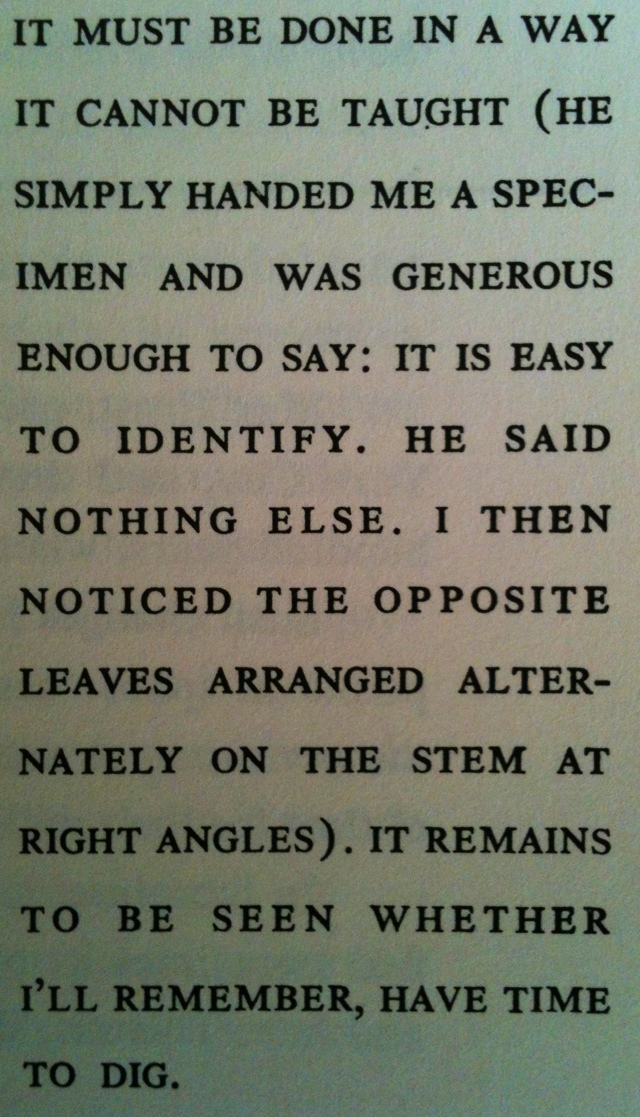
“It Must Be Done in a Way It Cannot Be Taught” — John Cage

20120228-173108.jpg

(From John Cage’s A Year from Monday).

“Florida” — Elizabeth Bishop

“Florida” by Elizabeth Bishop

The state with the prettiest name,
the state that floats in brackish water,
held together by mangrave roots
that bear while living oysters in clusters,
and when dead strew white swamps with skeletons,
dotted as if bombarded, with green hummocks
like ancient cannon-balls sprouting grass.
The state full of long S-shaped birds, blue and white,
and unseen hysterical birds who rush up the scale
every time in a tantrum.
Tanagers embarrassed by their flashiness,
and pelicans whose delight it is to clown;
who coast for fun on the strong tidal currents
in and out among the mangrove islands
and stand on the sand-bars drying their damp gold wings
on sun-lit evenings.
Enormous turtles, helpless and mild,
die and leave their barnacled shells on the beaches,
and their large white skulls with round eye-sockets
twice the size of a man’s.
The palm trees clatter in the stiff breeze
like the bills of the pelicans. The tropical rain comes down
to freshen the tide-looped strings of fading shells:
Job’s Tear, the Chinese Alphabet, the scarce Junonia,
parti-colored pectins and Ladies’ Ears,
arranged as on a gray rag of rotted calico,
the buried Indian Princess’s skirt;
with these the monotonous, endless, sagging coast-line
is delicately ornamented.

Thirty or more buzzards are drifting down, down, down,
over something they have spotted in the swamp,
in circles like stirred-up flakes of sediment
sinking through water.
Smoke from woods-fires filters fine blue solvents.
On stumps and dead trees the charring is like black velvet.
The mosquitoes
go hunting to the tune of their ferocious obbligatos.
After dark, the fireflies map the heavens in the marsh
until the moon rises.
Cold white, not bright, the moonlight is coarse-meshed,
and the careless, corrupt state is all black specks
too far apart, and ugly whites; the poorest
post-card of itself.
After dark, the pools seem to have slipped away.
The alligator, who has five distinct calls:
friendliness, love, mating, war, and a warning–
whimpers and speaks in the throat
of the Indian Princess.

“Surreptitious Kissing” — Denis Johnson

“Surreptitious Kissing,” a poem by Denis Johnson

I want to say that
forgiveness keeps on

dividing, that hope
gives issue to hope,

and more, but of course I
am saying what is

said when in this dark
hallway one encounters

you, and paws and
assaults you—love

affairs, fast lies—and you
say it back and we

blunder deeper, as would
any pair of loosed

marionettes, any couple
of cadavers cut lately

from the scaffold,
in the secluded hallways

of whatever is
holding us up now.

“Self Portrait at Twenty Years” — Roberto Bolaño

“Self Portrait at Twenty Years,” a poem by Roberto Bolaño, from Laura Healy’s translation of The Romantic Dogs

I set off, I took up the march and never knew
where it might take me. I went full of fear,
my stomach dropped, my head was buzzing:
I think it was the icy wind of the dead.
I don’t know. I set off, I thought it was a shame
to leave so soon, but at the same time
I heard that mysterious and convincing call.
You either listen or you don’t, and I listened
and almost burst out crying: a terrible sound,
born on the air and in the sea.
A sword and shield. And then,
despite the fear, I set off, I put my cheek
against death’s cheek.
And it was impossible to close my eyes and miss seeing
that strange spectacle, slow and strange,
though fixed in such a swift reality:
thousands of guys like me, baby-faced
or bearded, but Latin American, all of us,
brushing cheeks with death.