Tag: Poetry
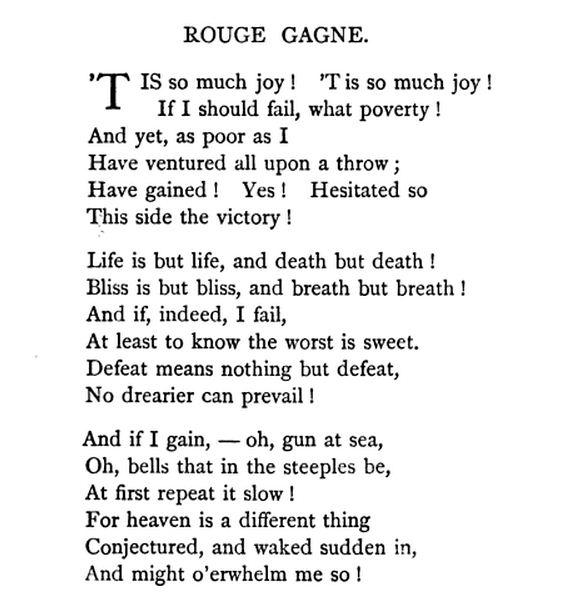
“Tis so much joy!” — Emily Dickinson
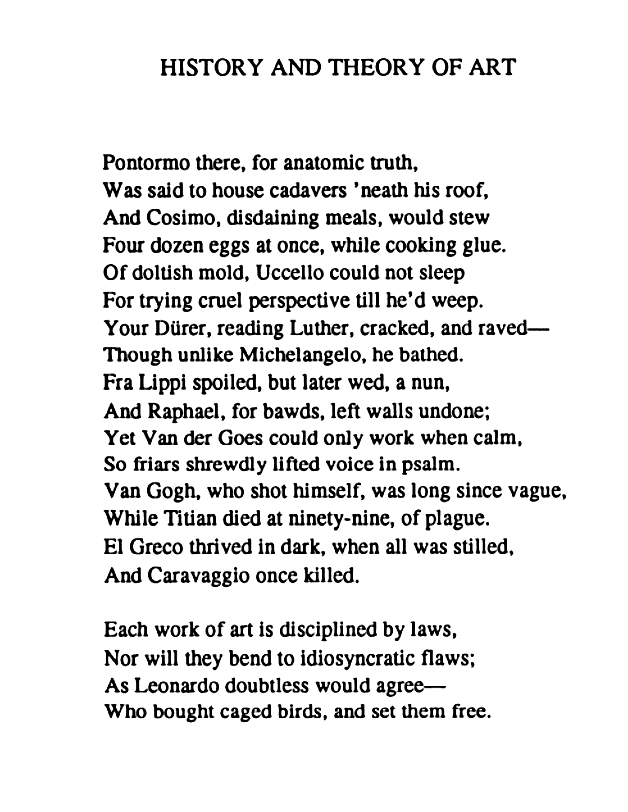
“History and Theory of Art” — David Markson
(Via).
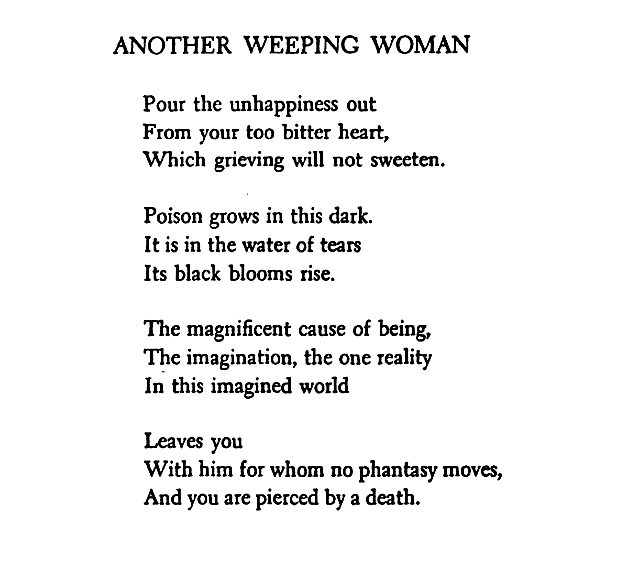
“Another Weeping Woman” — Wallace Stevens
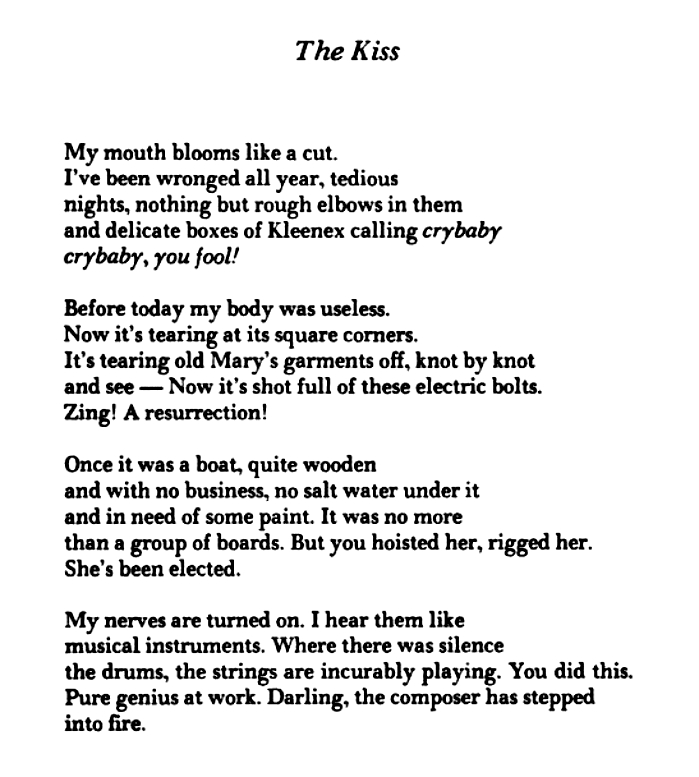
“The Kiss” — Anne Sexton
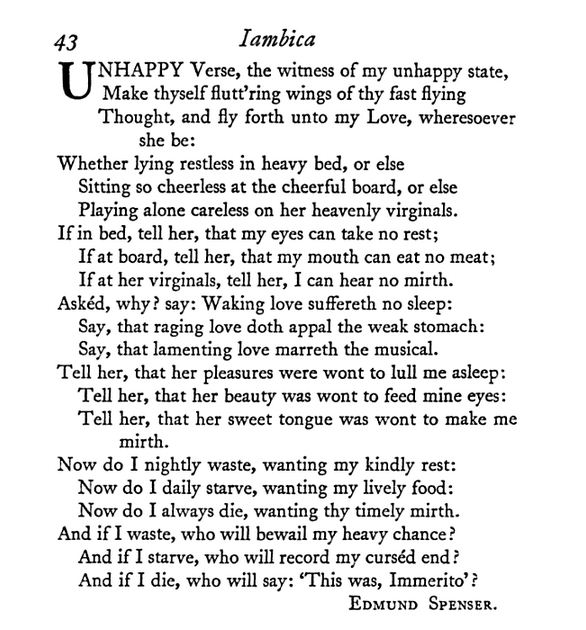
“Iambica” — Edmund Spenser
W.H. Auden Comic (Tom Gauld)

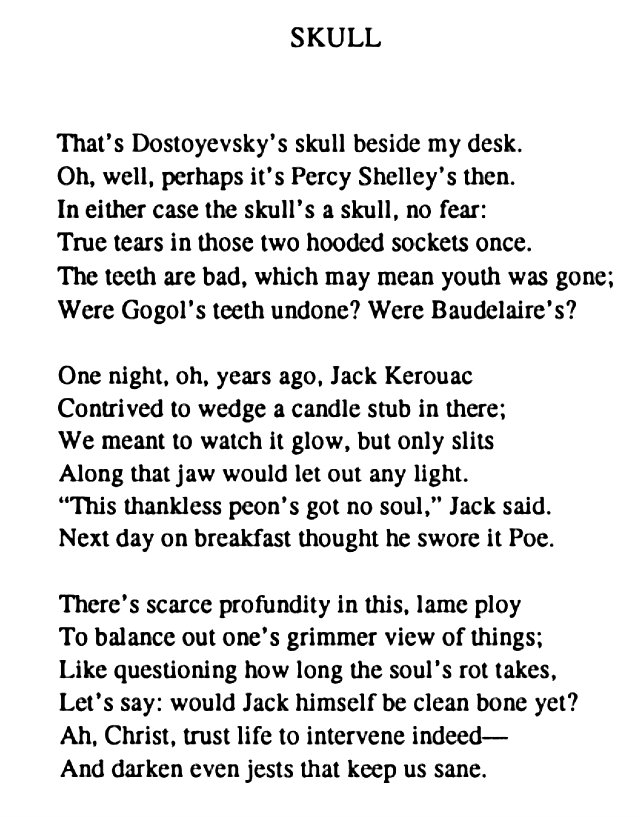
“Skull” — David Markson
(Via).
“Elegy with Surrealist Proverbs as Refrain” — Dana Gioia
“Elegy with Surrealist Proverbs as Refrain” by Dana Gioia—
“Poetry must lead somewhere,” declared Breton.
He carried a rose inside his coat each day
to give a beautiful stranger—“Better to die of love
than love without regret.” And those who loved him
soon learned regret. “The simplest surreal act
is running through the street with a revolver
firing at random.” Old and famous, he seemed démodé.
There is always a skeleton on the buffet.Wounded Apollinaire wore a small steel plate
inserted in his skull. “I so loved art,” he smiled,
“I joined the artillery.” His friends were asked to wait
while his widow laid a crucifix across his chest.
Picasso hated death. The funeral left him so distressed
he painted a self-portrait. “It’s always other people,”
remarked Duchamp, “who do the dying.”
I came. I sat down. I went away.Dali dreamed of Hitler as a white-skinned girl—
impossibly pale, luminous and lifeless as the moon.
Wealthy Roussel taught his poodle to smoke a pipe.
“When I write, I am surrounded by radiance.
My glory is like a great bomb waiting to explode.”
When his valet refused to slash his wrists,
the bankrupt writer took an overdose of pills.
There is always a skeleton on the buffet.Breton considered suicide the truest art,
though life seemed hardly worth the trouble to discard.
The German colonels strolled the Île de la Cité—
some to the Louvre, some to the Place Pigalle.
“The loneliness of poets has been erased,” cried Éluard,
in praise of Stalin. “Burn all the books,” said dying Hugo Ball.
There is always a skeleton on the buffet.
I came. I sat down. I went away.
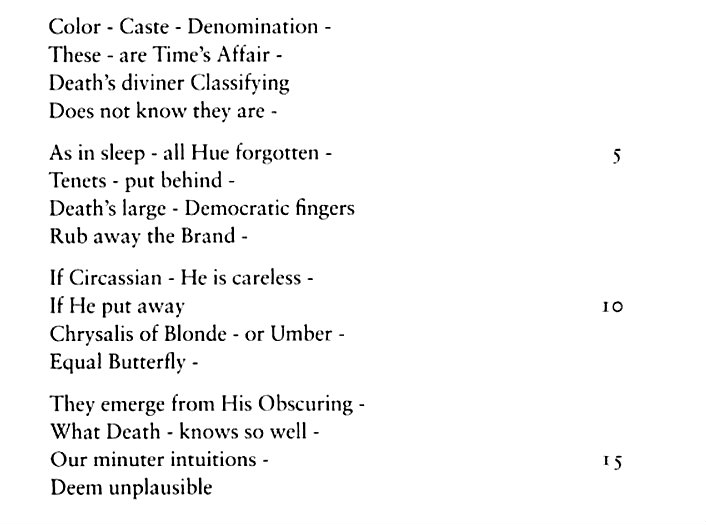
“Color — Caste — Denomination — ” — Emily Dickinson
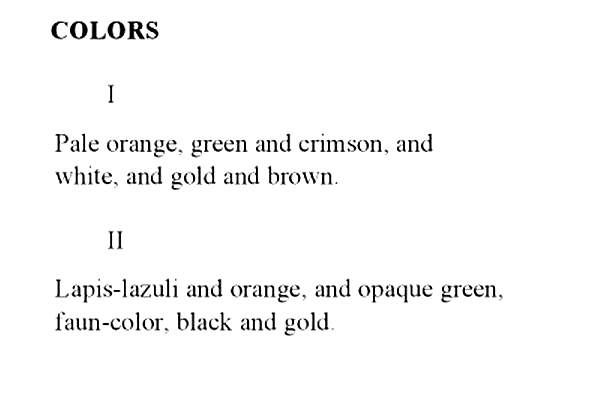
“Colors” — Wallace Stevens
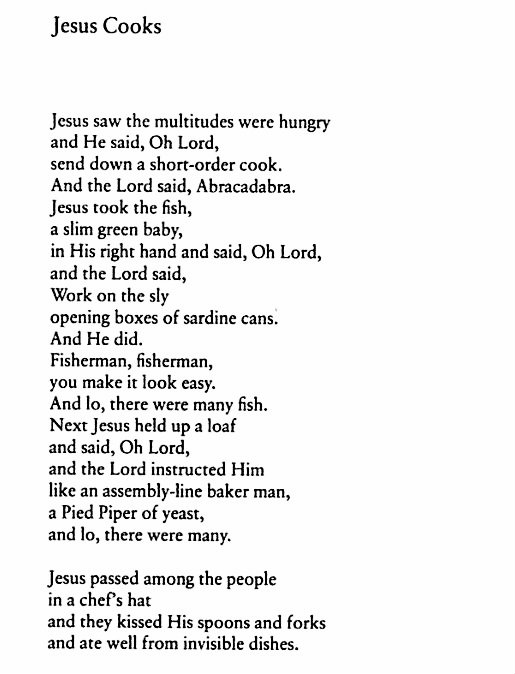
“Jesus Cooks” — Anne Sexton
Walt Whitman’s Handwritten Drafts of “Come, said my Soul”
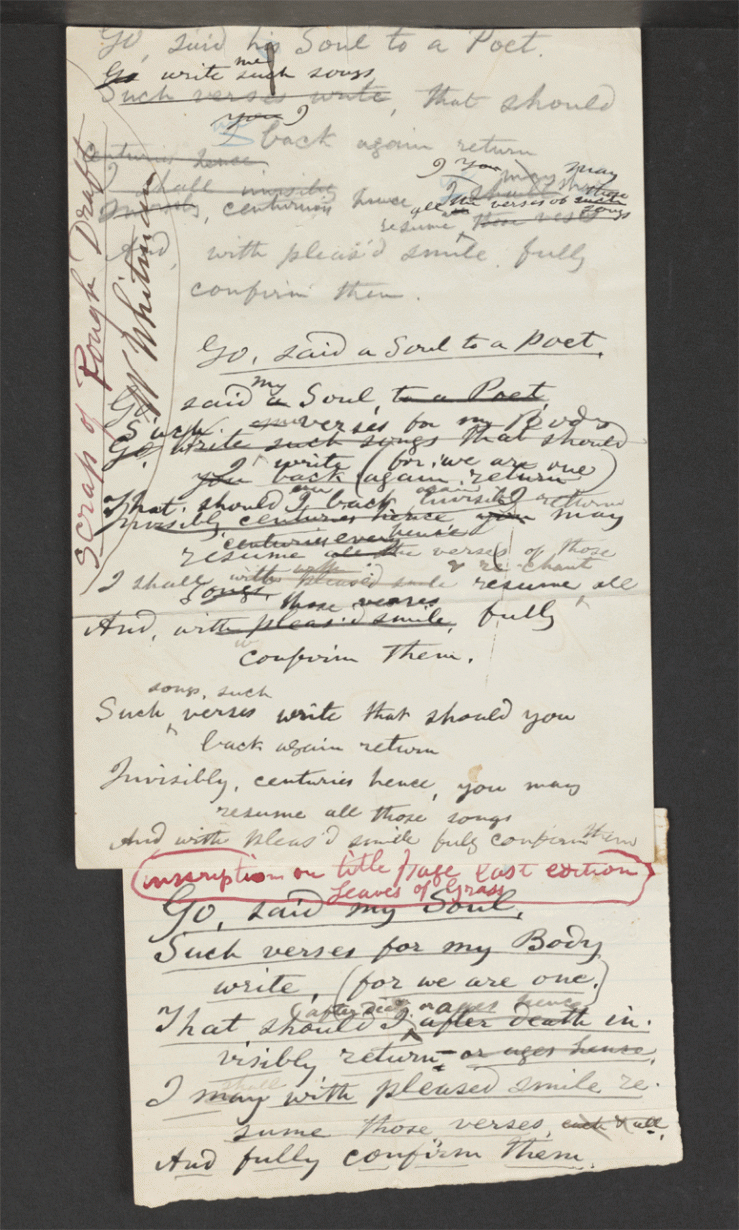
(Via/about).
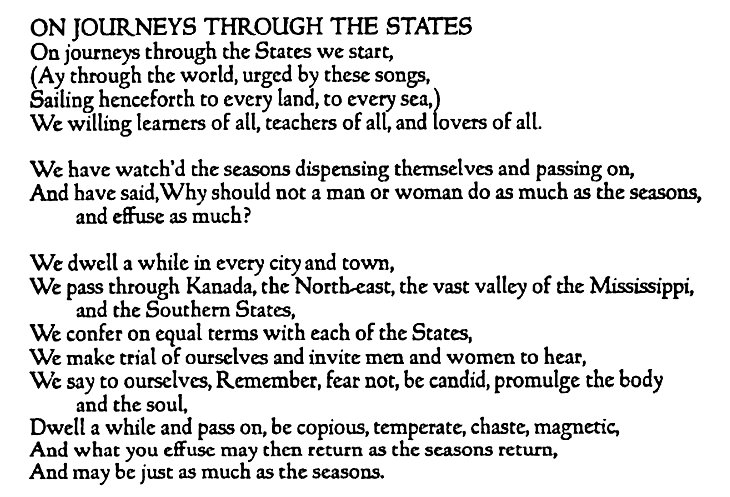
“On Journeys Through the States” — Walt Whitman
“Sometimes With One I Love” — Walt Whitman

“Love Letter Written in a Burning Building” — Anne Sexton
“Love Letter Written in a Burning Building” by Anne Sexton—
I am in a crate, the crate that was ours,
full of white shirts and salad greens,
the icebox knocking at our delectable knocks,
and I wore movies in my eyes,
and you wore eggs in your tunnel,
and we played sheets, sheets, sheets
all day, even in the bathtub like lunatics.
But today I set the bed afire
and smoke is filling the room,
it is getting hot enough for the walls to melt,
and the icebox, a gluey white tooth.I have on a mask in order to write my last words,
and they are just for you, and I will place them
in the icebox saved for vodka and tomatoes,
and perhaps they will last.
The dog will not. Her spots will fall off.
The old letters will melt into a black bee.
The night gowns are already shredding
into paper, the yellow, the red, the purple.
The bed – well, the sheets have turned to gold –
hard, hard gold, and the mattress
is being kissed into a stone.As for me, my dearest Foxxy,
my poems to you may or may not reach the icebox
and its hopeful eternity,
for isn’t yours enough?
The one where you name
my name right out in P.R.?
If my toes weren’t yielding to pitch
I’d tell the whole story –
not just the sheet story
but the belly-button story,
the pried-eyelid story,
the whiskey-sour-of-the-nipple story –
and shovel back our love where it belonged.Despite my asbestos gloves,
the cough is filling me with black and a red powder seeps through my
veins,
our little crate goes down so publicly
and without meaning it, you see, meaning a solo act,
a cremation of the love,
but instead we seem to be going down right in the middle of a Russian
street,
the flames making the sound of
the horse being beaten and beaten,
the whip is adoring its human triumph
while the flies wait, blow by blow,
straight from United Fruit, Inc.
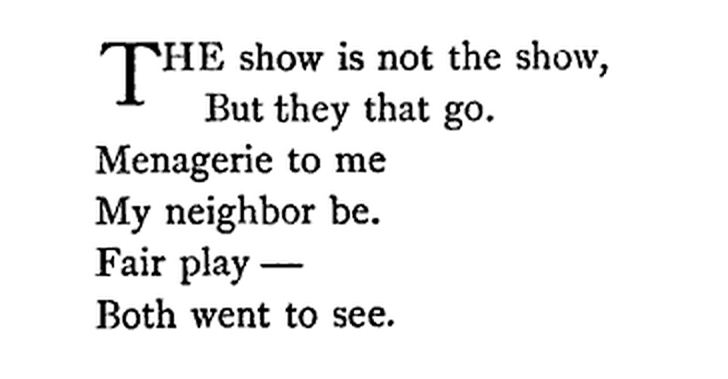
“The show is not the show” — Emily Dickinson
 Biblioklept