
Paul Thomas Anderson’s One Battle After Another is a frenetic, vital reimagining of Thomas Pynchon’s Vineland

Paul Thomas Anderson’s One Battle After Another takes Thomas Pynchon’s 1990 novel Vineland and sets it ablaze, reshaping its abstract paranoia and fractured narrative into something both deliriously immediate and ominously timeless.

The bones of Pynchon’s original are still present: a family broken by state violence; a daughter growing up without a mother; a father caught between shame and reluctant resistance. In PTA’s feverish recasting of Vineland, Zoyd Wheeler becomes Bob Ferguson (Leonardo DiCaprio), a former “Rocket Man” revolutionary burning out the past in a haze of weed smoke. Frenesi Gates is reimagined as Perfidia Beverly Hills (Teyana Taylor), a revolutionary addicted to the sexual thrill of power. Prairie Wheeler morphs into Willa (Chase Infiniti — and like wow jeez that’s a Pynchonian name the young actress has there, isn’t it?). And villainous Brock Vond is warped into Colonel Lockjaw (Sean Penn), a grotesque embodiment of authoritarian menace. Timelines collapse into themselves, Reagan-era dread transposes into our own disturbed now. Vineland is set in 1984; in One Battle After Another, PTA shows that we’ve never really moved on from that dystopian year. PTA condenses Vineland’s sprawling flashbacks and absurd digressions into an action-forward narrative that’s far more linear yet equally dizzying. The result is enthralling.

The film’s plot might be distilled simply from its title. One Battle After Another follows the trajectory of most of Pynchon’s fiction: individual resistance to authoritarian evil. In PTA’s film, that resistance takes the form of the French 75, a loose clandestine revolutionary group to which Bob and his partner Perfidia once belonged. There’s really no retiring for French 75 agents though, and soon Willa is tangled in the same web her parents sought to sunder in their radical actions. Penn’s maniacal Colonel Lockjaw hunts her down. She’s on the run, and so is papa Bob.
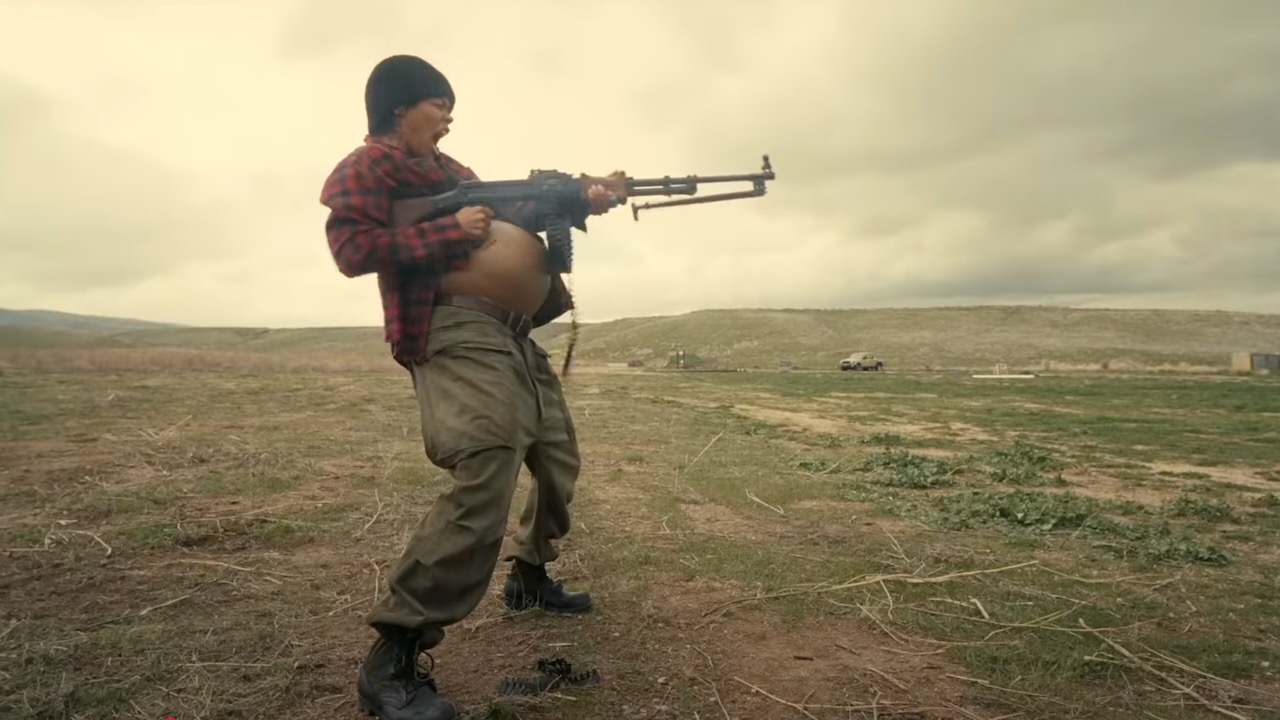
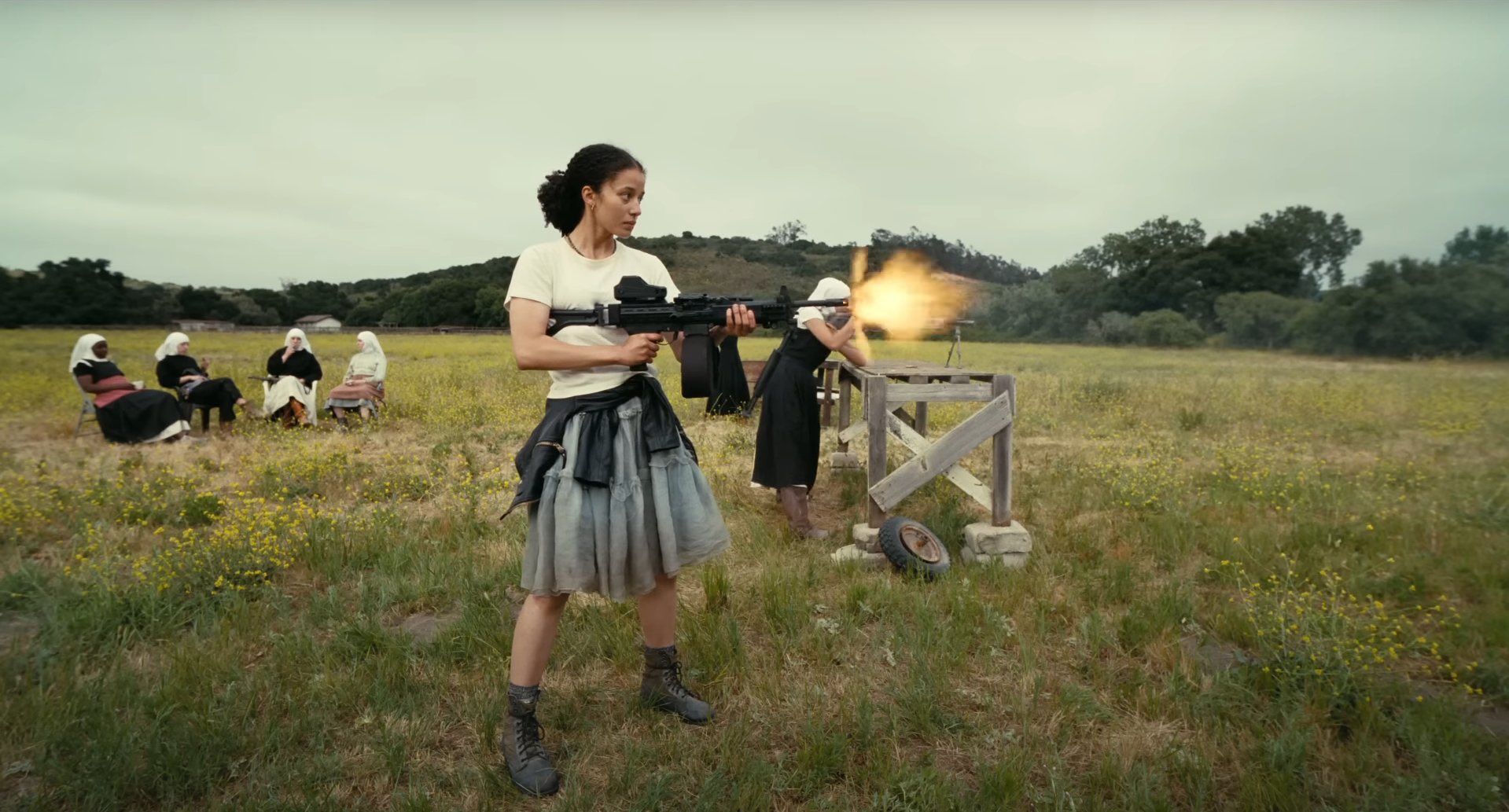
Pynchon’s novels frequently contrast Us vs Them systems — preterite vs. elect; misfits vs. authoritarians; freaks vs. the Man. And like Pynchon’s work, One Battle After Another shows the invisible overlapping and hierarchical confusions these Us/Them systems engender. The French 75’s sympathies directly correlate with the values of the immigrant community in Baktan Cross, the fictional sanctuary city Bob and Willa take refuge in. The de facto leader of these immigrants, Francisco (Benicio Del Toro), aids Bob in his fevered search for Willa. Francisco’s zen calm offers a counterbalance to Bob’s mania. Another Us group are the Sisters of the Brave Beaver (One Battle After another is crammed with Pynchonian vagina jokes), weed-growing nuns who offer Willa a brief safe harbor.
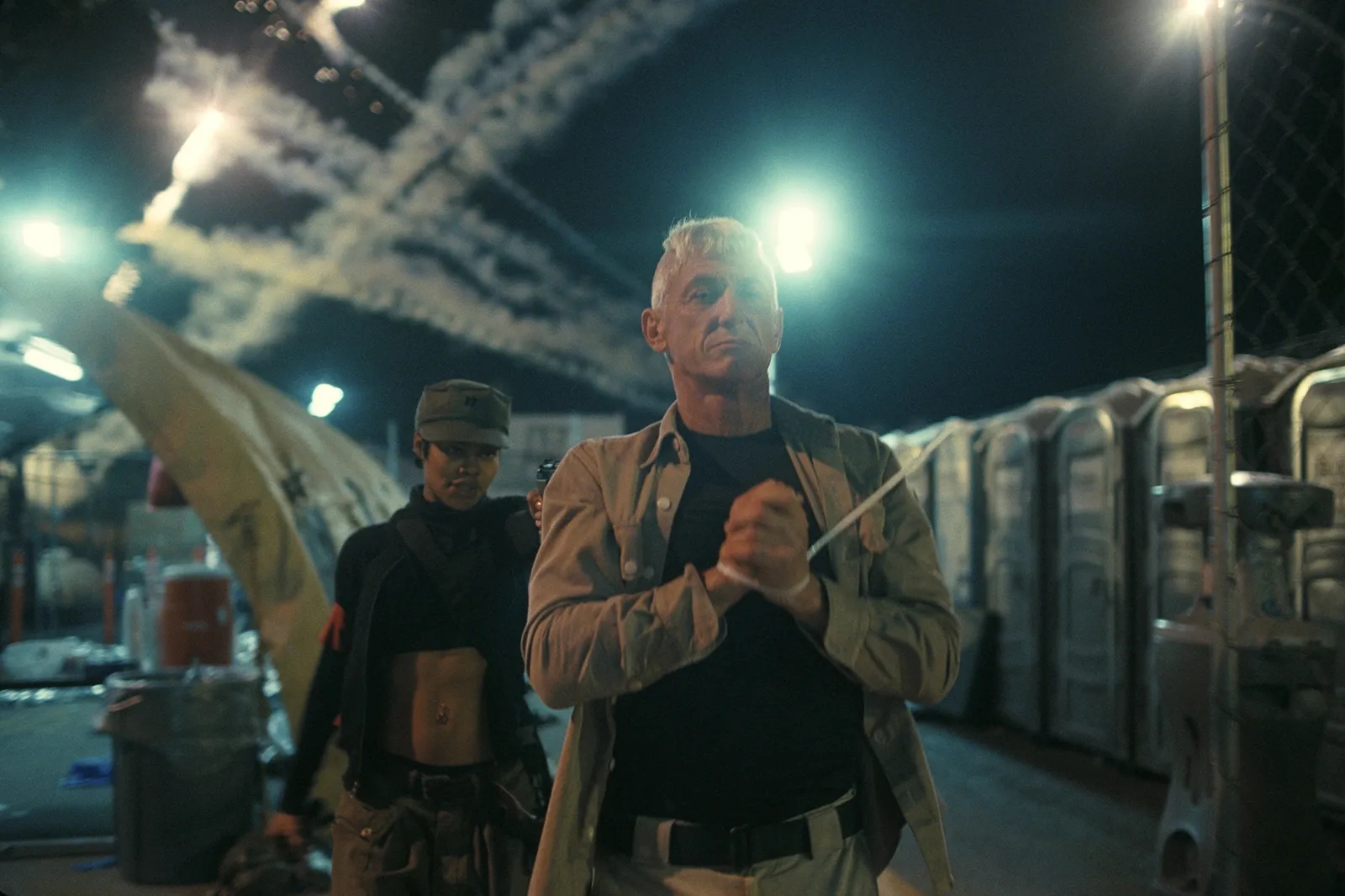
These disparate pockets of rebellion resist the tyranny of the modern racist capitalist system, embodied by Colonel Lockjaw and the military forces he commands (seemingly without any government oversight). We first meet Lockjaw running a migrant detention center — one of many timely PTA updates to Vineland — and his weird, forced, masochistic machismo plays out on the screen with a mix of menace and despair. For all his power and evil though, there’s yet another Them he isn’t part of. That would be the Christmas Adventurers Club, a shadowy cabal of elites on a racist mission to rid the world of “freaks.” Lockjaw would do quite literally anything to become a member of this club; his drive to to become even more Them propels the narrative while showing that Us-Them systems rely on hierarchies to perpetuate oppression.

One Battle After Another zigzags through a whirlwind of absurdity, suffocating paranoia, and frantic action. The film balances chaotic humor with a darker exploration of the emotional impulses that underlie power and attraction. Colonel Lockjaw’s obsessive fixation on Perfidia (arguably the film’s closest connection to Vineland) underscores the irrational power dynamics of obsession and control. PTA frames their relationship—along with Lockjaw’s obsession with Willa—as a twisted mirror reflecting the power imbalances that define both the personal and the political in Us-Them systems. PTA’s films have always explored systems of exploitation that grind people down and the outsiders who try to navigate them; One Battle After Another is, thus far, his most sustained, howling effort in this vein.
The film is gorgeous, too, as fans would expect from PTA. Michael Bauman’s cinematography conveys frenzied energy without sacrificing cohesion or clarity. There are several outstanding set pieces, including a beautiful sequence in which Bob does his best to keep up with a trio of skateboarders traversing rooftops at night, their figures silhouetted against the flames of a riot below. The film’s climactic three-car chase scene is particularly magnificent, its every twist and turn symbolizing not just physical pursuit, but deeper spirals of control, conflict, and paranoia. It made me physical ill. (That’s high praise.)

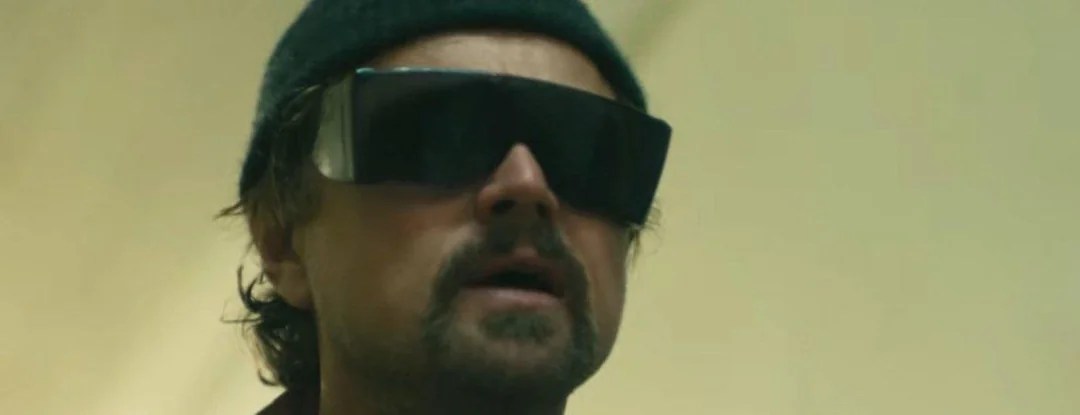
And while, yes, One Battle After Another is a bona fide action film, it’s still larded with strange little morsels that we’d expect from a PTA film — the image of Lockjaw licking his comb before taking it to his hair, his face contorted in anxious hope, or Bob, in his threadworn bathrobe, shoplifting a pair of cheap sunglasses. (Parenthetically, while the bathrobe is on my mind — Battle plays as a sinister inversion to The Big Lebowski. I will file the pair away for a future double feature.) One of the film’s funniest moments comes from Willa, who, despite being apparently subjugated by Lockjaw, nevertheless delivers the kind of crushing blow that can only come from a teen: “Why is your shirt so tight?” Indeed, Chase Infiniti’s portrayal of Willa is a revelation. In a movie crammed with paranoia and plot twists, she imbues in Willa a kind of moral force. She’s not an anchor exactly, because nothing is steady here. But maybe she’s the string you follow through the labyrinth.
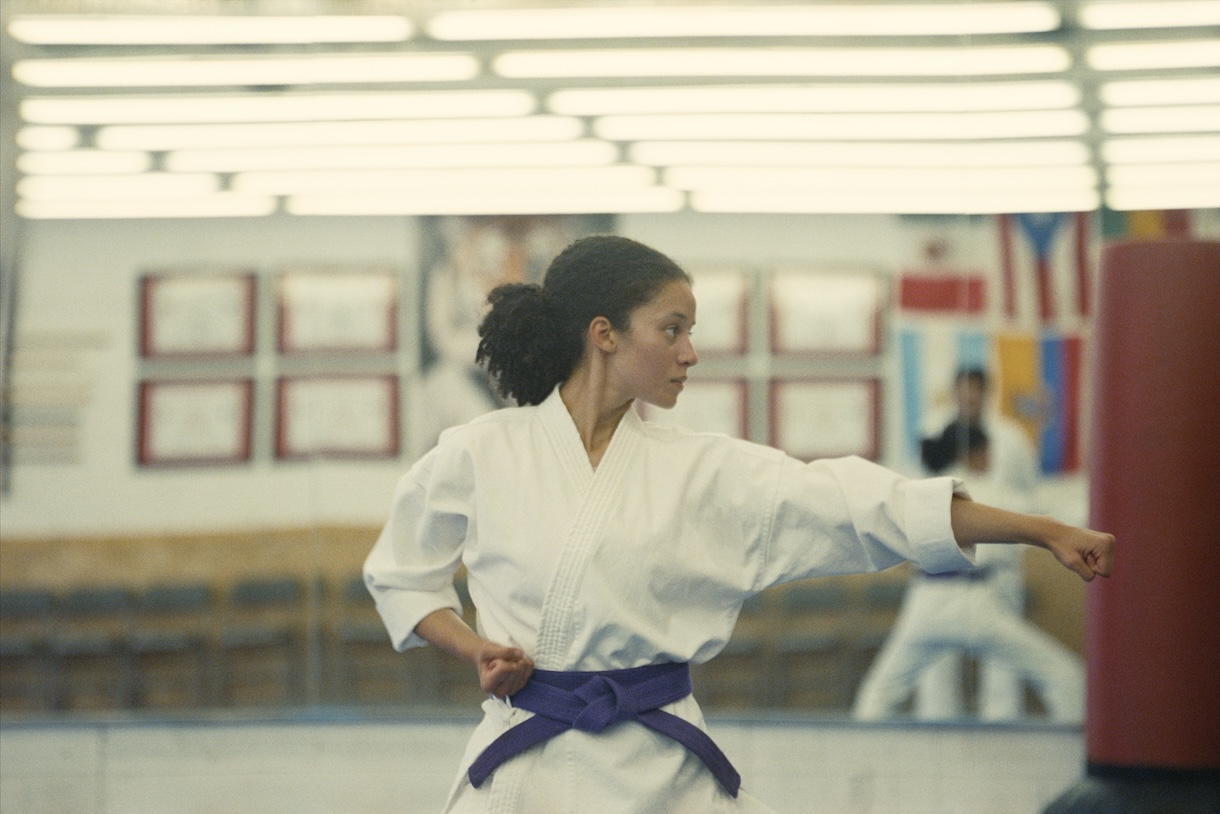
One Battle After Another is almost three hours long, but it never drags, thanks to the tight direction and enthralling plot. Long-time PTA collaborator Jonny Greenwood’s score also keeps the film moving at a quick pace. The score is ever-present — something that usually irritates me in a film — but here the music provides emotional cohesion. It’s also just really fucking pretty.  Frenetic drumming and altered pianos meet up with swelling strings that suggest sirens, banshees. Take “Mean Alley,” for example, which initially greets the ear as if the guitar is out of tune, but then coheres into beautiful dissonance. And although Greenwood’s wall-to-wall score leaves little room for the needle drops we might expect from a PTA joint, the film deploys Tom Petty’s “American Girl” in a moment of transcendent bliss that brought a tear to my eye.

Pynchon has always soundtracked his novels. Pynchonwiki gives close to 400 musical references for Vineland, but I don’t think any of these tracks ended up in One Battle After Another. My giving this data is a weak way of transitioning to the sentence, This is a film inspired by Vineland, not an adaptation of it. And while PTA captures the soul of the book, the vibe, or spirit, or whatever you like to call it, is decidedly different: darker, edgier, uglier. He captures the same strange humor and frustration of Vineland, but it’s amplified here with a chaotic energy that matches our current moment.
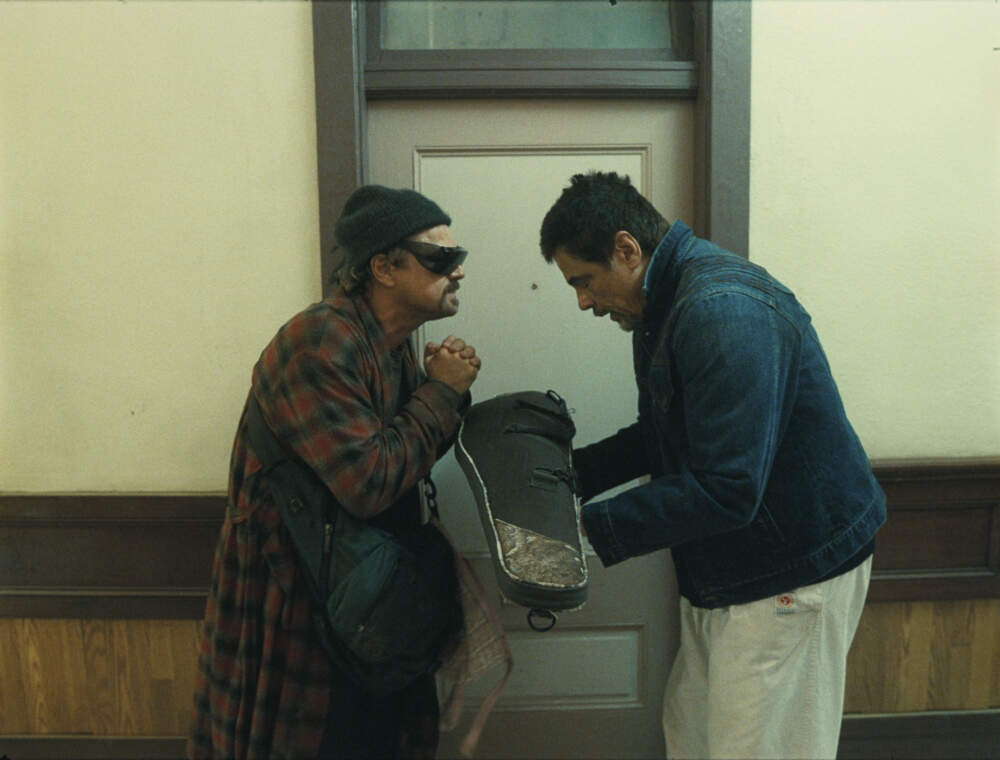
It’s also instructive to compare One Battle After Another to PTA’s earlier Pynchon adaptation, Inherent Vice. While Inherent Vice was a hazy sunsoaked journey through the disorienting aftereffects of the muddled sixties, One Battle After Another feels darker, more urgent, as if the timeline of history has compressed itself into an unyielding present. Both films deal with the fracturing of the American dream, but One Battle After Another does so with a sharper edge, drawing clearer political parallels. In some ways, PTA’s Inherent Vice is closer to Pynchon’s Vineland in tone and theme, less angular, more forgiving.

With both of his Pynchon films, PTA foregrounds a sweet final note, a belief in love as a sustaining force against Them. To borrow my favorite lines from Pynchon’s opus Gravity’s Rainbow: “They are in love. Fuck the war.” In his adaptation of Inherent Vice, PTA pulled a loose thread from the novel to neatly weave back into a prettier picture. He allows Doc Sportello to restore the heroin-addicted musician Coy to his family. One Battle offers a similarly fractured, imperfect restoration of family, a rewriting of rat-sins answered on the ghost of radio waves. He cleans up Pynchon’s messiness, but doesn’t sacrifice the deep danger that underwrites radical love.

One Battle After Another feels dangerously prescient, or, more accurately, a diagnosis of the big ugly now. In PTA’s Inherent Vice, there was an underlying fractured partnership between Us and Them; weirdo Doc Sportello tried to find some kind of brotherhood of man with The Man, Detective Bigfoot. No humanity can be extended to Lockjaw — not even from the club that will refuse him. They are unforgiving of any perceived impurity. The themes of mass surveillance, state violence, and detention resonate deeply in today’s climate. The recent death of Assata Shakur—possibly one inspiration for Perfidia Beverly Hills—adds a haunting layer to the film’s exploration of systemic oppression, the ways in which the state seeks to control and erase voices of resistance. The political urgency is palpable, and will undoubtedly alienate a large section of the genpop normies that Warner Brothers has heavily advertised the film to. Some folks will always root for Them.

But fuck Them. One Battle After Another is a triumph, a dizzying, chaotic masterpiece that never loses its grip on the present—one battle after another, all too real, all too important. See it on the biggest screen you can.
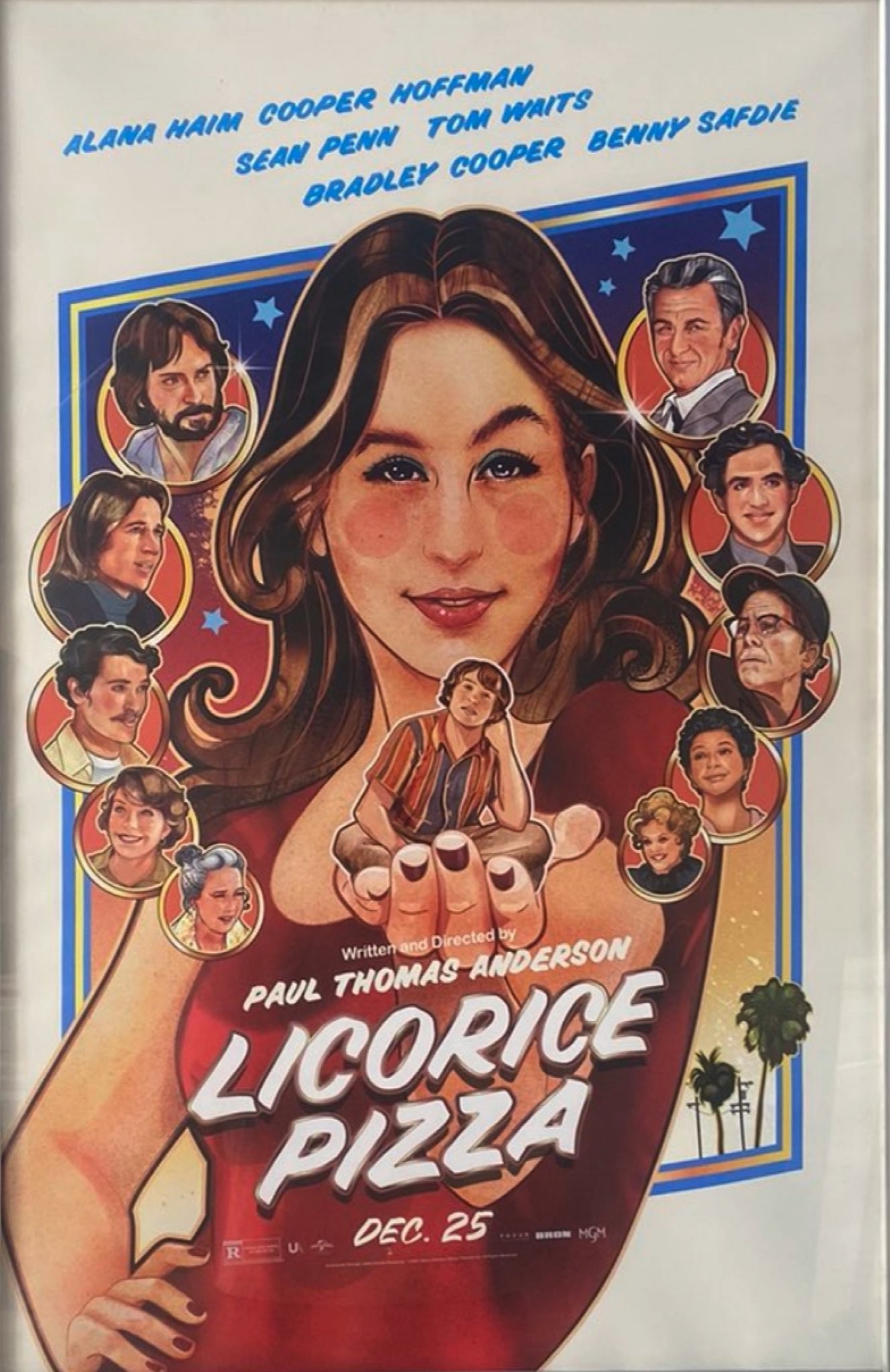
Paul Thomas Anderson talks Licorice Pizza, other stuff

Paul Thomas Anderson is interviewed in Variety about his new film, Licorice Pizza.

From the interview, on what inspired Licorice Pizza:

A very long time ago I was walking around my neighborhood, and I passed Portola Middle School. It was picture day, and I saw this very energetic teenager flirting with the girl who was taking pictures. It was an instantly good premise. What happens if you have a kid invite an older woman to dinner, and what if that girl against her better judgment says yes? That seemed ripe for humor. That didn’t go anywhere, but then I had a friend who grew up in the San Fernando Valley. He was a child actor who got involved in the waterbed business. And he told me all these stories, and each one was more wonderful than the last. Like there was this time he’d appeared in the movie “Yours, Mine and Ours” with Lucille Ball, and he was on his way to New York for a publicity tour and needed a chaperone. He ended up hiring a burlesque dancer who lived in his neighborhood to take him. And Lucille Ball was on her second marriage to Gary Morton, and she used to scream “Gary!” all the time. That was my friend’s name, so he’d think, ‘Holy shit, she’s yelling at me.” But she was screaming at her husband.

Watch the trailer for Licorice Pizza, Paul Thomas Anderson’s latest film


Licorice Pizza will be in theaters around Thanksgiving.

Jon Brion talks about scoring Punch-Drunk Love

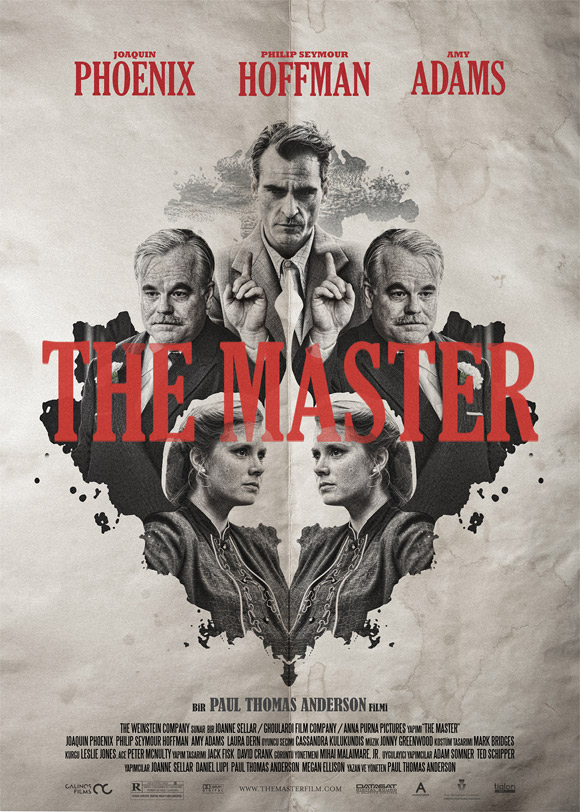
A Riff on Paul Thomas Anderson’s Film The Master (Including a Take on the Ending)

TheMasterPosterTurkishFullBWaltv2

1. I finally saw Paul Thomas Anderson’s 2012 film The Master last night. I’m going to riff on the film. Fair warning:this riff will contain spoilers—I’ll talk about the film’s final scene, for instance (and if you just want to read about the ending, scroll down to point 23, after the embedded video).

2. The first hour of The Master is probably the best thing PTA has done.

3. The Master begins on a beach somewhere in the South Pacific. These are the final days of WWII. Navy boy Freddie Quell (portrayed by Joaquin Phoenix), solitary from his fellows, pours from a can of the mystic moonshine he brews into a coconut he’s hacked open with a machete. He then drinks the potion and mimes chopping off his hand with the machete. After this, he humps a woman made of sand and jerks off into the ocean.

4. The idyll of the Pacific beach contrasts strongly with Quell’s tortured psyche—it’s clear from the film’s first few moments that he’s borderline deranged, a sex-obsessed alcoholic who was damaged long before the war.

5. Quell is also a profoundly talented chemist (or alchemist) capable of brewing strange cocktails mixed from whatever’s at hand. These potions intrigue Lancaster Dodd (henceforth Master, played by Philip Seymour Hoffman), who samples a flask and asks Quell to brew more. Quell says he’ll make Master something different from that first batch, asking him, “How do you want to feel?”

6. “How do you want to feel?”

This question governs The Master, and the film is at its best when probing and plumbing these depths.

7. Back to my second statement: The first hour or so of The Master is probably the best thing PTA has done. Freddie Quell is an intriguing figure, a desperate madman who recapitulates the crimes of Oedipus where ever he goes.

He is The Misfit of Flannery O’Connor’s story “A Good Man Is Hard to Find,” trying to match faith to the phenomenal world.

He is Jonah, fleeing angry Yaweh, stowing away on a ship.

8. The first scenes of The Master borrow liberally from the Terrence Malick playbook:

The opening scene on the beach strongly recalls the opening of The Thin Red Line, and the subsequent scenes where Quell maybe murders a man and then must run feel like the opening minutes of Days of Heaven.

Like Malick, PTA lets the gorgeous cinematography convey meaning; dialog passes through the background of the film.

9. The dialog begins when Quell meets Master, charismatic leader of “The Cause.” You know of course that Master is based on L. Ron Hubbard, founder of Scientology. It’s worth pointing out that the film isn’t really about Scientology, or cults, or charlatans—although these points are explored, for sure—it’s really about the search for meaning, for stability. For some kind of peace.

10. The friendship—and friendship-as-dialog—between Master and Quell is by far the most compelling part of The Master, and the film’s best scene is a long episode where Master initiates “Processing” with Quell—delving into the man’s founding traumas to purify his spirit. I usually hate to laud actors, but Hoffman and Phoenix are sublime here, fully inhabiting the characters through the scenes deep emotional shifts.

The Master never surpasses this scene.

11. Indeed, the biggest failure of the film is that there’s no moment in its back half that can respond to the Processing scene. The film’s final scene attempts to mirror it in some ways, but the attempt lacks the weight. It’s off balance.

12. I feel the need to preface what I’m about to write by saying very clearly:

Paul Thomas Anderson is an extremely gifted auteur, a filmmaker who has, moreso than perhaps any of his contemporaries, continued in the (anti-)tradition of the New Hollywood films of the seventies. I would rather watch a PTA film than a film by just about anybody.

But:

The guy has a real problem sticking the ending. His films fail to cohere, to transcend the sum of their parts. This might be an editing issue or a plotting issue or something more commercially-driven, like running time. I don’t know.

13. Exceptions to PTA not sticking the ending:

Punch Drunk Love, easily his most concise and focused film, a long short story from a filmmaker who works in sprawling novels.

Possibly Boogie Nights, which sags in the final third but is nevertheless buoyed by an energetic scene featuring Alfred Molina, a mixtape, some cocaine, and fireworks. (This scene is lifted from Robert Downey Sr.’s Putney Swope, by the way).

14. For the most part though, PTA’s films swell outside of the margins that their own narratives establish in the beginning of each film (I’m not sure if this sentence makes sense—what I mean is that the films’ endings fall apart w/r/t the films’ beginnings).

In There Will Be Blood, PTA uses a stunning, violent, unforgettable final moment as a punchline to the film. It’s probably what most of us remember, and it’s certainly a great way to close the epic. Still: When I rewatch Blood, I start to become impatient with the film’s meandering after its thrilling opening hour. I start to anticipate the horrific punchline.

15. The easiest example to point to of PTA’s undisciplined sprawl is Magnolia. I can’t think of a film with a stronger opening that so quickly devolves into Altmanesque chaos. Which is the point, yes, I get—but Magnolia, again, is a PTA film which can’t live up to its first hour. (Again, PTA covers over the back end’s sloppiness with a marvelous final scene).

16. So, to return to The Master: I went into the film with high expectations—hoping that this would be the film by PTA that coheres, that is more than just a collection of fantastic performances and amazing scenes. And for the first hour, I was enthralled: I cared deeply about Freddie Quell, found his strange passions heartbreaking, was moved by his bizarre relationship with Master.

And the film is great—it really is—but it’s not as great as I wanted it to be. (Which, yes, I know, says nothing about the film and everything about me).

17. The film’s seams start to show after the magical sea voyage from California to New York. The first few scenes in New York are fascinating (especially when Master is confronted by a skeptic at a party), but as the The Cause moves back West over land, PTA increasingly relies on montages and shorter scenes that seem like placeholders to cobble together the film’s longer sections.

18. The last truly transcendent scene is where Master sings “I’ll Go No More A-Roving,” and it comes at almost exactly the half-way point of the film’s 138 minute running time.

19. All kinds of interesting stuff happens after the “Roving” scene—and PTA seems content to raise more mysteries than he resolves, which I’m fine with—but a long montage showcasing the different Processing techniques of The Cause sucks the energy right out of the film.

20. What follows is a lot of meandering, a lot of unexplained—or worse, unexplored—moments between characters that shift focus away from the relationship between Master and Quell.

21. Maybe I want a longer edit of The Master.

22. Here’s a 20 minute reel of cut footage:

23. And what about the ending of The Master? As I tried to convey in points 13-15, PTA usually closes with a very strong scene or image. With the exception of There Will Be Blood, I’d argue that the final moments of PTA’s films generally depict moments of love, redemption, or reconciliation. The Master fits into this trend. How so?

24. Okay: So The Master is in some ways formally Oedipal.

Quell’s crimes are two-fold: He kills a man who he says reminds him of his father and he has sex with his aunt. The film leaves open the possibility that both of these crimes—crimes he confesses to Master during Processing—are simply displacements for the more direct sins of killing his real father and fucking his real mother.

The Oedipal tensions that underwrite the film are strongly on display in the relationship between Master and Quell: Master is in love with Quell; Quell needs a father figure. All sorts of weird familial displacements ensue between Master’s family members and Quell.

The Oedipal theme also evinces in the film’s motif of breasts, bellies, and other pregnancy images. While not many of The Cause’s ideas are expressed clearly in The Master, the idea that all founding traumas are recorded in/on the soul is made plain several times. Put another way, all people are subjected to traumas that exist in pre-Oedipal, pre-lingual, pre-conscious states.

Quell wants to return to the womb to correct or ameliorate or avoid these traumas. The impossibility of achieving this desire drives him to self-medicate with his homemade brews and to see sex in everything.

The film ends with Quell having sex with a stranger he picks up in a bar. They laugh heartily—another of the film’s motifs—laughter as a measurement of joy, but also dejection, also hysteria, also fear, also irrationality, also no language, just laughter—they laugh heartily, and in a shot that foregrounds his sex partner’s large breasts, Quell begins Processing her.

25. We then get the film’s last line, delivered with laughter: “Stick it back in, it fell out.”

The referent of the “it” is, on the surface level, Quell’s penis, but it also serves as a substitution for Quell himself, who would like to return to a mother, to start again in a new life. (The scene, a riff on Quell’s first Processing with Master, can also be read as the displaced sexual consummation between the two men).

The film’s final image gives us Quell lying down next to the woman made of sand, her huge breasts erect, dominating the shot; he curls into her, peaceful, serene, fetal. The shot is deceptive: It suggests reconciliation or even redemption, but the memory of peace is just one fragment of Quell’s terribly fragmented life. Significantly, the moment comes from the beginning of the film. If Quell is to be reborn and live again—as Master believes all people are—it is clear that he has not transcended his base animal urges.

When Quell awakes, he awakes to trauma.

26. Having riffed on the film’s end, I think the film is probably better than I gave it credit for earlier. It’s a cold Sunday. I think I’ll watch The Master again.

Watch Paul Thomas Anderson’s Short Film Cigarettes & Coffee (1993)