Faulkner House/Crescent City Books (Books Acquired Some Time Last Week)

Had a wonderful if sweaty trip to New Orleans last week.

Great food, great music, and great bookstores.

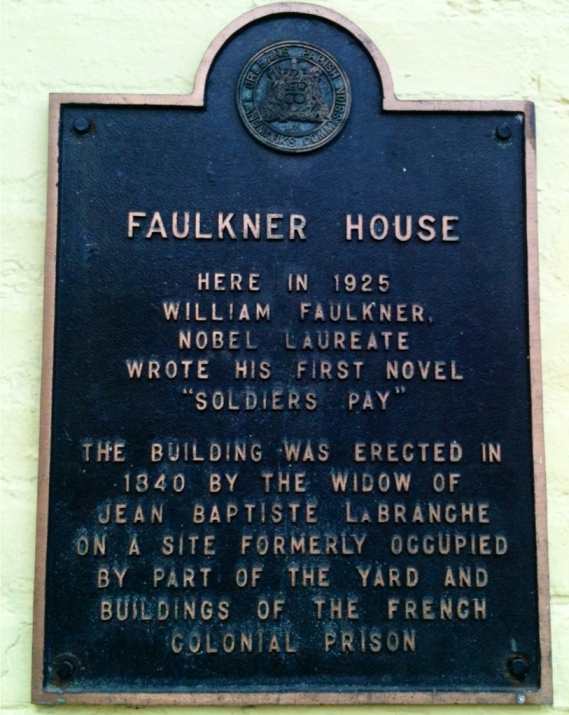
First up, Faulkner House:

20120808-163344.jpg

Faulkner House is a tiny little shop just off Jackson Square. Its two rooms (really, a main room and a hallway) are lined from bottom to top with literature, poetry, and philosophy. I can’t overstate the excellence of the collection in here—all kinds of rare and beautiful tomes, signed stuff, local and localish stuff, etc (local gal Anne Rice was the closest thing I saw to genre fiction). It’s great to walk into a bookshop and see a near-complete collection of new NYRB volumes stacked prominently upfront along with new novels by Richard Ford and Teju Cole.

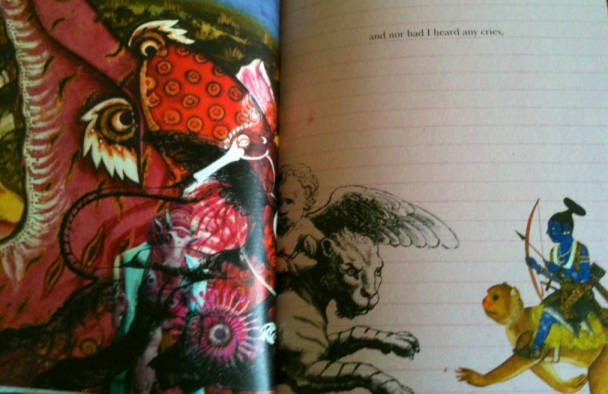
I picked up this handsome illustrated edition of Thomas Bernhard’s Victor Halfwit, the handsomeness and bigness and luxuriousness of which simply doesn’t come across in this lousy iPhone pic:

20120808-163414.jpg

Random framed shot:

20120808-163426.jpg

And a random two-page shot with glare:

20120808-163432.jpg

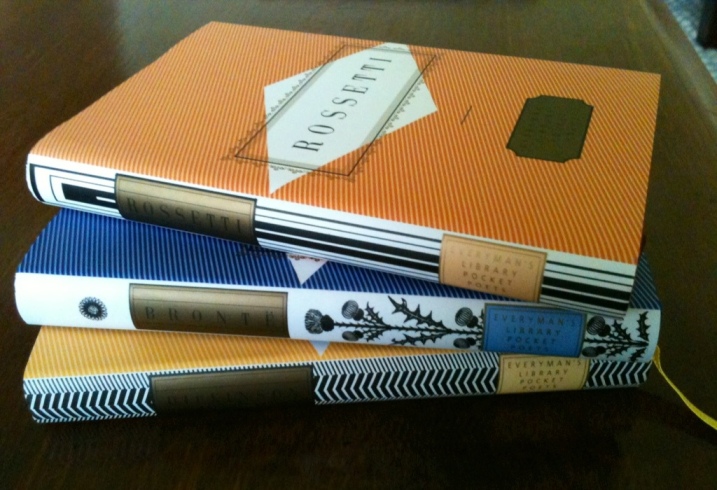
My wife picked out three lovely editions from Everyman’s Library Pocket series, poems from Christina Rosetti, Emily Dickinson, and Emily Brontë:

20120808-163439.jpg

The owner and the manager were very kind, knowledgeable, and tolerant of my questions about what kind of stock they moved (biggest seller, unsurprisingly, is Soldier’s Pay).

Info for Faulkner House, via bookmark (the manager put one in each book I bought):

20120808-163445.jpg

A few days later after a three-Bloody-Mary-breakfast I stumbled into Crescent City Books:

20120808-163523.jpg

This is a great shop that, like Faulkner House, doesn’t waste precious shelf space on glitter vampires or self-help books or novelty cookbooks. Lots of art volumes (many rare and in German, French, Italian, etc.), a large poetry section, philosophy, history, etc. Lots of great old prints too. And an old cat, who was basically boss of the place.

They also carry physical copies of Rain Taxi, which I haven’t seen in years.

I picked up Masquerade and Other Stories after a Biblioklept commenter recommended Walser (by way of Kafka). I read about half of this over the next few days (full review to come):

20120808-163504.jpg

“A Squeeze of the Hand” — Herman Melville

“A Squeeze of the Hand”

That whale of Stubb’s, so dearly purchased, was duly brought to the Pequod’s side, where all those cutting and hoisting operations previously detailed, were regularly gone through, even to the baling of the Heidelburgh Tun, or Case.

While some were occupied with this latter duty, others were employed in dragging away the larger tubs, so soon as filled with the sperm; and when the proper time arrived, this same sperm was carefully manipulated ere going to the try-works, of which anon.

It had cooled and crystallized to such a degree, that when, with several others, I sat down before a large Constantine’s bath of it, I found it strangely concreted into lumps, here and there rolling about in the liquid part.  It was our business to squeeze these lumps back into fluid.  A sweet and unctuous duty!  No wonder that in old times this sperm was such a favorite cosmetic.  Such a clearer! such a sweetener! such a softener; such a delicious mollifier!  After having my hands in it for only a few minutes, my fingers felt like eels, and began, as it were, to serpentine and spiralize.

As I sat there at my ease, cross-legged on the deck; after the bitter exertion at the windlass; under a blue tranquil sky; the ship under indolent sail, and gliding so serenely along; as I bathed my hands among those soft, gentle globules of infiltrated tissues, woven almost within the hour; as they richly broke to my fingers, and discharged all their opulence, like fully ripe grapes their wine; as.  I snuffed up that uncontaminated aroma,— literally and truly, like the smell of spring violets; I declare to you, that for the time I lived as in a musky meadow; I forgot all about our horrible oath; in that inexpressible sperm, I washed my hands and my heart of it; I almost began to credit the old Paracelsan superstition that sperm is of rare virtue in allaying the heat of anger; while bathing in that bath, I felt divinely free from all ill-will, or petulance, or malice, of any sort whatsoever.

Squeeze! squeeze! squeeze! all the morning long; I squeezed that sperm till I myself almost melted into it; I squeezed that sperm till a strange sort of insanity came over me; and I found myself unwittingly squeezing my co-laborers’ hands in it, mistaking their hands for the gentle globules.  Such an abounding, affectionate, friendly, loving feeling did this avocation beget; that at last I was continually squeezing their hands, and looking up into their eyes sentimentally; as much as to say,—Oh! my dear fellow beings, why should we longer cherish any social acerbities, or know the slightest ill-humor or envy!  Come; let us squeeze hands all round; nay, let us all squeeze ourselves into each other; let us squeeze ourselves universally into the very milk and sperm of kindness.

Would that I could keep squeezing that sperm for ever!  For now, since by many prolonged, repeated experiences, I have perceived that in all cases man must eventually lower, or at least shift, his conceit of attainable felicity; not placing it anywhere in the intellect or the fancy; but in the wife, the heart, the bed, the table, the saddle, the fire-side; the country; now that I have perceived all this, I am ready to squeeze case eternally.  In thoughts of the visions of the night, I saw long rows of angels in paradise, each with his hands in a jar of spermaceti.

Now, while discoursing of sperm it behooves to speak of other things akin to it, in the business of preparing the sperm whale for the try-works.

First comes white-horse, so called, which is obtained from the tapering part of the fish, and also from the thicker portions of his flukes.  It is tough with congealed tendons—a wad of muscle—but still contains some oil.  After being severed from the whale, the white-horse is first cut into portable oblongs ere going to the mincer.  They look much like blocks of Berkshire marble.

Plum-pudding is the term bestowed upon certain fragmentary parts of the whale’s flesh, here and there adhering to the blanket of blubber, and often participating to a considerable degree in its unctuousness.  It is a most refreshing, convivial, beautiful object to behold.  As its name imports, it is of an exceedingly rich, mottled tint, with a bestreaked snowy and golden ground, dotted with spots of the deepest crimson and purple.  It is plums of rubies, in pictures of citron.  Spite of reason, it is hard to keep yourself from eating it.  I confess, that once I stole behind the foremast to try it.  It tasted something as I should conceive a royal cutlet from the thigh of Louis le Gros might have tasted, supposing him to have been killed the first day after the venison season, and that particular venison season contemporary with an unusually fine vintage of the vineyards of Champagne.

There is another substance, and a very singular one, which turns up in the course of this business, but which I feel it to be very puzzling adequately to describe.  It is called slobgollion; an appellation original with the whalemen, and even so is the nature of the substance.  It is an ineffably oozy, stringy affair, most frequently found in the tubs of sperm, after a prolonged squeezing, and subsequent decanting.  I hold it to be the wondrously thin, ruptured membranes of the case, coalescing.

Gurry, so called, is a term properly belonging to right whalemen, but sometimes incidentally used by the sperm fishermen.  It designates the dark, glutinous substance which is scraped off the back of the Greenland or right whale, and much of which covers the decks of those inferior souls who hunt that ignoble Leviathan.

Nippers.  Strictly this word is not indigenous to the whale’s vocabulary.  But as applied by whalemen, it becomes so.  A whaleman’s nipper is a short firm strip of tendinous stuff cut from the tapering part of Leviathan’s tail:  it averages an inch in thickness, and for the rest, is about the size of the iron part of a hoe.  Edgewise moved along the oily deck, it operates like a leathern squilgee; and by nameless blandishments, as of magic, allures along with it all impurities.

But to learn all about these recondite matters, your best way is at once to descend into the blubber-room, and have a long talk with its inmates.  This place has previously been mentioned as the receptacle for the blanket-pieces, when stript and hoisted from the whale.  When the proper time arrives for cutting up its contents, this apartment is a scene of terror to all tyros, especially by night.  On one side, lit by a dull lantern, a space has been left clear for the workmen.  They generally go in pairs,—a pike-and-gaffman and a spade-man.  The whaling-pike is similar to a frigate’s boarding-weapon of the same name.  The gaff is something like a boat-hook.  With his gaff, the gaffman hooks on to a sheet of blubber, and strives to hold it from slipping, as the ship pitches and lurches about.  Meanwhile, the spade-man stands on the sheet itself, perpendicularly chopping it into the portable horse-pieces.  This spade is sharp as hone can make it; the spademan’s feet are shoeless; the thing he stands on will sometimes irresistibly slide away from him, like a sledge.  If he cuts off one of his own toes, or one of his assistants’, would you be very much astonished?  Toes are scarce among veteran blubber-room men.

“A Squeeze of the Hand” is Chapter 94 of Herman Melville’s novel Moby-Dick.

Interior with Book — Richard Diebenkorn

Books Acquired a Few Weeks Ago, Or, Here’s What’s New from Picador This Month

20120729-154520.jpg

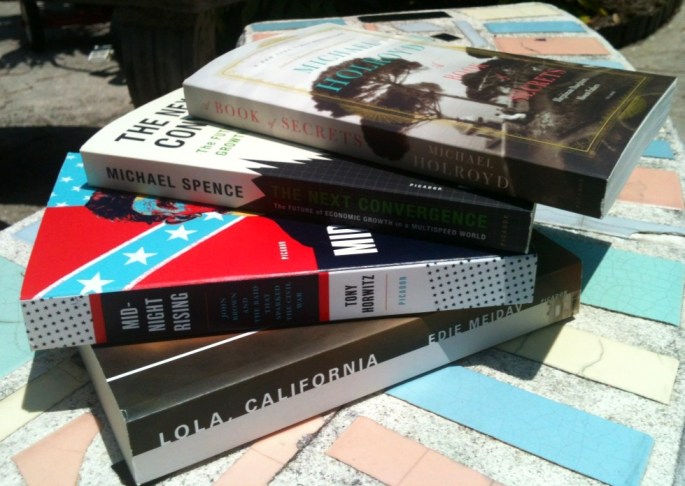
Short stack of fat books from Picador this month.

Some highlights:

20120729-154535.jpg

Tony Horwitz’s Midnight Rising piqued my interest last year when it came out in hardback. I am a buff of the American history. From Kevin Boyle’s review in the NYT last year:

. . . Horwitz has given us a hard-driving narrative of one of America’s most troubling historical figures: the fearsome John Brown, whose blood-soaked raid on the federal armory at Harpers Ferry, Va., in October 1859 — a “misguided, wild and apparently insane” act, in the abolitionist William Lloyd Garrison’s words — helped to push the nation into the most devastating war it would ever endure.

In Horwitz’s telling, Brown was set on the road to Harpers Ferry from birth. His parents were fervent Calvinists who raised their children to see life as a constant struggle against sin. Much of the battle was personal: Brown’s earliest memory, from age 5, was of being whipped by his mother for having stolen a handful of brass pins. But it was political as well. The Browns believed that the devout had to bear witness against the sins of the nation. And there was no greater sin, they said, than the institution of slavery. So Brown’s father turned the family home in northeast Ohio into a stop on the Underground Railroad. And he turned his son into an ardent abolitionist.

Horwitz moves nimbly through Brown’s deepening involvement in the movement in the 1830s and ’40s, setting his devotion alongside the growing national conflict over slavery’s place in a country ostensibly dedicated to equality. Abolitionism was then dominated by pacifists like Garrison, who insisted that the evil could be destroyed by moral suasion. Brown didn’t agree. In 1837 he gathered together his wife and three teenage boys — the eldest of 20 children he would father — and asked who among them “were willing to make common cause with him in doing all in our power to ‘break the jaws of the wicked and pluck the spoil out of his teeth.’ ”

20120729-154551.jpg

Edie Meidav named her third novel Lola, California, which I think is a pretty great name for a novel. Ellen Wernecke reviewed it in hardback for The AV Club last year and gave it an “A” (NB: I almost always disagree with AV Club’s reviews and I think grading books is a ridiculous gesture. Still):

A decades-old murder in New Age-inflected Berkeley forces a reunion between two high-school best friends in Edie Meidav’s textured, disquieting third novel. Lola, California plumbs the rise and fall of a friendship, finding its terrifying resonance for the adults it produced. Former Berkeley professor and ’70s guru Vic Mahler sits in a California prison with brain cancer, an unwitting cause célèbre for opponents of the tough new death penalty under which he is sentenced to die. Even though he won’t see her, a lawyer named Rose, who practically grew up in Vic’s house, believes she can secure him a stay so he can die in peace. After they met at 14, Rose and Vic’s daughter Lana were so inseparable, they called each other by the same name, Lola, sharing clothes and secret dances; even when sneaking out on Lana’s parents or Rose’s foster mother, they always went home together. After Vic’s arrest, Lana walked out of her best friend’s life, moving to L.A. and changing her name. The former best friends reencounter each other at a hot spring where Lana has moved with her new boyfriend, who hopes to follow in Vic’s footsteps.

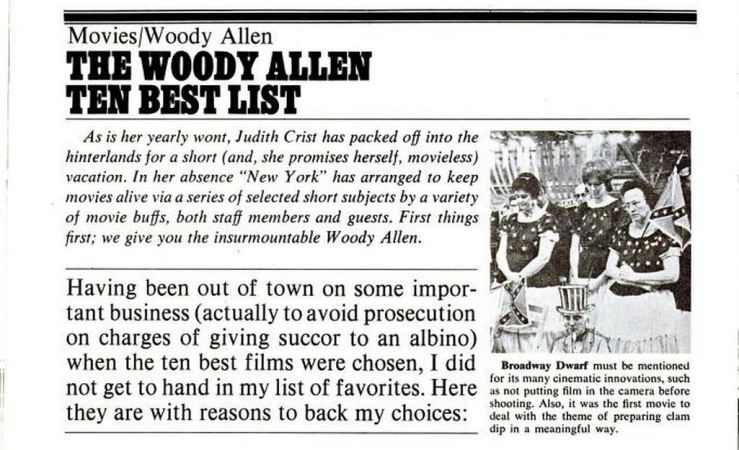
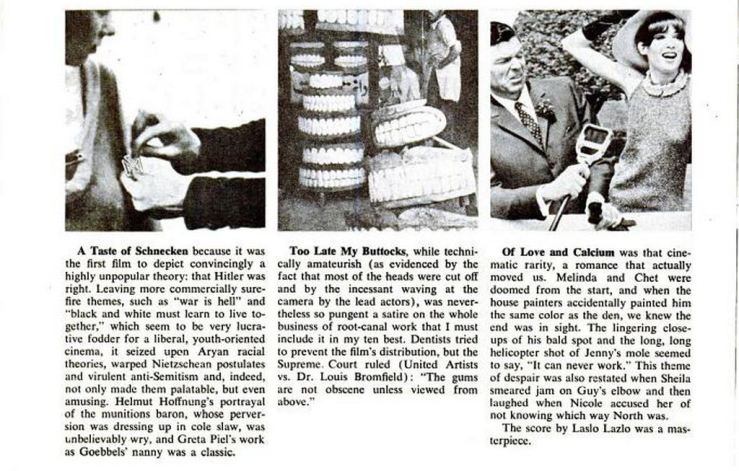
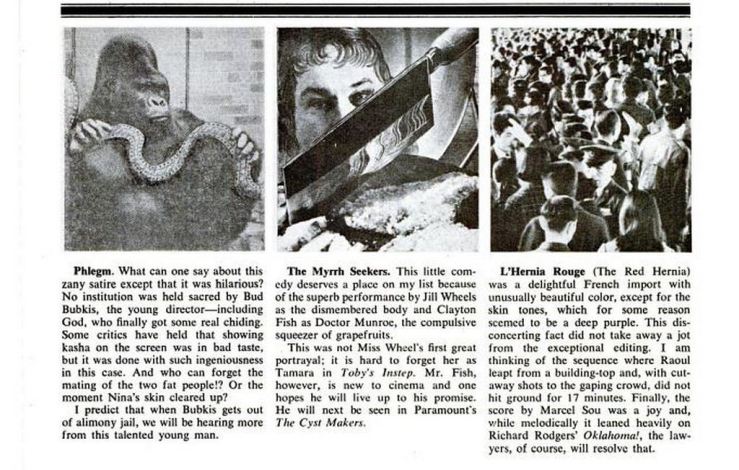
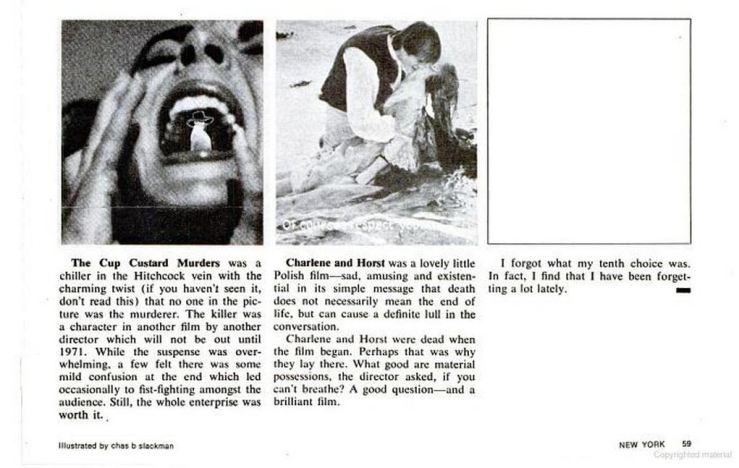
The Woody Allen Ten Best List

From New York Magazine, August 3, 1970. Via Matt Singer’s Twitter

The Spirit of Plato — William Blake

List with No Name #2

  1. The first 20 minutes of 2001: A Space Odyssey
  2. The last 10 minutes of if . . . .
  3. The first half of Barry Lyndon but not the second half
  4. Every minute of Days of Heaven
  5. Every minute of Russian Ark
  6. The opening sequence of Ponyo
  7. The last five minutes of Aguirre, the Wrath of God
  8. The closing titles sequence of INLAND EMPIRE

The Bookworm — Carl Spitzweg

Hunter S. Thompson: “I Always Roll My Ice in Chlorophyll Before I Drink Whiskey”

Fifty Sexy Literary Alternatives to Fifty Shades of Grey

I hate to be anti-book—any book, really, even awful ones—but Fifty Shades of Grey barely qualifies as a book, and it’s utterly dreadful to think that a Twilight knockoff that started as Twilight fanfiction (!) is now sold in bulk across the world when there are so many good books out there—salacious, sexy, erotic books at that. But, like I said, I hate to knock on something when it’s more productive to offer an alternative. So: a list.

This list is subjective, occasionally weird, and hardly complete (feel free to point out what I’ve left off). I’ve only included works that I’ve read in part or in whole. I’m clearly aware that certain stuff like D.H. Lawrence, much of Updike, and infamous classics like Walter’s My Secret Life are not on here—if it’s not on here, I haven’t read any of it. I vouch for everything else.

  1. Song of Songs (Old Testament)
  2. Juliette, Marquis de Sade
  3. Justine, Marquis de Sade
  4. The 120 Days of Sodom, Marquis de Sade
  5. The Pearl, William Lazenby (ed.)
  6. The Story of O, Pauline Réage
  7. Delta of Venus,  Anaïs Nin
  8. Little Birds, Anaïs Nin
  9. Lost Girls, Alan Moore and Melinda Gebbie
  10. The Soft Machine, William Burroughs
  11. Story of the Eye, Georges Bataille
  12. The Garden of Eden, Ernest Hemingway
  13. Ada, or Ador, Vladimir Nabokov
  14. Fanny Hill, John Cleland
  15. Poems of Sappho
  16. Crash, J.G. Ballard
  17. Their Eyes Were Watching God, Zora Neale Hurston
  18. House of Holes, Nicolson Baker
  19. Blood and Guts in High School, Kathy Acker
  20. Satyricon, Petronius Arbiter
  21. “Penelope”/Molly’s monologue from Ulysses, James Joyce
  22. “Nausicaa” from Ulysses, James Joyce
  23. “Circe” from Ulysses, James Joyce
  24. Boccaccio’s Decameron
  25. Tropic of Cancer, Henry Miller
  26. Tropic of Capricorn, Henry Miller
  27. Women, Charles Bukowski
  28. Poems of Catullus
  29. A Midsummer Night’s Dream, William Shakespeare
  30. Kama Sutra
  31. Naked Lunch, William Burroughs
  32. The Ways, Caracci and Aretino
  33. Vox, Nicholson Baker
  34. Ars Amatoria, Ovid
  35. A Feast of Snakes, Harry Crews
  36. Casanova’s letters and memoirs 
  37. Chaucer’s The Canterbury Tales
  38. Snow White, Donald Barthelme
  39. Brave New World, Aldous Huxley
  40. Briar Rose, Robert Coover
  41. Frisk, Dennis Cooper
  42. Song of Myself, Walt Whitman
  43. Hotel Iris, Yoko Ogawa
  44. “Wild nights! Wild nights!”, Emily Dickinson
  45. Various selections of Robert Crumb
  46. Dream Story, Arthur Schnitzler
  47. A few choice passages from Roberto Bolaño’s The Savage Detectives
  48. Venus in Furs,  Leopold von Sacher-Masoch
  49. The Bloody Chamber, Angela Carter
  50. “I started Early – Took my Dog -“, Emily Dickinson

Tiger — Eugène Delacroix

“Thomas Browne Was Born in London on the 19th of October, 1605, the Son of a Silk Merchant” — W.G. Sebald


Thomas  Browne was born in London on the 19th of October 1605, the son of a silk merchant. Little is known of his childhood, and the accounts of his life following completion of his master’s degree at Oxford tell us scarcely anything about the nature of his later medical studies. All we know for certain is that from his twenty-fifth to his twenty-eighth year he attended the universities of Montpellier, Padua and Vienna, then outstanding in the Hippocratic sciences, and that just before returning to England, received a doctorate in medicine from Leiden. In January 1632, while Browne was in Holland, and thus at a time when he was engaging more profoundly with the mysteries of the human body than ever before, the dissection of a corpse was undertaken in public at the Waaggebouw in Amsterdam—the body being that of Adriaan Adriaanszoon alias Aris Kindt, a petty thief of that city who had been hanged for his misdemeanours an hour or so earlier. Although we have no definite evidence for this, it is probable that Browne would have heard of the dissection and was present at the extraordinary event, which Rembrandt depicted in his painting of the Guild of Surgeons, for the anatomy lessons given every year in the depth of winter by Dr Nicolaas Tulp were not only of the greatest interest to a student of medicine but constituted in addition a significant date in the agenda of a society that saw itself as emerging from the darkness into the light. The spectacle, presented before a paying public drawn from the upper classes, was no doubt a demonstration of the undaunted investigative zeal in the new sciences; but it also represented (though this surely would have been refuted) the archaic ritual of dismembering a corpse, of harrowing the flesh of the delinquent even beyond death, a procedure then still part of the ordained punishment. That the anatomy lesson in Amsterdam was about more than a thorough knowledge of the inner organs of the human body is suggested by Rembrandt’s representation of the ceremonial nature of the dissection—the surgeons are in their finest attire, and Dr Tulp is wearing a hat on his head—as well as by the fact that afterwards there was a formal, and in a sense symbolic banquet. If we stand today before the large canvas of Rembrandt’s The Anatomy Lesson in the Mauritshuis we are standing precisely where those who were present at the dissection in the Waaggebouw stood, and we believe that we see what they saw then: in the foreground, the greenish, prone body of Aris Kindt, his neck broken and his chest risen terribly in rigor mortis. And yet it is debatable whether anyone ever really saw that body, since the art of anatomy, then in its infancy, was not least a way of making the reprobate body invisible. It is somehow odd that Dr Tulp’s colleagues are not looking at Kindt’s body, that their gaze is directed just past it to focus on the open anatomical atlas in which the appalling physical facts are reduced to a diagram, a schematic plan of the human being, such as envisaged by the enthusiastic amateur anatomist René Descartes, who was also, so it is said, present that January morning in the Waaggebouw. In his philosophical investigations, which form one of the principal chapters of the history of subjection, Descartes teaches that one should disregard the flesh, which is beyond our comprehension, and attend to the machine within, to what can fully be understood, be made wholly useful for work, and, in the event of any fault, either repaired or discarded.
A passage from W.G. Sebald’s book The Rings of Saturn


Reading a Book — Nikolay Bogdanov-Belsky

Robert Hughes Slags Damien Hirst and Andy Warhol

RIP Robert Hughes

RIP art critic Robert Hughes, 1938-2012

Watch “The Mechanical Paradise,” the first episode of The Shock of the New:

Details from a Museum Visit

I visited the New Orleans Museum of Art last week.

I’d been before, about ten years ago, I guess, and at that time I was far more interested in their collection of modern stuff—surrealism, pop, conceptual, etc.

Over the years my taste has veered strongly toward Renaissance stuff, and I think I got a lot more out of NOMA this time.

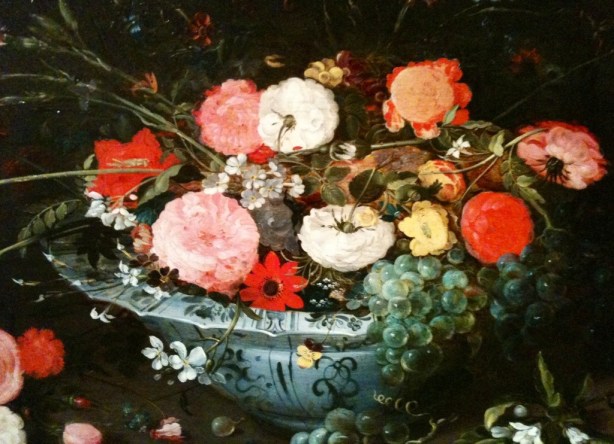
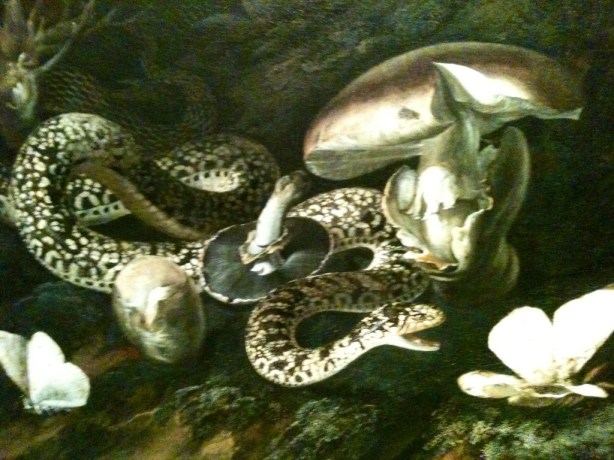
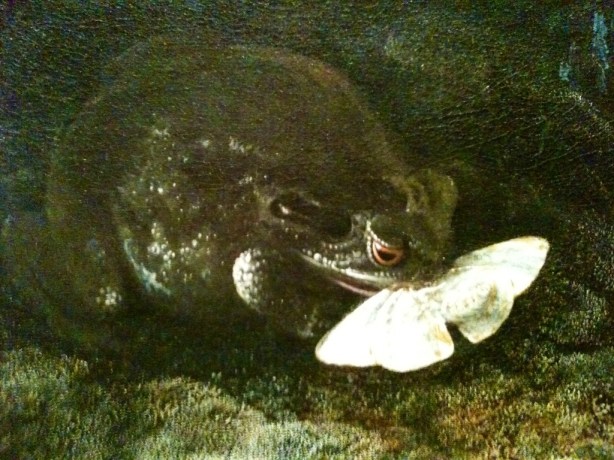
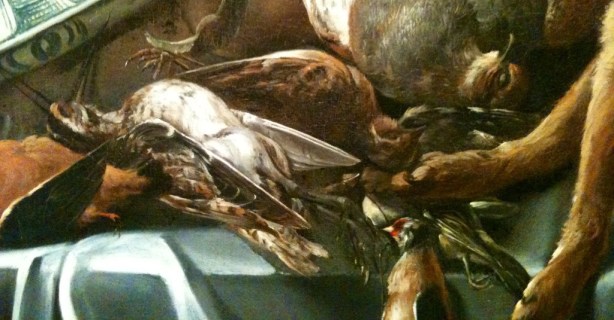
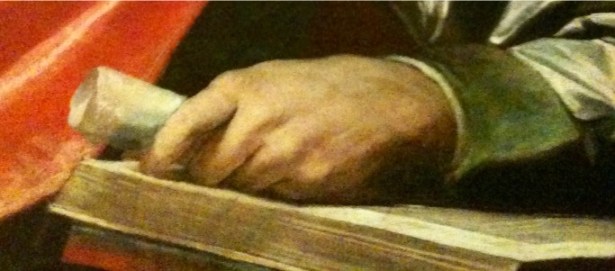
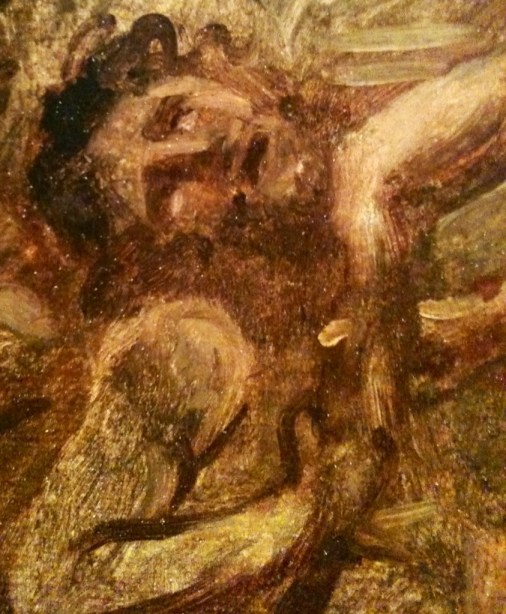
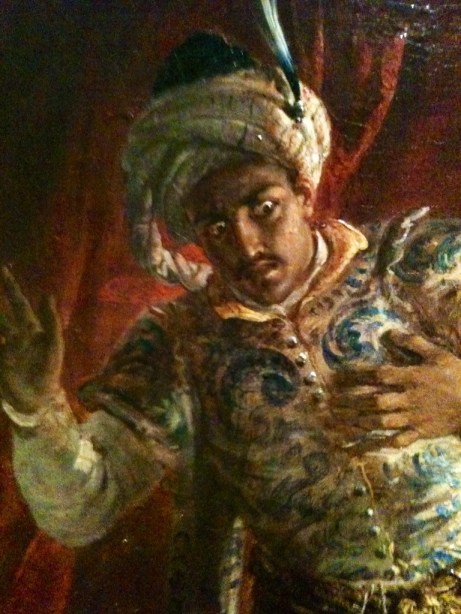
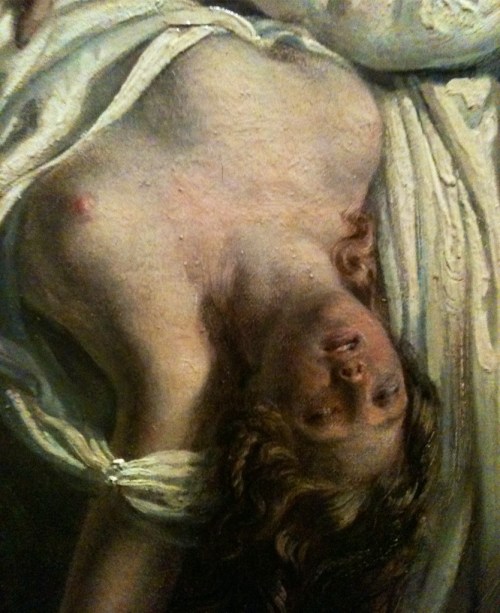
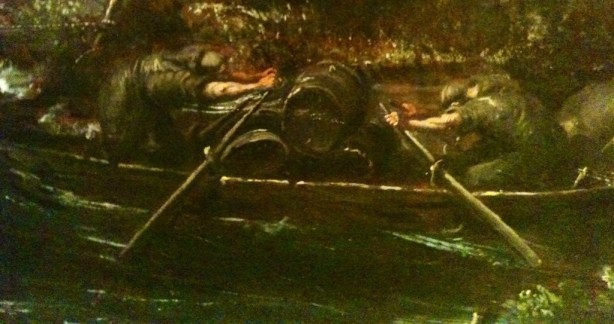
Anyway, I took some shots with my antique iPhone, and present them here with no commentary.

20120806-164850.jpg

Detail from Summer Flowers in a Wanli Kraak Porcelain Bowl by Jan Brueghel the Younger

20120806-164754.jpg

20120806-164805.jpg

Details from Serpents and Insects by Otto Marseus van Schreick

20120806-164815.jpg

20120806-164824.jpg

Details from Still Life of Fruit with Lobster and Dead Game by Michiel Simons

20120806-164839.jpg

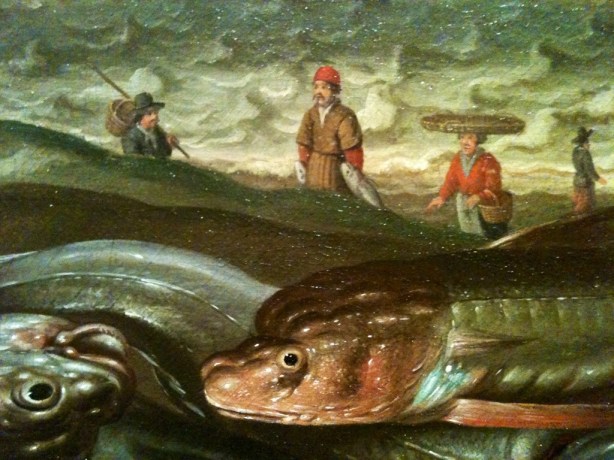
Detail from Fish Heaped on the Beach by Willem Ormea and Adam Willaerts

20120806-164900.jpg

20120806-164909.jpg

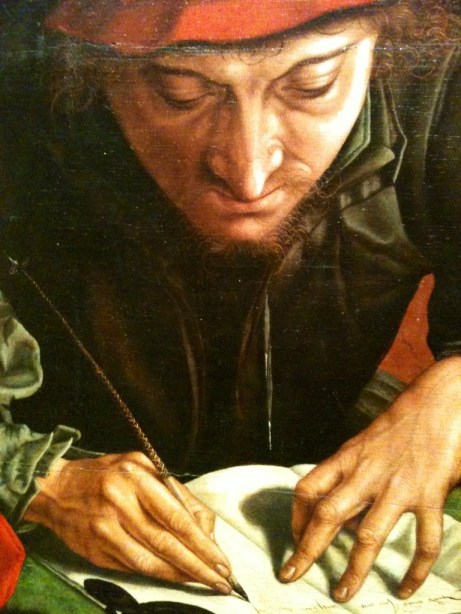
Details from The Lawyer’s Office by Marinus van Reymerswache

20120806-164918.jpg

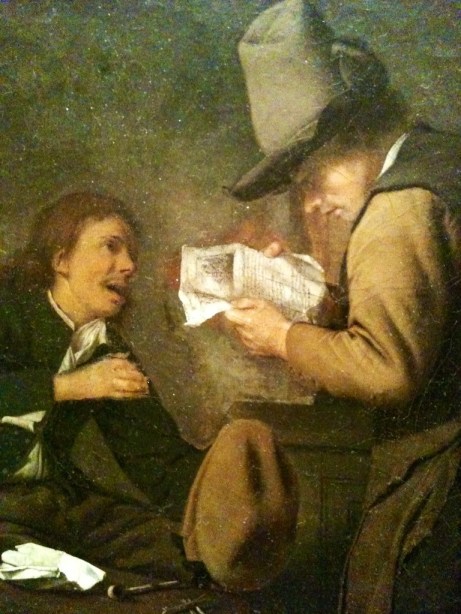
Detail from The Latest News by Andries Andriesz Schaeck

20120806-164931.jpg

20120806-164947.jpg

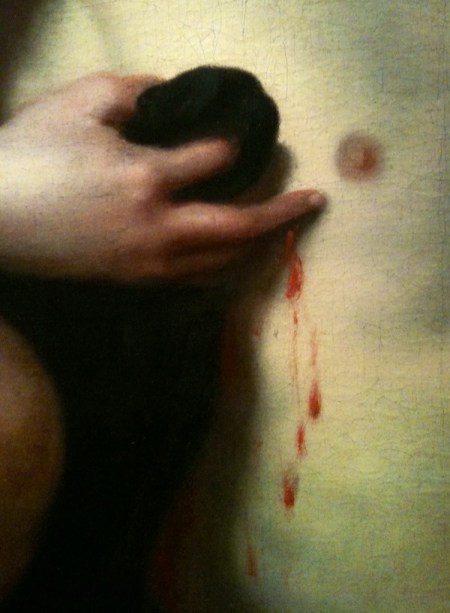
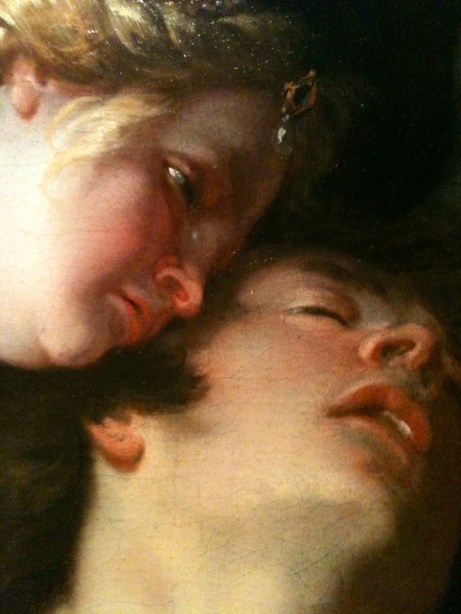
Details from Venus Mourning the Death of Adonis by Thomas Willeboirts Bosschaert

20120806-165020.jpg

20120806-165029.jpg

20120806-165049.jpg

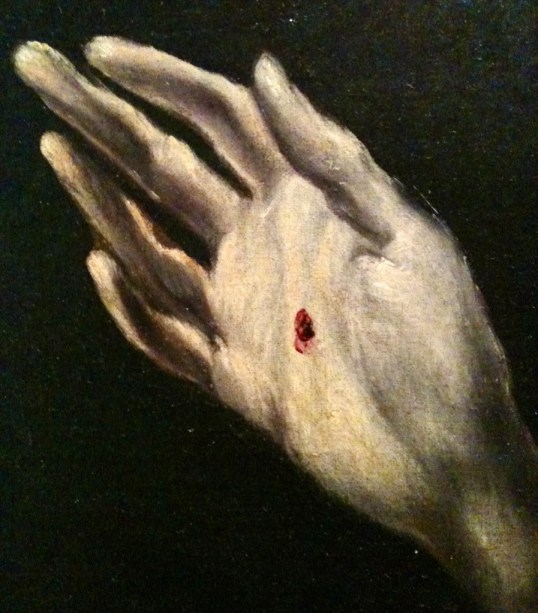
Details from St. Francis by El Greco

20120806-165102.jpg

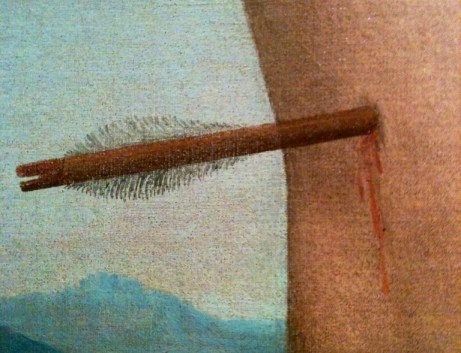
Detail from Saint Sebastian by Giuliano Bugiardini

20120806-165111.jpg

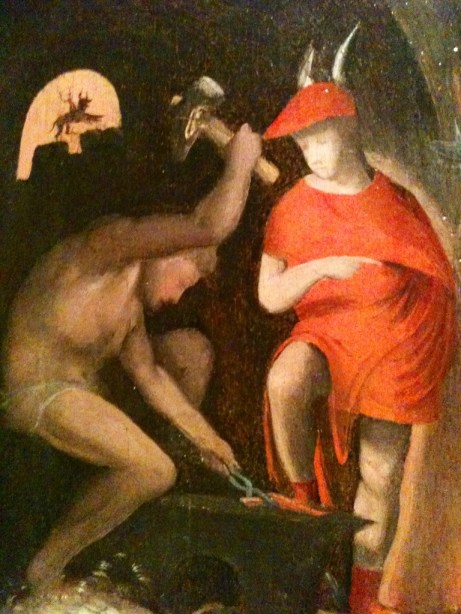
Detail from Venus and Cupid with Vulcan by Domenico Beccafumi

20120806-165123.jpg

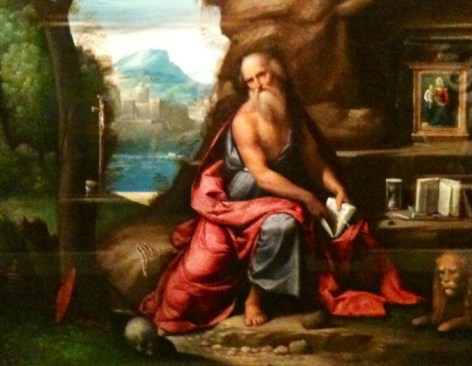
Detail from Meditation of Saint Jerome by Garofalo

20120806-165135.jpg

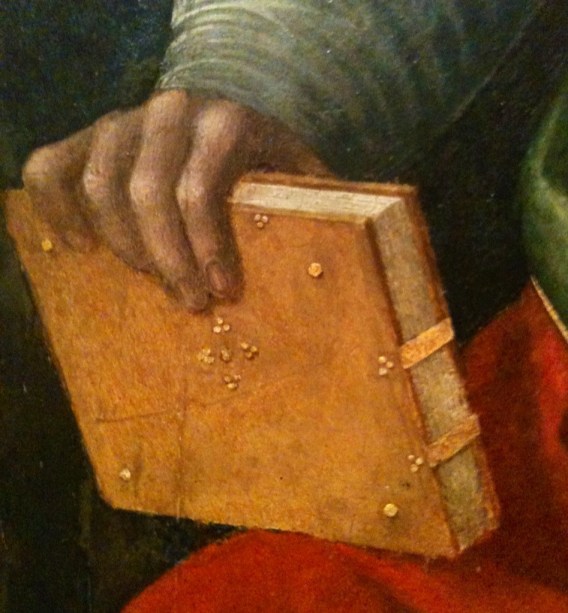
Detail from Saint Paul by Vincenzo Foppa

20120806-165152.jpg

Detail from A Saint Reading by Lorenzo Lippi

20120806-165212.jpg

Detail from Saint Theresa of Avila by Joseph-Marie Vien

20120806-165231.jpg

20120806-165247.jpg

Details from First Sketch for “The Pest house at Jaffa” by Antoine Jean Barron Gros

20120806-165258.jpg

20120806-165316.jpg

Details from Othello and Desdemona by Alexander-Marie Colin

Detail from Landscape with Travelers by Alessandro Magnasco

The Exile and The Snail — William Turner