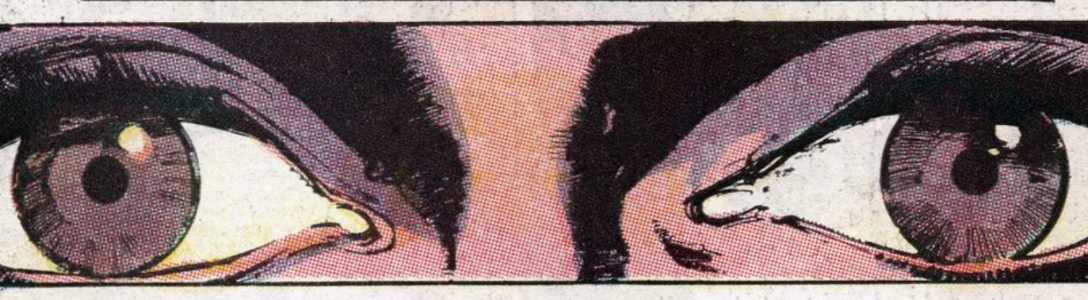
My Birth — Frida Kahlo

“The Toll-Gatherer’s Day” — Nathaniel Hawthorne

“The Toll-Gatherer’s Day”

by

Nathaniel Hawthorne

Methinks, for a person whose instinct bids him rather to pore over the current of life than to plunge into its tumultuous waves, no undesirable retreat were a toll-house beside some thronged thoroughfare of the land. In youth, perhaps, it is good for the observer to run about the earth, to leave the track of his footsteps far and wide, to mingle himself with the action of numberless vicissitudes, and, finally, in some calm solitude to feed a musing spirit on all that he has seen and felt. But there are natures too indolent or too sensitive to endure the dust, the sunshine or the rain, the turmoil of moral and physical elements, to which all the wayfarers of the world expose themselves. For such a man how pleasant a miracle could life be made to roll its variegated length by the threshold of his own hermitage, and the great globe, as it were, perform its revolutions and shift its thousand scenes before his eyes without whirling him onward in its course! If any mortal be favored with a lot analogous to this, it is the toll-gatherer. So, at least, have I often fancied while lounging on a bench at the door of a small square edifice which stands between shore and shore in the midst of a long bridge. Beneath the timbers ebbs and flows an arm of the sea, while above, like the life-blood through a great artery, the travel of the north and east is continually throbbing. Sitting on the aforesaid bench, I amuse myself with a conception, illustrated by numerous pencil-sketches in the air, of the toll-gatherer’s day. Continue reading ““The Toll-Gatherer’s Day” — Nathaniel Hawthorne”

On the Beach — Edouard Manet

Stroszek — Werner Herzog (Full Film)

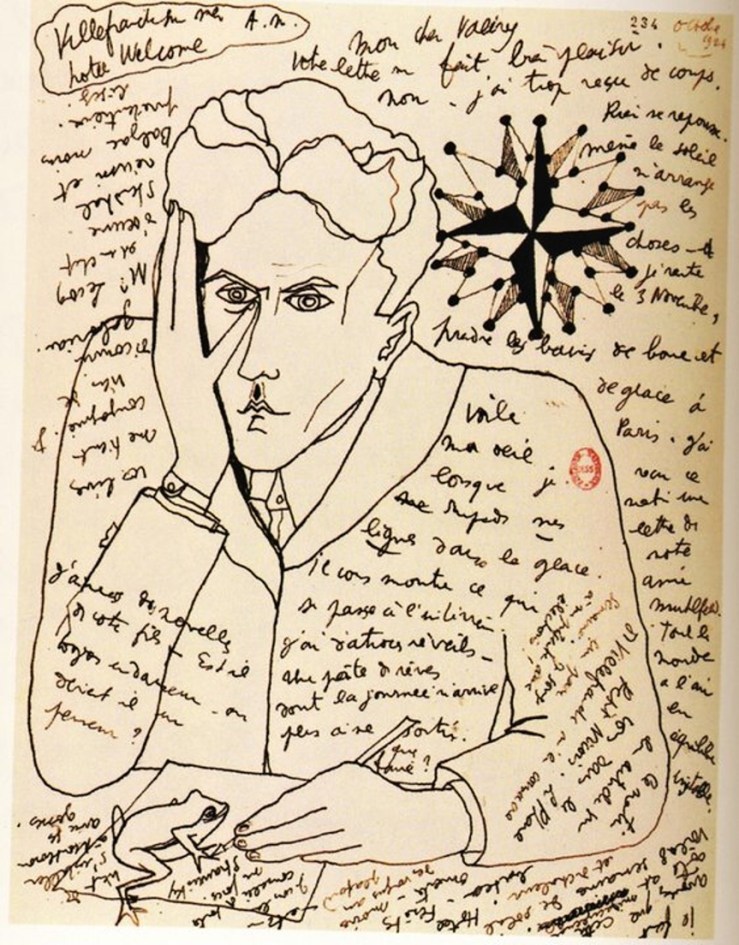
Self-Portrait (In a letter to Paul Valéry) — Jean Cocteau

jc

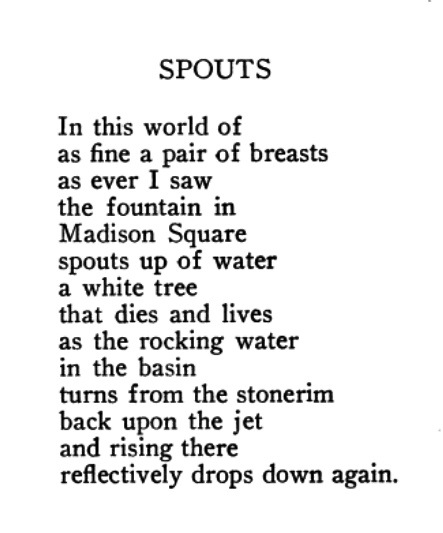
“Spouts” — William Carlos Williams

20140627-095521-35721000.jpg

Feathered Serpent — Barry Moser

20140629-152019-55219133.jpg

Why we like tragedies (Alasdair Gray)

A story can always end happily by stopping at a cheerful moment. Of course in nature the only end is death, but death hardly ever happens when people are at their best. That is why we like tragedies. They show men ending energetically with their wits about them and deserving to do it.

From Alasdair Gray’s novel Lanark

“Sticks” — George Saunders

“Sticks” by George Saunders. (Collected in Tenth of December):

Every year Thanksgiving night we flocked out behind Dad as he dragged the Santa suit to the road and draped it over a kind of crucifix he’d built out of metal pole in the yard. Super Bowl week the pole was dressed in a jersey and Rod’s helmet and Rod had to clear it with Dad if he wanted to take the helmet off. On Fourth of July the pole was Uncle Sam, on Veterans Day a soldier, on Halloween a ghost. The pole was Dad’s one concession to glee. We were allowed a single Crayola from the box at a time. One Christmas Eve he shrieked at Kimmie for wasting an apple slice. He hovered over us as we poured ketchup, saying, Good enough good enough good enough. Birthday parties consisted of cupcakes, no ice cream. The first time I brought a date over she said, What’s with your dad and that pole? and I sat there blinking.

We left home, married, had children of our own, found the seeds of meanness blooming also within us. Dad began dressing the pole with more complexity and less discernible logic. He draped some kind of fur over it on Groundhog Day and lugged out a floodlight to ensure a shadow. When an earthquake struck Chile he laid the pole on its side and spray-painted a rift in the earth. Mom died and he dressed the pole as Death and hung from the crossbar photos of Mom as a baby. We’d stop by and find odd talismans from his youth arranged around the base: army medals, theater tickets, old sweatshirts, tubes of Mom’s makeup. One autumn he painted the pole bright yellow. He covered it with cotton swabs that winter for warmth and provided offspring by hammering in six crossed sticks around the yard. He ran lengths of string between the pole and the sticks, and taped to the string letters of apology, admissions of error, pleas for understanding, all written in a frantic hand on index cards. He painted a sign saying LOVE and hung it from the pole and another that said FORGIVE? and then he died in the hall with the radio on and we sold the house to a young couple who yanked out the pole and left it by the road on garbage day.

Gaspar Melchor de Jovellanos — Francisco Goya

Our Banner in the Sky — Frederic Edwin Church

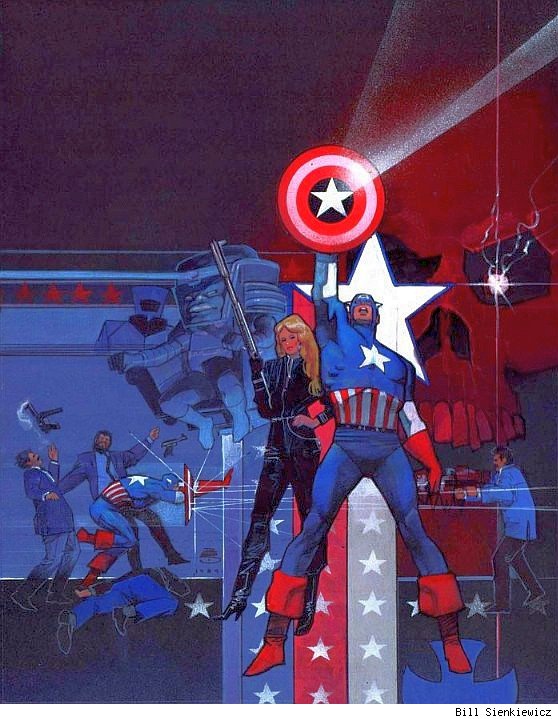
Captain America — Bill Sienkiewicz

ca

Fireworks Floral with Bomb and Matches — Glennray Tutor

Flags I — Jasper Johns

Beach Scene with Pink Hat — Eric Fischl

I Am My Films: A Portrait of Werner Herzog

Bathers on the Beach under Umbrella — Rafael Zabaleta