More colour is wanted (Oscar Wilde)

You have too many white walls.  More colour is wanted.  You should have such men as Whistler among you to teach you the beauty and joy of colour.  Take Mr. Whistler’s ‘Symphony in White,’ which you no doubt have imagined to be something quite bizarre.  It is nothing of the sort.  Think of a cool grey sky flecked here and there with white clouds, a grey ocean and three wonderfully beautiful figures robed in white, leaning over the water and dropping white flowers from their fingers.  Here is no extensive intellectual scheme to trouble you, and no metaphysics of which we have had quite enough in art.  But if the simple and unaided colour strike the right key-note, the whole conception is made clear.  I regard Mr. Whistler’s famous Peacock Room as the finest thing in colour and art decoration which the world has known since Correggio painted that wonderful room in Italy where the little children are dancing on the walls.  Mr. Whistler finished another room just before I came away—a breakfast room in blue and yellow.  The ceiling was a light blue, the cabinet-work and the furniture were of a yellow wood, the curtains at the windows were white and worked in yellow, and when the table was set for breakfast with dainty blue china nothing can be conceived at once so simple and so joyous.

The fault which I have observed in most of your rooms is that there is apparent no definite scheme of colour.  Everything is not attuned to a key-note as it should be.  The apartments are crowded with pretty things which have no relation to one another.  Again, your artists must decorate what is more simply useful.  In your art schools I found no attempt to decorate such things as the vessels for water.  I know of nothing uglier than the ordinary jug or pitcher.  A museum could be filled with the different kinds of water vessels which are used in hot countries.  Yet we continue to submit to the depressing jug with the handle all on one side.  I do not see the wisdom of decorating dinner-plates with sunsets and soup-plates with moonlight scenes.  I do not think it adds anything to the pleasure of the canvas-back duck to take it out of such glories.  Besides, we do not want a soup-plate whose bottom seems to vanish in the distance.  One feels neither safe nor comfortable under such conditions.  In fact, I did not find in the art schools of the country that the difference was explained between decorative and imaginative art.

From “House Decoration,” a lecture delivered by Oscar Wilde on his 1882 American tour.

Memorabilia (Perry Bible Fellowship)

PBF249-Memorabilia

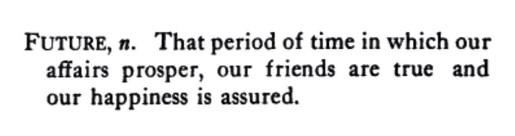
Future (Ambrose Bierce)

20140614-113703-41823597.jpg

Book with Wavy Pages — Abelardo Morell

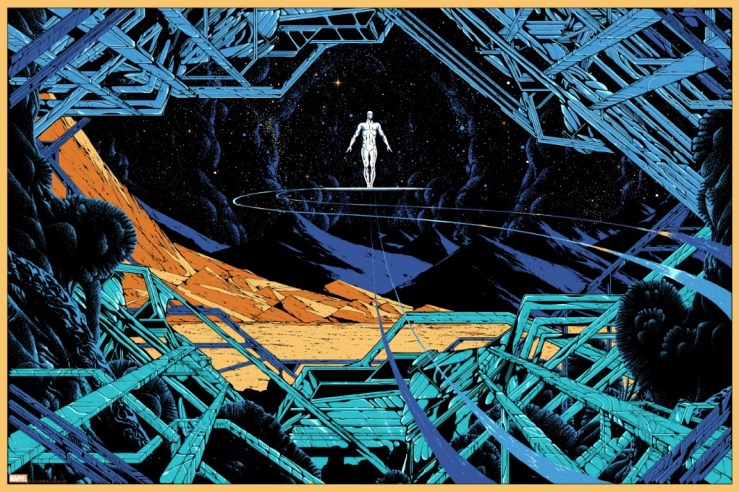
Silver Surfer — Kilian Eng

silver surfer

Get Your Borges Timer Now!

borges_timer

Illustration for Ozu’s Tokyo Story — Chris Ware

untitled

A Lady with a Squirrel and a Starling — Hans Holbein the Younger

“Over an Absinthe Bottle” — W.C. Morrow


“Over an Absinthe Bottle”

by

W.C. Morrow

Arthur Kimberlin, a young man of very high spirit, found himself a total stranger in San Francisco one rainy evening, at a time when his heart was breaking; for his hunger was of that most poignant kind in which physical suffering is forced to the highest point without impairment of the mental functions. There remained in his possession not a thing that he might have pawned for a morsel to eat; and even as it was, he had stripped his body of all articles of clothing except those which a remaining sense of decency compelled him to retain. Hence it was that cold assailed him and conspired with hunger to complete his misery. Having been brought into the world and reared a gentleman, he lacked the courage to beg and the skill to steal. Had not an extraordinary thing occurred to him, he either would have drowned himself in the bay within twenty-four hours or died of pneumonia in the street. He had been seventy hours without food, and his mental desperation had driven him far in its race with his physical needs to consume the strength within him; so that now, pale, weak, and tottering, he took what comfort he could find in the savory odors which came steaming up from the basement kitchens of the restaurants in Market Street, caring more to gain them than to avoid the rain. His teeth chattered; he shambled, stooped, and gasped. He was too desperate to curse his fate—he could only long for food. He could not reason; he could not understand that ten thousand hands might gladly have fed him; he could think only of the hunger which consumed him, and of food that could give him warmth and happiness. Continue reading ““Over an Absinthe Bottle” — W.C. Morrow”

Daniel’s — Kenton Nelson

daniel's

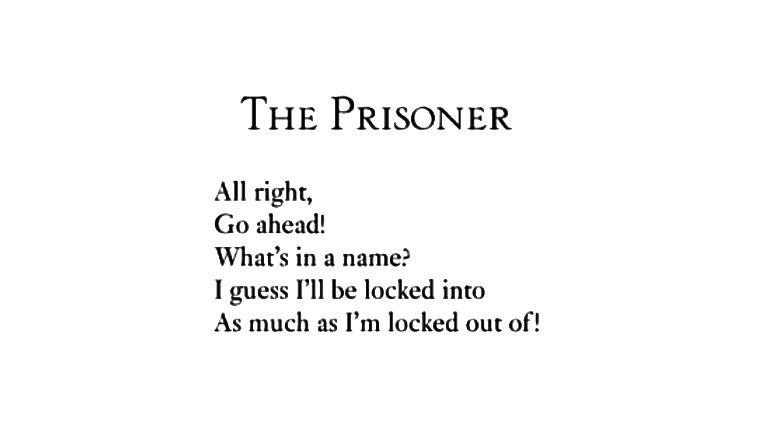
“The Prisoner” — Edna St. Vincent Millay

20140612-200611-72371190.jpg

“All art constantly aspires towards the condition of music”

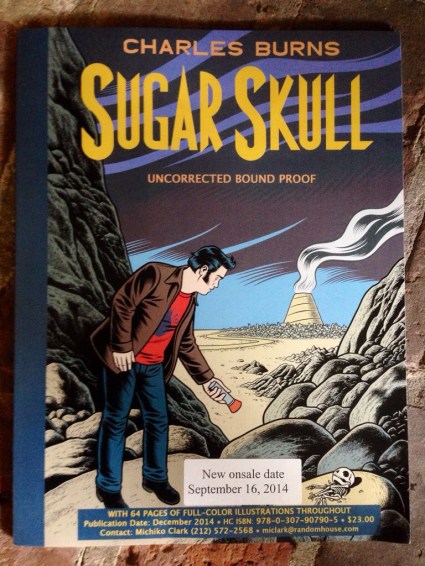
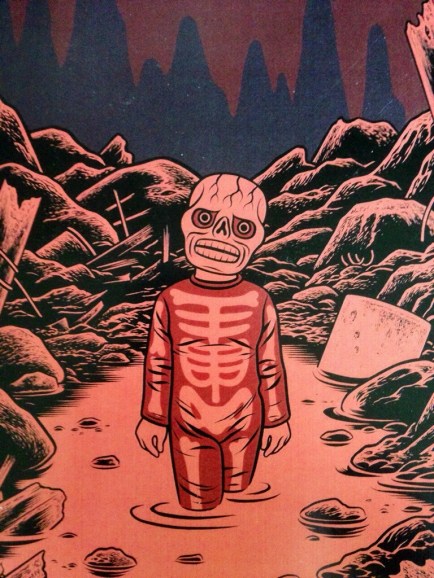
Charles Burns’s Sugar Skull (Book Acquired, 6.06.2014)


20140612-154238-56558886.jpg

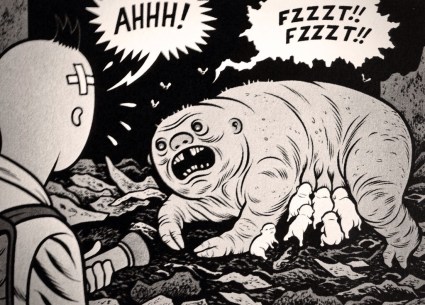
Got a bound black and white proof of Sugar Skull, the final book in Charles Burns’s Tintin-punk-rock-Interzone trilogy. Out from the good people of Pantheon this September.

Back cover image:
20140612-154241-56561020.jpg

So I went back and reread X’ed Out and The Hive and then yeah I read Sugar Skull. I’m going to wait to read a finished color copy to do a full review but, good great weird stuff.

A tender moment:

20140612-154241-56561231.jpg

Sketch for The Little Prince — Antoine de Saint-Exupéry

The Spring of Evil — Georges de Feure

Like a ranging spaniel (Robert Burton)

This roving humour (though not with like success) I have ever had, and like a ranging spaniel, that barks at every bird he sees, leaving his game, I have followed all, saving that which I should, and may justly complain, and truly, qui ubique est, nusquam est, which Gesner did in modesty, that I have read many books, but to little purpose, for want of good method; I have confusedly tumbled over divers authors in our libraries, with small profit, for want of art, order, memory, judgment. I never travelled but in map or card, in which mine unconfined thoughts have freely expatiated, as having ever been especially delighted with the study of Cosmography. Saturn was lord of my geniture, culminating, &c., and Mars principal significator of manners, in partile conjunction with my ascendant; both fortunate in their houses, &c. I am not poor, I am not rich; nihil est, nihil deest, I have little, I want nothing: all my treasure is in Minerva’s tower. Greater preferment as I could never get, so am I not in debt for it, I have a competence (laus Deo) from my noble and munificent patrons, though I live still a collegiate student, as Democritus in his garden, and lead a monastic life, ipse mihi theatrum, sequestered from those tumults and troubles of the world, Et tanquam in specula positus, (as he said) in some high place above you all, like Stoicus Sapiens, omnia saecula, praeterita presentiaque videns, uno velut intuitu, I hear and see what is done abroad, how others run, ride, turmoil, and macerate themselves in court and country, far from those wrangling lawsuits, aulia vanitatem, fori ambitionem, ridere mecum soleo: I laugh at all, only secure, lest my suit go amiss, my ships perish, corn and cattle miscarry, trade decay, I have no wife nor children good or bad to provide for. A mere spectator of other men’s fortunes and adventures, and how they act their parts, which methinks are diversely presented unto me, as from a common theatre or scene. I hear new news every day, and those ordinary rumours of war, plagues, fires, inundations, thefts, murders, massacres, meteors, comets, spectrums, prodigies, apparitions, of towns taken, cities besieged in France, Germany, Turkey, Persia, Poland, &c., daily musters and preparations, and such like, which these tempestuous times afford, battles fought, so many men slain, monomachies, shipwrecks, piracies and sea-fights; peace, leagues, stratagems, and fresh alarms. A vast confusion of vows, wishes, actions, edicts, petitions, lawsuits, pleas, laws, proclamations, complaints, grievances are daily brought to our ears. New books every day, pamphlets, corantoes, stories, whole catalogues of volumes of all sorts, new paradoxes, opinions, schisms, heresies, controversies in philosophy, religion, &c. Now come tidings of weddings, maskings, mummeries, entertainments, jubilees, embassies, tilts and tournaments, trophies, triumphs, revels, sports, plays: then again, as in a new shifted scene, treasons, cheating tricks, robberies, enormous villainies in all kinds, funerals, burials, deaths of princes, new discoveries, expeditions, now comical, then tragical matters. Today we hear of new lords and officers created, tomorrow of some great men deposed, and then again of fresh honours conferred; one is let loose, another imprisoned; one purchaseth, another breaketh: he thrives, his neighbour turns bankrupt; now plenty, then again dearth and famine; one runs, another rides, wrangles, laughs, weeps, &c. This I daily hear, and such like, both private and public news, amidst the gallantry and misery of the world; jollity, pride, perplexities and cares, simplicity and villainy; subtlety, knavery, candour and integrity, mutually mixed and offering themselves; I rub on privus privatus; as I have still lived, so I now continue, statu quo prius, left to a solitary life, and mine own domestic discontents: saving that sometimes, ne quid mentiar, as Diogenes went into the city, and Democritus to the haven to see fashions, I did for my recreation now and then walk abroad, look into the world, and could not choose but make some little observation, non tam sagax observator ac simplex recitator, not as they did, to scoff or laugh at all, but with a mixed passion.

From Robert Burton’s The Anatomy of Melancholy.