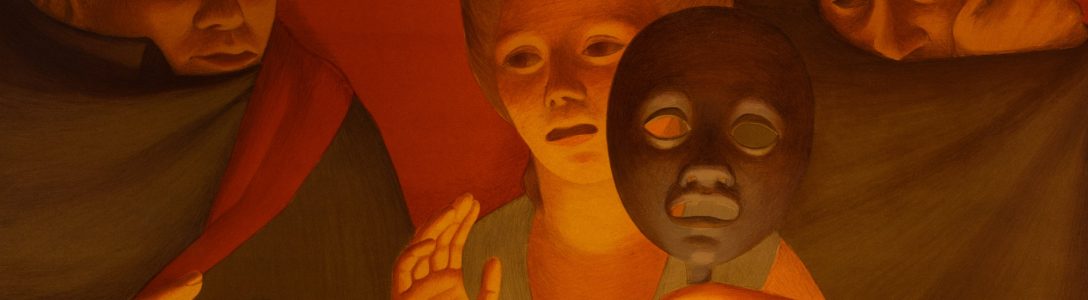
Perseus Rescuing Andromeda (detail) — Piero di Cosimo

perseus8

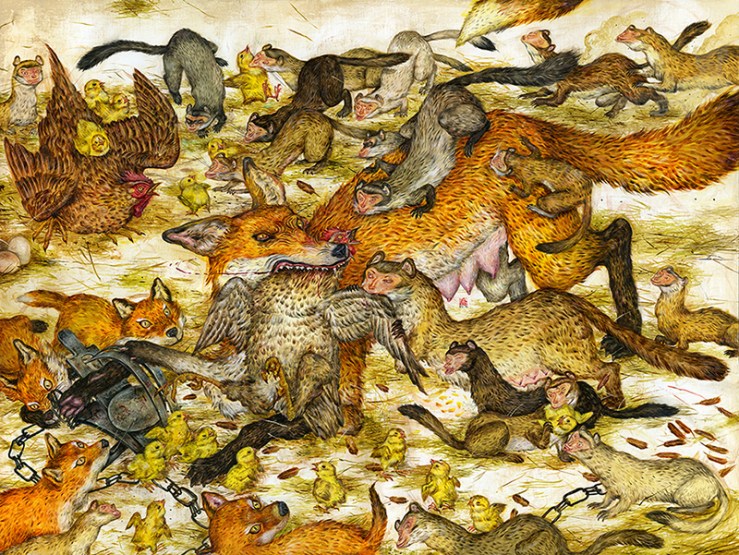
Fox — Mu Pan

fox

A Splendid Savage (Book acquired, 1.29.2016)

img_1407

Steve Kemper’s biography of Frederick Russell Burnham, A Splendid Savage, is new in hardback from Norton. I interviewed Kemper a few years ago about A Labyrinth of Kingdoms, his biography of Heinrich Barth.

Norton’s blurb for A Splendid Savage:

A life of adventure and military daring on violent frontiers across the American West, Africa, Mexico, and the Klondike.

Frederick Russell Burnham’s (1861–1947) amazing story resembles a newsreel fused with a Saturday matinee thriller. One of the few people who could turn his garrulous friend Theodore Roosevelt into a listener, Burnham was once world-famous as “the American scout.” His expertise in woodcraft, learned from frontiersmen and Indians, helped inspire another friend, Robert Baden-Powell, to found the Boy Scouts. His adventures encompassed Apache wars and range feuds, booms and busts in mining camps around the globe, explorations in remote regions of Africa, and death-defying military feats that brought him renown and high honors. His skills led to his unusual appointment, as an American, to be Chief of Scouts for the British during the Boer War, where his daring exploits earned him the Distinguished Service Order from King Edward VII.

After a lifetime pursuing golden prospects from the deserts of Mexico and Africa to the tundra of the Klondike, Burnham found wealth, in his sixties, near his childhood home in southern California. Other men of his era had a few such adventures, but Burnham had them all. His friend H. Rider Haggard, author of many best-selling exotic tales, remarked, “In real life he is more interesting than any of my heroes of romance.”

Among other well-known individuals who figure in Burnham’s story are Cecil Rhodes and William Howard Taft, as well as some of the wealthiest men of the day, including John Hays Hammond, E. H. Harriman, Henry Payne Whitney, and the Guggenheim brothers.

Failure and tragedy streaked his life as well, but he was endlessly willing to set off into the unknown, where the future felt up for grabs and values worth dying for were at stake. Steve Kemper brings a quintessential American story to vivid life in this gripping biography.

“New” Bosch

01-de-verzoeking-van-de-heilige-antonius_kansas-city-the-nelson-atkins-museum-of-art_hr-670x1024

According to Hyperallergic,

Researchers at the Bosch Research and Conservation Project (BRCP) have attributed another painting to the hands of Bosch that was previously classified as a work by a student or a follower. The newly authenticated Bosch has turned up in Kansas City, owned by the esteemed Nelson-Atkins Museum of Art, which is renowned in particular for its extensive collection of Asian art. Acquired by the museum in the early 1930s, “The Temptation of St. Anthony” (c. 1500–10) depicts the saint, marked by the Tau cross on his cloak, filling a jug with water and surrounded by Bosch’s classic, bizarre beasts. The small panel, which remained in storage for years, will make its public debut at the Noordbrabants Museum in Hieronymus Bosch — Visions of Genius, an exhibition nine years in the making that brings together around 40 works from collections around the world.

Perseus Rescuing Andromeda (detail) — Piero di Cosimo

perseus4

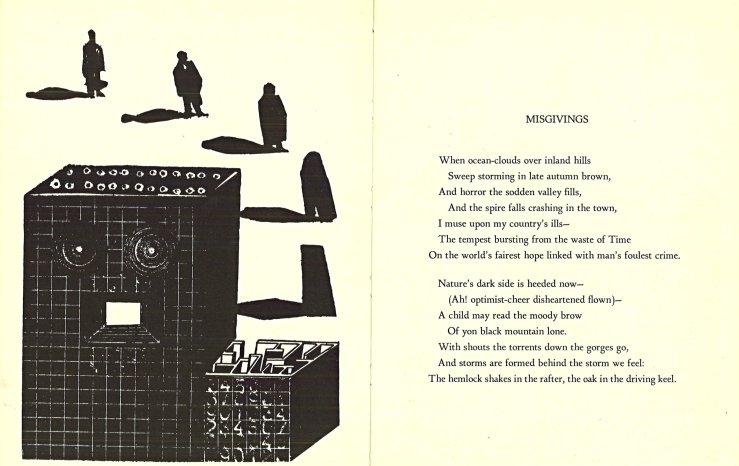
Misgivings (Herman Melville/Antonio Frasconi)

misgivings

From On the Slain Collegians: Selections from the poems of Herman Melville. Edited, and with woodcuts by Antonio Frasconi. Noonday Press, 1971.

Rothko Forgery

rothko forgery

Everybody has that feeling when they look at a work of art and it’s right, that sudden familiarity, a sort of…recognition, as though they were creating it themselves, as though it were being created through them while they look at it or listen to it…

The Recognitions, William Gaddis

Perseus Rescuing Andromeda (detail) — Piero di Cosimo

perseus3

James Joyce’s Death Mask

James Joyce’s death mask, by Paul Speck (1941)

Waywords and Meansigns: Recreating Finnegans Wake [in its whole wholume], Wholume 2

Robert Berry copy
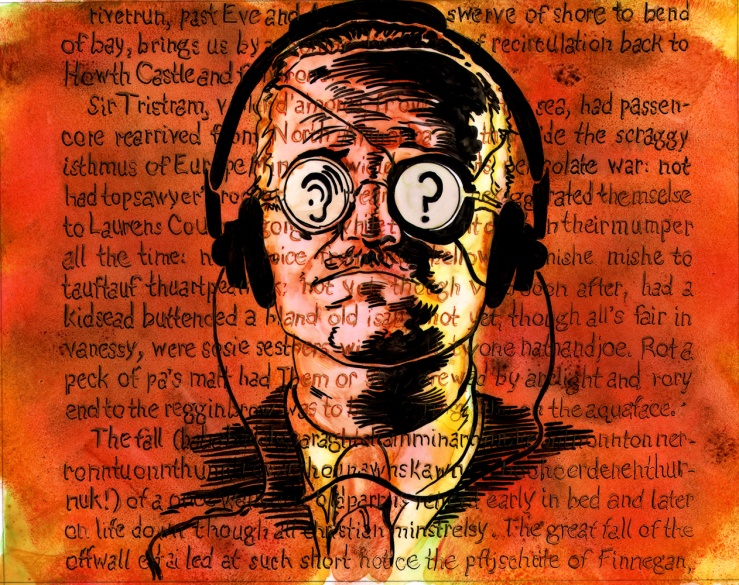
Image by Robert Berry

Last year, I talked to Derek Pyle about his production Waywords and Meansigns, a collaborative music project that recreates James Joyce’s Finnegans Wake in a range of musical genres by all kinds of musicians. In our interview, he revealed that there would be a second volume adaptation of the Wake this winter:

Biblioklept: When do you anticipate the completed project being released?

DP: So we’re actually doing two separate editions of Waywords and Meansigns; both will be unabridged, all 17 chapters. When we first put out the call for musicians, there were so many folks we didn’t want to turn away. So the first edition will debut very soon — 4 May 2015. Then the second edition will debut sometime during the coming winter, with a whole new cast of musicians.

And so well that coming winter is here now—on JJ’s birthday. So Here Comes Everybody! Check it out.

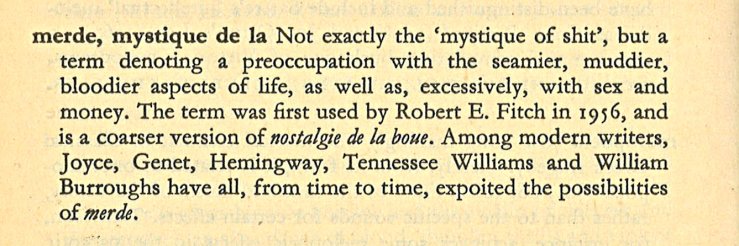
merde, mystique de la

merde

From J.A. Cuddon’s A Dictionary of Literary Terms (Penguin, 1979)

Three Medlars with a Butterfly — Adriaen Coorte

3medlars

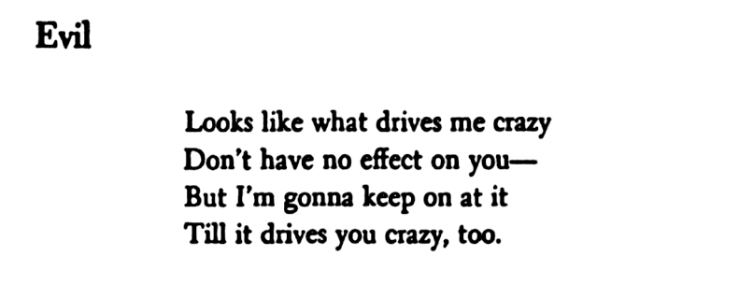
“Evil” — Langston Hughes

Screenshot 2016-02-01 at 6

Perseus Rescuing Andromeda (detail) — Piero di Cosimo

perseus1

Selections from One-Star Amazon Reviews of David Foster Wallace’s Infinite Jest

[Ed. note: I usually don’t preface these one-star Amazon selection riffs with much, other than to note the occasion for the post. In this case, the occasion is my coming to the end of a second reading of Pynchon’s novel Gravity’s Rainbow, a novel that is very much about the military-industrial-entertainment complex. And so well anyway, I keep thinking about Infinite Jest, which I have not read in full since 2002, but plan to reread later this summer. I expected Pynchon to show up a few times in the one-star reviews, but he’s present throughout, often obliquely referenced. Otherwise, the one-star reviews are typical: Rants against academia, “literary elites,” etc. The term “self-indulgent” appears again and again. Only one reviewer bothers to engage the plot though.

Update: I ran this post (minus this update) in the summer of 2015; I’m running it again because today’s the 20th anniversary of IJ’s publication]

***

slop

passably clever

completely pointless

superfluous logorrhea

spawn of PC Elitist writers

reads like a math textbook

This is the T.S. Eliot Effect

terminally adolescent drivel.

The footnotes have footnotes.

Big words and run-on sentences

utterly lacking in aesthetic merit

I only read the first 50 pages or so

wow, that’s a heck of a lot of words.

challenging, involving, and horrifying

A humorous book? – no. Absurd – Yes.

never made it to the end of chapter one.

I never did get through Gravity’s Rainbow

the magnum opus of American hipsterism.

the worst science fiction novel ever written.

If you like Pynchon, fine, go ahead, you’ll like this.

over a hundred pages of notes that serve no purpose

I pride myself on being an intelegent well read person

At least Pynchon, has humor, literary references, etc.

He probably sold more books on hype than on talent.

All in all, I suppose Wallace will just become a footnote.

this book(?) would not be worth the money if it was free

I trie d to think of Catcher in the Rye, but no comparison.

If you want to be warm, burn your overrated copy of Infinite Jest.

Wallace makes up words which does not help one reading a story.

I think it was in that book that I learned the word “omphaloskepsis.”

I’ll bet Dave had to beat off the nubile young co-eds after they read this one

obviously didn’t follow Elmore Leonard’s last tenet of his “10 Rules for Writing”

I suppose that some might consider Wallace a great writer, but was he popular?

It’s written in the first-person from the point of view of a mentally ill teenager.

he filled it with worthless footnotes that pretend to enlighten the victim of his prose

I just don’t understand how my fellow Amazon reviewers could have scored this book highly.

I realize that this book is considered to be “literature” but IMHO the internal ravings of mentally ill people isn’t literature.

It is called “INFINITE JETS” but there is not a single aircraft within, in fact the book is about people on land with drugs problems.

The book contains an anecdote plagiarized from the humorist, Gerard Hoffnung, who recorded it in the 1950s.

700 pages of clumsy sci-fi and the kind of smarty pants absurdist nonsense you’d expect from a precocious middle schooler

The premise for this novel derives from a Monty Python sketch in which the world’s funniest joke is also fatal.

Oh one other thing that drove me crazy: he started so many sentences with “And but so..” or “So but and…”

if Finnegans Wake was a rancid fart that was proudly left to rip, Infinite Jest is a weak one, lacking sound and odor.

Just a bunch of irrelevant words to set the scene…. not to mention he described everything into painful detail.

a kid thinks he’s going to the dentist but it’s really some sort of counselor and they have a long battle of wits to see which one of them is the bigger booger-eating nerd

DWF is desperately trying to emulate one of the century’s greatest authors, and utterly fails.

Put down the bong, go outside and get some real world experience before putting pen to paper.

Comparing Wallace to Pynchon is like comparing a kettle of sponges to Disney World

Academics also praise it as a badge of courage for (allegedly) reading it

It’s just the narrator’s interior thoughts about trying to buy drugs.

I was two pages in and started to feel confused, zoned out, and lost.

It reads like the stream of consciousness of a spoiled 10th grader.

What I read would have gotten an F in a freshman writing class.

The style is Pynchon. And by style, I mean, an exact duplication

At least, now I know where Dave Eggers ripped off his garbage

sorry Amazon,you definitely missed the boat with this one.

completely lacking in any kind of moral or ethical center

He and this book are simply silly, and a waste of pulp.

Book was a work of art, one I wasted my time viewing.

seems to spend forever talking about tennis and drugs

Characters are unbelievable and are over analyzed

Sure, he was making good points, for the 1990s!

Reading a thesaurus does not count as research.

Over 1000 pages of pseudo-subersiveness.

It’s the tyranny of the English Deparment

I only read about four percent of the book

For my taste, there were too many words

I think his suicide inflated his reviews.

I still feel awful thinking about it.

narcissistic garbage

wannabe Pynchon

Bad read no stars.

…is this an essay?

Generic Pynchon

Troglodyte.

Boring.

Skip it.