AD/BC: A Rock Opera by Matt Berry and Richard Ayoade

Dreams No. 2 — Jacob Lawrence

1986-6-95_1a

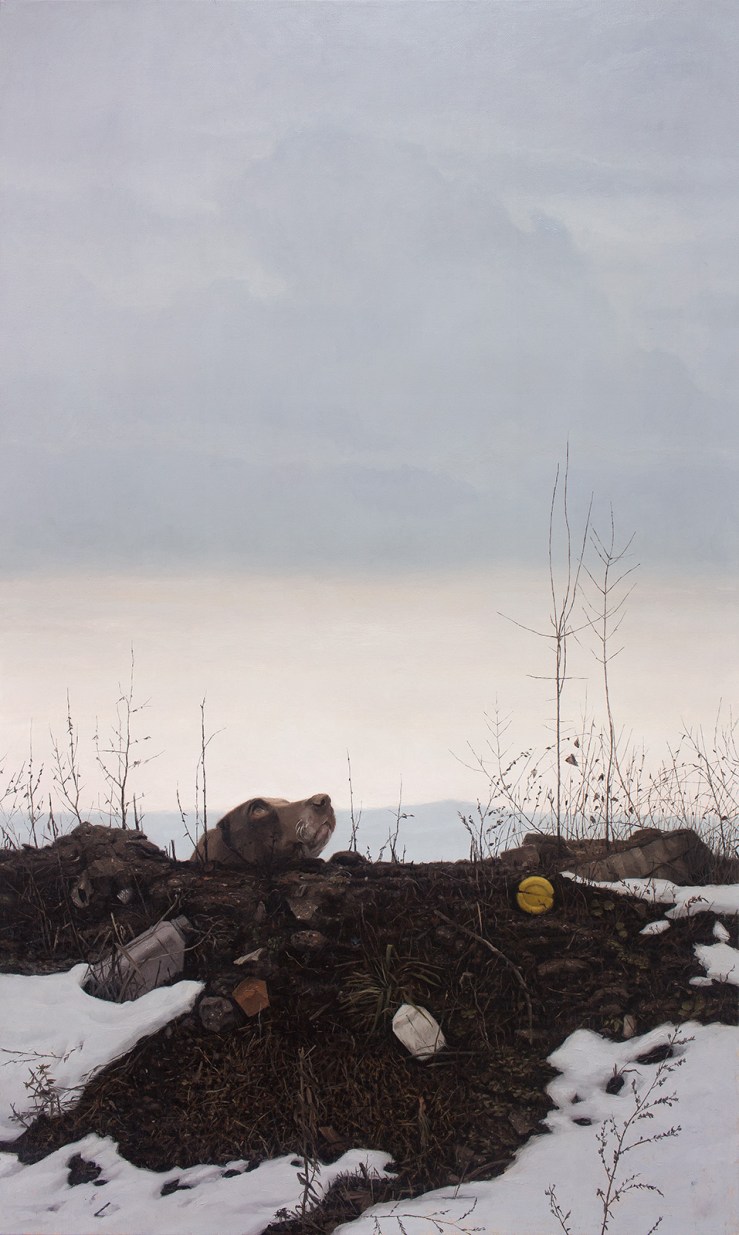
Refuse Heap (after Goya’s Dog) — Dragan Bibin

tumblr_nl8fcxqwqp1uqpzx8o1_r2_1280

Passionate extremists (From Stanley Elkin’s novel The Dick Gibson Show)

He could not depend upon his listeners; he had no notion of them. They were as faceless to him as he to them. (They didn’t even have a voice.) His panels, his Special Guests were more real. As for his listeners, he guessed they were insomniacs, cabbies, enlisted men signed out on leave at midnight driving home on turnpikes, countermen in restaurants by highways, people in tollbooths. Or he saw them in bed—they lived in the dark—lumps under covers, profiles on pillows, their skulls beside the clock radio (the clock radio had done more to change programming than even TV) while the dialogue floated above their heads like balloon talk aloft in comic strips. Half asleep, they would not follow it too closely. No, he knew little about his listeners. They were not even mysterious; they were there, but distant as the Sioux.

He knew more about the passionate extremists who used his microphones in the groundless hope of stirring those sleepers, and winning over the keepers of the booths—the wild visionaries, opponents of fluoride, palmists, astrologers, the far right and far left and far center, the dianeticians, scientologists, beatniks, homosexuals from the Mattachine Society, the handwriting analysts, addicts, nudists, psychic phenomenologists, all those who believed in the Loch Ness Monster, the Abominable Snowman and the Communist Conspiracy; men beyond the beyond, black separatists who would take over Idaho and thrive by cornering the potato, pretenders to a half-dozen thrones, Krebiozonists, people from MENSA, health-food people, eaters of weed and soups of bark, cholesterolists, poly-unsaturationalists, treasure hunters, a woman who believed she held a valid Spanish land grant to all of downtown San Francisco, the Cassandras warning of poison in the white bread and cola and barbecued potato chip, conservationists jittery about the disappearing forests and the diminishing water table (and one man who claimed that the tides were a strain on the moon), would-be reformers of a dozen industries and institutions and a woman so fastidious about the separation of church and state that she would take the vote away from nuns and clergymen, capital punishers, atheists, people who wanted the abortion laws changed and a man who thought all surgery was a sin and ought to carry the same sentence as any other assault with a knife, housewives spooked by lax Food and Drug regulations, Maoists, Esperantoists, American Nazis, neo-Jaegerists, Reichians, juvenile delinquents, crionics buffs, anti-vivisectionists, witches, wizards, chief rabbis of no less than three of the twelve lost tribes of Israel, and a fellow who claimed he died the same year Columbus discovered America.

From Stanley Elkin’s 1971 novel The Dick Gibson Show.

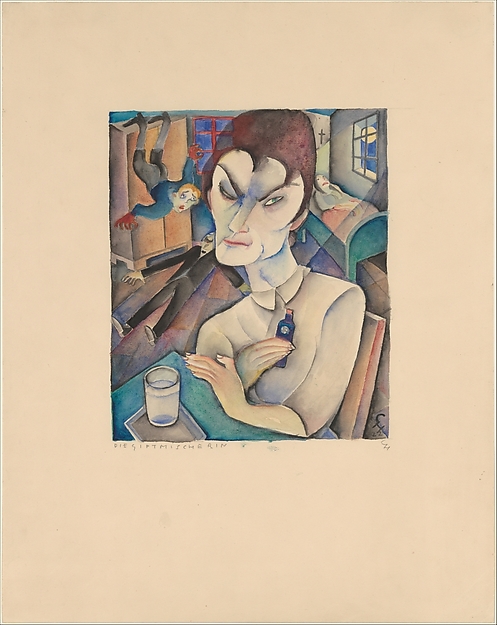
The Poison Mixer — Carry Hauser

dp266806

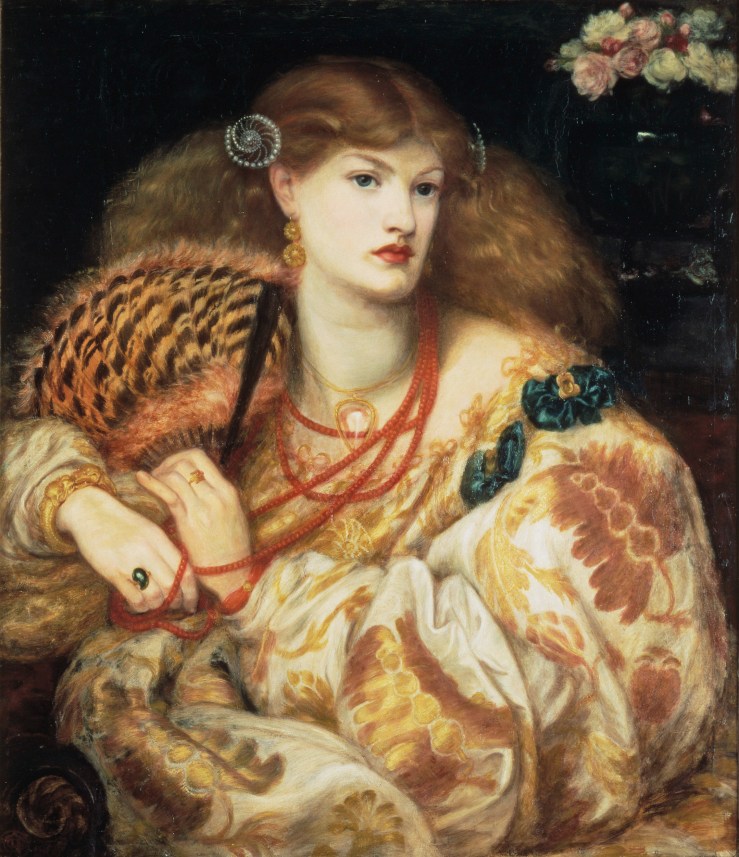
Monna Vanna — Dante Gabriel Rosetti

Dante Gabriel Rossetti: Monna Vanna, 1866.

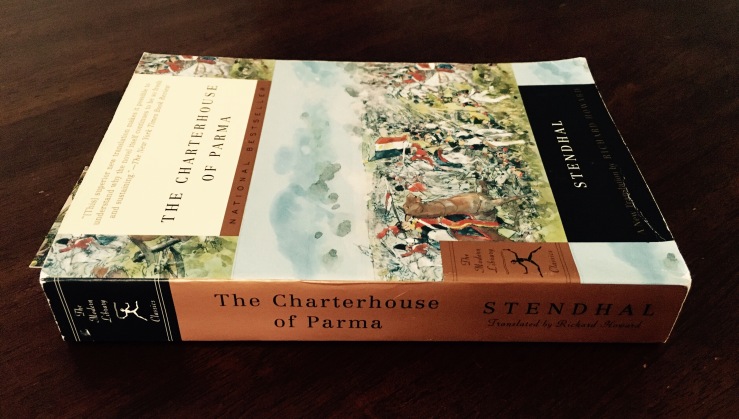
(Another copy of) The Charterhouse of Parma (Book acquired sometime the week before last)

img_2734

I included Stendhal’s The Charterhouse of Parma in a post I wrote a few weeks ago about books I start repeatedly yet have never been able to finish. Various folks on Twitter and elsewhere told me I need to stick it out with the novel, including Jacob Siefring, who suggested I try Richard Howard’s 1999 Modern Library translation (instead of the 1925 Moncrieff translation I’d been struggling with).  Jacob wrote about this translation on his blog Bibliomanic, by the way. I’m a little over halfway through with Stanley Elkin’s novel The Dick Gibson Show and I plan to give this a shot next.

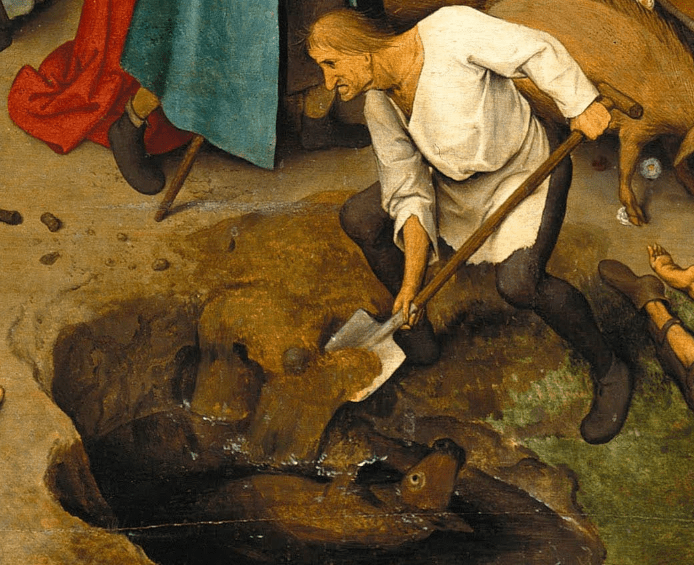
Netherlandish Proverbs (detail) — Pieter Bruegel the Elder

Screenshot 2016-06-26 at 11.25.04 AM

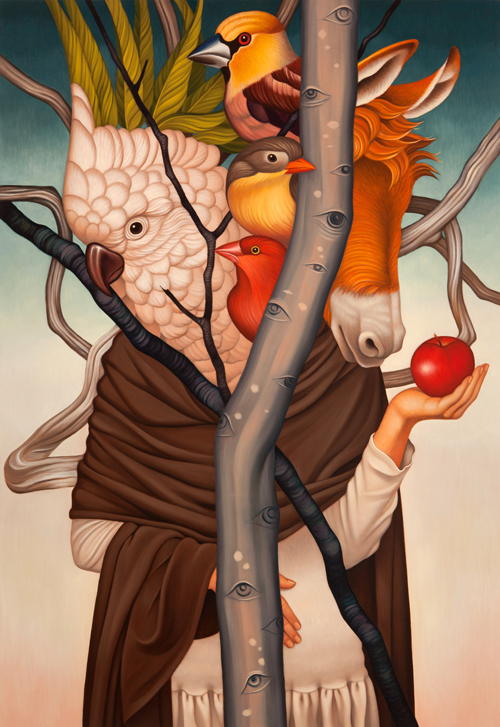
Very Old Riddle 2 — Egene Koo

very20old20riddle2

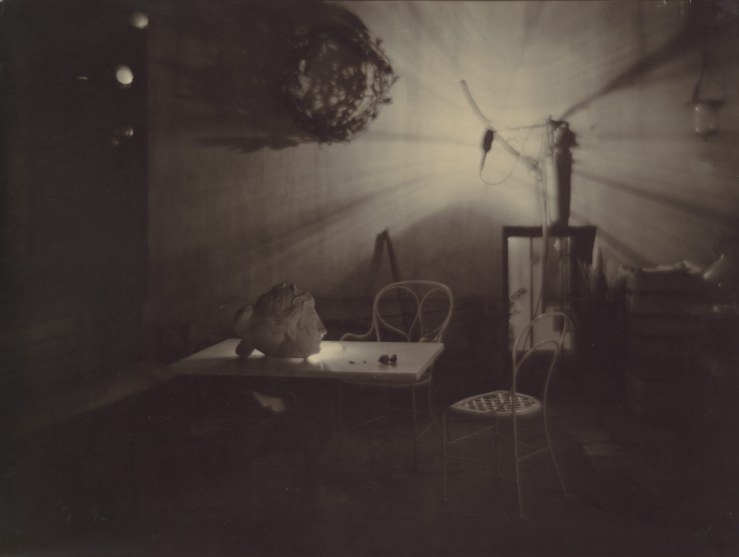
Nightfall — Josef Sudek

1989.1073

Suburban Life — Leonard Koscianski

small-suburbia_web

HIC SUNT DODOS! (From Stanley Elkin’s novel The Dick Gibson Show)

The report has come back. It’s official. HIC SUNT DODOS!

The dodo is an extinct species of ungainly, flightless bird of the genus Raphus or Didus. Its incubation ground and later its world was the island of Mauritius. It was closely related in habit and aspect to a smaller bird, the solitaire, also extinct but once indigenous to the island of Réunion. It has long been held by ornithologists that the dodo—both the dodo proper and the solitaire henceforward will be subsumed under the pseudo-generic term ‘dodo’—was related to the pigeon, but this is only an hypothesis since the bird has not been available for study since 1680, the year that the last known dodo died. Although the dodo was sent to European museums, no complete specimen exists, and today only the foot and leg of one specimen are preserved at Oxford. The representations one sees, even in the Mauritius Museum of Art itself, are merely restorations, little more than cunning dolls constructed on skeletal frames. Nevertheless, the skeletons, the scattered bones of which are to be found abundantly even today in the Mauritian fens and swamps, have been painstakingly reassembled by Mauritian dodo artisans—the best in the world—and give an accurate picture of what the bird was like.

He was large, slightly bigger than the American turkey whom he in no mean way resembles. In silhouette the dodo is not unlike a great scrunched question mark. For detail we may refer to the paintings from life that have been made of the bird, many of the best of which are still here in the Mauritius Museum of Art and Dodo Reconstruction. Most of the artists seem to be in agreement that the animal possessed an enormous blackish bill which, together with the huge horny hook in which it terminates, constituted the shepherd’s crook of the question mark. Its cheeks, partially bare, seem oddly weather- beaten and muscular, like the toothless cheeks of old men who have worked out in the open all their lives. Black except for some whitish plumage on his breast and tail and some yellowish white the tint of old piano keys on his tail, the dodo was somewhat formal in appearance, if a trifle stupid looking. This formal aspect is attributable also to his wing, foreshortened as a birth defect, which in repose flops out and down from his body like an unstarched pocket handkerchief.

Dodos are said to have inhabited the Mauritian forests—this is the style of information, of certain kinds of fact; I find it relaxing—and to have laid a single large white egg which they mounted high in a setting of piled grass. Hogs, brought in by the settlers, fed on the dodo eggs and on the dodo young, and in one or two generations the birds were extinct.

From Stanley Elkin’s 1971 novel The Dick Gibson Show.

Voulangis — Edward J. Steichen

hb_1990-1042

The American — Bo Bartlett

bb_the_americanslideshow_280954

“This Schedule In Effect July 5th, 1922” — The Great Gatsby’s House Guests

In Chapter 4 of F. Scott Fitzgerald’s The Great Gatsby, narrator Nick Carraway recounts the names of the rich, shallow, parasitic guests who attended Gatsby’s parties. Nick tells us the list comes from “an old time-table” of names he originally recorded in July 5th—significantly, the day after Independence Day: the day after the hopes and dreams of a new country. From the chapter—-

Once I wrote down on the empty spaces of a time-table the names of those who came to Gatsby’s house that summer. It is an old time-table now, disintegrating at its folds, and headed “This schedule in effect July 5th, 1922.” But I can still read the gray names, and they will give you a better impression than my generalities of those who accepted Gatsby’s hospitality and paid him the subtle tribute of knowing nothing whatever about him.

From East Egg, then, came the Chester Beckers and the Leeches, and a man named Bunsen, whom I knew at Yale, and Doctor Webster Civet, who was drowned last summer up in Maine. And the Hornbeams and the Willie Voltaires, and a whole clan named Blackbuck, who always gathered in a corner and flipped up their noses like goats at whosoever came near. And the Ismays and the Chrysties (or rather Hubert Auerbach and Mr. Chrystie’s wife), and Edgar Beaver, whose hair, they say, turned cotton-white one winter afternoon for no good reason at all.

Clarence Endive was from East Egg, as I remember. He came only once, in white knickerbockers, and had a fight with a bum named Etty in the garden. From farther out on the Island came the Cheadles and the O. R. P. Schraeders, and the Stonewall Jackson Abrams of Georgia, and the Fishguards and the Ripley Snells. Snell was there three days before he went to the penitentiary, so drunk out on the gravel drive that Mrs. Ulysses Swett’s automobile ran over his right hand. The Dancies came, too, and S. B. Whitebait, who was well over sixty, and Maurice A. Flink, and the Hammerheads, and Beluga the tobacco importer, and Beluga’s girls.

From West Egg came the Poles and the Mulreadys and Cecil Roebuck and Cecil Schoen and Gulick the state senator and Newton Orchid, who controlled Films Par Excellence, and Eckhaust and Clyde Cohen and Don S. Schwartze (the son) and Arthur McCarty, all connected with the movies in one way or another. And the Catlips and the Bembergs and G. Earl Muldoon, brother to that Muldoon who afterward strangled his wife. Da Fontano the promoter came there, and Ed Legros and James B. (“Rot-Gut.”) Ferret and the De Jongs and Ernest Lilly — they came to gamble, and when Ferret wandered into the garden it meant he was cleaned out and Associated Traction would have to fluctuate profitably next day.

A man named Klipspringer was there so often and so long that he became known as “the boarder.”— I doubt if he had any other home. Of theatrical people there were Gus Waize and Horace O’donavan and Lester Meyer and George Duckweed and Francis Bull. Also from New York were the Chromes and the Backhyssons and the Dennickers and Russel Betty and the Corrigans and the Kellehers and the Dewars and the Scullys and S. W. Belcher and the Smirkes and the young Quinns, divorced now, and Henry L. Palmetto, who killed himself by jumping in front of a subway train in Times Square.

Benny McClenahan arrived always with four girls. They were never quite the same ones in physical person, but they were so identical one with another that it inevitably seemed they had been there before. I have forgotten their names — Jaqueline, I think, or else Consuela, or Gloria or Judy or June, and their last names were either the melodious names of flowers and months or the sterner ones of the great American capitalists whose cousins, if pressed, they would confess themselves to be.

In addition to all these I can remember that Faustina O’brien came there at least once and the Baedeker girls and young Brewer, who had his nose shot off in the war, and Mr. Albrucksburger and Miss Haag, his fiancee, and Ardita Fitz-Peters and Mr. P. Jewett, once head of the American Legion, and Miss Claudia Hip, with a man reputed to be her chauffeur, and a prince of something, whom we called Duke, and whose name, if I ever knew it, I have forgotten.

All these people came to Gatsby’s house in the summer.

Netherlandish Proverbs (detail) — Pieter Bruegel the Elder

Screenshot 2016-06-26 at 11.23.14 AM.png

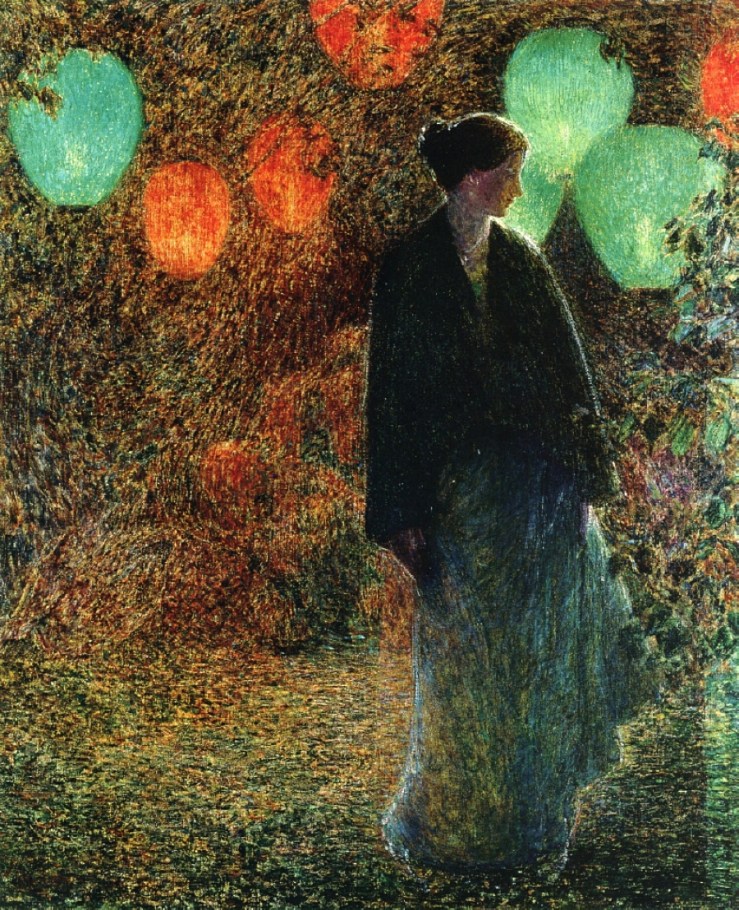
July Night — Childe Hassam

0_b1516_9aad7d68_xxxl