Tuesday — Peter Blake

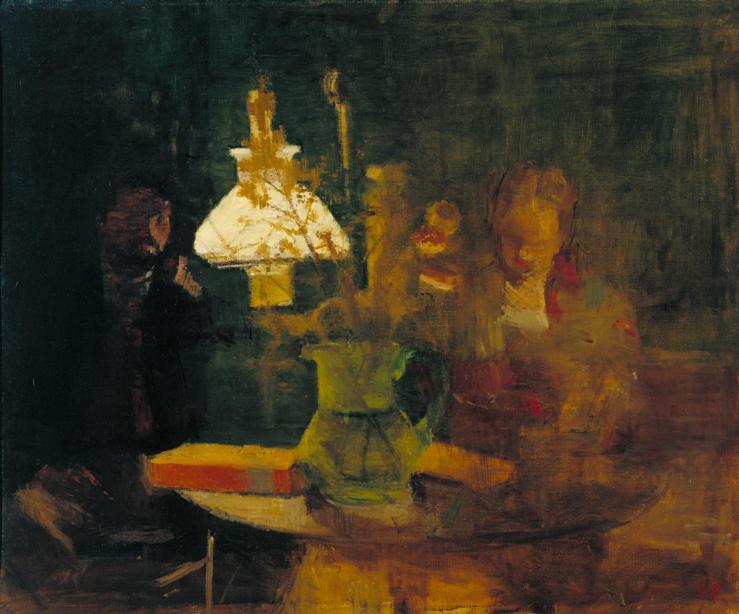
Tuesday 1961 by Peter Blake born 1932

Tuesday, 1961 by Peter Blake (b. 1932)

Ishmael Reed’s Reckless Eyeballing (Book acquired 13 Jan. 2020)

img_4728

I got an email from an independent bookseller a few days ago confirming that I bought a copy of  Ishamel Reed’s 1986 novel Reckless Eyeballing. I had no recollection of purchasing the novel online, although this kind of thing has happened more than once. It was a Saturday night; I may or may not have had a few tumblers of scotch, and was probably jonesing for more Reed after having finished Flight to Canada. Anyway, it showed up today. Here is the back cover:

img_4730

And here is the first paragraph of Larry McCaffery’s contemporary review of the novel in The Los Angeles Times:

Early on in “Reckless Eyeballing,” one of the book’s many beleaguered black men observes that “throughout history when the brothers feel that they’re being pushed against the wall, they strike back and when they do strike back it’s like a tornado, uprooting, flinging about, and dashing to pieces everything in its path.” This passage provides a perfect entryway into Ishmael Reed’s latest novel, for like many other black men, Reed obviously feels that “the brothers” are catching it from all sides–and not just from the usual sources of racial bigotry, but from ‘60s liberals now turned neo-conservatives, from white feminists who propagate the specter of the black men as phallic oppressor, from other racial minorities anxious to wrest various monkeys off their own backs.

Painter’s Deathbed — Nigel Cooke

COOKN-00422 001

Painter’s Deathbed, 2008 by Nigel Cooke (b. 1973)

Hunting — Xiao Guo Hui

hunting-1520941117-picture

Hunting, 2017 by Xiao Guo Hui (b. 1969)

Varlam Shalamov’s Sketches of the Criminal World (Book acquired sometime in Dec. 2019)

img_4720

A collection of Varlam Shalamov’s work, called Sketches of the Criminal World, is new from NYRB this week (translated by Donald Rayfield). I finally had a chance to dip into some of Shalamov’s Gulag tales this afternoon, and it’s probably not the right comparison at all, but something about what I read reminded me of Roberto Bolaño’s fiction, or some of his fiction. NYRB’s blurb:

n 1936, Varlam Shalamov, a journalist and writer, was arrested for counterrevolutionary activities and sent to the Soviet Gulag. He survived fifteen years in the prison camps and returned from the Far North to write one of the masterpieces of twentieth-century literature, an epic array of short fictional tales reflecting the years he spent in the Gulag. Sketches of the Criminal World is the second of two volumes (the first, Kolyma Stories, was published by NYRB Classics in 2018) that together constitute the first complete English translation of Shalamov’s stories and the only one to be based on the authorized Russian text.

In this second volume, Shalamov sets out to answer the fundamental moral questions that plagued him in the camps where he encountered firsthand the criminal world as a real place, far more evil than Dostoyevsky’s underground: “How does someone stop being human?” and “How are criminals made?” By 1972, when he was writing his last stories, the camps were being demolished, the guard towers and barracks razed. “Did we exist?” Shalamov asks, then answers without hesitation, “I reply, ‘We did.’”

Hide Out — Toyin Ojih Odutola

tumblr_pf5xwsuprq1w6tjkb_1280

Hide Out, 2018 by Toyin Ojih Odutola (b. 1985)

Stay Friends — Falk Gernergross

gernegroc39f-stayfriends2c-20142c-90x60cm

Stay Friends, 2018 by Falk Gernergross (b. 1973)

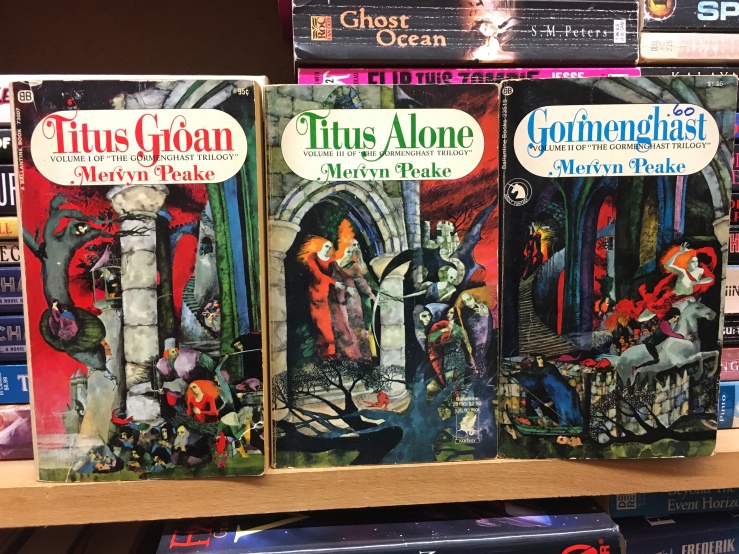
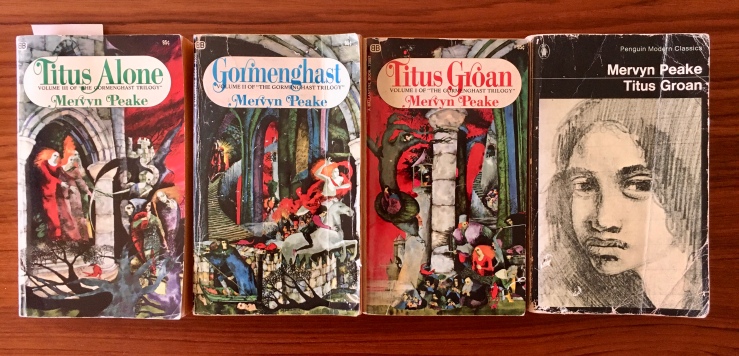
Mervyn Peake/Susan Sontag (Books acquired, 10 Jan. 2020)

img_4717

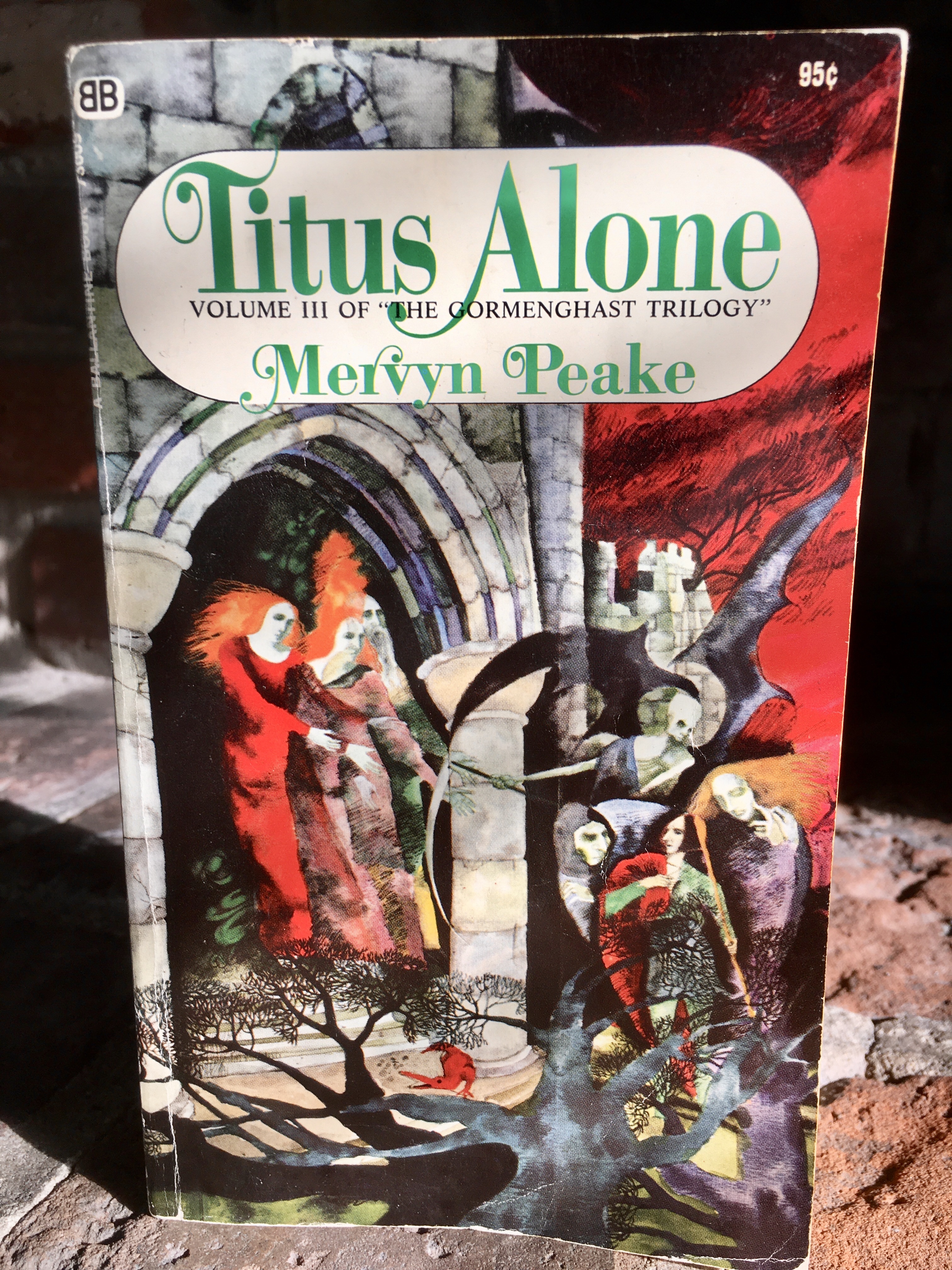
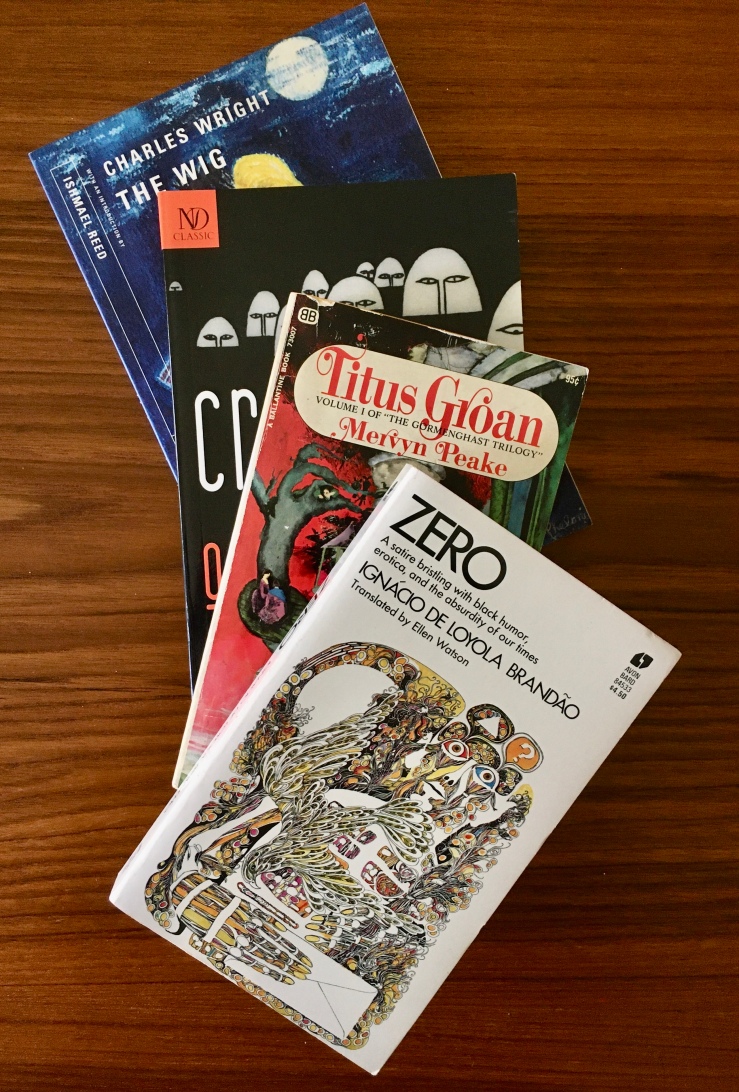
Last week, browsing yon olde booke shoppe, I came across a battered but beautiful copy of Mervyn Peake’s novel Gormenghast. I can’t remember how or where I heard of Peake’s trilogy of not-quite-fantasy novels, but when I spied the spine I pulled it, loved the cover, and asked Twitter if the novels were any good. The answer seemed to be a resounding, Yes.


I picked up a Penguin Modern Classics edition of the first part of the trilogy, Titus Groan, along with the beautiful Ballantine edition of Gormenghast today. I also couldn’t resist a first edition of Sontag’s Under the Sign of Saturn.

I started Titus Groan today, and after pushing through its thick opening paragraphs, started to really dig it. The opening sentences are a bit of a hurdle. Here’s the first paragraph, thick and even foreboding in its diction and syntax:

Gormenghast, that is, the main massing of the original stone, taken by itself would have displayed a certain ponderous architectural quality were it possible to have ignored the circumfusion of those mean dwellings that swarmed like an epidemic around its outer walls. They sprawled over the sloping earth, each one half way over its neighbour until, held back by the castle ramparts, the innermost of these hovels laid hold on the great walls, clamping themselves thereto like limpets to a rock. These dwellings, by ancient law, were granted this chill intimacy with the stronghold that loomed above them. Over their irregular roofs would fall throughout the seasons, the shadows of time-eaten buttresses, of broken and lofty turrets, and, most enormous of all, the shadow of the Tower of Flints. This tower, patched unevenly with black ivy, arose like a mutilated finger from among the fists of knuckled masonry and pointed blasphemously at heaven. At night the owls made of it an echoing throat; by day it stood voiceless and cast its long shadow.

It was “the owls made of it an echoing throat” that made me want to keep going. Peake, like Faulkner or Cormac McCarthy, is a wordslinger. A few pages in he made me look up the word “recrudescent.” I was proud of myself a few pages later when Peake busted out “catalpytic,” which I guess I sort of knew (“a catalyptic mass of wine-drenched blubber” was the phrase). Describing some castle drudges getting drunks, he notes that they “attacked the bungs as though unweaned” which cracked me up. By the time little Titus is born, the book seems to make more sense to me: funny, thick, imaginative, but also abject, a bit gross, grotesque even, drunk on its own thick language.


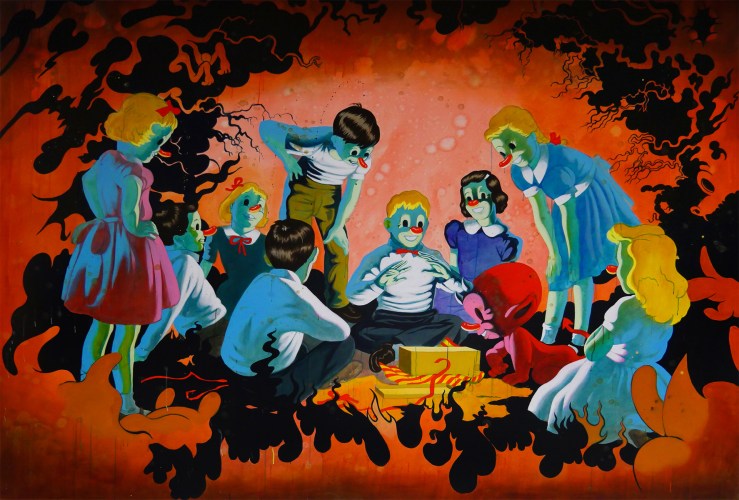
The Arrival of Late Lucys — Helen Verhoeven 

image052

The Arrival of Late Lucys, 2011 by Helen Verhoeven (b. 1974)

The Magpie on the Gallows — Pieter Bruegel the Elder

The Magpie on the Gallows, by Pieter Brueghel the Elder

Screenshot 2020-01-09 at 4.25.57 PMScreenshot 2020-01-09 at 4.25.32 PM

The Magpie on the Gallows, 1568 by Pieter Bruegel the Elder (c. 1525-1569)

The Journal of David Foster Wallace Studies, Vol. 1, Issue 2 (Book acquired, 9 Dec. 2019)

img_4711

I finally had a bit of time to properly dip into the second issue of The Journal of David Foster Wallace Studies this afternoon. (I brought it to work with me and read from it between classes.)

This issue essentially came out of a 2015 conference at the University of Bristol called David Foster Wallace and the Short Things. Issue 2 contains six essays on Wallace’s “short things” — short stories, sure, but also the vignettes and bits and pieces and fragments that make up The Pale King (and Infinite Jest).

After skimming around a bit, I read the last one, Jeffrey Severs’ “‘Listen’: Wallace’s Short Story Endings and the Art of Falling Silent.” Severs explores Wallace’s endings as a kind of series of revisions to the conclusion of Wallace’s first novel, The Broom of the System (Wallace later called the ending “shitty and dissatisfying”). Severs discusses Girl with Curious Hair extensively, but also touches on The Pale King and Infinite Jest. (And Wittgenstein, silence, and meditative listening.)

There are also two reviews of recent books on Wallace in this issue, just as in the previous issue, one for Marshall Boswell’s The Wallace Effect: David Foster Wallace and the Contemporary Literary Imagination, and one for Ralph Clare’s The Cambridge Companion to David Foster Wallace.

A few of the other essays piqued my interest; Tim Groenland has a thing on fragments, The Pale King, and ancient Rome, and Pia Masiero has a thing on Brief Interviews with Hideous Men, which is maybe my favorite Wallace book.


Float — David Bailin

float

Float, 2015 by David Bailin

The Land of Extreme Happiness in The West — Mu Pan

west_web-1-768x650-1

The Land of Extreme Happiness in The West, 2019 by Mu Pan (b. 1976)

Lars Iyer’s Nietzsche and the Burbs (Book acquired, sometime in Dec. 2019)

img_4709

Lars Iyer’s latest is Nietzsche and the Burbs, out now from Melville House. Their blurb:

In a work of blistering dark hilarity, a young Nietzsche experiences life in a metal band & the tribulations of finals season in a modern secondary school

When a new student transfers in from a posh private school, he falls in with a group of like-minded suburban stoners, artists, and outcasts—too smart and creative for their own good. His classmates nickname their new friend Nietzsche (for his braininess and bleak outlook on life), and decide he must be the front man of their metal band, now christened Nietzsche and the Burbs.

With the abyss of graduation—not to mention their first gig—looming ahead, the group ramps up their experimentations with sex, drugs, and…nihilist philosophy. Are they as doomed as their intellectual heroes? And why does the end of youth feel like such a universal tragedy?

And as they ponder life’s biggies, this sly, elegant, and often laugh-out-loud funny story of would-be rebels becomes something special: an absorbing and stirring reminder of a particular, exciting yet bittersweet moment in life…and a reminder that all adolescents are philosophers, and all philosophers are adolescents at heart.


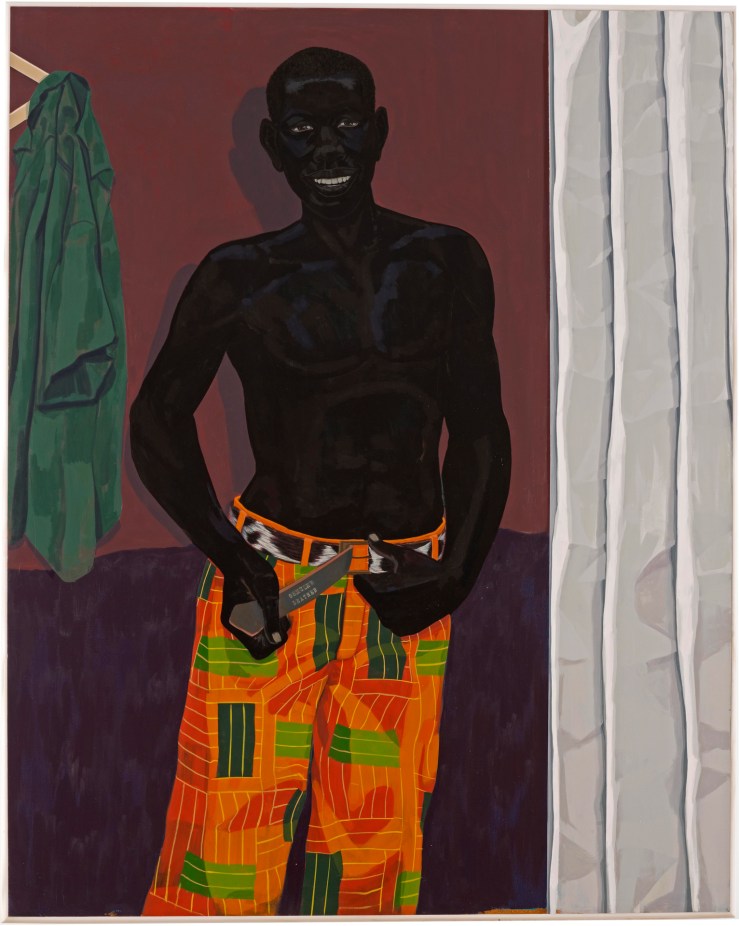
Untitled (Stage) — Kerry James Marshall

untitled-stage

Untitled (Stage), 2018 by Kerry James Marshall (b. 1955)

The Pillow — John Currin

2011_cks_07990_0012_000john_currin_the_pillow

Screenshot 2020-01-04 at 11.03.26 AM.png

The Pillow, 2006 by John Currin (b. 1962)

Blog about Ishmael Reed’s 1976 neo-slave narrative Flight to Canada

2020-01-03_152112

I read Ishmael Reed’s 1976 novel Flight to Canada over the last few days of 2019. I enjoyed the book tremendously, even as it made me dizzy at times with its frenetic, zany  achronological satire of the American Civil War.

What is it about?

Flight to Canada features a number of intersecting plots. One of these plots follows the ostensible protagonist of the novel, former slave Raven Quickskill, who escapes the Swille plantation in Virginia. Along with two other former slaves of the Swille plantation, Quickskill makes his way far north to “Emancipation City” where he composes a poem called “Flight to Canada,” which expresses his desire to escape America completely. The aristocratic (and Sadean) Arthur Swille simply cannot let “his property run off with himself,” and sends trackers to find Quickskill and the other escapees, Emancipation Proclamation be damned. On the run from trackers, Quickskill jumps from misadventure to misadventure, eventually reconnecting his old flame, an Indian dancer named Quaw Quaw (as well as her husband, the pirate Yankee Jack). Back at Swille’s plantation Swine’rd, several plots twist around, including a visit by Old Abe Lincoln, a sadistic episode between Lady Swille and her attendant Mammy Barracuda, and the day-to-day rituals of Uncle Robin, a seemingly-compliant “Uncle Tom” figure who turns out to be Reed’s real hero in the end.

(And oh, Quickskill makes it to Canada in the end. Now, whether or not he wants to stay there after he gets there…)

There’s a whole lot more in the book, too. It’s difficult to summarize—like the majority of the other seven novels I’ve read by Reed, Flight to Canada isn’t so much a work of plot and character development as it is a jazzy extemporization of disparate themes and motifs. Reed’s novel is about slavery and freedom, war and aesthetics, perspective and time, and how history gets told and taught to future.

As a means to satirize not just the Civil War but also how we read and write and portray the Civil War, Reed collapses time in Flight to Canada. As novelist Jerome Charyn points out in his contemporary review of the novel in The New York Times,

Reed has little use for statistical realities. He is a necromancer, a believer in the voodoos of art. Time becomes a modest, crazy fluid in Reed’s head, allowing him to mingle events of the last 150 years, in order to work his magic. We have Abe Lincoln and the Late Show, slave catchers and “white ‐ frosted Betty Crocker glossy cake,” Jefferson Davis and Howard K. Smith. Every gentleman’s carriage is equipped with “factory climate‐control air conditioning, vinyl top, AM/FM stereo radio, full leather interior, power‐lock doors, six‐way power seat, power windows, whitewall wheels, door‐edge guards, bumper impact strips, rear defroster and softglass.”

Reed’s achronological gambit allows him to bring figures from any time period into the narrative, no questions asked. Edgar Allan Poe is there, even though he died over a decade before the war began. No matter. Our narrator claims early on that Poe was “the principal biographer of that strange war…Poe got it all down. Poe says more in a few stories than all of the volumes by historians.” Lord Byron shows up too, as do Charles I of England and the Marquis de Sade. There are contemporary figures of the Civil War era there too, of course—Harriet Beecher Stowe (whom Reed takes to task repeatedly), Frederick Douglass, and the writer William Wells Brown, whom Quickskill meets in a surprisingly moving scene (Quickskill says that Brown is his hero and that his novel Clotel was the inspiration for “Flight to Canada”). The fictional characters of Flight to Canada discuss or interact with these historical figures in such a way to continually critique not just the words and deeds of the historical figures, but the very way we frame and narrativize those words and deeds.

2020-01-03_152112_1The technological anachronisms of Flight to Canada also serve to critique our framing of history. Our American Cousins plays live on broadcast TV, assassination and all:

Booth, America’s first Romantic Assassin. They replay the actual act, the derringer pointing through the curtains, the President leaning to one side, the FIrst Lady standing, shocked, the Assassin leaping from the balcony, gracefully, beautifully, in slow motion. They promise to play it again on the Late News. When the cameras swing back to the Balcony, Miss Laura Keene of Our American Cousins is at Lincoln’s side “live.” Her gown is spattered with brain tissue. A reporter has a microphone in Mary Todd’s face.

“Tell us, Mrs. Lincoln, how do you feel having just watched your husband’s brains blow out before your eyes?”

(In a very Reedian move, the live assassination plays out during a sex scene between Quickskill and Quaw Quaw. The TV is always on in America, even during sex.)

Reed’s rhetorical distortions in depicting the Lincoln assassination are both grotesque and comic. Not only can we imagine a reporter doing the same in 1976, when Flight to Canada was published, we can imagine the same crass, exploitative handling today. Technology might have changed but people really haven’t

In his review, Jerome Charyn, begins by pointing out that 1976 is the American Bicentennial, something that simply did not entire my mind while reading Flight to Canada. Reed’s novel’s publication is appropriate and timely, and breaks “through the web of historical romance” (in the words of Charyn) that hangs over the “chicanery, paranoia and violence underlying most of our ‘democratic vistas.'”

Concluding his review, Charyn writes,

Flight to Canada could have been a very thin book, an unsubtle catalogue of American disorders. But Reed has the wit, the style, and the intelligence to do much more than that. The book explodes. Reed’s special grace is anger. His own sense of bewilderment deepens the comedy, forces us to consider the sad anatomy of his ideas. Flight to Canada is a hellish book with its own politics and a muscular, luminous prose. It should survive.

Books don’t survive of course; rather, they are always in the process of surviving. Books are either read, or not read. Flight to Canada should be read because it is witty and angry and unique and smart, and its critique of American history (and how we narrativize and aestheticize American history) is as vital and necessary today as it was nearly a half century ago.

img_4558