I feel pretty in the chimney, I feel

RIP Damo Suzuki, 1950-2024

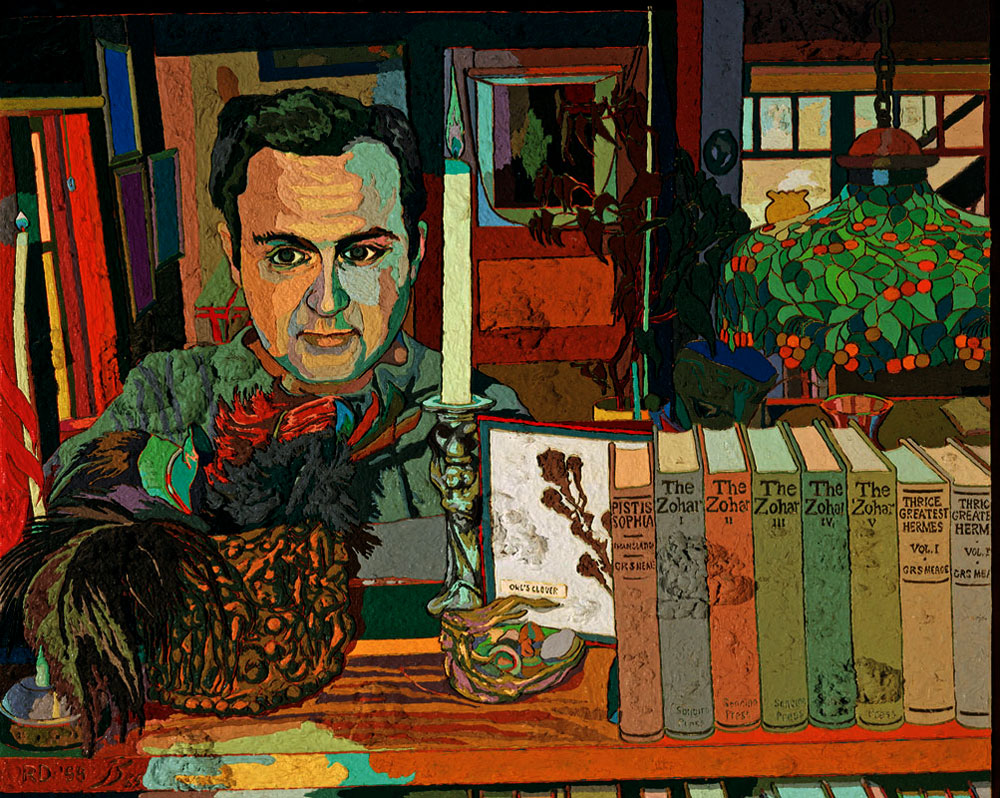
Faust: We still need an essay tracing the importance of Faust to Gaddis

Faust: We still need an essay tracing the importance of Faust to Gaddis. Some critics have mentioned it, of course, but they’ve only skimmed the surface. Faust obviously plays a role in The Recognitions, which started off as a parody of it, but there’s a need to explore the Faust references in J R via Schramm’s Western (i.e. Gaddis’s screenplay Dirty Tricks). A Frolic of His Own too: In a 1988 letter, Gaddis compares Judge Crease’s law clerk to Faust’s assistant Wagner. Gaddis repeatedly cites both Marlowe’s Doctor Faustus and Goethe’s Faust; Dostoevsky cites the latter, so those two could be tied together. Gaddis even owned a signed copy of George Haimsohn’s The Bedside Faust, which is apparently a graphic novel version. Faust was also paramount in the nonfiction Gaddis was reading when he was composing The Recognitions: he is especially prominent in Spengler’s book, and to a lesser extent in Toynbee. The Faust figure was big in postwar fiction: Thomas Mann’s novel Doktor Faustus came out in 1947 (and was treated in one early dissertation on Gaddis), and Faustian man (via Spengler) was a recurring topic among the Beats: the subtitle to Jack Kerouac’s novel Dr. Sax, written in the early ’50s, is Faust Part Three, all of which could be brought in to widen the scope of a paper. Gaddis had a perhaps unique take on the subject: in a 1973 letter, he confessed to a “preoccupation with the Faust legend as pivotal posing the question: what is worth doing?” That question might even be the unifying theme of all of Gaddis’s work; all his novels can be regarded as dramatized responses to that question.

From “New Directions for Gaddis Scholarship,” Steven Moore’s address to the William Gaddis Centenary Conference at Washington University St Louis in October of 2022. The transcription is gathered as part of Electronic Book Review’s special issue, “Gaddis at His Centenary,” which includes Gaddis scholarship, histories, unpublished Gaddisalia, and some roundtable discussions (I was privileged enough to attend one and even opened my stupid mouth a few times).

“The Quarterback Speaks to His God,” a story by Herbert Wilner


“The Quarterback Speaks to His God”

by

Herbert Wilner


Bobby Kraft, the heroic old pro, lies in his bed in the grip of medicines relieving his ailing heart. Sometimes he tells his doctor your pills beat my ass, and the doctor says it’s still Kraft’s choice; medicine or open heart surgery. Kraft shuts up.

He wasn’t five years out of pro football, retired at thirty-six after fourteen years, when he got the rare viral blood infection. Whatever they were, the damn things ate through his heart like termites, leaving him with pericarditis, valve dysfunction, murmurs, arrhythmia, and finally, congestive failure. The physiology has been explained to him, but he prefers not to understand it. Fascinated in the past by his strained ligaments, sprained ankles, torn cartilage, tendinitis, he now feels betrayed by his heart’s disease.

“You want to hear it?” Dr. Felton once asked, offering the earpieces of the stethoscope.

Kraft recoiled.

“You don’t want to hear the sound of your own heart?”

Sitting on the examining table, Kraft was as tall as the short doctor, whose mustache hid a crooked mouth.

“Why should I?” Kraft said. “Would you smile in the mirror after your teeth got knocked out?”

This morning in bed, as with almost every third morning of the past two years, Kraft begins to endure the therapeutic power of his drugs. He takes diuretics: Edecrin, or Lasix, or Dyazide, or combinations. They make him piss and piss, relieving for a day or two the worst effects of the congesting fluids that swamp his lungs and gut. He’s been told the washout dumps potassium, an unfortunate consequence. The depletions cramp his muscles, give him headaches, sometimes trigger arrhythmias. They always drive him into depressions as deep as comas. He blames himself.

“It has nothing to do with will power,” Dr. Felton explained. “If you ran five miles in Death Valley in August, you’d get about the same results as you do from a very successful diuresis.”

To replenish some of his losses, Kraft stuffs himself with bananas, drinks orange juice by the pint, and takes two tablespoons a day of potassium chloride solution. To prevent and arrest the arrhythmia, he takes quinidine, eight pills a day, 200 mg per pill. To strengthen the enlarged and weakened muscle of his heart wall, he takes digoxin. Together they make him nauseous, gassy, and distressed. He takes anti-nausea pills and chews antacids as though they were Life Savers. Some nights he takes Valium to fall asleep. If one doesn’t work, he takes two.

“I can’t believe it’s me,” he protests to his wife, Elfi. “I never took pills, I wouldn’t even touch aspirins. There were guys on coke, amphetamines, Novocaine. I wouldn’t touch anything. Now look at me. I’m living in a drugstore.”

His blurred eyes sweep the squads of large and small dark labeled bottles massed on his chest of drawers. His wife offers little sympathy.

“Again and again the same thing with you,” she’ll answer in her German accent. “So go have the surgery already, you coward ox.”

Coward? Him? Bobby Kraft? Continue reading ““The Quarterback Speaks to His God,” a story by Herbert Wilner”

The spectator, at this point, is certain to wonder whether he must now endure a football game in print | Don DeLillo

(The spectator, at this point, is certain to wonder whether he must now endure a football game in print — the author’s way of adding his own neat quarter-notch to the scarred bluesteel of combat writing. The game, after all, is known for its assault-technology motif, and numerous commentators have been willing to risk death by analogy in their public discussions of the resemblance between football and war. But this sort of thing is of little interest to the exemplary spectator. As Alan Zapalac says later on: “I reject the notion of football as warfare. Warfare is warfare. We don’t need substitutes because we’ve got the real thing.” The exemplary spectator is the person who understands that sport is a benign illusion, the illusion that order is possible. It’s a form of society that is rat free and without harm to the unborn; that is organized so that everyone follows precisely the same rules; that is electronically controlled, thus reducing human error and benefiting industry; that roots out the inefficient and penalizes the guilty; that tends always to move toward perfection. The exemplary spectator has his occasional lusts, but not for warfare, hardly at all for that. No, it’s details he needs — impressions, colors, statistics, patterns, mysteries, numbers, idioms, symbols. Football, more than other sports, fulfills this need. It is the one sport guided by language, by the word signal, the snap number, the color code, the play name. The spectator’s pleasure, when not derived from the action itself, evolves from a notion of the game’s unique organic nature. Here is not just order but civilization. And part of the spectator’s need is to sort the many levels of material: to allot, to compress, to catalogue. This need leaps from season to season, devouring much of what is passionate and serene in the spectator. He tries not to panic at the final game’s final gun. He knows he must retain something, squirrel some food for summer’s winter. He feels the tender need to survive the termination of the replay. So maybe what follows is a form of sustenance, a game on paper to be scanned when there are stale days between events; to be propped up and looked at — the book as television set — for whatever is in here of terminology, pattern, numbering. But maybe not. It’s possible there are deeper reasons to attempt a play-by-play. The best course is for the spectator to continue forward, reading himself into the very middle of that benign illusion. The author, always somewhat corrupt in his inventions and vanities, has tried to reduce the contest to basic units of language and action. Every beginning, it is assumed, must have a neon twinkle of danger about it, and so grandmothers, sissies, lepidopterists and others are warned that the nomenclature that follows is often indecipherable. This is not the pity it may seem. Much of the appeal of sport derives from its dependence on elegant gibberish. And of course it remains the author’s permanent duty to unbox the lexicon for all eyes to see — a cryptic ticking mechanism in search of a revolution.)

From Don DeLillo’s 1972 novel End Zone.

Elberto Muller’s Graffiti on Low or No Dollars (Book subtitled “An alternative guide to aesthetics and grifting throughout the United States and Canada,” Feb. 2024)

Digging Elberto Muller’s Graffiti on Low or No Dollars. Mast Books’ blurb

Muller cut his teeth riding freights across America, doing graffiti, creating zines, molding three-dimensional graffiti mosaics and has recently finished his novel: Graffiti on Low or No Dollars. His Huck Finn approach and penchant for freedom from an ordinary life is translated through his art. The work is incredibly honest and reminiscent of Daniel Johnston at times with some of the subjects being tackled a painful reflection of our society today. In the same breath his art can make you smile with all of its crassness and glory.

Advancing Impulses — Mildred Thompson

Advancing Impulses, 1997 by Mildred Thompson (1936-2003)

“Florida Road Workers” — Langston Hughes

“Florida Road Workers”

by

Langston Hughes


Hey, Buddy!
Look at me!

I’m makin’ a road
For the cars to fly by on,
Makin’ a road
Through the palmetto thicket
For light and civilization
To travel on.

I’m makin’ a road
For the rich to sweep over
In their big cars
And leave me standin’ here.

Sure,
A road helps everybody.
Rich folks ride —
And I get to see ’em ride.
I ain’t never seen nobody
Ride so fine before.

Hey, Buddy, look!
I’m makin’ a road!

Nude (Spotlight) — Kerry James Marshall

Nude (Spotlight), 2009 by Kerry James Marshall (b. 1955)

“The Temptation of St. Anthony,” a short story by Donald Barthelme

“The Temptation of St. Anthony”

by

Donald Barthelme


YES, THE saint was underrated quite a bit, then, mostly by people who didn’t like things that were ineffable. I think that’s quite understandable—that kind of thing can be extremely irritating, to some people. After all, everything is hard enough without having to deal with something that is not tangible and clear. The higher orders of abstraction are just a nuisance, to some people, although to others, of course, they are quite interesting. I would say that on the whole, people who didn’t like this kind of idea, or who refused to think about it, were in the majority. And some were actually angry at the idea of sainthood—not at the saint himself, whom everyone liked, more or less, except for a few, but about the idea he represented, especially since it was not in a book or somewhere, but actually present, in the community. Of course some people went around saying that he “thought he was better than everybody else,” and you had to take these people aside and tell them that they had misperceived the problem, that it wasn’t a matter of simple conceit, with which we are all familiar, but rather something pure and mystical, from the realm of the extraordinary, as it were; unearthly. But a lot of people don’t like things that are unearthly, the things of this earth are good enough for them, and they don’t mind telling you so. “If he’d just go out and get a job, like everybody else, then he could be saintly all day long, if he wanted to”—that was a common theme. There is a sort of hatred going around for people who have lifted their sights above the common run. Probably it has always been this way.

For this reason, in any case, people were always trying to see the inside of the saint’s apartment, to find out if strange practices were being practiced there, or if you could discern, from the arrangement of the furniture and so on, if any had been, lately. They would ring the bell and pretend to be in the wrong apartment, these people, but St. Anthony would let them come in anyhow, even though he knew very well what they were thinking. They would stand around, perhaps a husband-and-wife team, and stare at the rug, which was ordinary beige wall-to-wall carpet from Kaufman’s, and then at the coffee table and so on, they would sort of slide into the kitchen to see what he had been eating, if anything. They were always surprised to see that he ate more or less normal foods, perhaps a little heavy on the fried foods. I guess they expected roots and grasses. And of course there was a big unhealthy interest in the bedroom, the door to which was usually kept closed. People seemed to think he should, in pursuit of whatever higher goals he had in mind, sleep on the floor; when they discovered there was an ordinary bed in there, with a brown bedspread, they were slightly shocked. By now St. Anthony had made a cup of coffee for them, and told them to sit down and take the weight off their feet, and asked them about their work and if they had any children and so forth: they went away thinking, He’s just like anybody else. That was, I think, the way he wanted to present himself, at that time.

Later, after it was all over, he moved back out to the desert. Continue reading ““The Temptation of St. Anthony,” a short story by Donald Barthelme”

Self-Portrait with Palm Fronds –Julie Heffernan

Self-Portrait with Palm Fronds, 2022 by Julie Heffernan (b. 1956)

Books acquired, 26 Jan. 2024

Last Friday, I drove across a bridge to a library on the other side of the city for a Friends of the Library sale. I was hoping for a nice leisurely afternoon browse, figured I’d find a few titles worth my efforts, and I’d fill out the 10 dollar brown paper grocery bag with books I could trade for store credit elsewhere. I ended up filling the bag almost immediately, mostly with heavy hardbacks, resulting in my weak arm quickly settling into a painful fatigue that killed my browsing vibe.

Here are the books I picked up:

–A paperback copy of Thomas S. Klise’s cult classic The Last Western. It was in the “nonfiction” section, which I didn’t really browse that studiously, but its cover nevertheless stood out to me. I bought a copy of it from an online used bookseller online six years ago (and was very disappointed that the seller had appended a retail barcode sticker to its cover).

–A paperback omnibus of Salem Kirban’s early seventies “prophecy” apocalypse novels 666 and its sequel 1000. I’d thumbed through a worn copy of 666 sometime last year—the title of and its cracked spine calling to me from the shelf of the sci-fi section. Kirban’s “novel” is a millennialist screed conveyed in a tawdry postmodern manner, and it didn’t seem worth the eight bucks the used bookstore was asking at the time—but I didn’t mind snuggling it into the paper bag last Friday, oddity that it is.

–A hardback copy of Don DeLillo’s novel Zero K. I skipped it when it came out, and I don’t think DeLillo’s done anything good since Point Omega.

–A hardback copy of John Barth’s novel Every Third Thought. I think that Barth’s best work is decades behind him, but every now and then I try something newer, and this 2011 novel is one of his shorter recentish efforts.

–A hardback copy of Leni Zumas’ novel Red Clocks. I had never heard of this book, but the spine enticed me enough to pick it up when I was browsing the “sci fi” section at the booksale, and the premise–America has outlawed and criminalized abortion–seemed depressingly dystopian enough to take it with me.

–A hardback copy of Sven Birkert’s collection of literary criticism, An Artificial Wilderness. Includes chapters on Thomas Bernhard, Umberto Eco, Borges, and “The School of Gordon Lish” among many, many others.

–A Vintage Contemporaries Edition of Raymond Carver’s Where I’m Calling From, a collection I have not read in over two decades.

–A hardback copy of Jesse Ball’s novel How to Set a Fire and Why. I liked his 2011 novel The Curfew, so maybe I’ll like this?

–A hardback copy of Jeanette Winterson’s novel Frankisstein; reviews of this 2019 novel intrigued me at the time it was published (and I do like a good Frankenstein riff).

–A hardback copy of Robert Coover’s novel Huck Out West. An amazing sequel to Twain’s novel; I reviewed it on this site years ago. This handsome edition shall replace the ugly advance copy I got years ago. I might need to revisit it in anticipation of Percival Everett’s take on Twain’s Huck’s Jim—James.

–A hardback copy of Lawrence Ferlinghetti’s late novel Little Boy, which The Guardian described as a “novel-cum-memoir-cum-grand finale.” (Too much cum, The Guardian.)

–A Library of America edition of The Complete Novels of Eudora Welty. I hate to admit what I will now admit: I love love love Welty’s short stories, but have never read one of her novels.

–A hardback copy of Walker Percy’s Thanatos Syndrome. Again, a late-period work by old master, likely not his finest stuff, but hey. I burned through his first four novels a few years ago—Lancelot was my favorite.

The Magician — Leonora Carrington

The Magician, 1955 by Leonora Carrington (1917-2011)

Counterfeit | Emily Dickinson

A Counterfeit — a Plated Person —
I would not be —
Whatever strata of Iniquity
My Nature underlie —
Truth is good Health — and Safety, and the Sky.
How meagre, what an Exile — is a Lie,
And Vocal — when we die —

Emily Dickinson

Condemned to seriousness and silliness, two blood sisters | Miguel de Unamuno

A little while after arriving in the city, and after he had built up a better than average practice and had acquired the reputation of a serious, careful, painstaking and well-endowed doctor, a local journal published his first story, a story half-way between fantasy and humor, without descriptive writing and without a moral. Two days later I found him very upset; when I asked the reason, he burst forth: “Do you think I’m going to be able to resist the overwhelming pressure of the idiocy prevailing here? Tell me, do you think so? It’s the same thing all over again, exactly the same as in my town, the very same! And just as happened there, I’ll end by becoming known as a madman. I, who am a marvel of calm! And my patients will gradually drop away, and I’ll lose my practice. Then the dismal days will come again. days filled with despair, disgust, and bad temper, and 1 will have to leave here just as I had to leave my own town!”

“But what has happened?” I was finally able to ask.

“What has happened? Simply that five people have already approached me to ask what I meant by writing the piece of fiction I just published, what I intended to say, and what bearing did it have. Idiots, idiots, and thrice idiots! They’re worse than children who break dolls to find out what’s inside. This town has no hope of salvation, my friend; it’s simply condemned to seriousness and silliness, two blood sisters. People here have the souls of school teachers. They believe no one could write except to prove some-thing, or defend or attack some proposition, or from an ulterior motive. One of these blockheads asked me the meaning of my story and by way of reply I asked him: ‘Did it amuse you?’ And he answered: ‘As far as that goes, it certainly did; as a matter of fact, I found it quite amusing; but…’ I left the last word in his mouth, because as soon as he reached this point in the conversation, I turned my back on him and walked away. That a piece of writing is amusing wasn’t enough for this monster. They have the souls of school teachers, the souls of school teachers!”

“But, now…” I ventured to take up the argument.

“Listen,” he interrupted, “don’t you come at me with any more ‘buts.’ Don’t bother. The infectious disease, the itch of our Spanish literature is the urge to preach. Everywhere a sermon, and a bad sermon at that. Every little Christ sets himself up to dispense advice, and does it with a poker-face. I remember picking up the Moral Epistle to Fabian and being unable to get beyond the first three verses; I simply couldn’t stomach it. This breed of men is totally devoid of imagination, and so all their madness is merely silly. An oyster-like breed—there’s no use of your denying it—; oysters, that’s what they are, nothing but oysters. Everything here savors of oyster beds, or ground-muck. I feel like I’m living among human tubers. And they don’t even break through the ground, or lift their heads up, like regular tubers.”

In any case, Dr. Montarco did not take heed, and he went and published another story, more satirical and fantastic than the first.

From “The Madness of Dr. Montarco” by Miguel de Unamuno; trans. by Anthony Kerrigan.

Blog about some recent books acquired, other stuff

I read Will Oldham’s book On Bonnie ‘Prince’ Billy almost a decade and it therefore doesn’t belong in a stack of recent acquisitions, but it’s there—I pulled it off the shelf last week and thumbed through it in anticipation of seeing Oldham play this past Thursday. I even brought the book to the venue, thinking maybe I’d ask him to sign it. But I left it in the car and simply enjoyed Oldham and his pal run through a set of covers and originals. His voice is more resonant, richer, bolder than the last time I saw him live, and even if I didn’t know half of the songs, I enjoyed the gentle chill music on a cold Florida Thursday night. (I suspect Oldham’s short “tour” of Florida is an excuse to get out of the midwestern cold—although he complained it was “fuckin’ cold” here.)

Other books in the stack above are a composite of three or maybe four book store visits. The most memorable visit was to Aeon Bookstore in the Lower East Side of NYC.

Aeon is a small, cozy shop, well-curated with art, philosophy, anthropology, and literature books, as well as an excellent selection of jazz records. The clerk let me handle some first editions of Williams Burroughs and Gaddis, as well as Ishmael Reed and others.

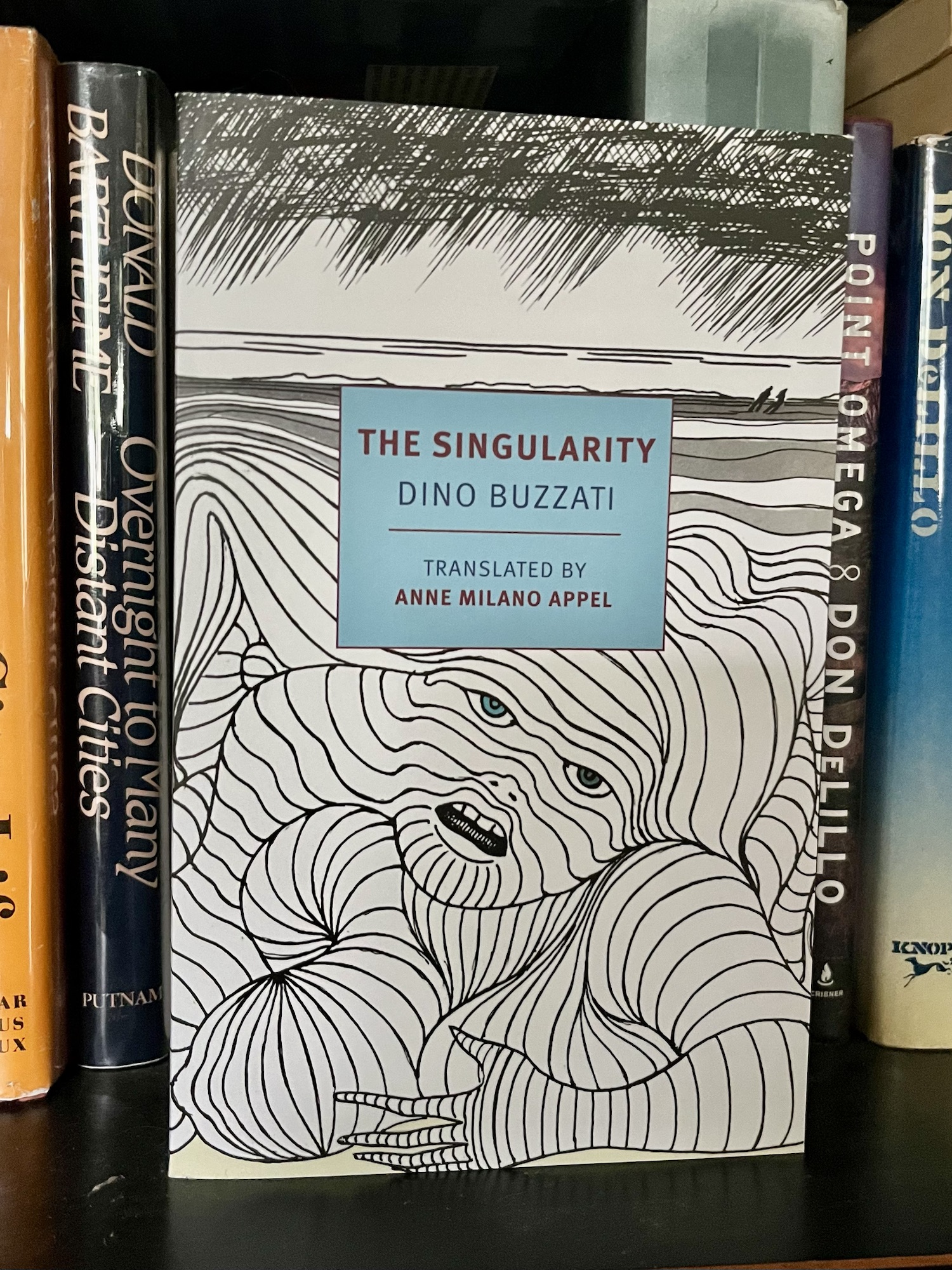
I resisted The Recognitions and The Hearing Trumpet and picked up first editions of Donald Barthelme’s City Life and Don DeLillo’s Ratner’s Star.

Over two or possibly three visits to my local bookshop over the last month, I picked up copies of Stanley Elkin’s A Bad Man, Denis Johnson’s Resuscitation of a Hanged Man, and Carole Maso’s Ava. I also picked up Anthony Kerrigan’s translation of Miguel de Unamuno stories, Abel Sanchez and Other Stories.

I also snagged an advance copy of Percival Everett’s James. Blurb:

When the enslaved Jim overhears that he is about to be sold to a man in New Orleans, separated from his wife and daughter forever, he decides to hide on nearby Jackson Island until he can formulate a plan. Meanwhile, Huck Finn has faked his own death to escape his violent father, recently returned to town. As all readers of American literature know, thus begins the dangerous and transcendent journey by raft down the Mississippi River toward the elusive and too-often-unreliable promise of the Free States and beyond.

While many narrative set pieces of Adventures of Huckleberry Finn remain in place (floods and storms, stumbling across both unexpected death and unexpected treasure in the myriad stopping points along the river’s banks, encountering the scam artists posing as the Duke and Dauphin…), Jim’s agency, intelligence and compassion are shown in a radically new light.


Mary Reading — Edmund Charles Tarbell

Mary Reading, c. 1916 by Edmund Charles Tarbell (1862-1938)

Debbie Urbanski’s After World (Book acquired, Dec. 2023)

I plan to start into Debbie Urbanski’s debut After World this weekend. Here’s publisher Simon & Schuster’s blurb:

Sen Anon is assigned to be a witness for the Department of Transition, recording the changes in the environment as the world begins to rewild. Abandoned by her mother in a cabin somewhere in Upstate New York, Sen will observe the monumental ecological shift known as the Great Transition, the final step in Project Afterworld. Around her drones buzz, cameras watch, microphones listen, digitizing her every move. Privately she keeps a journal of her observations, which are then uploaded and saved, joining the rest of humanity on Maia, a new virtual home. Sen was seventeen years old when the Digital Human Archive Project (DHAP) was initiated. 12,000,203,891 humans have been archived so far. Only Sen remains.

[storyworker] ad39-393a-7fbc’s assignment is to capture Sen’s life, and they set about doing this using the novels of the 21st century as a roadmap. Their source files: 3.72TB of personal data, including images, archival records, log files, security reports, location tracking, purchase histories, biometrics, geo-facial analysis, and feeds. Potential fatal errors: underlying hardware failure, unexpected data inconsistencies, inability to follow DHAP procedures, empathy, insubordination, hallucinations. Keywords: mothers, filter, woods, road, morning, wind, bridge, cabin, bucket, trying, creek, notebook, hold, future, after, last, light, silence, matches, shattered, kitchen, body, bodies, rope, garage, abandoned, trees, never, broken, simulation, gone, run, don’t, love, dark, scream, starve, if, after, scavenge, pieces, protect.

As Sen struggles to persist in the face of impending death, [storyworker] ad39-393a-7fbc works to unfurl the tale of Sen’s whole life, offering up an increasingly intimate narrative, until they are confronted with a very human problem of their own.