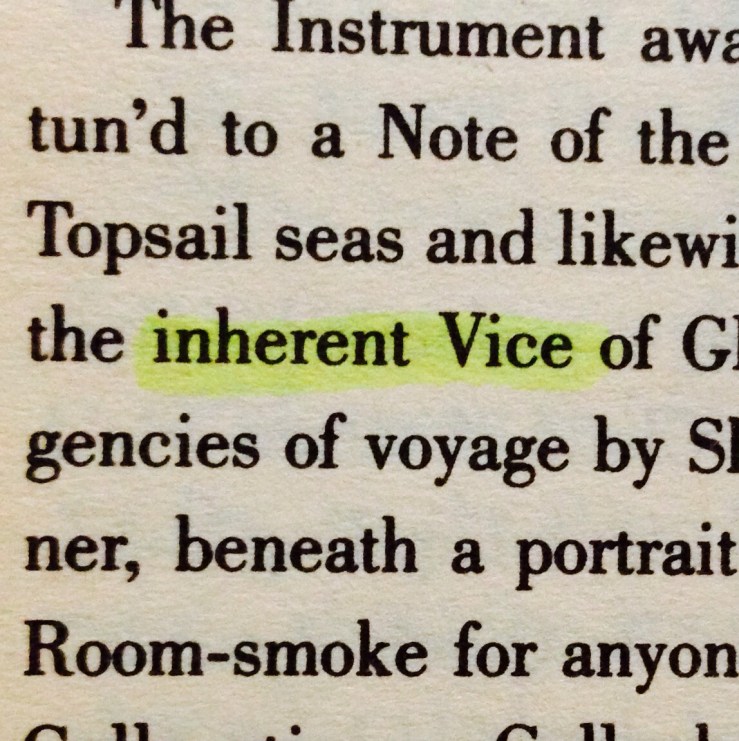
Inherent Vice (Thomas Pynchon’s Mason & Dixon)

IMG_4191

From page 272, chapter 27 of Thomas Pynchon’s novel Mason & Dixon. The phrase “against the day” appeared in chapter 13, on page 125. Perhaps I should be on the lookout for the phrase “bleeding edge.”

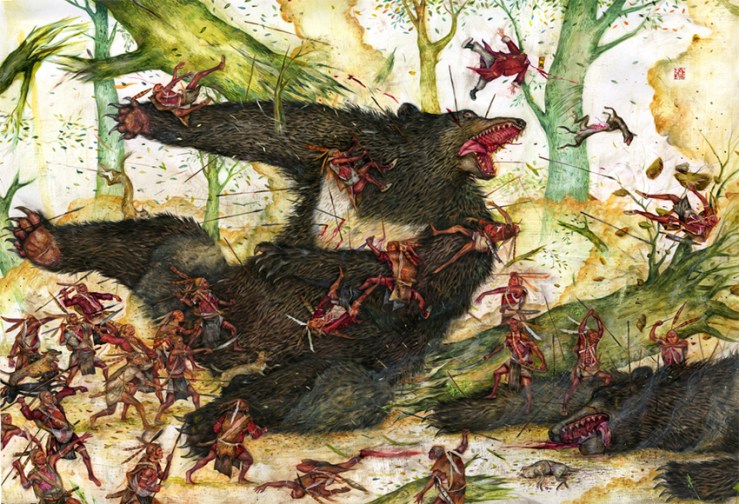
Untitled (In Hoc Signo Vinces) — Zdislav Beksinski

The Temptation of St. Anthony — Herri met de Blas

11505OP2103AU18440

A clip from Paul Thomas Anderson’s film Inherent Vice

India in Woodstock — Amanda Charchian

40

Via; more.

Young Girl Reading — Gustav Adolph Hennig

gustavv-adolph-henning-jene-fille-lisant-1828.1299571148.thumbnail

No.

B4XpDGqIcAA-tFK (2)

Via:

Forbidden Literature (The Use of the Word) — Rene Magritte

Vocabulary exercises (Georges Perec)

IMG_4159.JPG

A Woman Reading — François Bonvin (After Pieter Janssens Elinga)

DP805444

Goodnight from Bukoswki

Emily Carroll’s Ann by the Bed (Book acquired, 12.05.2014)

IMG_4148.JPG

I was pleasantly surprised when a copy of Emily Carroll’s issue of Frontier came in Friday’s mail. I tried to read it right away but a domestic chore intervened—which ended up working out better, really. I read it in bed by the light of my iPhone’s flashlight, which is exactly as god intended.

IMG_4151.JPG

Publisher Youth in Decline’s blurb:

Our final issue of 2014 features an eerie and stunning original comic by Emily Carroll titled, “Ann by the Bed.” Experience the dreadful tale of Ann Herron’s bloody murder, and the awful legacy that persists today in Southern Ontario.

IMG_4149.JPG

Full review forthcoming. Until then, check out Carroll’s excellent comics,“The Prince and the Sea,” and “His Face All Red.”

IMG_4152.JPG

Eloe from Ellenai — Jacek Malczewski

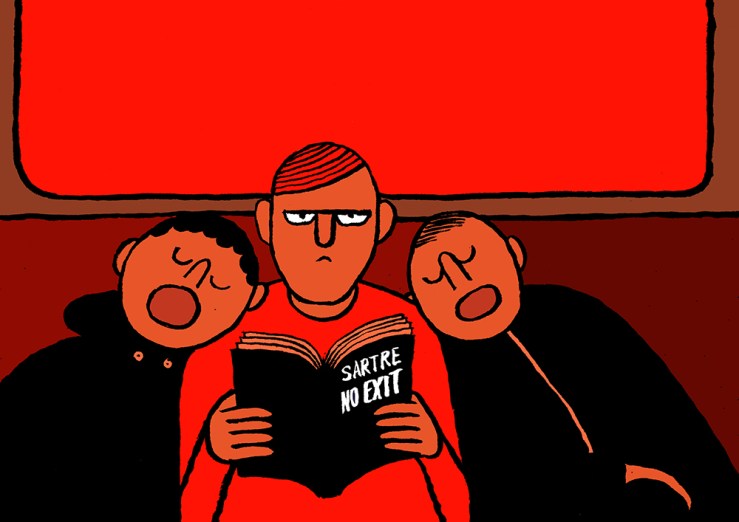
The Bus — Paul Kirchner

1

Read Willa Cather’s short story “The Sentimentality of William Tavener”

“The Sentimentality of William Tavener”

by

Willa Cather

It takes a strong woman to make any sort of success of living in the West, and Hester undoubtedly was that. When people spoke of William Tavener as the most prosperous farmer in McPherson County, they usually added that his wife was a “good manager.” She was an executive woman, quick of tongue and something of an imperatrix. The only reason her husband did not consult her about his business was that she did not wait to be consulted.

It would have been quite impossible for one man, within the limited sphere of human action, to follow all Hester’s advice, but in the end William usually acted upon some of her suggestions. When she incessantly denounced the “shiftlessness” of letting a new threshing machine stand unprotected in the open, he eventually built a shed for it. When she sniffed contemptuously at his notion of fencing a hog corral with sod walls, he made a spiritless beginning on the structure—merely to “show his temper,” as she put it—but in the end he went off quietly to town and bought enough barbed wire to complete the fence. When the first heavy rains came on, and the pigs rooted down the sod wall and made little paths all over it to facilitate their ascent, he heard his wife relate with relish the story of the little pig that built a mud house, to the minister at the dinner table, and William’s gravity never relaxed for an instant. Silence, indeed, was William’s refuge and his strength.

William set his boys a wholesome example to respect their mother. People who knew him very well suspected that he even admired her. He was a hard man towards his neighbors, and even towards his sons; grasping, determined and ambitious. Continue reading “Read Willa Cather’s short story “The Sentimentality of William Tavener””

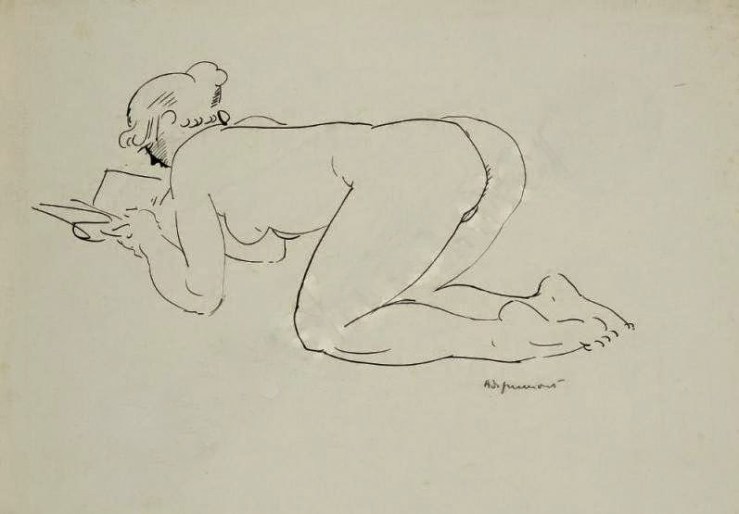
Woman Reading — Pieter Janssens Elinga

169161900

Thomas Pynchon’s recipe for what is arguably the first British Pizza (Mason & Dixon)

“Lud wishes to know,” Whike relays at last, “Mr. Emerson’s Cousin’s Views, upon the Structure of the World.”
“A Spheroid, the last I heard of it, Sir.”
“Ahr Ahr ahr, ’ahr ahhrr!”
“ ’And I say, ’tis Flat,’” the Jesuit smoothly translates. “Why of course, Sir, flat as you like, flat as a Funnel-Cake, flat as a Pizza, for all that,— ”
“Apologies, Sir,—” Whike all Unctuosity, “the foreign Word again, was . . . ?”
“The apology is mine,— Pizza being a Delicacy of Cheese, Bread, and Fish ubiquitous in the region ’round Mount Vesuvius. . . . In my Distraction, I have reach’d for the Word as the over-wrought Child for its Doll.”
“You are from Italy, then, sir?” inquires Ma.
“In my Youth I pass’d some profitable months there, Madam.”
“Do you recall by chance how it is they cook this ‘Pizza’? My Lads and Lasses grow weary of the same Daily Gruel and Haggis, so a Mother is ever upon the Lurk for any new Receipt.”
“Why, of course. If there be a risen Loaf about . . . ?”
Mrs. Brain reaches ’neath the Bar and comes up with a Brown Batch-Loaf, rising since Morning, which she presents to “Cousin Ambrose,” who begins to punch it out flat upon the Counter-Top. Lud, fascinated, offers to assault the Dough himself, quickly slapping it into a very thin Disk of remarkable Circularity.
“Excellent, Sir,” Maire beams, “I don’t suppose anyone has a Tomato?”
“A what?”
“Saw one at Darlington Fair, once,” nods Mr.”“Brain.
“No good, in that case,— eaten by now.”
“The one I saw, they might not have wanted to eat . . . ?”
Dixon, rummaging in his Surveyor’s Kit, has come up with the Bottle of Ketjap, that he now takes with him ev’rywhere. “This do?”
“That was a Torpedo, Husband.”
“That Elecktrickal Fish? Oh . . . then this thing he’s making isn’t elecktrical?”
“Tho’ there ought to be Fish, such as those styl’d by the Neopolitans, Cicinielli. . . .”
“Will Anchovy do?” Mrs. Brain indicates a Cask of West Channel ’Chovies from Devon, pickl’d in Brine.
“Capital. And Cheese?”
“That would be what’s left of the Stilton, from the Ploughman’s Lunch.”
“Very promising indeed,” Maire wringing his Hands to conceal their trembling. “Well then, let us just . . .”
By the Time what is arguably the first British Pizza is ready to come out of the Baking-Oven beside the Hearth, the Road outside has gone quiet and the Moorland dark, several Rounds have come and pass’d, and Lud is beginning to show signs of Apprehension. “At least ’tis cloudy tonight, no Moonlight’ll be getting thro’,” his Mother whispers to Mr. Emerson.”

From Thomas Pynchon’s novel Mason & Dixon.