“Spirits of the Dead” — Edgar Allan Poe

spirits

Portrait of Alexandre Benois — Leon Bakst

The Vampire — Sergio Aragones

sergio aragones. the vampire. 001

RIP Lou Reed

lou-reed

RIP Lou Reed, 1942-2013

I imagine other folks will put together overviews of Lou Reed’s career that contextualize his dramatic importance to contemporary music—to rock n’ roll—so I’m not gonna bother to do that. Instead, let me shoot from the hip here:

I’m surprised how sad I felt today when I learned that Reed had died. I don’t think I can overstate how important the Velvet Underground’s music was to me when I was young; more significantly, I still love their music today, still listen to it every week. Not all of Reed’s solo albums stuck in my brain, but many of them did, and so many of his songs are wedged so deep in my consciousness that I can hit “play” and hear them in toto without having to actually touch a stereo.

The first Lou Reed song I heard was “Walk on the Wild Side,” which I heard on the fucking radio, some time in the late 1980s, when I was still a kid, when I was perplexed and stunned and weirded out by Reed’s storytelling, of Holly and Candy and Jackie,  when I didn’t know what to make of a signal phrase like, “And the colored girls go…,” as much as I loved the “Doo do doo do doo do do doo…”

In 1991 my dad gave me a Sony Discman which I lived a good part of my life through. I bought a number of albums through a record club–maybe BMG or Columbia House, probably both (how to explain these scams to kids today…)—and the most important one in the first batch was The Best of the Velvet Underground: The Words and Music of Lou Reed. The songs and the liner notes opened up new avenues of what music could do. After that record I bought Magic and Loss, an album about loss and grieving and mortality that was just way too mature for me, but I loved and still love the single “What’s Good?”

I was one of those kids who scrawled Velvet Underground lyrics all over notebooks in high school; I still remembered the squareheaded jock who sat by me in American Government leaning in to mock the phrase “it’s so cold in Alaska” which repeated over my binder. I guess what I’m trying to say is that, like a lot of you weirdos, the Velvets were and are important to me, they helped me to live.

The cliche that everyone will cite is that line about the Velvets, how they didn’t sell any records but that everyone who did buy one of those records went and started a band…that cliche is true. The Velvet Underground birthed not just bands but whole new genres, art forms, experiences. It’s so hard to explain against the backdrop of the internet, this wonderful tool that grants immediate access to so much music, to the history of music, but pre-internet bands like the Velvet Underground—and the bands they engendered, like R.E.M. and Sonic Youth—were deeply important as curators, as taste makers, as starting points to access the real stuff.

Lou Reed, like any good artist, was an asshole, or at least that’s my suspicion informed by the many, many interviews and articles I read about him, an opinion informed deeply by Victor Bockris’s biography Transformer; I wrote about that book years ago on this site so I’ll cannibalize that writing now:

Lou Reed is a weirdo, and Victor Bockris wants you to know about it. Starting with Reed’s Long Island youth (complete with electro-shock therapy), Bockris’s biography covers pretty much everything right up through the Velvet Underground’s early nineties reunion: Reed’s early apprenticeship in the Brill Building, the nascent days of the VU (plenty of Warhol anecdotes, of course), punk rock, several doomed romances, his years living with a transvestite, his karate skills, his yoga skills, and his all-bran diet, and of course, the drugs. Oh the drugs. Also, Reed’s solo career is also examined (including plenty of material from guitar god Bob Quine). Bockris seems to feel Magic and Loss is something of a watershed moment in modern rock (anyone who accidentally bought this album knows otherwise).

Bockris’s book employs a bitchy, dishy tone, rife with catty comments from everyone whoever worked with Reed: apparently Lou was a total asshole. Bockris reprints some painful comments (e.g. Reed on Springsteen, 1975: “Isn’t Springsteen over the hill?”); the most awkward moment comes in the book’s appendix, in a transcript of a meeting Bockris arranged between Reed and William Burroughs. Bad idea (Reed can’t remember the name of “that book you published”–Naked Lunch).

As I’m putting this together, a friend texts me to chat about Lou. We were in a band together, this friend and I, years ago…We got to open for Moe Tucker’s band, that’s the closest we got to Lou Reed. My friend tells me that he wishes he could “trade Bono” to get Reed back.

It’s strange to feel surprised that a rock star who wrote a song called “Heroin” is dead, but I thought he’d keep living. I don’t know why. All those weird projects (Lulu?!), all that collaboration. And here is where I write some hackneyed line about Reed still living, still being alive through music, some nonsense, and then later when I get in my car with my kids to drive to a pumpkin to buy pumpkins to carve into jack o’ lanterns for Halloween, I’ll push the “next” button on my CD player through tracks from the Smiths and Talking Heads and Luna and Beach House, tracks that I already know are on the mix CD in there, I’ll push through to “Rock & Roll,” one of those songs that inevitably ends up on half of the CDs I make for myself.

Sorceress — Dominique Vivant Denon

SNL Parodies Wes Anderson with The Midnight Coterie of Sinister Intruders Trailer

A Reading in the Garden — Theo van Rysselberghe

Run for Your Life, Charlie Brown

run_for_your_life__charlie_b_by_citizenwolfie-d4dtb6j

Run for Your Life, Charlie Brown by Dennis Davies.

St. Anthony Attacked by Devils — Limbourg Brothers

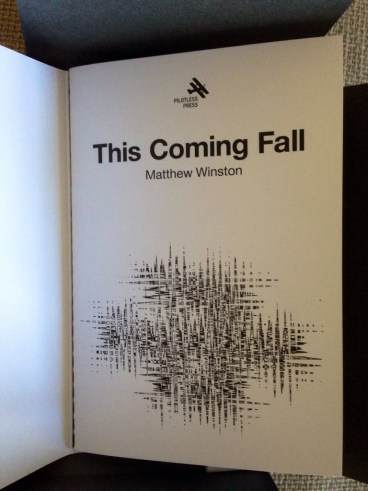
One Way Out: The Inside History of the Allman Brothers Band (Book Acquired, 10.15.2013)

20131019-164212.jpg

One Way Out: The Inside History of the Allman Brothers Band by Alan Paul is out early next year. From the author’s website:

One Way Out is an oral history of the Allman Brothers Band culled from hundreds of hours of interview, all conducted by award-winning author and journalist Alan Paul, of Guitar World magazine.

The book includes many never-before-published interviews with band members Gregg Allman, Dickey Betts, Jaimoe, Butch Trucks, Warren Haynes, Derek Trucks, Oteil Burbridge, the late Allen Woody, Jack Pearson, Jimmy Herring, plus Eric Clapton, Tom Dowd, Phil Walden, Rick Hall, Billy Gibbons, Dr. John, Scott Boyer and others.

Bonus:

“Wolf-Alice” — Angela Carter

“Wolf-Alice” by Angela Carter

Could this ragged girl with brindled lugs have spoken like we do she would have called herself a wolf, but she cannot speak, although she howls because she is lonely–yet’ howl’ is not the right word for it, since she is young enough to make the noise that pups do, bubbling, delicious, like that of a panful of fat on the fire. Sometimes the sharp ears of her foster kindred hear her across the irreparable gulf of absence; they answer her from faraway pine forest and the bald mountain rim. Their counterpoint crosses and criss-crosses the night sky; they are trying to talk to her but they cannot do so because she does not understand their language even if she knows how to use it for she is not a wolf herself, although suckled by wolves.

Her panting tongue hangs out; her red lips are thick and fresh. Her legs are long, lean and muscular. Her elbows, hands and knees are thickly callused because she always runs on all fours. She never walks; she trots or gallops. Her pace is not our pace.

Two-legs looks, four-legs sniffs. Her long nose is always a-quiver, sifting every scent it meets. With this useful tool, she lengthily investigates everything she glimpses. She can net so much more of the world than we can through the fine, hairy, sensitive filters of her nostrils that her poor eyesight does not trouble her. Her nose is sharper by night than’ our eyes are by day so it is the night she prefers, when the cool reflected light of the moon does not make her eyes smart and draws out the various fragrances from the woodland where she wanders when she can. But the wolves keep well away from the peasants’ shotguns, now, and she will no longer find them there.

Wide shoulders, long arms and she sleeps succinctly curled into a ball as if she were cradling her spine in her tail. Nothing about her is human except that she is not a wolf; it is as if the fur she thought she wore had melted into her skin and become part of it, although it does not exist. Like the wild beasts, she lives without a future. She inhabits only the present tense, a fugue of the continuous, a world of sensual immediacy as without hope as it is without despair.

When they found her in the wolf’s den beside the bullet-riddled corpse of her foster mother, she was no more than a little brown scrap so snarled in her own brown hair they did not, at first, think she was a child but a cub; she snapped at her would-be saviours with her spiky canines until they tied her up by force. She spent her first days amongst us crouched stockstill, staring at the whitewashed wall of her cell in the convent to which they took her. The nuns poured water over her, poked her with sticks to rouse her. Then she might snatch bread from their hands and race with it into a corner to mumble it with her back towards them; it was a great day among the novices when she learned to sit up on her hind legs and beg for a crust.

They found that, if she were treated with a little kindness, she was not intractable. She learned to recognize her own dish; then, to drink from a cup. They found that she could quite easily be taught a few, simple tricks but she did not feel the cold and it took a long time to wheedle a shift over her head to cover up her bold nakedness. Yet she always seemed wild, impatient of restraint, capricious in temper; when the Mother Superior tried to teach her to give thanks for her recovery from the wolves, she arched her back, pawed the floor, retreated to a far corner of the chapel, crouched, trembled, urinated, defecated–reverted entirely, it would seem, to her natural state. Therefore, without a qualm, this nine days’ wonder and continuing embarrassment of a child was delivered over to the bereft and unsanctified household of the Duke. Continue reading ““Wolf-Alice” — Angela Carter”

An Interior with a Woman Reading — Carl Larsson

Tokyo Story — Yasujiro Ozu (Full Film)

Three Women and Three Wolves — Eugène Grasset

“Prelude to Another Drink” — Malcolm Lowry

ml

Nosferatu — Bill Sienkiewicz

“There Is Evil in Every Human Heart” and Seven Other Story Ideas from Nathaniel Hawthorne’s Note-Books

  1. Our body to be possessed by two different spirits; so that half of the visage shall express one mood, and the other half another.
  2. An old English sea-captain desires to have a fast-sailing ship, to keep a good table, and to sail between the tropics without making land.
  3. A rich man left by will his mansion and estate to a poor couple. They remove into it, and find there a darksome servant, whom they are forbidden by will to turn away. He becomes a torment to them; and, in the finale, he turns out to be the former master of the estate.
  4. Two persons to be expecting some occurrence, and watching for the two principal actors in it, and to find that the occurrence is even then passing, and that they themselves are the two actors.
  5. There is evil in every human heart, which may remain latent, perhaps, through the whole of life; but circumstances may rouse it to activity. To imagine such circumstances. A woman, tempted to be false to her husband, apparently through mere whim,–or a young man to feel an instinctive thirst for blood, and to commit murder. This appetite may be traced in the popularity of criminal trials. The appetite might be observed first in a child, and then traced upwards, manifesting itself in crimes suited to every stage of life.
  6. The good deeds in an evil life,–the generous, noble, and excellent actions done by people habitually wicked,–to ask what is to become of them.
  7. A satirical article might be made out of the idea of an imaginary museum, containing such articles as Aaron’s rod, the petticoat of General Hawion, the pistol with which Benton shot Jackson,–and then a diorama, consisting of political or other scenes, or done in wax-work. The idea to be wrought out and extended. Perhaps it might be the museum of a deceased old man.
  8. An article might be made respecting various kinds of ruin,–ruin as regards property,–ruin of health,–ruin of habits, as drunkenness and all kinds of debauchery,–ruin of character, while prosperous in other respects,–ruin of the soul. Ruin, perhaps, might be personified as a demon, seizing its victims by various holds.

Notations from Nathaniel Hawthorne’s American Note-Books.