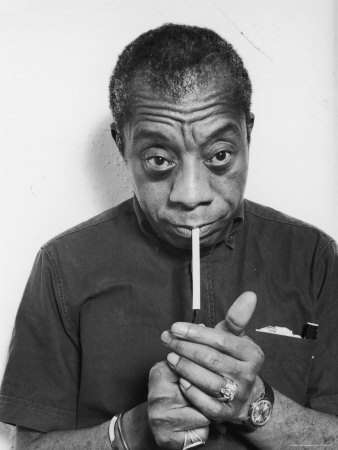
Jumpin’ John Steinbeck

jumping john steinbeck

(Via).

List with No Name #23

  1. Haruki Marukami
  2. Joyce Carol Oates
  3. Philip Roth
  4. John Updike
  5. Saul Bellow
  6. Paul Bowles
  7. Edith Wharton

“On the Divide” — Willa Cather

“On the Divide” by Willa Cather

Near Rattlesnake Creek, on the side of a little draw stood Canute’s shanty. North, east, south, stretched the level Nebraska plain of long rust-red grass that undulated constantly in the wind. To the west the ground was broken and rough, and a narrow strip of timber wound along the turbid, muddy little stream that had scarcely ambition enough to crawl over its black bottom. If it had not been for the few stunted cottonwoods and elms that grew along its banks, Canute would have shot himself years ago. The Norwegians are a timber-loving people, and if there is even a turtle pond with a few plum bushes around it they seem irresistibly drawn toward it.

As to the shanty itself, Canute had built it without aid of any kind, for when he first squatted along the banks of Rattlesnake Creek there was not a human being within twenty miles. It was built of logs split in halves, the chinks stopped with mud and plaster. The roof was covered with earth and was supported by one gigantic beam curved in the shape of a round arch. It was almost impossible that any tree had ever grown in that shape. The Norwegians used to say that Canute had taken the log across his knee and bent it into the shape he wished. There were two rooms, or rather there was one room with a partition made of ash saplings interwoven and bound together like big straw basket work. In one corner there was a cook stove, rusted and broken. In the other a bed made of unplaned planks and poles. It was fully eight feet long, and upon it was a heap of dark bed clothing. There was a chair and a bench of colossal proportions. There was an ordinary kitchen cupboard with a few cracked dirty dishes in it, and beside it on a tall box a tin washbasin. Under the bed was a pile of pint flasks, some broken, some whole, all empty. On the wood box lay a pair of shoes of almost incredible dimensions. On the wall hung a saddle, a gun, and some ragged clothing, conspicuous among which was a suit of dark cloth, apparently new, with a paper collar carefully wrapped in a red silk handkerchief and pinned to the sleeve. Over the door hung a wolf and a badger skin, and on the door itself a brace of thirty or forty snake skins whose noisy tails rattled ominously every time it opened. The strangest things in the shanty were the wide windowsills. At first glance they looked as though they had been ruthlessly hacked and mutilated with a hatchet, but on closer inspection all the notches and holes in the wood took form and shape. There seemed to be a series of pictures. They were, in a rough way, artistic, but the figures were heavy and labored, as though they had been cut very slowly and with very awkward instruments. There were men plowing with little horned imps sitting on their shoulders and on their horses’ heads. There were men praying with a skull hanging over their heads and little demons behind them mocking their attitudes. There were men fighting with big serpents, and skeletons dancing together. All about these pictures were blooming vines and foliage such as never grew in this world, and coiled among the branches of the vines there was always the scaly body of a serpent, and behind every flower there was a serpent’s head. It was a veritable Dance of Death by one who had felt its sting. In the wood box lay some boards, and every inch of them was cut up in the same manner. Sometimes the work was very rude and careless, and looked as though the hand of the workman had trembled. It would sometimes have been hard to distinguish the men from their evil geniuses but for one fact, the men were always grave and were either toiling or praying, while the devils were always smiling and dancing. Several of these boards had been split for kindling and it was evident that the artist did not value his work highly.

It was the first day of winter on the Divide. Canute stumbled into his shanty carrying a basket of cobs, and after filling the stove, sat down on a stool and crouched his seven foot frame over the fire, staring drearily out of the window at the wide gray sky. He knew by heart every individual clump of bunch grass in the miles of red shaggy prairie that stretched before his cabin. He knew it in all the deceitful loveliness of its early summer, in all the bitter barrenness of its autumn. He had seen it smitten by all the plagues of Egypt. He had seen it parched by drought, and sogged by rain, beaten by hail, and swept by fire, and in the grasshopper years he had seen it eaten as bare and clean as bones that the vultures have left. After the great fires he had seen it stretch for miles and miles, black and smoking as the floor of hell. Continue reading ““On the Divide” — Willa Cather”

Girl Reading — Georgios Jakobides

71 Fragments of a Chronology of Chance — Michael Haneke

Secrets of the Creative (Life in Hell)

hell

Popular Error (Nietzsche)

Capture

Jorge Luis Borges Resting on Edgar Allan Poe’s Grave

borges poe

“Flight” — John Steinbeck

“Flight” by John Steinbeck

Out fifteen miles below Monterey, on the wild coast, the Torres family had their farm, a few sloping acres above a cliff that dropped to the brown reefs and to the hissing white waters of the ocean. Behind the farm the stone mountains stood up against the sky. The farm buildings huddled like the clinging aphids on the mountain skirts, crouched low to the ground as though the wind might blow them into the sea. The little shack, the rattling, rotting barn were gray-bitten with sea salt, beaten by the damp wind until they had taken on the color of the granite hills. Two horses, a red cow and a red calf, half a dozen pigs and a flock of lean, multicolored chickens stocked the place. A little corn was raised on the sterile slope, and it grew short and thick under the wind, and all the cobs formed on the landward sides of the stalks.

Mama Torres, a lean, dry woman with ancient eyes, had ruled the farm for ten years, ever since her husband tripped over a stone in the field one day and fell full length on a rattlesnake. When one is bitten on the chest there is not much that can be done.

Mama Torres had three children, two undersized black ones of twelve and fourteen, Emilio and Rosy, whom Mama kept fishing on the rocks below the farm when the sea was kind and when the truant officer was in some distant part of Monterey County. And there was Pepe, the tall smiling son of nineteen, a gentle, affectionate boy, but very lazy. Pepe had a tall head, pointed at the top, and from its peak coarse black hair grew down like a thatch all around. Over his smiling little eyes Mama cut a straight bang so he could see. Pepe had sharp Indian cheekbones and an eagle nose, but his mouth was as sweet and shapely as a girl’s mouth, and his chin was fragile and chiseled. He was loose and gangling, all legs and feet and wrists, and he was very lazy. Mama thought him fine and brave, but she never told him so. She said, “Some lazy cow must have got into thy father’s family, else how could I have a son like thee.” And she said, “When I carried thee, a sneaking lazy coyote came out of the brush and looked at me one day. That must have made thee so.”

Pepe smiled sheepishly and stabbed at the ground with his knife to keep the blade sharp and free from rust. It was his inheritance, that knife, his father’s knife. The long heavy blade folded back into the black handle. There was a button on the handle. When Pepe pressed the button, the blade leaped out ready for use. The knife was with Pepe always, for it had been his father’s knife.

One sunny morning when the sea below the cliff was glinting and blue and the white surf creamed on the reef, when even the stone mountains looked kindly, Mama Torres called out the door of the shack, “Pepe, I have a labor for thee.”

There was no answer. Mama listened. From behind the barn she heard a burst of laughter. She lifted her full long skirt and walked in the direction of the noise.

Pepe was sitting on the ground with his back against a box. His white teeth glistened. On either side of him stood the two black ones, tense and expectant. Fifteen feet away a redwood post was set in the ground. Pepe’s right hand lay limply in his lap, and in the palm the big black knife rested. The blade was closed back into the handle. Pepe looked smiling at the sky.

Suddenly Emilio cried, “Ya!”

Pepe’s wrist flicked like the head of a snake. The blade seemed to fly open in midair, and with a thump the point dug into the redwood post, and the black handle quivered. The three burst into excited laughter. Rosy ran to the post and pulled out the knife and brought it back to Pepe. He closed the blade and settled the knife carefully in his listless palm again. He grinned self-consciously at the sky.

“Ya! ”

The heavy knife lanced out and sunk into the post again. Mama moved forward like a ship and scattered the play. Continue reading ““Flight” — John Steinbeck”

Portrait of the Artist’s Mother — Franz Marc

Olivetti Poster — Herbert Bayer

olivetti

“What in water did Bloom, waterlover, drawer of water, watercarrier, returning to the range, admire?” (Ulysses)

What in water did Bloom, waterlover, drawer of water, watercarrier, returning to the range, admire?

Its universality: its democratic equality and constancy to its nature in seeking its own level: its vastness in the ocean of Mercator’s projection: its unplumbed profundity in the Sundam trench of the Pacific exceeding 8000 fathoms: the restlessness of its waves and surface particles visiting in turn all points of its seaboard: the independence of its units: the variability of states of sea: its hydrostatic quiescence in calm: its hydrokinetic turgidity in neap and spring tides: its subsidence after devastation: its sterility in the circumpolar icecaps, arctic and antarctic: its climatic and commercial significance: its preponderance of 3 to 1 over the dry land of the globe: its indisputable hegemony extending in square leagues over all the region below the subequatorial tropic of Capricorn: the multisecular stability of its primeval basin: its luteofulvous bed: its capacity to dissolve and hold in solution all soluble substances including millions of tons of the most precious metals: its slow erosions of peninsulas and islands, its persistent formation of homothetic islands, peninsulas and downwardtending promontories: its alluvial deposits: its weight and volume and density: its imperturbability in lagoons and highland tarns: its gradation of colours in the torrid and temperate and frigid zones: its vehicular ramifications in continental lakecontained streams and confluent oceanflowing rivers with their tributaries and transoceanic currents, gulfstream, north and south equatorial courses: its violence in seaquakes, waterspouts, Artesian wells, eruptions, torrents, eddies, freshets, spates, groundswells, watersheds, waterpartings, geysers, cataracts, whirlpools, maelstroms, inundations, deluges, cloudbursts: its vast circumterrestrial ahorizontal curve: its secrecy in springs and latent humidity, revealed by rhabdomantic or hygrometric instruments and exemplified by the well by the hole in the wall at Ashtown gate, saturation of air, distillation of dew: the simplicity of its composition, two constituent parts of hydrogen with one constituent part of oxygen: its healing virtues: its buoyancy in the waters of the Dead Sea: its persevering penetrativeness in runnels, gullies, inadequate dams, leaks on shipboard: its properties for cleansing, quenching thirst and fire, nourishing vegetation: its infallibility as paradigm and paragon: its metamorphoses as vapour, mist, cloud, rain, sleet, snow, hail: its strength in rigid hydrants: its variety of forms in loughs and bays and gulfs and bights and guts and lagoons and atolls and archipelagos and sounds and fjords and minches and tidal estuaries and arms of sea: its solidity in glaciers, icebergs, icefloes: its docility in working hydraulic millwheels, turbines, dynamos, electric power stations, bleachworks, tanneries, scutchmills: its utility in canals, rivers, if navigable, floating and graving docks: its potentiality derivable from harnessed tides or watercourses falling from level to level: its submarine fauna and flora (anacoustic, photophobe), numerically, if not literally, the inhabitants of the globe: its ubiquity as constituting 90 percent of the human body: the noxiousness of its effluvia in lacustrine marshes, pestilential fens, faded flowerwater, stagnant pools in the waning moon.

From the penultimate episode of James Joyce’s Ulysses.

T.S. Eliot’s Handwritten Manuscript for “Virginia”

virginia_eliot

Red river, red river,
Slow flow heat is silence
No will is still as a river
Still. Will heat move
Only through the mocking-bird
Heard once? Still hills
Wait. Gates wait. Purple trees,
White trees, wait, wait,
Delay, decay. Living, living,
Never moving. Ever moving
Iron thoughts came with me
And go with me:
Red river, river, river.


(Via).

William Faulkner Pouring Some Coffee

tumblr_lrix0cDh9r1r2nz2so1_r1_400

(Via).

“Petrified Man” — Eudora Welty

ew

(Read the rest of “Petrified Man”).

Compartment Car — Edward Hopper

The Little Prince — Moebius

prince moebius