Talk to me about your family history, said the bastards | Roberto Bolaño

A passage from “The Part About The Crimes” from 2666 by Roberto Bolaño in translation by Natasha Wimmer


Talk to me about your family history, said the bastards. Explain your family tree, the assholes said. Self-sucking pieces of shit. Lalo Cura didn’t get angry. Faggot sons of bitches. Tell me about your coat of arms. That’s enough now. The kid’s going to blow. Stay calm. Respect the uniform. Don’t show you’re scared or back down, don’t let them think they’re getting to you. Some nights, in the dim light of the tenement, when he was done with the books on criminology (don’t lose it now, man), dizzy from all the fingerprints, blood and semen stains, principles of toxicology, investigations of thefts, breaking and entering, footprints, how to make sketches and take photographs of the crime scene, half asleep, drifting between sleep and wakefulness, he heard or remembered voices talking to him about the first Exposito, the family tree dating back to 1865, the nameless orphan, fifteen years old, raped by a Belgian soldier in a one-room adobe house outside Villaviciosa. The next day the soldier got his throat cut and nine months later a girl was born, called Maria Exposito. The orphan, the first one, said the voice, or several voices taking turns, died in childbirth and the girl grew up in the same house where she was conceived, which became the property of some peasants who took her in and treated her like another member of the family. In 1881, when Maria Exposito was fifteen, on the feast day of San Dimas, a drunk from another town carried her off on his horse, singing at the top of his lungs: Que chingaderas son estas I Dimas le dijo a Gestas. On the slope of a hill that looked like a dinosaur or a Gila monster he raped her several times and disappeared. In 1882, Maria Exposito gave birth to a child who was baptized Maria Exposito Exposito, said the voice, and the girl was the wonder of the peasants of Villaviciosa. From early on she showed herself to be clever and spirited, and although she never learned to read or write she was known as a wise woman, learned in the ways of herbs and medicinal salves. In 1898, after she had been away for seven days, Maria Exposito appeared one morning in the Villaviciosa plaza, a bare space in the center of town, with a broken arm and bruises all over her body. She would never explain what had happened to her, nor did the old women who tended to her insist that she tell. Nine months later a girl was born and given the name Maria Exposito, and her mother, who never married or had more children or lived with any man, initiated her into the secret art of healing. But the young Maria Exposito resembled her mother only in her good nature, a quality shared by all the Maria Expositos of Villaviciosa. Some were quiet and others liked to talk, but common to them all was their good nature and the fortitude to endure periods of violence or extreme poverty. But young Maria Exposito’s childhood and adolescence were more carefree than her mother’s and grandmother’s had been. In 1914, at sixteen, her thoughts and actions were still those of a girl whose only tasks were to accompany her mother once a month in search of rare herbs and to wash the clothes, not at the public washhouse, which was too far away, but behind the house, in an old wooden trough. That was the year Colonel Sabino Duque (who in 1915 would be shot to death for cowardice) came to town looking for brave men—and the men of Villaviciosa were famous for being braver than anyone—to fight for the Revolution. Continue reading “Talk to me about your family history, said the bastards | Roberto Bolaño”

To Be Without Choice — Tatyana Fazlalizadeh

To Be Without Choice, 2019 by Tatyana Fazlalizadeh (b. 1985)

Untitled 5 (from the Abortion Pastels) — Paula Rego

Untitled No. 5 (from the Abortion Pastels)1998 by Paula Rego (1935-2022)

Center for Reproductive Rights

NARAL Pro-Choice America

National Abortion Federation 

National Network of Abortion Funds

National Organization for Women

Planned Parenthood

Refuse & Resist!

More

The Blazing Infant — Grace Pailthorpe

April 20, 1940 (The Blazing Infant), 1940 by Grace Pailthorpe (1883-1971)

It’s a fool’s game (I’m furious)

“Room” — Frank O’Hara

Sperlonga Drawing — Cy Twombly

Sperlonga Drawing, 1959 by Cy Twombly (1928-2011)

Anthony Michael Perri’s Lonely Boxer (Book acquired, 7 June 2022)

Anthony Michael Perri’s Lonely Boxer is good stuff—a terse, dark (and often funny) boxing story packed with punchy sentences. Jacket copy:

Lonely Boxer is a novella in vignettes. It deals with the themes of depression, loneliness, violence and morals. Recently released from jail, Lonely Boxer resumes his training regime. After all, this is the only place he feels comfortable – in the ring. And when a title fight between himself and the world’s most popular boxer, Famous Rafael, is announced, Lonely asks himself; will he be able to overcome his opponent? Along the way he’ll have to contend against an indifferent psychologist, an unreliable best friend, and an abusive mother. Will he be able to overcome all of these challenges and become the World Champ?

John’s Up — Jed Webster Smith

John’s Up, 2021 by Jed Webster Smith (b. 1992)

Posted in Art

“The Father Who Bowed” — Russell Edson

“The Father Who Bowed”

by

Russell Edson


A father presented himself. He said, ladies and gentlemen, your father …

His family applauded.

He bowed …

Ladies and gentlemen, he began, it has come to my attention over the last few decades that we are run up against a biological barrier …

His family began to applaud …

No, he began again, do not say that age is beauty, that the white-haired old woman trying to see the sock she darns through cataracts is worth the droppings of a rat.

No, I should say more service to the healthy microbe in the rat’s droppings than the poor darning that comes of arthritic hands and eyes in cataract …

No, indeed, more to be said for lesser forms than men astride their graves!

… We weary the promise unfulfilled, the downward repetition that ends in utter, utter death …

His family applauded …

Ladies and gentlemen, he began again, let us end this terrible business: stuffing brother George into the toilet like a turd; Mother into the garden like a potato; sister Ann up under the roof like an old cobweb; for me, the garbage can …

His family began to cheer; they were on their feet crying, bravo bravo, encore encore.

You do me too much honor, he sighed as he bowed; the curtain slowly coming down …

No use

Crowdsource — Chester Arnold

Crowdsource, 2017 by Chester Arnold (b. 1952)

Nude in a Landscape — José Manuel Capuletti

Nude in a Landscape by José Manuel Capuletti (1925-1978)

After him freshfound the hue and cry zigzag gallops in hot pursuit of follow my leader: Partial castlist, James Joyce’s Ulysses

(He hurries out through the hall. The whores point. Florry follows, spilling water from her tilted tumbler. On the doorstep all the whores clustered talk volubly, pointing to the right where the fog has cleared off. From the left arrives a jingling hackney car. It slows to in front of the house. Bloom at the halldoor perceives Corny Kelleher who is about to dismount from the car with two silent lechers. He averts his face. Bella from within the hall urges on her whores. They blow ickylickysticky yumyum kisses. Corny Kelleher replies with a ghastly lewd smile. The silent lechers turn to pay the jarvey. Zoe and Kitty still point right. Bloom, parting them swiftly, draws his caliph’s hood and poncho and hurries down the steps with sideways face. Incog Haroun al Raschid he flits behind the silent lechers and hastens on by the railings with fleet step of a pard strewing the drag behind him, torn envelopes drenched in aniseed. The ashplant marks his stride. A pack of bloodhounds, led by Hornblower of Trinity brandishing a dogwhip in tallyho cap and an old pair of grey trousers, follow from fir, picking up the scent, nearer, baying, panting, at fault, breaking away, throwing their tongues, biting his heels, leaping at his tail. He walks, runs, zigzags, gallops, lugs laid back. He is pelted with gravel, cabbagestumps, biscuitboxes, eggs, potatoes, dead codfish, woman’s slipperslappers. After him freshfound the hue and cry zigzag gallops in hot pursuit of follow my leader: 65 C, 66 C, night watch, John Henry Menton, Wisdom Hely, V. B. Dillon, Councillor Nannetti, Alexander Keyes, Larry O’rourke, Joe Cuffe Mrs O’dowd, Pisser Burke, The Nameless One, Mrs Riordan, The Citizen, Garryowen, Whodoyoucallhim, Strangeface, Fellowthatsolike, Sawhimbefore, Chapwithawen, Chris Callinan, Sir Charles Cameron, Benjamin Dollard, Lenehan, Bartell d’Arcy, Joe Hynes, red Murray, editor Brayden, T. M. Healy, Mr Justice Fitzgibbon, John Howard Parnell, the reverend Tinned Salmon, Professor Joly, Mrs Breen, Denis Breen, Theodore Purefoy, Mina Purefoy, the Westland Row postmistress, C. P. M’Coy, friend of Lyons, Hoppy Holohan, maninthestreet, othermaninthestreet, Footballboots, pugnosed driver, rich protestant lady, Davy Byrne, Mrs Ellen M’Guinness, Mrs Joe Gallaher, George Lidwell, Jimmy Henry on corns, Superintendent Laracy, Father Cowley, Crofton out of the Collector-general’s, Dan Dawson, dental surgeon Bloom with tweezers, Mrs Bob Doran, Mrs Kennefick, Mrs Wyse Nolan, John Wyse Nolan, handsomemarriedwomanrubbedagainstwide behindinClonskeatram, the bookseller of Sweets of Sin, Miss Dubedatandshedidbedad, Mesdames Gerald and Stanislaus Moran of Roebuck, the managing clerk of Drimmie’s, Wetherup, colonel Hayes, Mastiansky, Citron, Penrose, Aaron Figatner, Moses Herzog, Michael E Geraghty, Inspector Troy, Mrs Galbraith, the constable off Eccles Street corner, old doctor Brady with stethoscope, the mystery man on the beach, a retriever, Mrs Miriam Dandrade and all her lovers.)

From Joyce’s Ulysses.

We’ve gotten used to death | from Roberto Bolaño’s 2666

So, wanting the thick feeling and flavor of a long book but committed to so many skinny books, I started listening to the audiobook of Roberto Bolaño’s 2666 this week. I’m about twelve hours in (it’s something like forty hours), and it’s activated so many memories and thoughts. I don’t think I’d recommend 2666 as an audiobook on the first read—it helps to know the novel’s abyssal shapes and strategies. I’ve read 2666 three times, including a back-to-back reading, and so much of the novel has stuck with me more than many other novels I’ve read. This morning—early for me—I went for a walk and listened in the baking Florida heat, sun blazing, and, in the book titled “The Part About Fate,” I heard a passage that resonated with me. I pulled my chunky body ‘neath a magnolia’s shade and opened up a note app on my phone to type some of the language, thinking I’d share it on this blog. When I got home I googled the phrases I’d recorded, and realized that I’d shared the passage on this blog eleven years ago.

I’ll put together some thoughts on revising 2666 after a decade, but here’s the passage.

From Roberto Bolaño’s 2666, “The Part About Fate, pages 266-267:

“We’ve gotten used to death,” he heard the young man say.

“It’s always been that way,” said the white-haired man, “always.”

In the nineteenth century, toward the middle or the end of the nineteenth century, said the white-haired man, society tended to filter death through the fabric of words. Reading news stories from back then you might get the idea that there was hardly any crime, or that a single murder could throw a whole country into tumult. We didn’t want death in the home, or in our dreams and fantasies, and yet it was a fact that terrible crimes were committed, mutilations, all kinds of rape, even serial killings. Of course, most of the serial killers were never caught. Take the most famous case of the day. No one knew who Jack the Ripper was. Everything was passed through the filter of words, everything trimmed to fit our fear. What does a child do when he’s afraid? He closes his eyes. What does a child do when he’s about to be raped and murdered? He closes his eyes. And he screams, too, but first he closes his eyes. Words served that purpose. And the funny thing is, the archetypes of human madness and cruelty weren’t invented by the men of our day but by our forebears. The Greeks, you might say, invented evil, the Greeks saw the evil inside us all, but testimonies or proofs of this evil no longer move us. They strike us as futile, senseless. You could say the same about madness. It was the Greeks who showed us the range of possibilities and yet now they mean nothing to us. Everything changes, you say. Of course everything changes, but not the archetypes of crime, not any more than human nature changes. Maybe it’s because polite society was so small back then. I’m talking about the nineteenth century, eighteenth century, seventeenth century. No doubt about it, society was small. Most human beings existed on the outer fringes of society. In the seventeenth century, for example, at least twenty percent of the merchandise on every slave ship died. By that I mean the dark-skinned people who were being transported for sale, to Virginia, say. And that didn’t get anyone upset or make headlines in the Virginia papers or make anyone go out and call for the ship captain to be hanged. But if a plantation owner went crazy and killed his neighbor and then went galloping back home, dismounted, and promptly killed his wife, two deaths in total, Virginia society spent the next six months in fear, and the legend of the murderer on horseback might linger for generations. Or look at the French. During the Paris Commune of 1871, thousands of people were killed and no one batted an eye. Around the same time a knife sharpener killed his wife and his elderly mother and then he was shot and killed by the police. The story didn’t just make all the French newspapers, it was written up in papers across Europe, and even got a mention in the New York Examiner. How come? The ones killed in the Commune weren’t part of society, the dark-skinned people who died on the ship weren’t part of society, whereas the woman killed in a French provincial capital and the murderer on horseback in Virginia were. What happened to them could be written, you might say, it was legible. That said, words back then were mostly used in the art of avoidance, not of revelation. Maybe they revealed something all the same. I couldn’t tell you.

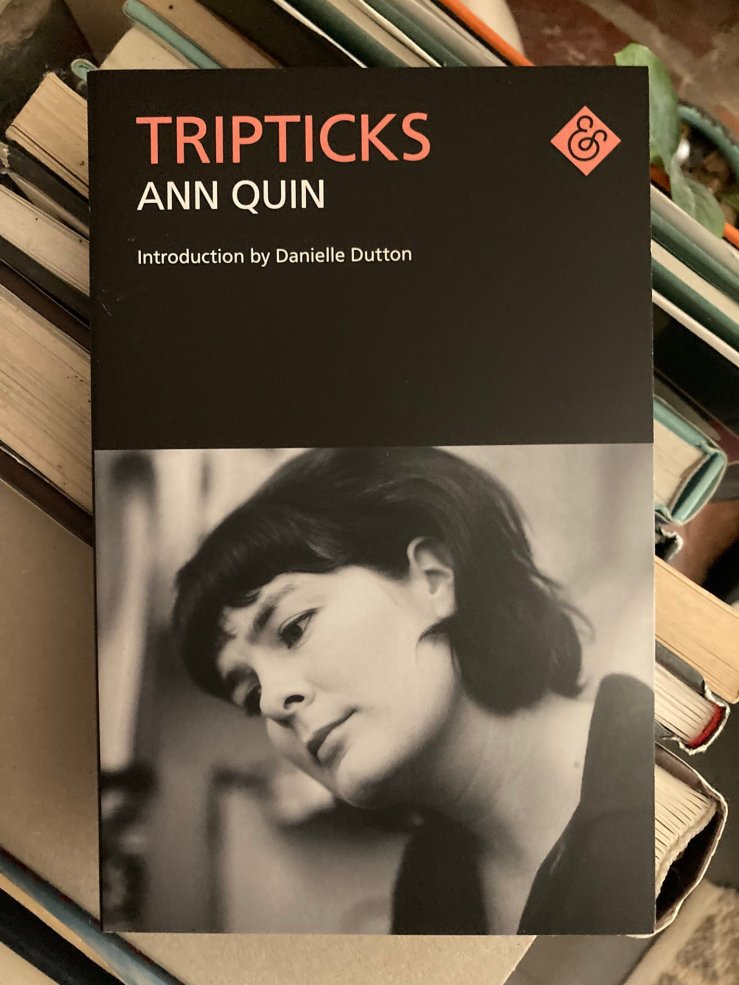
Giado Scodellaro’s Some of Them Will Carry Me/Amina Cain’s A Horse at Night (Books acquired, 7 June 2022)

Two forthcoming titles from Dorothy both look promising.

(Parenthetically–I finished Dorothy’s recent publication, Caren Beilin’s Revenge of the Scapegoat the other night and found it confounding, upsetting, engaging, and very, very funny. Should have a proper review in the next few days, if I can commit to writing about a novel that zapped and perplexed me.)

Here’s the blurb for Giada Scodellaro’s collection Some of Them Will Carry Me:

Giada Scodellaro’s stories range in length, style, and tone—a collage of social commentary, surrealism, recipes, folklore, and art. What brings them together is a focus on experiences of black women in moments of dislocation, and a cinematic prose style saturated with detail: a child’s legs bent upon the small bosom of their mother, three-piece suits floating in a river, a man holding a rotting banana during sex, wet cardboard, a woman walking naked through a traffic tunnel. In language that is lyrical, minimal, and often absurd, the diverse stories in Some of Them Will Carry Me deconstruct contemporary life while building a surprising new reality of language, intimacy, and loss.

And here’s the blurb for Amina Cain’s essay collection, A Horse at Night (which I dipped into this afternoon):

In Amina Cain’s first nonfiction book, a series of essayistic inquiries come together to form a sustained meditation on writers and their works, on the spaces of reading and writing fiction, and how these spaces take shape inside a life. Driven by primary questions of authenticity and freedom in the shadow of ecological and social collapse, Cain moves associatively through a personal canon of authors—including Marguerite Duras, Elena Ferrante, Renee Gladman, and Virginia Woolf—and topics as timely and various as female friendships, zazen meditation, neighborhood coyotes, landscape painting, book titles, and the politics of excess. A Horse at Night: On Writing is an intimate reckoning with the contemporary moment, and a quietly brilliant contribution to the lineage of Woolf’s A Room of One’s Own or William H. Gass’s On Being Blue, books that are virtuosic arguments for—and beautiful demonstrations of—the essential unity of writing and life.

Study for The Angel Standing in the Sun — JMW Turner

Study for The Angel Standing in the Sun, c.1841-6 by Joseph Mallord William Turner (1775-1851)