Read Donald Barthelme’s uncollected short story “The Ontological Basis of Two”

Donald Barthelme published a short story called “The Ontological Basis of Two” under the pseudonym “Michael Houston” in the June, 1963 issue of Cavalier, a “men’s” magazine. In her biography Donald Barthelme: The Genesis of a Cool Sound, Barthelme’s ex-wife Helen Moore Barthelme writes,

…Don had with him the June issue of Cavalier. In it was a story he had written the previous December and submitted to Playboy. But “killing my hopes of a warm winter,” the story was turned down. He then submitted it under a pseudonym to a Playboy-styled magazine, Cavalier…

The story was “The Ontological Basis of Two,” and it appeared under the name of Michael Houston, a pseudonym he had used for Forum. A parody of B.F. Skinner’s Walden Two, it is an ironical tale of a girl–Peridot Concord– “who was raised in a glass box by a Harvard Professor.” He says of Peridot that because she inhabited the box until her fourth year, she “is as healthy and natural as a shrub.” Although she is free of the inhibitions of appearing nude that beset the narrator and everyone else, four years in the box have also left her “lacking in basic carnality.

The story remains uncollected, but you can read “The Ontological Basis of Two” online thanks to Jessamyn West’s fantastic Barthelme page.

Here’s the opening paragraph of the story:

A voice in her head that sound like her voice | Another report from Marlon James’s novel Moon Witch, Spider King

My last report from Marlon James’s Moon Witch, Spider King found the novel’s political machinations kicking in after its first seven chapters. Our hero Sogolon finds herself in the Northern Kingdom’s capital Fasisi. The capital is soaked in paranoia. The king is dying, a fact that cannot be admitted publicly or even privately (“The King is about his business,” courtiers and officials repeat). According to custom, it is the son of the king’s daughter who will take up his crown—only Princess Emini has been unable to conceive a child. Meanwhile, her brother Prince Lukid plots a coup, assisted (and likely designed, really), by the Aesi, a Machiavellian who may or may not have magic powers. The Aesi has engineered a literal witch hunt, accusing, arresting, and executing any woman who threatens his hold on power, with the aid of the Sangomin, a band of children necromancers with mutant powers (there’s a two-headed boy, a “razor boy,” a lizard girl, etc.)

The Aesi takes special note of Sogolon, recognizing an emerging power in her that others overlook. She’s wary of him, a feeling that only intensifies as she strikes up an odd friendship with Commander Ulu, a former commander of the Royal Guard who has no memories. Sogolon intuits that it’s likely that the Aesi is responsible for the memory loss, a suspicion that solidifies later in the novel. In an attempt to retain his memories, Ulu writes them down, filling every surface of his living quarters, and even writing in blood. Over time, Sogolon learns to read, with Ulu as a kind if unwitting teacher. Sogolon’s relationship with Keme also deepens, although she learns he has a wife and family.

The relative stability of Sogolon’s life ends when the king dies and Prince Likud claims the throne, taking up the mantle Kwash Moki. The Aesi’s schemes bear fruit-in a sequence that foregrounds the novel’s background trope of witch hunting, princess Emini is put on a trial for adultery. She’s exiled to a walled city of nuns, where she is to spend the rest of her life, and Sogolon is sent with her.

They never make it to the nunnery though. Presumably at the secret command of the Aeisi, the Sangomin attack their caravan killing everyone except Sogolon. She escapes, but the Sangomin track her down. As they attack, she seems to black out. She awakes to a scene of devastating violence she has no memory of. She appears to be in a giant crater, a “smooth bowl that she will have to climb out of.” There, she sees

…them floating, first the top half of the razor finger boy, his entrails dangling, his eyes gazing into nothing, and his legs nowhere to be seen. Slabs of loose white rock and cut white stone—the big man shattered in a multitude of pieces. She climb out and walk past the red and blue girl with the lizard tongue, her hands and legs swaying as if underwater, her face sleepy, the back of her head exploded with all of her shooting out. Perplexing it be, all three floating in air like they underwater, but everything stuck as if whatever happen don’t finish.

Sogolon comes to realize that she was the author of this destruction. When her life is threatened, Sogolon musters a telekinetic force that she refers to sometimes as “wind” or as the “push”–but she can’t control it (yet).

After wandering in the wilderness and cold, she’s found by Keme and other former members of the royal guard who are now part of the Red Army—the king Kwash Moki’s army. Keme has no memory of Sogolon. He brings her back to Fasisi, despite her protest (“They sent us on a fact finding mission, and you are the fact that we found”). Thus ends part one of Moon Witch, Spider King.

I’ve cobbled together a plot summary here, but I’m sure there are many gaps (and maybe some mistakes). In Moon Witch, we’re only privy to what Sogolon sees and hears, and while she’s a curious and perceptive girl, she’s also quite young and lacks any formal education. Much of our understanding of the plot is filtered through Sogolon’s intuition, and a major motif that emerges in these chapters is memory loss, as well as the power that controlling a narrative confers. The Aesi is able to rewrite history, to make people believe things that they witnessed first-hand could not be true.

At the same time the first part of Moon Witch, subtitled “No Name Woman,” is about a consciousness creating itself. Sogolon grew up imprisoned first in a termite mound, then in a whorehouse, then in the home of a fallen aristocrat. She had to name herself, teach herself to read, to scrape together her memories into a slim personal history. In the final sections of “No Name Woman,” the narrator repeats an attribution each time Sogolon enters into a dialogue with her emerging consciousness, as in the following example:

Wake up early girl, will yourself, say a voice in her head that sound like her.

This “voice in her head that sound like her” is Sogolon’s self-making, a consciousness reaching toward the “I” that disappears after the novel’s opening sentences:

One night I was in the dream jungle. It was not a dream, but a memory that jump up in my sleep to usurp it. And in the dream memory is a girl. See the girl.

After that second sentence, the first-person narrator disappears—only to reappear in the beginning of part two, “A Girl Is a Hunted Thing.” More thoughts to come.


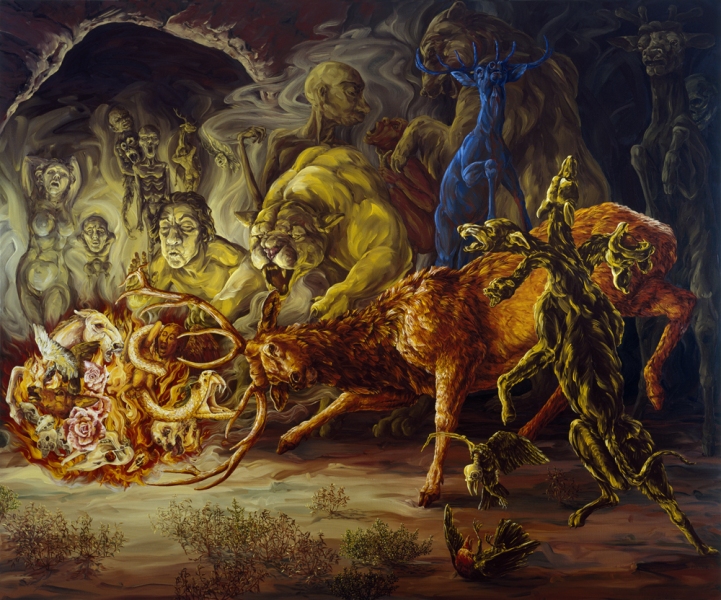
Temptation of St. Anthony — Melissa Miller

Temptation of St. Anthony, 1993 by Melissa Miller (b. 1951)

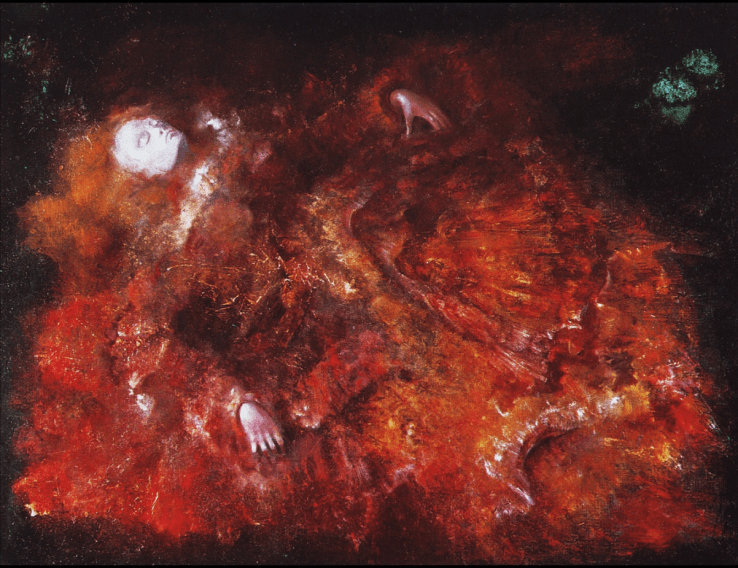
Useless Dress — Leonor Fini

Useless Dress, 1964 by Leonor Fini (1908-1996)

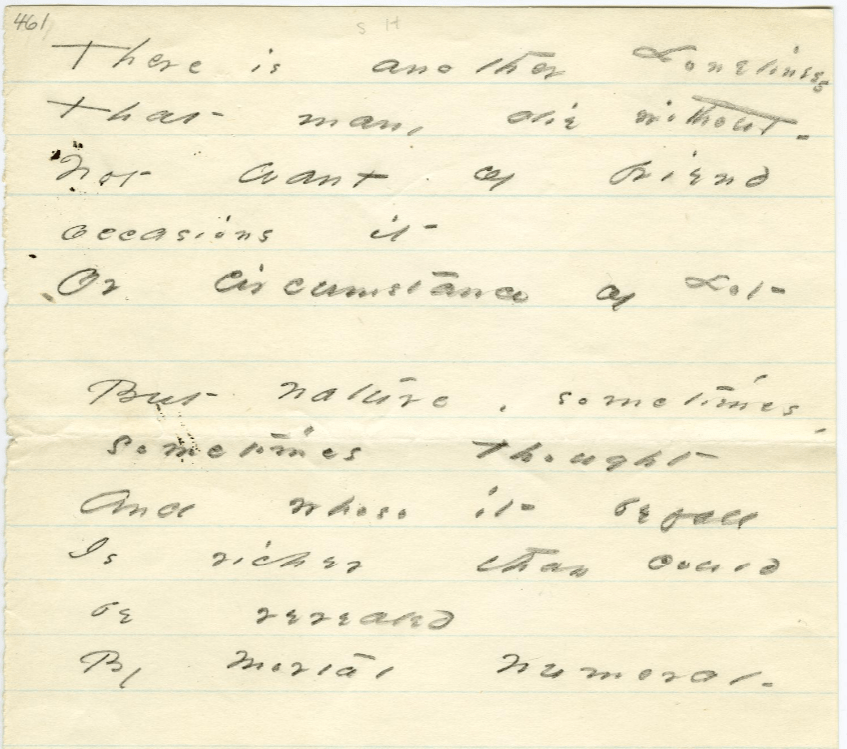
“There is another Loneliness” — Emily Dickinson

There is another Loneliness
That many die without —
Not want of friend occasions it
Or circumstances of Lot

But nature, sometimes, sometimes thought
And whoso it befall
Is richer than could be revealed
By mortal numeral —

Woman Bathing — Mary Cassatt

Woman Bathing, 1891 by Mary Cassatt (1844-1926)

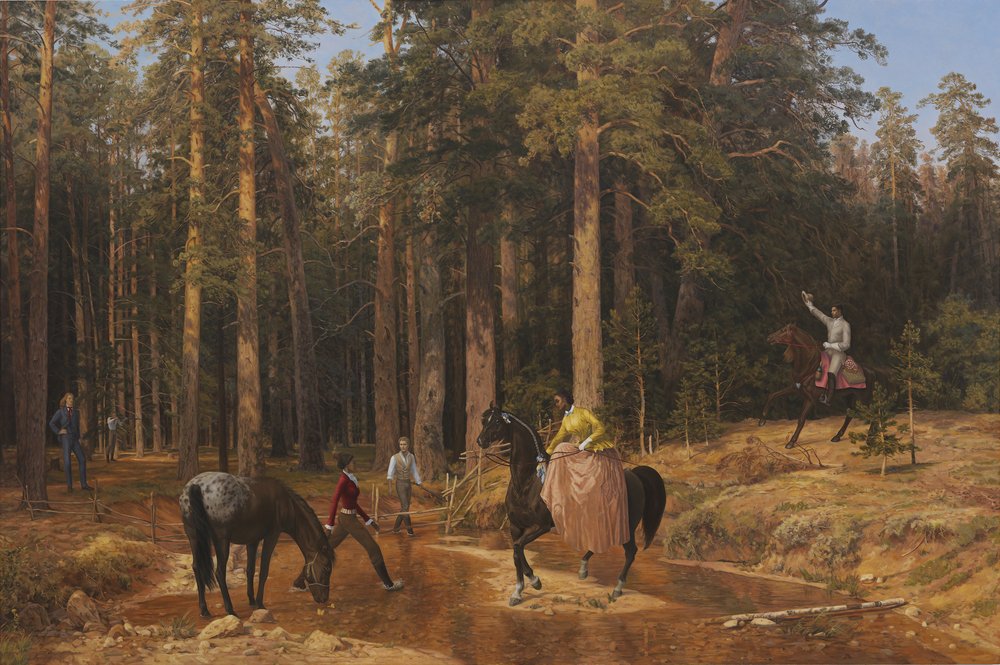
Before — Hilary Harkness

Before, 2021 by Hilary Harkness (b. 1971)

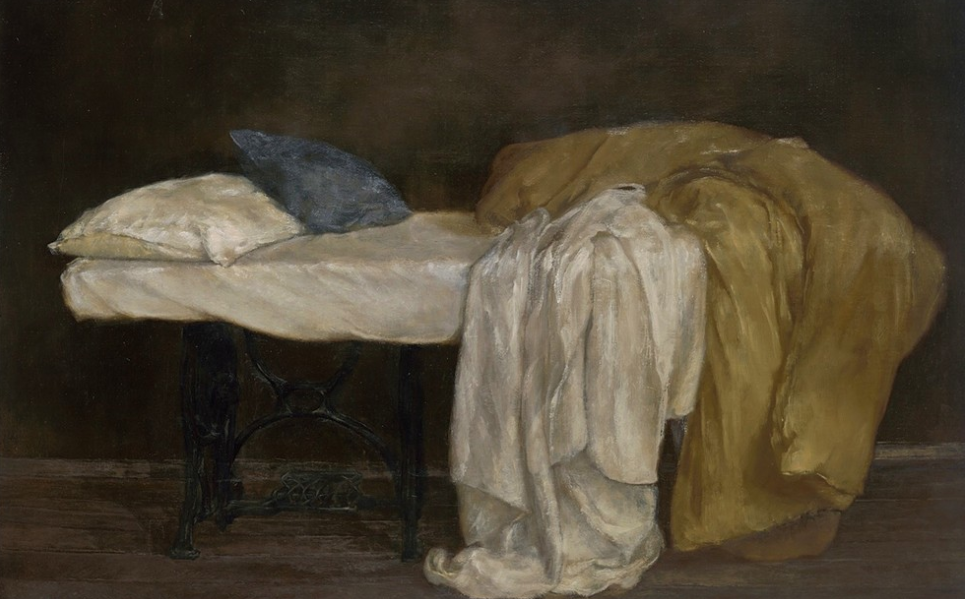
Empty Bed — Anne Herrero 

Empty Bed, 2014 by Anne Herrero (b. 1984)

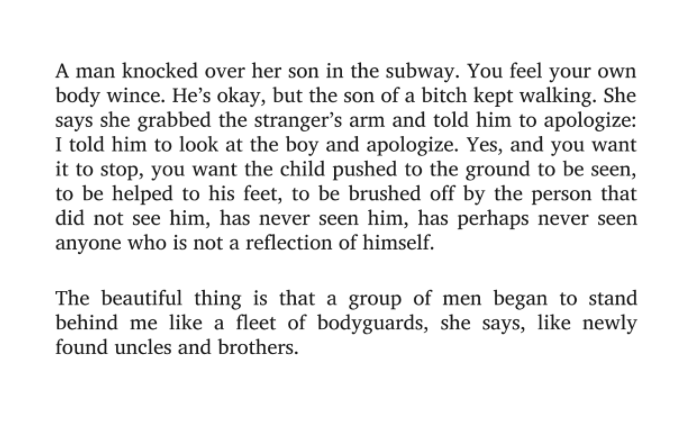
Look at the boy and apologize | Claudia Rankine

A Lady Reading — Gwen John

A Lady Reading 1909-11 by Gwen John 1876-1939

A Lady Reading, 1911 by Gwen John (1876–1939)

New novels from Cormac McCarthy in the fall of 2022

Cormac McCarthy has two novels coming out later this year: The Passenger and Stella Maris. Speculation about The Passenger has percolated for years, with increased interest after McCarthy read excerpts at the Santa Fe Institute in August of 2015. The reading was captured on video and disseminated on the internet and subsequently transcribed (stirring protest from the Cormac McCarthy Society).

A story in The New York Times reports that The Passenger and Stella Maris “represent a major stylistic and thematic departure for McCarthy” and that his “longtime publisher, Alfred A. Knopf, will release” the novels a month apart this fall.

As of now, Knopf’s website doesn’t include any info about the novels, but the NYT story does include what appears to be cover art:

McCarthy’s UK publisher, Pan Macmillan, does have some info on their website about the books, which will apparently be released in a “box set” edition in the UK.

Pan Macmillan also offers some descriptions of the books:

The Passenger

1980, PASS CHRISTIAN, MISSISSIPPI: It is three in the morning when Bobby Western zips the jacket of his wetsuit and plunges from the boat deck into darkness. His divelight illuminates the sunken jet, nine bodies still buckled in their seats, hair floating, eyes devoid of speculation. Missing from the crash site are the pilot’s flightbag, the plane’s black box, and the tenth passenger. But how? A collateral witness to machinations that can only bring him harm, Western is shadowed in body and spirit – by men with badges; by the ghost of his father, inventor of the bomb that melted glass and flesh in Hiroshima; and by his sister, the love and ruin of his soul. Traversing the American South, from the garrulous bar rooms of New Orleans to an abandoned oil rig off the Florida coast, The Passenger is a breathtaking novel of morality and science, the legacy of sin, and the madness that is human consciousness.

Stella Maris

1972, BLACK RIVER FALLS, WISCONSIN: Alicia Western, twenty years old, with forty thousand dollars in a plastic bag, admits herself to the hospital. A doctoral candidate in mathematics at the University of Chicago, Alicia has been diagnosed with paranoid schizophrenia, and she does not want to talk about her brother, Bobby. Instead, she contemplates the nature of madness, the human insistence on one common experience of the world; she recalls a childhood where, by the age of seven, her own grandmother feared for her; she surveys the intersection of physics and philosophy; and she introduces her cohorts, her chimeras, the hallucinations that only she can see. All the while, she grieves for Bobby, not quite dead, not quite hers. Told entirely through the transcripts of Alicia’s psychiatric sessions, Stella Maris is a searching, rigorous, intellectually challenging coda to The Passenger, a philosophical inquiry that questions our notions of God, truth, and existence.

McCarthy is now 88. His last novel, The Road, came out sixteen years ago. He also wrote the screenplay for The Counselor (2013, dir. Ridley Scott), and some nonfiction stuff. My guess is that these two novels are likely the last we’ll get from him. But I hope not.

Here are two photographs of Cormac McCarthy playing pool in El Paso, Texas, in 1998:


“Fore!” — William S. Burroughs

“Fore!”

from

Cities of the Red Night

by

William S. Burroughs


The liberal principles embodied in the French and American revolutions and later in the liberal revolutions of 1848 had already been codified and put into practice by pirate communes a hundred years earlier. Here is a quote from Under the Black Flag by Don C. Seitz:

Captain Mission was one of the forbears of the French Revolution. He was one hundred years in advance of his time, for his career was based upon an initial desire to better adjust the affairs of mankind, which ended as is quite usual in the more liberal adjustment of his own fortunes. It is related how Captain Mission, having led his ship to victory against an English man-of-war, called a meeting of the crew. Those who wished to follow him he would welcome and treat as brothers; those who did not would be safely set ashore. One and all embraced the New Freedom. Some were for hoisting the Black Flag at once but Mission demurred, saying that they were not pirates but liberty lovers, fighting for equal rights against all nations subject to the tyranny of government, and bespoke a white flag as the more fitting emblem. The ship’s money was put in a chest to be used as common property. Clothes were now distributed to all in need and the republic of the sea was in full operation.

Mission bespoke them to live in strict harmony among themselves; that a misplaced society would adjudge them still as pirates. Self-preservation, therefore, and not a cruel disposition, compelled them to declare war on all nations who should close their ports to them. “I declare such war and at the same time recommend to you a humane and generous behavior towards your prisoners, which will appear by so much more the effects of a noble soul as we are satisfied we should not meet the same treatment should our ill fortune or want of courage give us up to their mercy.…” The Nieustadt of Amsterdam was made prize, giving up two thousand pounds and gold dust and seventeen slaves. The slaves were added to the crew and clothed in the Dutchman’s spare garments; Mission made an address denouncing slavery, holding that men who sold others like beasts proved their religion to be no more than a grimace as no man had power of liberty over another.…

Mission explored the Madagascar coast and found a bay ten leagues north of Diégo-Suarez. It was resolved to establish here the shore quarters of the Republic—erect a town, build docks, and have a place they might call their own. The colony was called Libertatia and was placed under Articles drawn up by Captain Mission. The Articles state, among other things: all decisions with regard to the colony to be submitted to vote by the colonists; the abolition of slavery for any reason including debt; the abolition of the death penalty; and freedom to follow any religious beliefs or practices without sanction or molestation. Continue reading ““Fore!” — William S. Burroughs”

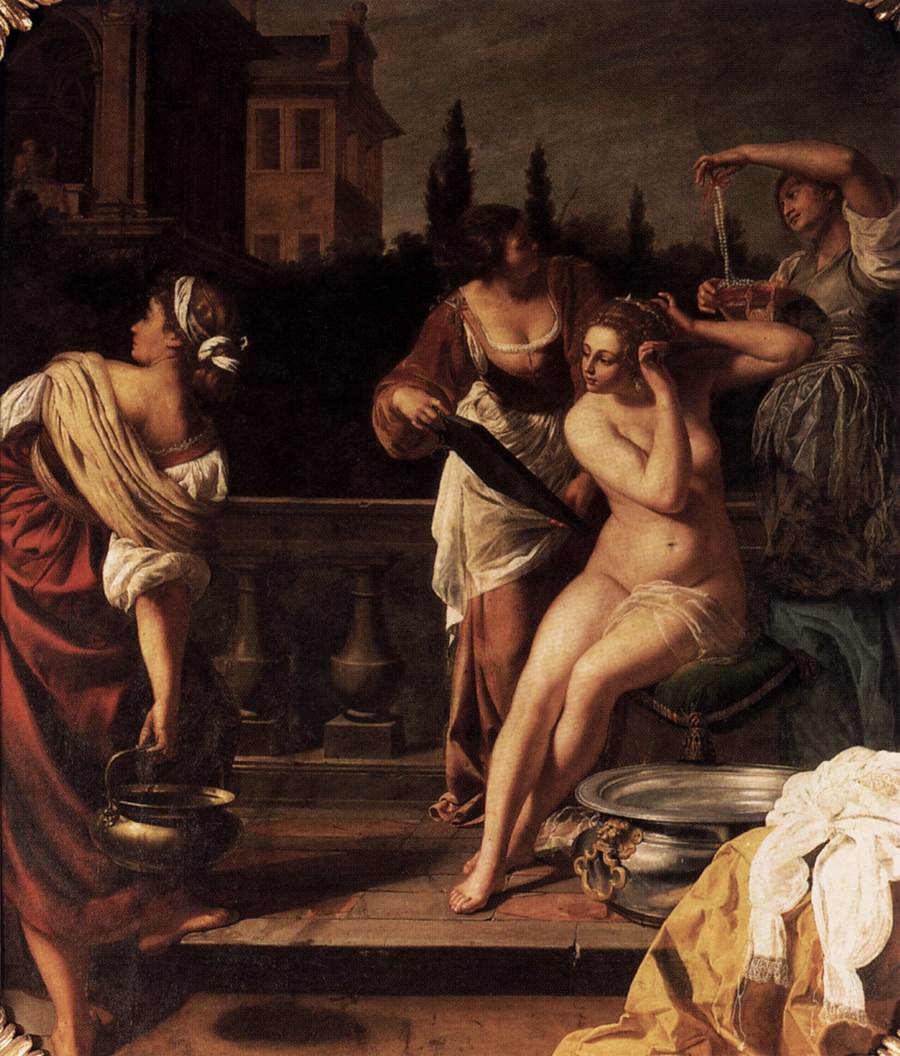
Bathsheba — Artemisia Gentileschi

Bathsheba, c. 1645–1650 by Artemisia Gentileschi (1593-1653)

“Fox” — Rita Dove

“Fox”

by

Rita Dove


She knew what
she was and so
was capable
of anything
anyone
could imagine.
She loved what
she was, there
for the taking,
imagine.

She imagined
nothing.
She loved
nothing more
than what she had,
which was enough
for her,
which was more
than any man
could handle.

Photographic portrait of Donald Barthelme at his drum kit, taken by his father Donald Barthelme, Sr.

db

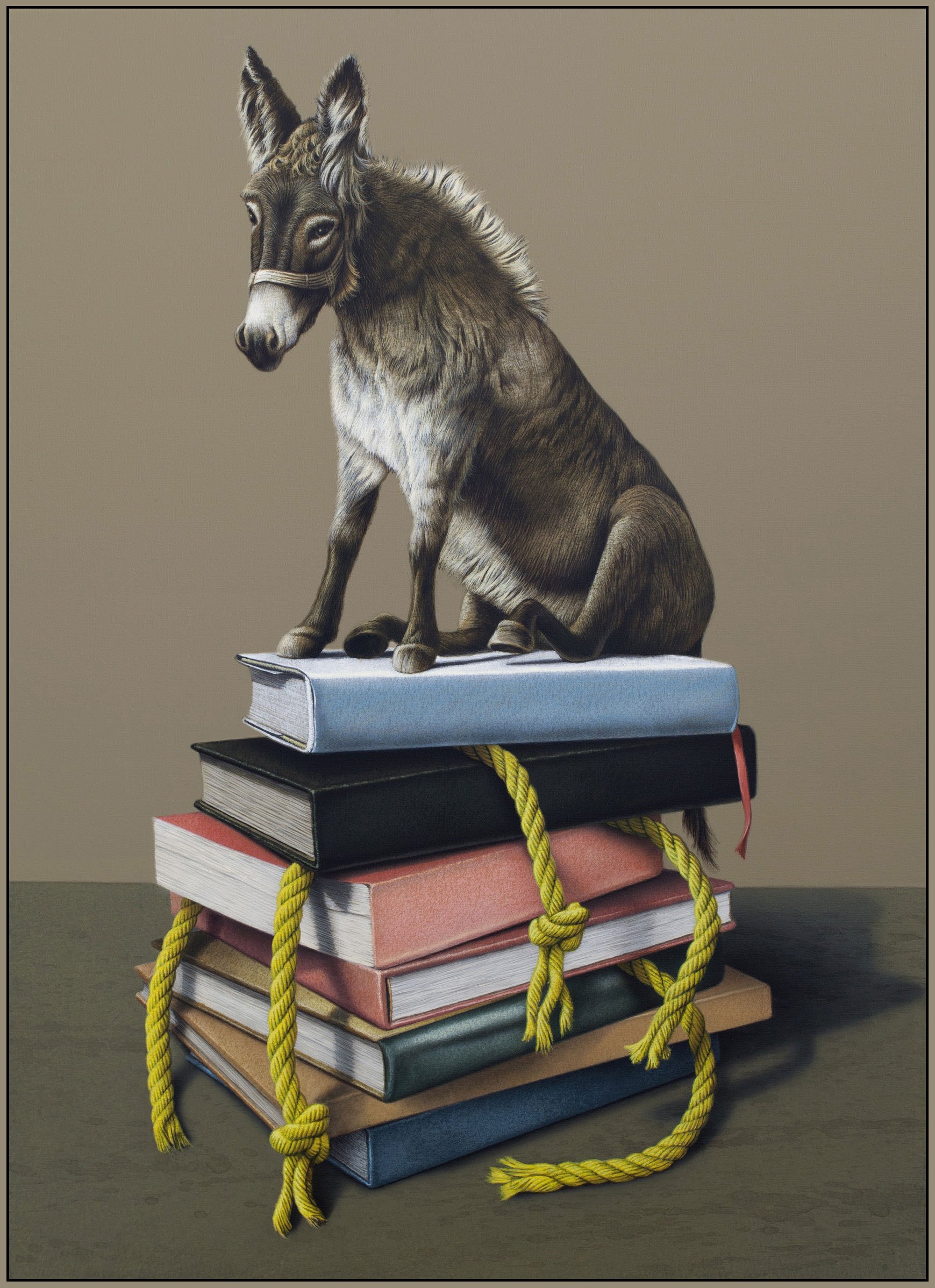
Donkey — Eckhart Hahn

Donkey, 2019 by Eckhart Hahn (b. 1971)

Hero’s Journey — Susannah Martin

Hero’s Journey, 2021 by Susannah Martin (b. 1964)