We’re currently reading–and really enjoying–David Peace’s Occupied City, a dark and bewildering account of the 1948 Teikoku Bank Massacre in Tokyo. Peace’s book gets its American debut later this week from Knopf. We’ll run a proper review then. For now, here’s Peace discussing the project, his difficulty in writing it, the crime’s contemporary resonance in modern Japan, and how he stole from Rashomon:
Author: Biblioklept
“William Burns” — Roberto Bolaño
Hey! Check it out: new (well, new as these things go) fiction from Roberto Bolaño. The New Yorker has published a selection called “William Burns,” which may or may not be (but we’re thinking probably is) an excerpt from a longer work, one that will probably come out in the nearish future. Chris Andrews translates. “William Burns” tells the story of the eponymous Californian, a “laid-back guy who never lost his cool,” who seems to be a private investigator entrusted to protect two women from a killer. The story builds in typical Bolaño fashion: plenty of sinister, Lynchian ambiance punctuated by strange humor, with a good shot of banality to smooth things out. Our favorite passage:
If I were a dog, I thought resentfully, these women would show me a bit more consideration. Later, after I realized that none of us were feeling sleepy, they started talking about children, and their voices made my heart recoil. I have seen terrible, evil things, sights to make a hard man flinch, but, listening to the women that night, my heart recoiled so violently it almost disappeared. I tried to butt in, I tried to find out if they were recalling scenes from childhood or talking about real children in the present, but I couldn’t. My throat felt as if it were packed with bandages and cotton swabs.
WSJ Interviews Don DeLillo
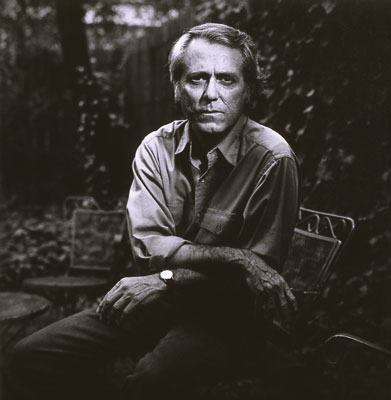
The Wall Street Journal has published an interview with Don DeLillo where the reclusivish author discusses the genesis of his new novella, Point Omega. From the interview:
The Wall Street Journal: How did this book evolve?
Don DeLillo: The idea began in the same place where the novel begins — in the sixth floor gallery at the Museum of Modern Art — and at the same time, summer of 2006. I wandered in and there was “24 Hour Psycho,” which I found very interesting to watch and to think about. In fact, I returned two or three times after that, and by the third visit I was fairly certain I wanted to write something about it — the idea of time and motion and the sense of self-conscious seeing, because everything happens in such slow motion and because the imagery is somewhat familiar from the movie itself. I began to wonder about such things, about how we see and what we see, and what we miss seeing when we’re looking at things in a more conventional format. And I decided finally that I wasn’t going to risk writing a piece of nonfiction because I’m not a philosopher or a physicist and I could not study time in the matter that seemed to be warranted. So I placed a character in the gallery and began from there.
The Wall Street Journal seems to be on a streak when it comes to interviewing authors who typically avoid interviews–Cormac McCarthy talked with the financial magazine late last year. Maybe we should scour their archives more closely–who knows, maybe there’s a secret Salinger interview stashed away somewhere.
Robin in the Rye
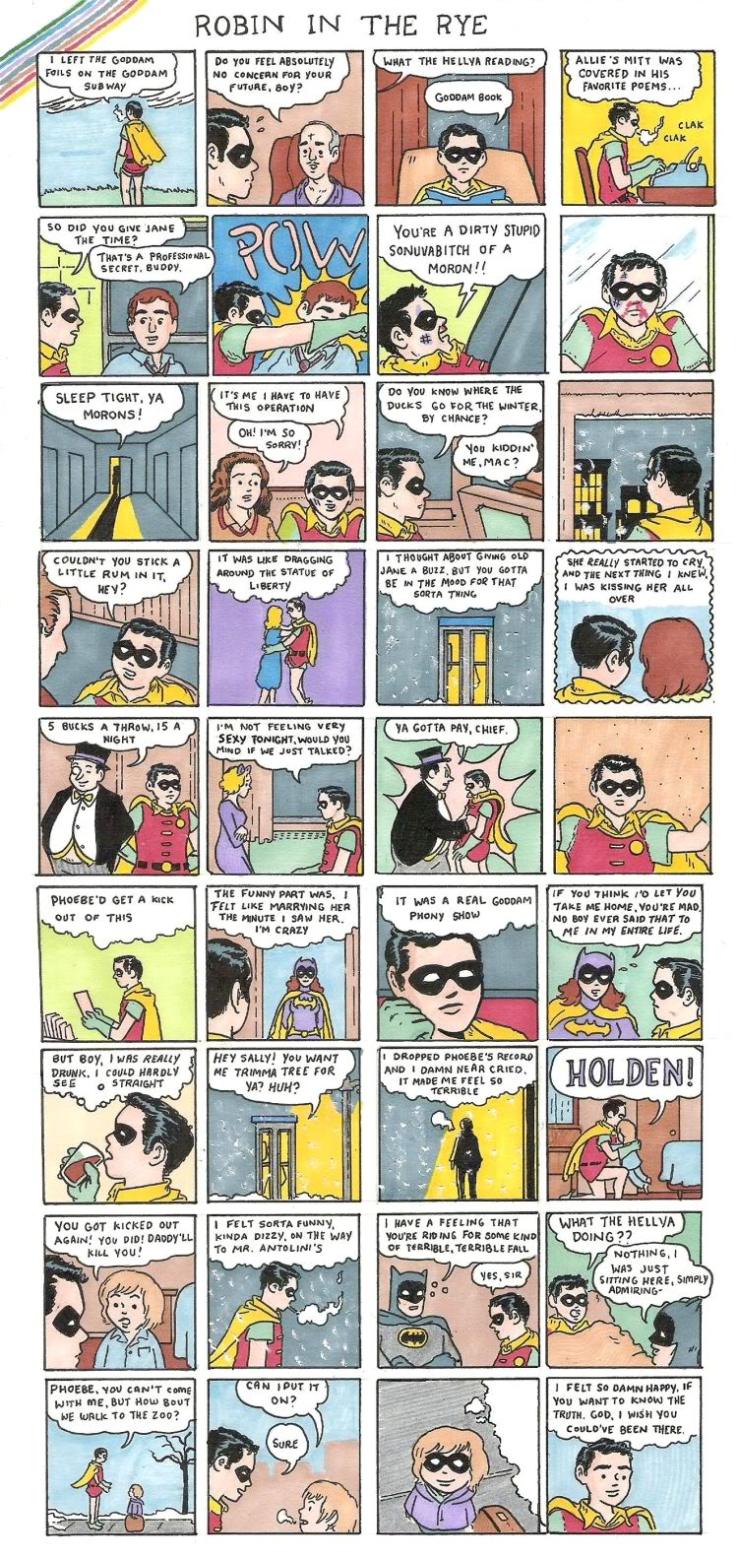
An oldie but a goodie. Andrew Lorenzi‘s “Robin in the Rye” channels J.D. Salinger via R. Sikoryak.
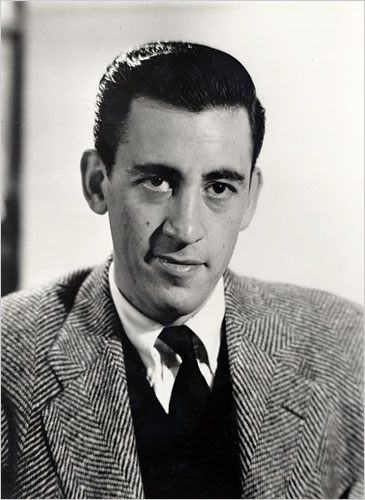
RIP J.D. Salinger
DeLillo Goes Psycho
Okay. We admit that’s a stupid headline. Anyway.
We dove into our review copy of Don DeLillo’s latest novel (it’s really a novella, despite claims made by its cover and press materials) Point Omega last night. It opens with a protracted scene of a man at the 2006 MOMA showing of Douglas Gordon’s videowork, 24 Hour Psycho. Gordon’s project, first presented in Glasgow and Berlin in 1993, slows Alfred Hitchock’s classic Psycho to a crawl, stretching the entire film over 24 hours.

DeLillo’s description:
The slightest camera movement was a profound shift in space and time but the camera was not moving now. Anthony Perkins is turning his head. It was like whole numbers. The man could count the gradations in the movement of Anthony Perkins’ head. Anthony Perkins turns his head in five incremental movements rather than one continuous motion. It was like bricks in a wall, clearly countable, not like the flight of an arrow or a bird. Then again it was not like or unlike anything. Anthony Perkins’ head swiveling over time on his long thin neck.
Ah, DeLillo — “it was not like or unlike anything” — redact your own similes. There’s also this classic DeLilloian line in the episode, somehow both concise and oblique: “The film made him feel like someone watching a film.” Maybe watching this 35 second YouTube clip of 24 Hour Psycho will make you feel like someone watching a 35 second YouTube clip of 24 Hour Psycho.
“Write the Dirty Words Big and Underline Them and Kiss Them and Hold Them for a Moment” — James Joyce’s Dirty Epistles
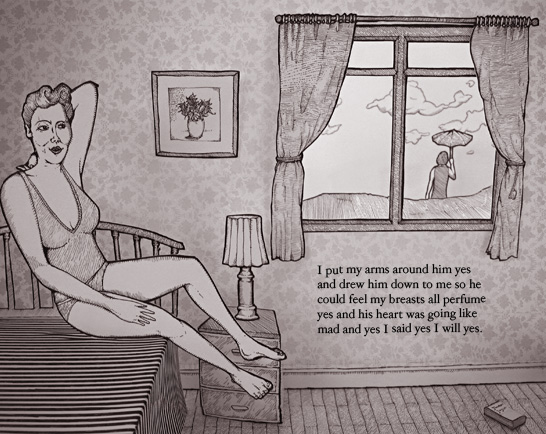
Anyone who’s read the “Circe/Nighttown” chapter of James Joyce’s Ulysses knows that Joyce had more than a passing interest in masochism, gender-role reversals, scatology, and other aspects of “deviant” sexuality (we put the word in quotations in an attempt to remove it from any pejorative or judgmental connotations and at the same time recognize that Joyce aspired to shock or otherwise disrupt his audience in his depictions of sexuality). But if you want to read something really filthy, something purposefully obscene, check out Joyce’s dirty letters to his wife Nora, written over a three month period in 1909 when the couple were separated due to a business trip. Joyce shows a particular fetish for coprophilia, expresses a desire to wear his wife’s underwear, and meticulously describes his wife’s farts. Gross stuff.
William Burroughs’s Stuff
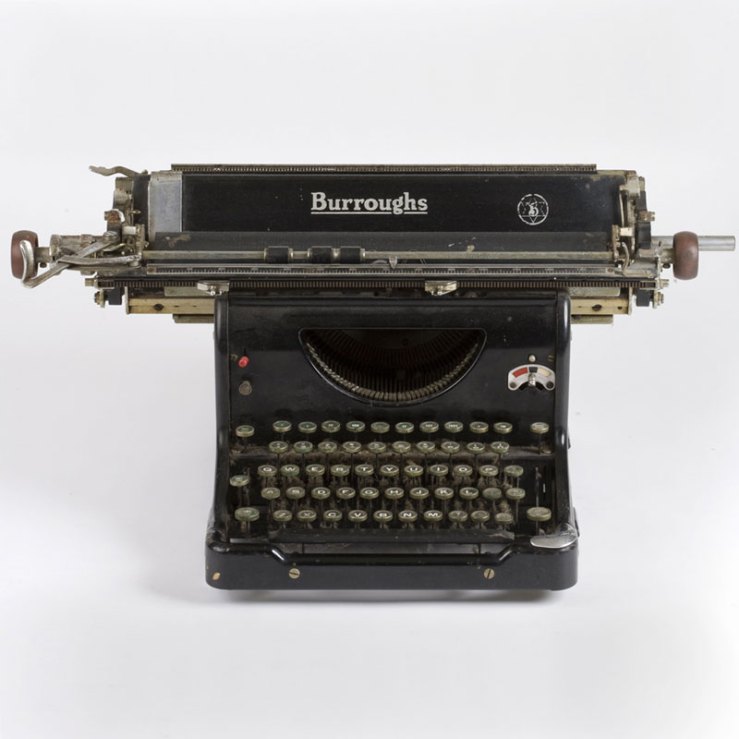 Check out this photo series of William Burroughs’s personal effects at The Morning News. There’s also a really cool interview with the photographer Peter Ross. Great, uh, stuff.
Five Dials Publishes DFW Memorials
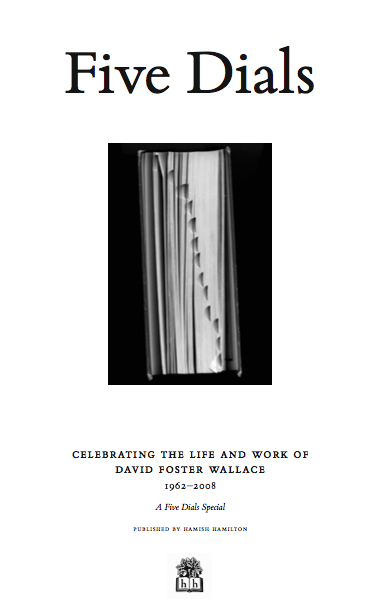 Via Times Flow Stemmed: issue 10 of Five Dials magazine is available for easy-breezy pdf download. The issue collects all the testimonies from the October 2008 memorial service at NYU for the recently-deceased author David Foster Wallace, including moving pieces from his sister, editor, publisher, and writers Zadie Smith, George Saunders, Don DeLillo, and Jonathan Franzen. Here’s what we wrote when we found out about DFW’s death.
Moebius Gallery
Got an hour to kill? Lose yourself in the surreal world of French artist Moebius (Jean Giraud) at this cool little gallery. Moebius’s art taps into the mythological, exploring themes that seem at once both strangely familiar but also wildly divergent from our expectations. We love his pictures best when there are no cartoon speech bubbles imposing language on the scene; far better to engage him in his projects of imagination. Great stuff.

“The Philosophy of Furniture” — Edgar Allan Poe
“There is reason, it is said, in the roasting of eggs, and there is philosophy even in furniture — a philosophy nevertheless which seems to be more imperfectly understood by Americans than by any civilized nation upon the face of the earth.”
I started Roberto Bolaño’s faux-encyclopedia, Nazi Literature in the Americas last night. In the first section, Edelmira Thompson de Mendiluce creates a room based on Edgar Allan Poe’s essay “The Philosophy of Furniture.” I’d never read or even heard of that essay up until now, and, given Bolaño’s penchant for invention, I wondered for a moment if it even really existed. Edelmira recreates the room according Poe’s specifications and then writes Poe’s Room, her defining novel, in its rich confines. The essay exists outside of Bolaño, of course, as does the room–it’s part of the Edgar Allan Poe National Historic Site.


The Anxiety of Influence

In her essay “The Naked and the Conflicted,” published in today’s New York Times, Katie Roiphe suggests that “we are awfully cavalier about the Great Male Novelists of the last century. It has become popular to denounce those authors, and more particularly to deride the sex scenes in their novels.” By the Great Male Novelists she is, of course, referring to Norman Mailer, John Updike, Philip Roth, and Saul Bellow. She continues: “Even the young male writers who, in the scope of their ambition, would appear to be the heirs apparent have repudiated the aggressive virility of their predecessors.” Roiphe picks a relatively slim sample of “young male writers” to prove her thesis, including David Foster Wallace, Michael Chabon, Dave Eggers, and Jonathan Franzen. Slim sample, but still, quite representative. Her big claim: “The younger writers are so self-conscious, so steeped in a certain kind of liberal education, that their characters can’t condone even their own sexual impulses; they are, in short, too cool for sex.” Hmmm . . . Perhaps. Makes us think about how writers like Dennis Cooper, Wells Tower, Junot Díaz, or Stephen Elliott might fit into this scheme . . .

A Modern Euphemism Which Softens the Ugly Word Book-thief
A definition of “biblioklept,” from William S. Walsh’s strange and wonderful 1909 ‘cyclopedia, Handy-book of Literary Curiosities:
Biblioklept, a modern euphemism which softens the ugly word book-thief by shrouding it in the mystery of the Greek language. So the French say, not voleur, but chipeiir de livres. The true bibliomaniac cannot help feeling a tenderness for his pet fad, even when carried to regrettable excesses. Perhaps he has often felt his own fingers tingle in view of a rare de Grolier, a unique Elzevir, he knows the strength of the temptation, he estimates rightly his own weakness; perhaps, if he carries self-analysis to the unflattering point which it rarely reaches, save in the sincerest and finest spirits, he recognizes that his power of resistance is supplied not by virtue, but by fear,—fear of ilie police and of Mrs. Grundy. In his inner soul he admires the daring which risks all for the sake of a great passion. When a famous book-collector was exhibiting his treasures to the Duke of Sussex, Queen Victoria’s uncle, he apologized to his royal highness for having to unlock each case. ‘• Oh, quite right, quite right,” was the reassuring reply: “to tell the truth, I’m a terrible thief.” There are not many of us who are so honest. Nevertheless, the epidemic form which bibliokleptomania has assumed is recognized in the motto which school-boys affix to their books, warning honest friends not to steal them. ” Honest may, of course, be a fine bit of sarcasm. But one prefers to look upon it as indicating a subtle juvenile prescience that the most honest and the most friendly will steal books, as the most honest will cheat their dearest friends in a matter of horseflesh.
Continue reading “A Modern Euphemism Which Softens the Ugly Word Book-thief”
Heroes of 2009



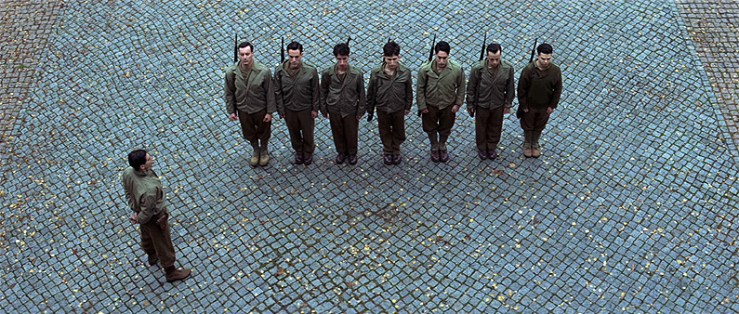


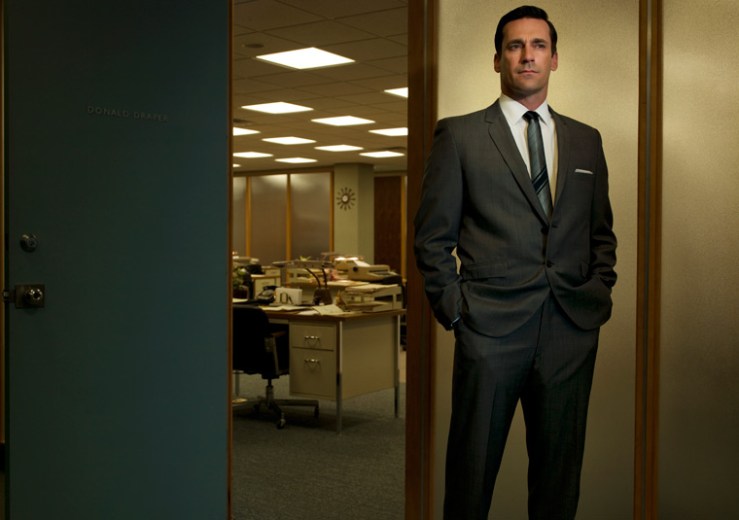


-
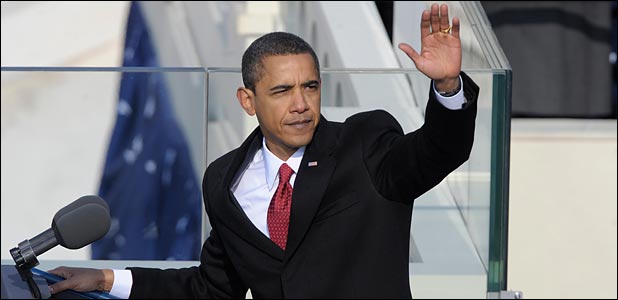
BARRY MIGHT NOT WALK ON WATER BUT HIS INAUGURATION BROUGHT TEARS TO OUR EYES
Books To Look Forward To In 2010
A couple of months ago, this cryptic postcard arrived in the mail:
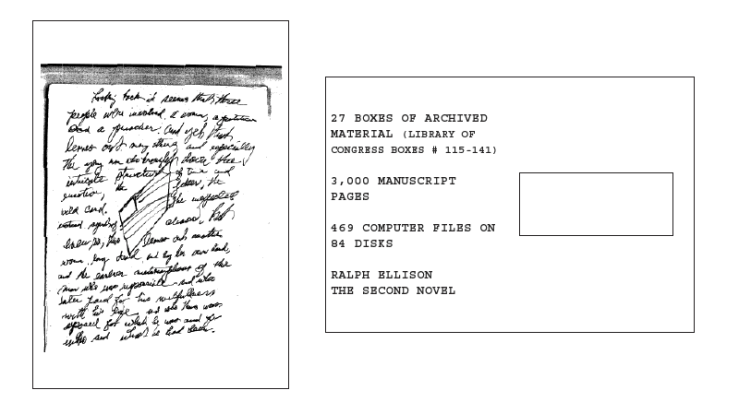 A second novel from Ralph Ellison? Wasn’t that Juneteenth, the posthumous work pieced together from thousands of pages and notes by Ellison’s literary executor, John Callahan? The one that was kinda sorta panned as a mess (or at least an incomplete vision)? A few weeks later, another postcard:
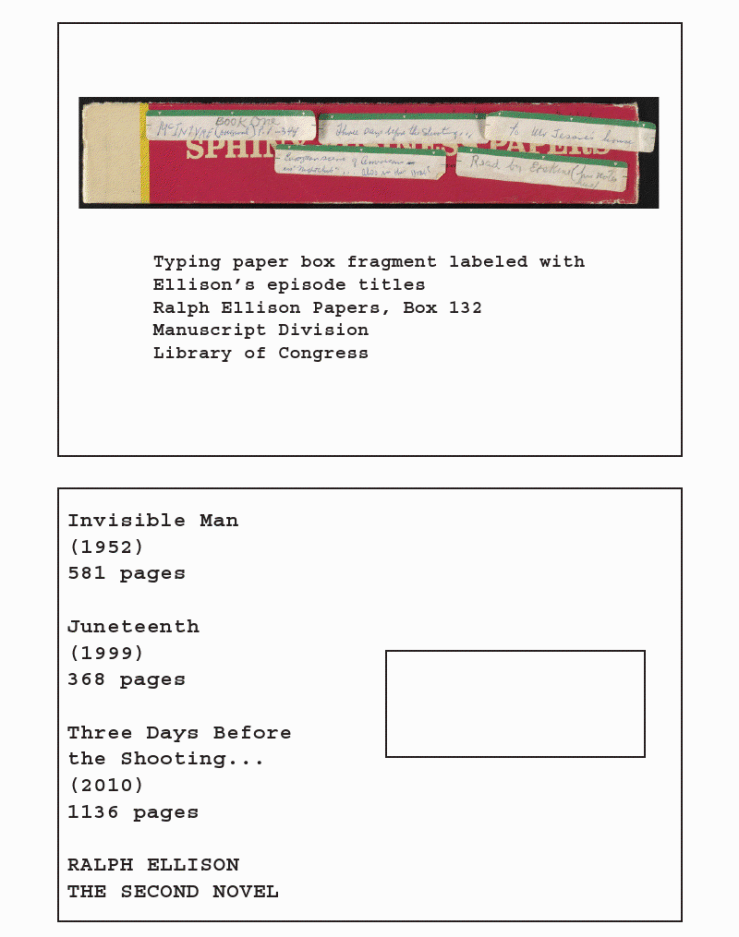 So we were still a little confused. Was Three Days Before the Shooting… a more complete version of Juneteenth, or a wholly separate novel? A week or two later, a third postcard showed up with some answers: Ralph Ellison’s Three Days Before the Shooting… is a re-edit of the material originally presented as Juneteenth back in 1999, expanded from 368 pages to 1136 pages. Hopefully, Ellison’s vision will be restored here. Modern Library plans to release Three Days Before the Shooting… in late January of 2010.
Don DeLillo‘s newest novel Point Omega (sounds like some G.I. Joe shit) will drop in early February of 2010. It’s a slim 128 pages, a novella really, which might be a nice change of pace. Here’s the cover:

Wells Towers had something of a hit this year with his collection of short stories, Everything Ravaged, Everything Burned, but maybe you didn’t read it because it was in oh-so cumbersome hardback. Thankfully, Picador will release Everything Ravaged in trade paperback in February of 2010. In the meantime, check out Chris Roth’s short adaptation of the title story:
There’s no release date yet for Jonathan Franzen‘s forthcoming novel Freedom, but it should come out next year. The novel is Franzen’s follow-up to his breakout hit, The Corrections. Can’t wait an indeterminate measure? The New Yorker published an excerpt called “Good Neighbors” earlier this year.
We began with a posthumous novel and will end with one: David Foster Wallace’s The Pale King may or may not come out in 2010 (some websites are citing 2011 now). We will not parse through the problems of unfinished, post-death work here but simply say we want to read it. We were intrigued by–and enjoyed–the portions of the novel that have been published thus far, and we love Wallace, and we’re greedy, and we want more.
(An Incomplete List of) Writers Who Died in 2009
John Updike
Blair Lent
Hortense Calisher
John Mortimer
Philip José Farmer
James Purdy
Billy C. Clark
Horton Foote
Santha Rama Rau
J.G. Ballard
Eve Kosofsky Sedgwick
Bob Hamm
Tim Guest
Gordon Burn
Frank McCourt
Stanley Middleton
E. Lynn Harris
Jim Carroll
Keith Waterhouse
William Safire
William Hoffman
Lionel Davis
Norma Fox Mazer
Claude Lévi-Strauss
Raymond Federman
Christopher Anvil
Robert Holdstock
D0nald Harington
Stephen Toulmin
Milorad Pavić
And I Only Am Escaped Alone to Tell Thee


 Biblioklept