
March 11th.–After the ground had been completely freed of snow, there has been a snow-storm for the two days preceding yesterday, which made the earth all white again. This morning at sunrise, the thermometer stood at about 18 degrees above zero. Monument Mountain stands out in great prominence, with its dark forest-covered sides, and here and there a large, white patch, indicating tillage or pasture land; but making a generally dark contrast with the white expanse of the frozen and snow-covered lake at its base, and the more undulating white of the surrounding country. Yesterday, under the sunshine of mid-day, and with many voluminous clouds hanging overit, and a mist of wintry warmth in the air, it had a kind of visionary aspect, although still it was brought out in striking relief. But though one could see all its bulgings, round swells, and precipitous abruptnesses, it looked as much akin to the clouds as to solid earth and rock substance. In the early sunshine of the morning, the atmosphere being very clear, I saw the dome of Taconic with more distinctness than ever before, the snow-patches, and brown, uncovered soil on its round head, being fully visible. Generally it is but a dark blue unvaried mountain-top. All the ruggedness of the intervening hill-country was likewise effectively brought out. There seems to be a sort of illuminating quality in new snow, which it loses after being exposed for a day or two to the sun and atmosphere.
Category: Art
Big Dreamer with an Ode to the Dawn — Adrian Cox
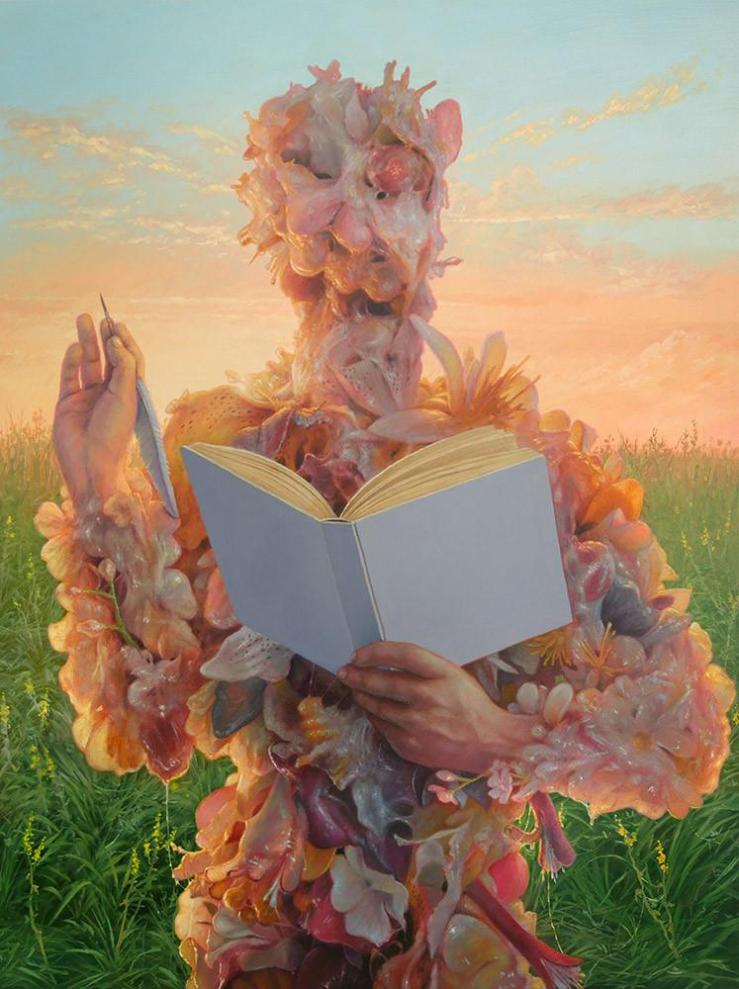
Big Dreamer with an Ode to the Dawn by Adrian Cox (b. 1988)
Agbogo-Mmuo — Ben Enwonwu
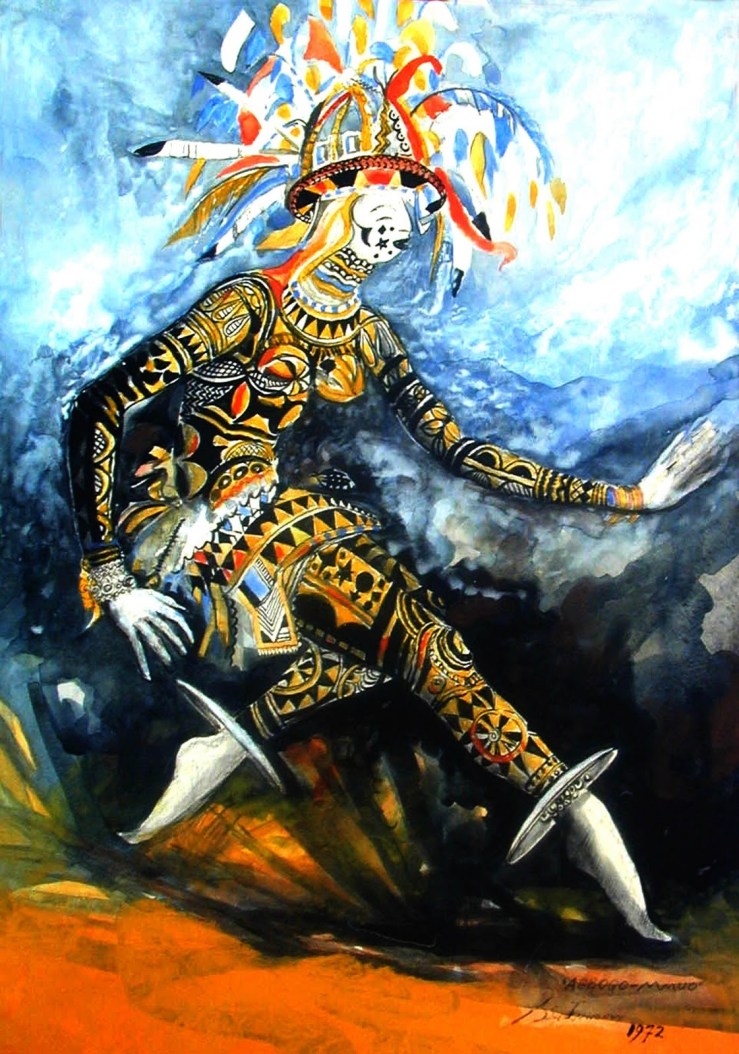
Agbogo-Mmuo, 1972 by Ben Enwonwu (1917-1994)
Mourning and Fecundity II — Vincent Desiderio
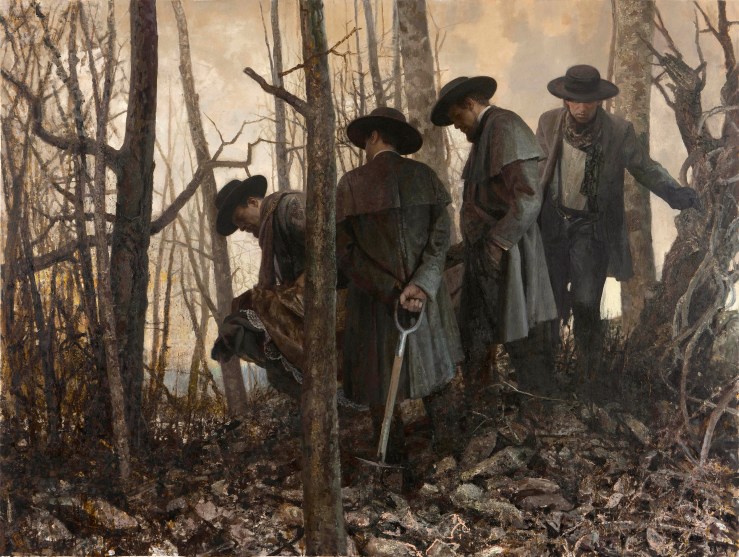
Mourning and Fecundity II, 2011 by Vincent Desiderio (b. 1955)
Woman in the Mirror — Cagnaccio di San Pietro

Woman in the Mirror, 1930 by Cagnaccio di San Pietro (1897 – 1946)
I’m into Shooting in Natural Environments — Dana Schutz

I’m into Shooting in Natural Environments, 2008 — Dana Schutz (b. 1976)
Four Fairies — Michaël Borremans
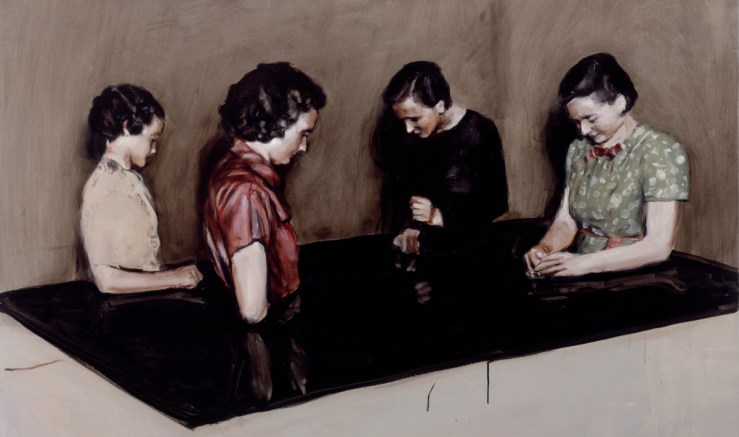
Four Fairies, 2003 by Michaël Borremans (b. 1963)
Vortex — Sharon Sprung

Vortex, Sharon Sprung (b. 1953)
Mardi Gras — Sean Mellyn
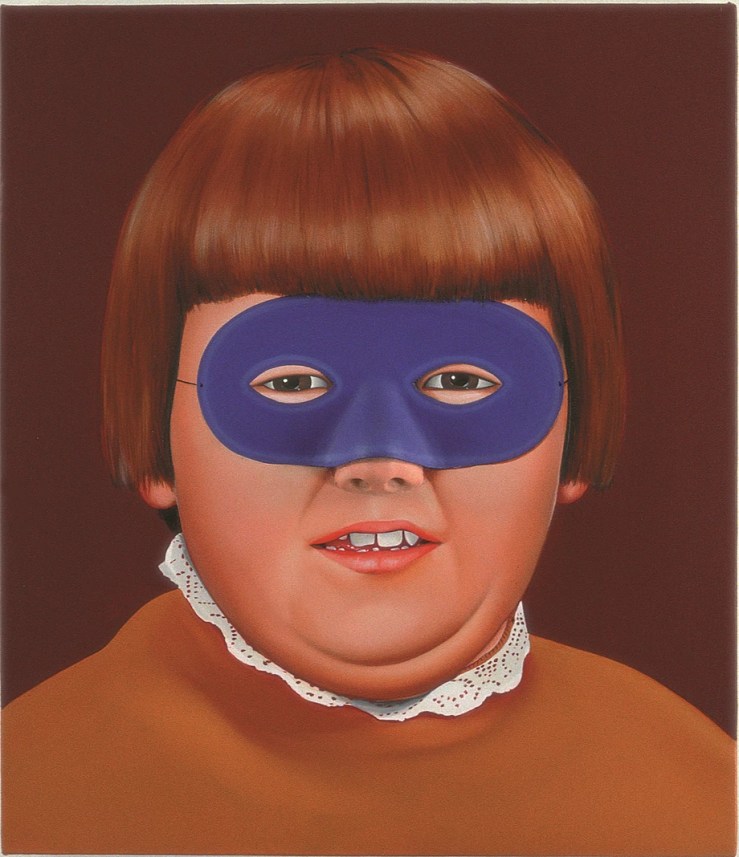
Mardi Gras, 1998 by Sean Mellyn (b. 1965)
The Day I Quit — Susannah Martin
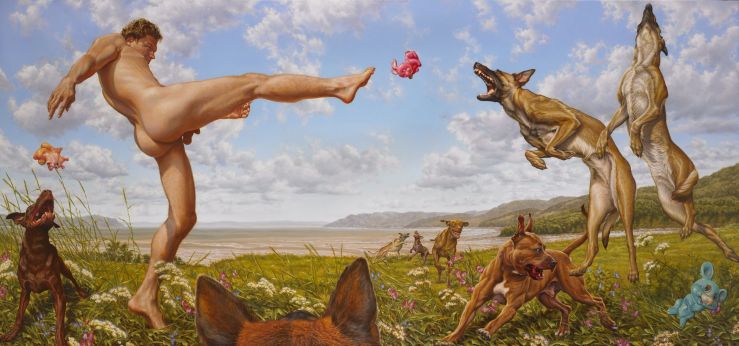
The Day I Quit, 2014 by Susannah Martin (b. 1964)
Dick (Perry Bible Fellowship)

Hotel Maid — Alex Colville
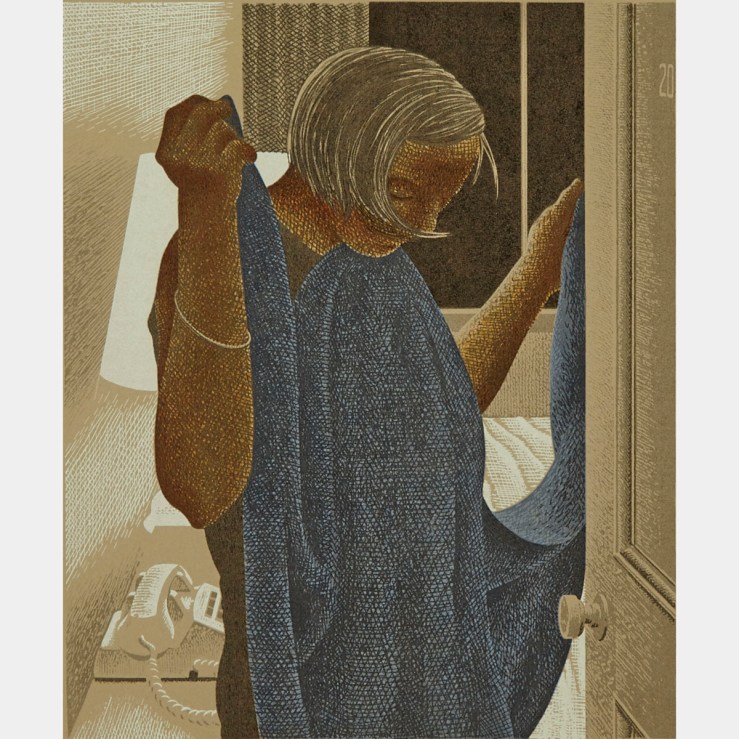
Hotel Maid, 1978 by Alex Colville (1920-2013)
Blog about Ishmael Reed’s The Last Days of Louisiana Red (Book acquired 27 Feb. 2019)

A few weeks ago I went to my favorite used bookstore to pick up a copy of Ishmael Reed’s follow up to Mumbo Jumbo, 1974’s The Last Days of Louisiana Red. The store had a few copies of it, but they were all Dalkey Archive editions with ugly covers and bad binding, so I broke down and ordered a first edition Random House hardback online. (I was tempted to pick up the Avon Bard paperback version to match the covers of the other Reed books I own, which are so beautiful I’ll share them here again):
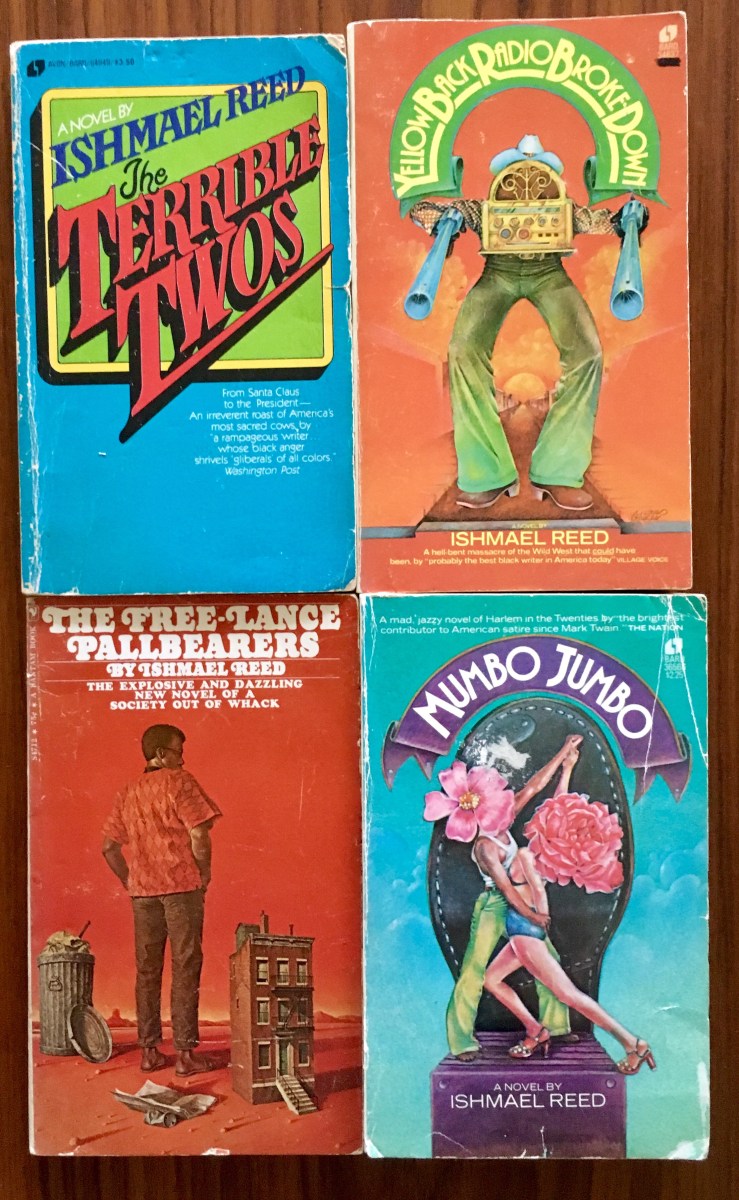
Anyway, I did the design of the hardback the came in, which the jacket flap credits as Reed’s own suggestion. Oh, and it’s an old library book:
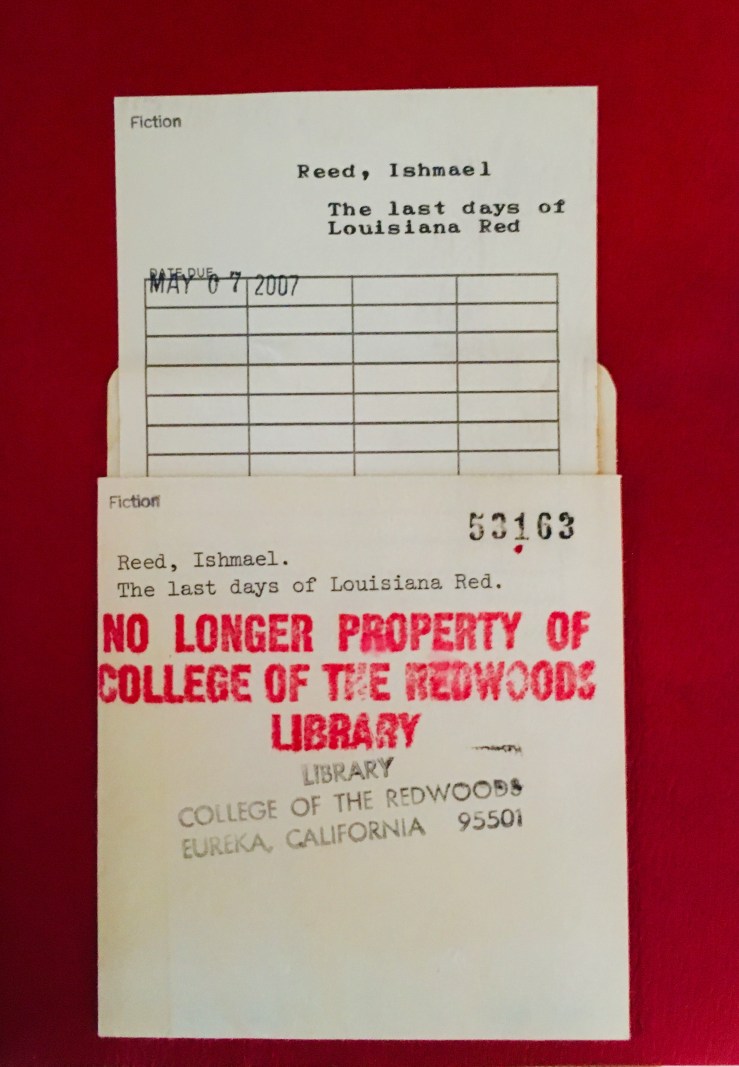
I read the first half of The Last Days of Louisiana Red this weekend. Reed’s writing is bitter, prescient, zany, and mythological, telegraphed in a range of comic and tragic voices. The chapters are short, and the sentences sting. The plot—well, in Louisiana Red, Reed brings back Papa LaBas the Neo-HooDoo hero of Mumbo Jumbo, and sends him to the West Coast, to Berkeley, Carlifornia to investigate the murder of Ed Yellings. Yellings, a Neo-HooDoo man himself, has discovered the cure for cancer through his mysterious enterprise, the Solid Gumbo Works. Yellings’ gumbo is also a cure for “Louisiana Red,” a poisonous mental disease that afflicts black people in the Americas. Papa LeBas is alternately helped and hindered by Yellings’ adult children: Wolf, Street, Sister, and the provocative and gifted Minnie, who leads a group of militants called the Moochers.
I’m really digging Louisiana Red, which, like the other early Reed novels I’ve read, synthesizes the history, folklore, mythology, and intellectual traditions of the African diaspora into a slapstick satire of USA at the end of the twentieth century. Reed cooks his gumbo with a wide variety of ingredients: voodoo lore and California history bubble in the same pots as riffs on astrology and Cab Calloway’s hit “Minnie the Moocher.” Reed satirizes the Berkeley youth movement, radical feminism, and intellectual hucksterism, all through an allegorical lens—he dares us, often explicitly (by way of a character named Chorus) to read Louisiana Red as an allegorical retelling of Sophocles’ Antigone. While Papa LaBas appears to be the moral center of Reed’s novel, delivering righteous condemnation after righteous condemnation of the Moochers and other persons afflicted with Louisiana Red, Reed nevertheless gives expression to a multitude of opposing viewpoints in the novel. It is a speaking novel, a novel that is both of its time but transcends it, as most of the problems and perils it diagnoses are, unfortunately, still with us. More to come.
Devotion — Egon Schiele
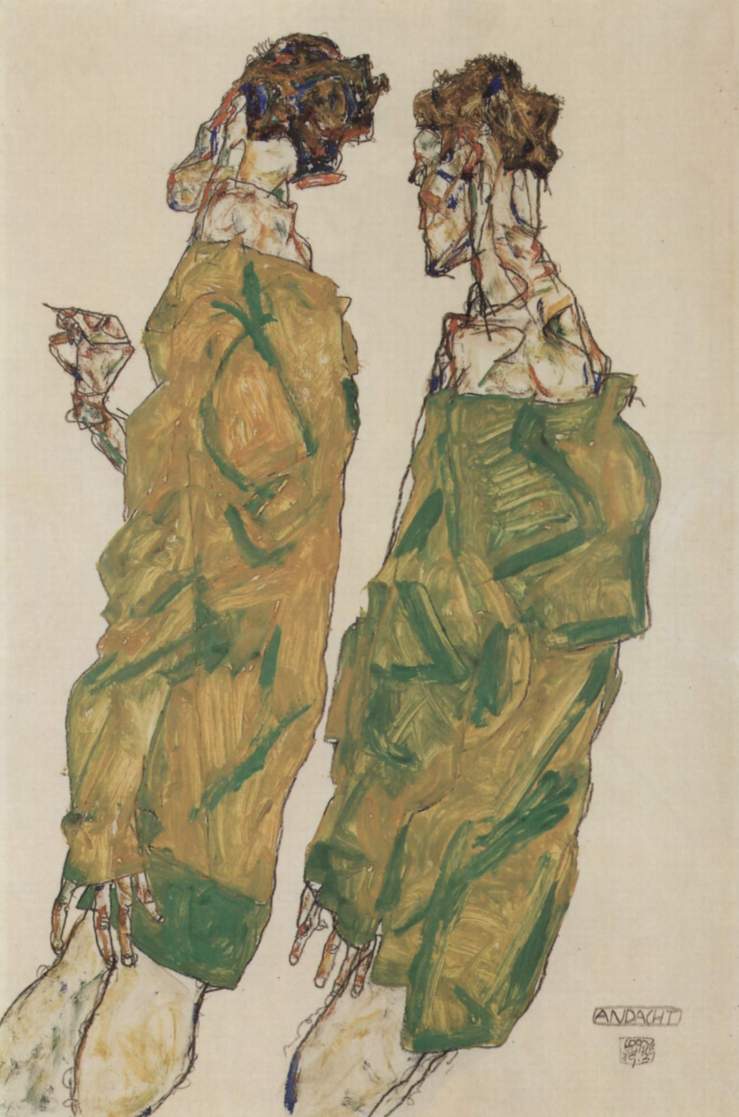
Devotion, 1913 — Egon Schiele (1890-1918)
Battle of Grunwald (Detail) — Jan Matejko

Battle of Grunwald (Detail), 1878 by Jan Matejko (1838-1893)
March — Alex Colville
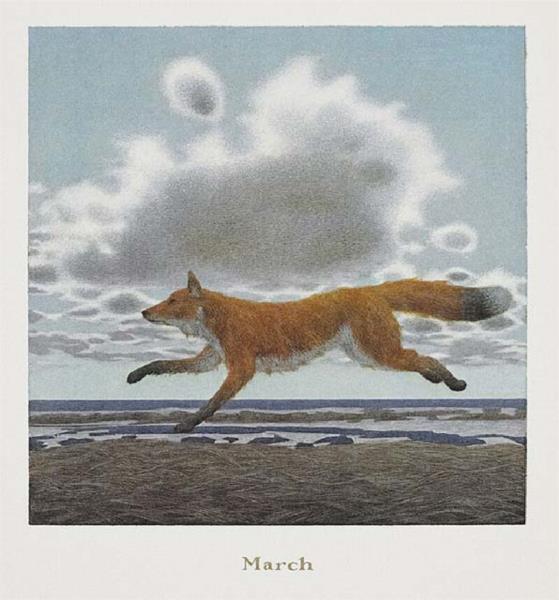
March, 1979 by Alex Colville (1920-2013)
Battle of Grunwald (Detail) — Jan Matejko
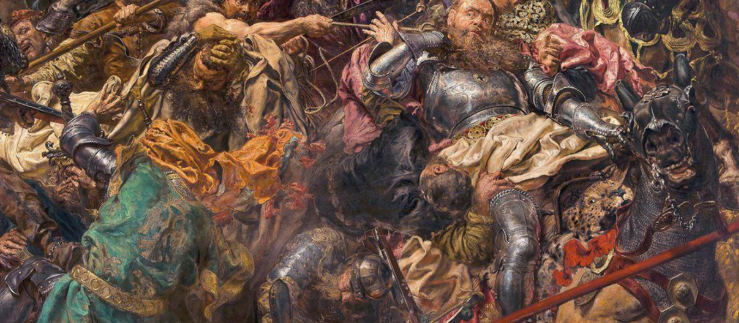
Battle of Grunwald (Detail), 1878 — Jan Matejko (1838-1893)
 Biblioklept