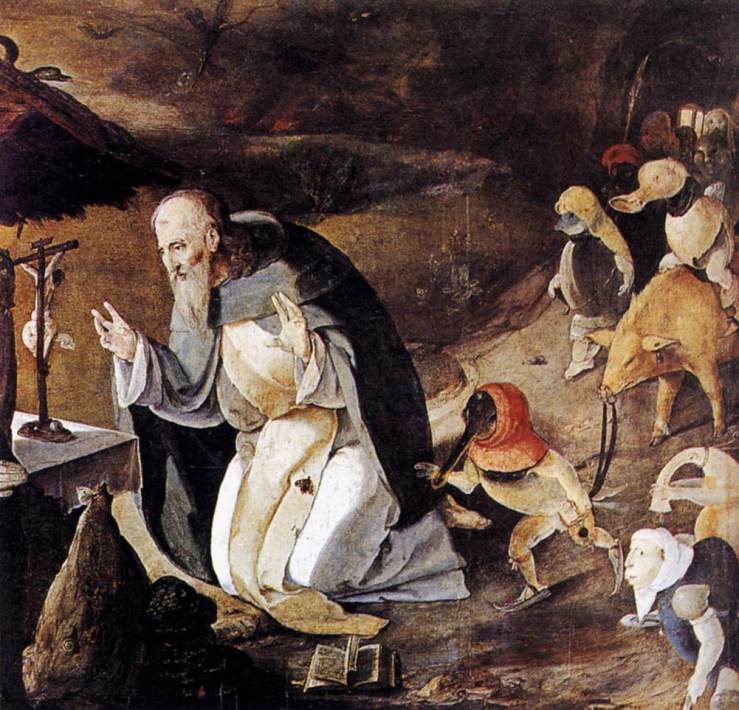
The Temptation of St. Anthony — Lucas van Leyden

anthony

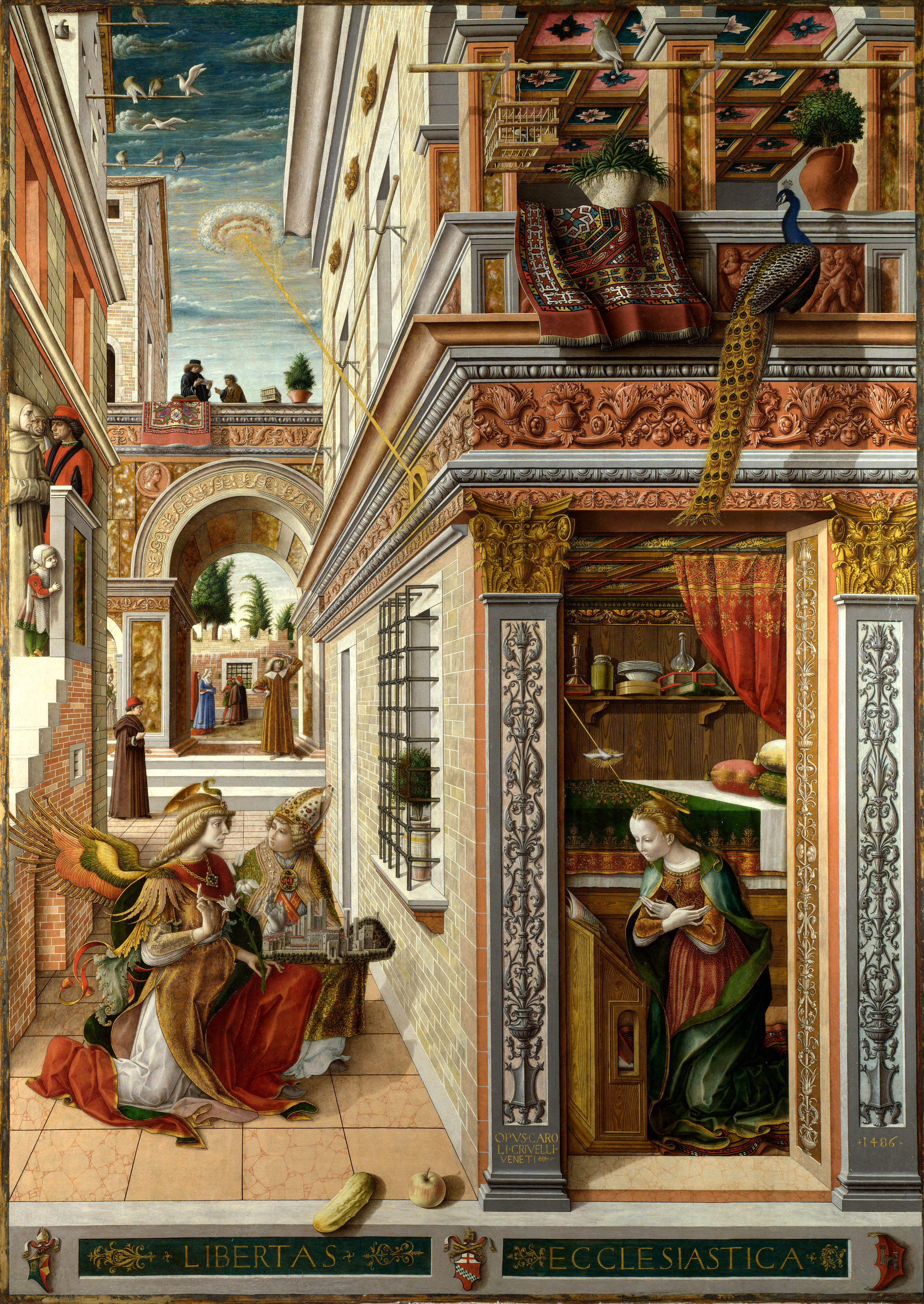
Detail from Crivelli’s Annunciation

Screenshot 2015-07-17 at 2.33.18 PM

Screams from the abattoir | J.G. Ballard on Francis Bacon

In 1955 there was a modest retrospective of Francis Bacon’s paintings at the Institute of Contemporary Arts, followed in 1962 by a far larger retrospective at the Tate Gallery, which was a revelation to me. I still think of Bacon as the greatest painter of the post-war world. Sadly, when I met him in the 1980s I found, like many others before me, that he was not interested in receiving compliments or in talking about his own work. I suspect that he was still sensitive to charges of gratuitous violence and sensationalism that were levelled at him in the 1950s and 1960s. He chose as his official interviewer the art critic David Sylvester, who was careful to steer clear of the questions everyone was eager to hear answered, and only asked Bacon about his handling of space and other academic topics. In his replies Bacon adopted the same elliptical and evasive language, with the result that we know less about the motives of this extraordinary painter than we do of almost any other 20th-century artist. At least Crivelli’s Annunciation in the 1950s was not screened behind endless lectures on Renaissance perspective and the fluctuating price of lapis lazuli.

Bacon’s paintings were screams from the abattoir, cries from the execution pits of World War II. His deranged executives and his princes of death in their pontiffs’ robes lacked all pity and remorse. His popes screamed because they knew there was no God. Bacon went even further than the surrealists, assuming our complicity in the mid-century’s horrors. It was we who sat in those claustrophobic rooms, like TV hospitality suites in need of a coat of paint, under a naked light bulb that might signal the arrival of the dead, the only witnesses at our last interview.

Yet Bacon kept hope alive at a dark time, and looking at his paintings gave me a surge of confidence. I knew there was a link of some kind with the surrealists, with the dead doctors lying in their wooden chests in the dissecting room, with film noir and with the peacock and the loaf of bread in Crivelli’s Annunciation. There were links to Hemingway and Camus and Nathanael West. A jigsaw inside my head was trying to assemble itself, but the picture when it finally emerged would appear in an unexpected place.

From J.G. Ballard’s autobiography Miracles of Life.

Film Poster for The Warriors — Tomer Hanuka

warriors_650

Detail from Crivelli’s Annunciation

Screenshot 2015-07-17 at 2.31.19 PM

Young Man Reading by Candle Light — Matthias Stom

Crivelli’s Annunciation | J.G. Ballard

I am sure that a large part of the enduring mystery of the Renaissance masterpieces in the National Gallery was due to the absence of the explanatory matter that now drains away much of the strangeness and poetry of the Old Masters. I would stare at Crivelli’s Annunciation, charmed by the peacocks, loaves of bread and other incongruous items, the passer-by reading a book on the bridge and the Virgin in her jewel box of a house. I was forced to use my own imagination to stitch these elements into a master narrative that made some kind of sense, rather than read an extended wall caption and be solemnly told that the peacock was a symbol of eternal life. Perish the thought, and let the exquisite bird be itself, and nothing more or less than itself. What could be more natural, and more mysterious, than a peacock and a loaf of bread appearing on the scene to celebrate the forthcoming birth of the Saviour?

From J.G. Ballard’s autobiography Miracles of Life.

The Hurdy-Gurdy Player — Georges de la Tour

Judith and Her Maidservant — Artemisia Gentileschi

So, How Is Your Appetite, Troll Mother Continued — John Bauer

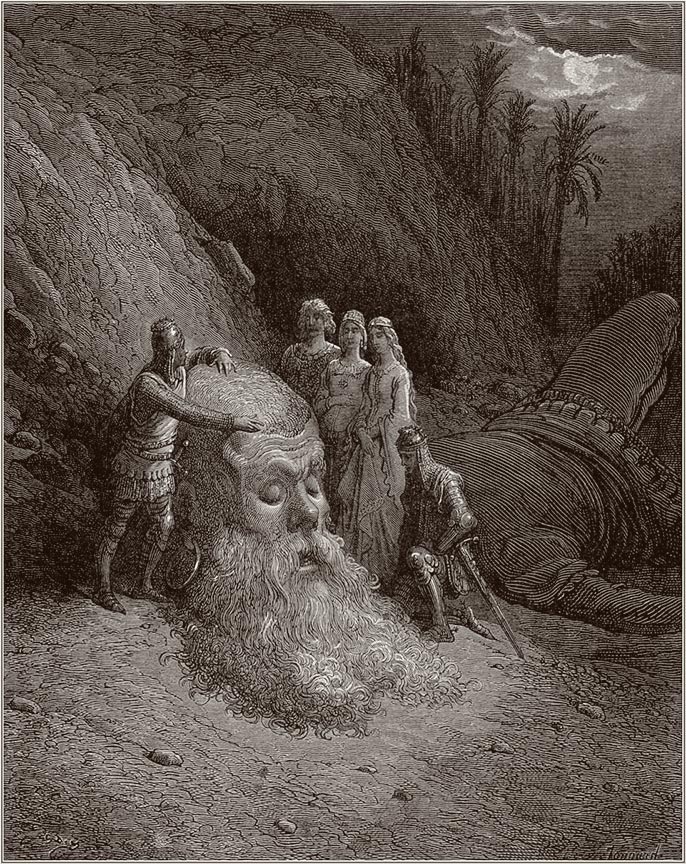
Illustration for Orlando Furioso — Gustave Doré

dore-orlando-furioso-864

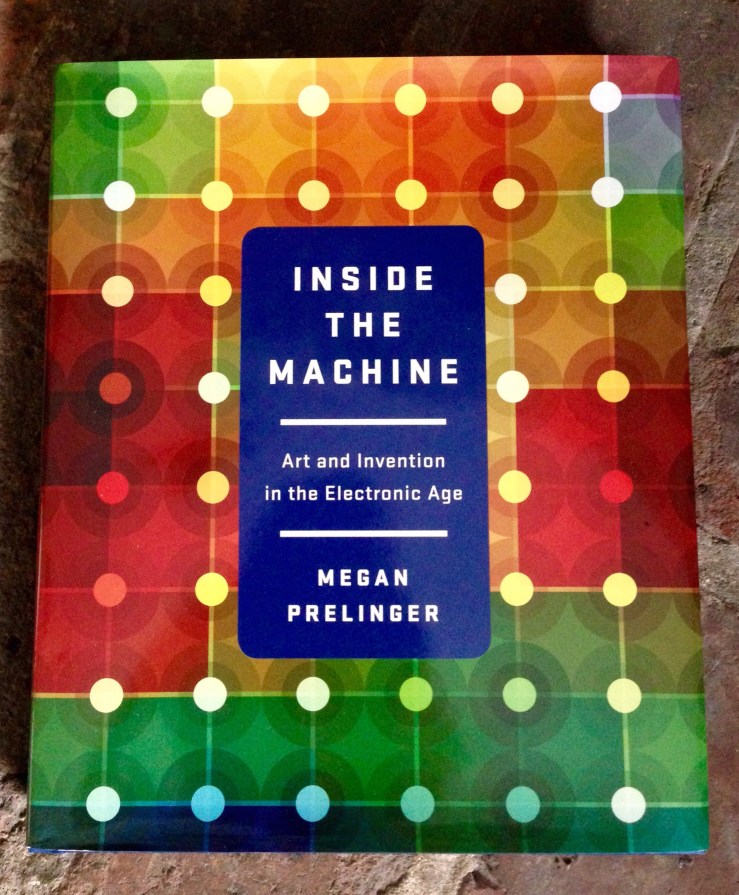
Inside the Machine (Book acquired 6.25.2015)

IMG_7686

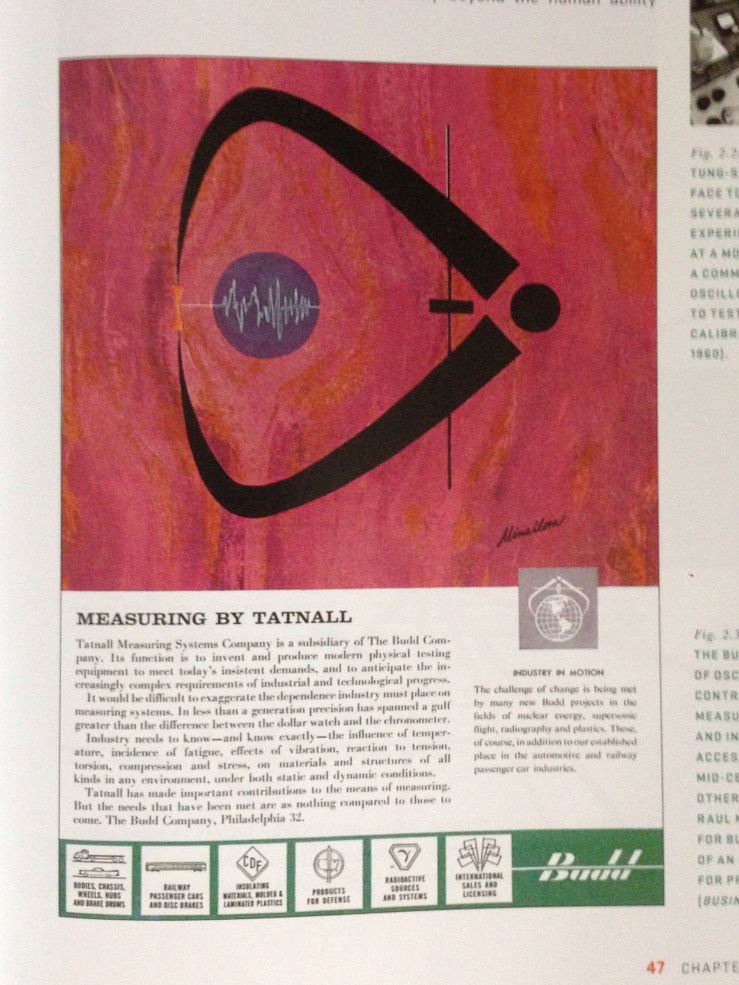
My crappy iPhone pics aren’t doing justice to these images from Megan Prelinger’s Inside the Machine (glossy pages are hard to photograph). Book is out in August from W.W. Norton—their blurb:

A visual history of the electronic age captures the collision of technology and art—and our collective visions of the future.

A hidden history of the twentieth century’s brilliant innovations—as seen through art and images of electronics that fed the dreams of millions.

A rich historical account of electronic technology in the twentieth century, Inside the Machine journeys from the very origins of electronics, vacuum tubes, through the invention of cathode-ray tubes and transistors to the bold frontier of digital computing in the 1960s.

But, as cultural historian Megan Prelinger explores here, the history of electronics in the twentieth century is not only a history of scientific discoveries carried out in laboratories across America. It is also a story shaped by a generation of artists, designers, and creative thinkers who gave imaginative form to the most elusive matter of all: electrons and their revolutionary powers.

As inventors learned to channel the flow of electrons, starting revolutions in automation, bionics, and cybernetics, generations of commercial artists moved through the traditions of Futurism, Bauhaus, modernism, and conceptual art, finding ways to link art and technology as never before.

A visual tour of this dynamic era, Inside the Machine traces advances and practical revolutions in automation, bionics, computer language, and even cybernetics. Nestled alongside are surprising glimpses into the inner workings of corporations that shaped the modern world: AT&T, General Electric, Lockheed Martin.

While electronics may have indelibly changed our age, Inside the Machinereveals a little-known explosion of creativity in the history of electronics and the minds behind it.

IMG_7687

Continue reading “Inside the Machine (Book acquired 6.25.2015)”

The Willy Grasser — Sidney Sime

Title/s: 'Bogus Beast, The Wily Grasser' Maker/s: Sime, Sidney Herbert (draughtsman) [ULAN info: British artist, 1867] Technique Description: pen and Indian ink with grey wash on paper, stuck down on card Dimensions: height: 227 mm, width: 168 mm

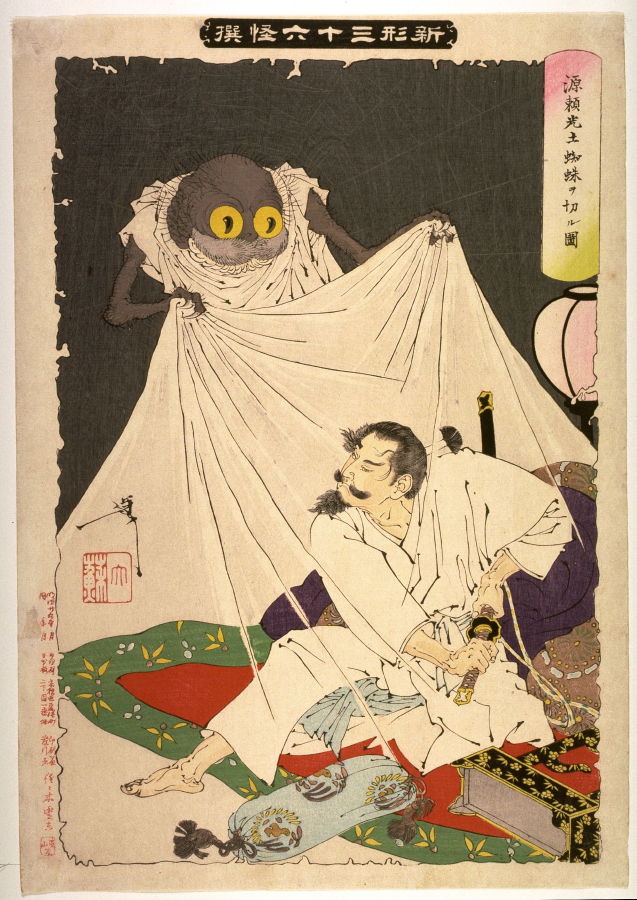
Minamoto no Yorimitsu Preparing to Kill the Earth Spider — Tsukioka Yoshitoshi

5050161212810010

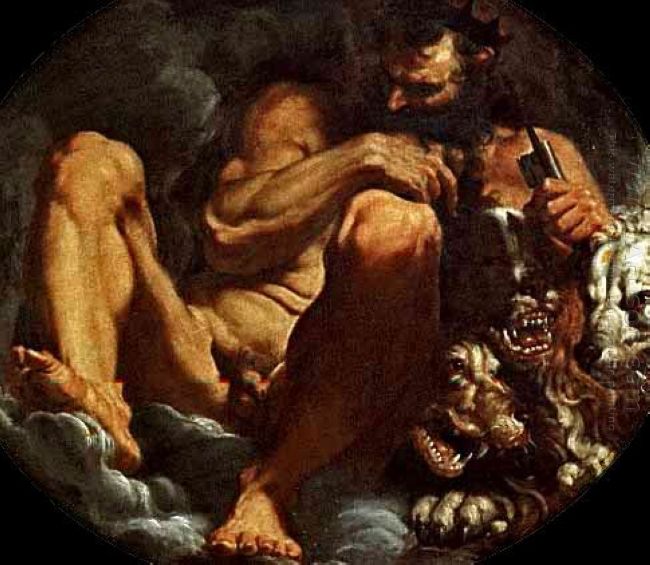
Pluto — Agostino Carracci

ARTS601676

The Fourteenth of July at Etretat — Felix Vallotton