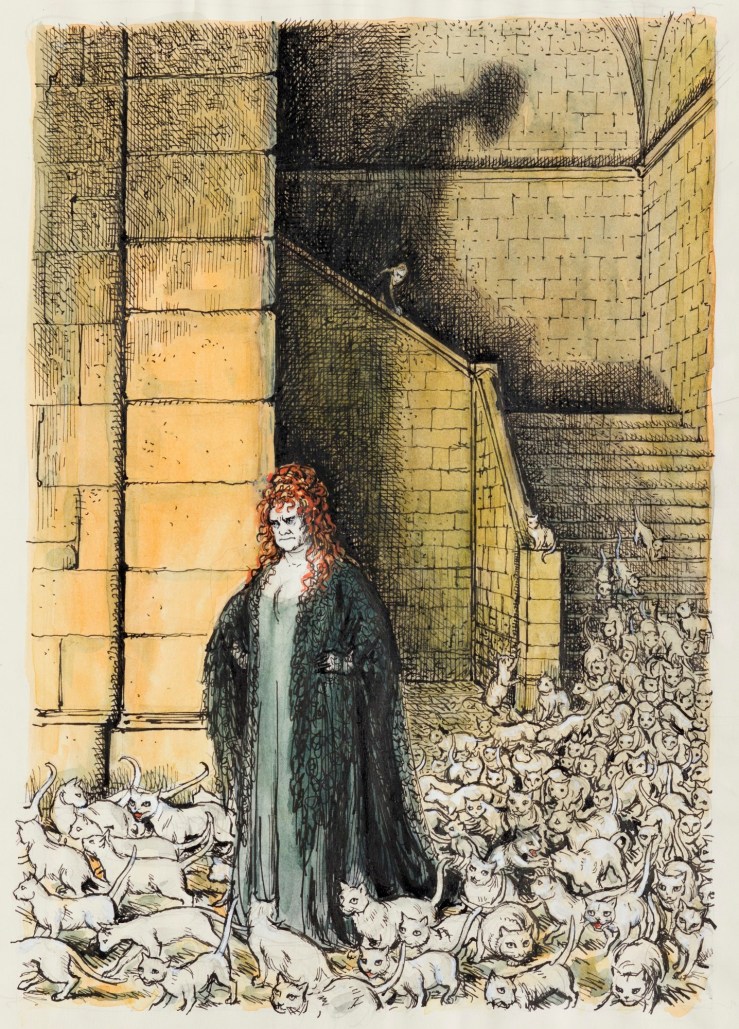
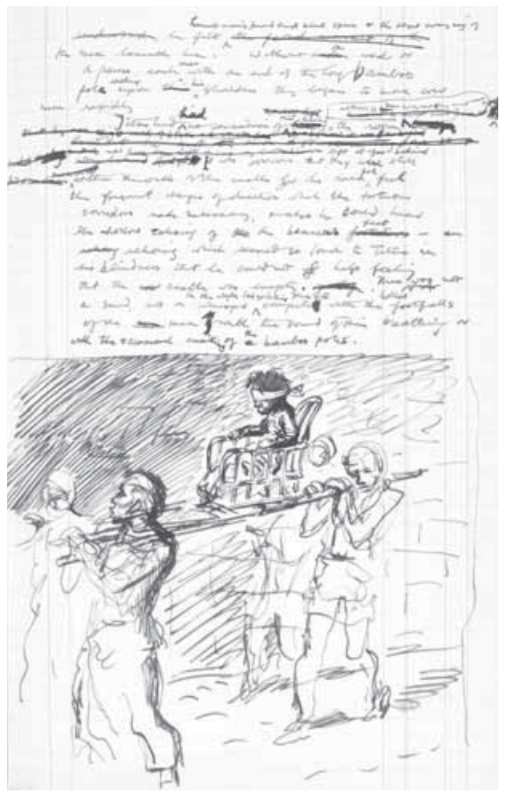
On the Way to the Doctor, 1974 by Charles W. Stewart (1915 – 2001).
Part of a series of unpublished illustrations that were to illustrate Mervyn Peake’s 1950 novel, Gormenghast. (More here.)

On the Way to the Doctor, 1974 by Charles W. Stewart (1915 – 2001).
Part of a series of unpublished illustrations that were to illustrate Mervyn Peake’s 1950 novel, Gormenghast. (More here.)
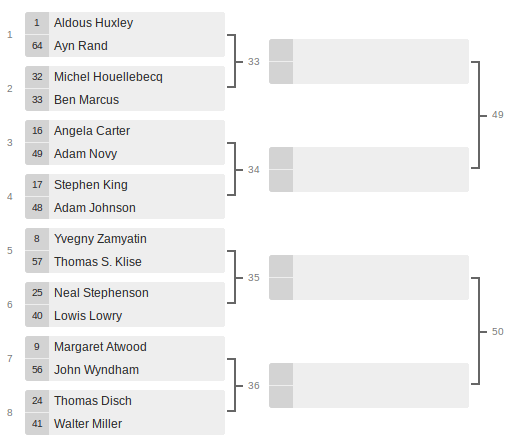
On Sunday, I came up with a list of 64 writers that have written novels or stories that either anticipate, reflect, or otherwise describe our zeitgeist. The first dozen or so seeds (as well as the bottom dozen or so) came rather intuitively to me, but the writers in the middle were seeded somewhat randomly. I used Twitter’s poll feature to determine the winners of Round One. In most of my polls, I included a third option, where voters could choose just to see the poll results instead of actually voting; I won’t be doing that going forward, because the data looks, if not exactly skewed, well, just a little off-putting, as in Round 1, Bracket 8 below:
My intuition is that Disch (Camp Concentration) and Walter Miller (A Canticle for Leibowitz) were either too obscure for many folks, or at least not writers very many people are passionate about.
Sinclair Lewis (It Can’t Happen Here) tied with China Miéville (Marxism, steampunk, Perdido Street Station, bold baldness) and went to a tie (I managed to misspell China Miéville’s name in both tweets)—
I was also surprised by top-ten seed Octavia Butler (Kindred, Parable of the Sower) losing to José Saramago (Blindness). I suppose I seeded Saramago too low.
Here are the results of Round One and the match-ups for Round Two:
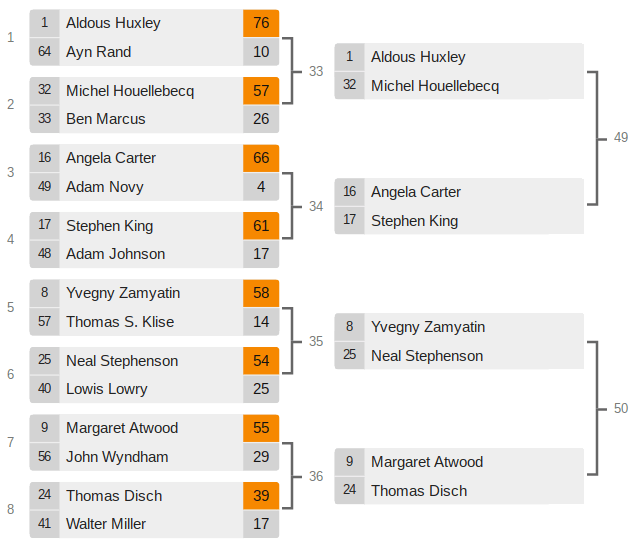
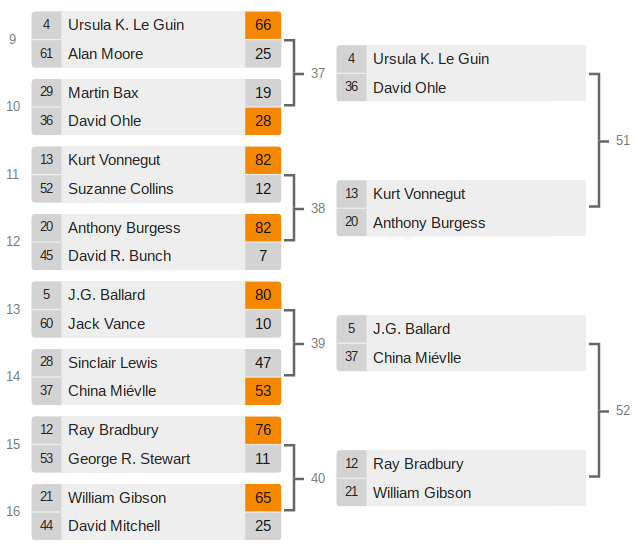


Bracket 46 is particularly painful for me!
Poll results by tweet:
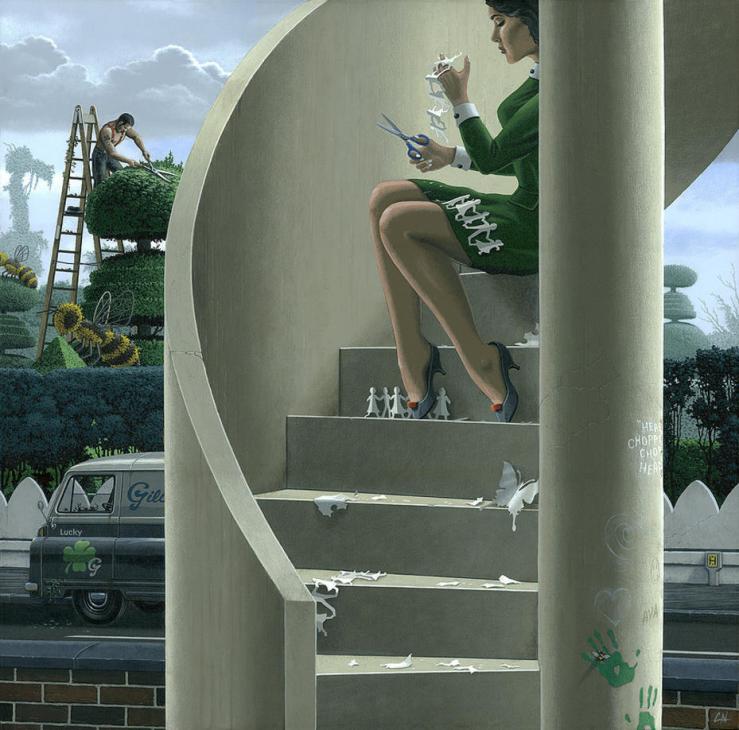
The Cutters, 2017 by Christopher Noulton (b. 1961)
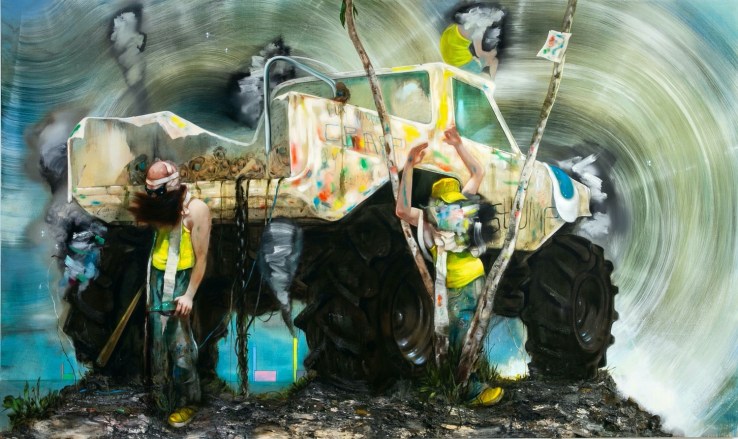
Interference, 2011 by Nigel Cooke (b. 1973)
Maybe you’re bored, maybe you’re stuck inside, missing NCAA March Madness, watching the world’s madness through a screen. Maybe this will be a diversion. (I’m hoping it’s a diversion for me.)
I came up with a list of 64 writers that have written novels or stories that either anticipate, reflect, or otherwise describe our zeitgeist. (I realize now that I’ve forgotten a bunch, but, hey.) After a certain point, there wasn’t much thought put into seeding the tournament.
I’ll be doing running polls on Twitter for the next few days, starting today, with brackets 1-4 launching today.
Here are the brackets for Round 1:


“Herman Melville”
by
W.H. Auden
Towards the end he sailed into an extraordinary mildness,
And anchored in his home and reached his wife
And rode within the harbour of her hand,
And went each morning to an office
As though his occupation were another island.
Goodness existed: that was the new knowledge.
His terror had to blow itself quite out
To let him see it; but it was the gale had blown him
Past the Cape Horn of sensible success
Which cries: “This rock is Eden. Shipwreck here.”
But deafened him with thunder and confused with lightning:
–The maniac hero hunting like a jewel
The rare ambiguous monster that had maimed his sex,
The unexplained survivor breaking off the nightmare–
All that was intricate and false; the truth was simple.
Evil is unspectacular and always human,
And shares our bed and eats at our own table,
And we are introduced to Goodness every day,
Even in drawing-rooms among a crowd of faults;
He has a name like Billy and is almost perfect,
But wears a stammer like a decoration:
And every time they meet the same thing has to happen;
It is the Evil that is helpless like a lover
And has to pick a quarrel and succeeds,
And both are openly destroyed before our eyes.
For now he was awake and knew
No one is ever spared except in dreams;
But there was something else the nightmare had distorted–
Even the punishment was human and a form of love:
The howling storm had been his father’s presence
And all the time he had been carried on his father’s breast.
Who now had set him gently down and left him.
He stood upon the narrow balcony and listened:
And all the stars above him sang as in his childhood
“All, all is vanity,” but it was not the same;
For now the words descended like the calm of mountains–
–Nathaniel had been shy because his love was selfish–
Reborn, he cried in exultation and surrender
“The Godhead is broken like bread. We are the pieces.”
And sat down at his desk and wrote a story.
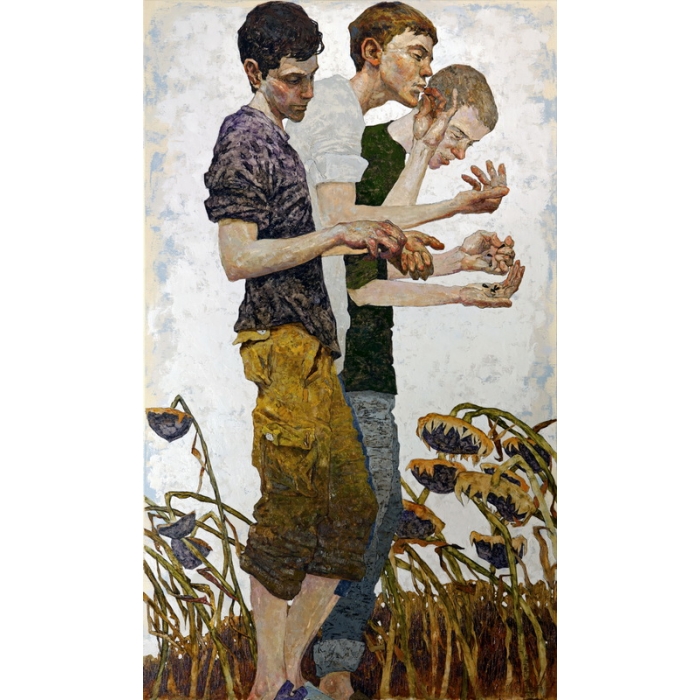
Wild Sunflowers, 2015 by Denis Sarazhin (b. 1982)
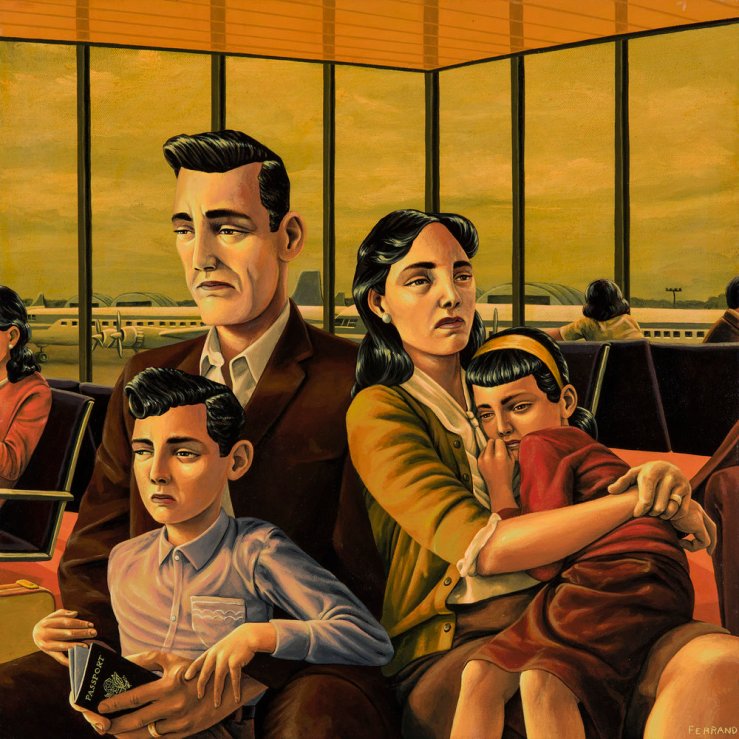
Who Are We Now?, 2017 by Gregory Ferrand (b. 1975)

D’Audieu, 2017 by Jonathan Leaman (b. 1954)
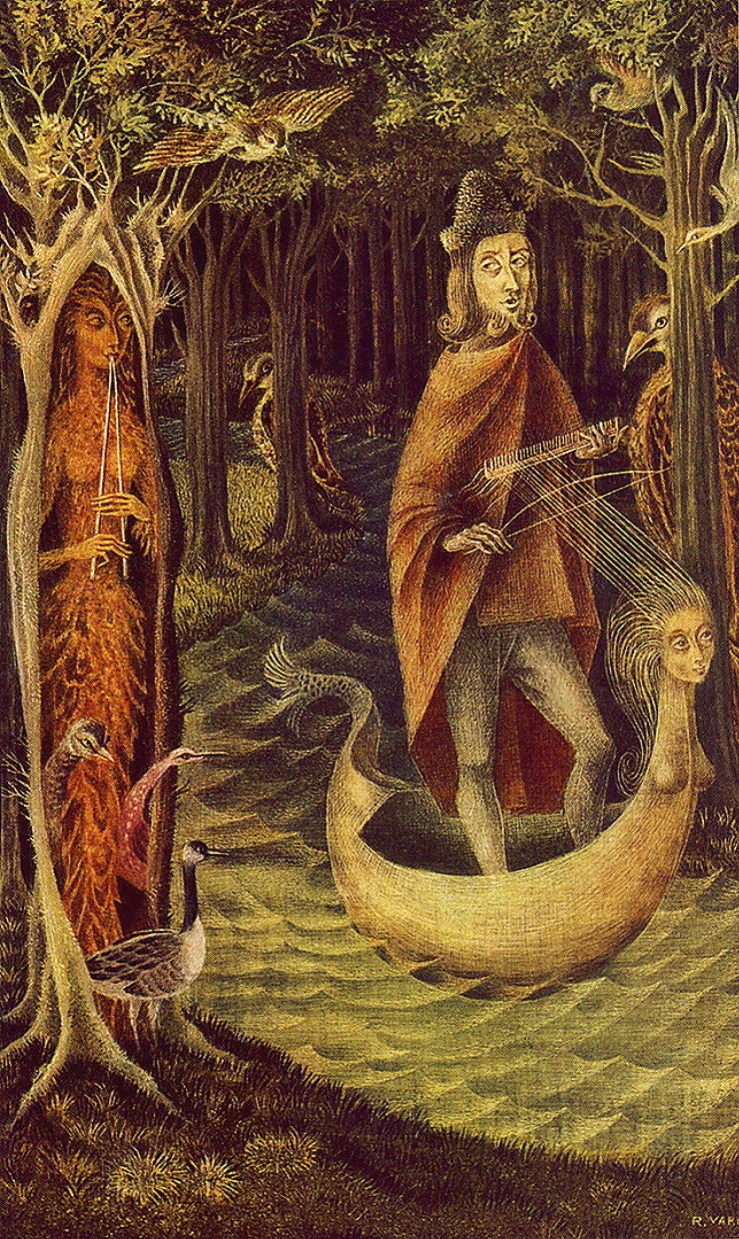
Troubadour, 1959 by Remedios Varo (1908-1963)
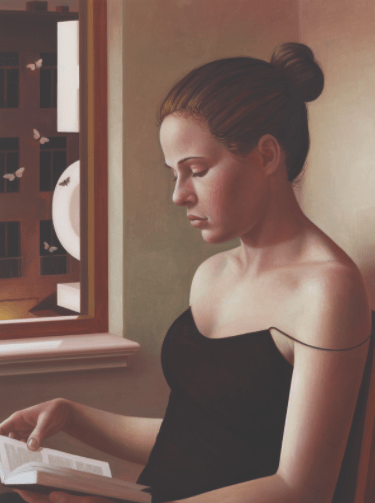
Butterfly Stories, 2012 by Falk Gernergross (b. 1973)
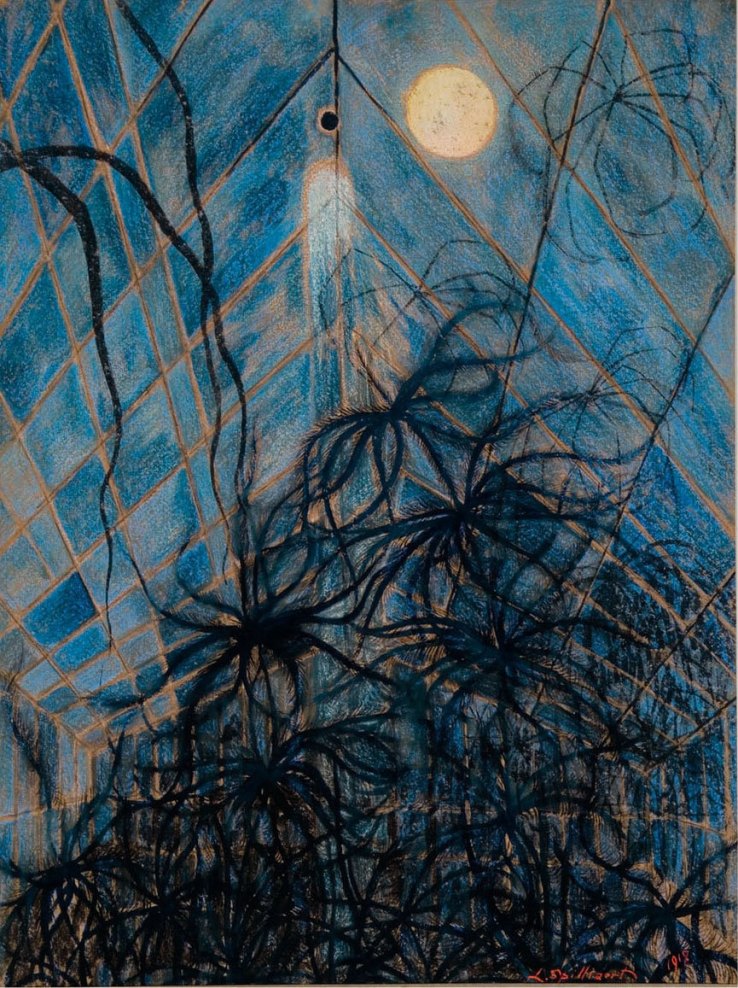
Hothouses I, 1917 by Léon Spilliaert (1881–1946)
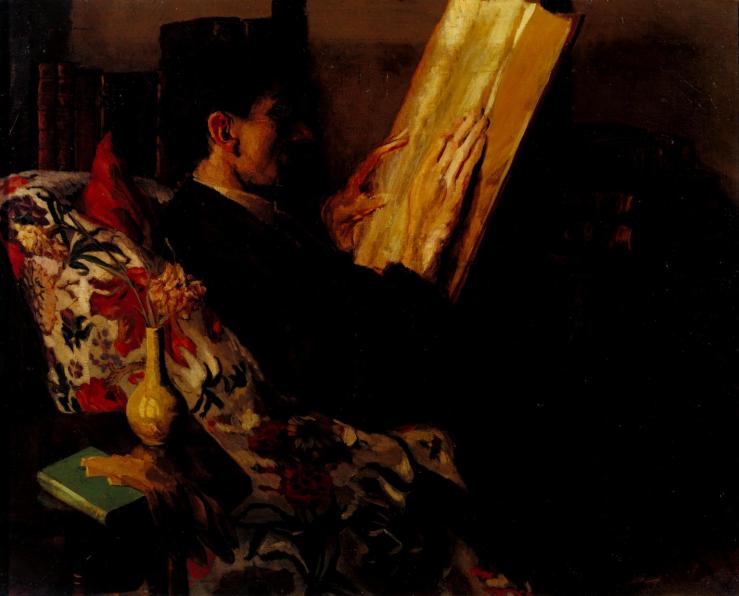
Lytton Strachey. Verso: Crime and Punishment, c. 1909 by Duncan Grant (1885–1978)
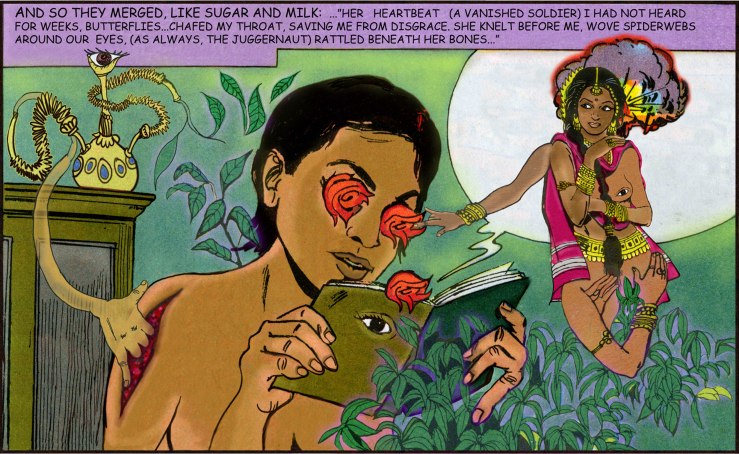
Sugar and Milk, from Her Nuclear Waters by Chitra Ganesh (b. 1975)
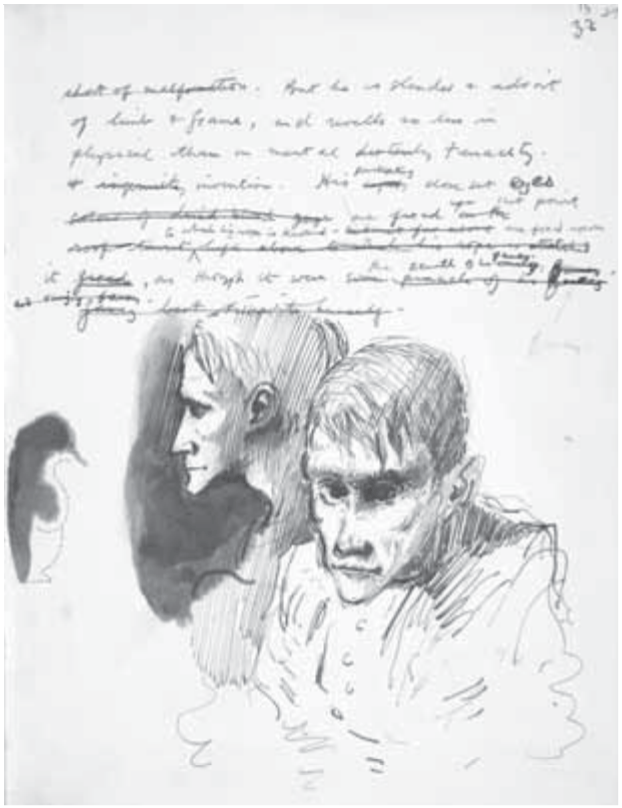
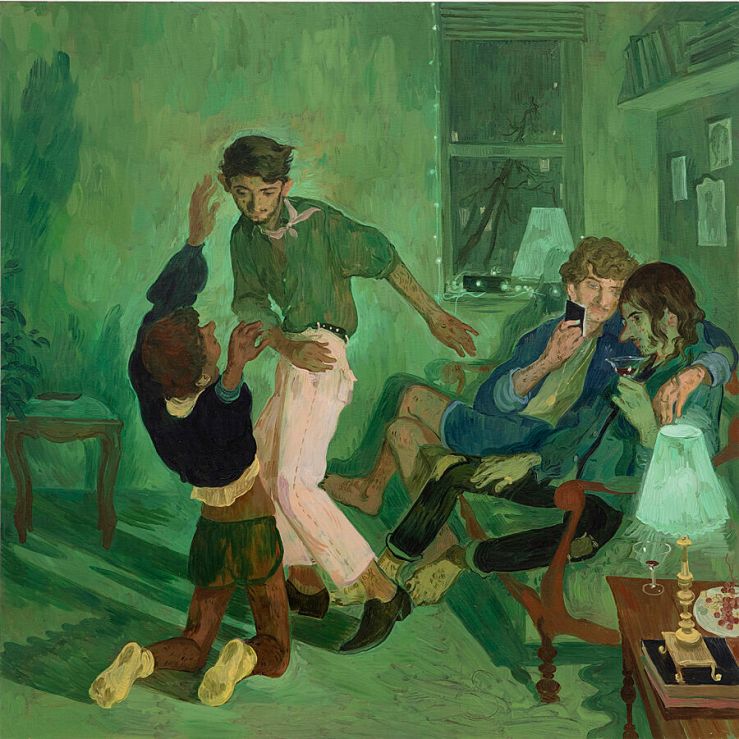
Four Friends, 2019 by Salman Toor (b. 1983)
 Biblioklept