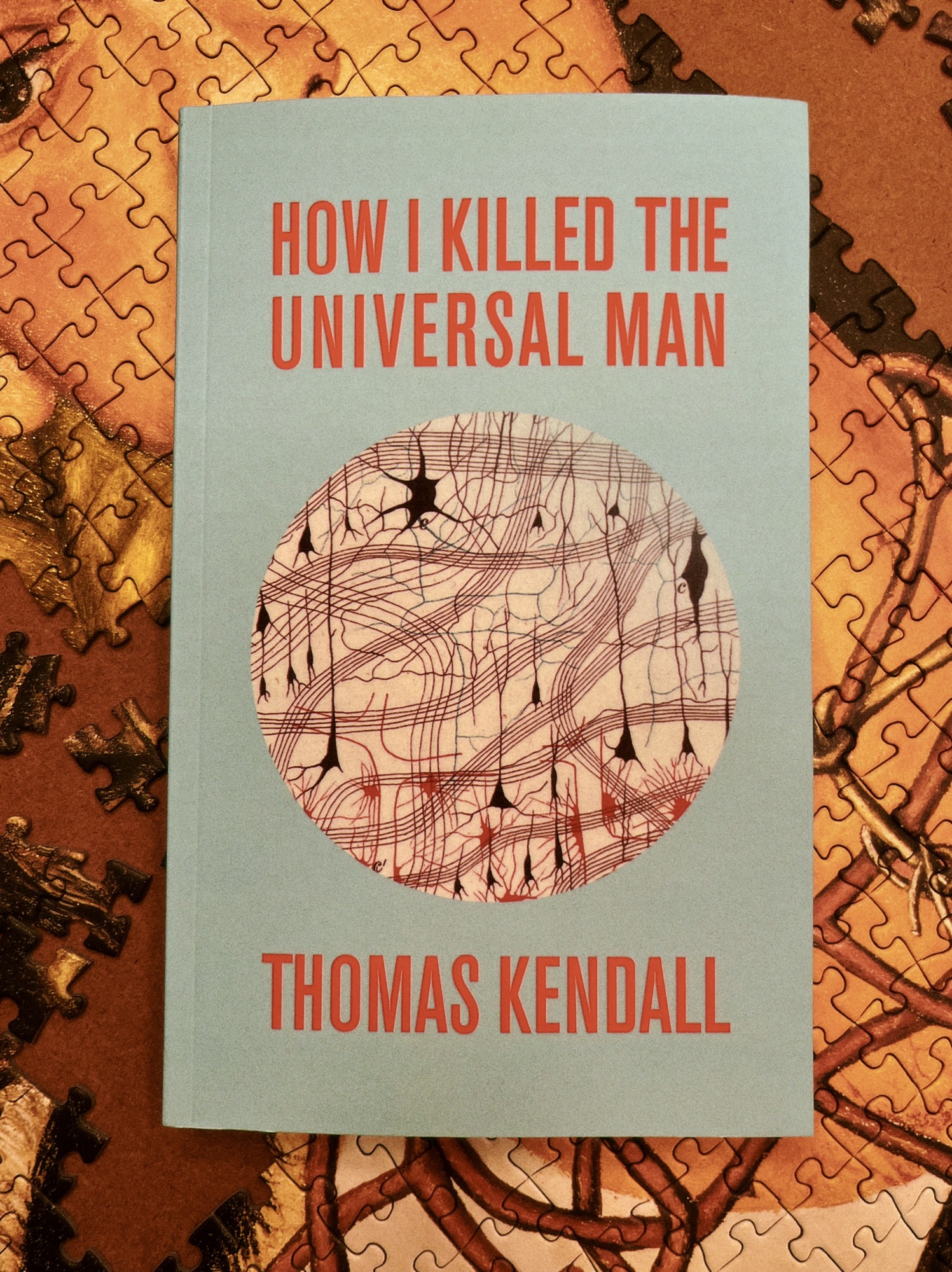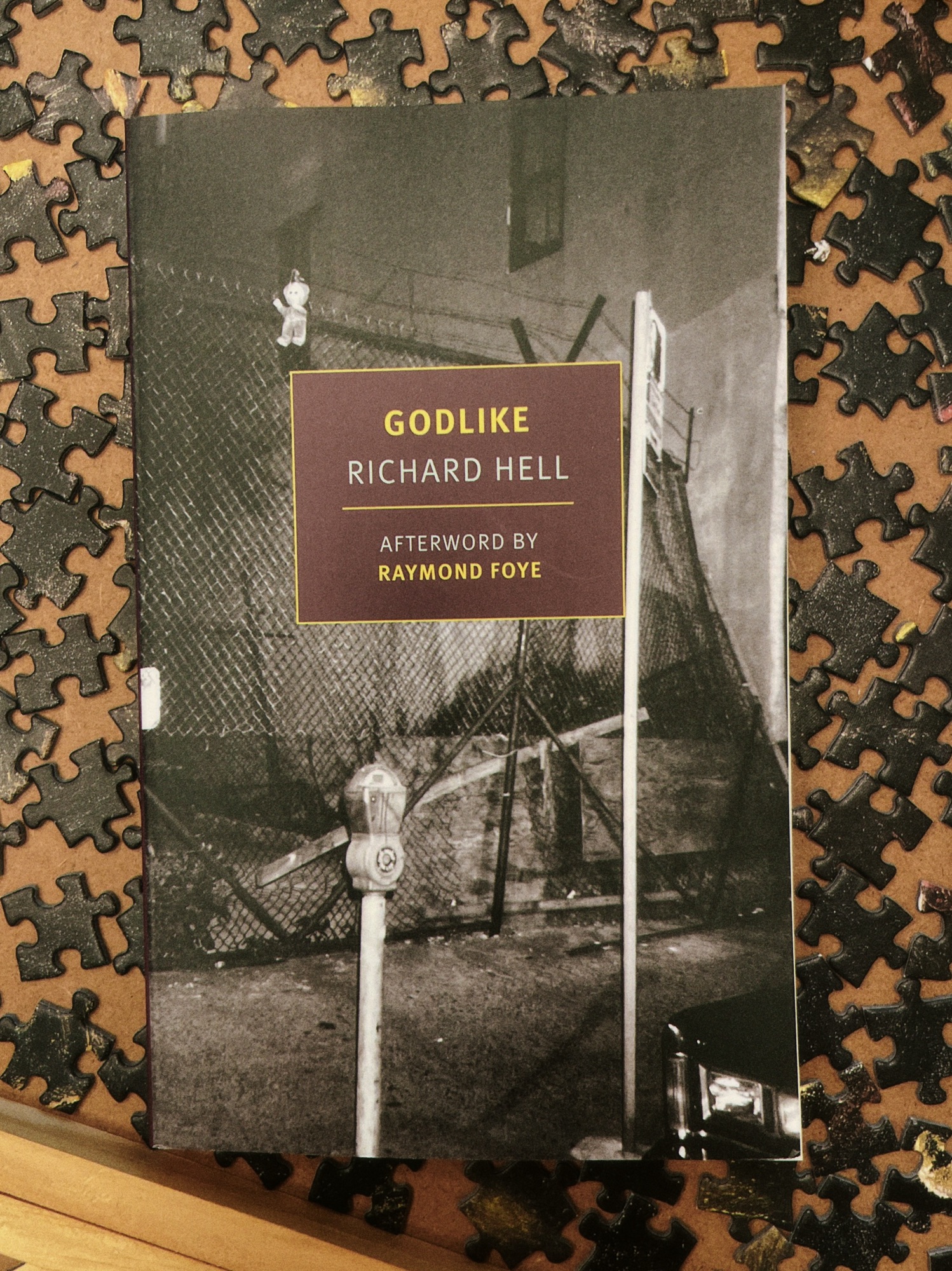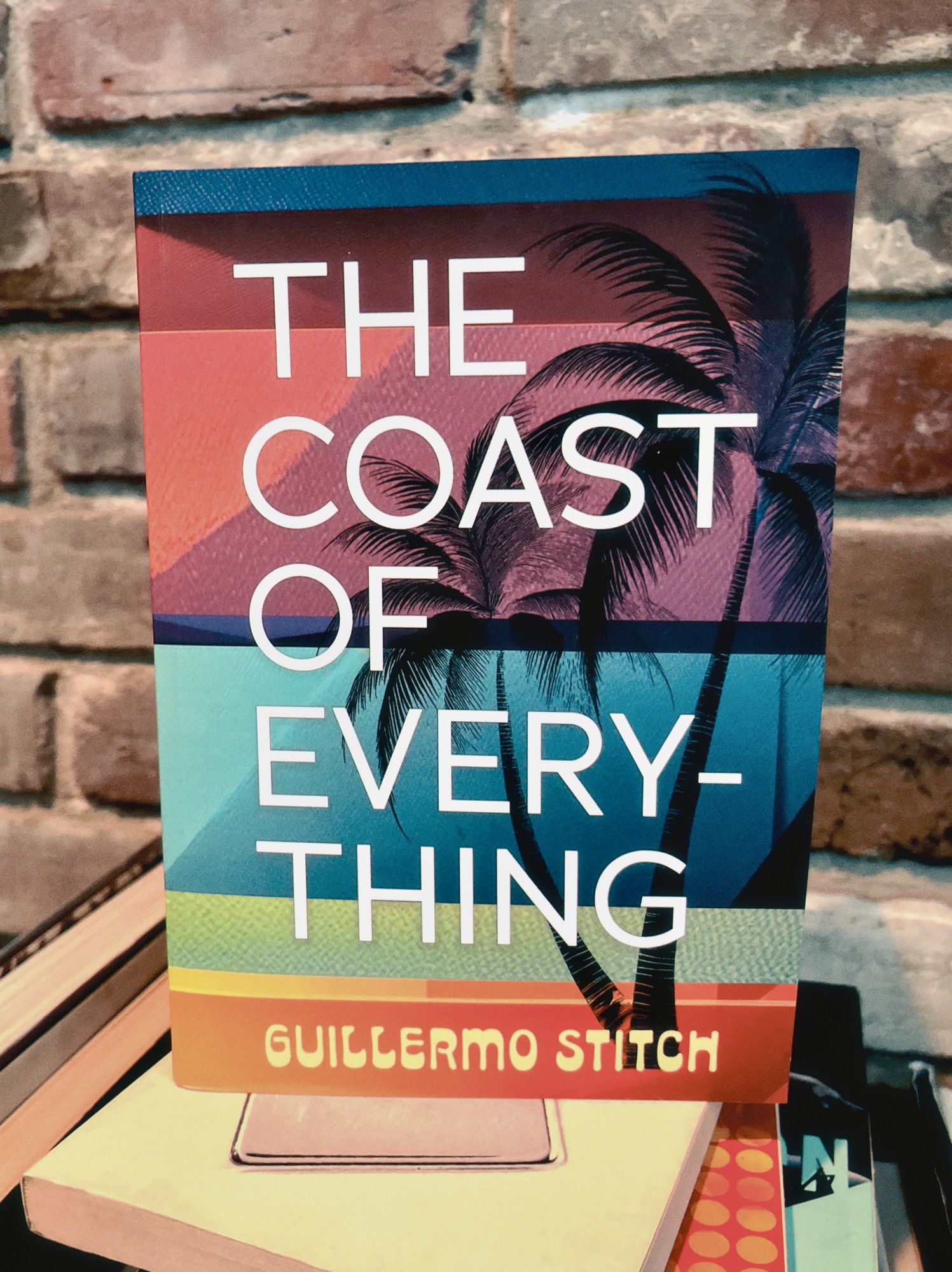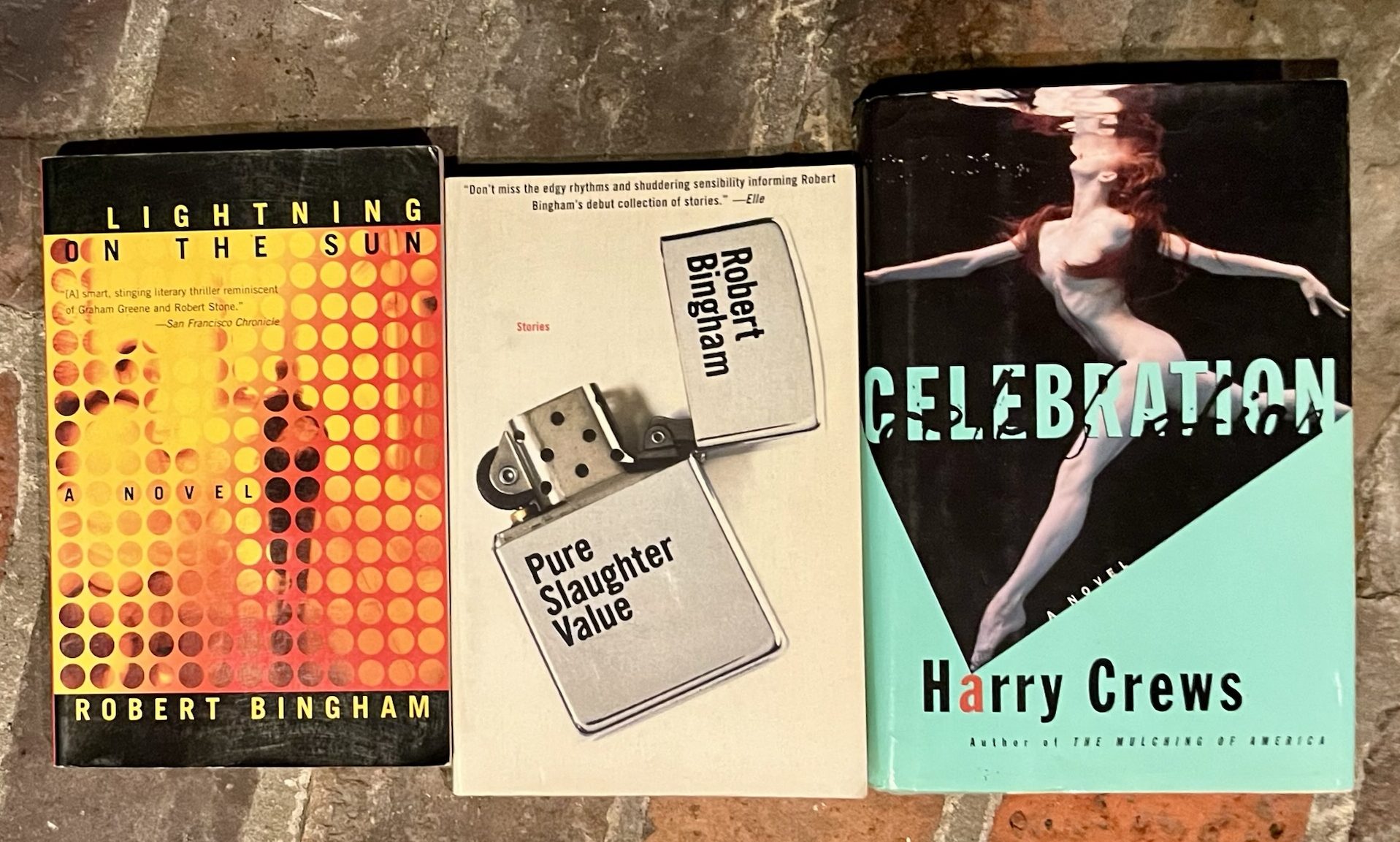
Gerhard Rühm’s The Folded Clock (Book acquired, drifted through, last week or the week before, end of 2025)

I dug/was perplexed by Gerhard Rühm’s Cake and Prostheses a few years ago, so when I got my soft pink hands on The Folded Clock, (translated like C & P by Alexander Booth), I was intrigued. Publisher Twisted Spoon describes The Folded Clock as a collection of “number poems, comprising typewriter ideograms, typed concrete poetry, collages of everyday paper ephemera and scraps, and a wide variety of literary forms where the visual pattern created on the page underpins the thematic meaning.”

Rühm seems to identify Kurt Schwitters as his artistic precursor, or an artistic precursor. Like Cake and Prosthesesthe pieces in The Folded Clock defy easy categorization — Is it a script or a poem or art? is probably the wrong question.

Passing eyes over the text is probably not the way to go; Rühm’s asking you to engage. As Joseph Schreiber puts it in his review at Rough Ghosts, you might follow Rühm’s directions and “allow yourself to read aloud and, there are you are, from the very beginning, not simply reading but actively engaging with the poem.”

I don’t really like numbers that much, at least not in a mob, a gang, a swarm. I tried and didn’t work out. Not just with this book but in general. I can’t count sheep, I guess.

I had a better time with Rühm’s forays into music and letters and collages; I enjoyed whatever psychotic version of minesweeper or Sudoku this piece is:

Michel Tournier’s Friday (Book acquired, 12 Nov. 2025)

Michel Tournier’s 1967 novel Friday is getting a reprint (Norman Denny’s translation) from NYRB. Their blurb:

Friday is the Friday of Robinson Crusoe, and Michel Tournier’s retelling of Defoe’s tale of solitude and survival turns it on its head. Cast away on a tropical island, the God-fearing Crusoe hasn’t the least doubt what he must do: tame the wilderness and stamp it with the sign of civilization, a fool’s errand to which he devotes years and in which he comes close to succeeding. Then Friday shows up, infuriating him with his “irrepressible, lyrical, and blasphemous” laugh, and a new, more challenging task confronts the island’s self-proclaimed master. But after an unforeseen event destroys all of Crusoe’s work, it is up to Friday to teach him just how ignorant he is and always has been.

Friday was Tournier’s first novel, and it quickly found a wondering and delighted readership. Writing about the book in his autobiography, Tournier asks, “What was Friday to Daniel Defoe? Nothing: an animal, at best a creature waiting to receive his humanity from Robinson Crusoe, who as a European was in sole possession of all knowledge and wisdom.” In Friday, Tournier steps out of the secular world of the Western novel into the sacred precincts of universal mythology. The result is radiant, sensual, funny, and utterly unexpected—a modern masterpiece.

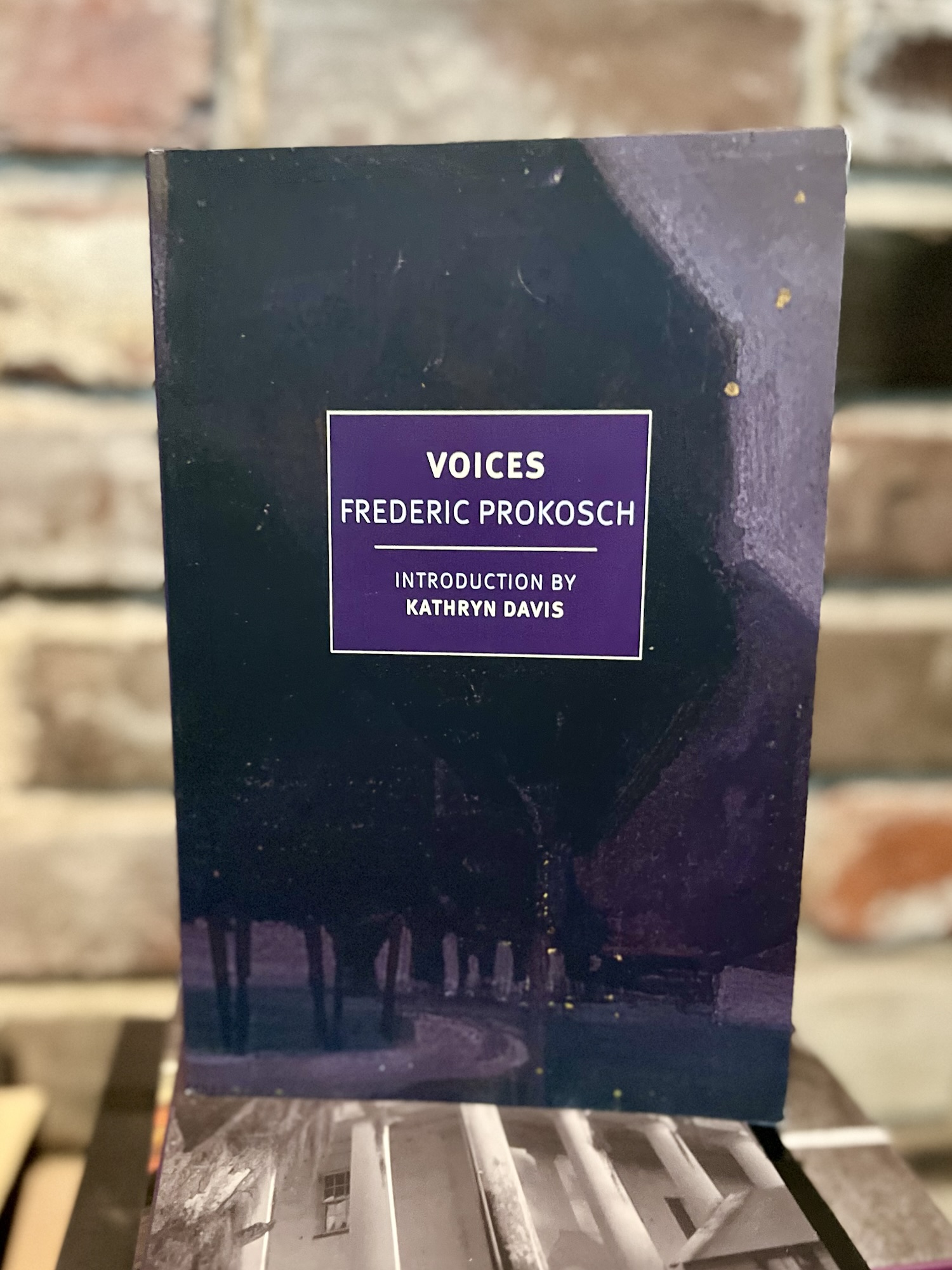
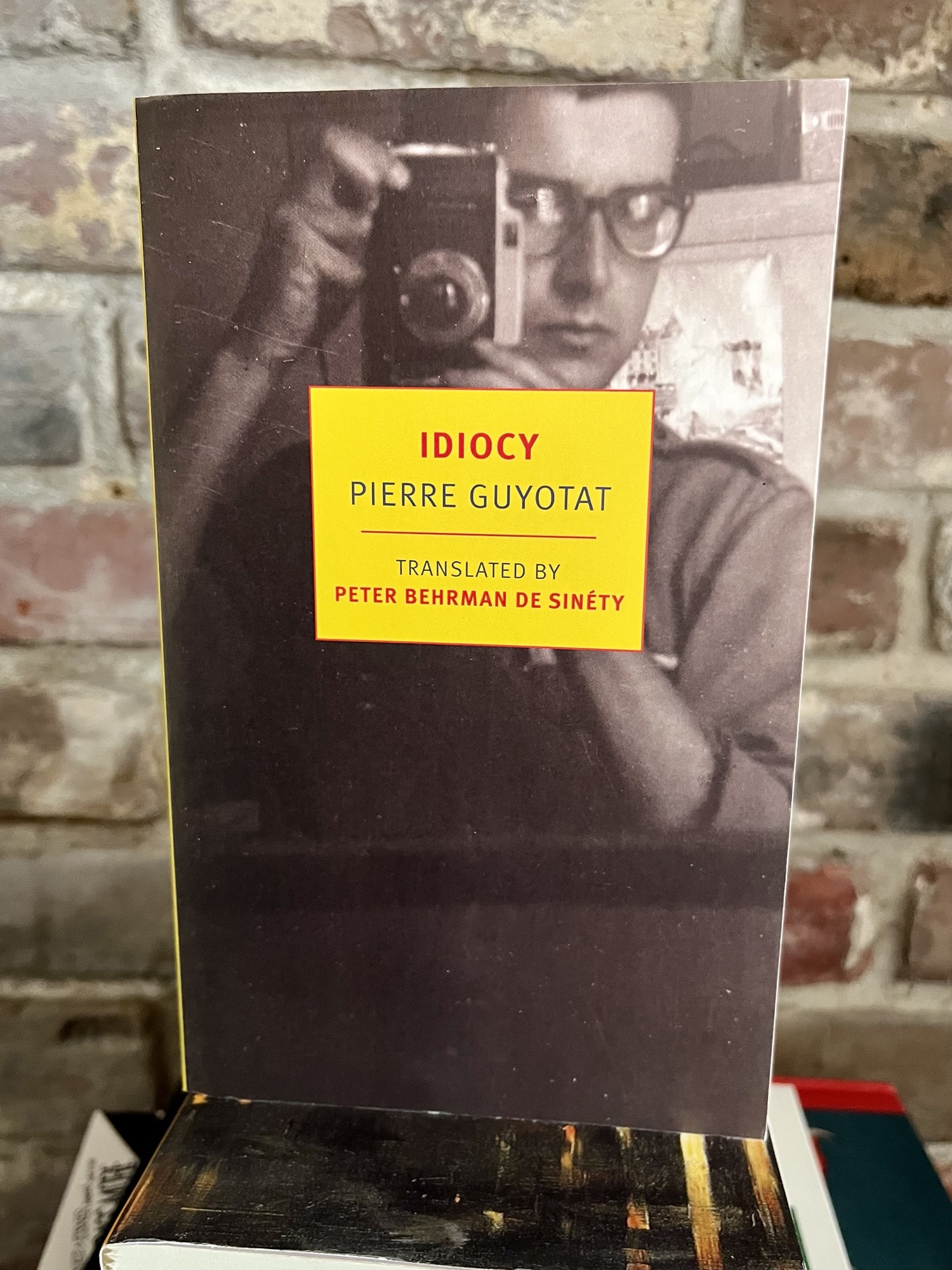
Pierre Guyotat’s memoir Idiocy (Book acquired, Oct. 2025)

Pierre Guyotat’s memoir Idiocy is new in English translation from publisher NYRB and translator and Peter Behrman de Sinéty. NYRB’s blurb–

Pierre Guyotat was one of the most radical and uncompromising writers of the twentieth century, a literary successor to Sade, Bataille, and Genet whose visceral fictions and bold experiments with language have earned him cult status in France and abroad. Idiocy is his searing memoir of coming of age between 1958 and 1962, when he discovered his burgeoning sexuality and aptitude for rebellion—first against his father, whom he escaped to become a writer in Paris, then against the French military authorities as a conscript in the Algerian War.

Guyotat recounts the atrocities he witnessed first-hand in Algeria, as well as his own harrowing experience of being arrested for inciting desertion and imprisoned in a hole in the ground for three months. Guyotat wields his language like a scalpel, merciless in his exploration of human brutality in all its horrible, granular detail. Yet his generous depictions of camaraderie and friendship are just as unflinching.

The winner of the 2018 Prix Médicis, Idiocy is an incisive condemnation of violence and colonialism, and a bracing, hallucinatory late masterpiece from a writer hailed by Edmund White as “one of the few geniuses of our day.”

Gabrielle Tergit’s Effingers (Book acquired, 18 Oct. 2025)


Gabriele Tergit’s 1951 novel Effingers is out in its first published English translation, by Sophie Duvernoy, from publisher NYRB. From Sandra Lipner’s English-language review of the novel (Lipner is reviewing the original German edition; she concludes the 2020 review by wishing for an English translation):

Tergit writes as both novelist and historian. Her protagonists are complex and so incredibly human that the book reads like a family biography written by a close friend, rather than a piece of fiction based on the author’s imagination. Tergit did write from experience: she was born in 1894 as Elise Hirschmann in Berlin and grew up in the world she describes. Her grandparents were practising Jews from southern Germany, and her upbringing gave her an intimate knowledge of Mathias Effinger’s world. According to her biographer Nicole Henneberg, the three houses featured in the book resemble her and her husband’s childhood homes. Only the fact that her protagonists’ politics, professions, and personalities are so expertly nuanced as to contrast with each other in a panoply of responses to historical currents and affairs suggests that the book is a work of fiction. Tergit’s attention to detail as a writer is astounding and allows her readers to immerse themselves in a world that no longer exists. By chronicling the lives of the two interlinked families across three generations and 70 years, and by including detailed descriptions of furniture, dress, and food, Tergit creates a panorama of a milieu that ceased to exist with the Holocaust. As a result, Effingers will be of interest to everyone who enjoys good fiction, cultural historians and readers with German-Jewish roots.

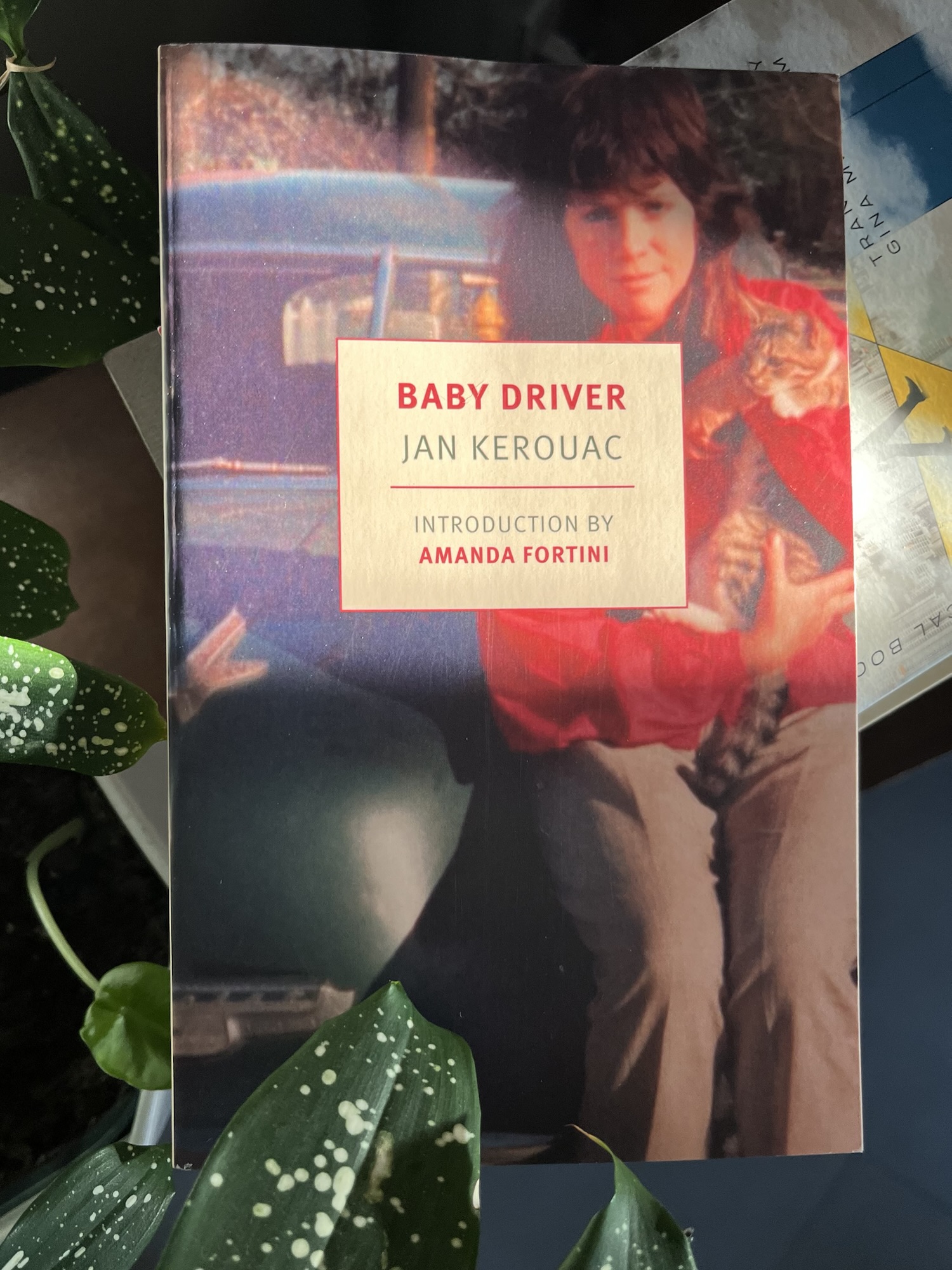
Jan Kerouac’s Baby Driver (Book acquired, 14 Oct. 2025)

Jan Kerouac’s first autofiction novel Baby Driver is getting a reprint from NYRB. Their blurb:

“Was it January or February? The coconut fronds waving, shining like green hair in the sun, gave no clue.” Fifteen-year-old Jan is pregnant, gamely living off rice and whatever fish her boyfriend John can catch in Yelapa, Mexico. Her sojourn there–both thrilling and heartbreaking–marks the beginning of a life of restless wandering. Jan Kerouac, the only child of Jack Kerouac, first published her autobiographical novel Baby Driver in 1981. Fearless and frank, Baby Driver is the story of a difficult childhood, marked by maternal warmth and paternal disregard, and of the heady freedom and precariousness of self-reliance.

Mattia Filice’s Driver (Book acquired, 26 Sept. 2025)

Mattia Filice’s Driver is new in English translation by Jacques Houis. Here’s NYRB’s blurb:

Driver is a book about a young man from the provinces who moves to Paris and studies to become a train driver. As he learns about trains and their intricate workings, he is transported into a world in constant motion, with its own laws and codes and specialized language, its own heroes and legends and manifold dangers. Written in a style as surprising and eclectic as a night on the rails—packed with inside jokes and allusions that extend from Arthur Rimbaud to hip-hop and beyond—Driver takes us deep into the world of the train, until it becomes, like the ship in Moby-Dick, a microcosm of the world at large.

Drawing on twenty years of experience driving trains, Mattia Filice writes memorably about solitude and sleepless nights in the cab, accidents and breakdowns, but also about the lives and personalities of his fellow workers and the conversations and solidarity they share, both on the job and on the picket line, in what is a continual struggle to improve the conditions of work.

Unsentimental yet full of feeling, Driver is both an unusual and formally adventurous novel about labor and life and a stirring ode to the power of the collective.

Surprisingly, NYRB’s blurb doesn’t mention the novel’s striking style; on the page, the episodes of Driver look like poems that sometimes coalesce into prose. The chapter titles and section titles also seem to cast the novel as a take on knight’s quest. Compelling stuff.

Thomas Pynchon’s Shadow Ticket (Book acquired, 30 Sept. 2025)

Here are the first four paragraphs of Thomas Pynchon’s ninth novel Shadow Ticket:

When trouble comes to town, it usually takes the North Shore Line. What with tough times down the Lake in Chicago, changes in the wind, Prohibition repeal just around the corner, Big Al in the federal pokey in Atlanta, Outfit affairs grown jumpy and unpredictable, anybody needing an excuse to get out of town in a hurry comes breezing up here to Milwaukee, where it seldom gets more serious than somebody stole somebody’s fish.

 Hicks McTaggart has been ankling around the Third Ward all day keeping an eye on a couple of tourists in Borsalinos and black camel hair overcoats up from the home office at 22nd and Wabash down the Lake, the Chicago Outfit handling whatever needs to be taken care of in Milwaukee since Vito Guardalabene cashed in his chips ten years ago, though Vito’s successor Pete Guardalabene is still considered head man in the Ward, gets his picture in the social pages smiling at weddings and so forth.

 Loitering in the alleyway in back of Pasquale’s Bella Palermo, Hicks can hear sounds of noodle-flexing sociability, smell spaghetti sauce and garlic frying and sfinciuni bagherese baking over an olive-branch fire, and it’s making him hungry, though this close to payday his lunch menu is a thermos of coffee and a buttermilk cruller stashed in a pocket someplace.

 The explosion when it comes seems to be from somewhere across the river and nearer the Lake. Forks and glassware pause between tabletop and mouth, as if everybody’s observing a moment of stillness, and nobody seems surprised.

An explosion! There we go.

Ben Passmore’s Black Arms to Hold You Up (Book acquired, 23 Sept. 2025)

I was psyched to get an early copy of Ben Passmore’s Black Arms to Hold You Up this week. I love the dramatic vibrancy of Passmore’s cartooning, and his economic use of black, white, gray, and red throughout the book. I should have a review out around its release on 7 Oct. 2025.

Here is publisher Pantheon’s blurb:

It’s the summer of 2020, and downtown Philly is up in flames. “You’re not out in the streets with everyone else?” Ronnie asks his ambivalent son, Ben, shambling in with arms full of used books: the works of Malcom X, Robert F. Williams, Assata and Sanyika Shakur, among others. “Black liberation is your fight, too.”

So begins Black Arms to Hold You Up, a boisterous, darkly funny, and sobering march through Black militant history by political cartoonist Ben Passmore. From Robert Charles’s shootout with the police in 1900, to the Black Power movement in the 1960s, to the Los Angeles and George Floyd uprisings of the 1990s and 2020, readers will tumble through more than a century of armed resistance against the racist state alongside Ben—and meet firsthand the mothers and fathers of the movement, whose stories were as tragic as they were heroic.

What, after so many decades lost to state violence, is there left to fight for? Deeply researched, vibrantly drawn, and bracingly introspective, Black Arms to Hold You Up dares to find the answer.

Siegfried Kracauer’s Ginster (Book acquired, 16 Sept. 2025)

Siegfried Kracauer’s 1928 novel Ginster is forthcoming in translation by Carl Skoggard from NYRB. Their blurb:

Ginster is a war novel about not going to war; about how war, far from the front, comes to warp every aspect of outer and inner life and to infect the workings of language itself. The subject is World War I, but this novel by the brilliant twentieth-century sociologist, journalist, and film critic Siegfried Kracauer, first published in 1928, has as much to say about what it means to live under the sulking great powers and blood-imbrued satrapies of today as it does about the inflamed self-righteousness of late imperial Germany. In Ginster, as in Greek tragedy, massacre occurs offstage, arriving only as “news,” but the everyday horror of a society engineered for the continual production of violence is not to be denied. Ginster, the Chaplinesque antihero, intent chiefly on saving his own skin, works hard to keep his distance from the war machine, and yet making a living, he discovers, is all about keeping it running. How different, in the end, is his dreamy self-absorption from the empty military language that has come to pervade every aspect of civilian life in the homeland?

Bialik/Rilke (Two poetry collections acquired, 13 Sept. 2025)

Two new collections from NYRB’s Poets imprint: On the Slaughter by Hayim Nahman Bialik, translated by Peter Cole, and Fifty Poems by Rainer Maria Rilke, translated by Geoffrey Lehmann. NYRB’s Bialik blurb:

Few poets in the history of Hebrew have possessed the power and prescience of Hayim Nahman Bialik. Born in 1873 in a small Ukrainian village, he spent his most productive years in Odessa and in his fifties made his way to British Mandatory Palestine. He died in Vienna in 1934. His body of work opened a path from the traditional Jewish world of Eastern Europe into a more expansive Jewish humanism. In a line that stretches back to the Bible and the Hebrew poetry of Muslim and Christian Spain, he stands out—in the words of Maxim Gorky—as “a modern Isaiah.” He remains to this day an iconic and shockingly relevant poet, essayist, and tutelary spirit.

Translated and introduced by MacArthur-winning poet Peter Cole, On the Slaughter presents Bialik for the first time in English as a masterful artist, someone far more politically and psychologically unsettling than his reputation as the national poet of the Jewish people might suggest. This compact collection offers readers a panoramic view of Bialik’s inner and outer landscapes—from his visionary “poems of wrath” that respond in startling fashion to the devastations of pogroms and revolutionary unrest to quietly sublime lyrics of longing and withering self-assessment. The volume also includes a sampling of slyly sophisticated verse for children, and a moving introduction that bridges Bialik’s moment and our own.

And “The Grown-up,” a poem from Rilke in Lehmann’s translation:

“The Grown-up”

All stood on her, all that has ever been
and was the world, and stood, its fears and grace,
as trees stand straight and rooted in one place, and solemn, like the memory of a race
or Ark of God, all-seeing and not seen.

She carried it; knowledge of who they are,
the flyers, those who flee, the distant ones,
the monsters and the awkward, diffident sons,
casually like a brimming water jar
on her calm head. Then in the midst of play,
preparing, changing slowly, cell by cell,
she did not sense the first white veil that fell
across her open face, bland as the day,

almost opaque, never to lift again.
And she forgot the answers she once knew,
leaving some vagueness she could not explain:
in you, the child who you have been, in you.

Another Dalloway

Virginia Woolf’s modernist classic Mrs Dalloway is getting a centennial update from publisher NYRB. The new edition is edited by literary critic Edward Mendelson, who makes a persuasive case for his version of the text in the book’s afterword, an essay with the appropriately flat title “The Text of This Edition.” “This edition is an attempt to provide the least bad, perhaps, among many possible editions,” Mendelson writes, before appending after a semicolon: “other editors will rank it more harshly.” I imagine it’s hard work to tidy a giant.

As a point of comparison, I pulled out the HBJ mass-market paperback of Mrs Dalloway that I read at least three times years and years ago; there’s no front or back matter, no intro or afterword, not even a credit for the lovely art. I (a version of myself) had scribbled “symbol is not universal” in the narrow margin of page 41; underlined “narrower and narrower” on page 45; boxed a paragraph catching salmon freely on page 152. Two photographs fell from the book — a picture of my wife and my infant daughter, c. 2008; the other, a picture of my wife and her eighteen-years-younger brother, also an infant in the picture, also held by wife, c. 1998. Those are probably the years I read the book. The older person made more scribbles, I think. What I most remember of the novel Mrs Dalloway is the WWI veteran, Septimus; I recall his anguish as a throbbing (organizing) pulse in the novel’s so-called stream-of-consciousness style. I remember generally enjoying the novel, but preferring Woolf’s Orlando; I remember a sort of sneer on the face of a fellow grad student after this declaration. Orlando is a more fun book, a picaresque sci-fi gender jaunt. I suppose Dalloway is more, like, important.

As another point of comparison, I pulled out the 1990 HBJ trade paperback of Mrs Dalloway that I picked up at the beginning of the summer at a Friends of the Library sale. I wrote in a post about those acquisitions that, “…I’ll be happy to trade out the cheap mass markets of Mrs. Dalloway and To the Lighthouse I’ve had forever in favor of these HBJ Woolfs (Wolves?)” — but that’s not true. I’ve decided I love the cheap mass market Dalloway. (A sixteen-year-old picture of my wife and daughter falling out of it didn’t hurt.) This 1990 edition features a 1981 introduction by novelist Maureen Howard. She voices her intro in the first-person plural, an unfortunate choice that we employed on this blog in our earlier years, insecure as we were. The occasion of Ms Howard’s introduction is, I think–we think, we mean–the fiftieth anniversary of the novel’s publication, although that math doesn’t add up. I dig Susan Gallagher’s cover art.

The cover for the new NYRB edition features a “specially commissioned” cover that pays “tribute to the original designs by Hogarth Press.” The publisher notes that forthcoming “new editions of To the Lighthouse and The Waves [reprinted] in celebration of their respective centenaries” will also get the cover updates. These editions are also Mendelson edits.

I mostly know Mendelson as the editor of Pynchon: A Collection of Critical Essays, and as the author of “The Sacred, the Profane, and The Crying of Lot 49.”

NYRB’s edition of Mrs Dalloway publishes next month.

Dante’s Paradiso (Book acquired, some time in July 2025)

D.M. Black’s new translation of Dante’s The Divine Comedy concludes in this volume. Publisher NYRB’s blurb:

Paradiso brings The Divine Comedy to a virtuosic and visionary end. This final leg of Dante’s journey from Hell into the presence of God is for many the most memorable stretch of the poem, a musical and mystical interveaving of mind and heart and transported sense that is unlike anything else in world literature. This new English rendering of Paradiso by the poet D.M. Black, whose Purgatorio won the 2022 National Translation Award in Poetry, re-creates this masterpiece with fidelity and clarity.

Cleansed of sin after his grueling trek up Mount Purgatory, Dante’s pilgrim sets out to explore the celestial spheres under the guidance of his childhood sweetheart and lifelong muse, Beatrice. As he moves from the moon to the planets to the Primum Mobile and beyond, encountering emperors, heroes, saints, members of his family, and various other redeemed sinners, he contemplates optics, angels, free will, mercy, and love. The transcendent actuality of bliss is ever more palpable as the poem unfolds, and yet in the background remains the carnage of history and the deforming bitterness of the human heart, not to be denied—Dante is nothing if not a realist—even in the supreme light of “the Love that moves the sun and all the stars.”

Written at a time of great political turmoil in Italy and great personal anxiety in Dante’s life, Paradiso wrestles with many questions that have echoes in our own disturbing times. It is a book about the shape of the universe and how to find one’s place within it, composed with inventive daring and linguistic ingenuity as Dante stretches language to its very limits, striving to make vivid and tangible the ineffable and sublime.

Manuel Mujica Lainez’s Bomarzo (Book acquired, 14 July 2025)

I’m always intrigued by any NYRB fatty that shows up at Biblioklept World Headquarters, and Manuel Mujica Lainez’s 1962 novel Bomarzo (translated by Gregory Rabassa) has especially piqued my interest. The back of this edition features praise from Roberto Bolaño:

[Bomarzo] is a novel that will make any reader happy…. It’s a novel about art and a novel about decadence, about the luxury of writing novels and about the exquisite uselessness of the novel…. And of course it’s also a novel to be read aloud, with the whole family gathered around.

I’d heard of the novel a few years ago, but hadn’t been able to track down a used copy, so it’s great that it’s back in print. Here’s NYRB’s description:

Pier Francesco Orsini, duke of Bomarzo, created a park of monsters in which the nightmares of the Renaissance are preserved, set in stone yet still writhingly alive. In Bomarzo, Manuel Mujica Lainez—one of the great Argentine novelists of the twentieth century—re-creates the dark and legendary duke as a brilliant memoirist recalling the trials and travails of his sixteenth-century life from a modern point of view (Freudian psychoanalysis and Lolita both put in an appearance) while ensconced in a city that sounds suspiciously like Mujica Lainez’s own Buenos Aires.

Bomarzo is a historical novel in the grand manner, a first-person portrait of an aristocratic hunchback bullied by his family and determined to prove a villain (a portrait so convincing that Edmund Wilson assumed it to be fact). It is also, of course, a commentary on such historical fictions. But above all it’s an immersive story told in a sumptuous style—a bit as if Proust were rewriting one of Poe’s Italian tales—as Gregory Rabassa’s translation (out of print for many years) conveys beautifully.

Leonora Carrington’s The Stone Door (Book acquired, 22 June 2025)

Superpsyched about this one. NYRB’s jacket copy:

The Stone Door is an omen, an incantation, and an adventure story rolled into one. Built in layers like a puzzle box, it is the tale of two people, of love and the Zodiac and the Kabbalah, of Transylvania and Mesopotamia converging at the Caucasus, of a mad Hungarian King named Böles Kilary and of a woman’s discovery of an initiatory code that leads to a Cyclopean obstacle, to love, self, and awareness, to the great stone door of Kescke and beyond.

Written at the end of World War II but not published until 1977 and long unavailable, The Stone Door is at once a celebration of the union of the surrealist painter Leonora Carrington and her husband, the Hungarian-born photographer Chiki Weisz, and an argument for the unification of the male and the female as a means of liberating the human race.

Konstantin Vaginov’s Goat Song (Book acquired, c. early May 2025)

I kinda sorta lost a big chunk of May this year, and some of the books that arrived at Biblioklept World Headquarters slipped through the cracks. Here, the cliche slipped through the cracks means got piled up in the wrong pile. Ainsley Morse’s and Geoff Cebula’s translation of Konstantin Vaginov’s Goat Song was one of these slipped-crack-wrong-pile titles. The volume actually collects two short novels by Vaginov: Goat Song, and Works and Days of Whistlin. Publisher NYRB’s blurb:

Konstantin Vaginov was an early and exemplary figure of Soviet modernist writing in all its agonized and glorious contradictions. Born into an educated middle-class family, Vaginov came of age with the Revolution. His novels of the late 1920s and early ’30s are daringly experimental and tragically nostalgic, using mercilessly ironic prose to mourn the loss of prerevolutionary intellectual culture. Adrift in the brave new Soviet world, Vaginov’s protagonists attempt to conjure the recent and distant past by stockpiling old books and songs, vulgar baubles and bad jokes, newspaper clippings, coins, and graffiti.

This volume contains two novels: Goat Song features thinly veiled portraits of Vaginov’s contemporaries as they flounder and self-destruct in their new bracingly materialist circumstances. Echoing Gogol, Dostoyevsky, and Bely, Goat Song is both a classic Petersburg city text and its swan song: “Now there is no Petersburg . . . the author is a coffin-maker by trade, not a cradle expert.”

Works and Days of Whistlin follows the novelist Whistlin as he unscrupulously mines the lives of his friends and fellow citizens for literary material. His exploitation of human material is a wry commentary on the concurrent efforts to industrialize and collectivize the Soviet economy, at a horrific human cost.

Debbie Urbanski’s Portalmania (Book acquired, 5 May 2025)

I really dug Debbie Urbanski’s debut novel After World, writing about it,

Debbie Urbanski’s debut novel After World reimagines the end of humanity—or perhaps the beginning of a new digital existence. The narrator, [storyworker] ad39-393a-7fbc, reconstructs the life of Sen Anon, the last human archived in the Digital Human Archive Project, using sources like drones, diaries, and other materials. Drawing on tropes from dystopian and post-apocalyptic literature, this metatextual novel references authors like Octavia Butler and Margaret Atwood while nodding to works such as House of Leaves and Station Eleven. Urbanski’s spare, post-postmodern approach also reminded me of David Markson’s Wittgenstein’s Mistress—good stuff.

Publisher Simon & Schuster’s blurb:

In Portalmania, Debbie Urbanski wields sci-fi, fantasy, horror, and realism to build a dark mirror that she holds up to the ordinary world. Within the sharply imagined landscape of this collection, portals appear in linen closets, planetary gateways materialize in boarding schools, monsters wait in bathroom vents, and transformations of women’s bodies are an everyday occurrence. Political division causes physical rifts that break apart the Earth’s crust. A son on another planet sends dispatches home to the mother who failed him, and a wife turns to the supernatural to escape her abusive marriage. Portals are not only doorways found in children’s classics, but separations, escapes, dead ends, desertions, and choices that will change these characters’ lives forever.

Paul Kirchner’s The Bus 3 (Book acquired, early May 2025)

Paul Kirchner’s surreal cult classic strip The Bus has another sequel. The Bus 3 is new from Tanibis Editions, which published The Bus 2 a decade ago along with a collection of the original Bus strips.

From my review of The Bus 2:

Paul Kirchner’s cult classic comic strip The Bus originally ran in Heavy Metal from 1979-1985. The (anti-)story of “a hapless commuter and a demonic bus” (as Kichner put it himself in a recent memoir at The Boston Globe), The Bus, at its finest moments, transcends our expectations for what a comic strip can and should do. Sure, Kirchner delivers the set-ups, gags, japes, and jests we expect from a cartoon—but more often than not The Bus surpasses the confines of its form and medium. Its protagonist The Commuter is an allegorical everyman, a passenger tripping through an absurd world. Kirchner’s strip often shows us ways to see that absurd world—which is of course our own absurd world—with fresh eyes.

Here is the first strip in The Bus 3:

More thoughts to come.