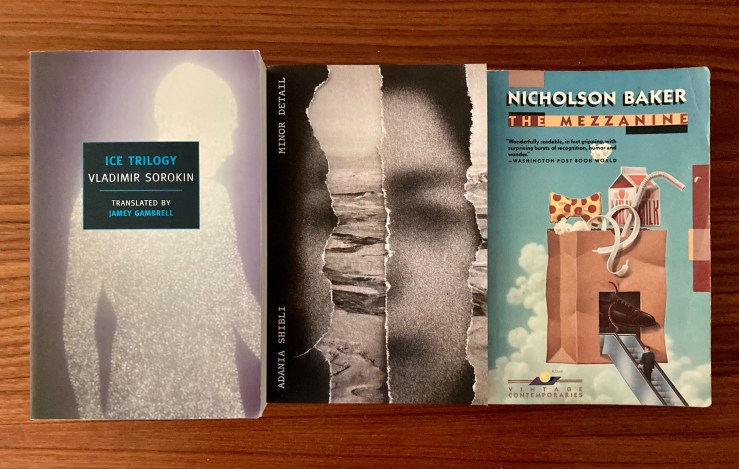
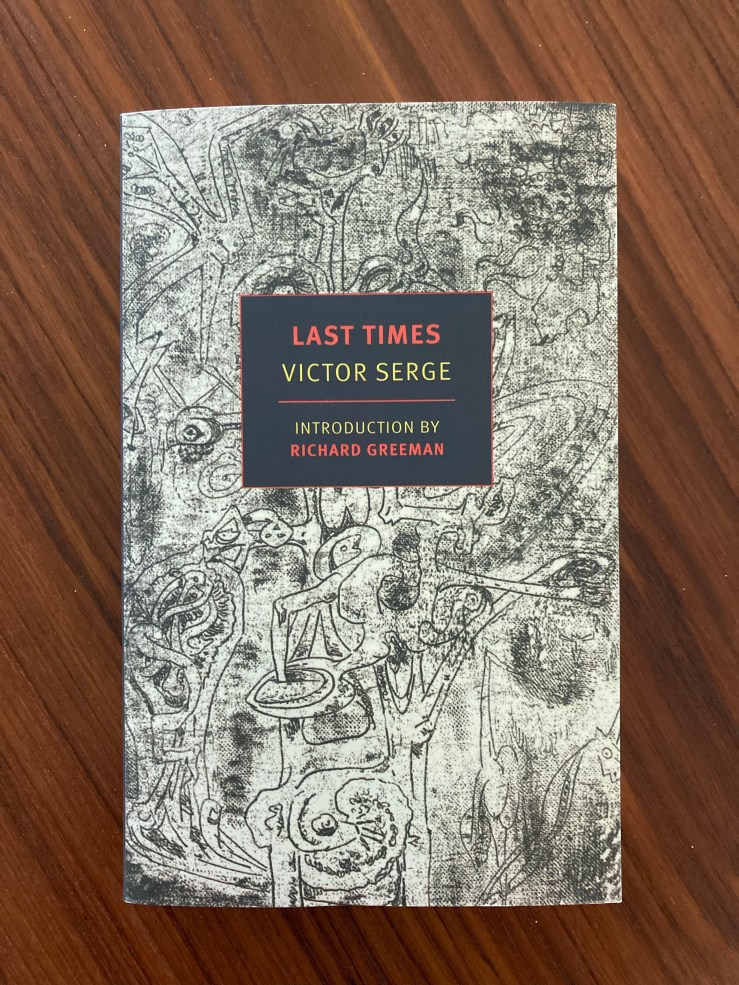
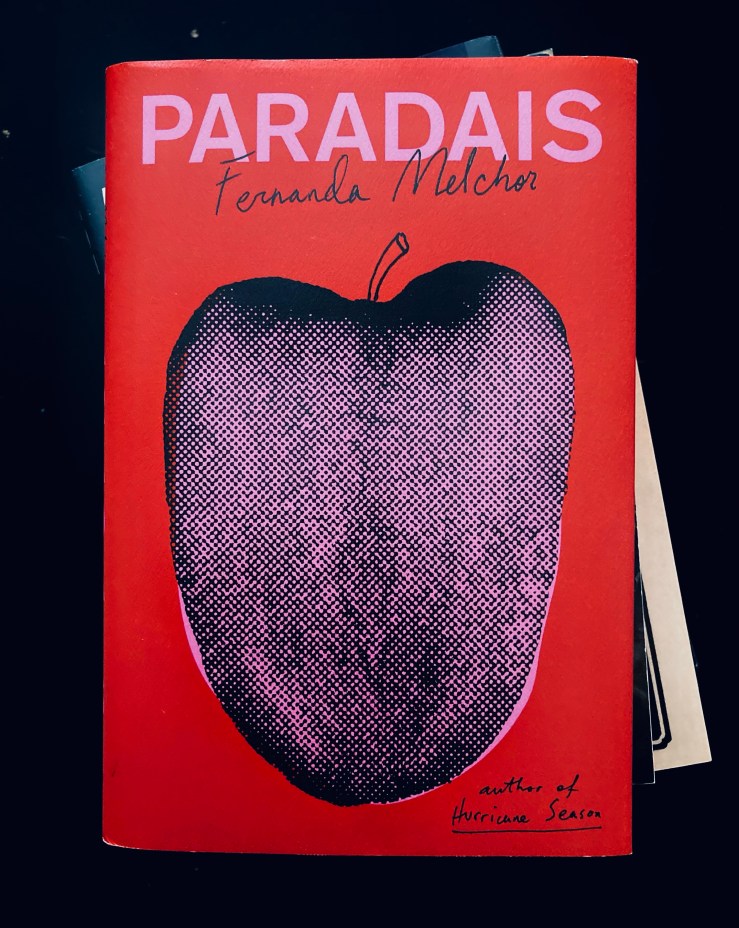
Fernanda Melchor’s Paradais (Book acquired, 20 July 2022; also, a few notes on a week in DC)

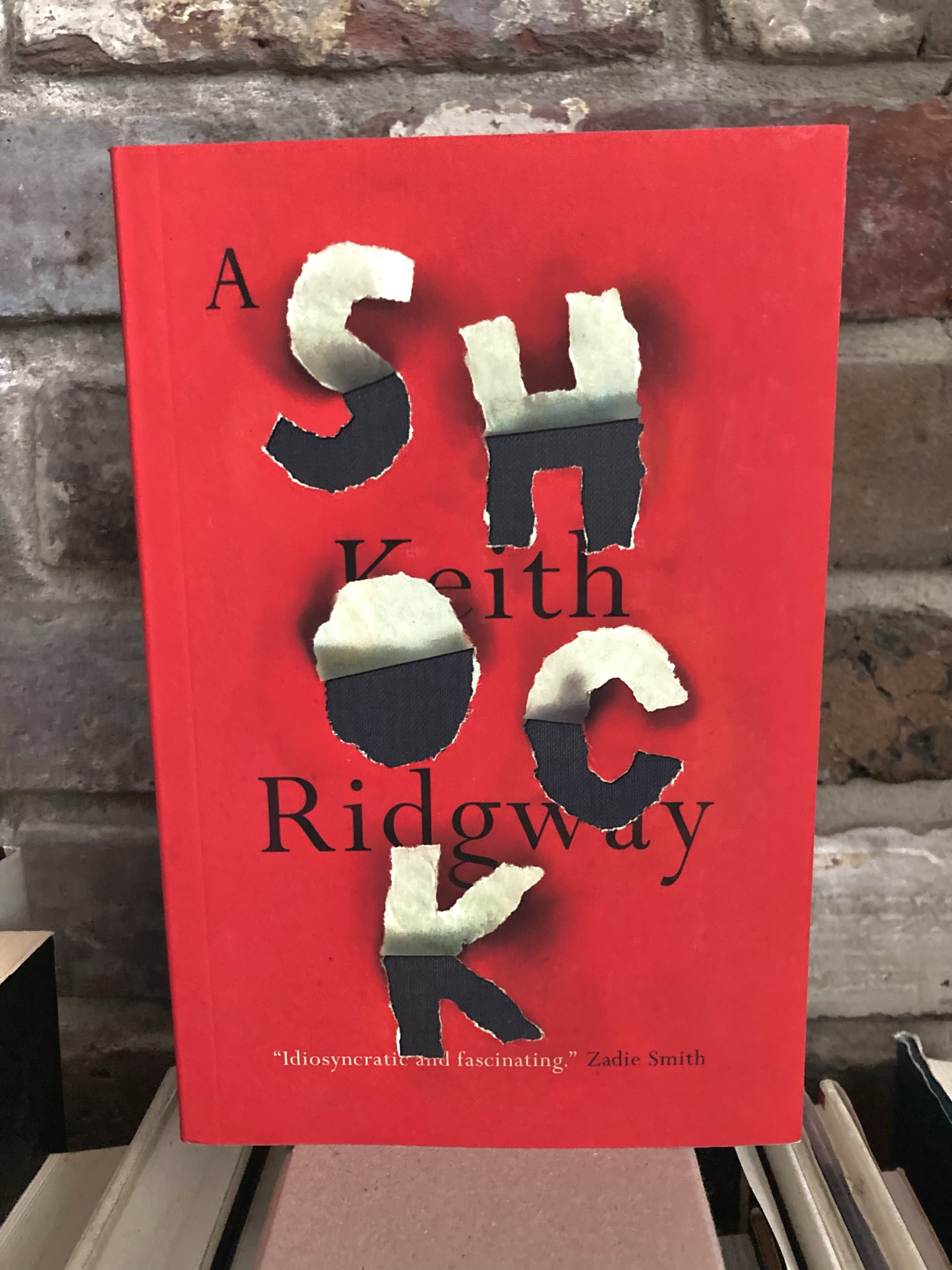
I picked up a copy of Fernanda Melchor’s Paradais last week, in translation by Sophie Hughes, who also translated Melchor’s novel Hurricane Season, possibly my favorite contemporary read of last year. Here’s publisher New Directions’ blurb:

Inside a luxury housing complex, two misfit teenagers sneak around and get drunk. Franco, lonely, overweight, and addicted to porn, obsessively fantasizes about seducing his neighbor—an attractive married woman and mother—while Polo dreams about quitting his awful job as the gated community’s gardener and fleeing his overbearing mother and their narco-controlled village. Faced with the impossibility of getting what they think they deserves, Franco and Polo hatch a mindless and macabre scheme.

I picked up Paradais at East City Bookshop in Washington, D.C., where I spent a humid, often-aggravating week with my family, or most of my family. My daughter was attending a sleep-away camp there, so my wife and son and I took on that week as a vacation; he lost his fifth-grade trip to D.C. in 2020, one of so many things cancelled by  Covid.

East City was the best of the handful of bookshops I got to go to in D.C. — clean and well-curated with a nice contemporary selection. All new, no used, but cool stuff. I went there after visiting Capitol Hill Books, which has a nice selection of second-hand stuff, but I’ve been spoiled by the place right by my house. I also enjoyed lunch at the Busboys and Poets on K Street, and browsed their small but-well-curated inventory without purchasing anything. I also walked a block out of my way to go to Reiter’s Books, which seemed to be more of a coffee stand/passport photo booth with some used economics books strewn about. 

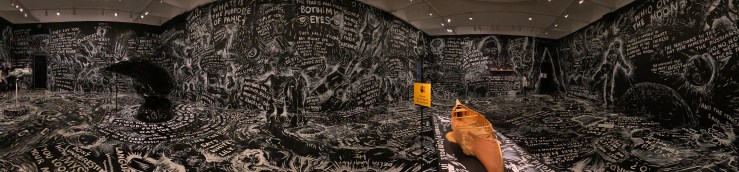
I didn’t expect the bookstores to be a highlight of D.C. and they weren’t. It was the museums we spent most of our time at, our son making most of the calls. My favorite thing was Laurie Anderson’s exhibit The Weather at the Hirschorn: immersive, bold, moving, the right mix of playfulness and pretension. I got to see it twice, the second time in the morning as we waited to view the Yayoi Kusama exhibit, and this time it was mostly empty, and I could really “see” it and feel it.

I also enjoyed my visit to the National Gallery of Art, which was chock full of great stuff, but a strange highlight were the huge, scrolling Joan of Arc paintings by Louis-Maurice Boutet de Monvel, which stood out, so-called “children’s illustrations” in a gallery full of fine art where nothing else looked like them.

There were plenty of other highlights, as well as wonderful little moments of revelation, like seeing a Jacob Lawrence hanging in the White House, or a random Whistler in the Freer, but as everyone who tries to attend to art museums overmuch, one’s sensitivity becomes dulled.

This was by my reckoning my seventh trip to D.C. and the city seems more blocked up than ever—the vibe is stifled, stuck, barriers literal and figurative everywhere. Along with Las Vegas, D.C. is the only major American city I can think of that I am happy to leave in contrast to, say, L.A. or NYC or Key West or Atlanta or New Orleans, where I always want just one more day. 

At the end of it all I finally got Covid, which has fortunately passed over my family. I’ve been fine, just a little sick, mostly bored of being quarantined in my bedroom. Today was the first day I actually felt able to, like, write, although I’ve had a hard time reading anything to be honest (I pass my eyes over the words, but nothing attaches). But finally getting Covid feels like the appropriate conclusion to a week in the capital at the end of the awful summer of 2022.

I’ll end with a quote that’s always stuck in my head from an obscure Pavement song, “Brink of the Clouds”: “And the capital sucks / Like a capital should.”

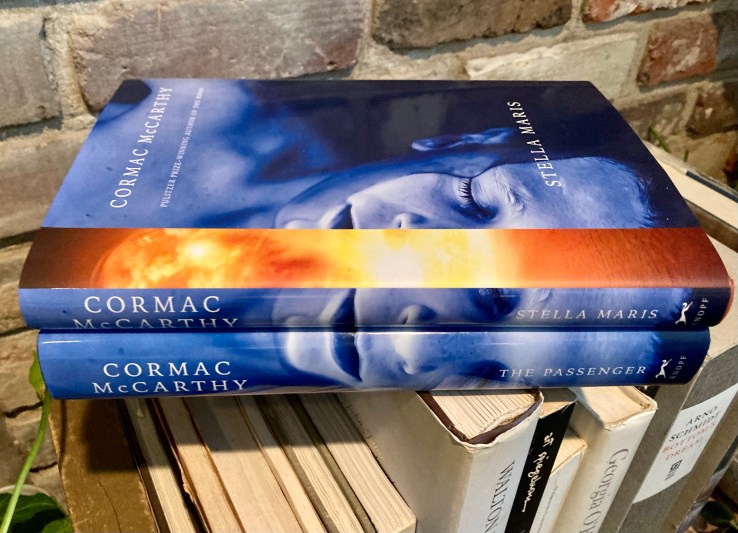
(Another copy of) Vladimir Sorokin’s Telluria (Book acquired, 23 July 2022)

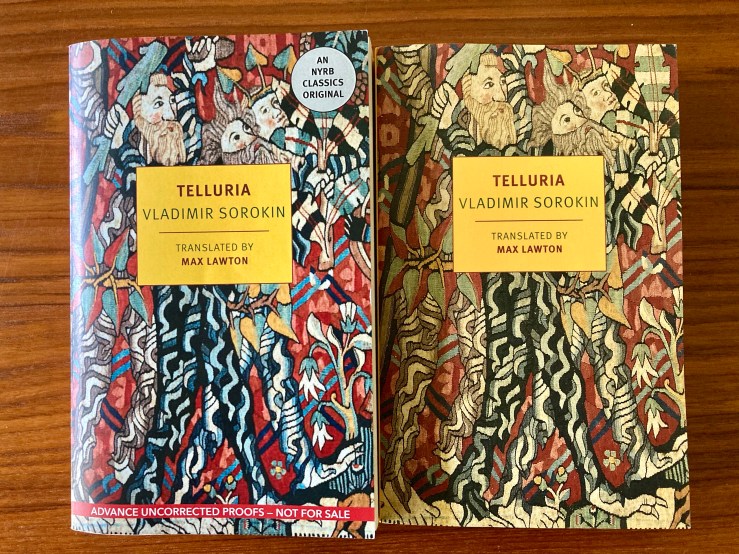
A finished copy of Vladimir Sorokin’s novel Telluria arrived at Biblioklept World Headquarters yesterday. The novel, in translation by Max Lawton, has been my favorite read so far this year. It’s on sale in a few weeks from the good people at NYRB. I would normally share their copy from the back of the book, but I have something better. I’ve got an interview with translator Max Lawton forthcoming, and here’s his description of Telluria:

TELLURIA is “Oxen of the Sun” as sci-fi novel, without any notion of a language’s generation—without any notion of “progress.” It is fractal and rhizome, scattered out over 50 chapters, with the only hint of redemption coming in a narcotic vision of Christ. TELLURIA is about pushing one’s mastery of style to the point where it begins to break down—in the mode of late Miles. It is at these moments of breaking down that something new begins to come into being. On the level of content, TELLURIA suggests that the small is always more charming—more desirable—than the master narrative. Nationalism, he suggests, can only be cute if it’s a doll-sized state that’s doing the nationalizing. Anything bigger is monstrous. The book, then, is an ode to difference. And a challenge to land-grabbing, logos-hijacking imperialists who believe in a single story. For Sorokin, the world is a million different textures, a million different languages, and no ONE can be said to triumph.

Blog about some books acquired, 15 July 2022


I live in an old neighborhood filled with old people who are dying at a reliable rate, which means that there are frequent estate sales in the neighborhood. I walk the neighborhood pretty much every day, and if I see an estate sale sign, I’ll walk toward it and go through the house, looking at the items of the recently deceased, or recently relocated, or what have you, not so much interested in purchasing anything as I am trying to piece together a little bit of a life from objects, colors, totems. Sometimes the interiors of these houses remind me of being in my own grandparents’ homes back in 1985—homes built in the 1950s with few updates, some tasteful furniture, maybe a bit of fanciful wallpaper, a pink-tiled bathroom. Sometimes I might buy a knife or a tool or a mirror, or even get lucky with an old print or painting. And of course I always look through the books.

The books you might find in the homes in the estate sales in my neighborhood are generally predictable. There are bibles, a small selection of “great books,” classics, what have you, a few books that indicate the removed persons’ hobbies, old cookbooks with few or no color pictures. Often you might find the books of the eldest or middle child, selections from their freshman English course. Westerns, mysteries, a few art books.

Today I came across an estate sale not even a block from my house and meandered in. The man running the estate sale had sold me a large signed Alexander Calder print a few years ago, not realizing its full value; he had then called me repeatedly trying to sell me three more Calder prints which he had repriced and overpriced. He didn’t recognize me. The house was much smaller inside than I had expected, but beautifully furnished. There was a large framed photograph of Winston Churchill on the fireplace mantel along with a leather-bound collection of his memoirs. On the other side was an incomplete selection of Shakespeare plays, also bound in leather. Outside was a small shallow swimming pool, clearly original to the house.

The layout of the house—a brick midcentury ranch home, like almost all of the homes in the neighborhood—was very similar to my own house’s layout, and I could even see the use of the some of the same materials (particularly in the guest bathroom, which had not been updated). The first and second bedrooms suggested a couple who at some point had had two children, a boy and a girl, probably five or ten years older than I am. The last bedroom was being used as an office or study, and it was filled with books. There was a large electric Olivetti typewriter on the desk in this room, as well as a beautiful early 1980’s Bose sound system with a strange control box.

The first row of books I saw soured my hopes of finding anything worthwhile. It was mostly conservative stuff, including stuff by Charles Murray and David Brooks. Nothing fringe exactly, but still. There were also lots of books about travel and France in particular, including several plays in French (one by Moliere). This book case also held several books about writing—style manuals, thesauruses, etc., but also a book about selling one’s writing and a book on the publishing industry. The next book case was filled with paperbacks. Someone before me had fished out A Clockwork Orange and left it unshelved; it was the same edition I had read myself almost thirty years ago. The case held lots of sci-fi paperback—at least a dozen books by John Brunner and Robert Heinlein.

Near the bottom shelf was an oddity—a poorly-printed Clarice Lispector book, An Apprenticeship; or, The Book of Delights, published by the University of Texas in 1986. I have a matching copy of Lispector’s Family Ties.
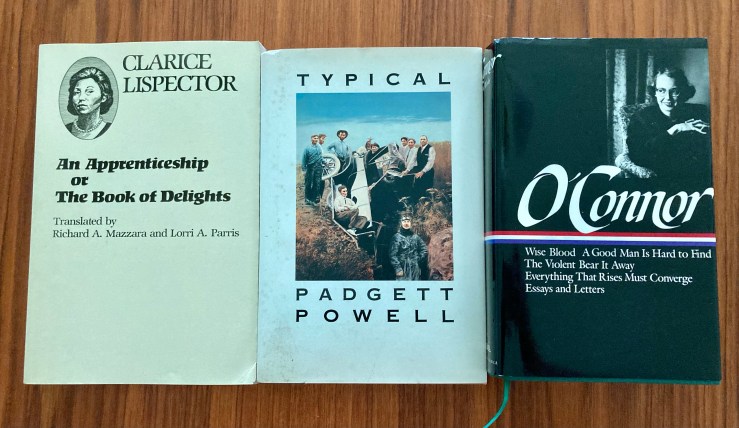
The last shelf held mostly hardbacks, including lots of Steinbeck, Hemingway, and other twentieth-century American novelists. I picked up the first-edition hardback copy of Padgett Powell’s first collection of stories, opened it, and was surprised to find that it was signed by the author.
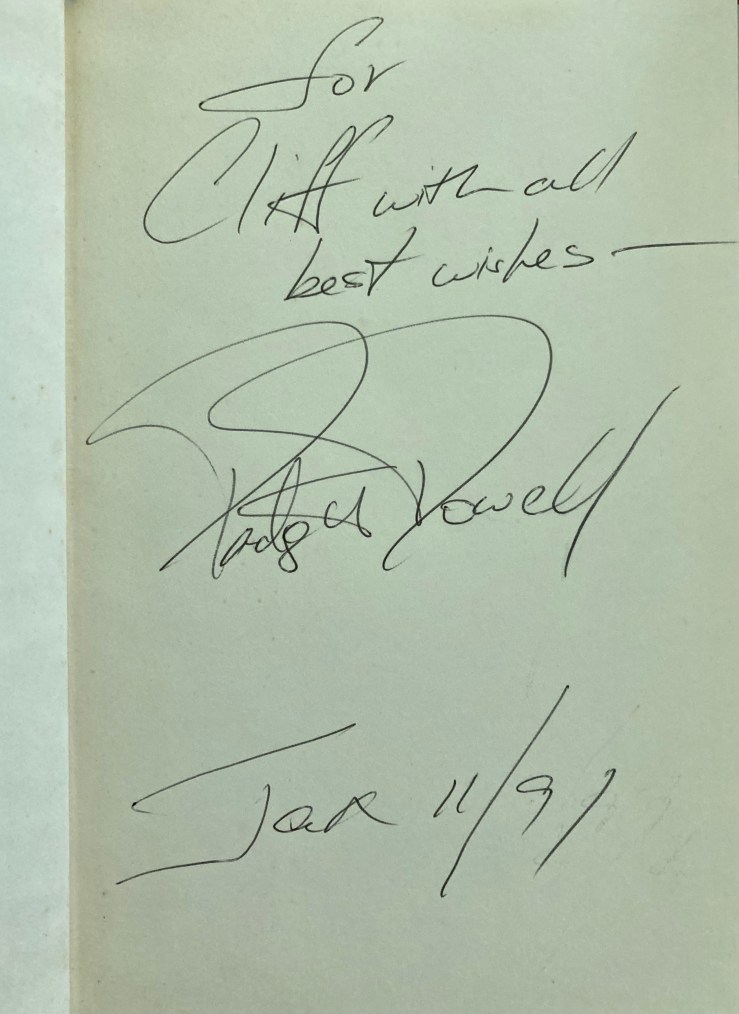
I wondered if I was in Cliff’s old study. Once I’d committed to taking the Lispector and Powell with me, it was easy to take the Library of America’s Collected Works of Flannery O’Connor.

I didn’t buy the beautiful deer antler knife from the kitchen, and I didn’t buy the Emory University Alumni coffee cup, although I wanted both, but I think that they are waiting for someone else.

 

Ivan Turgenev’s Fathers and Children (Book acquired, 6 July 2022)

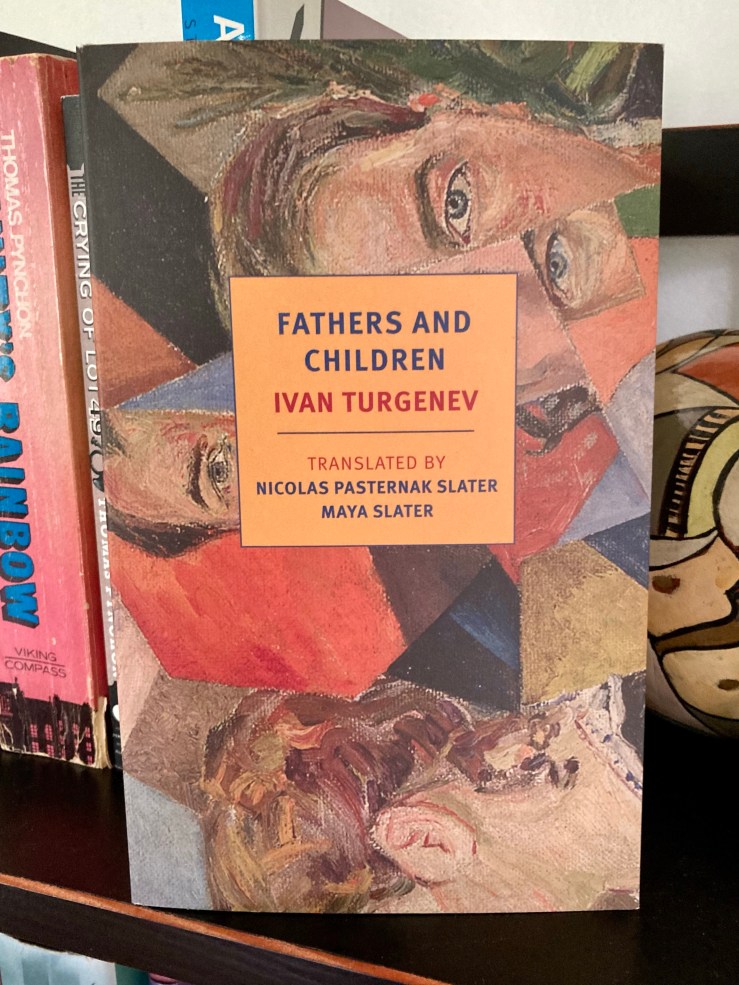
NYRB is publishing Ivan Turgenev’s novel Fathers and Children next month, in English translation by Nicolas Pasternak Slater and Maya Slater. NYRB’s blurb:

Ivan Turgenev’s Fathers and Children is a masterpiece not only of the nineteenth century but of the whole of Russian literature, a book full to bursting with life. It is a novel about the relationships between the young and the old; about love, families, politics, religion; about strong beliefs and heated disagreements, illness and death. It is about the clash between liberals and conservatives, revolutionaries and reactionaries. At the time of its publication in 1862, the book aroused indignation in its critics who felt betrayed by Turgenev’s refusal to let his novel serve a single ideology; it also received a spirited defense by those who saw in his diffuse sympathies a greater service to art and to humanity. Fathers and Children is not a practical manifesto but a lasting work of art and a timely book for our present age, newly and ably translated by Nicolas Pasternak Slater and Maya Slater.

E.E. Cummings’ The Enormous Room ( Book acquired, mid-June 2022)

E.E. Cummings’ autobiographical novel The Enormous Room is forthcoming in a new edition from NYRB in July. Their blurb:

In 1917, after the entry of America into World War I, E. E. Cummings, a recent graduate of Harvard College, volunteered to serve on an ambulance corps in France. He arrived in Paris with a new friend, William Slater Brown, and they set about living it up in the big city before heading off to their assignment. Once in the field, they wrote irreverent letters about their experiences, which attracted the attention of the censors and ultimately led to their arrest. They were held for months in a military detention camp, sharing a single large room with a host of fellow detainees. It is this experience that Cummings relates in lightly fictionalized form in The Enormous Room, a book in which a tale of woe becomes an occasion of exuberant mischief. A free-spirited novel that displays the same formal swagger as his poems, a stinging denunciation of the stupidity of military authority, and a precursor to later books like Catch-22 and MASH, Cummings’s novel is an audacious, uninhibited, lyrical, and lasting contribution to American literature.

Anthony Michael Perri’s Lonely Boxer (Book acquired, 7 June 2022)

Anthony Michael Perri’s Lonely Boxer is good stuff—a terse, dark (and often funny) boxing story packed with punchy sentences. Jacket copy:

Lonely Boxer is a novella in vignettes. It deals with the themes of depression, loneliness, violence and morals. Recently released from jail, Lonely Boxer resumes his training regime. After all, this is the only place he feels comfortable – in the ring. And when a title fight between himself and the world’s most popular boxer, Famous Rafael, is announced, Lonely asks himself; will he be able to overcome his opponent? Along the way he’ll have to contend against an indifferent psychologist, an unreliable best friend, and an abusive mother. Will he be able to overcome all of these challenges and become the World Champ?

Giado Scodellaro’s Some of Them Will Carry Me/Amina Cain’s A Horse at Night (Books acquired, 7 June 2022)

Two forthcoming titles from Dorothy both look promising.

(Parenthetically–I finished Dorothy’s recent publication, Caren Beilin’s Revenge of the Scapegoat the other night and found it confounding, upsetting, engaging, and very, very funny. Should have a proper review in the next few days, if I can commit to writing about a novel that zapped and perplexed me.)

Here’s the blurb for Giada Scodellaro’s collection Some of Them Will Carry Me:

Giada Scodellaro’s stories range in length, style, and tone—a collage of social commentary, surrealism, recipes, folklore, and art. What brings them together is a focus on experiences of black women in moments of dislocation, and a cinematic prose style saturated with detail: a child’s legs bent upon the small bosom of their mother, three-piece suits floating in a river, a man holding a rotting banana during sex, wet cardboard, a woman walking naked through a traffic tunnel. In language that is lyrical, minimal, and often absurd, the diverse stories in Some of Them Will Carry Me deconstruct contemporary life while building a surprising new reality of language, intimacy, and loss.

And here’s the blurb for Amina Cain’s essay collection, A Horse at Night (which I dipped into this afternoon):

In Amina Cain’s first nonfiction book, a series of essayistic inquiries come together to form a sustained meditation on writers and their works, on the spaces of reading and writing fiction, and how these spaces take shape inside a life. Driven by primary questions of authenticity and freedom in the shadow of ecological and social collapse, Cain moves associatively through a personal canon of authors—including Marguerite Duras, Elena Ferrante, Renee Gladman, and Virginia Woolf—and topics as timely and various as female friendships, zazen meditation, neighborhood coyotes, landscape painting, book titles, and the politics of excess. A Horse at Night: On Writing is an intimate reckoning with the contemporary moment, and a quietly brilliant contribution to the lineage of Woolf’s A Room of One’s Own or William H. Gass’s On Being Blue, books that are virtuosic arguments for—and beautiful demonstrations of—the essential unity of writing and life.

Blixa Bargeld’s “semi-fictional” tour diary, Europe Crosswise: A Litany (Book acquired, 6 June 2022)

Blixa Bargeld, the lead singer and guitarist of the German experimental noise band Einstürzende Neubauten published a “semi-fictional” account of his bands 2008 tour a year after the tour’s completion. That book, Europe Crosswise: A Litany is now available in English translation by Mark Kanak from Contra Mundum. Their blurb:

In this semi-fictional account, Blixa Bargeld recounts life on tour in 2008 with Einstürzende Neubauten — from Lisbon to Moscow, Oslo to Naples, criss-crossing Europe. Along the way we encounter mind numbing routines, interesting restaurants (good and bad), colorful museums, rocky bus rides, mundane hotels, odd characters and old friends — they’re all there.  Along with the structure holding it all together, namely, a recurring setlist that is invoked as a litany.  In the end the book proves to be a declaration of love for Europe, and in the current dark times we are presently living through, more immediate than ever.

The book, first published in German in 2009 and something of a semi-fictional travel journal from the “Alles Wieder Offen” Tour, will be published soon by Contra Mundum Press in an English translation by author, translator, and radioplay artist Mark Kanak.

Trey Ellis’s Platitudes (Book acquired, 6 June 2022)

I had a full 90 minutes to browse the second, downtown location of my favorite bookshop today, while my daughter completed onboarding at City Hall for her summer job. I picked up assigned summer reading for both of my kids, and came across a Vintage Contemporaries edition I’d never seen before: Trey Ellis’s debut novel PlatitudesThe blurb on the back by Ishmael Reed sold me on Platitudes:

I was zapped by Trey Ellis’s humongous talent. His book, Platitudes, is delightfully rad. He dares to have the gumption to write comically about American literary politics.

I also managed to avoid leaving with a bunch of massmarket paperbacks by Philip K. Dick—but here’s a pic of all their covers: 

—which I think are so much more interesting than these handsome, respectable, uniform contemporaries:

Marina Warner’s Esmond and Ilia (Book acquired, late May 2022)

Marina Warner’s “unreliable memoir” of her parents’ early life as a couple came to Biblioklept World Headquarters a few days ago. While I haven’t read much, the form (and content, to a certain degree), remind me of a post-Sebaldian mode. NYRB’s blurb:

Marina Warner’s father, Esmond, met her mother, Ilia, while serving as an officer in the British Army during the Second World War. As Allied forces fought their way north through Italy, Esmond found himself in the southern town of Bari, where Ilia had grown up, one of four girls of a widowed mother. The Englishman approaching middle age and the twenty-one-year-old Italian were soon married. Before the war had come to an end, Ilia was on her way alone to London to wait for her husband’s return and to learn how to be Mrs. Esmond Warner, an Englishwoman.

Ilia begins to learn the world of cricket, riding, canned food, and distant relations she has landed in, while Esmond, in spite of his connections, struggles to support his wife and young daughter. He comes up with the idea of opening a bookshop, a branch of W.H. Smith’s, in Cairo, where he had spent happy times during the North African campaign. In Egypt, however, nationalists are challenging foreign influences, especially British ones, and before long Cairo is on fire.

Deeply felt, closely observed, rich with strange lore, Esmond and Ilia is a picture of vanished worlds, a portrait of two people struggling to know each other and themselves, a daughter’s story of trying to come to terms with a past that is both hers and unknowable to her. It is an “unreliable memoir”—what memoir isn’t?—and a lasting work of literature, lyrical, sorrowful, shaped by love and wonder.

Last day of school

Today was the last day of school for my kids. They both started new schools this year (high school and middle school). It’s been a weird few years and a bad few days. My son chose not to attend the last two days but my daughter wanted to see her friends. My mother called me the afternoon of the Ulvade murders to ask if my kids were okay and I didn’t even know how to answer. My daughter has been in two active-shooter lockdowns already in her life and she’s not even 15. They’ve spent their entire life fully inscribed in this nightmare. One of the worst memories of my early parenthood was my daughter coming home from kindergarten and describing her first active-shooter practice drill: “Some of us were weeping,” she said. It was the word weeping that really stuck with my wife and me—the odd precision of it.

I don’t want to rant on here; that’s not what this blog is for, and not what I imagine those who check in on it want to read or see. I expressed my own sense of horror and despair obliquely on here the other day, in any case.

I spent too much of today staring at screens, reading, horrified and angry, still stunned by the stupidity of the world we’ve botched together. I tried to pick up the book I’ve been trying to read, but I found I couldn’t press into it, couldn’t focus on a sentence let alone a paragraph. I ended up playing a lot of internet chess, on the smaller screen.

And then I found myself exhausted, needing to get out of the house. So I pulled the same Friday trick I always do, which sometimes works and sometimes doesn’t. I went to the used bookstore down the road.

I like to browse and handle the material there, looking for oddities and weird scores. I ended up with a hardback ex-library copy of Vladimir Sorokin’s Day of the Oprichnik (trans. Jamey Gambrell, RIP). It’s in the stack below, a stack of books I’ve read or am (ostensibly) reading:

And so some mini-not-reviews, top to bottom:

Kou Machida’s Rip It Up (trans. Daniel Joseph): Read it back in April when I was finishing up the semester—it was a wonderful punk-psych antidote to final essay doldrums. Short, kinetic, caustic, and surreal. I wrote about the first part here.

Caren Beilin’s Revenge of the Scapegoat: This is the novel I attempted to start a few days ago, after finishing William Burroughs’s The Western Lands. I am having a hard time reading anything right now, let alone writing any proper review. I hope the thing I once had comes back.

Vladimir Sorokin’s Telluria (trans. Max Lawton): The best contemporary novel I’ve read in a long time—a polyglossic satirical epic pieced together in vital miniatures. Rich and dense but also loose and funny, Sorokin’s post-collapse world doesn’t seem all that bad.

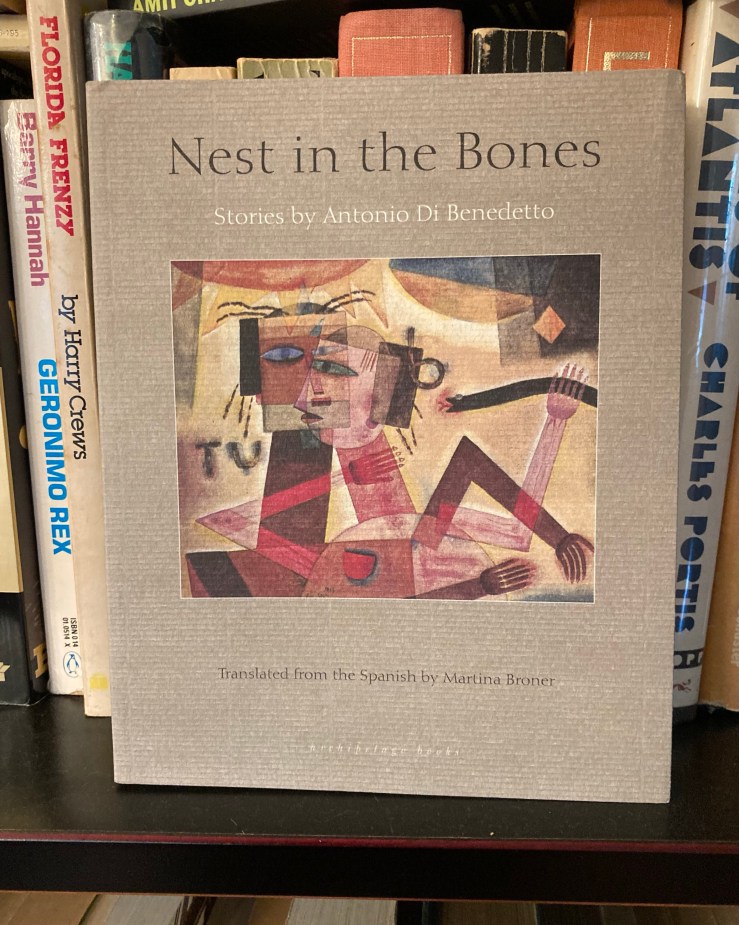
Antonio di Benedtto’s The Silentiary (trans. Esther Allen): The narrator of this understated Kafkaesque novel cannot abide the increasing cacophony of 20th-century life. His resistance to noise is futile though, and comes at great cost to both himself and his family. The Silentiary is good stuff, but not as achieved as Di Benedetto’s novel Zama.

I bought Sorokin’s Day of Oprichnik today.

(Parenthetically: I went to the bookstore, as I stated above, to try to decompress, get away from screens, news, etc.—but I could not.

There was a young woman standing near the “RE” area in General Fiction having the loudest possible conversation one can have on a phone without actually yelling. She was talking at her mother about all the strife she has with her brother, who is also her roommate, and her father (who is divorced from the mother). The young woman cursed in almost every sentence she spoke, damning her brother for not taking out the trash, for not doing the dishes, etc. She near-shouted about her father’s siding with her brother, and about how the whole situation necessitates more therapy for her, and how she is the sane responsible one, while her brother is not. Her brother refuses to engage with her when she addresses him, claiming that he claims he can’t talk to her when she shouts, but how can she not be emotional when she’s angry? And how does that mean that she’s not rational, just because she’s yelling? And isn’t he really the abusive one, for shutting down on her and not responding when she, a grown-ass adult, is simply trying to confront him about not doing what he should be doing?

I put this information together in waves over 45 minutes. It was like running up a caustic radio show that tuned in and out depending on my proximity to its signal. Vile.)

William S. Burroughs’s final trilogy: I haven’t read WSB in ages, but I finished up his last novel, The Western Lands a few days ago (not pictured because it’s still in my car; I’d been rereading bits during carpool pick-up).. The final three books in Burroughs’s oeuvre are maybe his best (and most-overlooked), and The Place of Dead Roads is particularly fantastic.

Okay, I’m out of juice. I hope the summer is better for most of us, although there’s not much force in that verb, hope.

The Uncollected Essays of Elizabeth Hardwick (Book acquired, 25 April 2022)

NYRB has collected the uncollected essays of Elizabeth Hardwick and published it as The Uncollected Essays of Elizabeth Hardwick. Thirty-five essays, out in late May. NYRB’s blurb:

The Uncollected Essays of Elizabeth Hardwick is a companion collection to The Collected Essays, a book that proved a revelation of what, for many, had been an open secret: that Elizabeth Hardwick was one of the great American literary critics, and an extraordinary stylist in her own right. The thirty-five pieces that Alex Andriesse has gathered here—none previously featured in volumes of Hardwick’s work—make it clear that her powers extended far beyond literary criticism, encompassing a vast range of subjects, from New York City to Faye Dunaway, from Wagner’s Parsifal to Leonardo da Vinci’s inventions, and from the pleasures of summertime to grits soufflé. In these often surprising, always well-wrought essays, we see Hardwick’s passion for people and places, her politics, her thoughts on feminism, and her ability, especially from the 1970s on, to write well about seemingly anything.

Kou Machida’s Rip It Up (Book acquired, 15 April 2022)

So I got into Kou Machida’s short novel Rip It Up last night. This Japanese novel (original title, きれぎれ [Kiregire]) gets its first English translation, via Daniel Joseph and Mercurial Editions, a new translation imprint from Inpatient Press. This is how the publisher describes Rip It Up:

Set in a kaleidoscopic hyperreal Japan circa Y2K, Rip It Up catalogues the misdeeds and misgivings of a down-and-out wannabe debonair who ekes out a meager living at the fringes of the art world, wracked by jealousy at his friend’s success and despondency of his own creative (and moral) bankruptcy. In turn hilarious and also horrifying, Machida’s pyrotechnic prose plumbs the discursive depths of the creative spirit, a head-spinning survey of degeneration and self-sabotage.

Machida’s psychedelic punk prose takes a few pages to tune into. The (as-yet?) unnamed narrator’s voice is tinged with madness and soaked with vitriol for the conformist society he can’t seem to get out of. He’s a rich kid, a lout, and a bum, obsessed with Satoe the horse-headed girl. Her head isn’t really a horse’s head; rather, it’s a mask she’s wearing when he first runs into her at a drunken Setsubun party at the “panty bar” where she works. He’s stumbled in after getting drunk at his friend’s funeral. The scene Machida conjures is simultaneously vile, hallucinatory, and hilarious, with salarymen and “little people gotten up to look like Fukusuke dolls” crashing about the place in a bizarre karaoke showdown. The narrator takes the mic, belting out malapropisms that synthesize and parody the lyrics of Western pop songs:

It’s not unusual to hi-de hi-de hi-de-hi

You’re as chaste as ice

And baby we were born to nun

Rollin’, rollin’, rollin’ on Moon River

Any way the lunch grows, doesn’t really matter

A few pages later, the narrator still pines for the horse-headed girl, spending all his money at the panty bar. He has to go visit his rich mother for a “loan,” but she makes him embark on a stolid omiai, a marriage interview, which he torpedoes by declaring to the prospective partner and her dour mother “exactly what kind of person I am”:

That I spend all my free time at the panty bar. That I dropped out of high school. That I’m a spendthrift. That I’ve got my head in the clouds and I’ve never done an honest days work in my life because I despise hard work. That’s all.

I’m digging Rip It Up so far; it’s alienating, self-indulgent stuff. Daniel Joseph’s translation conveys a desperate, stuffy world, and shows how linguistic resistance might puncture stifling conformity. More thoughts to come. Check out Kou Machida’s seminal punk band Inu,


Four Books (Barthelme, Burroughs, and Barry [Hannah])

If you follow this blog even semi-regularly, you may know that I frequently frequent Chamblin Bookmine. This sprawling bookstore, with an inventory of close to three million books (mostly used, and often very weird), is about a mile from my house, and in some small ways might constitute a mute coauthor of this blog. I don’t get to their second location, Chamblin Uptown (in downtown Jacksonville) that often, and even less during the last few years (for obvious reasons), but I went downtown to watch my nephew wrestle last Sunday, and stopped by. In addition to a pair of Ishmael Reed massmarket 1970s paperbacks, I fetched a small stack of first-edition hardbacks by Donald Barthelme, William Burroughs, and Barry Hannah.

I was thrilled to find a first-edition of Donald Barthelme’s first novel Snow White (Atheneum, 1970), with a jacket by Lawrence Ratzkin. The cover sans jacket is also nice:

Overnight to Many Distant Cities isn’t Barthelme’s best collection, but I couldn’t pass up a first edition (G. P. Putnam’s Sons, 1983). The cover features a photograph by Russell Munson.

So far this year, William S. Burroughs’ late novel Cities of the Red Night has been a reading highlight for me: apocalyptic, utopian, discursive, funny, and more poignant than I had remembered when I first read it two decades ago. I couldn’t pass up on a first-edition of its sequel, The Place of Dead Roads (Holt, Rinehart, and Winston, 1983) with a jacket by Robert Reed (working from an old uncredited photograph). I found an audiobook of Dead Roads at my local library, so I might give that a shot.


I also grabbed a signed copy of Barry Hannah’s semi-autobiography, Boomerang (Houghton Mifflin, 1989), with a cover by one of my favorite designers, Fred Marcellino. Here’s the autograph:

Marcellino also did the cover for another signed Hannah I have, Captain Maximus (wait, is this Five Books?):

img_9605

Elizabeth Sewell’s The Orphic Voice (Book acquired, 12 April 2022)

Elizabeth Sewell’s 1960 work The Orphic Voice is getting a new edition this summer from NYRB. Their blurb:

Taking its bearings from the Greek myth of Orpheus, whose singing had the power to move the rocks and trees and to quiet the animals, Elizabeth Sewell’s The Orphic Voice transforms our understanding of the relationship between mind and nature. Myth, Sewell argues, is not mere fable but an ancient and vital form of reflection that unites poetry, philosophy, and natural science: Shakespeare with Francis Bacon and Giambattista Vico; Wordsworth and Rilke with Michael Polanyi. All these members of the Orphic company share a common perception that “discovery, in science and poetry, is a mythological situation in which the mind unites with a figure of its own devising as a means toward understanding the world.” Sewell’s visionary book, first published in 1960, presents brilliantly illuminating readings of A Midsummer Night’s Dream and Rilke’s Sonnets to Orpheus, among other masterpieces, while deepening our understanding not only of poetry and the history of ideas but of the biological reach of the mind.

Four Books (By Ishmael Reed)

Seven years ago I came across three lovely 1970s mass market paperback Ishmael Reed novels. In the years since then, I’ve consumed most of Reed’s novels, even picking up an undervalued signed copy online. Two of my favorite Reed editions are from Avon Bard. This past Sunday, I came across two more Reed Avon Bard editions, and snapped them up, despite already owning them in hardback. While no designer or artist is credited, the signature on this edition of Flight to Canada clearly says “Andrew Rhodes”:

I’m pretty sure that Rhodes is the artist (and possibly designer) of the other Avon Bard Reeds I picked up years ago, Mumbo Jumbo

IMG_0547

—and Yellow Back Radio Broke-Down (the signature is clear on this one):


IMG_0548

We can also see “Rhodes” on the copy of The Last Days of Louisiana Red I picked up on Sunday. (This book also has the stamp of a guy who lives (lived?) in Perry, Florida, a stamp I’ve come to recognize over the years as a guy who, at least at one point, had very similar taste to my own. I have a lot of his old books and I wonder about him sometimes.)

Here are some reviews I’ve written of Reed’s novels over the past few years:

A review of Ishmael Reed’s sharp satire The Last Days of Louisiana Red

Blog about Ishmael Reed’s 1976 neo-slave narrative Flight to Canada

A review of Yellow Back Radio Broke-Down, Ishmael Reed’s syncretic Neo-HooDoo revenge Western

A review of Ishmael Reed’s Christmas satire, The Terrible Twos

Blog about Ishmael Reed’s novel Juice! (Book acquired, 10 Dec. 2019)

Kobo Abe’s Inter Ice Age 4 (Book acquired, 1 April 2022)

I was thrilled to find a first-edition U.S. hardback (Knopf, 1970, Book Club Edition) of Kobo Abe’s novel Inter Ice Age 4. The translation is by E. Dale Saunders, and is the only English translation of the novel that I am aware of. The jacket design is by Joseph del Gaudio; I’m not sure if he is responsible for this lovely little embossed image that takes up the bottom-right corner of the cover:

This edition includes five line drawings by Abe’s wife, the artist Machi Abe. Here is one of those drawings:

I’ve had a samizdat e-copy of Inter Ice Age 4 for ages now, but haven’t made it past the first 20 or so pages, but the intriguing, prescient plot has always intrigued me. First composed and published in serialization at the end of the 1950s, Inter Ice Age 4 is set in a world where the polar ice caps are rapidly melting. Scientists genetically modify gilled children to survive this new reality. A proto-AI, a computer that can tell the future is the novel’s central antagonist. Thank god nothing like that’s shaking down these days!