

Category: Books
Woman Reading — Peter Vilhelm Ilsted

The Collected Works of Jane Bowles (Book Acquired, 12.19.2014)
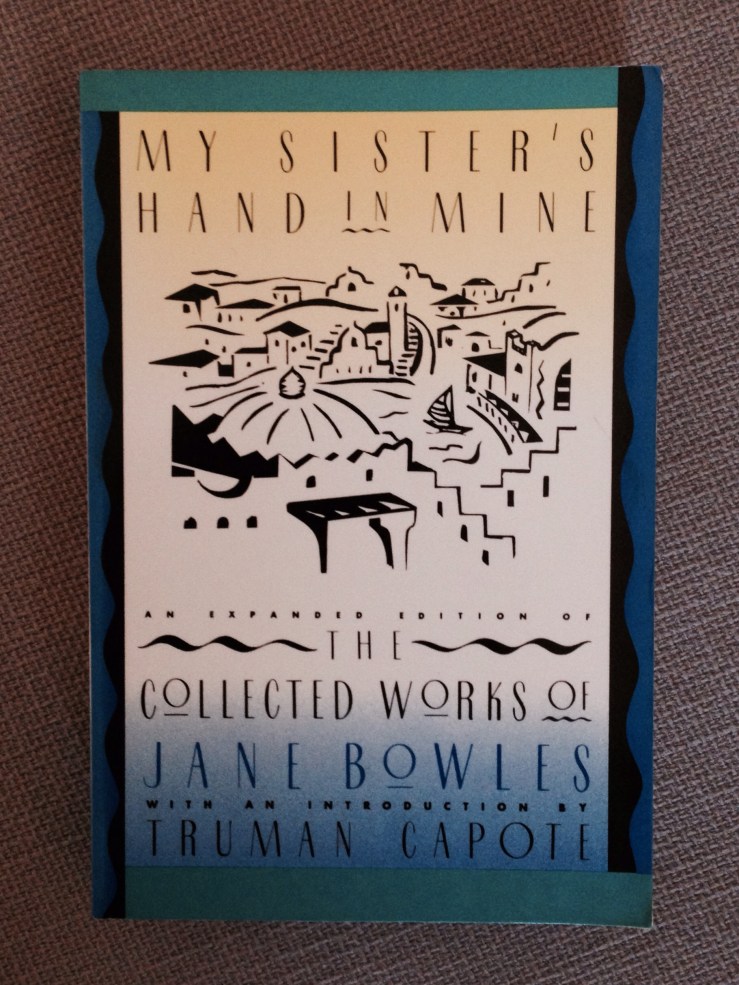
I picked up My Sister’s Hand in Mine: The Collected Works of Jane Bowles mostly because I couldn’t find a stand-alone version of the novel Two Serious Ladies. I guess it doesn’t hurt to have, y’know, all of her stuff (or really most of her stuff), but I’m not really a fan of omnibus editions. My interest in Two Serious Ladies was piqued by Ben Marcus, whom I interviewed by phone earlier this month (still transcribing that one; hope to run it in January). He spoke highly of the book and includes it on his writing syllabus.
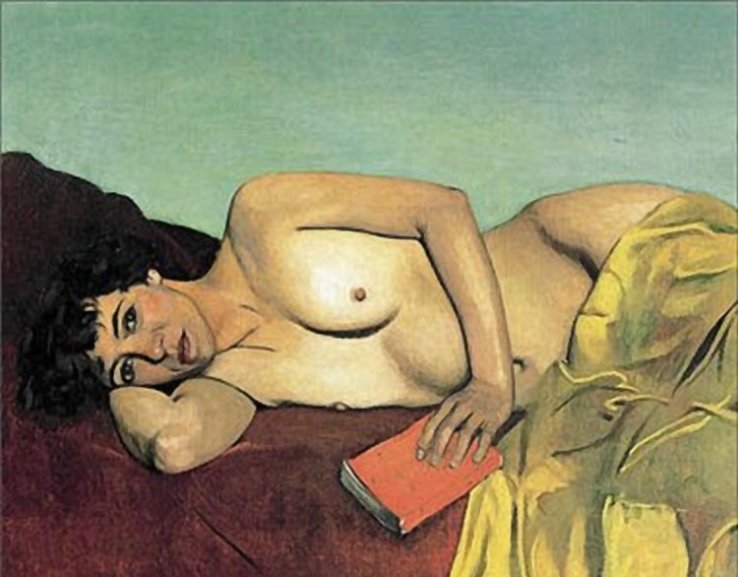
Reading Abandoned — Felix Vallotton
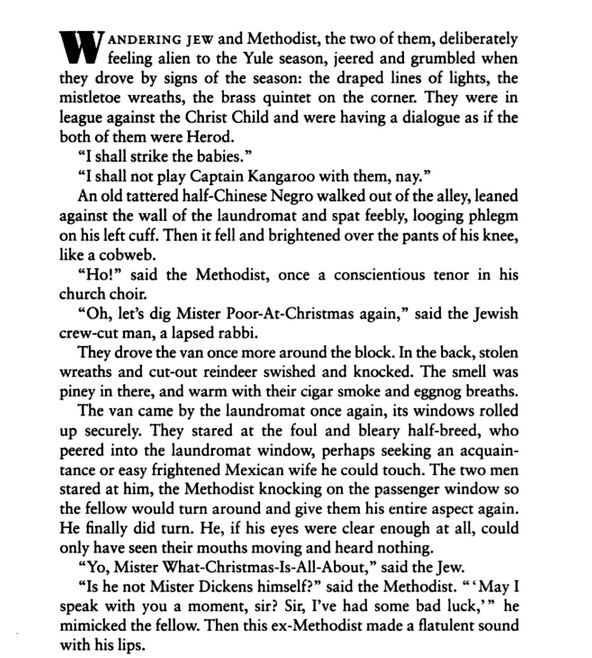
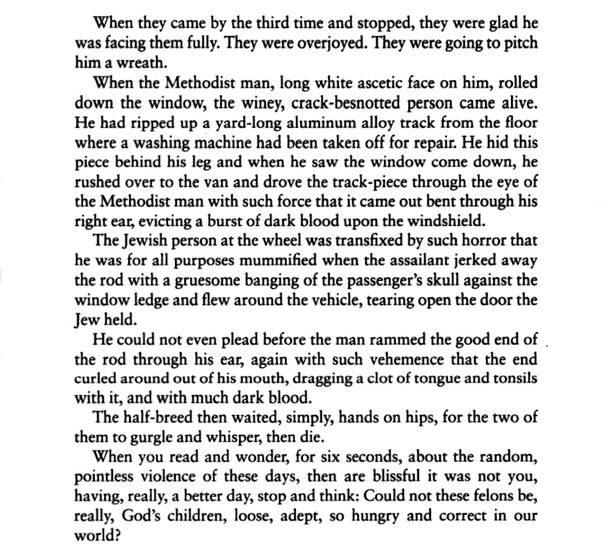
“A Christmas Thought” — Barry Hannah
Seated Woman Reading — François Bonvin

Mary Magdalene Reading — Ambrosius Benson

Trailer for Terrence Malick’s new film Knight of Cups
Manuscript Page of Charles Dickens’s A Christmas Carol

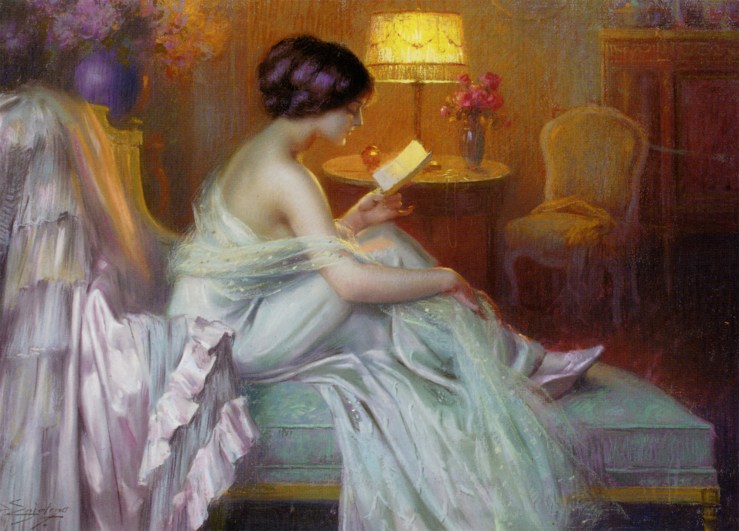
Reading by Lamp Light — Delphin Enjolras
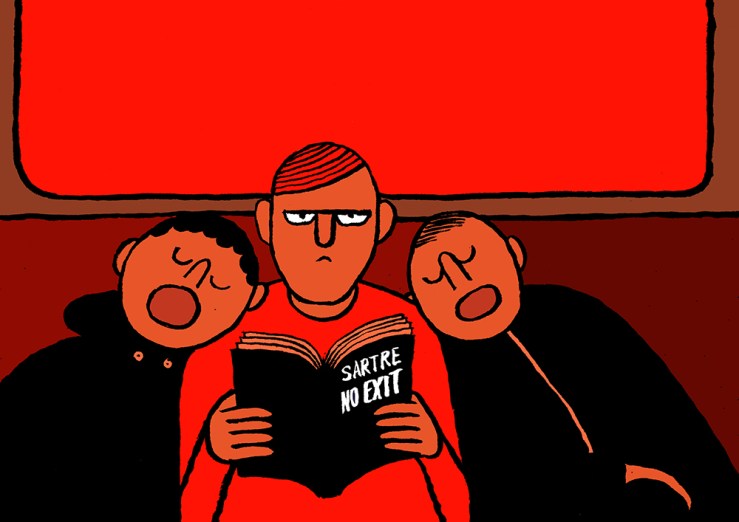
No Exit — Jean Jullien
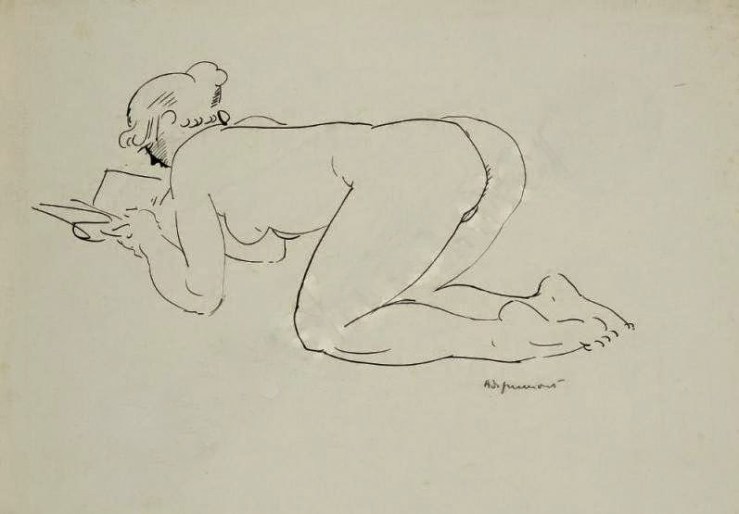
Woman Reading — André Dignimont
Bukowski for Kids — Bob Staake

Can Not Prevent It, but There Is No Need to Prevent It — Ryohei Hase

Thomas Pynchon’s Mason & Dixon (Second Riff: The Pygmies’ Discovery of Great Britain)
A. Okay. So I finished the first section of Mason & Dixon a few days ago. I’m now at the part where our titular heroes are smoking weed and eating snacks with George Washington. I can’t possibly handle all the material I’ve read so far—even in a riff (here’s the first riff for anyone inclined)—so instead I’ll annotate a few passages from Ch. 19, one of my favorite episodes so far.
B. Setting and context: 1762. “The George,” a pub in Gloucestershire (Mason’s home county). The patrons at the tavern are heatedly discussing the eleven days that went “missing” when the British moved from the Julian calendar to the Gregorian calendar.
One (satirical) source for this controversy comes from William Hogarth’s 1755 painting An Election Entertainment; in the detail below, you can read (barely) the slogan “Give us our Eleven Days” on the black banner under the man’s foot.

A bit more context, via History Today:
In 1750 England and her empire, including the American colonies, still adhered to the old Julian calendar, which was now eleven days ahead of the Gregorian calendar, introduced in 1582 by Pope Gregory XIII and in use in most of Europe.
Attempts in the sixteenth and seventeenth centuries to adopt the new calendar had broken on the rock of the Church of England, which denounced it as popish. The prime mover in changing the situation was George Parker, second Earl of Macclesfield, a keen astronomer and a Fellow of the Royal Society. He was assisted in his calculations by his friend James Bradley…
I emphasized Bradley—Mason’s mentor—and Macclesfield as they are minor characters in this episode.
Basically, the pub patrons demand that Mason explain what happened to the missing eleven days.
C. Okay—so this whole episode, this discussion of time and space clearly helps underline the big themes of Mason & Dixon: How to measure the intangible, the invisible—how to pin down the metaphysical to the physical—how to know and how to not know. (Hence all the paranoia). Continue reading “Thomas Pynchon’s Mason & Dixon (Second Riff: The Pygmies’ Discovery of Great Britain)”
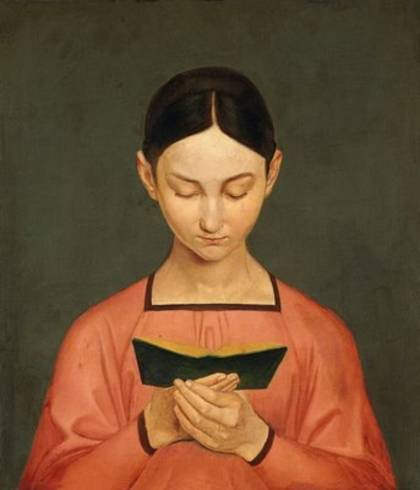
Young Girl Reading — Gustav Adolph Hennig
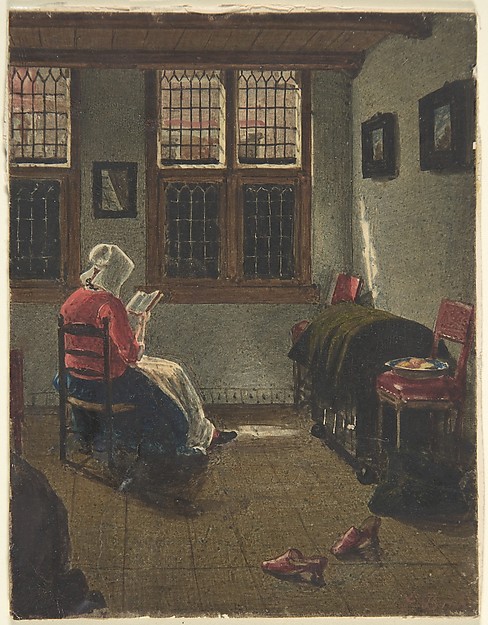
A Woman Reading — François Bonvin (After Pieter Janssens Elinga)
 Biblioklept