

Category: Books
A Scapegoat for Promiscuous Drunks, Friendly Calls, and Humbug Resolutions

From Mark Twain’s January 1st, 1863 column in the Territorial Enterprise:
Now is the accepted time to make your regular annual good resolutions. Next week you can begin paving hell with them as usual. Yesterday, everybody smoked his last cigar, took his last drink, and swore his last oath. To-day, we are a pious and exemplary community. Thirty days from now, we shall have cast our reformation to the winds and gone to cutting our ancient short comings considerably shorter than ever. We shall also reflect pleasantly upon how we did the same old thing last year about this time. However, go in, community. New Year’s is a harmless annual institution, of no particular use to anybody save as a scapegoat for promiscuous drunks, and friendly calls, and humbug resolutions, and we wish you to enjoy it with a looseness suited to the greatness of the occasion.
Shooting the Witches on New Year’s Eve (From Sir James George Frazer’s The Golden Bough)
On New Year’s Eve, which is Saint Sylvester’s Day, Bohemian lads, armed with guns, form themselves into circles and fire thrice into the air. This is called “Shooting the Witches” and is supposed to frighten the witches away. The last of the mystic twelve days is Epiphany or Twelfth Night, and it has been selected as a proper season for the expulsion of the powers of evil in various parts of Europe. Thus at Brunnen, on the Lake of Lucerne, boys go about in procession on Twelfth Night carrying torches and making a great noise with horns, bells, whips, and so forth to frighten away two female spirits of the wood, Strudeli and Strätteli. The people think that if they do not make enough noise, there will be little fruit that year. Again, in Labruguière, a canton of Southern France, on the eve of Twelfth Day the people run through the streets, jangling bells, clattering kettles, and doing everything to make a discordant noise. Then by the light of torches and blazing faggots they set up a prodigious hue and cry, an ear-splitting uproar, hoping thereby to chase all the wandering ghosts and devils from the town.
From Sir James George Frazer’s The Golden Bough.
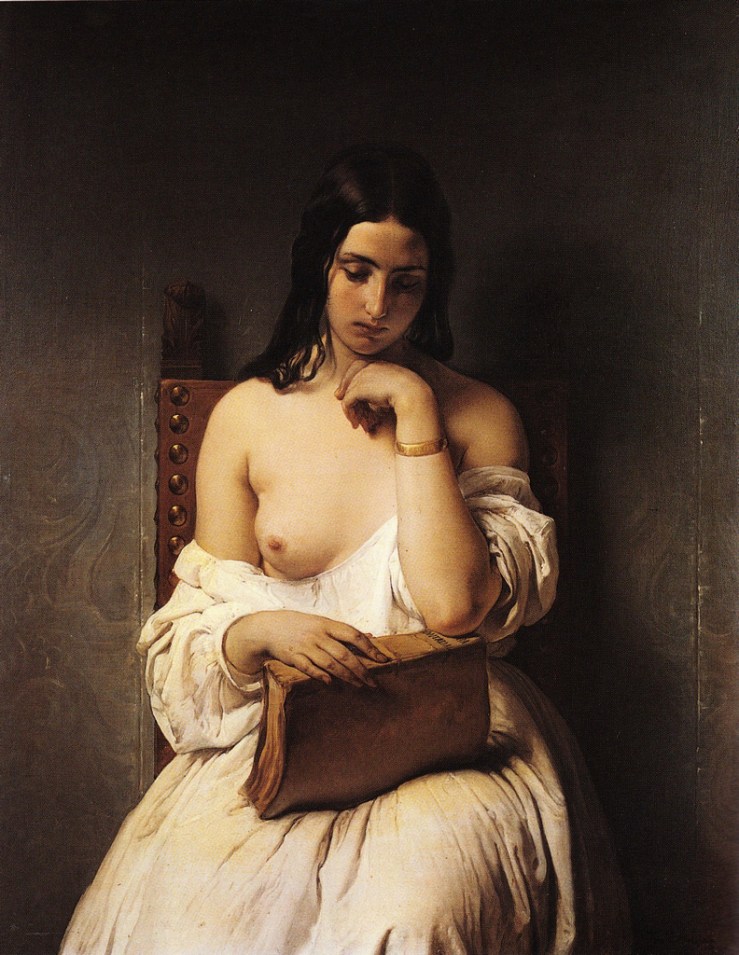
Meditation — Francesco Hayez
William T. Vollmann: A Critical Companion (Book acquired, 12.27.2014)
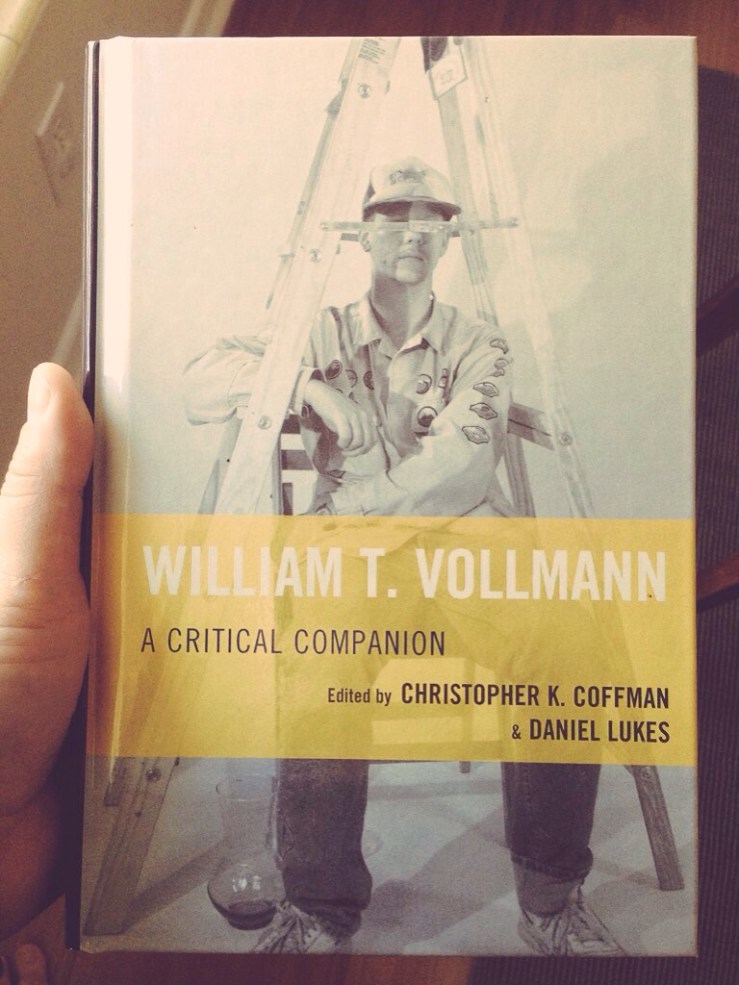
William T. Vollmann: A Critical Companion is new from University of Delaware Press and editors Christopher K. Coffman and Daniel Lukes. Their blurb:
The essays in this collection make a case for regarding William T. Vollmann as the most ambitious, productive, and important living author in the US. His oeuvre includes not only outstanding work in numerous literary genres, but also global reportage, ethical treatises, paintings, photographs, and many other productions. His reputation as a daring traveler and his fascination with life on the margins have earned him an extra-literary renown unequaled in our time. Perhaps most importantly, his work is exceptional in relation to the literary moment. Vollmann is a member of a group of authors who are responding to the skeptical ironies of postmodernism with a reinvigoration of fiction’s affective possibilities and moral sensibilities, but he stands out even among this cohort for his prioritization of moral engagement, historical awareness, and geopolitical scope. Included in this book in addition to twelve scholarly critical essays are reflections on Vollmann by many of his peers, confidantes, and collaborators, including Jonathan Franzen, James Franco, and Michael Glawogger. With a preface by Larry McCaffery and an afterword by Michael Hemmingson, this book offers readings of most of Vollmann’s works, includes the first critical engagements with several key titles, and introduces a range of voices from international Vollmann scholarship.
The book (it’s beautiful, by the way) intersperses the more “academic” essays that comprise its bulk with shorter riffs, memoirs, and vignettes about Vollmann, or reading Vollmann (I wish Franzen would’ve devoted a few more lines in his piece “A Friendship” to describing the time he got to shoot Vollmann’s Tec 9, but it’s still a fascinating little piece). I read a few of these (Franco refers to our author as “Volhman” and then ends his “essay” with this parenthetical aside: “(Shit, I went back online, and I see that there is no ‘h’ in his name. Sorry, Billy.”)
I haven’t gotten into any of the the critical essays yet, but a scan over the book’s index and bibliography indicates a serious work of scholarship, while a cursory scan of a few of the more intriguing titles (“‘Strange Hungers’: William T. Vollmann’s Literary Performances of Abject Masculinity”; “The Ethics of the Archive and the William T. Vollmann Collection”; “Imperial Photography”) suggests a unified work with a tone decidedly divorced from stale academic language. More to come.
Tintin (Noël) — Hergé

Selections from One-Star Amazon Reviews of Thomas Pynchon’s Mason & Dixon
[Ed. note: The following citations come from one-star Amazon reviews of Thomas Pynchon’s novel Mason & Dixon—which I loved. (See also: Chinua Achebe’s Things Fall Apart, Mary Shelley’s Frankenstein, Thomas Pynchon’s Gravity’s Rainbow, George Orwell’s 1984, Herman Melville’s Moby-Dick, James Joyce’s Ulysses and David Markson’s Wittgenstein’s Mistress). I’ve preserved the reviewers’ own styles of punctuation and spelling].
What crap.
A talking dog?
I made a mistake.
Dialogue that is meaningless?
But what is the point of this story?
Pynchon is simply messing around
I can’t believe I read the whole thing.
I guess there’s no accounting for taste.
Rarely have I anticipated a book so hungrily.
Lost me at the talking dog, and never recovered.
I’ve also seen Pynchon praised for his erudition.
You think a talking dog or mechanical duck is funny?
Supposedly it’s a literary adventure through the 18th century
George Washington smoking pot and getting the munchies?
I consider my myself a reader who relishes literary challenges.
I am a reader who enjoys being bluntly told what the author thinks
The only book I’ve ever read that was a complete waste of time !
just an endless series of unconnected and unrelated ramblings…
Yes, it was a different world back then, and people talked funny (to our ear).
The publisher should have left the trees to grow rather than putting this in print.
I had to finish it – but resorted to scanning the text for references to my 7th great grandfather.
Pynchon is like strolling through a garbage dump full of meaningless, forgotten pop culture relics.
Wow, I give up on Mr. Pynchon who apparently has some intergalactic literary insights well above my head.
Regretfully, I’ll need to wait for the english language translation before properly assessing this novel’s merits.
Thomas Pynchon surely must have been smoking something more powerful than plain tobacco when he wrote this debacle…
I admit to approaching this book with a great deal of reverence, along with guilt for never having attempted either “V” or “Gravity’s Rainbow.”
Mr.Pynchon may be considered one of today’s great writers by the cosmopolitan literati, but this provencial reader found his work to be a 773 page morass of archaic vernacular with no particular point.
I would like to assert, however, as one who has read quite deeply in English prose of the last 400 years, that the much-praised “18th-century English” is nothing like, being full of anachronisms and lapses of decorum.
Pynchon doesn’t descibe. He makes lists of objects, as if the acculation of things or people surrounding the characters is enough to create some semblance of reality, or alternate reality, or hyperreality or whatever.
I am in the vast minority, obviously, who “didn’t get it.” Some times I wonder if reviewers, too “didn’t get it” but were afraid to say so, because this conglomeration of words is just that – a pointless, incomprehensible waste of trees.
My Tedium never Ceases, yet have I only Dredged thru half of this Tome. My eyes grow Tir’d and my Thoughts grow more hateful towards this Author. History is barely Reveal’d and the style has Vex’d me thru and thru. Hemp smoking Franklin? Confus’d and Stupid Astronomers? Half the book not spent in the country of interest? Yet I plod on, making a use of this Fantastique tale, to knaw away at the Minutes spent in the loo. Wouldst it be quite the thing, if only the Paper t’was softer, I can then make of it a Cleansing Agent for my Posterior once Finished with each page.
It was evidently written for a limited audience–people who can actually read eighteenth century style prose and who still find jokes about “not inhaling” to be amusing.
Pynchon’s style is clotted, mannered, meretricious and UNpoetic in the extreme. Indeed, I think much of the book, in word and matter, is a stale exercise in collecting academic trivia and faddish modern-day truisms about the period.
To be sure, there is some real history reported, but there is also much nonsense and fakery–the first pizza, golems–and interminable, leaden dialogues that could never have taken place.
Really Pynchon was just showing off his “imagination” with endless derails, whimsical characters that didn’t figure into the story at all, and stupid jokes bathed in obscure jargon.
If you like rambling verbiage that not only obstructs but obliterates the point, you’ll love this author, whose neurotic word dribblings are gnosticed by critics to be visionary insights.
For all the scribblings in this book’s 800 some pages, 90% of it just feels like hot air lacking any real message or content.
One could read this book from front to back, back to front, or from the middle both ways and not be able to tell the difference..
I love sentimental literature but I couldn’t for the life of me see much connection between Pynchon’s writings and the major works of the 18th century.
I challenge any fan to give even one insight about life or the universe that they gleaned from Mason and Dixon..
Just because the gags are about the hollow earth theory does not make them any more than just gags.
The reader is presented with one choppy chapter after another, often with little or no context.
The book is a mess and sorely needed a large pair of scissors to trim out the inane chatter.
Thers’s an old phrase about good writing: show, don’t tell. Phynchon don’t show nothun’.
For years Pynchon has intrigued me as being one of the “bosses” of modern literature.
There’s no sense of place, no compelling plotline. The characterization is merely O.K.
Pynchon is all over the map willy nilly throwing out anything that diverts his attention.
In what way was this an homage, parody, or imitation of 18th century literature?
If Thomas Pynchon has a plot or a story line, he surely has hidden it very well..
To this day I do not know what the book was about and what was going on.
The overall scheme of the novel is stupid and amateurish.
Too hard to read for this master’s degree English teacher.
Hundreds of unrelated and disconnected characters too..
Some as ridiculous as a talking dog, and a robot duck…
This book is a waste of time and paper.
What is all this supposed to mean?
Honestly, this book is just annoying.
The first pizza made in England?
Clearly, the fault is mine.
Wicks Cherrycoke?
Big @#$%ing deal.
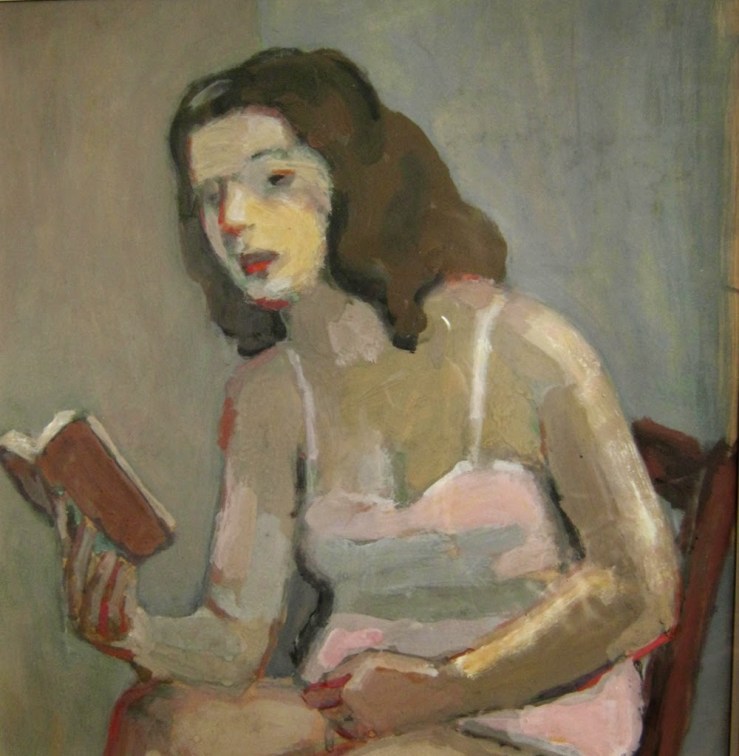
Young Woman Reading — Ossip Lubitch
Thomas Pynchon’s Mason & Dixon (Third Riff: The Rabbi of Prague)
A. I’m a few chapters–three, precisely—from finishing Mason & Dixon. “Finishing” is not the right verb here, though—Pynchon’s novel is so rich, funny, strange, and energetic that I want to return to it immediately.
B. But I need to backtrack a bit, riff on one of my favorite episodes—Chapter 50.
C. (First riff and second riff for those inclined).
D. In Chapter 50,
’tis Dixon’s luck to discover The Rabbi of Prague, headquarters of a Kabbalistick Faith, in Correspondence with the Elect Cohens of Paris, whose private Salute they now greet Dixon with, the Fingers spread two and two, and the Thumb held away from them likewise, said to represent the Hebrew letter Shin and to signify, “Live long and prosper.”
Pynchon plays here on the reader’s initial understanding of the signal and phrase as a pop culture reference—
—but the goof isn’t merely postmodernist shtick—Pynchon is pointing to how the invisible manifests itself in signs and wonders, covert, cryptic, but perhaps—perhaps—decipherable.

E. (Maybe this needs clarification: The Rabbi of Prague is a tavern. I lost track of how many bars taverns pubs inns alehouses coffeehouses etc. show up in M&D). Continue reading “Thomas Pynchon’s Mason & Dixon (Third Riff: The Rabbi of Prague)”
Balestrini/Pasolini (Books acquired, 12.27.2014)

So I picked up two ebooks from Verso today for less than a pint of beer. Ridiculous! The Unseen by Nanni Balestrini, and Pasolini’s unproduced screenplay St. Paul. All kinds of great stuff. I think my favorite thing about Verso’s ebooks is how straightforward they are to access—no weird third-party app or DRM issues.
Sarah Allen — Allen Butler Talcott
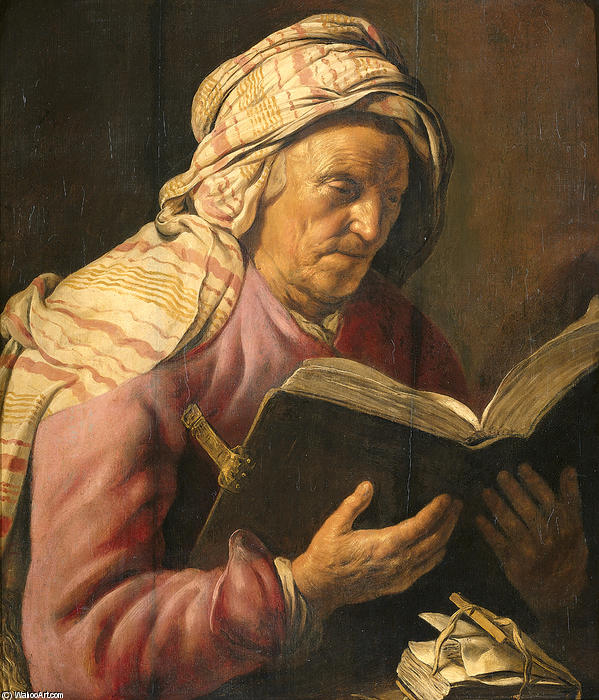
Old Woman Reading — Jan Lievens
Christmas Trio — Norman Rockwell

Read “The Fir-Tree,” Hans Christian Andersen’s Depressing Story About the Existential Fate of a Christmas Tree
“The Fir-Tree” by Hans Christian Andersen
Far down in the forest, where the warm sun and the fresh air made a sweet resting-place, grew a pretty little fir-tree; and yet it was not happy, it wished so much to be tall like its companions— the pines and firs which grew around it. The sun shone, and the soft air fluttered its leaves, and the little peasant children passed by, prattling merrily, but the fir-tree heeded them not. Sometimes the children would bring a large basket of raspberries or strawberries, wreathed on a straw, and seat themselves near the fir-tree, and say, “Is it not a pretty little tree?” which made it feel more unhappy than before. And yet all this while the tree grew a notch or joint taller every year; for by the number of joints in the stem of a fir-tree we can discover its age. Still, as it grew, it complained, “Oh! how I wish I were as tall as the other trees, then I would spread out my branches on every side, and my top would over-look the wide world. I should have the birds building their nests on my boughs, and when the wind blew, I should bow with stately dignity like my tall companions.” The tree was so discontented, that it took no pleasure in the warm sunshine, the birds, or the rosy clouds that floated over it morning and evening. Sometimes, in winter, when the snow lay white and glittering on the ground, a hare would come springing along, and jump right over the little tree; and then how mortified it would feel! Two winters passed, and when the third arrived, the tree had grown so tall that the hare was obliged to run round it. Yet it remained unsatisfied, and would exclaim, “Oh, if I could but keep on growing tall and old! There is nothing else worth caring for in the world!” In the autumn, as usual, the wood-cutters came and cut down several of the tallest trees, and the young fir-tree, which was now grown to its full height, shuddered as the noble trees fell to the earth with a crash. After the branches were lopped off, the trunks looked so slender and bare, that they could scarcely be recognized. Then they were placed upon wagons, and drawn by horses out of the forest. “Where were they going? What would become of them?” The young fir-tree wished very much to know; so in the spring, when the swallows and the storks came, it asked, “Do you know where those trees were taken? Did you meet them?”
 The swallows knew nothing, but the stork, after a little reflection, nodded his head, and said, “Yes, I think I do. I met several new ships when I flew from Egypt, and they had fine masts that smelt like fir. I think these must have been the trees; I assure you they were stately, very stately.”
“Oh, how I wish I were tall enough to go on the sea,” said the fir-tree. “What is the sea, and what does it look like?”
“It would take too much time to explain,” said the stork, flying quickly away.
“Rejoice in thy youth,” said the sunbeam; “rejoice in thy fresh growth, and the young life that is in thee.”
And the wind kissed the tree, and the dew watered it with tears; but the fir-tree regarded them not. Continue reading “Read “The Fir-Tree,” Hans Christian Andersen’s Depressing Story About the Existential Fate of a Christmas Tree”
A Mason & Dixon Christmastide (Thomas Pynchon)
They discharge the Hands and leave off for the Winter. At Christmastide, the Tavern down the Road from Harlands’ opens its doors, and soon ev’ryone has come inside. Candles beam ev’rywhere. The Surveyors, knowing this year they’ll soon again be heading off in different Directions into America, stand nodding at each other across a Punch-bowl as big as a Bathing-Tub. The Punch is a secret Receipt of the Landlord, including but not limited to peach brandy, locally distill’d Whiskey, and milk. A raft of long Icicles broken from the Eaves floats upon the pale contents of the great rustick Monteith. Everyone’s been exchanging gifts. Somewhere in the coming and going one of the Children is learning to play a metal whistle. Best gowns rustle along the board walls. Adults hold Babies aloft, exclaiming, “The little Sausage!” and pretending to eat them. There are popp’d Corn, green Tomato Mince Pies, pickl’d Oysters, Chestnut Soup, and Kidney Pudding. Mason gives Dixon a Hat, with a metallick Aqua Feather, which Dixon is wearing. Dixon gives Mason a Claret Jug of silver, crafted in Philadelphia. There are Conestoga Cigars for Mr. Harland and a Length of contraband Osnabrigs for Mrs. H. The Children get Sweets from a Philadelphia English-shop, both adults being drawn into prolong’d Negotiations with their Juniors, as to who shall have which of. Mrs. Harland comes over to embrace both Surveyors at once. “Thanks for simmering down this Year. I know it ain’t easy.”
“What a year, Lass,” sighs Dixon.
“Poh. Like eating a Bun,” declares Mason.”
The last paragraphs of Ch. 52 of Thomas Pynchon’s novel Mason & Dixon.
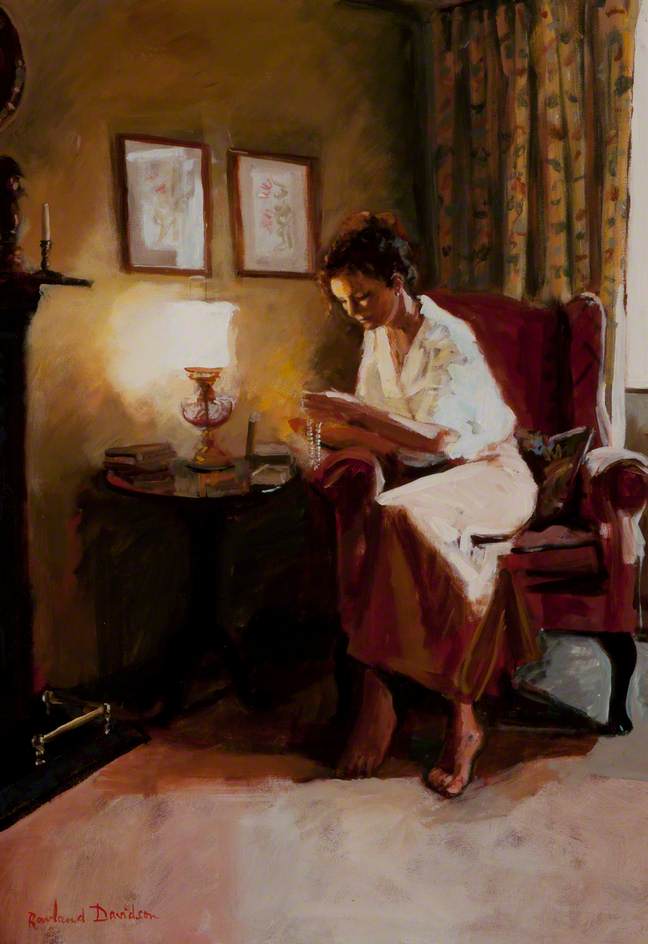
Lady Reading a Book by Lamplight — Rowland Davidson
There are a Mason and Dixon in Hell (Thomas Pynchon)
DePugh recalls a Sermon he once heard at a church-ful of German Mysticks. “It might have been a lecture in Mathematics. Hell, beneath our feet, bounded,— Heaven, above our pates, unbounded. Hell a collapsing Sphere, Heaven an expanding one. The enclosure of Punishment, the release of Salvation. Sin leading us as naturally to Hell and Compression, as doth Grace to Heaven, and Rarefaction. Thus— ”
Murmurs of,” ‘Thus’?”
“— may each point of Heaven be mapp’d, or projected, upon each point of Hell, and vice versa. And what intercepts the Projection, about mid-way (reckon’d logarithmickally) between? why, this very Earth, and our lives here upon it. We only think we occupy a solid, Brick-and-Timber City,— in Reality, we live upon a Map. Perhaps even our Lives are but representations of Truer Lives, pursued above and below, as to Philadelphia correspond both a vast Heavenly City, and a crowded niche of Hell, each element of one faithfully mirror’d in the others.”
“There are a Mason and Dixon in Hell, you mean?” inquires Ethelmer, “attempting eternally to draw a perfect Arc of Considerably Lesser Circle?”
“Impossible,” ventures the Revd. “For is Hell, by this Scheme, not a Point, without Dimension?”
“Indeed. Yet, suppose Hell to be almost a Point,” argues the doughty DePugh, already Wrangler material, “— they would then be inscribing their Line eternal, upon the inner surface of the smallest possible Spheroid that can be imagin’d, and then some.”
“More of these . . . ,” Ethelmer pretending to struggle for a Modifier that will not offend the Company, “curious Infinitesimals, Cousin.— The Masters at my Purgatory are bewitch’d by the confounded things. Epsilons, usually. Miserable little,”— Squiggling in the air, “sort of things. Eh?”
“See them often,” sighs DePugh, “this Session more than ever.”
“What puzzles me, DeP., is that if the volume of Hell may be taken as small as you like, yet the Souls therein must be ever smaller, mustn’t they,— there being, by now, easily millions”“there?”
“Aye, assuming one of the terms of Damnation be to keep just enough of one’s size and weight to feel oppressively crowded,— taking as a model the old Black Hole of Calcutta, if you like,— the Soul’s Volume must be an Epsilon one degree smaller,— a Sub-epsilon.”
“ ‘The Epsilonicks of Damnation.’ Well, well. There’s my next Sermon,” remarks Uncle Wicks.
“I observe,” Tenebræ transform’d by the pale taper-light to some beautiful Needlewoman in an old Painting, “of both of you, that your fascination with Hell is match’d only by your disregard of Heaven. Why should the Surveyors not be found there Above,”— gesturing with her Needle, a Curve-Ensemble of Embroidery Floss, of a nearly invisible gray, trailing after, in the currents rais’d by Talking, Pacing, Fanning, Approaching, Withdrawing, and whatever else there be to indoor Life,— “drifting about, chaining the endless airy Leagues, themselves approaching a condition of pure Geometry?”
“Tho’ for symmetry’s sake,” interposes DePugh, “we ought to say, ‘almost endless.’ ”
“Why,” whispers Brae, “whoever said anything had to be symmetrickal?” The Lads, puzzl’d, exchange a quick Look.”
From Ch. 49 of Thomas Pynchon’s novel Mason & Dixon.
The passage steps outside of the story that Reverend Cherrycoke is telling—a representation of Mason and Dixon—and into the “real” time of the narrative. Map and territory, spirit and substance. This particular passage echoes a complaint in Ch. 42 that “too much out here [i.e., the “New World”] fails to “mark the Boundaries between Reality and Representation.” Pynchon’s novel, I think, strives to measure (and break) the boundaries between reality and representation.
 Biblioklept