More Alphabet Soup: Brought to You Today by the Letter H

lolita.jpg

H is for Humbert Humbert, the rascally narrator of Vladamir Nabokov’s Lolita. Throughout the novel HH, a sardonic European, provides a running critique of conformist 1950s America, his adopted home. Pining for the haunting, ineffable feeling associated with a brief, tragic childhood love, HH engineers a series of unfortunate events in order to abscond with (and eventually seduce) twelve-year old Lolita Haze. Yep. That’s right. A child-molester made this list. But if you’ve ever read Lolita, you know how charming and funny this son-of-bitch is. Lolita is in a special class of books in the Biblioklept library; it’s one of those books that I’ve read in full at least four times, and one that I pick up and read parts of every year. The first time I read Lolita, I didn’t even realize what a monster HH was–in fact, I tended to sympathize with him, even to the point of sharing his condemnation of Lolita’s bratty, manipulative nature toward the end of the novel. Like Catcher in the Rye, I first read Lolita when I was 16; like Catcher in the Rye, Lolita was an entirely different book when I read it at 21. Somehow the book managed to change again, four or five years later. I’m sure Lolita will be completely different in a year or two when I’m thirty. In fact, I vow here and now to re-read it in full right after my 30th birthday. Who knows what will have happened to it by then? How these books change on you…

Narratological shape-shifting aside Lolita deserves to be read, and read repeatedly. Nabokov’s highly alliterative prose reverberates with lyrical gymnastics, multi-lingual puns, and allusions that will make you feel oh-so clever (if you are indeed oh-so clever enough to get them, of course). Neither Kubrick’s toothless 1962 film adaption or Adrian Lyne’s gauzy 1997 attempt do any justice at all to Nabokov’s words–this is one you simply have to read. Great stuff.

velocity.jpg

H is also for Hand, zany foil to Will, the tormented narrator of Dave Eggers’s You Shall Know Our Velocity!. In this book, the pair embarks on a futile attempt to travel the globe giving away an enormous amount of money Will has recently received as part of an injury settlement. This scheme turns out to be much more difficult and much more complicated than they had imagined. Hand is one of my favorite characters because he’s just really damn cool–a strange combination of someone’s hip older brother mixed with someone’s annoying younger brother. My favorite part of Velocity is the fifty page section where Hand takes over the narrative, casting doubt on everything that Will has previously told the reader. Will then resumes the narrative, but at that point, the book–and Will’s status as a reliable narrator–has taken an entirely different shape. Although the story ends at a wedding, Velocity is ultimately a tragedy; the very first page announces Will’s death. But again, the whole narrative is cast in ambiguity and doubt. I loved this book so much that I bought it for a friend.

(Incidentally, Hand also tuns up in “The Only Meaning of the Oil-Wet Water,” one of Eggers’s short stories collected in How We Are Hungry).

U.S.!–Chris Bachelder

us.jpg

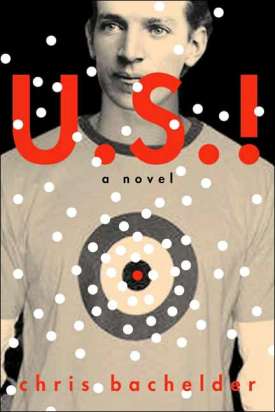
Chris Bachelder‘s superb novel U.S.! portrays an alternate (and somewhat hyperbolic) United States where the Left (big-L) keeps bringing Upton Sinclair (that guy who wrote The Jungle (maybe you read it in high school (I didn’t))) back to life. These would-be revolutionaries try to keep Sinclair (and hope) alive in spite of the fact that right-wing reactionary populist heroes keep assassinating him. In fact, in U.S.!, Upton Sinclair assassination is its own cottage industry.

Bachelder uses a dazzling range of approaches in the first 200 pages of the novel, employing everything from folk song lyrics to Amazon reviews to talk show transcripts in order to flesh out his alternate universe. The first part of U.S.! essentially sets up the last third of the novel, a relatively straight-forward third-person omniscient account of a Fourth of July book-burning in a Southern state. I won’t reveal any more of the plot, because I’m lazy and you should read this book for yourself.

Bachelder’s writing crackles with wit and surprising warmth, especially in the character of Sinclair, who comes across as a (literally) dusty out-of-touch relic, an idealist as equally unable to effect any change in the modern world as he was able to in his own era. Sinclair and the would-be revolutionaries who resuscitate him serve as Bachelder’s critique on America’s stale, impotent left (or is it Left?). Bachelder also savagely criticizes Sinclair’s rhetoric; one of the funniest sections of the first part of the book involves an analysis of exclamation points (and their overuse) in Sinclair’s novels. Toward the end of the novel, Bachelder employs a meta-critical strategy of adding more and more exclamation points to his own writing; the exaggerated gestures comically highlight the cartoonishly grotesque world of U.S.!, at the same time counterbalancing the understated but profound sadness of the novel.

My only gripe with U.S.! would be Bachelder’s rare lapse into what I like to call “workshop fiction”–fiction that seems the contrived and overwritten product of MFA work-shopping (did I mention that Bachelder got his MFA at my alma mater, the University of Florida at Gainesville? (other great writers associated with this glorious institution include Padgett Powell and Harry Crews)). As I noted though, these instances are rare and mostly notable because the majority of the novel is so fresh, original, and readable. This book is funny, poignant, and you should read it.

Support Indie Publishers

It’s no secret that we love McSweeney’s here at the Biblioklept–sure, some of the writing can be smartassed and some people might find their publishing concepts gimmicky at times (not me!)–but Dave Eggers’s collective puts out some of the best stuff around these days, and in some of the freshest packaging. Unfortunately, McSweeney’s distributor went bankrupt, leaving them in dire economic straits. The silver lining here (if you can call it that) is that they’re having a big sale, including half off on old stuff, and 30% off on new stuff. They’re also auctioning off a ton of original art. If you’re interested, check out the email below–

As you may know, it’s been tough going for many independent publishers, McSweeney’s included, since our distributor filed for bankruptcy last December 29. We lost about $130,000 — actual earnings that were simply erased. Due to the intricacies of the settlement, the real hurt didn’t hit right away, but it’s hitting now. Like most small publishers, our business is basically a break-even proposition in the best of times, so there’s really no way to absorb a loss that big.

We are committed to getting through and past this difficult time, and we’re hoping you, the readers who have from the start made McSweeney’s possible, will help us.

Over the next week or so, we’ll be holding an inventory sell-off and rare-item auction, which we hope will make a dent in the losses we sustained. A few years ago, the indispensible comics publisher Fantagraphics, in similarly dire straits, held a similar sale, and it helped them greatly. We’re hoping to do the same.

So if you’ve had your eye on anything we’ve produced, now would be a great time to take the plunge. For the next week or so, subscriptions are $5 off, new books are 30 percent off, and all backlist is 50 percent off. Please check out the store and enjoy the astounding savings, while knowing every purchase will help dig us out of a big hole.

Many of our contributors have stepped up and given us original artwork and limited editions to auction off. We’ve got original artwork from Chris Ware, Marcel Dzama, David Byrne, and Tony Millionaire; a limited-edition music mix from Nick Hornby; rare early issues of the quarterly, direct from Sean Wilsey’s closet; and more. We’re even auctioning off Dave Eggers’s painting of George Bush as a double-amputee, from the cover of Issue 14.

This is the bulk of our groundbreaking business-saving plan: to continue to sell the things we’ve made, albeit at a greatly accelerated pace for a brief period of time. We are not business masterminds, but we are optimistic that this will work. If you’ve liked what we’ve done up to now, this is the time to ensure we’ll be able to keep on doing more.

Plenty of excellent presses are in similar straits these days; two top-notch peers of ours, Soft Skull and Counterpoint, were just acquired by Winton, Shoemaker & Co. in the last few weeks. It’s an unsteady time for everybody, and we know we don’t have any special claim to your book-buying budget. We owe all of you a lot for everything you’ve allowed us to do over the last nine years, for all the time and freedom we’ve been given.

Once this calamity is averted, we’ll get back to our bread and butter — the now-legendary Believer music issue is already creeping into mailboxes everywhere; Issue 24 of our quarterly is in the midst of a really pretty silkscreening process; and in July the fourth issue of Wholphin, our DVD magazine, will slip over the border from Canada, bringing with it some very good footage of Maggie Gyllenhaal and a Moroccan drummer who messes up a wedding in an entertaining way. And then a couple of months after that, we’ll publish a debut novel from a writer named Millard Kaufman. This book is exactly the kind of thing McSweeney’s was created to do: The novel came through the mail, without an agent’s imprimatur, and it was written by a first-time novelist. This first-time novelist is ninety years old. It was pulled from the submissions pile and it knocked the socks off of everyone who read it. Millard may well be the best extant epic-comedic writer of his generation, and he stands at equal height with the best of several generations since.

Whatever you can do to help in the coming days, we thank you a thousand times. We’ll keep updating everybody on how this is going over the next few weeks; for now, pick up a few things for yourself, your friends, for Barack Obama. More news soon — thanks for reading.

Yours warmly,
The folks at McSweeney’s

———–

This email was sent by: McSweeney’s
826 Valencia Street San Francisco, CA, 94110, USA

Knocked Up, Rakish Behavior, More Bibliomania, and a Brief Hiatus

So today we (id est, Mrs. Biblioklept and myself) saw Knocked Up, which is pretty much the best pregnancy movie I’ve ever seen (yes, better than 9 Months, Parenthood and Father of the Bride 2 put together, and at least equal to Rosemary’s Baby, which I’m not really sure even counts). Judd Apatow (we mentioned our love of Mr. Apatow’s work in a previous post) assembled a host of familiar faces from his regular crew (including his wife and daughters) to make a funny and honest (although certainly hyperbolic) movie about love, relationships, having kids, growing older, and all that crap. Highly recommended. For a more detailed review, check out this Slate article (warning: this is a typical Slate article, i.e. the author starts by saying they basically like what they’re about to discuss before hemming and hawing over every little detail in an effort to pick it apart. Still, on the whole, the article’s pretty good).

Now, writing about movies and card games and TV shows is all well and good, but once upon a time this was a blog about books (sort of), and perhaps some of you feel that I’ve gotten particularly lazy in my reading. This is actually far from the case; in fact, all I’ve been doing lately is reading. Only the reading I’ve been doing has been for a grad class revolving around the figure of the libertine. Summer school. Yay. Not that the class has been boring per se, just not really something that’s translated into anything I’ve felt the urge to write about. The poems and biographical of John Wilmot, Earl of Rochester have been of great interest–this guy was downright naughty. Also a relatively recent play about Rochester called The Libertine was particularly good (much better than the movie version starring Johnny Depp that came out a year or two ago). The current reading for the class, however, Samuel Richardson’s Clarissa, is more than I can bear. We are reading the abridged version, which is about 550 pages, paperback. The unabridged version is a large-sized small-print trade paperback topping 1600 pages. I have no idea what the editor cut out (neither do I care). The last time I read a book like this was in high school–Thomas Hardy’s Tess of the d’Urbervilles. Both novels are painfully long accounts of a young lady’s trying circumstances. In both novels nothing really happens, and anything interesting that does happen is so coded that you have to read between the lines to figure it out (“Huh? Did Tess get raped? Huh?” also, “Huh? Did Clarissa get raped? Huh?”). Maybe I’m just a lazy reader.

But being a lazy reader hasn’t stopped me from buying more books. My bibliomania persists unchecked, fueled by bargain blowout prices on last year’s hardback remainders and promises of free shipping from Amazon. A quick run down of what I bought this week, complete with odds that I’ll actually finish the book.

Sanctuary, William Faulkner

Intruder in the Dust, William Faulkner

The Portable Faulkner, ed. Malcolm Cowley

Fiction, Film, and Faulkner: The Art of Adaptation, Gene Phillips

Yes, I am taking a Faulkner class this summer. With the exception of the Phillips text, all materials were procured at my favorite local bookstore via store credit. Some of the books I used to get credit were not exactly mine. The Biblioklept strikes again! Likelihood that I’ll finish all of these: 99.9%. I’m a good student. I don’t cut any corners when it comes to class reading.

The Children’s Hospital, Chris Adrian

I’ve been wanting to read this all year; rave reviews all around. Likelihood that I’ll finish it: 50/50 might be generous. It’s pretty long (600 pages) and hardback (I have a very poor track record with hardback). I’ll give it a serious attempt in the two week window between the end of summer school and the fall semester. We’ll see.

U.S.!, Chris Bachelder

Another book I’ve heard only great things about. The Left (big-L) keeps reviving muckraker Upton Sinclair (you know, dude who wrote The Jungle) from the dead to help “the cause”; he is repeatedly assassinated. Likelihood that I’ll finish it: 99%–I started yesterday and am close to half finished. It’s very, very good, and I’ll try to review it later. It’s actually been a terrible distraction from Clarissa. Plus, according to the back of the book, Bachelder got his MFA from my alma mater, the University of Florida. So there.

Against the Day, Thomas Pynchon

I loved loved loved V. The Crying of Lot 49 was decent enough. Vineland was good enough, I suppose, albeit kind of silly. I’ve put down Gravity’s Rainbow more times than I can count. The first 100 pages of Mason & Dixon bored me to tears. Why did I buy this again? Oh, right, it was on sale. Likelihood that I’ll finish this: This book is hardcover and over a 1000 pages. Let’s just be honest–I will never finish this book. Maybe I’ll give it to a friend as a burdensome gift, a sort of annoying challenge.

__________________________________________________________________________________

I realize that this post has been overlong and probably looks like a weak attempt to compensate for not having written in some time (which it certainly is); however, it will have to suffice, gentle reader, for an indeterminate amount of time. Mrs. Biblioklept will be going into the exquisite labors of childbirth any minute now (really), so I’m not sure when I’ll have the leisure to post again. Until then.

Feist on Leno

feist.jpg

For those of you who can stay up past eleven, lovely-voiced Leslie Feist is scheduled to perform tonight (5.8.07) on The Tonight Show with Jay Leno. For the rest of us, I’m sure Youtube will provide. If you’re not sure that you’re interested, check out the video for “1 2 3 4” here (WARNING! In all likelihood this song will get stuck in your head for the next few days).

G is for…

G is for Gandalf the Gray (later, Gandalf the White), the archetypal wizard of Tolkien’s Middle Earth. Geeks who need to know can find an exhaustive biography of the fictional mage here (or perhaps you are a true geek who is already well versed in the lore of the Istari); however, it’s not Tolkien’s overly-detailed-to-the-point-of-insanity backgrounding that I love so much about Gandalf. It’s that Gandalf, like the hobbits of Lord of the Rings, is a complex and not-so-obvious hero. Despite his appearance as a frail old man, Gandalf is a actually a total bad-ass swordsman and magician. He’s also the mastermind behind all of the action, but it also seems evident that he’s not really sure what he’s doing at times. Repeatedly throughout LOTR, his faith in the silly little hobbits is questioned by kings and warriors and elves who don’t get why the wizard would put the fate of the world into the hands of child-sized halflings who don’t even wear shoes.

Gandalf was brought to life earlier this decade in an obscure series of low-budget film versions of LOTR; savvy readers may be able to find DVD versions of these movies from their favorite online boutiques that cater to such eccentric tastes. For the record, I thought Ian McKellen, who starred in these indie gems, was perfect as Gandalf. To learn more about Gandalf the Gay, check out this short essay from McKellen.

G is also for the Glass children, the protagonists of many of reclusive author J.D. Salinger’s short stories and novellas. The seven Glass children (Glass being the last name: the children are not made out of glass, dummy) all were recurring contestants on a radio-quiz show called It’s a Wise Child, a program which earned them both mild fame and some money. The eldest of the Glass children is Seymore, is central to many of Salinger’s stories, but my absolute favorite is “A Perfect Day for Bananafish.” It’s hard to properly describe the emotional impact of the story without spoiling the ending, but “Bananafish” contains themes that are relevant today and will probably always relevant: the psychological damage of warfare, the inability of humans to adequately express their thoughts and desires, the breakdown of the modern family. Everyone should read it–do yourself a favor and go pick up a copy of Nine Stories. You can get one mailed to your house for under five bucks. No excuses.

Leviathan–Jens Harder

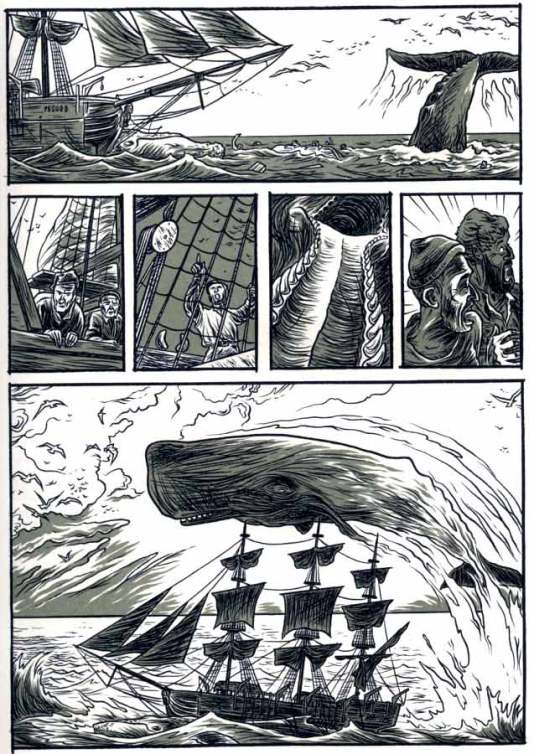
Jens Harder’s Leviathan is a graphic novel in the truest sense. Harder uses scratchy but fluid images to tell the story of a mystical whale who battles a giant squid, saves Noah’s ark, attacks the Pequod, wreaks havoc on a cruise ship, and eventually battles an armada of anachronisms. The only text Harder employs in Leviathan are excerpts and quotes from a variety of sources including the Bible and a host of philosophers; the bulk of quotes come from Melville’s Moby-Dick. Just as that novel begins with an “Etymology” followed by a section called “Extracts,” Harder begins with a section called “Leviathanology,” a collection of quotes about leviathans from the likes of Hobbes, Milton, and the book of Job. These quotes inform the story of Leviathan, connecting the whale to a sublime and unknowable mystery that Harder will explore. Harder’s surreal images often invert notions of “proper” space and time, giving the whale an awesome significance, but also positing the beast as something that denies signification. By eschewing the traditional forms of graphic storytelling, which rely on speech bubbles and clear-cut panel transitions, Harder is able to capture something that is essentially too large to capture. This book works. Highly recommended.

leviathan.jpg

More Soup

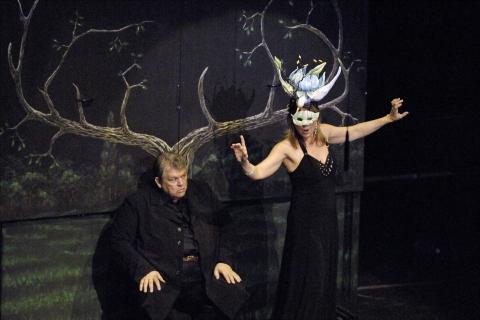
F is for Falstaff, Shakespeare’s knavish knight. Part rascally gnoff, part philosopher, this fat rascal appears in three of the bard’s plays. In Henry IV parts 1 and 2 he advises young Prince Hal (the future king) on matters of honor and drinking. In the comedy The Merry Wives of Windsor, Falstaff tries to cuckold some country farmers and steal their cash; the scalawag’s plans go awry and he ends up wearing the horns. Falstaff is one of Shakespeare’s most verbose characters–only Hamlet has more lines. And despite his fun-loving and roguish nature, Falstaff, like Hamlet, also provides several meditations on human nature, death, and the seeming futility of the individual’s ability to change social order.

falstaff605.jpg

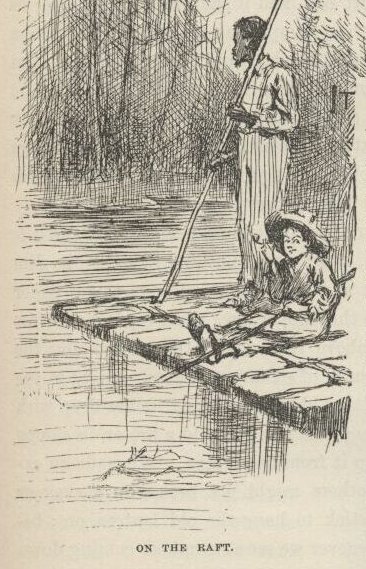
F is also for Finn, Huckleberry. Like Falstaff, Huck Finn is something of a rogue, albeit he is just a child. As the white trash double to middle class Tom Sawyer, Huck is one of Twain’s keenest tools for social satire. Huck escapes the Widow Douglas’s aspirations to give him a moral education, in turn helping her slave Jim make his own escape via the Mississippi River. While navigating the river, Huck must also navigate the perplexing and paradoxical moral codes of the strange South. Despite the happy ending of The Adventures of Huckleberry Finn, the novel remains controversial over a hundred years after its publication, still appearing frequently on lists of challenged books.

huck-and-jim-on-raft.jpg

Another Serving of Alphabet Soup

Dis for Daedalus, kid Icarus’s papa. From Joseph Shipley’s The Origin of English Words: A Discursive Dictionary of Indo-European Roots, a book that has given me more joy than is probably normal or healthy :

“del II: cut; carve; harm. GK daidalos: cut with art; Daedalus, the inventor who built the labyrinth for Minos, king of Crete, to confine the Minotaur. This monster—half man, half bull—was conceived by Minos’s wife Pasiphae with Poseidon’s sacred bull, which Minos had refused to return to Poseidon. Imprisoned, Daedalus made wings for himself and his son Icarus; they few away; but the son flew too near the sun, the wax fastening his wings melted, and he fell and drowned in what was thereafter called the Icarian Sea. Hence daedalian: skillful; Icarian: rash and ruinous” (Shipley 58).

D is also for Dedalus, Stephen, James Joyce’s semi-autobiographical stand-in in Portrait of an Artist as a Young Man. Stephen Dedalus also is prominent in the first couple of chapters of Ulysses, before Leopold Bloom’s journey through Dublin becomes the novel’s focus. Despite the heroic help of my college roommate’s Ritalin prescription, I never finished Ulysses, but I’m enrolled in a Joyce seminar commencing this fall (should be good). I did however read Portrait a number of times; I can’t think of a better example of an experimental writing style that evolves and adapts as its main character grows, learns, and rebels.

E is for Ebdus, Dylan, the hero of one of my all-time favorites, Jonathan Lethem’s The Fortress of Solitude. Like Portrait of the Artist as a Young Man, Fortress is a bildungsroman, a novel that details the development of its main character from childhood to maturity. To this end, each chapter of the first section of Fortress covers approximately a year in the life of young Dylan as he tries to make meaning out of his strange Brooklyn neighborhood and race-relations in the seventies.

E is also for Essrog, Lionel, the would-be detective who narrates Jonathan Lethem’s 1999 novel Motherless Brooklyn. Lionel Essrog is afflicted with Tourette’s syndrome, and his tics and yelps punctuate the novel with a weird and fascinating rhythm, a play of re-signification that would make Derrida proud. This is one of those Sunday afternoon books, the kind that you sit down to read with a glass (or four) of sangria and pretty much finish. Japanese monks, Brooklyn mobsters, hot dogs and papaya juice, plenty of verbal tics. And orphans. Lots and lots of orphans.

Alphabet Soup–Our Favorite Literary Characters (Part One)

A is for Antigone, the incestuous product of Oedipus and his mama Jocasta. In Sophocles’ play of the same name, Antigone is punished for burying the body of her exiled brother Polynices. Like her papa Oedipus, Antigone pushes the limits of cultural boundaries and the conflicts that duty to one’s family and the gods present to social order. Good, tragic stuff.

A is also for Alice, the heroine of not one but two Lewis Carroll classics, Alice’s Adventures in Wonderland and Through the Looking-Glass, and What Alice Found There. Full of logic puzzles, cryptic satire, and good old fashioned nonsense, Alice’s adventures work on a range of levels that appeal to both children and adults. She explores altered states and missing signifiers while flirting with death and madness in a surreal dreamworld. (Fans of Carroll’s twisty logic will surely delight in Douglas Hofstadter’s Gödel, Escher, Bach: an Eternal Golden Braid).

B is for Bartleby the scrivener, the eponymous non-hero of my favorite Herman Melville short story. Bartleby is hired by a wealthy lawyer to copy texts, a job at which he excels. But whenever Bartleby is asked to do something other than copy letters, he always replies “I would prefer not to.” This answer incenses the other employs and bewilders the lawyer. Eventually Bartleby stops doing any task, but somehow always remains around the office, almost like a ghost. Just what exactly Bartleby is meant to symbolize is up for grabs–Melville’s text is rich with possible interpretations. Every time I read this one, I get a new perspective. Read the full text here.

B is also for Billy Budd, yet another Melville character. Maybe you read Billy Budd in high school (it made me scratch my head quite a bit my Junior year). Billy Budd is a foundling who grows into the type of man admired by all. When he joins the crew of a ship, he is lovingly called “Baby Budd” by his fellow sailors. However, when he encounters his embittered superior Claggart, his innocence is put to the test; Claggart accuses young Budd of plotting mutiny. Billy is literally struck dumb by the accusation, and he responds by striking Claggart, inadvertently killing him. For this crime he is put to death and revered as a Christ-like figure by the crew. Like the story of Bartleby, Billy Budd resists easy decoding. Simply put, this is a great novella to come back to more than once.

C is for Chinaski. Henry Chinaski was the alter-ego Charles Bukowski used to represent himself in his books. Chinaski was a macho coward, a drunken gambler who was always chasing ladies and losing jobs. Chinaski was (bizarrely) the ideal imagined self for Bukowski, full of faults and shortcomings and egotistical brutality. I recently watched the documentary Bukowski: Born into This. One memorable scene goes something like this: the filmmaker (this is in the early 70s, when the filmmaker first begins shooting the footage that becomes Born into This) follows Bukowski from L.A. to San Francisco, where he’s giving a poetry reading. Bukowski gets drunk on the plane, makes an ass of himself, is a moron at the reading, is a bumbling idiot, etc, etc. However Bukowski writes up the whole event very differently in his Open City column, “Notes of a Dirty Old Man”–he paints a picture of himself having to help this idiot camera guy out; he says the filmmaker is a lost fool. When the filmmaker runs into Bukowski, he’s upset; he says: “Don’t you realize that I have film of the whole thing? I’ve got you drunk on film, looking like a fool!” Bukowski replies: “Fuck you! When I write, I’m the hero of my shit!” So that’s Chinaski: the hero of Bukowski’s shit.

C is also for Calliope, the protagonist of Jeffrey Eugenides’ 2002 novel Middlesex. To be honest, I thought the second half of the novel was weak (in fact I thought the end was downright awful), and Eugenides’ writing was surprisingly rote, even hackneyed at times (I use the adverb “surprisingly” as I was under the impression that he was something different based on friends’ reviews of The Virgin Suicides, which I never read). Nevertheless, poor cursed Calliope is a complex and at times enthralling character to follow. No one realizes Calliope is a hermaphrodite until she (Cal is raised as a girl) turns fourteen and shit gets weird. The gender study implications are interesting here, but what I found truly fascinating about the novel was the way that Eugenides used Calliope as a muse for genetic history; the character is essentially a complex and conflicting comment on the clashing paradigms of different ages and different spaces. Boys and girls, Turks and Greeks, blacks and whites, rich and poor, hippies and squares–as the name of the novel implies, there is never a definite and simple space where identity can rest.

God Bless You, Mr. Vonnegut

Like many of you I’m sure, I cut my literary teeth on Kurt Vonnegut, who died early this morning. My dad gave me three of Vonnegut’s books–Breakfast of Champions, Slaughterhouse Five, and The Sirens of Titan–when I was about eleven or twelve. It’s a cliché, but these books really did change my life forever. In the next couple of years, I devoured everything Vonnegut wrote. My favorite book of his was and is Cat’s Cradle, which I think surpasses both Mother Night and Slaughterhouse Five as his most important work. As I grew older, I began to reject Vonnegut, to see him as not as serious or profound as the authors I was reading. His later books like Hocus Pocus and the truly-lamentable Timequake didn’t help either. Nevertheless, I read them as soon as they came out in paperback. I had to. I had to read everything he wrote. Celebrate Vonnegut’s life by reading one of his books, and remember what got you into reading in the first place.

0kv1orgonpink.jpg

A Distinct Line Between Love and Hate

I occasionally dabble in a little hating, but for the most part I try to keep this blog on the positivity tip, yo. I mean, what’s the point in just grumbling, right? Anyway, I now present some stuff that I’ve been hating on lately, along with some possible solutions.

Hating on: The whole Don Imus controversy. Sure, Imus’s comments were rude, asinine, and perhaps racist. But he’s a morning schlock jock who has traded on such speech in the past. What’s the big deal? How is this any different from the vitriol Rush Limbaugh or Bill O’Reilly spew on a daily basis? It seems like we’re heading to a place in American media where people have to apologize and beg forgiveness for every rude or insensitive thing they say. Part of a functioning, healthy democracy is having people publicly say things that you think are awful or disagree with…and having the right to publicly disagree with them. I’m sick of this whole “tour of forgiveness”/rehabilitation culture. It’s OK to be an asshole sometimes. Just let it ride.

Antidote: Indulge in a random act of insensitivity. Tell that special someone how much they irk you, or arbitrarily curse a stranger. Freedom ain’t free–you’ve gotta fight for it! It’s the American way.

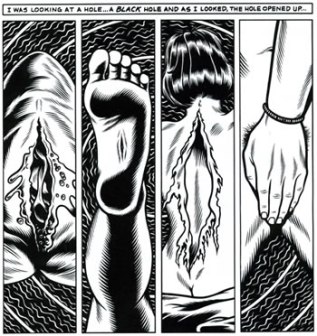
Hating on: Bill Willingham’s much lauded comic series Fables. I finally picked up a few of the Fables graphic novels at the library a few weeks ago. These comics are best suited for lining a ferret’s cage. Fables has won plenty of undeserved praise from both the comics and mainstream press. Allusions can enrich a story, but Willingham overtly rips off the plots of numerous books and stories and then seems to say: “See? Get it? I’m referencing X, get it? Clever, huh?” No, it isn’t, but neither was Vertigo’s other big critical hit, The Sandman, a series that is often held up as the pinnacle of the art form. My major concern is that people will read the reviews and honestly believe that this crap is the cream of the crop, when in reality there are thousands of better comics out there.

Antidote: For a major-label all-color comic that trips off of fabulous/mythic tropes in a far more rewarding way, check out Alan Moore’s legendary early 80s run on Swamp Thing. Or just go hardcore indie black-and-white with Charles Burns’s Black Hole.

burns_blackhole008.jpg

Hating on: Drivers. You can’t drive. Get off the road! Seriously, you’re a terrible driver, and that F-350 doesn’t make up for your tiny genitals. Tailgating will not make the traffic in front of me disappear, and racing to every red light will not win you a giant cup (or whatever shiny prize it is they give away at NASCAR).

Antidote: Dogfish Head 90 Minute IPA. This is the best beer I’ve ever had. (Note: Biblioklept does not endorse drinking while driving, except on rare and special occasions, such as weddings and weekends).

Hating on: Hip-hop in ’07. Wow. This is really bad. 50 Cent has his own line of bottled water? Ice Cube is doing this shit? Mims new song– “This is why I’m hot…I’m hot cause I’m fly” WTF! That’s basically a tautology, dude. (By the way Mims, you have the same nickname as my friend’s grandma).

Antidote: Journey’s Greatest Hits.

Hating on: “Definately”

Antidote: There is no “a” in the word, my friends. Spell it with me: D-E-F-I-N-I-T-E-L-Y, definitely. That is absolutely, positively, most assuredly the definite spelling of “definitely.” Again, please remember: “no a.”

Hating on: Pitchfork. Okay, I admit it, I go to Pitchfork just about every day, just as I have for years and years now. And I hate it: I hate their awful reviews, their lack of editorial sensibility, their penchant for applauding the most maudlin crap, and their constant attempts to rewrite music history.

Antidote: Soulseek.

Hating on: Undergrads. Jesus Christ kids, you’ve got to show up to class–even when it rains or is cold outside! And, when you do come to class, you need to have done the assigned reading. Also, no one cares about what your friend’s cousin heard on the radio or what your brother’s girlfriend read on the internet–if you must present an opinion, try to keep it rooted in the reading (again, you need to have done the assigned reading). Furthermore, you can text-message after class. Quit wasting your parents money.

Antidote: Trade school.

Hating on: The New Testament. Okay, “hate” is a little extreme. But seriously, I just can’t get into this. JC is kinda cool, but on the whole, this book is awfully preachy.

Antidote: The Old Testament. Now this I get. Yaweh is one bad mama-jama. He’s not fooling around. If you mess with Yaweh, he will wipe-you-out. No joke. He flooded the whole world! Total destruction! Also, he totally messed with this dude Job just to prove a point to Satan. And he kicked Adam and Eve out of his garden for forever, and they had to toil and sweat. And he turned Lot’s wife into a pillar of salt–salt!–just for looking back at a city full of sodomites. And he sent mad plagues on the Egyptians. Word to God, kid!

Hating on: The Jacksonville Jazz Festival. Come on, you don’t really like jazz, do you? And how do you make jazz worse? How about sitting in the park with thousands of other unwashed “jazz fans”? But who am I to hate on the luminous talents of Al Jarreau and Chuck Mangione…

Antidote: Sitting alone in the dark blissing out to Alice Coltrane and Pharaoh Sanders.

Jonathan Lethem, Emo Comic Books, Realism, Meta-textual Quotes, History’s Actors, and Lazy Writing

There’s a good (and rather long) interview with Jonathan Lethem at the AVClub today. Mr. Lethem is one of our favorite authors here at Biblioklept, Inc. (you may recall our review of his brilliant Fortress of Solitude back in September of 2006 (a mere 1,111 days after the book was initially published)).

In the interview, Lethem references the Talking Heads a number of times, claims to be slowly writing “kind of an emo comic book” for Marvel Comics, goes in-depth on his style and approach to writing, and discusses his new book, You Don’t Love Me, which I have not read yet.

The interview begins with an interesting discussion about realism (specifically, literary realism) which reminded me of an essay I’d read a few days before in the February issue of The Believer by Chris Bachelder (yes, I’m aware that I lazily linked to a Believer article earlier this week).

In “Doctorow’s Brain,” Bachelder ponders on whether such a thing as literary realism can really exist, and if so, what types of books and literature represent that style. I found the essay fascinating–I love all things literary, and I could point plenty of books that could be called “magical realism,” but I would have a really difficult time defining “realism.”  So Bachelder’s inquiry provoked a lot of deep questions about the very nature of writing, communication, memory and history. One of the most fascinating (and scary) pieces of writing he discusses is a quote from one of George W. Bush’s senior advisers, published originally in an October 2004 New York Times Magazine article by Ron Suskind. From Bachelder’s article:

“[…] Ron Suskind’s “Without a Doubt” introduced the Bush administration’s derision of what it calls the “reality-based community”–those reporters who, according to a senior adviser to Bush, “believe that solutions emerge from judicious study of discernible reality.” As the adviser explains to Suskind:

“That’s not the way the world really works anymore. We’re an empire now, and when we act, we create our own reality. And while you’re studying that reality–judiciously, as you will–we’ll act again, creating other new realities, which you can study too, and that’s how things will sort out. We’re history’s actors…and you, all of you, will be left to just study what we do.””

Yikes!

Seven Great Books About Rock and Roll (In No Particular Order)

1. Crazy From the Heat by David Lee Roth

david-lee-roth.jpg

This book is as good as you want it to be and there is absolutely no doubt in my mind that David Lee Roth wrote every word of it (no ghostwriters here, pure Roth). I’m not even sure if there was an editor involved, actually. David Lee Roth takes the chronological approach, giving equal time to Van Halen’s earliest days, their 80s success, and his post-Van Halen, big band days. Particularly interesting is David’s illumination of some of the vocal techniques involved in the production of those early Van Halen records (hamburgers and marijuana cigarettes). This book is a treasured gift from a dear friend.

2. Jimi Hendrix’s Electric Ladyland by John Perry.

082641571701_aa240_sclzzzzzzz_.jpg

I read this in like two days. What a great book. Author John Perry was a young eyewitness to many of Jimi’s London gigs; most of the info here is culled from personal memories and observations, as well as discussions with all the people involved. Perry’s style is simple and always focused on the music. The book is divided into seven sections, including a thorough discussion of the instrumentation involved, a detailed track by track review of the album; even a section about the cover. Perry writes from a musician’s point of view, but the most interesting lines to me are about the initial reaction of the American critical press to Jimi Hendrix:

“Behind a whole raft of complaints about Hendrix’s undignified performance and his irritating failure to fit existing critical categories for black performers, lay the essential point that his songs mysteriously failed to punish the audience for being white. Hendrix didn’t play the wounded, angry black man, or the dignified bearer of oppression; he didn’t provide white critics with a handy receptacle for their guilt. They didn’t know quite what role he fulfilled.”

I got this for fifty cents at the Friends of the Library Sale.

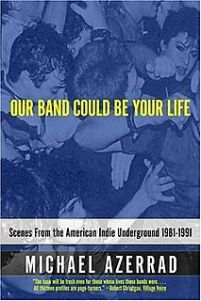
3. Our Band Could Be Your Life by Michael Azerrad.
our-band.jpg

Your life is probably nothing like any of the sort-of-famous indie bands covered here, unless you basically live in a van. I’m actually not even really sure if this qualifies as a great book. This book is actually just “okay.” Chances are, if you’re a fan of Sonic Youth, Ian McKaye, Dinosaur Jr, or Hüsker Dü you probably know most of this stuff already, or at least the stuff that’s interesting. And if you’re a fan of Beat Happening, well, there you go. This book has a whole chapter on Beat Happening. Actually, if you’re really interested in the whole indie rock thing, 1991: The Year Punk Broke is a much better document. But here I go comparing apples to oranges. I bought Our Band Could Be Your Life at Barnes & Noble for like three or four dollars.

4. Chronicles, Volume 1 by Bob Dylan

180px-bob_dylan_chronicles_volume_1.jpg

It took me a long time to get through this. Let me clarify: I read this in large, fifty page chunks, put it down, picked it up again months later. Dylan’s style is discursive and rambling; he elliptically deconstructs his own myth, picking away at the bits of identity he picked off of other musicians and poets on his way to fame. The book never really gets to that fame–to be clear, it discusses the after-effects of Dylan’s fame in detail: the obsessive fans who showed up at his home unannounced, the bewildering pressure to deliver some kind of messianic answer, the expectations to deliver a specific kind of record–but Chronicles spends most of its pages tracing and retracing Dylan’s youth in Minnesota and his days sleeping on friends’ couches in New York City. Will the second and third volumes ever come out? Who knows with this guy. This book was given to me by my cousin for Christmas a few years ago.

*Also recommended: Anthony Scaduto’s biography Bob Dylan.

5 . Transformer by Victor Bockris

transfusa.jpg

Lou Reed is a weirdo, and Victor Bockris wants you to know about it. Starting with Reed’s Long Island youth (complete with electro-shock therapy), Bockris’s biography covers pretty much everything right up through the Velvet Underground’s early nineties reunion: Reeds early apprenticeship in the Brill Building, the nascent days of the VU (plenty of Warhol anecdotes, of course), punk rock, several doomed romances, his years living with a transvestite, his karate skills, his yoga skills, and his all-bran diet, and of course, the drugs. Oh the drugs. Also, Reed’s solo career is also examined (including plenty of material from guitar god Bob Quine). Bockris seems to feel Magic and Loss is something of a watershed moment in modern rock (anyone who accidentally bought this album knows otherwise).

Bockris’s book employs a bitchy, dishy tone, rife with catty comments from everyone whoever worked with Reed: apparently Lou was a total asshole. Bockris reprints some painful comments (e.g. Reed on Springsteen, 1975: “Isn’t Springsteen over the hill?”); the most awkward moment comes in the book’s appendix, in a transcript of a meeting Bockris arranged between Reed and William Burroughs. Bad idea (Reed can’t remember the name of “that book you published”–Naked Lunch). I can’t remember, but I think I got this for like three or four bucks at Barnes & Noble.

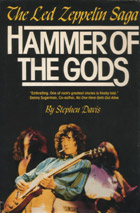
6. Hammer of the Gods by Stephen Davis
hammer_of_the_gods.jpg

“Here’s a red snapper for your red snapper!”

Intrigued? You should be! Burroughs makes a cameo here as well.

I don’t own this one. I read the good bits in high school though.

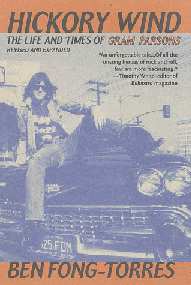
7. Hickory Wind: The Life and Times of Gram Parsons by Ben Fong-Torres
gparsons.jpg

Some jackass made a movie about Gram Parsons’ life a few years ago; I think Johnny Knoxville played Parsons. I didn’t see it, but I’m sure this book is way better. Rolling Stone alum Ben Fong-Torres clearly appreciates Parsons as not only the influential icon that he’s generally recognized as, but also as a truly gifted songwriter. Parsons’ early days in Winterhaven, Waycross, and Jacksonville (he attended the Bolles School) are scrutinized along with his brief stint at Harvard, his time in the Byrds and his days partying with the Rolling Stones in California hippy mansions. Also, another appearance by William Burroughs, who recommended a treatment to help kick the heroin. Parsons’ infamous death in the California desert is also put under the lens, right down to a time-line if I remember correctly. Good stuff. My uncle lent me this book, and yes, I returned it to him. So there.

From The Believer: Stephen Elliot’s “The Score”

I have a subscription to The Believer, a magazine I truly love but am consistently unable to finish each month. They just pile up on my coffee table, the site of all sorts of literary flotsam and jetsam. Of course, when I first get each month’s issue, I like to skim through it and read any articles that catch my eye immediately–this is the only way they’ll get read. The tone of the majority of The Believer‘s articles and features tends to be a mix of post-modern pop culture criticism, faux academese, and general smart-assed winking and nodding. Also, they have some pretty great interviews.

Anyway, last month’s issue had a beautifully earnest personal essay by Stephen Elliot called “The Score.” I loved this essay so much that I actually called people to tell them about it. Luckily, The Believer website has the full text of “The Score” for all to read for free. This isn’t the type of essay that will make you smarter or enrich your vocabulary or provide any kind of hipster insights…it’s just a very good personal essay, a genre which I pretty much despise. Elliot discusses his dysfunctional relationship with his ex-girlfriend, drug use, and the Chicago Bulls of the 1990s in an unnerving but oddly affecting manner. Tell me that you don’t love this essay.