Three Books

IMG_0046

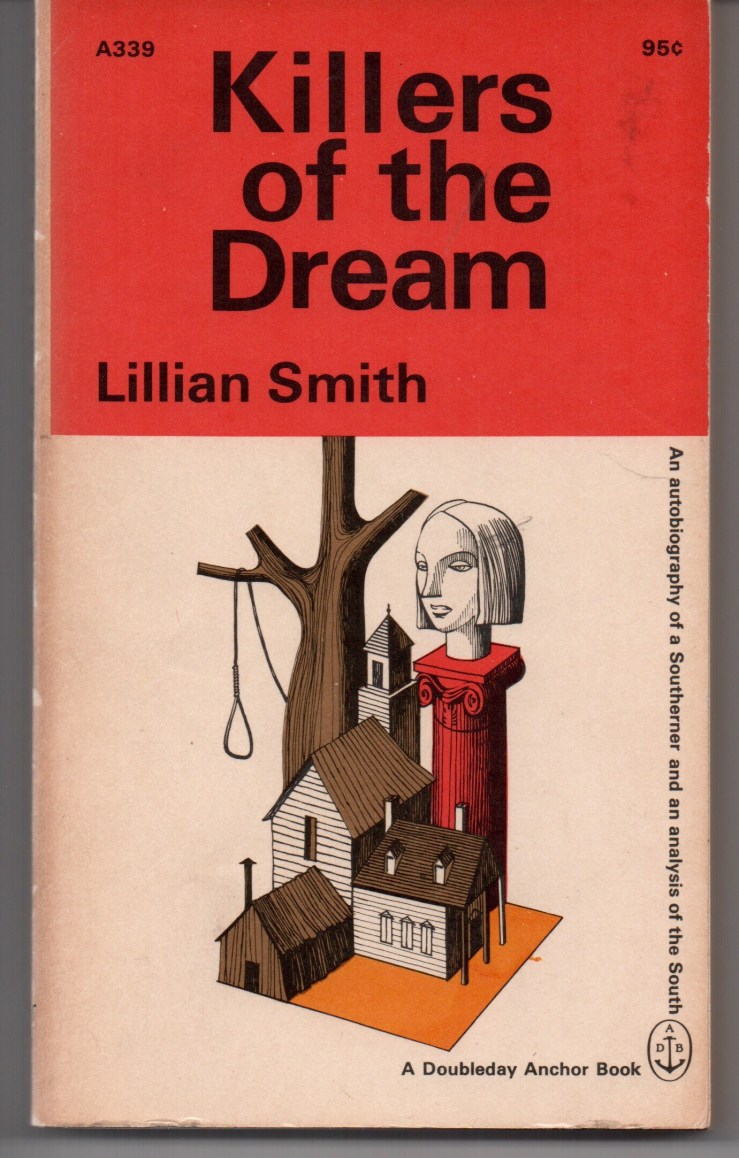
Killers of the Dream by Lillian Smith. Doubleday Anchor, 1963 mass market paperback edition. Cover design by George Giusti. Smith’s memoir-essay-critique is an underappreciated masterful dissection of the South in particular and humanity in general.IMG_0047

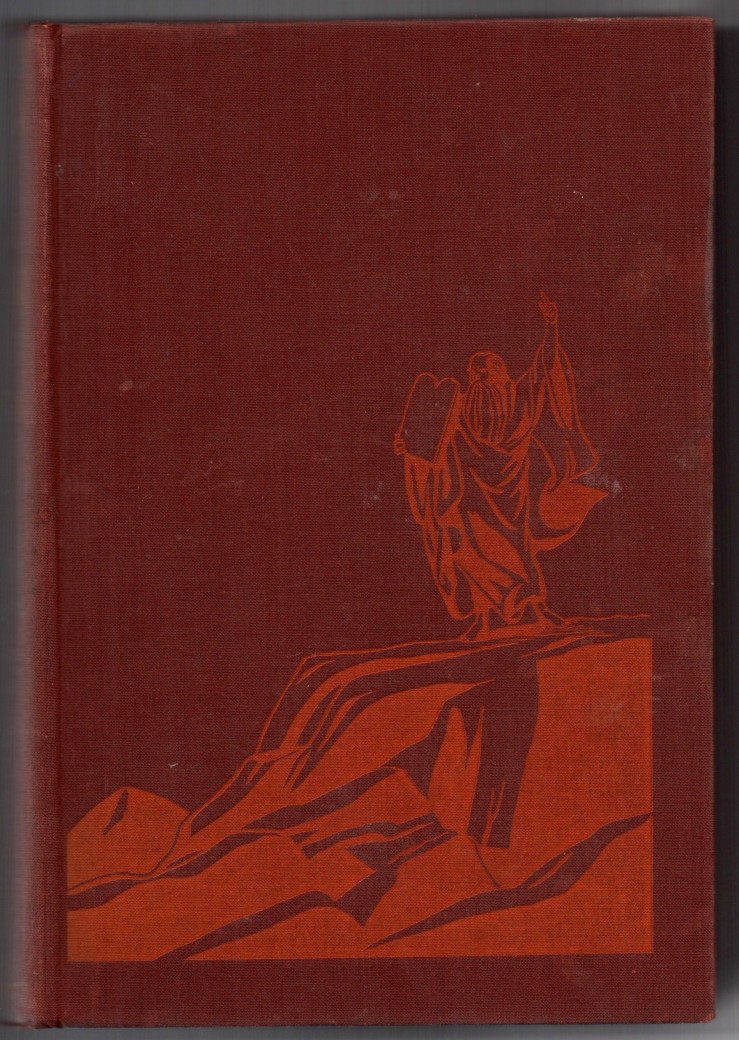
Moses, Man of the Mountain by Zora Neale Hurston. First-edition clothbound hardback from J. B. Lippincott, 1939. The dust jacket is missing, and no designer is credited in the book. I picked this up for eight dollars a few years ago. I lent my paperback copy to a student years ago; she never returned it. (Good for her!).IMG_0048

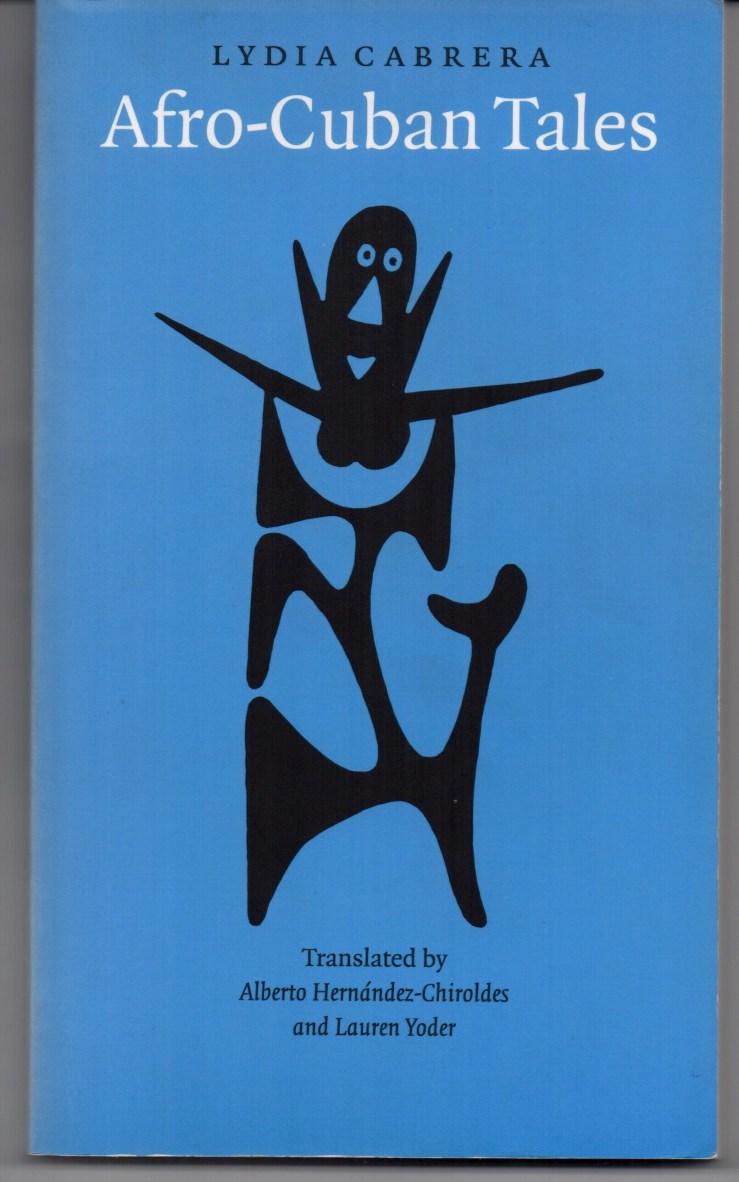
Afro-Cuban Tales by Lydia Cabrera. 2004 trade paperback by the University of Nebraska Press. Book design by R. Eckersley; cover illustration by Lydia Cabrera. Cabrera (1899-1991), an ethnographer, went beyond documenting the tales and fables of her native Cuba: she synthesized them into new tellings, new variations (not unlike Zora Neale Hurston’s folklore work in Mules and Men and Tell My Horse). Cabrera deserves a wider audience.

A bicentennial edition of Jane Austen’s Emma from Penguin Classics

IMG_0032

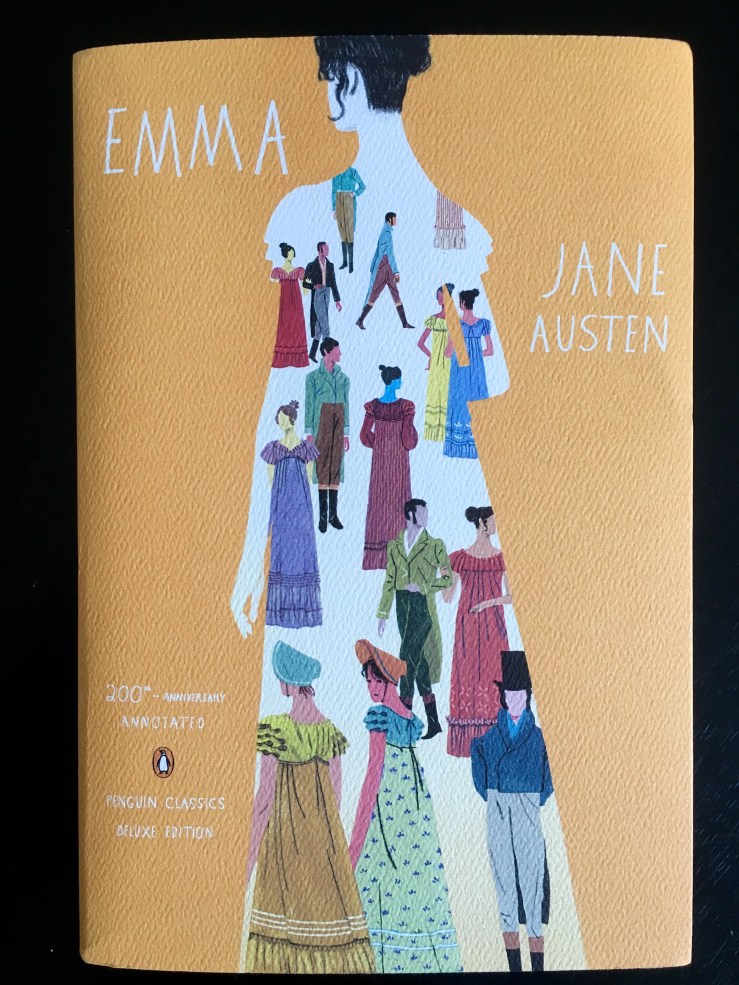
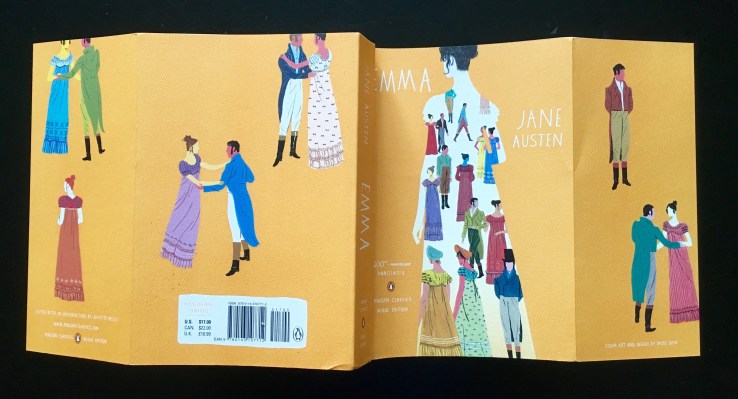
Last month, to mark its bicentennial, Penguin Classics published a deluxe edition of Jane Austen’s novel Emma. It’s a beautiful, hefty book, with deckle edges, French flaps, and a cool cover by Dadu Shin.

IMG_0038

Beyond its obvious aesthetic appeal, Penguin’s new edition offers its readers helpful resources, including a note on spelling in the novel, a glossary, and a range of essays that offer context for better appreciating the plot (topics include “Dancing,” “Food,” and “Health”). Indeed, this edition seems geared towards helping younger readers appreciate and enjoy Emma. In a prefatory note, editor Juliette Wells writes:

This edition is designed to help. It’s a reader’s edition, not a scholarly one. In other words, the information you’ll find here is intended to support your understanding and appreciation of Emma rather than to instruct you in literary terms, theoretical perspectives, or critical debates. In choosing what to include, I’ve borne in mind what I’ve heard from students and others over the years about what has intrigued, and frustrated, them in reading this novel.

Wells’s brief introduction helps offer new readers context about the novel’s composition, publication, and reception. She even offers a short series of tips for reading Emma (sample: “If you’re feeling frustrated or bored because nothing much seems to be happening, remember that Austen’s own contemporaries commented on how little plot Emma contains and how ordinary its characters and events are”). The edition also features helpful maps (by Wells), along with illustrations and title pages from previous editions. The volume concludes with a suggested reading and viewing list “for further exploration.”

Emma is obviously in the public domain and available in plenty of inexpensive versions (like the Dover Thrift copy I read in high school)—but this new Penguin Classics edition makes a strong case for itself as the future go-to version for high school students. Wells’s editorial vision (and the aesthetic design of the book) show a strong love for Austen’s text that will carry over to a new generation of readers.  Continue reading “A bicentennial edition of Jane Austen’s Emma from Penguin Classics”

Sebald’s Vision (Book acquired 10.06.2015)

IMG_0023

  1. I can barely keep up with these “book acquired” posts this fall.
  2. I was actually reading Sebald last night—his essay on Rousseau in A Place in the Country. “How difficult it is in general to bring the machinery of thought to a standstill“—yes, yes, of course. Machinery! If there was just a switch…
  3. I mean that I would love to be like, transcendentalist (transcendent?  transcending? to transcend? trance? tr….) but the feeling of the feeling, the machinery of thought gets in the way. But anyway—
  4. (Sebald in this picture, and a few others, looks so much like my father that it frightens the fuck out of me. It’s horrifying).
  5. [Optometry joke]
  6. I was going somewhere with this (or not): Sebald’s Vision by Carol Jacobs. Publisher Columbia University Press’s blurb:

    W. G. Sebald’s writing has been widely recognized for its intense, nuanced engagement with the Holocaust, the Allied bombing of Germany in WWII, and other episodes of violence throughout history. Through his inventive use of narrative form and juxtaposition of image and text, Sebald’s work has offered readers new ways to think about remembering and representing trauma.

    In Sebald’s Vision, Carol Jacobs examines the author’s prose, novels, and poems, illuminating the ethical and aesthetic questions that shaped his remarkable oeuvre. Through the trope of “vision,” Jacobs explores aspects of Sebald’s writing and the way the author’s indirect depiction of events highlights the ethical imperative of representing history while at the same time calling into question the possibility of such representation.

    Jacobs’s lucid readings of Sebald’s work also consider his famous juxtaposition of images and use of citations to explain his interest in the vagaries of perception. Isolating different ideas of vision in some of his most noted works, including Rings of Saturn, Austerlitz, and After Nature, as well as in Sebald’s interviews, poetry, art criticism, and his lecture Air War and Literature, Jacobs introduces new perspectives for understanding the distinctiveness of Sebald’s work and its profound moral implications.

To bring the machinery of thought to a standstill (W.G. Sebald)

How difficult it is in general to bring the machinery of thought to a standstill is shown by Rousseau’s description of his apparently so happy days on the island in the Lac de Bienne. He has, as he writes in the fifth Promenade, deliberately forsworn the burden of work, and his greatest joy has been to leave his books safely shut away and to have neither ink nor paper to hand. However, since the leisure time thus freed up must be put to some use, Rousseau devotes himself to the study of botany, whose basic principles he had acquired in Môtiers on excursions with Jean Antoine d’Ivernois. “I set out to compose,” writes Rousseau in the fifth Promenade, “a Flora Petrinsularis and to describe every single plant on the island in enough detail to keep me busy for the rest of my days. They say a German once wrote a book about a lemon peel; I could have written one about every grass in the meadows, every moss in the woods, every lichen covering the rocks—and I did not want to leave even one blade of grass or atom of vegetation without a full and detailed description. In accordance with this noble plan, every morning after breakfast I would set out with a magnifying glass in my hand and my Systemae Naturae under my arm to study one particular section of the island, which I had divided for this purpose into small squares, intending to visit them all one after another in every season.” The central motif of this passage is not so much the impartial insight into the indigenous plants of the island as that of ordering, classification, and the creation of a perfect system. Thus this apparently innocent occupation—the deliberate resolve no longer to think and merely to look at nature—becomes, for the writer plagued by the chronic need to think and work, a demanding rationalistic project involving the compiling of lists, indices, and catalogs, along with the precise description of, for example, the long stamens of self-heal, the springiness of those of nettle and of wall-pellitory, and the sudden bursting of the seed capsules of balsam and of beech. Nonetheless, the leaves of the small herbaria which Rousseau later compiled for Madelon and Julie de la Tour and other young ladies take on the aspect of an innocent bricolage in comparison with the self-destructive business of writing to which he usually submitted himself. A faint aura of unconscious beauty still hovers over these flower collections, in which lichens, sprigs of veronica, lilies of the valley, and autumn crocuses have survived, pressed and a little faded, from the eighteenth century. They can still be admired today in the Musée Carnavalet and the Musée des Arts Décoratifs. The herbarium Rousseau compiled for himself, meanwhile—eleven quarto volumes—was, up to the Second World War, preserved in the Botanical Museum in Berlin, until, like so much and so many in that city, it went up in flames one night during one of the nocturnal bombing raids.

From W. G. Sebald’s essay “J’aurais voulu que ce lac eût été l’Océan.” Translated by Jo Catling and collected in A Place in the Country.

Making patent to all men the ill-kept secret that the codes by which they live are archaic survivals without point or power

Don Juan and Faust alike are former villains of the orthodox mind made heroes in an age of unorthodoxy, Promethean or Satanic figures; and both come to stand for the lonely individual (the writer himself!) challenging the mores of bourgeois society, making patent to all men the ill-kept secret that the codes by which they live are archaic survivals without point or power.

Often the two archetypes are blended in a single literary character, as in the lover-scientist Goethe calls by the name of Faust. But there is a real difference between the rebel whose life style is cued by passion and the one whose life style is compounded out of pride and terror—between the seducer and the black magician. Faust challenges the limitations set upon experience not in the name of pleasure but of knowledge; he seeks not to taste life without restraint but to control it fully; and his essential crime (or glory!) is, therefore, not seduction but the Satanic bargain: to sell one’s soul to the Devil. But what does it mean to sell one’s soul? The symbol is immensely complex, its significances multiple; they can be summed up, however, in the single phrase to choose to be damned, whatever damnation is. Not to fall into error out of a passionate loss of self-control, not even to choose to sin at a risk of damnation; but to commit oneself to it with absolute certainty for “as long as forever is.”

Damnation itself means various things to men of varying belief: a commitment to the vagaries of the unconscious; an abandonment of the comforts of social life—of marriage and the family, wealth and recognition; a rejection of all bonds of love and sympathy, of humanity itself; a deliberate plunge into insanity; and acceptance of eternal torment for the soul. When Huck Finn cries out, “all right, I’ll go to Hell,” and Ahab, “From hell’s heart I stab at thee!”; when Hester Prynne tears off her scarlet letter, they are Faustian heroes; but so, too (in all modesty and moral elegance), is Henry James’s Strether when he rejects Mrs. Newsome and Maria Gostrey alike, refuses all rewards from life; and so, too, is Hawthorne when confiding to a friend, after the composition of The Scarlet Letter, that he had written a “hell-fired book.” Anyone who, in full consciousness, surrenders the hope of heaven (what everyone says heaven is) for the endurance of hell (what everyone knows hell to be) has entered into a pact with Satan; and the very act, therefore, of writing a gothic novel rather than a sentimental one, of devoting a long fiction to terror rather than love, is itself a Faustian commitment.

From Leslie Fiedler’s Love and Death in the American Novel.

Three Books

IMG_0010

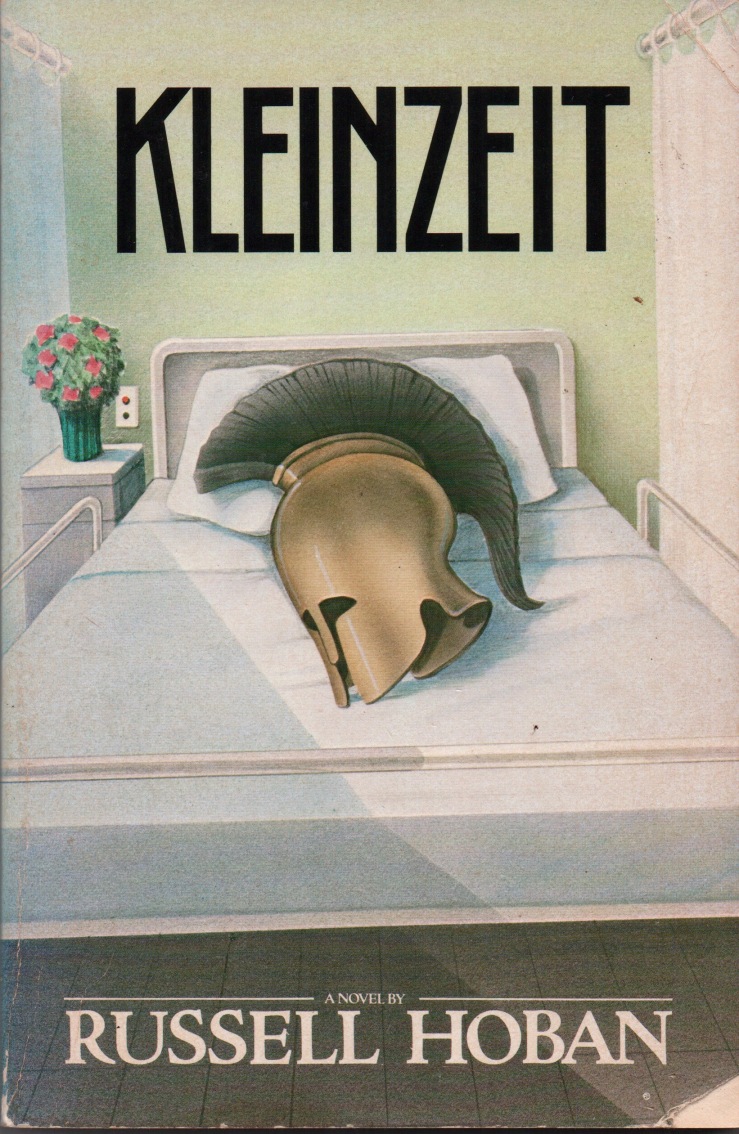
Kleinzeit by Russell Hoban. 1983 Summit Books trade paperback edition. Cover design by Fred Marcellino. A stark and funny retelling of the Orpheus myth, Hoban’s second novel obsesses over illness and art. Fans of Tom McCarthy might dig this one.

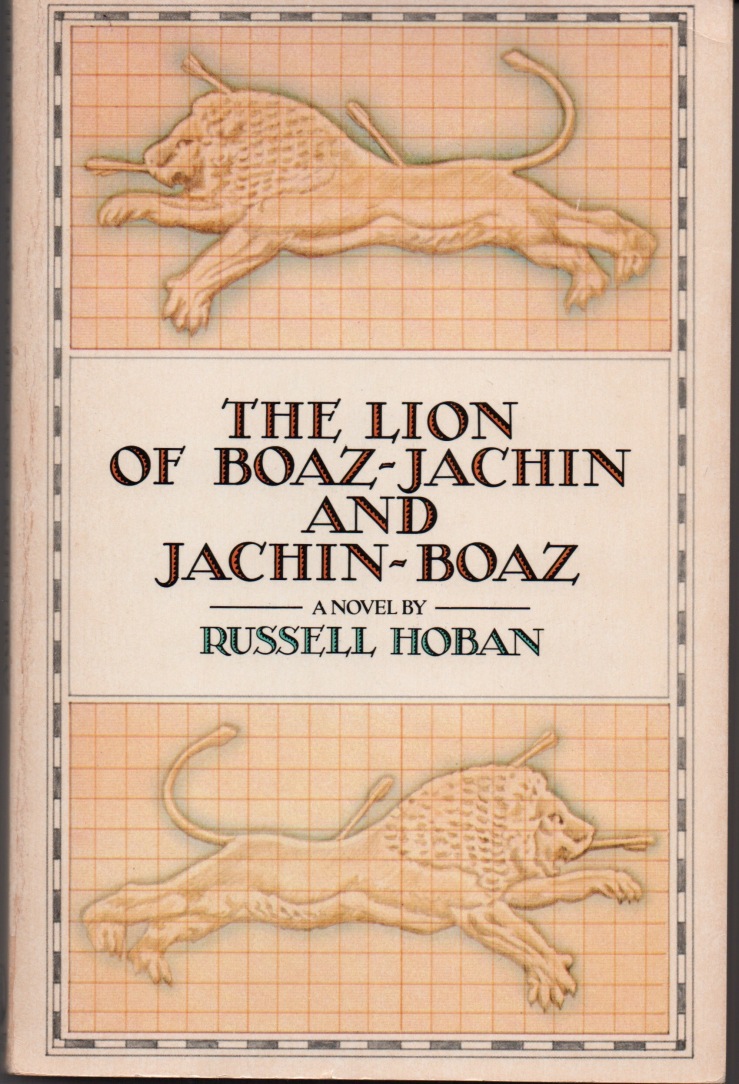
IMG_0012The Lion of Boaz-Jachin and Jachin-Boaz by Russell Hoban. 1983 Summit Books trade paperback edition. Cover design by Fred Marcellino. Hoban’s first novel. Not my favorite Hoban.IMG_0013 Pilgermann by Russell Hoban. 1984 Washington Square Press trade paperback. No designer is credited, but look closely under the horse’s fore hooves and note the signature “Rowena” — Rowena Morrill. (Note also the pig and naked lady). Pilgermann, Hoban’s follow-up (and somehow-sequel) to Riddley Walker, was the occasion for this Sunday’s Three Books post. I was reminded of this strange, wicked, dark, funny, apocalyptic book as I finished a reread of Cormac McCarthy’s Blood Meridian and began Kazuo Ishiguro’s The Buried Giant this weekend. Pilgermann is difficult but rewarding, and probably underappreciated, even as a cult novel.

Five ideas from Nathaniel Hawthorne’s Note-Books

Some man of powerful character to command a person, morally subjected to him, to perform some act. The commanding person suddenly to die; and, for all the rest of his life, the subjected one continues to perform that act.

“Solomon dies during the building of the temple, but his body remains leaning on a staff, and overlooking the workmen, as if it were alive.”

A tri-weekly paper, to be called the Tertian Ague.

Subject for a picture,–Satan’s reappearance in Pandemonium, shining out from a mist with “shape star-bright.”

Five points of Theology,–Five Points at New York.

From Passages from the American Note-Books. Stray notes of 1842.

The Tsar of Love and Techno (Book acquired, 9.29.2015)

IMG_8537

Anthony Marra’s collection The Tsar of Love and Techno is new in hardback from Hogarth next week. Here is the first part of Hogarth’s blurb (it’s the longest damn blurb I’ve ever seen I think):

Brilliantly constructed and beautifully inhabited, Anthony Marra’s new book, THE TSAR OF LOVE AND TECHNO (Hogarth; on sale October 6, 2015), is an exquisite collection of nine interconnected stories set in Russia that move across a century and introduce us to a cast of unforgettable characters whose lives intersect in ways both life-affirming and heartbreaking. Marra is a writer driven by a deep and authentic curiosity, and it was that curiosity that led him to write about Chechnya and to return there in THE TSAR OF LOVE AND TECHNO. With the recent insurgent attacks in Grozny, the Islamic State’s announcement that Chechnya will be their next zone of expansion, and 2015 marking the twentieth anniversary of the first Chechen War, Marra’s book couldn’t be timelier.

Vertigo/The Weight of Things (Books acquired, 9.28.2015)

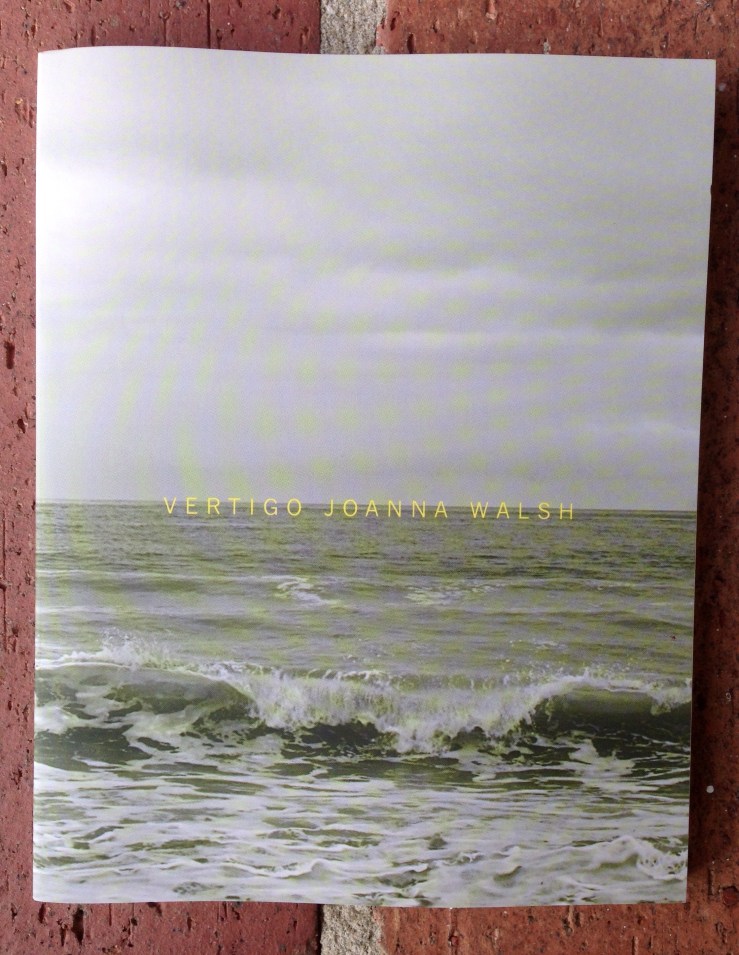
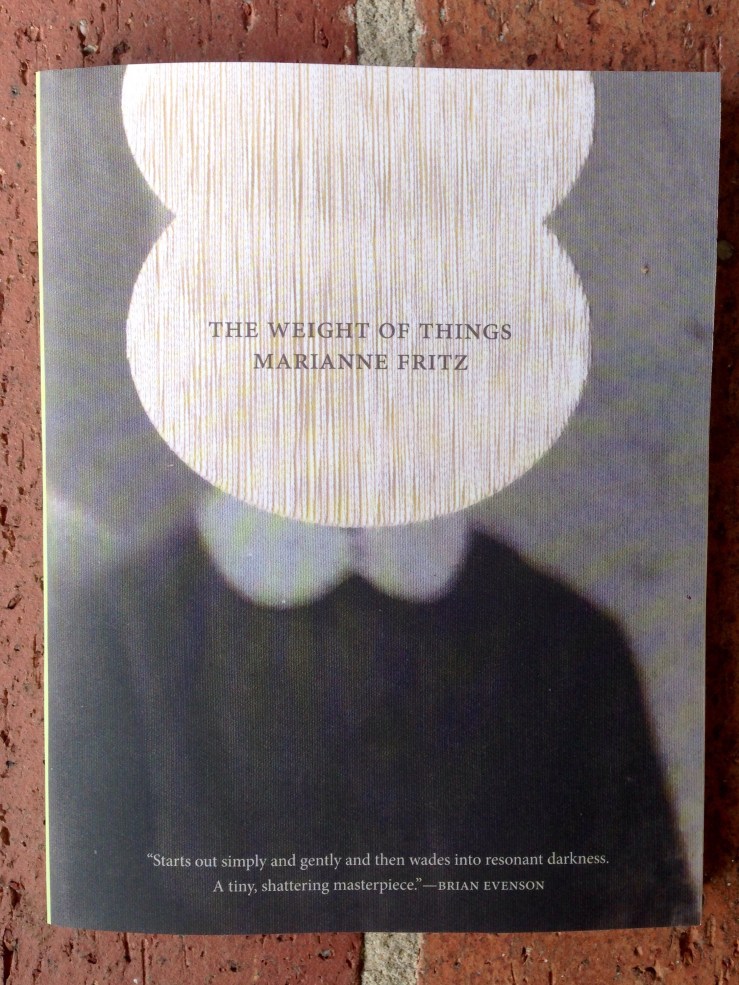
Two new books from The Dorothy Project: Joanna Walsh’s collection Vertigo and Austrian writer Marianne Fritz’s 1978 novel The Weight of Things (in English translation by Adrian Nathan West)

IMG_8532

You can read Walsh’s story “Online” online at Electric Literature.

IMG_8534

Dorothy’s blurb for Fritz’s novel:

The Weight of Things is the first book, and the first translated book, and possibly the only translatable book by Austrian writer Marianne Fritz (1948–2007). For after winning acclaim with this novel—awarded the Robert Walser Prize in 1978—she embarked on a 10,000-page literary project called “The Fortress,” creating over her lifetime elaborate colorful diagrams and typescripts so complicated that her publisher had to print them straight from her original documents. A project as brilliant as it is ambitious and as bizarre as it is brilliant, it earned her cult status, comparisons to James Joyce no less than Henry Darger, and admirers including Elfriede Jelinek and W. G. Sebald.

Yet in this, her first novel, we discover not an eccentric fluke of literary nature but rather a brilliant and masterful satirist, philosophically minded yet raging with anger and wit, who under the guise of a domestic horror story manages to expose the hypocrisy and deep abiding cruelties running parallel, over time, through the society and the individual minds of a century.

His grandaddy was killed by a lunatic and buried in the woods like a dog (Blood Meridian)

In Ch. 23 of Cormac McCarthy’s novel Blood Meridian our protagonist the kid—now the man but always the kid—has cause to kill a kind of postfiguration of himself, Elrod, an ornery youth who attempts to murder the kid in the dark of night:

I knowed you’d be hid out, the boy called.

He pushed back the blanket and rolled onto his stomach and cocked the pistol and leveled it at the sky where the clustered stars were burning for eternity. He centered the foresight in the milled groove of the framestrap and holding the piece so he swung it through the dark of the trees with both hands to the darker shape of the visitor.

I’m right here, he said.

The boy swung with the rifle and fired.

You wouldnt of lived anyway, the man said.

When Elrod’s traveling companions come to fetch his body, we get this microbiography:

They come out here from Kentucky mister. This tyke and his brother. His momma and daddy both dead. His grandaddy was killed by a lunatic and buried in the woods like a dog. He’s never knowed good fortune in his life and now he aint got a soul in this world.

The line about the grandfather “killed by a lunatic and buried in the woods like a dog” instantly recalled for me the judge’s tale about the harnessmaker in Ch. XI. The tale begins thus:

In the western country of the Alleghenies some years ago when it was yet a wilderness there was a man who kept a harness shop by the side of the Federal road. He did so because it was his trade and yet he did little of it for there were few travelers in that place. So that he fell into the habit before long of dressing himself as an indian and taking up station a few miles above his shop and waiting there by the roadside to ask whoever should come that way if they would give him money. At this time he had done no person any injury.

And climaxes thus:

As they walked out they spoke of life in such a wild place where such people as you saw you saw but one and never again and by and by they came to the fork in the road and here the traveler told the old man that he had come with him far enough and he thanked him and they took their departure each of the other and the stranger went on his way. But the harnessmaker seemed unable to suffer the loss of his company and he called to him and went with him again a little way upon the road. And by and by they came to a place where the road was darkened in a deep wood and in this place the old man killed the traveler. He killed him with a rock and he took his clothes and he took his watch and his money and he buried him in a shallow grave by the side of the road. Then he went home.

The judge’s story goes on a bit longer, but the remarkable moment is when he finishes, all the men of Glanton’s company claim to know the story, but in variations—part of the book’s dark take on the Emersonian oversoul. (Later in the same chapter: “What is true of one man, said the judge, is true of many”).

To return to Elrod (the name means something like God rules): I’ve always read the kid’s killing him as foreshadowing to the kid’s own final encounter with the judge later in the same chapter. Maybe the grandfather-lunatic-burial is just another one of the judge’s damn riddles, but it’s got me perplexed. Maybe best not to look for too much order in the dance?
Of this is the judge judge and the night does not end (Blood Meridian)

In that sleep and in sleeps to follow the judge did visit. Who would come other? A great shambling mutant, silent and serene. Whatever his antecedents he was something wholly other than their sum, nor was there system by which to divide him back into his origins for he would not go. Whoever would seek out his history through what unraveling of loins and ledgerbooks must stand at last darkened and dumb at the shore of a void without terminus or origin and whatever science he might bring to bear upon the dusty primal matter blowing down out of the millennia will discover no trace of any ultimate atavistic egg by which to reckon his commencing. In the white and empty room he stood in his bespoken suit with his hat in his hand and he peered down with his small and lashless pig’s eyes wherein this child just sixteen years on earth could read whole bodies of decisions not accountable to the courts of men and he saw his own name which nowhere else could he have ciphered out at all logged into the records as a thing already accomplished, a traveler known in jurisdictions existing only in the claims of certain pensioners or on old dated maps.

In his delirium he ransacked the linens of his pallet for arms but there were none. The judge smiled. The fool was no longer there but another man and this other man he could never see in his entirety but he seemed an artisan and a worker in metal. The judge enshadowed him where he crouched at his trade but he was a coldforger who worked with hammer and die, perhaps under some indictment and an exile from men’s fires, hammering out like his own conjectural destiny all through the night of his becoming some coinage for a dawn that would not be. It is this false moneyer with his gravers and burins who seeks favor with the judge and he is at contriving from cold slag brute in the crucible a face that will pass, an image that will render this residual specie current in the markets where men barter. Of this is the judge judge and the night does not end.

From Cormac McCarthy’s novel Blood Meridian.