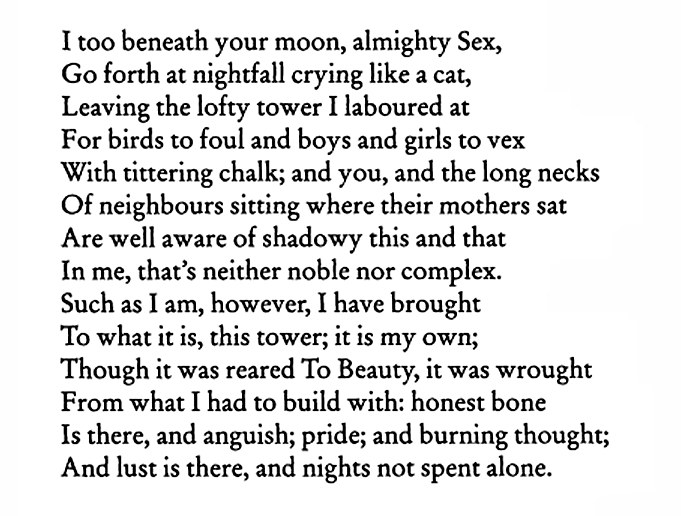
“I too beneath your moon, almighty Sex” — Edna St. Vincent Millay

esvm

“You’ve Got Worms” and Other Images from Anton Chekhov’s Note-Books

* * * * *

The French say: “Laid comme un chenille”—as ugly as a caterpillar.

* * * * *

People are bachelors or old maids because they rouse no interest, not even a physical one.

* * * * *

The children growing up talked at meals about religion and laughed at fasts, monks, etc. The old mother at first lost her temper, then, evidently getting used to it, only smiled, but at last she told the children that they had convinced her, that she is now of their opinion. The children felt awkward and could not imagine what their old mother would do without her religion.

* * * * *

There is no national science, just as there is no national multiplication table; what is national is no longer science.

* * * * *

The dog walked in the street and was ashamed of its crooked legs.

* * * * *

The difference between man and woman: a woman, as she grows old gives herself up more and more to female affairs; a man, as he grows old, withdraws himself more and more from female affairs.

* * * * *

That sudden and ill-timed love-affair may be compared to this: you take boys somewhere for a walk; the walk is jolly and interesting—and suddenly one of them gorges himself with oil paint.

* * * * *

The character in the play says to every one: “You’ve got worms.” He cures his daughter of the worms, and she turns yellow.

* * * * *

–From Anton Chekhov’s Note-Books.

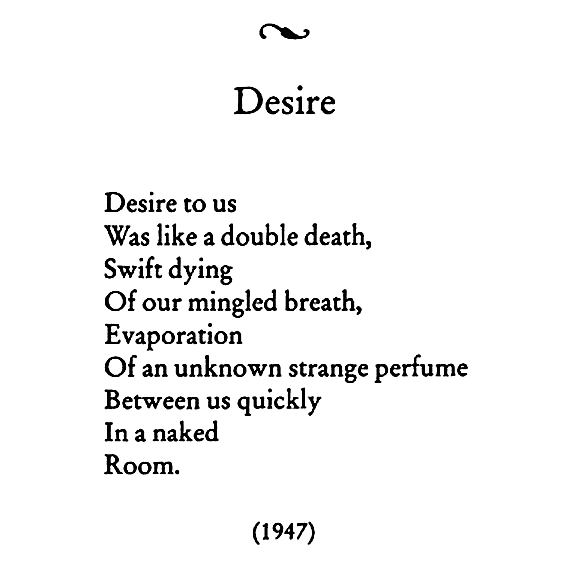
“Desire” — Langston Hughes

desire

“Books Are Like Brothers” and Other Notes from F. Scott Fitzgerald’s Notebooks

  1. Nothing is any more permitted in fiction like stage convention of keeping people on stage by coincidences.
  2. Must listen for conversation style a la Joyce
  3. Nevertheless value of Ernest’s feeling about the pure heart when writing—in other words the comparatively pure heart, the “house in order.”
  4.  Resent the attempt of the boys and girls who tried to bury me before I was dead.
  5. Books are like brothers. I am an only child. Gatsby my imaginary eldest brother, Amory my younger, Anthony my worry. Dick my comparatively good brother but all of them far from home. When I have the courage to put the old white light on the home of my heart, then—
  6. Shakespeare—whetting, frustrating, surprising and gratifying.
  7. Forebearance, good word.
  8. I can never remember the times when I wrote anything—This Side of Paradise time or Beautiful and Damned and Gatsby time for instance. Lived in story.
  9. That Willa Cather’s poem shall stand at beginning of Mediaval and that it shall be the story of Ernest.
  10. Just as Stendahl’s portrait of a Byronic man made Le Rouge et Noir so couldn’t my portrait of Ernest as Phillipe make the real modern man.
  11. There never was a good biography of a good novelist. There couldn’t be. He is too many people if he’s any good.
  12. And such condescension toward the creative life— Tolstoi caught the sense of the Napoleonic wars out in the street from the man in the street; his comments on fiction which would make any old 1864 copy of Leslie’s more humanly valuable than The Red Badge of Courage—the idealization of all that passes through his empty mind; his hatred of all people who formed the world in which he lives—a political Oscar Wilde peddling in the provinces the plums he took from our pudding; his role of Jesus cursing. You can see him going from prize fight to first night to baseball game-maybe even to women—trying to put back into movement the very things Lenin regretted that he might have destroyed—gracelessness and ugliness for its own sake. Gentlemen, proletarians—for a prize skunk I give you Mr. Forsite.

—From F. Scott Fitzgerald’s The Notebooks.


“The White Tribe” — Lydia Davis

ld

“The Satirist” — Robert Louis Stevenson

“The Satirist” by Robert Louis Stevenson

My companion enjoyed a cheap reputation for wit and insight. He was by habit and repute a satirist. If he did occasionally condemn anything or anybody who richly deserved it, and whose demerits had hitherto escaped, it was simply because he condemned everything and everybody. While I was with him he disposed of St. Paul with an epigram, shook my reverence for Shakespeare in a neat antithesis, and fell foul of the Almighty Himself, on the score of one or two out of the ten commandments. Nothing escaped his blighting censure. At every sentence he overthrew an idol, or lowered my estimation of a friend. I saw everything with new eyes, and could only marvel at my former blindness. How was it possible that I had not before observed A’s false hair, B’s selfishness, or C’s boorish manners? I and my companion, methought, walked the streets like a couple of gods among a swarm of vermin; for every one we saw seemed to bear openly upon his brow the mark of the apocalyptic beast. I half expected that these miserable beings, like the people of Lystra, would recognise their betters and force us to the altar; in which case, warned by the fate of Paul and Barnabas, I do not know that my modesty would have prevailed upon me to decline. But there was no need for such churlish virtue. More blinded than the Lycaonians, the people saw no divinity in our gait; and as our temporary godhead lay more in the way of observing than healing their infirmities, we were content to pass them by in scorn.

I could not leave my companion, not from regard or even from interest, but from a very natural feeling, inseparable from the case. To understand it, let us take a simile. Suppose yourself walking down the street with a man who continues to sprinkle the crowd out of a flask of vitriol. You would be much diverted with the grimaces and contortions of his victims; and at the same time you would fear to leave his arm until his bottle was empty, knowing that, when once among the crowd, you would run a good chance yourself of baptism with his biting liquor. Now my companion’s vitriol was inexhaustible.

It was perhaps the consciousness of this, the knowledge that I was being anointed already out of the vials of his wrath, that made me fall to criticising the critic, whenever we had parted.

After all, I thought, our satirist has just gone far enough into his neighbours to find that the outside is false, without caring to go farther and discover what is really true. He is content to find that things are not what they seem, and broadly generalises from it that they do not exist at all. He sees our virtues are not what they pretend they are; and, on the strength of that, he denies us the possession of virtue altogether. He has learnt the first lesson, that no man is wholly good; but he has not even suspected that there is another equally true, to wit, that no man is wholly bad. Like the inmate of a coloured star, he has eyes for one colour alone. He has a keen scent after evil, but his nostrils are plugged against all good, as people plugged their nostrils before going about the streets of the plague-struck city.

Why does he do this? It is most unreasonable to flee the knowledge of good like the infection of a horrible disease, and batten and grow fat in the real atmosphere of a lazar-house. This was my first thought; but my second was not like unto it, and I saw that our satirist was wise, wise in his generation, like the unjust steward. He does not want light, because the darkness is more pleasant. He does not wish to see the good, because he is happier without it. I recollect that when I walked with him, I was in a state of divine exaltation, such as Adam and Eve must have enjoyed when the savour of the fruit was still unfaded between their lips; and I recognise that this must be the man’s habitual state. He has the forbidden fruit in his waistcoat pocket, and can make himself a god as often and as long as he likes. He has raised himself upon a glorious pedestal above his fellows; he has touched the summit of ambition; and he envies neither King nor Kaiser, Prophet nor Priest, content in an elevation as high as theirs, and much more easily attained. Yes, certes, much more easily attained. He has not risen by climbing himself, but by pushing others down. He has grown great in his own estimation, not by blowing himself out, and risking the fate of Æsop’s frog, but simply by the habitual use of a diminishing glass on everybody else. And I think altogether that his is a better, a safer, and a surer recipe than most others.

After all, however, looking back on what I have written, I detect a spirit suspiciously like his own. All through, I have been comparing myself with our satirist, and all through, I have had the best of the comparison. Well, well, contagion is as often mental as physical; and I do not think my readers, who have all been under his lash, will blame me very much for giving the headsman a mouthful of his own sawdust.

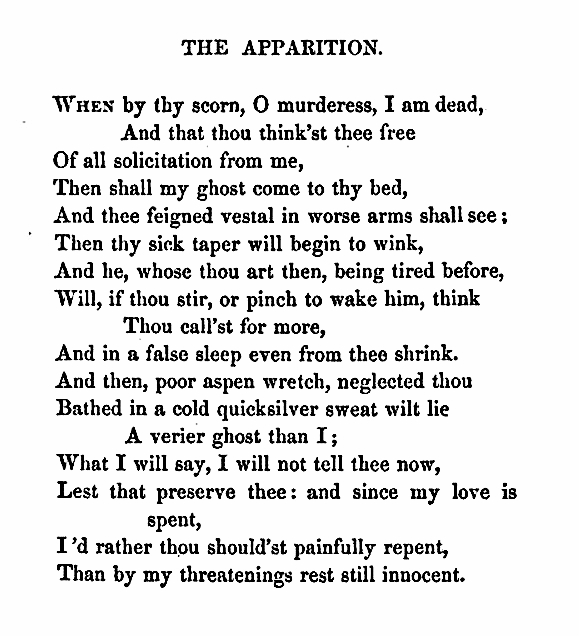
“The Apparition” — John Donne

jd

“The Bookkeeper’s Wife” — Willa Cather

“The Bookkeeper’s Wife” by Willa Cather

Nobody but the janitor was stirring about the offices of the Remsen Paper Company, and still Percy Bixby sat at his desk, crouched on his high stool and staring out at the tops of the tall buildings flushed with the winter sunset, at the hundreds of windows, so many rectangles of white electric light, flashing against the broad waves of violet that ebbed across the sky. His ledgers were all in their places, his desk was in order, his office coat on its peg, and yet Percy’s smooth, thin face wore the look of anxiety and strain which usually meant that he was behind in his work. He was trying to persuade himself to accept a loan from the company without the company’s knowledge. As a matter of fact, he had already accepted it. His books were fixed, the money, in a black-leather bill-book, was already inside his waistcoat pocket.

He had still time to change his mind, to rectify the false figures in his ledger, and to tell Stella Brown that they couldn’t possibly get married next month. There he always halted in his reasoning, and went back to the beginning.

The Remsen Paper Company was a very wealthy concern, with easy, old-fashioned working methods. They did a longtime credit business with safe customers, who never thought of paying up very close on their large indebtedness. From the payments on these large accounts Percy had taken a hundred dollars here and two hundred there until he had made up the thousand he needed. So long as he stayed by the books himself and attended to the mail-orders he couldn’t possibly be found out. He could move these little shortages about from account to account indefinitely. He could have all the time he needed to pay back the deficit, and more time than he needed. Continue reading ““The Bookkeeper’s Wife” — Willa Cather”

“Helen” — H.D.

“Helen” by H.D.—

All Greece hates
the still eyes in the white face,
the lustre as of olives
where she stands,
and the white hands.

All Greece reviles
the wan face when she smiles,
hating it deeper still
when it grows wan and white,
remembering past enchantments
and past ills.

Greece sees, unmoved,
God’s daughter, born of love,
the beauty of cool feet
and slenderest knees,
could love indeed the maid,
only if she were laid,
white ash amid funereal cypresses.

“The Coffee-House of Surat” — Leo Tolstoy

“THE COFFEE-HOUSE OF SURAT” by Leo Tolstoy

(After Bernardin de Saint-Pierre)

In the town of Surat, in India, was a coffee-house where many travellers and foreigners from all parts of the world met and conversed.

One day a learned Persian theologian visited this coffee-house. He was a man who had spent his life studying the nature of the Deity, and reading and writing books upon the subject. He had thought, read, and written so much about God, that eventually he lost his wits, became quite confused, and ceased even to believe in the existence of a God. The Shah, hearing of this, had banished him from Persia.

After having argued all his life about the First Cause, this unfortunate theologian had ended by quite perplexing himself, and instead of understanding that he had lost his own reason, he began to think that there was no higher Reason controlling the universe.

This man had an African slave who followed him everywhere. When the theologian entered the coffee-house, the slave remained outside, near the door, sitting on a stone in the glare of the sun, and driving away the flies that buzzed around him. The Persian having settled down on a divan in the coffee-house, ordered himself a cup of opium. When he had drunk it and the opium had begun to quicken the workings of his brain, he addressed his slave through the open door:

“Tell me, wretched slave,” said he, “do you think there is a God, or not?”

“Of course there is,” said the slave, and immediately drew from under his girdle a small idol of wood.

“There,” said he, “that is the God who has guarded me from the day of my birth. Every one in our country worships the fetish tree, from the wood of which this God was made.”

This conversation between the theologian and his slave was listened to with surprise by the other guests in the coffee-house. They were astonished at the master’s question, and yet more so at the slave’s reply.

One of them, a Brahmin, on hearing the words spoken by the slave, turned to him and said:

“Miserable fool! Is it possible you believe that God can be carried under a man’s girdle? There is one God—Brahma, and he is greater than the whole world, for he created it. Brahma is the One, the mighty God, and in His honour are built the temples on the Ganges’ banks, where his true priests, the Brahmins, worship him. They know the true God, and none but they. A thousand score of years have passed, and yet through revolution after revolution these priests have held their sway, because Brahma, the one true God, has protected them.” Continue reading ““The Coffee-House of Surat” — Leo Tolstoy”

I confess (Sappho)

confess

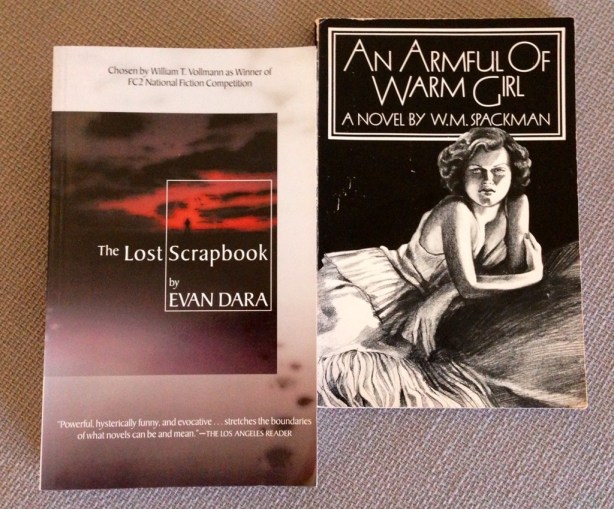
Books Acquired, 8.06.2013

20130809-114547.jpg

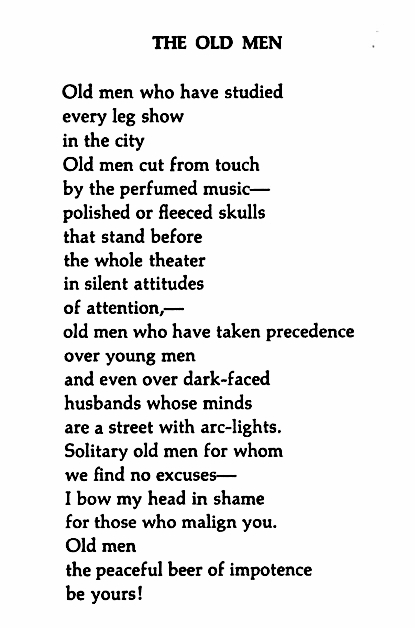
“The Old Men” — William Carlos Williams

old men

From Thomas Bernhard’s Novel Gargoyles, The Story of the Deceased Teacher

While we ate, my father also told me the following story about the deceased teacher. Once when he was a boy, his grandmother had taken him along into the deep woods to pick blackberries. They lost their way completely, wandered for hours, and could not find the way out of the woods. Darkness fell, and still they had not found the path. They kept going in the wrong direction all the time. Finally grandmother and grandson curled up in a hollow, and lying pressed close together, survived the night. They were lost all the next day and spent a second night in another refuge. Not until the afternoon of the second day did they suddenly emerge from the woods, only to find they had all along gone in a direction opposite from that of their home. Totally exhausted, they had struggled on to the nearest farmhouse.

This ordeal had quickly brought about the grandmother’s death. And her grandson, not yet six, had had his entire future ruined by it, my father said.

You could always conclude that the disasters in a man’s life derived from earlier, usually very early, injuries to his body and his psyche, my father averred. Modern medicine was aware of this, but still made far too little use of such knowledge.

“Even today most doctors do not look into causes,” my father said. “They concern themselves only with the most elementary patterns of treatment. They’re hypocrites who do nothing but prescribe medicines and close their eyes to the psyches of people who because of their helplessness and a disastrous tradition entrust themselves completely to their doctors. And most doctors are lazy and cowardly.”

Putting yourself at their mercy meant putting yourself at the mercy of chance and total unfeelingness, trusting to a pseudo-science, my father said. “Most doctors nowadays are unskilled workers in medicine. And the greatest mystifiers. I never feel more insecure than when I’m among my colleagues. Nothing is more sinister than medicine.”

In the last months of his life the teacher had developed an astonishing gift for pen drawing, my father said. The demonic elements that more and more came to light in his drawings shocked his parents. In delicate lines he drew a world “intent upon self-destruction” that terrified them: birds torn to pieces, human tongues ripped out by the roots, eight-fingered hands, smashed heads, extremities torn from bodies not shown, feet, hands, genitals, people suffocated as they walked, and so on. In those last months the bony structure of the young man’s skull became more and more prominent. And he drew his own portrait frequently, hundreds, thousands of times. When the young teacher talked, the disastrous way his mind was set became apparent. My father had considered taking some of the drawings and showing them to a gallery owner he knew in Graz. “They would make a good exhibition,” he said. “I don’t know anyone who draws the way the teacher did.” The teacher’s surrealism was something completely original, for there was nothing surreal in his drawings; what they showed was reality itself. “The world is surrealistic through and through,” my father said. “Nature is surrealistic, everything is surrealistic.” But he felt that art one exhibited was destroyed by the very act of being exhibited, and so he dropped the idea of doing anything with the teacher’s drawings. On the other hand, he was afraid the schoolmaster’s parents would throw away the drawings or burn them—thousands of them!—from ignorance of how good they were and because they were still frightened, anxious, and wrought up about these drawings. So he had decided to take them. “I’ll simply take them all with me,” he said. He had no doubt they would be handed over to him.

The teacher’s parents must have kept thinking of their sick son’s unfortunate bent whenever they looked at him during his last illness, my father said. “What a terrible thing it is that when you know of some deviation, some unnaturalness, or some crime in connection with a person, as long as he lives you can never look at him without thinking about that deviation, unnaturalness, or crime.”

From his bed the teacher had a view of the peak of the Bundscheck on one side and the rounded top of the Wölkerkogel on the other side. “You can feel this whole stark landscape in his drawings,” my father said.

The teacher’s parents said, however, that during his last days he had not spoken at all, only looked at the landscape outside his window. But the landscape he saw was entirely different from theirs, my father said, and different from the landscape we see when we look at it. What he depicted was an entirely different landscape, “everything totally different.”

—From Thomas Bernhard’s novel Gargoyles.


theNewerYork, a Worthy Alternative to Your iPhone

20130709-154848.jpg

Like many (maybe most) Americans, my first impulse when I have to wait somewhere is to pull out my smart phone and dick around. I like to dick around on Twitter, which often leads me to stuff that I scan or gaze or graze through, with a kind of distracted, even half-hearted, attention. Because I’m also attending to something else—the waiting.

I had to wait, or be patient, or be a patient, or what have you several times last month, and each time I brought with me the newest or forthcomingest issue of theNewerYork—issue 3 (or III, depending on press materials). It fits neatly in my pocket and most of the pieces are a page at most—a perfect alternative to my iPhone, with none of the eye-deadening numbness that so often happens with long binges on a tiny screen.

theNewerYork describes itself as

a weird sort of literary mag. Our rule: no short stories, no poetry, no essays. We want to play around with literary form and narration, we want to screw with your mind! There will be personal letters, flash-fictions, glossaries, aphorisms, manuals, lists and other absurdities. We received over 600 submissions from all over the world. We’ve got flash fictions of sex and drugs, teenage romances, philosophical treatises, pretentious definitions, web forums, silly, sappy, scary stuff.

That’s a pretty apt description. To hijack and cannibalize my write-up of the last issue, theNewerYork’s “willingness to showcase experimentation in what goes on paper for people to look at and read is both a strength and a weakness.” This third issue sees an all-around increase in quality, from the production design, to the art, to the writing.

Highlights include Panayotis Pakos’s “Les Innumerables (A Binary Tale),” a Calvinoesque flash that imagines the dream-life of numbers, and Shane Jesse Christmass’s “My Delicate Response to a Child’s Writing Prompt Website” (quick sample: “If there were no television I’d beach my television set down within the dunes…”). Zach Davidson’s “Unstandardized Testing” claims (truthfully?) to present a set of scrambled questions from a trash bin; the testtaker is tasked with creating proper order (sample: “too lazy to do lazy something you are if you are still?”)

The most affecting piece in the collection is Anton Nimblett’s “Show & Tell: An American Game,” an analysis posing as a chronology. I’ll share only the nineteenth century portion, and, at the risk of spoiling, let you know that the story ends with the line “Show birth certificate (again, again, again).”

20130807-130214.jpg

The list-form, along with (or combined with) the second-person POV seems a favorite for “experimental” fiction, which can occasionally be grating (but only when it doesn’t work)—but most of the pieces here work. And if they don’t, there’s something coming up that does.

Despite the disparate tones, approaches, and geographies of its contributors, theNewerYork coheres—the little magazine has a clear (if discursive vision). Good stuff. Check out their website for more. 

“Indifference” — Edna St. Vincent Millay

ind

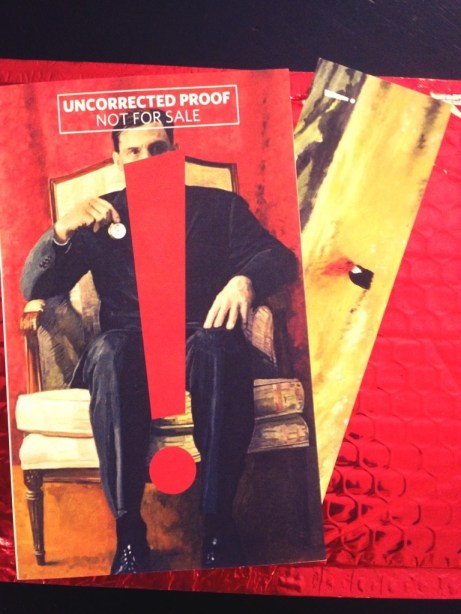
Son of a Gun (Book Acquired, 8.5.2013)

20130806-162848.jpg

Son of a Gun, Justin St. Germain’s memoir, explores the life and death of his mother, who was killed by her fifth husband. Here’s publisher Random House’s blurb:

Tombstone, Arizona, September 2001. Debbie St. Germain’s death in her remote trailer, apparently at the hands of her fifth husband, is a passing curiosity. “A real-life old West murder mystery,” the local TV announcers intone before the commercial break, while barroom gossips snicker cruelly. But for her twenty-year-old son, Justin St. Germain, the tragedy marks the line that separates his world into before and after.

Justin decides to confront people from his past and delve into the police records in an attempt to make sense of his mother’s life and death. All the while he tries to be the type of man she would have wanted him to be. Brutally honest and beautifully written, Son of a Gun is a brave, unexpected and unforgettable memoir.

Here’s Publishers Weekly’s write-up:

A young man wrestles with his heartache over his mother’s murder in this lacerating memoir of family dysfunction. St. Germain was a 20-year-old college student when his mother Debbie was shot to death in 2001 by her fifth husband in a desolate trailer in the Arizona desert, a disaster that threw into sharp relief the chaos of his working-class background. St. Germain revisits Debbie’s unstable life as an Army paratrooper and businesswoman, the string of men she took up with (some physically abusive), and his own boyhood resentment at their presence and at incessant domestic upheaval. Intertwined is a jaundiced, somewhat self-conscious meditation on St. Germain’s claustrophobic hometown of Tombstone—all sun-bleached ennui, arid hardpan, and tourist kitsch—and its presiding spirit, Wyatt Earp, archetype of the violent, trigger-happy machismo that he blames for killing his mother, yet feels drawn to as a touchstone of manhood. St. Germain makes harsh judgments of the men in his past (as well as of his sullen, callous adolescent self), but as he seeks them out later, he arrives, almost against his will, at a subtler appreciation of their complexities. At times his trauma feels more dutiful than deeply felt, but his memoir vividly conveys the journey from youthful victimization toward mature understanding.