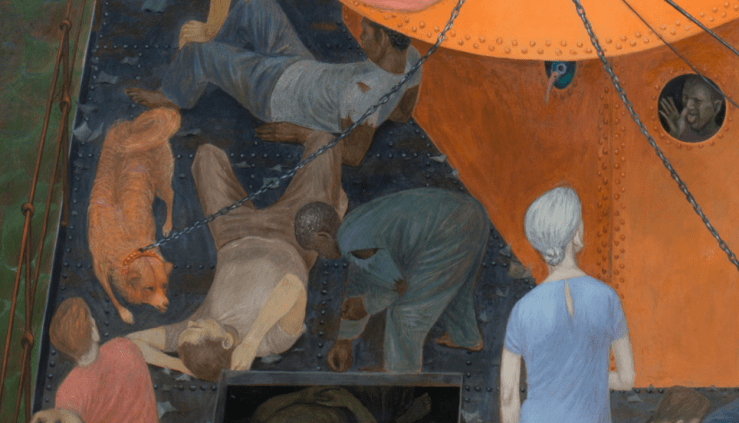
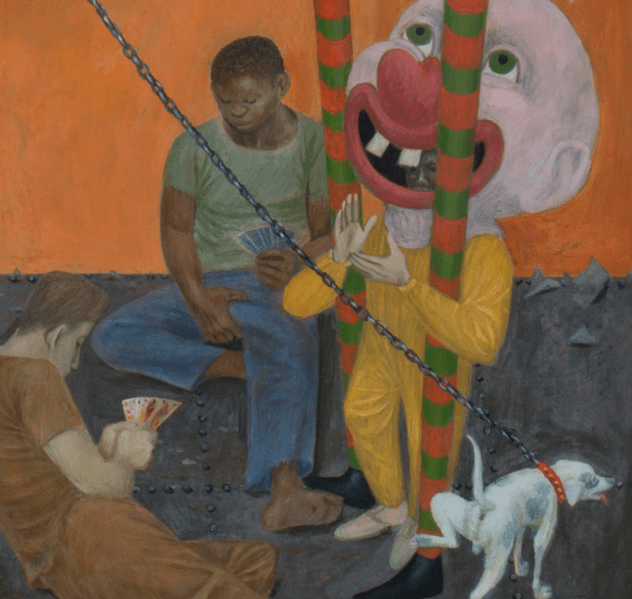
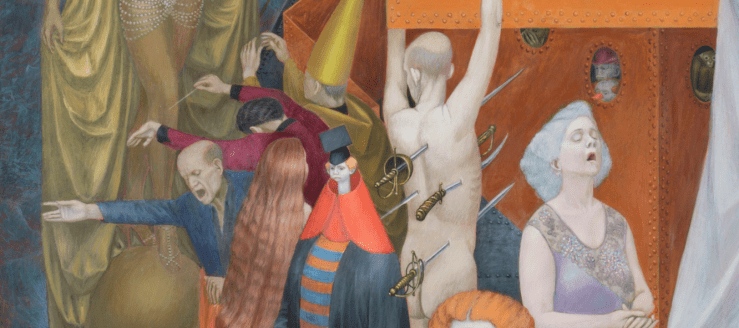
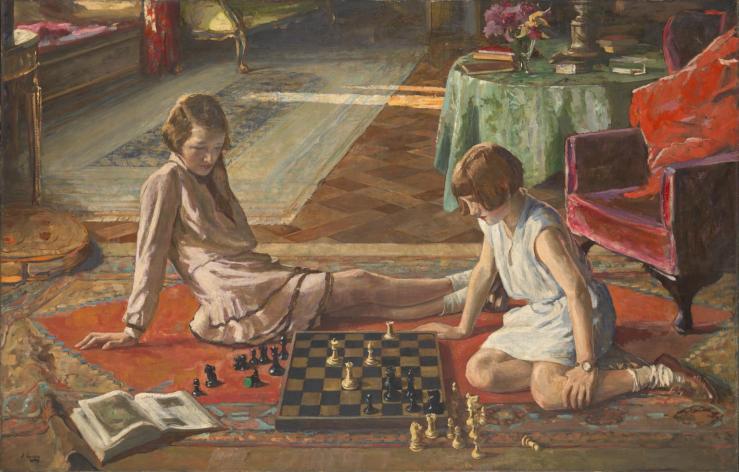
The Chess Players — John Lavery

The Chess Players 1929 by Sir John Lavery 1856-1941

The Chess Players, 1929 by John Lavery (1856–1941)

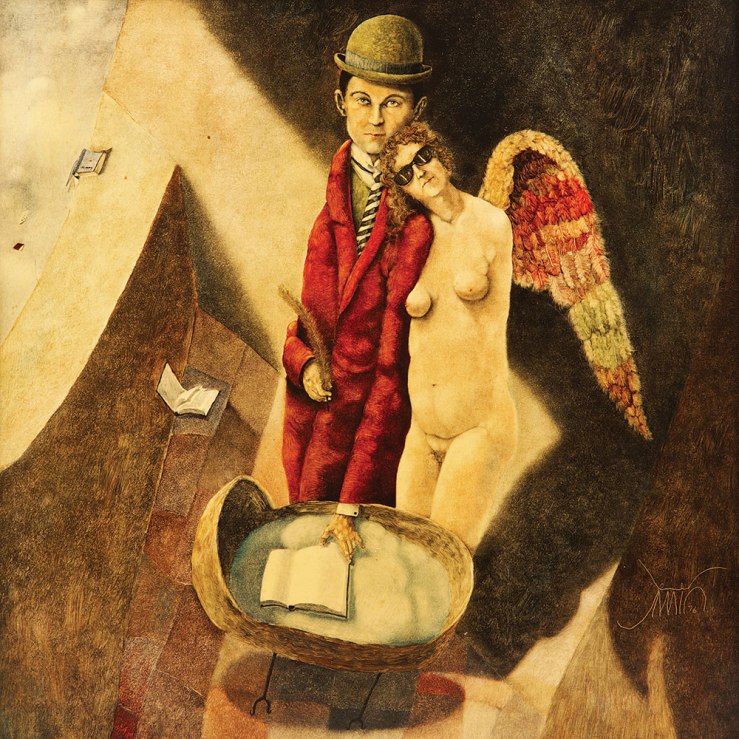
Kafka: Letters to Milena — Benjamin Cañas

78-benjamin-canas-ama-1

Kafka: Letters to Milena, 1976 by Benjamin Cañas (1933-1987)

Danae — Agostino Arrivabene

danae-

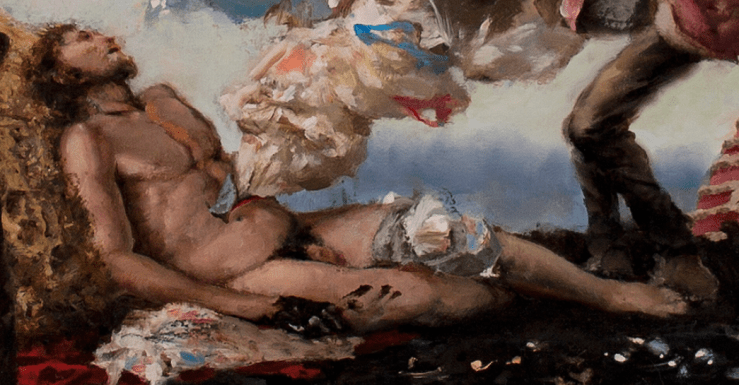
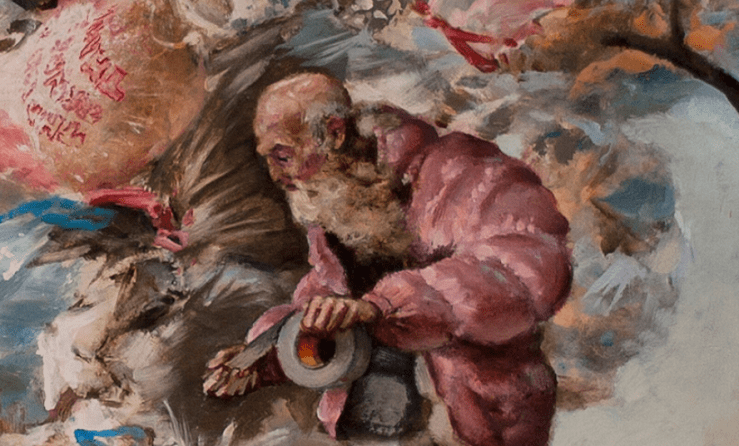
Danae, 2016 by Agostino Arrivabene (b. 1967)

Dada Is Dead — Adrian Ghenie

adrian-ghenie-dada-is-dead-220x200-cm-oil-on-canvas-2009-1024x916

Dada Is Dead, 2009 by Adrian Ghenie (b. 1977)

Seven story ideas from Nathaniel Hawthorne’s journal entry for August 22nd, 1838

A young man and girl meet together, each in search of a person to be known by some particular sign. They watch and wait a great while for that person to pass. At last some casual circumstance discloses that each is the one that the other is waiting for. Moral,–that what we need for our happiness is often close at hand, if we knew but how to seek for it.

The journal of a human heart for a single day in ordinary circumstances. The lights and shadows that flit across it; its internal vicissitudes.

Distrust to be thus exemplified: Various good and desirable things to be presented to a young man, and offered to his acceptance,–as a friend, a wife, a fortune; but he to refuse them all, suspecting that it is merely a delusion. Yet all to be real, and he to be told so, when too late.

A man tries to be happy in love; he cannot sincerely give his heart, and the affair seems all a dream. In domestic life, the same; in politics, a seeming patriot; but still he is sincere, and all seems like a theatre.

An old man, on a summer day, sits on a hill-top, or on the observatory of his house, and sees the sun’s light pass from one object to another connected with the events of his past life,–as the school-house, the place where his wife lived in her maidenhood,–its setting beams falling on the churchyard.

An idle man’s pleasures and occupations and thoughts during a day spent by the seashore: among them, that of sitting on the top of a cliff, and throwing stones at his own shadow, far below.

A blind man to set forth on a walk through ways unknown to him, and to trust to the guidance of anybody who will take the trouble; the different characters who would undertake it: some mischievous, some well-meaning, but incapable; perhaps one blind man undertakes to lead another. At last, possibly, he rejects all guidance, and blunders on by himself.

From Nathaniel Hawthorne’s journal entry for August 22nd, 1837. From Passages from the American Note-Books. The full journal entry contains a description of a walk, a note on Hawthorne’s ancestors, and a description of a portrait gallery in the Essex Historical Society.

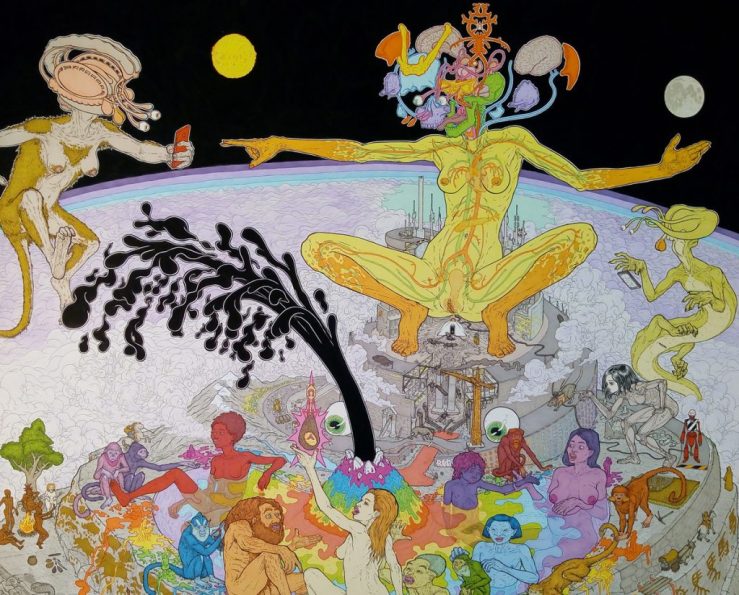
New World Order — Mat Brown

matbrown-thenewwordorder2019web-1024x825

New World Order, 2019 by Mat Brown (b. 1980)

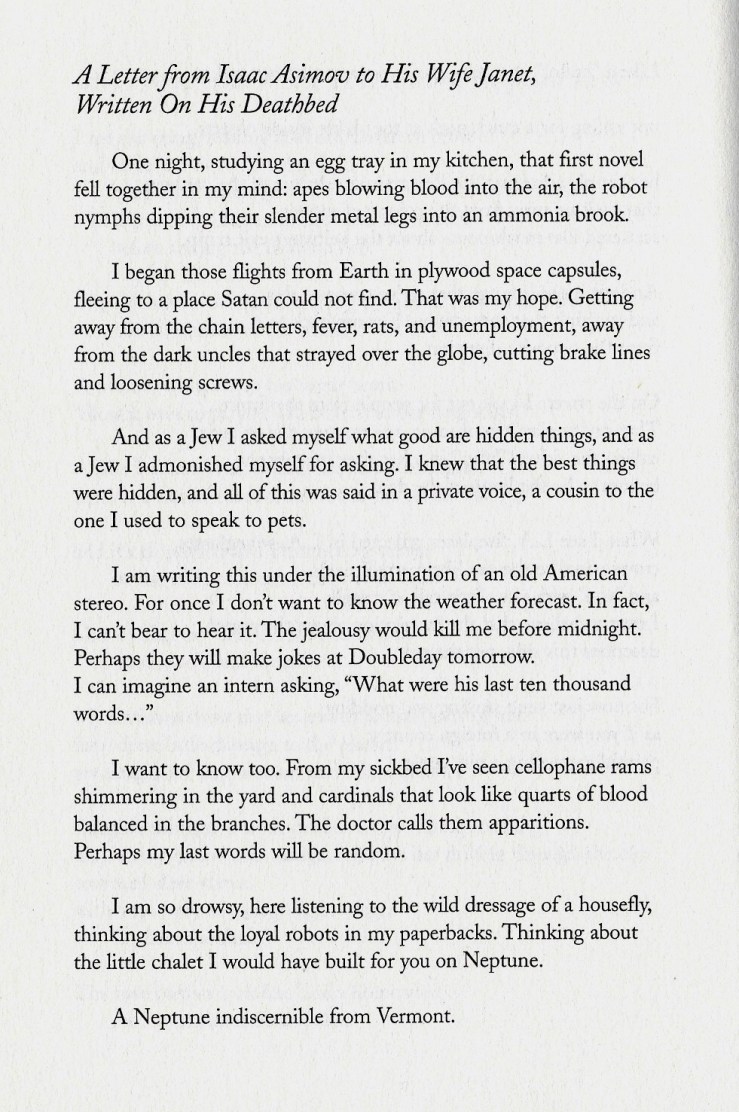
“A Letter from Isaac Asimov to His Wife Janet, Written on His Deathbed” — David Berman

2019-08-21_173715

From Actual Air (Open City, 1999)

Lisa — Kira Nam Greene

lisab-1750x2288

Lisa, 2018 by Kira Nam Greene

“Helping,” a short story by Robert Stone

“Helping”

by

Robert Stone


One gray November day, Elliot went to Boston for the afternoon. The wet streets seemed cold and lonely. He sensed a broken promise in the city’s elegance and verve. Old hopes tormented him like phantom limbs, but he did not drink. He had joined Alcoholics Anonymous fifteen months before.

Christmas came, childless, a festival of regret. His wife went to Mass and cooked a turkey. Sober, Elliot walked in the woods.

In January, blizzards swept down from the Arctic until the weather became too cold for snow. The Shawmut Valley grew quiet and crystalline. In the white silences, Elliot could hear the boards of his house contract and feel a shrinking in his bones. Each dusk, starveling deer came out of the wooded swamp behind the house to graze his orchard for whatever raccoons had uncovered and left behind. At night he lay beside his sleeping wife listening to the baying of dog packs running them down in the deep moon-shadowed snow.

Day in, day out, he was sober. At times it was almost stimulating. But he could not shake off the sensations he had felt in Boston. In his mind’s eye he could see dead leaves rattling along brick gutters and savor that day’s desperation. The brief outing had undermined him.

Sober, however, he remained, until the day a man named Blankenship came into his office at the state hospital for counselling. Blankenship had red hair, a brutal face, and a sneaking manner. He was a sponger and petty thief whom Elliot had seen a number of times before.

“I been having this dream,” Blankenship announced loudly. His voice was not pleasant. His skin was unwholesome. Every time he got arrested the court sent him to the psychiatrists and the psychiatrists, who spoke little English, sent him to Elliot. Continue reading ““Helping,” a short story by Robert Stone”

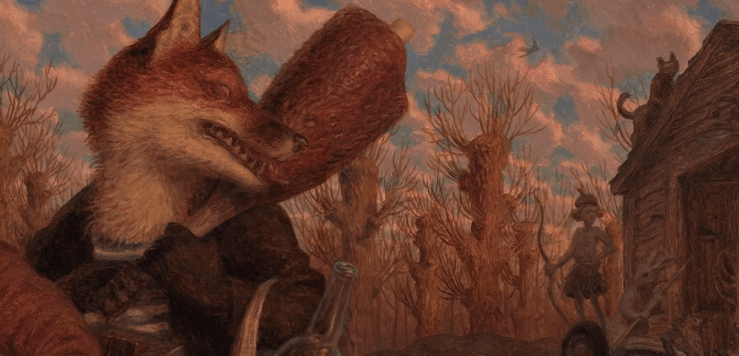
The Hedgerow Rebellion, 1962 — Peter Ferguson

ferguson-hedgerow-rebellion-1962-medium

Screenshot 2019-08-20 at 6.13.06 PMScreenshot 2019-08-20 at 6.13.22 PMScreenshot 2019-08-20 at 6.13.44 PM

The Hederow Rebellion, 1962 by Peter Ferguson (b. 1968)

Lost Horizon — Dan Lydersen

losthorizon

Lost Horizon, 2017 by Dan Lydersen (b. 1980)

Books acquired, 15 Aug. 2019

img_3825

I went to the used bookstore last week to pick up some of my daughters required reading for school. I fucked up and picked up a heavily-annotated copy of Elie Wiesel’s Night which I will have to return maybe tomorrow or Wednesday.

While there, I picked up Fup by Jim Dodge. I was looking for Dodge’s novel Stone Junction (a twitter-based recommendation based on my taking to Charles Portis), but I couldn’t find a copy. But Fup looked neat. And it’s illustrated (by Norman Green).

img_3857

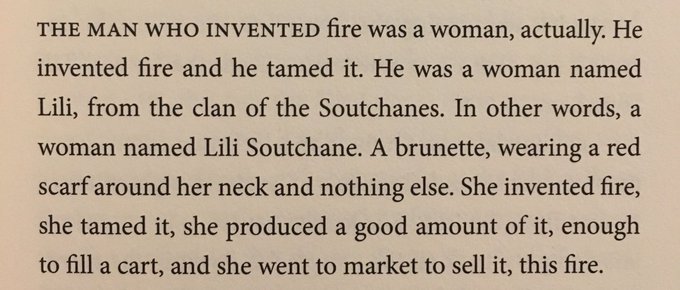
I also picked up Manuela Draeger’s In the Time of the Blue Bell in English translation by Brian Evenson. Draeger is one of French author Antoine Volodine’s pseudonyms. It’s good stuff. Here is the first paragraph:

ECDS3K3XUAAkTvN

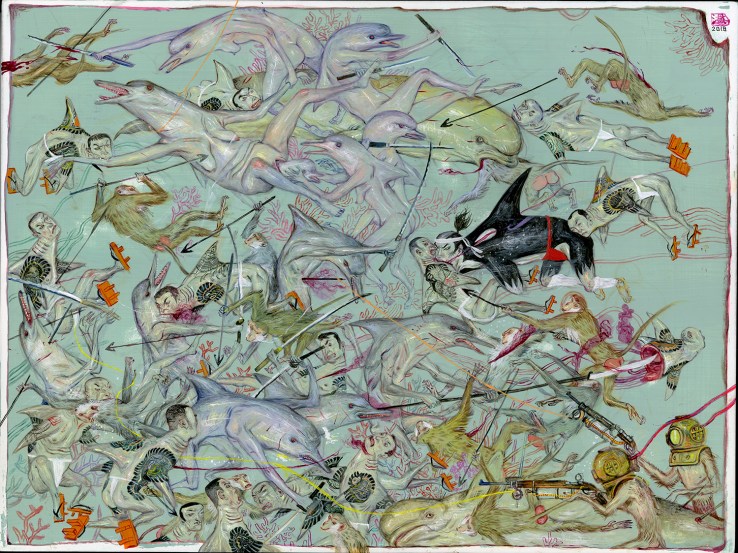
Dolphins — Mu Pan

dolphins

Screenshot 2019-08-18 at 10.32.38 AMScreenshot 2019-08-18 at 10.32.13 AMScreenshot 2019-08-18 at 10.31.55 AM

Dolphins, 2018 by Mu Pan (b. 1976)

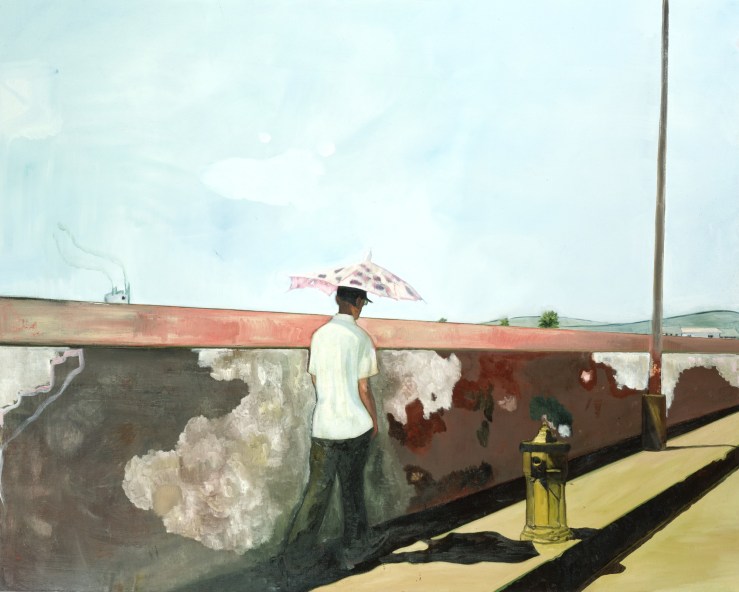
Lapeyrouse Wall — Peter Doig

w1siziisijexoduxmyjdlfsiccisimnvbnzlcnqilcitcmvzaxplidiwmdb4mjawmfx1mdazzsjdxq

Lapeyrouse Wall, 2004 by Peter Doig (b. 1959)

“The Mountebank” — Jorge Luis Borges

“The Mountebank”

by

Jorge Luis Borges

Translated by Andrew Hurley


One day in July, 1952, the man dressed in mourning weeds appeared in that little village on the Chaco River.* He was a tall, thin man with vaguely Indian features and the inexpressive face of a half-wit or a mask. The townsfolk treated him with some deference, not because of who he was but because of the personage he was portraying or had by now become. He chose a house near the river; with the help of some neighbor women he laid a board across two sawhorses, and on it he set a pasteboard coffin with a blond-haired mannequin inside. In addition, they lighted four candles in tall candleholders and put flowers all around. The townsfolk soon began to gather. Old ladies bereft of hope, dumbstruck wide-eyed boys, peons who respectfully took off their pith hats—they filed past the coffin and said: My condolences, General. The man in mourning sat sorrowfully at the head of the coffin, his hands crossed over his belly like a pregnant woman. He would extend his right hand to shake the hand extended to him and answer with courage and resignation: It was fate. Everything humanly possible was done. A tin collection box received the two-peso price of admission, and many could not content themselves with a single visit.

What kind of man, I ask myself, thought up and then acted out that funereal farce—a
fanatic? a grief-stricken mourner? a madman? a cynical impostor? Did he, in acting out his mournful role as the macabre widower, believe himself to be Perón? It is an incredible story, but it actually happened—and perhaps not once but many times, with different actors and local variants. In it, one can see the perfect symbol of an unreal time, and it is like the reflection of a dream or like that play within a play in Hamlet.

The man in mourning was not Perón and the blond-haired mannequin was not the woman Eva Duarte, but then Perón was not Perón, either, nor was Eva, Eva—they were unknown or anonymous persons (whose secret name and true face we shall never know) who acted out, for the credulous love of the working class, a crass and ignoble mythology.

Stars ‘n Tarnation — Scott Greene

s_greene_starsntarnationScreenshot 2019-08-16 at 9.29.26 AMScreenshot 2019-08-16 at 9.28.53 AM

Stars ‘n Tarnation, 2013 by Scott Greene

The Showboat — Henry Koerner

110 West 80 St-4R, NY, NY 10024
212 874 3879Screenshot 2019-07-15 at 9.18.08 PMScreenshot 2019-07-15 at 9.17.52 PMScreenshot 2019-07-15 at 9.17.32 PMScreenshot 2019-07-15 at 9.17.12 PMScreenshot 2019-07-15 at 9.16.44 PMScreenshot 2019-07-15 at 9.16.20 PMScreenshot 2019-07-15 at 9.15.44 PMScreenshot 2019-07-15 at 9.15.18 PMScreenshot 2019-07-15 at 9.14.45 PM

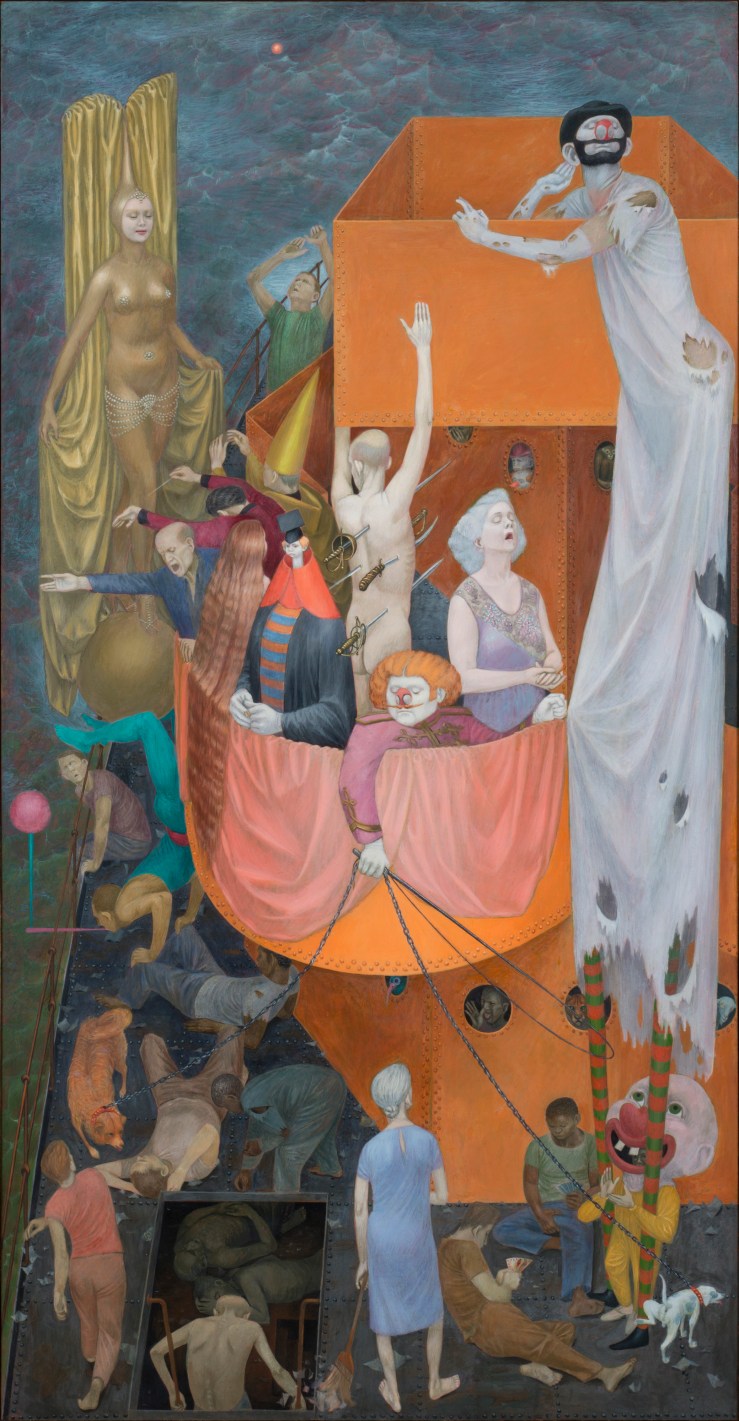
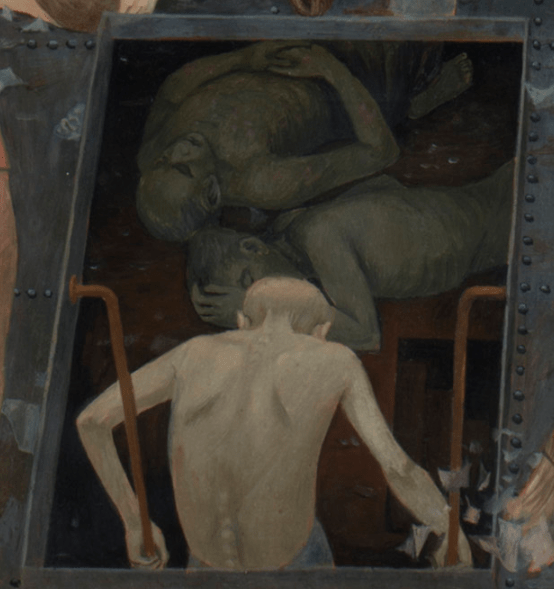
The Showboat, 1948 by Henry Koerner (1915-1991)