Classic I — Kati Heck

784266_3a983216b73941a887f8e58be4b123femv2

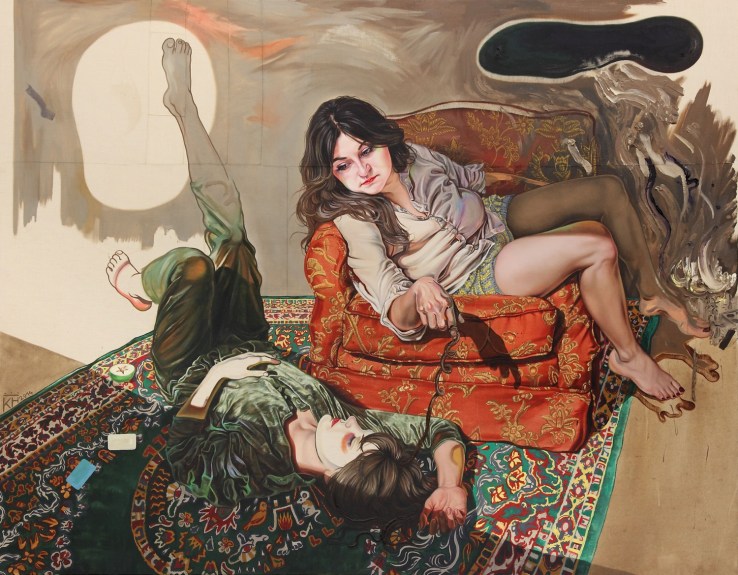
Classic I, 2014 by Kati Heck (b. 1979)

Undine Giving the Ring to Massaniello, Fisherman of Naples — JMW Turner

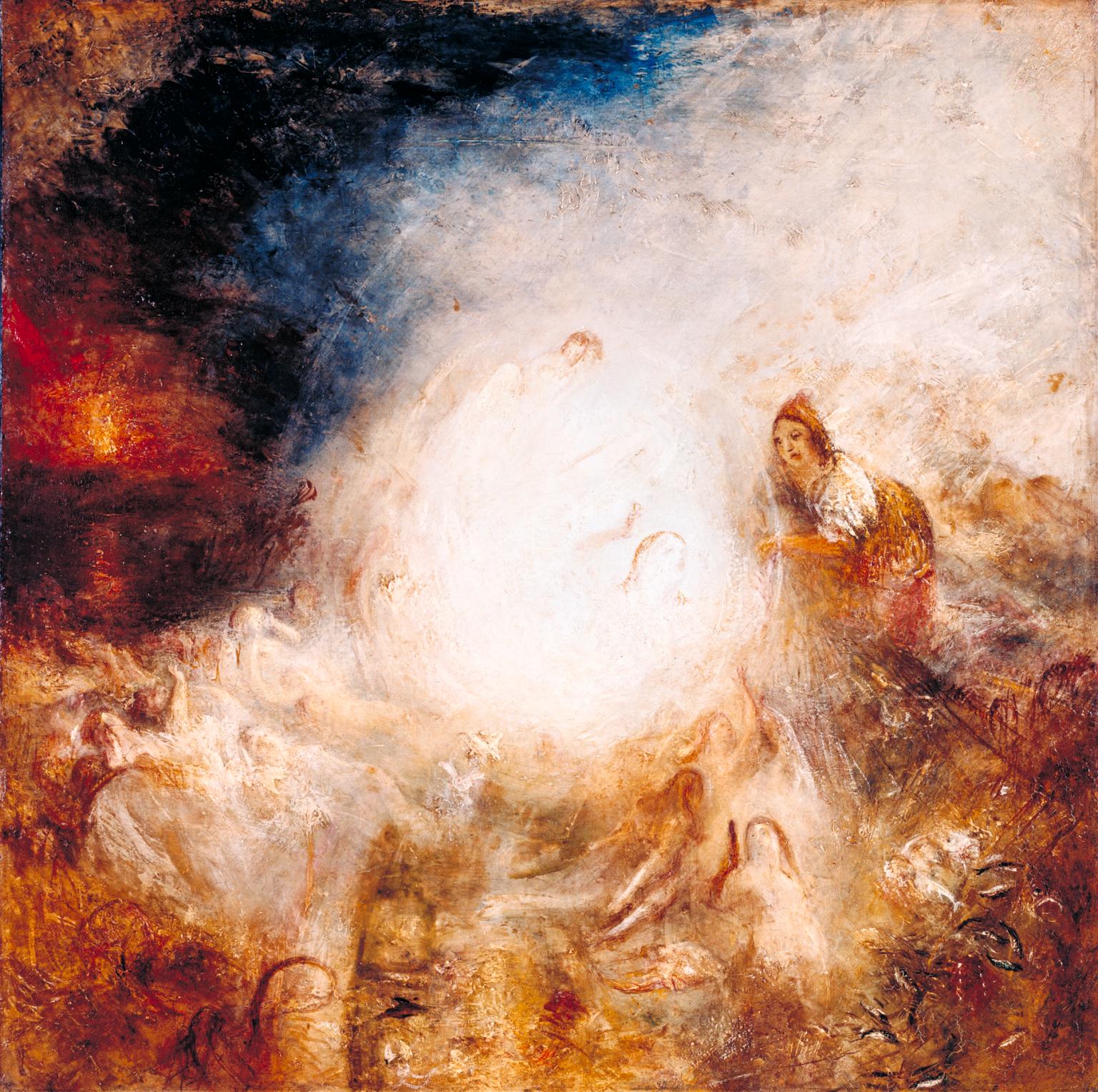
Undine Giving the Ring to Massaniello, Fisherman of Naples exhibited 1846 by Joseph Mallord William Turner 1775-1851

Screenshot 2019-05-30 at 8.28.16 AMScreenshot 2019-05-30 at 8.27.57 AMScreenshot 2019-05-30 at 8.28.27 AM

Undine Giving the Ring to Massaniello, Fisherman of Naples, 1846 by Joseph Mallord William Turner (1775–1851)


Woman in a Summer Kimono — Goyo Hashiguchi

46100g1

Woman in a Summer Kimono by Goyo Hashiguchi (1880–1921)

Deer Hunter No. 1 — Wei Dong

0

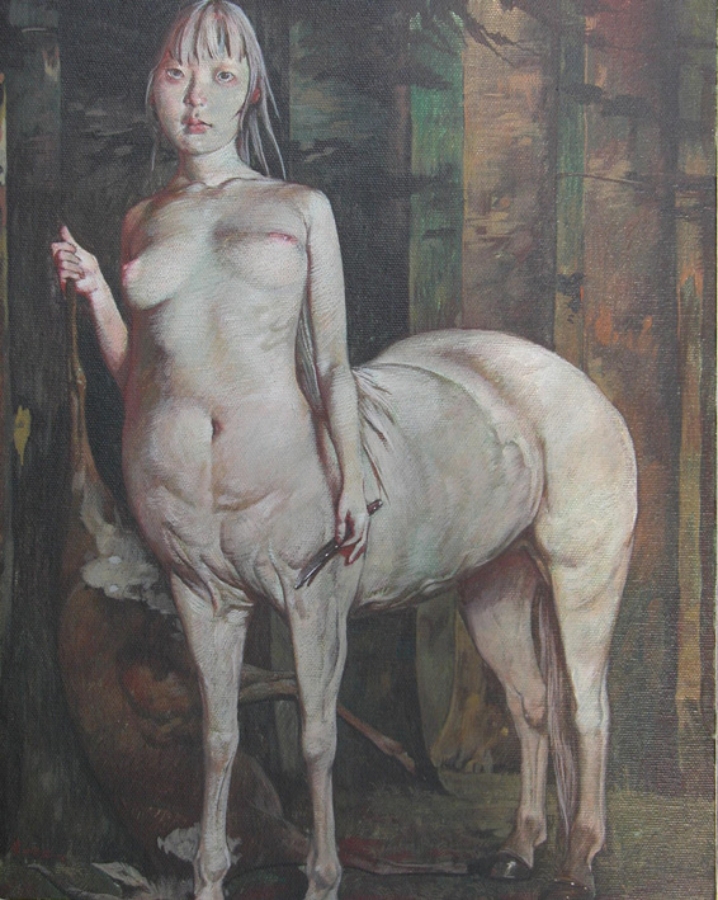
Deer Hunter No. 1, 2010 by Wei Dong (b. 1968)

Entopicon 1 — Jean-Pierre Roy

roy1

Entopicon 1, 2016 by Jean-Pierre Roy (b. 1974)

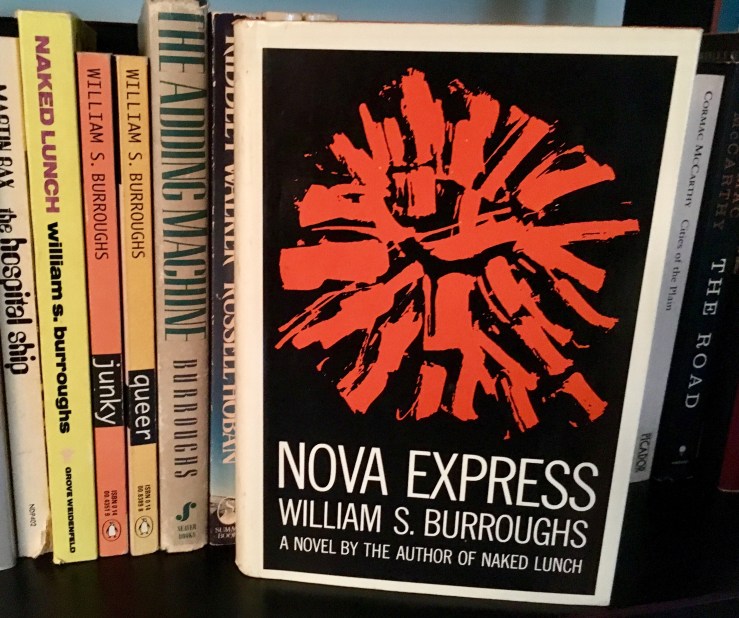
William Burroughs’ Nova Express (Book acquired sometime last week)

img_2863

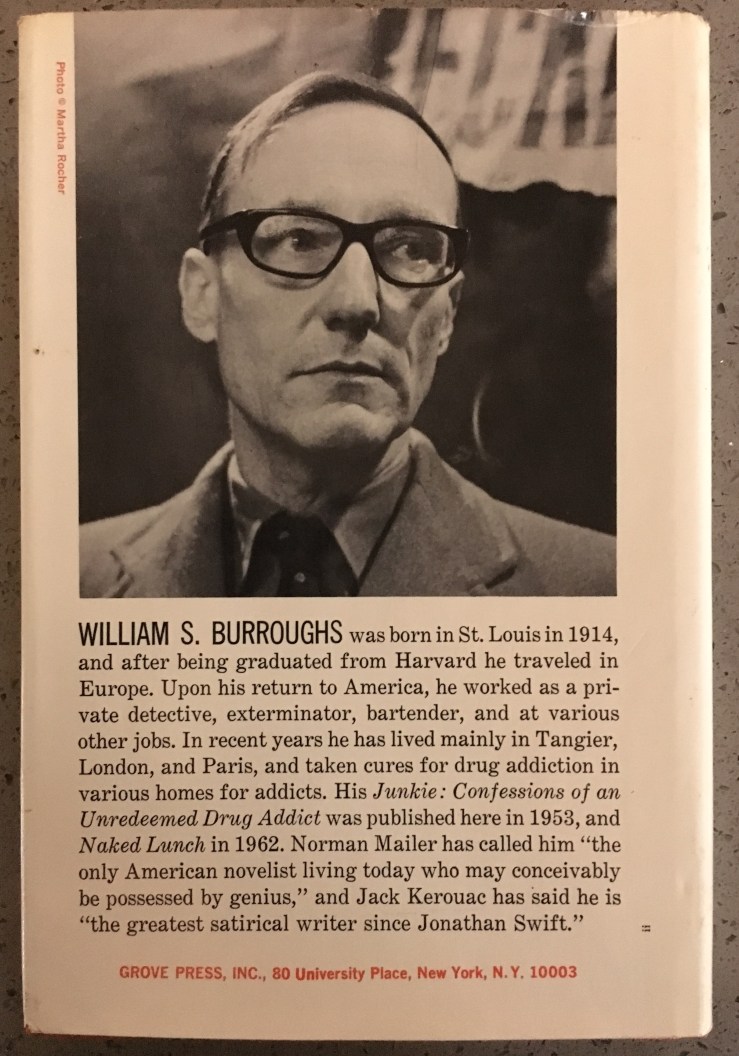
So I couldn’t pass up this first edition hardback Grove Press edition of William Burroughs’ 1964 novel Nova Express (with cover design by Grove Press stalwart Roy Kuhlman) that I found a few hot days ago, wandering decomposing stacks of pressed leaves here in North Florida. It ate up half of my credit at this particular used bookstore and yet was still cheaper than a new hardback NYT bestseller. Haven’t read the damn thing since college, and don’t own a copy so. Here’s the back cover with an author photo of Burroughs in which he looks like a goddamn baby (how did he live so long?):

img_2866

“[T]he greatest satirical writer since Jonathan Swift”! I’m sure Jack Kerouac wouldn’t like hyperbolize even a smidge. What was Burroughs satirizing? Like modernism, modern machine life, etc. Control, as in all Burroughs.

Biologic Agent K9 called for his check and picked up supersonic imitation blasts of The Death Dwarfs — “L’addition — Laddition — Laddittion — Garcon — Garcon — Garcon” — American tourist accent to the Nth power — He ordered another coffee and monitored the café — A whole table of them imitating word forms and spitting back at supersonic speed — Several patrons rolled on the floor in switch fits — These noxious dwarfs can spit out a whole newspaper in ten seconds imitating your words after you and sliding in suggestion insults — That is the entry gimmick of The Death Dwarfs: supersonic imitation and playback so you think it is your own voice — (do you own a voice?) they invade The Right Centers which are The Speech Centers and they are in the right — in the right — in thee write — “RIGHT” — “I’m in the right — in the right — You know I’m in the right so long as you hear me say inside your right centers ‘I am in the right’” — While Sex Dwarfs tenderize erogenous holes — So The Venusian Gook Rot flashed round the world —

Read the rest of the death dwarf routine.

Double Self-Portrait with Lobster — Maria Lassnig

maria_lassnig_doppeltes_selbstportraet_mit_hummer_1979_c_maria_lassnig_foundation-1.720x0

Double Self-Portrait with Lobster, 1979 by Maria Lassnig (1919-2014)

Sunlight on Water — Harry Callahan

w1siziisije4mjaymijdlfsiccisimnvbnzlcnqilcitcmvzaxplidiwmdb4mjawmfx1mdazzsjdxq

Sunlight on Water, 1943 by Harry Callahan (1912–1999)

“next to of course god america i” — e.e. cummings

“next to of course god america i”

by

e.e. cummings


“next to of course god america i
love you land of the pilgrims’ and so forth oh
say can you see by the dawn’s early my
country ’tis of centuries come and go
and are no more what of it we should worry
in every language even deafanddumb
thy sons acclaim your glorious name by gorry
by jingo by gee by gosh by gum
why talk of beauty what could be more beaut-
iful than these heroic happy dead
who rushed like lions to the roaring slaughter
they did not stop to think they died instead
then shall the voice of liberty be mute?”

He spoke. And drank rapidly a glass of water.

“Lament” — Edna St. Vincent Millay

“Lament”

by

Edna St. Vincent Millay


Listen, children:
Your father is dead.
From his old coats
I’ll make you little jackets;
I’ll make you little trousers
From his old pants.
There’ll be in his pockets
Things he used to put there,
Keys and pennies
Covered with tobacco;
Dan shall have the pennies
To save in his bank;
Anne shall have the keys
To make a pretty noise with.
Life must go on,
And the dead be forgotten;
Life must go on,
Though good men die;
Anne, eat your breakfast;
Dan, take your medicine;
Life must go on;
I forget just why.

Judge Holden holds forth on war (Blood Meridian)

From Chapter XVII of Cormac McCarthy’s novel Blood Meridian

They grew gaunted and lank under the white suns of those days and their hollow burnedout eyes were like those of noctambulants surprised by day. Crouched under their hats they seemed fugitives on some grander scale, like beings for whom the sun hungered. Even the judge grew silent and speculative. He’d spoke of purging oneself of those things that lay claim to a man but that body receiving his remarks counted themselves well done with any claims at all. They rode on and the wind drove the fine gray dust before them and they rode an army of gray-beards, gray men, gray horses. The mountains to the north lay sunwise in corrugated folds and the days were cool and the nights were cold and they sat about the fire each in his round of darkness in that round of dark while the idiot watched from his cage at the edge of the light. The judge cracked with the back of an axe the shinbone on an antelope and the hot marrow dripped smoking on the stones. They watched him. The subject was war.

The good book says that he that lives by the sword shall perish by the sword, said the black.

The judge smiled, his face shining with grease.

What right man would have it any other way? he said.

The good book does indeed count war an evil, said Irving. Yet there’s many a bloody tale of war inside it.

It makes no difference what men think of war, said the judge. War endures. As well ask men what they think of stone. War was always here. Before man was, war waited for him. The ultimate trade awaiting its ultimate practitioner. That is the way it was and will be. That way and not some other way.

He turned to Brown, from whom he’d heard some whispered slur or demurrer. Ah Davy, he said. It’s your own trade we honor here. Why not rather take a small bow. Let each acknowledge each.

My trade?

Certainly.

What is my trade?

War. War is your trade. Is it not?

And it aint yours?

Mine too. Very much so.

What about all them notebooks and bones and stuff?

All other trades are contained in that of war.

Is that why war endures?

No. It endures because young men love it and old men love it in them. Those that fought, those that did not.

That’s your notion.

The judge smiled. Men are born for games. Nothing else. Every child knows that play is nobler than work. He knows too that the worth or merit of a game is not inherent in the game itself but rather in the value of that which is put at hazard. Games of chance require a wager to have meaning at all. Games of sport involve the skill and strength of the opponents and the humiliation of defeat and the pride of victory are in themselves sufficient stake because they inhere in the worth of the principals and define them. But trial of chance or trial of worth all games aspire to the condition of war for here that which is wagered swallows up game, player, all.

Suppose two men at cards with nothing to wager save their lives. Who has not heard such a tale? A turn of the card. The whole universe for such a player has labored clanking to this moment which will tell if he is to die at that man’s hand or that man at his. What more certain validation of a man’s worth could there be? This enhancement of the game to its ultimate state admits no argument concerning the notion of fate. The selection of one man over another is a preference absolute and irrevocable and it is a dull man indeed who could reckon so profound a decision without agency or significance either one. In such games as have for their stake the annihilation of the defeated the decisions are quite clear. This man holding this particular arrangement of cards in his hand is thereby removed from existence. This is the nature of war, whose stake is at once the game and the authority and the justification. Seen so, war is the truest form of divination. It is the testing of one’s will and the will of another within that larger will which because it binds them is therefore forced to select. War is the ultimate game because war is at last a forcing of the unity of existence. War is god. Brown studied the judge.

You’re crazy Holden. Crazy at last.

The judge smiled.


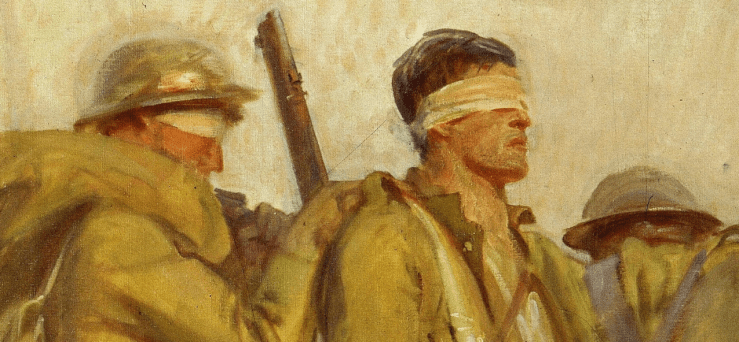
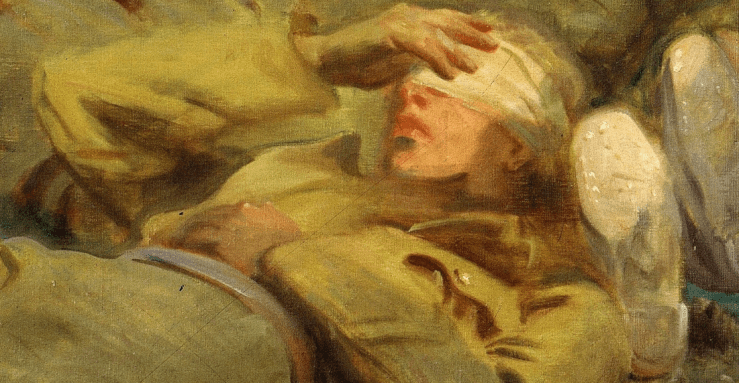
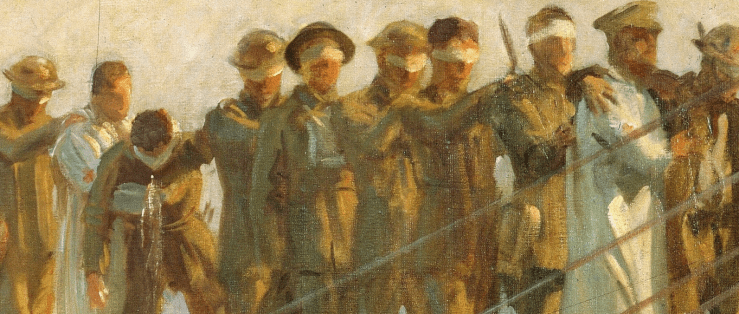
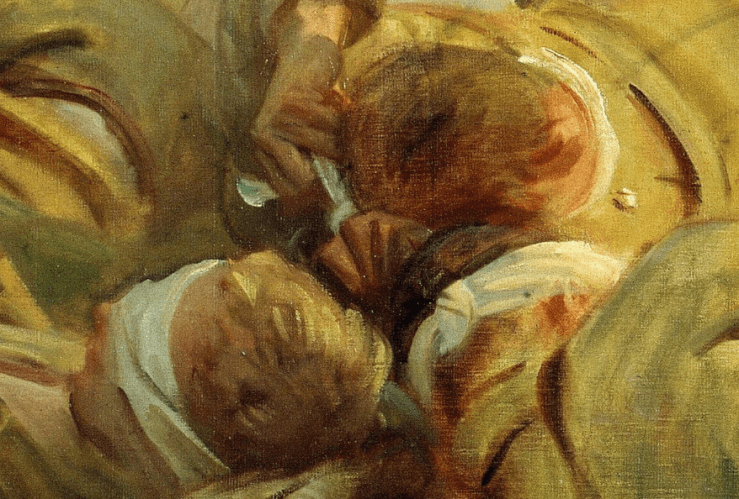
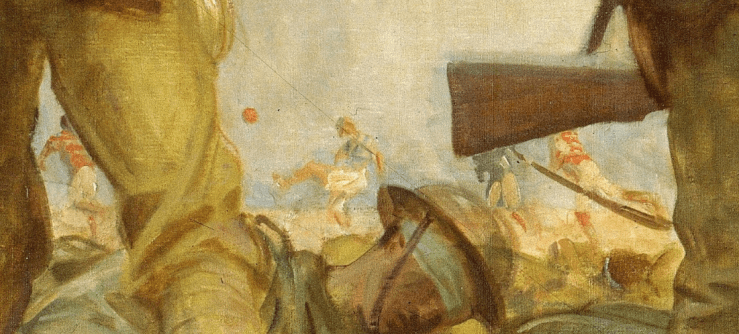
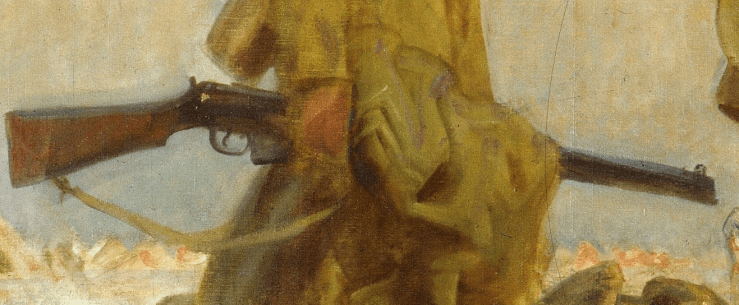
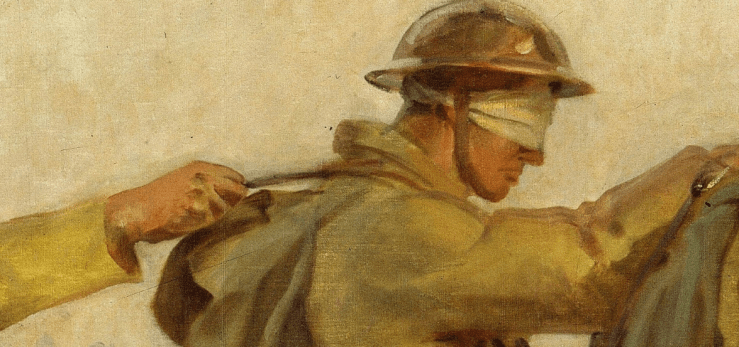
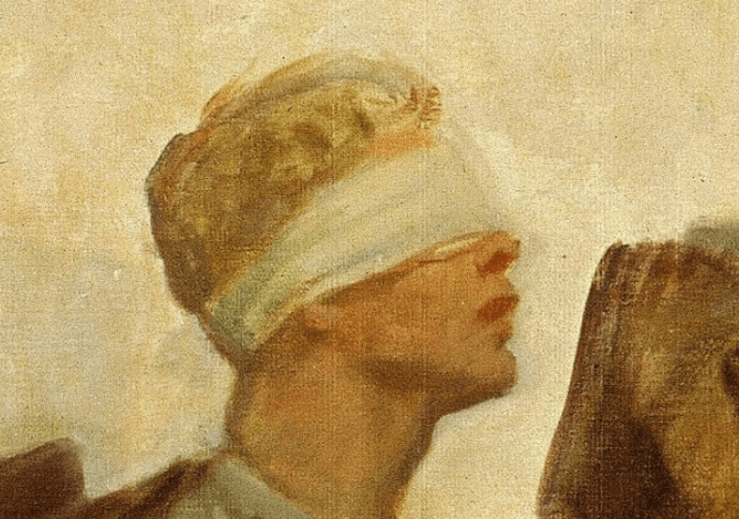
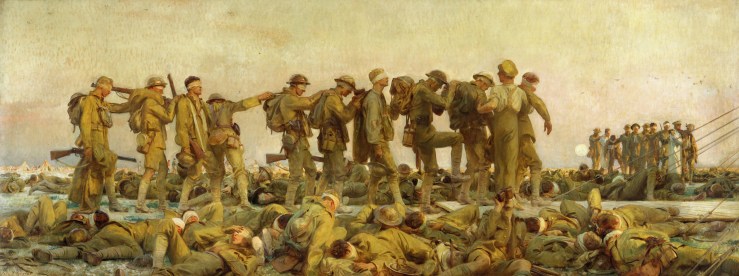
Gassed — John Singer Sargent

sargent2c_john_singer_28ra29_-_gassed_-_google_art_projectScreenshot 2019-05-27 at 11.38.54 AMScreenshot 2019-05-27 at 11.39.22 AMScreenshot 2019-05-27 at 11.40.13 AMScreenshot 2019-05-27 at 11.40.52 AMScreenshot 2019-05-27 at 11.41.28 AMScreenshot 2019-05-27 at 11.42.02 AMScreenshot 2019-05-27 at 11.42.27 AMScreenshot 2019-05-27 at 11.43.00 AMsargent2c_john_singer_28ra29_-_gassed_-_google_art_project

Gassed, 1919 by John Singer Sargent (1856-1925)

“War Is Kind” — Stephen Crane

“War Is Kind”

by

Stephen Crane


Do not weep, maiden, for war is kind.
Because your lover threw wild hands toward the sky
And the affrighted steed ran on alone,
Do not weep.
War is kind.

Hoarse, booming drums of the regiment,
Little souls who thirst for fight,
These men were born to drill and die.
The unexplained glory flies above them,
Great is the battle-god, great, and his kingdom—
A field where a thousand corpses lie.

Do not weep, babe, for war is kind.
Because your father tumbled in the yellow trenches,
Raged at his breast, gulped and died,
Do not weep.
War is kind.

Swift, blazing flag of the regiment,
Eagle with crest of red and gold,
These men were born to drill and die.
Point for them the virtue of slaughter,
Make plain to them the excellence of killing
And a field where a thousand corpses lie.

Mother whose heart hung humble as a button
On the bright splendid shroud of your son,
Do not weep.
War is kind.

Untitled (Pool) — William Eggleston

eggleston-pool

Screenshot 2019-05-26 at 11.28.22 AM.png

Untitled from The Democratic Forest, 1983-1986 by William Eggleston (b. 1939)


Dreaming Head — John Armstrong

Dreaming Head 1938 by John Armstrong 1893-1973

Dreaming Head, 1938 by John Armstrong (1893–1973)

Selections from One-Star Amazon Reviews of Thomas Pynchon’s The Crying of Lot 49

[Editorial note: The following citations come from one-star Amazon reviews of Thomas Pynchon’s novel The Crying of Lot 49. To be clear, I’m a big Pynchon fanI’ve preserved the reviewers’ own styles of punctuation and spelling. More one-star Amazon reviews].


If it were better written, it might qualify as pretentious.

the prose was simultaneously confusing and boring

my first Pynchon novel and probably my last

I am really picky when it comes to reading.

I suppose if you like post modernist crap?

This novel just did not do it for me.

Opaque, muddled, and mindless.

Yuck! Had to read for class. :-(

the characters were unlikable

Reading shouldn’t be work…

If you’re an English major

What is this I don’t even

I didn’t finish it

insufferable

convoluted

No thanks.

overly complicated

gacked-up cartoon of a…thing

stupidest thing I’ve ever read

left confused about many things

deliberate manipulation of names

palpably viscerally nauseated and sick

Pynchon and Robbins can just go and get a room.

I love A LOT of post-modern experimental fiction, but

I managed to finish this novel only because it’s short

This is really the worst book I have ever read

loaded with pretentious intellectualism

I find the weirdness too weird

required too much effort

A Silly Word Salad

wacky hi-jinks

post-beatnik weirdoes

difficult, delirious writing style

pretentious intellectualism posing as literature

like Sacha Baron Cohen of the dreadful movie “Borat” fame

(modern life is uncertain; there is no guarantee of a happy ending)

Pynchon is a sad man with a rather warped and gloomy view of the world

a prose style that is going to either delight or dismay most readers

physics, Greek tragedies, postal history, drug culture

is bizarre like the author is high when he wrote it

hyperstylized game of literary three card monte

I was expecting a Victorian crime drama

nothing to interest a decent reader

he really should find a day job

the character names; silly

without the humor

Thankfully brief

chaos engine
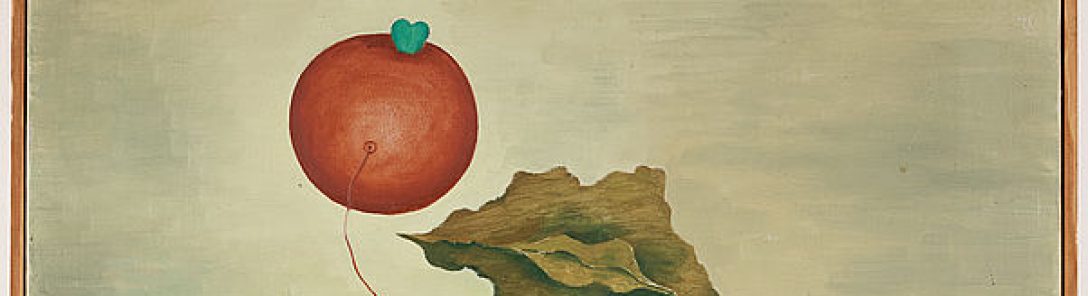


I consider myself a student of colours and shades and hues and tints (From Gerald Murnane’s Border Districts)

I consider myself a student of colours and shades and hues and tints. Crimson lake, burnt umber, ultramarine … I was too clumsy as a child to paint with my moistened brush the scenery that I would have liked to bring into being. I preferred to leave untouched in their white metallic surroundings my rows of powdery rectangles of water-colours, to read aloud one after another of the tiny printed names of the coloured rectangles, and to let each colour seem to soak into each word of its name or even into each syllable of each word of each name so that I could afterwards call to mind an exact shade or hue from an image of no more than black letters on a white ground.

Deep cadmium, geranium lake, imperial purple, parchment … after the last of our children had found employment and had moved out of our home, my wife and I were able to buy for ourselves things that had previously been beyond our means. I bought my first such luxury, as I called it, in a shop selling artists’ supplies. I bought there a complete set of coloured pencils made by a famous maker of pencils in England: a hundred and twenty pencils, each stamped with gold lettering along its side and having at its end a perfectly tapered wick. The collection of pencils is behind me as I write these words. It rests near the jars of glass marbles and the kaleidoscope mentioned earlier. None of the pencils has ever been used in the way that most pencils are used, but I have sometimes used the many-striped collection in order to confirm my suspicion as a child that each of what I called my long-lost moods might be recollected and, perhaps, preserved if only I could look again at the precise shade or hue that had become connected with the mood – that had absorbed, as it were, or had been permeated with, one or more of the indefinable qualities that constitute what is called a mood or a state of feeling. During the weeks since I first wrote in the earlier pages of this report about the windows in the church of white stone, I have spent every day an increasing amount of time in moving my pencils to and fro among the hollow spaces allotted to them in their container. I seem to recall that I tried sometimes, many years ago, to move my glass marbles from place to place on the carpet near my desk with the vague hope that some or another chance arrangement of them would restore to me some previously irretrievable mood. The marbles, however, were too variously coloured, and each differed too markedly from the other. Their colours seemed to vie, to compete. Or, a single marble might suggest more than I was in search of: a whole afternoon in my childhood or a row of trees in a backyard when I had wanted back only a certain few moments when my face was brushed by a certain few leaves. Among the pencils are many differing only subtly from their neighbours. Six at least I might have called simply red if I had not learned long ago their true names. With these six, and with still others from each side of them, I often arrange one after another of many possible sequences, hoping to see in the conjectured space between some or another unlikely pair a certain tint that I have wanted for long to see.

From Gerald Murnane’s 2018 novel Border Districts.