End of time. Ahasverus, seated upon a rock, gazes for a long while upon the horizon, athwart which wing two eagles, crossing each other in their path. He meditates, then falls into a doze. The day wanes.
Ahasverus. I have come to the end of time; this is the threshold of eternity. The earth is deserted; no other man breathes the air of life. I am the last; I can die. Die! Precious thought! For centuries of centuries I have lived, wearied, mortified, wandering ever, but now the centuries are coming to an end, and I shall die with them. Ancient nature, farewell! Azure sky, clouds ever reborn, roses of a day and of every day, perennial waters, hostile earth that never would devour my bones, farewell! The eternal wanderer will wander no longer. God may pardon me if He wishes, but death will console me. That mountain is as unyielding as my grief; those eagles that fly yonder must be as famished as my despair. Shall you, too, die, divine eagles?
Prometheus. Of a surety the race of man is perished; the earth is bare of them.
Ahasverus. I hear a voice…. The voice of a human being? Implacable heavens, am I not then the last? He approaches…. Who are you? There shines in your large eyes something like the mysterious light of the archangels of Israel; you are not a human being?…
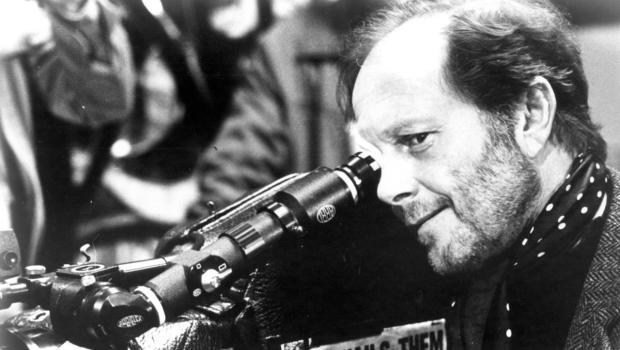
I was saddened to hear of the death of filmmaker Nicolas Roeg, who passed away yesterday at the age of 90. The first film I saw by Roeg was his adaptation of Roald Dahl’s The Witches (1990). I saw it in a theater with my mother when I was maybe eleven. I loved the book that it was based on and I loved the film just as much. Roeg captured the comic grotesquerie and sheer terror of the Dahl’s novel, as well as the abiding love that underpins the narrative. I’ve since seen the film many times, including earlier this year when I watched it with my own children, who also loved it.
Of course when I was eleven I had no notion that I was watching a “Nic Roeg film” — that is, a film by a director with a strange body of cult classics behind him. It wasn’t until I was in college and watched The Man Who Fell to Earth (1976) that I began to seek other Roeg films. The Man Who Fell to Earth is Roeg’s adaptation of Walter Tevis’s 1963 novel. It stars David Bowie, which was of course my initial attraction. The film became a college staple for myself and my friends, the kind of film that simply ran in the background while we hung out.
I had a little setup with two old VCRs, and I would dub tapes I’d check out from my university’s film library, and The Man Who Fell to Earth was one of the first films I copied. I also copied Performance (1970), another film featuring a rock star (Mick Jagger). I had actually already seen Performance in a film class, and somehow knowing that the guy who had made The Man Who Fell to Earth and The Witches had made this film made me like it even more.
My university’s film library did not have a copy of Walkabout (1971) though, and I didn’t see the film until 2002, when I rented it from the most amazing video cassette rental spot in my neighborhood in Tokyo, the kind of place that I still dream about. Walkabout is a perfect film—my favorite film of Roeg’s and one of my favorite films in general. It is the story of a teenage girl and her much younger brother who are stranded in the Australian outback after their father’s inexplicable suicide. They manage to survive with the help of an aboriginal teenage boy. This summary is no good though: The film is simply gorgeous, a kind of poem in light and sound. I watch it every few years. If you’ve never seen it, I hope that you will make time to watch it.
I’m thankful that I didn’t see Roeg’s follow up to Walkabout, Don’t Look Now (1973) when I was younger. I think I wouldn’t have understood it as well, if at all, in all its Gothic evocations of grief. Don’t Look Now is an impressionistic psychological thriller (based on a short story by Daphne du Maurier) about a husband and wife who travel to Venice after the recent death of their daughter. Like Walkabout, there’s an impressionistic, fluid quality to the film’s composition, and like Walkabout, Don’t Look Now is ultimately about the limits of communication. The pair are, in my estimation, the strongest of Roeg’s films.
Roeg’s films in the first half of the eighties are, if not quite as strong as his work in the seventies, still fascinating cult entries. Bad Timing (1980) is the best of the three I’m thinking of here. It’s both visually and thematically reminiscent of Don’t Look Now (and stars Art Garfunkel!). Bad Timing is not a film I ever want to rewatch, and I say that as a compliment. Eureka (1983), another thriller (starring Gene Hackman) is a bit harder to find—I didn’t track it down until the Golden Age of Torrents a few years ago. Insignificance (1985) is adapted from and feels like a play. It’s a take on the American mythos of the 1950s, putting Einstein, Marilyn Monroe, Joe DiMaggio, and Joseph McCarthy together in an imagined scenario that anticipates the shift from Modernism to postmodernism. All three of these films held a special fascination for me because 1) they were extremely difficult to find for a long time and 2) one of my favorite musicians, Jim O’Rourke, named a loose trilogy of his albums after them.
Roeg directed two films in the late eighties that I haven’t seen (Castaway, 1986 and Track 29, 1988). His adaptation of The Witches (1990) was his last major feature film, although he made three films after: Cold Heaven (1991), Two Deaths (1995), and Puffball (2007). I’ll admit that I don’t recall Puffball’s release at all—but it does look interesting.
But I started with The Witches, so I’ll end with it: It’s a wonderful film, maybe not really the most Roegish of Roeg films, but a Roeg film nonetheless, a film made with a cinematographer’s eye with a touch of a documentarian’s objectivity and a large dose of artistic panache. I’m glad I got to see it on a big screen, and I hope that I’ll get to see Don’t Look Now and Walkabout on a big screen too one day.











 Biblioklept