
Young Girl of Zsdjar in Sunday Clothes,1909 by Marianne Stokes (1855-1927)

Young Girl of Zsdjar in Sunday Clothes,1909 by Marianne Stokes (1855-1927)


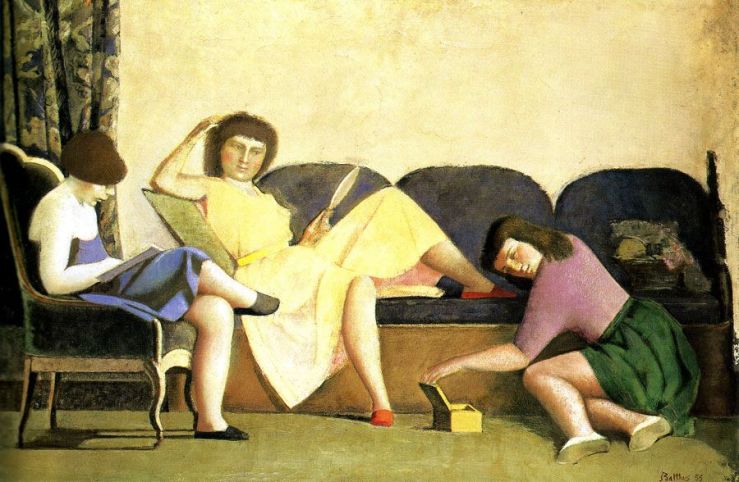
My young girls who read in dreaming poses are escaping from fleeting, harmful time: Katia, Frederique, and The Three Sisters. Fixing them in the act of reading or dreaming prolongs a privileged, splendid, and magic glimpsed-at time. A suddenly opened curtain sheds light from a window and is seen only by those who know how. Thus a book is a key to open a mysterious trunk containing childhood scents; we rush to open it like the child with butterflies, or the young girl with a moth. It is a gold-sprinkled time that avoids worldly alteration, time nimbused by a magic halo, time fixed in terms of what the smiling, dreaming girls see. It is surreal time in the true sense of the term.
—From Balthus’ 2001 memoir Vanished Splendors, “as told to” Alain Vircondelet. English translation by Benjamin Ivry.

The first Balthus painting I saw was The Bedroom. I saw it in Edward Lucie-Smith’s Movements in Art since 1945. I was maybe 17, and I found the painting not so much shocking as disturbing. It upset something in me, but I also found myself enchanted by it. In the painting an aesexual woman of dwarfish proportions, scowling and stern, pulls a black curtain to its side to allow sunlight to flood over the nude body of a young woman whose posture is simultaneously sexually vibrant and alarmingly comatose. A cat perched on a book glances out the window. There’s a dark fairy tale embedded in the painting. In its color, light, staging, subject, and theme, it’s of a piece with much of Balthus’ work. I didn’t know that over 20 years ago when I first saw it, but I did know that it intrigued me. I wanted to see more.

As a teenager, Balthus’ visions disturbed and engaged me. My response was aesthetic, but I also found a narrative even in his most static paintings. There’s an eerie peace to his reading girls that I saw then and see now. The rooms he painted were little dreams.
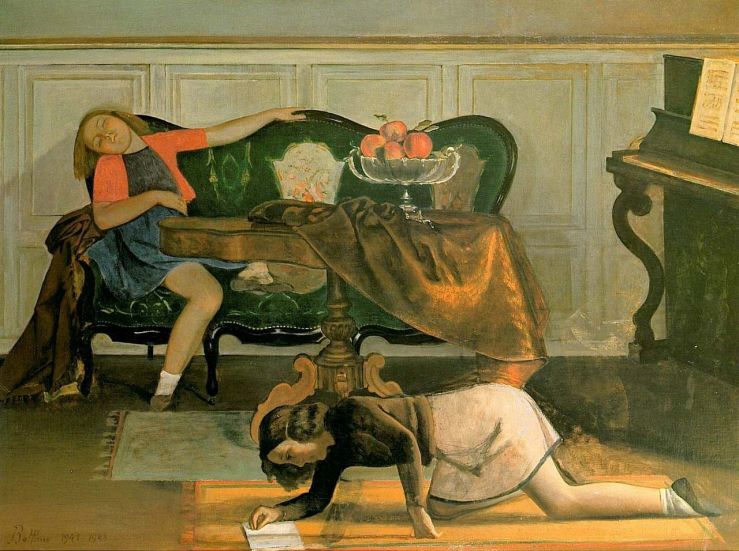
Now that I am older I find Balthus’ depictions of girls far, far more disturbing than I did two decades ago. Or rather, I find his paintings disturbing in a different way.
(I think here of rereading Lolita as an adult. I think I first read the book at 15 or 16, and was floored by its language; I read it again in my early 20s—and then in my late twenties. It was a different book).
And yet when I look at Balthus’ paintings of girls reading what emanates most strongly for me is that “gold-sprinkled time that avoids worldly alteration, time nimbused by a magic halo.” He captures something about the private world of reading that I identify with—what I mean is that I feel the feeling of the girls who read in his paintings.
Elsewhere in his memoir, Balthus declares—
…I completely reject the erotic interpretations that critics and other people have usually made of my paintings. I’ve accomplished my work, paintings and drawings, in which undressed young girls abound, not by exploiting an erotic vision in which I’m a voyeur and surrender unknowingly (above all, unknowingly) to some maniacal or shameful tendencies, but by examining a reality whose profound, risky, and unpredictable unreadability might be shed, revealing a fabulous nature and mythological dimension, a dream world that admits to its own machinery.
Balthus here gives us a fitting description of the “unreadability” of the visions he depicts. Key here is that both his negation (“not by”) and its parallel divergent conjunction (“but by”) frame a perfectly apt analysis of his own work—he is a voyeur, yes, and ushers in a voyeuristic eye—but he also stages a dream world that his viewers can feel.

Unfaithful Wife, 2004 by Eteri Chkadua
“Treatments,” a trio of very short fictions by Robert Coover, is new at The New Yorker.
You can also let Coover read you the story himself.
Here is the first part of the first piece, “Dark Spirit,” a riff on Beauty and the Beast (with touches of Dante’s Inferno):
They are on a film lot, walking through a pre-shoot reading of a script that calls for a brave traveller—“That’s you, kid,” the director says, leading her forward with an arm around her shoulders—to be lured to the edge of a deep, mysterious forest, known portentously as the Forest of Time. The forest is fake, deep as a painted scrim, but the director has told them that a real forest from Transylvania will be pasted in later, and they have all been asked to bat at the air around their faces, as if to brush away foliage, bugs, bats, clinging cobwebs. “Out, out, damned spot, I say!” an actor screams in falsetto, batting wildly, and everyone laughs. The actor, who has a bit part in the film, as the enchanted prince, smirks shyly, blinking his long lashes. He’s a cute boy, but too full of himself. And just a runt. He’ll have to stand on a chair for their happily-ever-after smooch once she’s freed the Beast from his spell and let the prince out. The industry is obsessed with this hackneyed tale, once inflicted upon young virgins to prepare them for marriage to feeble old buzzards with money. She used to raise hell about such things. Now she doesn’t really care. “The gutsy heroine knows that many have perished here,” the continuity girl says, reading from the script, “victims of the absolute evil that is believed to pervade the treacherous Forest of Time.” “Oh, the horror, the horror!” growls the actor playing the Beast, wearing his shaggy gorilla suit, but holding the head on his knee like a trophy. “Who wrote this shit?” an actress wants to know. One of Beauty’s ugly sisters. Already into her sneering role. “I put the words in,” the writer confesses, “but the producers told me which ones to use.” They are all laughing, she is laughing, if you can’t laugh you’re fucked, she knows that, but she doesn’t feel like laughing. It’s the damned Beast, messing with her mood. Not the costumed actor, a beardy creep given to chummy slaps on the fanny (she’s learned to keep her back turned away), but the maddeningly empty eyes in the hairy head on his lap. “I think this is going to have a bad ending,” she says to no one in particular, and with effort looks away. She is Beauty, though she’s no longer beautiful, if she ever was (makeup and wardrobe will do what they can), and it is she, just by being who and what she is supposed to be, who moves the tale along, making the inevitable happen. It’s her destiny. The trap she’s in.
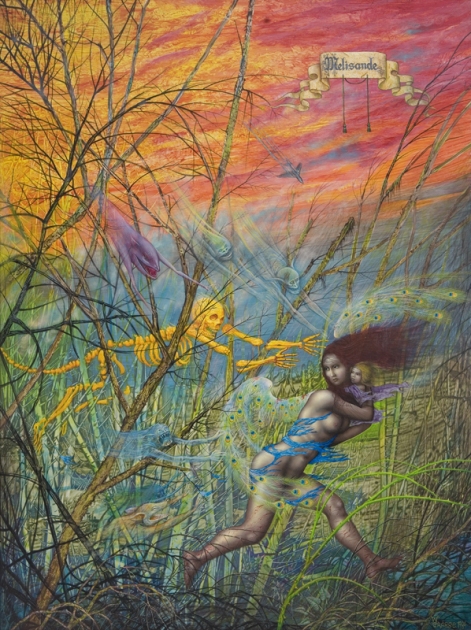
Melisande, 1984 by Wolfgang Grässe (1930-2008)

Our Daily Bread, 1942 by Rene Magritte (1898-1967)
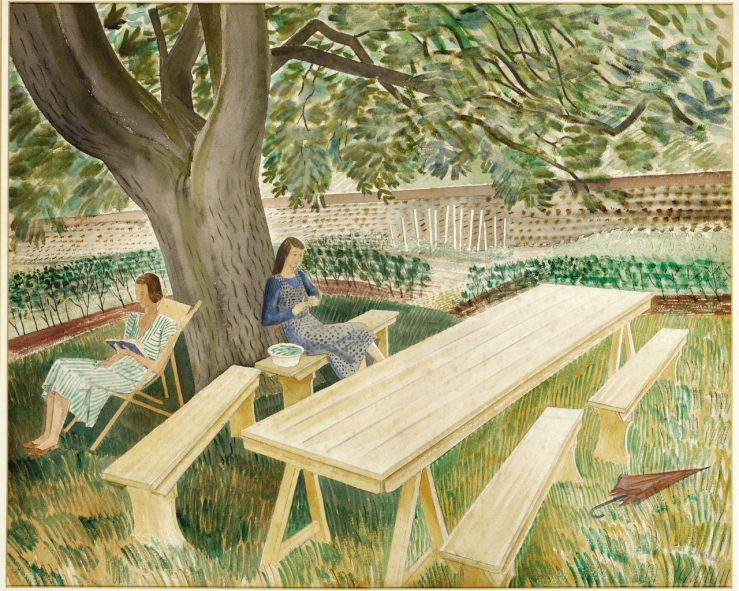
Two Women in a Garden, 1933 by Eric Ravilious (1903-1942)
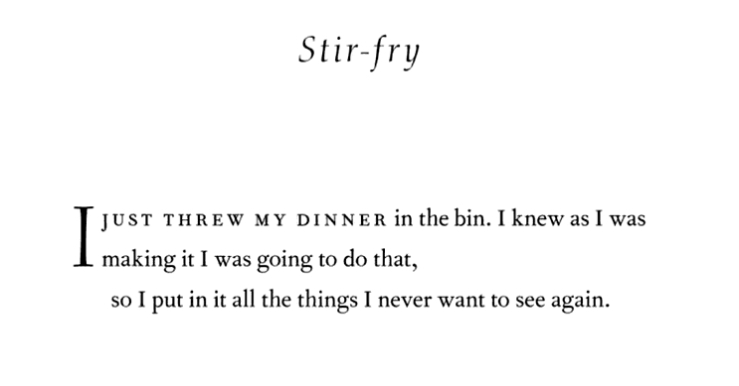
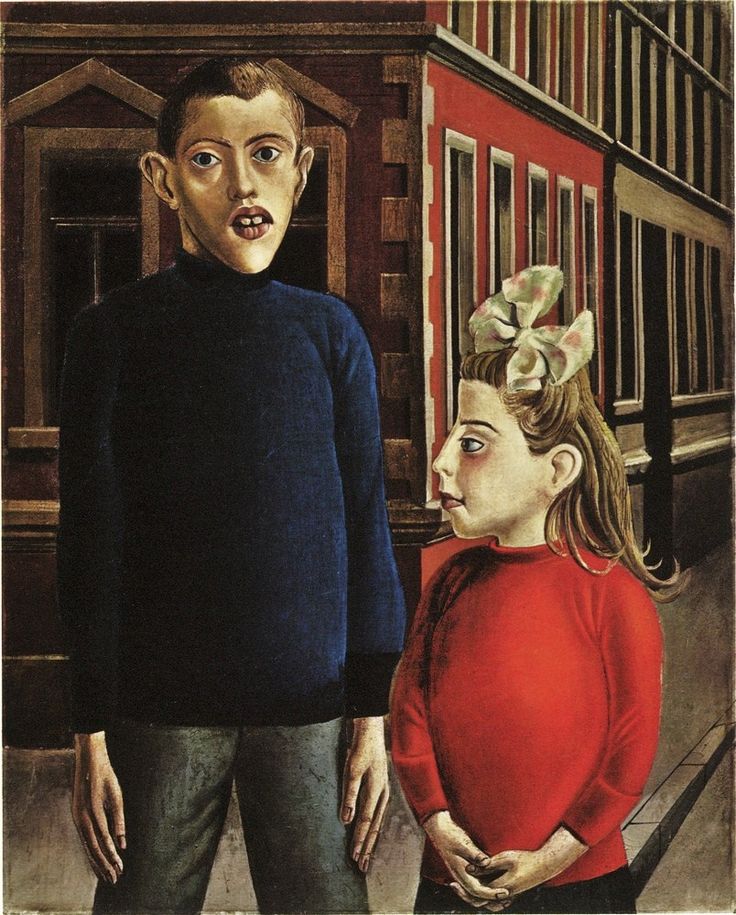
Two Children, 1921 by Otto Dix (1891-1969)
This weekend I picked up a new audiobook collection of Robert Coover short stories which has been titled Going for a Beer (presumably because “Going for a Beer” is a perfect short story). The audiobook contains 30 stories and is read by Charlie Thurston, a more than capable as an orator.
The opening story is one of Coover’s earliest published stories. “The Brother” (1962) retells the Noah narrative from the book of Genesis. I just wrote “retells,” but that’s not really the right term. Instead of retelling the story of Noah and the ark and YHWH’s flood, Coover imagines the apocalyptic affair from the perspective of Noah’s younger brother, who narrates this tale.
Noah’s unnamed brother is an earthy, sensual fellow who loves his wife and loves his wine. His wife—a sympathetic and endearing figure—is pregnant with their first child. They’re already picking out names (“Nathaniel or Anna”). Brother Noah keeps taking the narrator from his own familial duties to help build a boat though:
right there right there in the middle of the damn field he says he wants to put that thing together him and his buggy ideas and so me I says “how the hell you gonna get it down to the water?” but he just focuses me out sweepin the blue his eyes rollin like they do when he gets het on some new lunatic notion and he says not to worry none about that just would I help him for God’s sake and because he don’t know how he can get it done in time otherwise and though you’d have to be loonier than him to say yes I says I will of course I always would crazy as my brother is I’ve done little else since I was born and my wife she says “I can’t figure it out I can’t sec why you always have to be babyin that old fool he ain’t never done nothin for you God knows and you got enough to do here fields need plowin it’s a bad enough year already my God and now that red-eyed brother of yours wingin around like a damn cloud and not knowin what in the world he’s doin buildin a damn boat in the country my God what next? you’re a damn fool I tell you” but packs me some sandwiches just the same and some sandwiches for my brother
That’s kinda-sorta the opening paragraph—although no it’s not, because the whole story is just one big paragraph, a big oral fragment really, which begins with a lower-case r and keeps going in a verbal rush whose only concessions to punctuation are question marks and quotation marks. No periods or commas here folks. On the page, “The Brother” perhaps approximates the blockish brickish look of a Gutenberg Bible or even the Torah, neither of which give the reader a nice period to rest on, let alone a friendly pause between paragraphs.
“The Brother” might be typographically daunting, but the apparent thickness of verbal force on the page belies its oral charms. The story is meant to be read out loud. Hell, it’s biblical, after all—a witnessing. Read aloud, “The Brother” shows us a deeply sympathetic pair of characters, a husband and wife whose small pleasures, telegraphed in naturalistic speech, might remind the auditor of real persons living today. And yet there’s an apocalyptic backdrop here. Noah’s brother and Noah’s brother’s wife—and their unborn child, and all the unborn children—will not survive YHWH’s flood.
Coover does not paint Noah as anything but a shrugging reluctant weirdo. He’s no prophet who warns and helps his brother, but rather a defeated man:
and it ain’t no goddamn fishin boat he wants to put up neither in fact it’s the biggest damn thing I ever heard of and for weeks wee\s I’m tellin you we ain’t doin nothin but cuttin down pine trees and haulin them out to his field which is really pretty high up a hill and my God that’s work lemme tell you and my wife she sighs and says I am really crazy r-e-a-l-l-y crazy and her four months with a child and tryin to do my work and hers too and still when I come home from haulin timbers around all day she’s got enough left to rub my shoulders and the small of my back and fix a hot meal her long black hair pulled to a knot behind her head and hangin marvelously down her back her eyes gentle but very tired my God and I says to my brother I says “look I got a lotta work to do buddy you’ll have to finish this idiot thing yourself I wanna help you all I can you know that but” and he looks off and he says “it don’t matter none your work” and I says “the hell it don’t how you think me and my wife we’re gonna eat I mean where do you think this food comes from you been puttin away man? you can’t eat this goddamn boat out here ready to rot in that bastard sun” and he just sighs long and says “no it just don’t matter” and he sits him down on a rock kinda tired like and stares off and looks like he might even for God’s sake cry
Noah’s dismissing his brother’s work strikes me as utterly cruel—he makes no attempt to explain why his brother’s efforts at creating a better world are in vain. I shared the passage at length again in part because I hope you’ll read it aloud gentle reader, but also that you’ll note that maybe you didn’t note all its blasphemies—Coover’s story is larded with “my Gods” and “damns” and “goddamns,” no different than the speech of 1962, no different than the speech of 2018.
Coover gives us a narrator like us, human, earthly, driven by simple pleasures and a basic sense of love. Noah comes off like a prick. The Bible loves its heroes, but the ordinary folks don’t even get to live in the margins. There’s more morality in orality though—in conversation and communication and talk.
You don’t have to buy the audiobook though to hear “The Brother.” Here is Coover reading it himself:

The Little Murderess, 1987 by Paula Rego (b. 1935)
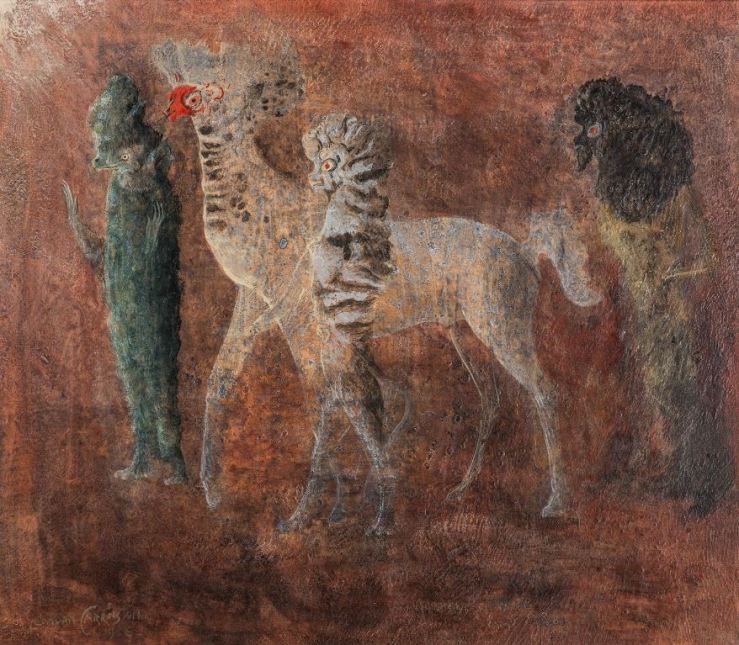
Untitled, 1956 by Leonora Carrington (1917–2011)
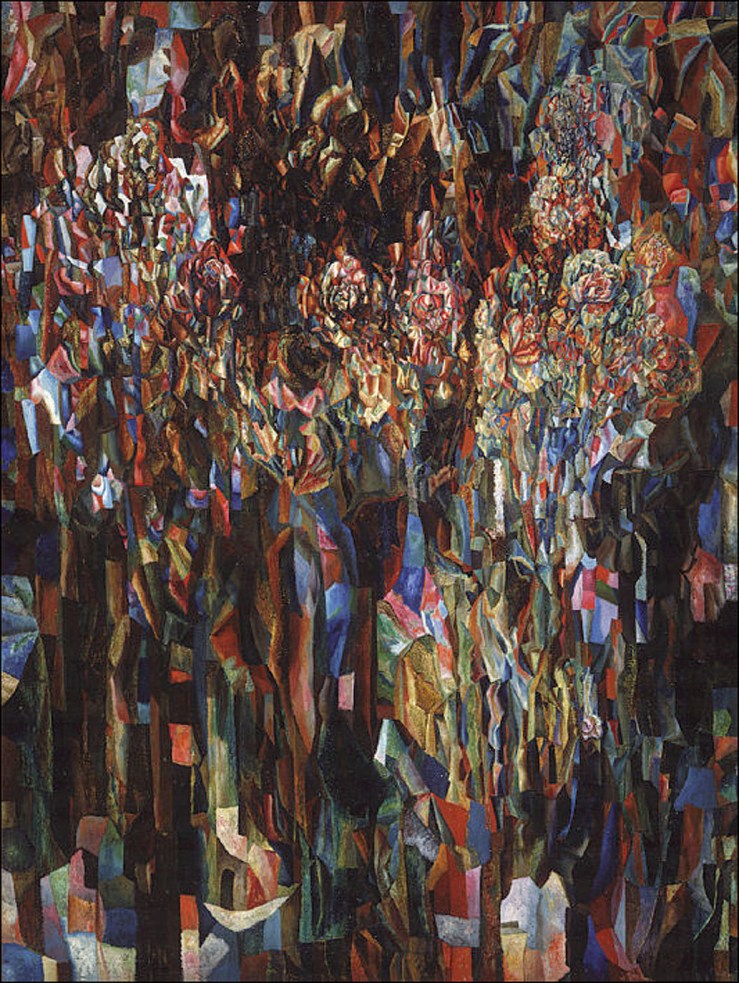
Flowers of the Universal Flowering, 1916 by Pavel Filonov (1883-1941)
In the final third of Nathaniel Hawthorne’s 1852 novel The Blithedale Romance, the narrator, having departed the titular would-be utopian farm, enjoys some city time in a hotel. He takes a voyeuristic pleasure in watching people from his window, and elects to deepen the pleasure by ordering a drink: “Just about this time a waiter entered my room. The truth was, I had rung the bell and ordered a sherry-cobbler.” The explanatory end note for my Penguin Classics copy of Blithedale gives the following recipe: “A drink made with sherry, lemon juice, sugar, and cracked ice.” I decided to make a few.
A brief internet search resulted in dozens and dozens of recipes, all more or less the same iteration: long glass, crushed ice, sherry, simple syrup, citrus (oranges cited most frequently), fresh berries if you have ’em, and a straw. The straw is the kicker here. Here is a passage from Charles Dickens’ 1844 novel Life and Adventures of Martin Chuzzlewit that shows the titular hero’s delight with his first sherry cobbler (note Chuzzlewit’s ecstasy when he gets “the reed” to his lips):
‘I wish you would pull off my boots for me,’ said Martin, dropping into one of the chairs ‘I am quite knocked up—dead beat, Mark.’
‘You won’t say that to-morrow morning, sir,’ returned Mr Tapley; ‘nor even to-night, sir, when you’ve made a trial of this.’ With which he produced a very large tumbler, piled up to the brim with little blocks of clear transparent ice, through which one or two thin slices of lemon, and a golden liquid of delicious appearance, appealed from the still depths below, to the loving eye of the spectator.
‘What do you call this?’ said Martin.
But Mr Tapley made no answer; merely plunging a reed into the mixture—which caused a pleasant commotion among the pieces of ice—and signifying by an expressive gesture that it was to be pumped up through that agency by the enraptured drinker.
Martin took the glass with an astonished look; applied his lips to the reed; and cast up his eyes once in ecstasy. He paused no more until the goblet was drained to the last drop.
‘There, sir!’ said Mark, taking it from him with a triumphant face; ‘if ever you should happen to be dead beat again, when I ain’t in the way, all you’ve got to do is to ask the nearest man to go and fetch a cobbler.’
‘To go and fetch a cobbler?’ repeated Martin.
‘This wonderful invention, sir,’ said Mark, tenderly patting the empty glass, ‘is called a cobbler. Sherry cobbler when you name it long; cobbler, when you name it short. Now you’re equal to having your boots took off, and are, in every particular worth mentioning, another man.’
Anyway. Where was I? Oh, yeah—so I looked around for recipes. David Wondrich’s 2007 cocktail history Imbibe! gives a helpful baseline recipe by citing Jerry Thomas’s 1862 classic, How to Mix Drinks. From Thomas’s book:

Thomas doesn’t mention muddling the oranges, although pretty much every online recipe I read called for muddling.
So reader, I muddled.
Here is my variation on the sherry cobbler (or Sherry Cobbler, or sherry-cobbler). In the loose spirit of the cocktail, I made ours entirely of ingredients I already had at the house. These were for each cocktail:
–4 oz of sherry
–1/2 oz of simple syrup
–1/2 oz of maraschino syrup
–1 oz of sparkling water
–1 clementine (muddled)
–sprigs of mint
–blueberries
–crushed ice

The maraschino syrup was an afterthought after I’d mixed the cocktail and was about to pour it over ice—I wanted to get a pop of color at the bottom of the glass. The mint and blueberries were from our garden. The pic above is lousy; sorry—not sure why I didn’t move the dishcloth and maybe photograph the cocktails like, uh, not in front of my wife’s kombucha hotels.
So how was it? Pretty refreshing. My wife enjoyed it more than I did, although I’m not a huge cocktail guy. (I think it’s pretty hard, for example, to improve upon neat scotch , although I do like bourbon straight up in the hotter months).
I’ve always been fascinated by literary recipes, so I’m a bit surprised the sherry cobbler has evaded my attention until now, despite its having shown up in various novels I’ve read (including Nicholson Baker’s House of Holes, as Troy Patterson pointed out in a remarkably thorough literary history of the cocktail at Slate years ago). I’m not sure I’d go out of my way to make a sherry cobbler again (not that I went out of my way to make these ones), but the basic cobbler recipe’s spirit is very close to my approach to making cocktails at home anyway—use what you have. In fact, the major difference between the sherry cobblers I made yesterday and the kind of cocktail I’d normally cobble together for my wife on a Saturday afternoon is the sherry—I’d usually use rum or maybe vodka. Anyway, the whole thing was fun, which is like, the point of cocktails.
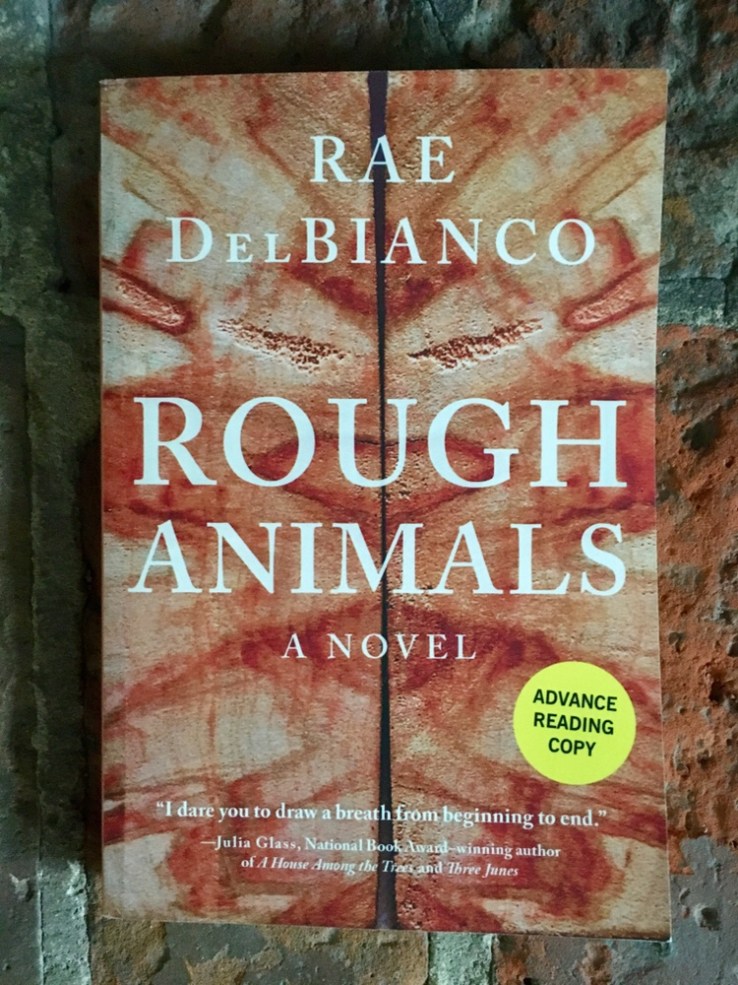
A copy of Rae DelBianco’s novel, Rough Animals, arrived at Biblioklept World Headquarters yesterday. I read the first chapter, which has the protagonist getting shot on like, the second page. This is a fast-paced book so far, its plot propelled by prose clearly influenced by Cormac McCarthy and Denis Johnson.
Here is the blurb:
Ever since their father’s untimely death five years before, Wyatt Smith and his inseparably close twin sister, Lucy, have scraped by alone on their family’s isolated ranch in Box Elder County, Utah. That is until one morning when, just after spotting one of their bulls lying dead in the field, Wyatt is hit in the arm by a hail of gunfire that takes four more cattle with it. The shooter: a fever-eyed, fearsome girl-child with a TEC-9 in her left hand and a worn shotgun in her right. They hold the girl captive, but she breaks loose overnight and heads south into the desert. With the dawning realization that the loss of cattle will mean the certain loss of the ranch, Wyatt feels he has no choice but to go after her and somehow find restitution for what’s been lost.
Wyatt’s decision sets him on an epic twelve-day odyssey through a nightmarish underworld he only half understands; a world that pitches him not only against the primordial ways of men and the beautiful yet brutally unforgiving landscape, but also against himself. As he winds his way down from the mountains of Box Elder to the mesas of Monument Valley and back, Wyatt is forced to look for the first time at who he is and what he’s capable of, and how those hard truths set him irrevocably apart from the one person he’s ever really known and loved. Steeped in a mythic, wildly alive language of its own, and gripping from the first gunshot to the last, Rough Animals is a tour de force from a powerful new voice.
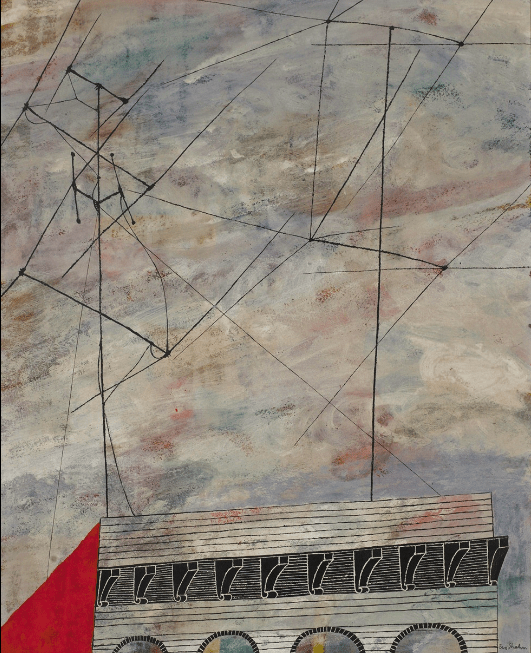
Television #2, 1949 by Ben Shahn (1898–1969)
 Biblioklept