Every day made her more certain of my various failings. I compiled a mental list, which I often recited aloud to her, asking how accurate it was in reflecting her grievances. This was my chief weapon of the period. She hated the feeling that someone knew her mind.
1. Self-satisfied.
2. Uncommitted.
3. Willing to settle.
4. Willing to sit and stare, conserving yourself for some end-of-life event, like God’s face or the squaring of the circle.
5. You like to advertise yourself as refreshingly sane and healthy in a world of driven neurotics. You make a major production of being undriven.
6. You pretend.
7. You pretend not to understand other people’s motives.
8. You pretend to be even-tempered. You feel it gives you a moral and intellectual advantage. You are always looking for an advantage.
9. You don’t see anything beyond your own modest contentment. We all live on the ocean swell of your well-being. Everything else is trivial and distracting, or monumental and distracting, and only an unsporting wife or child would lodge a protest against your teensy weensy happiness.
10. You think being a husband and father is a form of Hitlerism and you shrink from it. Authority makes you uneasy, doesn’t it? You draw back from anything that resembles an official capacity.
11. You don’t allow yourself the full pleasure of things.
12. You keep studying your son for clues to your own nature.
13. You admire your wife too much and talk about it too much. Admiration is your public stance, a form of self-protection if I read it correctly.
14. Gratified by your own feelings of jealousy.
15. Politically neuter.
16. Eager to believe the worst.
17. You will defer to others, you will be acutely sensitive to the feelings of strangers, but you will contrive to misunderstand your family. We make you wonder if you are the outsider in this group.
18. You have trouble sleeping, an attempt to gain my sympathy.
19. You sneeze in books.
20. You have an eye for your friends’ wives. Your wife’s friends. Somewhat speculative, somewhat detached.
21. You go to extremes to keep your small mean feelings hidden. Only in arguments do they appear. Completing your revenge. Hiding it even from yourself at times. Not willing to be seen taking your small mean everyday revenge on me, which, granted, I have sometimes abundantly earned. Pretending your revenge is a misinterpretation on my part, a misunderstanding, some kind of accident.
22. You contain your love. You feel it but don’t like to show it. When you do show it, it is the result of some long drawn-out decision making process, isn’t it, you bastard.
23. Nurser of small hurts.
24. Whiskey sipper.
25. Underachiever.
26. Reluctant adulterer.
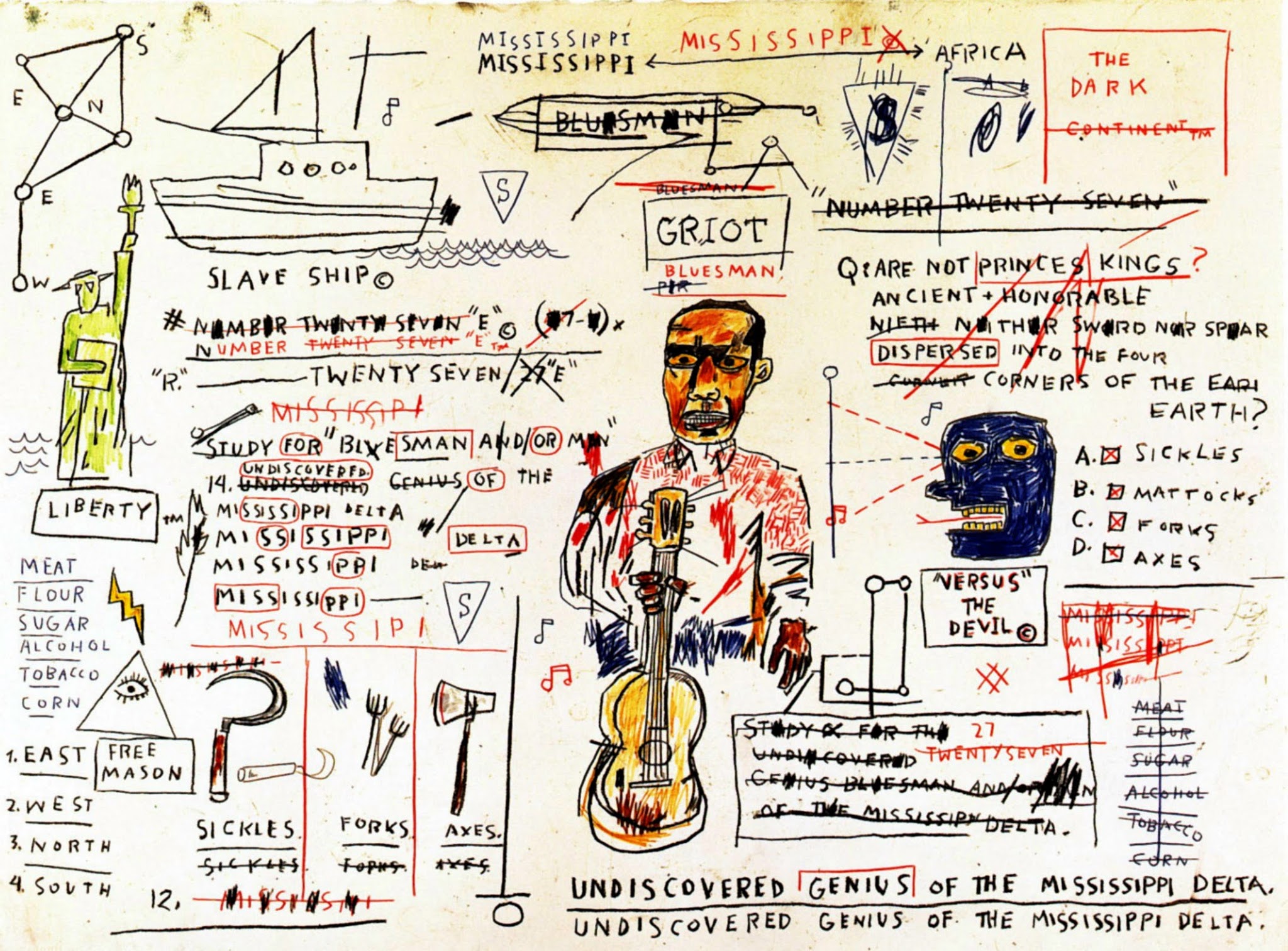
27. American.
We came to refer to these as the 27 Depravities, like some reckoning of hollow-cheeked church theologians. Since then I’ve sometimes had to remind myself it was my list, not hers.









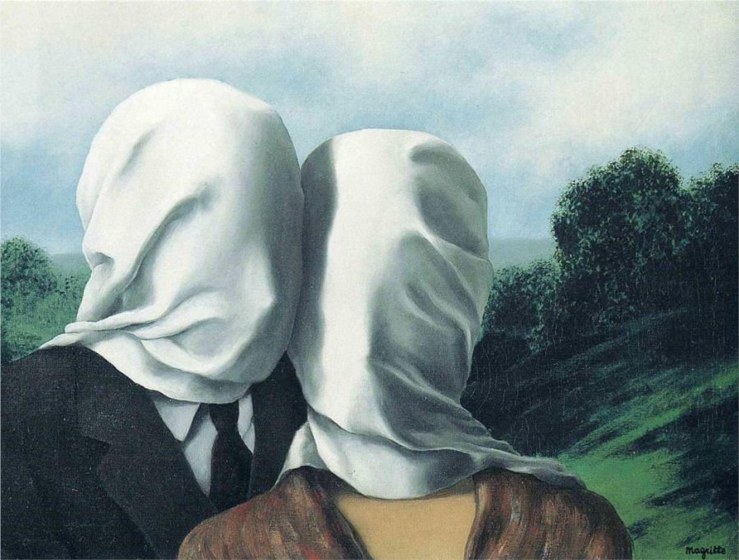 The Lovers, 1928 by Rene Magritte (1898-1967)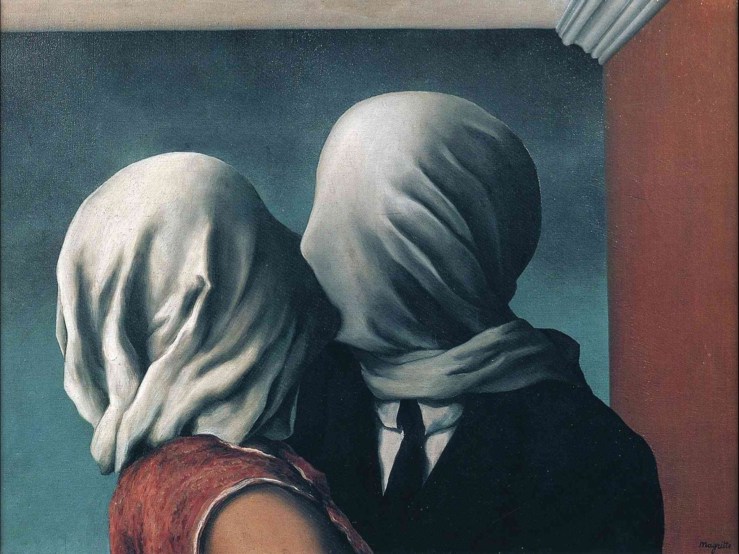

 Biblioklept